
The pet wearable landscape is shifting rapidly. As pet owners demand more precise, real-time location tracking and comprehensive health diagnostics, manufacturers are forced to rethink hardware architecture. This article explores how to balance the demands for smaller form factors with the technical requirements of connectivity standards like LoRa and cellular IoT.
The Evolution of Pet Wearable Hardware
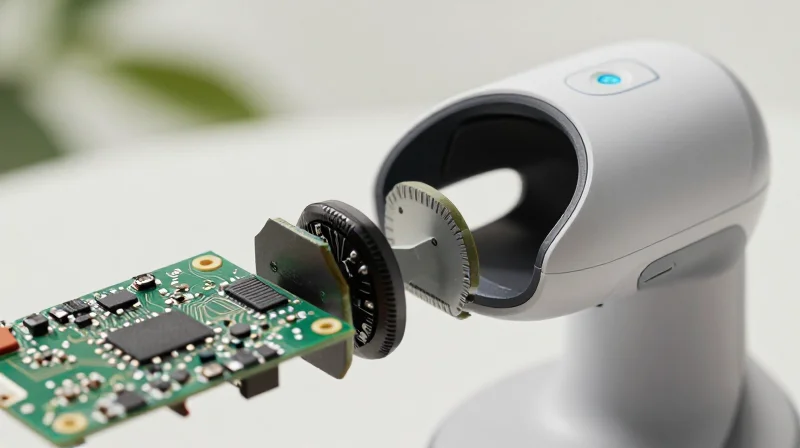
From Bulk to Precision: The Hardware Transition
Early generations of pet wearables were characterized by external, bolt-on modules that prioritized basic tracking functionality over animal comfort. These devices were often heavy, prone to snagging, and limited by primitive battery technologies. Today, the shift toward highly integrated PCB (Printed Circuit Board) designs has fundamentally changed the engineering landscape. Modern pet wearables now utilize System-on-Chip (SoC) architectures that consolidate GPS, cellular modems, and sensor arrays onto a single, miniaturized footprint.
Key Milestones in Hardware Miniaturization
| Generation | Hardware Focus | Form Factor | Primary Limitation |
|---|---|---|---|
| Gen 1: Ruggedized GPS | External Modules | Bulky/Clunky | Battery Longevity |
| Gen 2: Smart Sensing | Integrated Modules | Wearable Collars | Power-to-Size Ratio |
| Gen 3: Micro-Integration | Single PCB SoC | Sleek/Ergonomic | Advanced Connectivity |
Technical Challenges in Modern PCB Design
Designing for the pet market requires overcoming unique physics-based constraints. Unlike human wearables, pet devices must withstand unpredictable physical impacts, exposure to the elements, and high-frequency movement. Engineers are increasingly adopting multi-layer, flexible PCBs that allow the device to contour to the animal's neck. Furthermore, optimizing antenna placement for both GPS and cellular or LoRa signals remains the primary hurdle for maintaining signal integrity within a compact, water-resistant housing.
Frequently Asked Questions
- How does PCB integration impact device weight?
Modern SoC integration eliminates the need for redundant components, allowing for up to a 40% reduction in total weight compared to modular designs from a decade ago. - What role does thermal management play in modern pet wearables?
As chips grow more powerful, heat dissipation becomes critical. Efficient board layout and passive cooling materials are essential to ensure the device remains safe and comfortable against an animal's fur. - Why is multi-protocol support becoming the industry standard?
Modern PCBs now prioritize hybrid connectivity, allowing the device to switch between power-efficient LoRa for local area tracking and cellular networks for long-range coverage.
Navigating Connectivity Standards: LoRa vs. Cellular
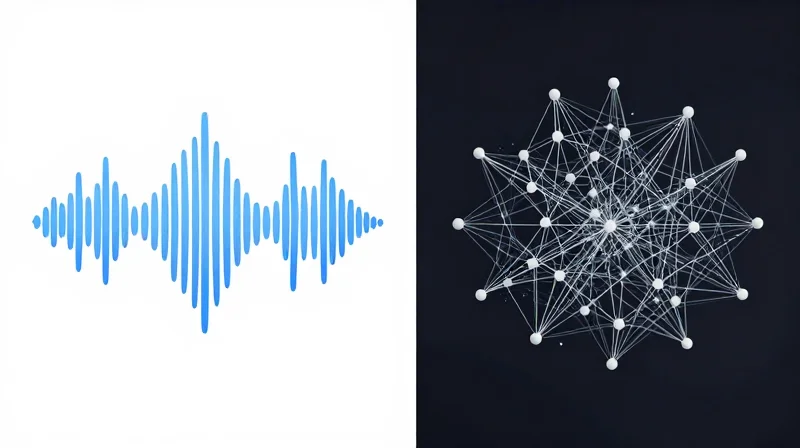
Comparing Connectivity Paradigms: LoRa vs. Cellular
The choice between LoRa (Long Range) and cellular IoT standards like LTE-M or NB-IoT hinges on the device's operational environment and the required frequency of data transmission. LoRa operates in the unlicensed ISM spectrum, offering exceptional battery longevity and low infrastructure cost, but at the expense of high-bandwidth capabilities and guaranteed real-time responsiveness. Conversely, cellular standards utilize licensed spectrums, providing high reliability and ubiquity, which are essential for active tracking in densely populated urban environments.
| Feature | LoRa | Cellular (LTE-M/NB-IoT) |
|---|---|---|
| Power Consumption | Ultra-Low | Moderate |
| Data Bandwidth | Low | High |
| Infrastructure | Requires Gateway | Public Network |
| Indoor Penetration | High | Moderate to High |
| Ideal Use Case | Rural/Remote Monitoring | Urban/Dynamic Tracking |
Technical Trade-offs for PCB Integration
Integrating these technologies into PCB designs presents unique challenges regarding antenna placement and power management. Cellular modules typically require more complex radio front-end circuitry and high peak current during transmission, which necessitates larger battery capacitors. LoRa modules are significantly more compact and easier to integrate, allowing for the miniaturized form factors becoming common in modern pet smart collars.
- Does LoRa support real-time GPS tracking?
No, LoRa’s low data rate is unsuitable for continuous real-time streaming; it is better optimized for periodic sensor data and location snapshots. - Is cellular integration more complex for developers?
Yes, cellular requires SIM management (eSIM/iSIM), carrier certifications, and more sophisticated power-saving state management compared to the plug-and-play nature of LoRa gateways. - How do these technologies handle indoor tracking?
LoRa signals generally provide better deep-indoor penetration, while cellular connectivity relies on broader signal density, which can degrade in shielded, deep-basement environments.
Miniaturization Challenges in PCB Design
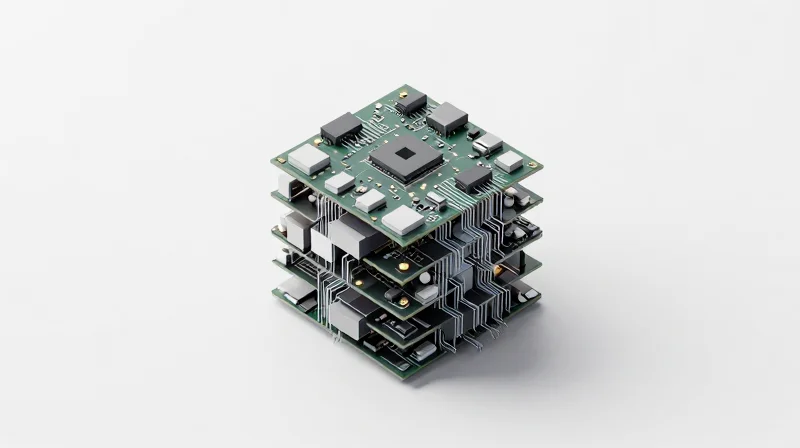
The Physics of Miniaturization
The primary challenge in miniaturizing pet wearables stems from the physical constraints of integrating high-gain antennas and battery capacity into a chassis small enough for a cat or small dog. As PCBs shrink, electromagnetic interference (EMI) between the GPS receiver and cellular/LoRa modules increases, leading to potential signal degradation and erratic tracking data.
Engineering Trade-offs
| Constraint | Technical Impact | Mitigation Strategy |
|---|---|---|
| Antenna Size | Reduced gain/range | Advanced LCP or LDS antennas |
| Heat Dissipation | Thermal throttling | High-density interconnect (HDI) PCBs |
| Battery Volume | Limited runtime | SiP (System-in-Package) integration |
Design Strategies for High-Density Integration
To maintain high performance in a compact footprint, engineers are increasingly turning to multi-layered, rigid-flex PCB architectures. By utilizing System-in-Package (SiP) modules, designers can combine the application processor, memory, and connectivity radios into a single, space-efficient unit, effectively bypassing the need for sprawling trace routing that consumes valuable board real estate.
Common Miniaturization Queries
- How does PCB density affect battery life?
Increased density requires more complex power management ICs to regulate heat, which can lead to quiescent current drain; optimized trace routing is essential to minimize energy loss. - Why is antenna placement critical in small devices?
In cramped PCBs, the antenna is often too close to ground planes or other metal components, which detunes the antenna and severely limits the Effective Radiated Power (ERP). - Is rigid-flex PCB technology worth the cost?
While more expensive to manufacture, rigid-flex allows for 3D packaging within curved collar housings, maximizing internal volume that would otherwise be wasted by rigid, flat boards.
Energy Efficiency and Battery Life Optimization
Strategies for Power-Aware Firmware Design
Achieving multi-week battery life in pet wearables is less about battery capacity and more about intelligent software-defined power management. By leveraging motion-sensing triggers, developers can move away from continuous GPS polling toward event-driven data acquisition. When the device detects inactivity via an onboard accelerometer, it enters a deep-sleep state, waking only periodically to broadcast a 'heartbeat' signal rather than full location telemetry.
| Power State | Activity Trigger | Primary Power Draw | Typical Utility |
|---|---|---|---|
| Deep Sleep | Stationary/No Motion | RTC & Accel interrupt | Long-term rest periods |
| Adaptive Polling | Movement Detected | GPS + LoRa/LTE | Active outdoor exercise |
| High-Frequency | Geofence Breach | Max RF Output | Emergency retrieval |
Protocol-Specific Efficiency Gains
Communication overhead often accounts for the largest portion of the energy budget. In cellular-based (LTE-M/NB-IoT) designs, power consumption is largely determined by the radio's connection time; using eDRX (Extended Discontinuous Reception) and PSM (Power Saving Mode) allows the device to stay registered to the network without constant handshaking. Conversely, LoRa-based solutions gain efficiency by utilizing extremely low duty cycles, making them ideal for long-distance tracking where frequent data transmission is unnecessary.
Energy Management FAQ
- How do adaptive polling intervals impact accuracy?
Adaptive polling reduces sampling frequency when the pet is sedentary, which significantly saves power while maintaining high-fidelity tracking during periods of high-intensity movement. - What is the role of the accelerometer in battery optimization?
The accelerometer acts as a hardware-level gatekeeper, preventing the power-hungry GPS and cellular modules from activating until physical displacement is confirmed. - Does NB-IoT consume more power than LoRa for pet tracking?
Generally, yes. NB-IoT requires active network synchronization, whereas LoRa is asynchronous, allowing the device to remain in low-power modes for much longer intervals.
Real-Time Location Tracking Accuracy

Overcoming Urban Signal Degradation
In dense urban environments, the 'urban canyon' effect—where tall buildings reflect or block satellite signals—poses the greatest challenge to location accuracy. Modern pet wearable designs overcome this by utilizing multi-constellation support, allowing devices to lock onto GPS, GLONASS, Galileo, and BeiDou simultaneously. By increasing the available satellite pool, the device significantly reduces the time-to-first-fix (TTFF) and maintains a higher probability of maintaining a robust signal even in congested architectural corridors.
The Role of Assisted GPS (A-GPS)
A-GPS is critical for modern pet tracking as it allows the device to download satellite orbital data via a cellular or Wi-Fi connection rather than relying solely on slow satellite broadcasts. This drastically improves performance for mobile pets that may move quickly out of a secure area.
| Feature | Standard GPS | A-GPS & Multi-Constellation |
|---|---|---|
| TTFF Speed | Slow (30-60+ seconds) | Fast (<5 seconds) |
| Urban Performance | Poor in signal canyons | High reliability |
| Data Reliance | None | Requires low-bandwidth data |
Frequently Asked Questions
- Does multi-constellation support drain more battery?
While processing more satellite signals requires more compute, modern low-power GNSS chipsets handle multi-constellation acquisition in short bursts, which actually saves energy by reducing the total time the receiver must remain active to calculate a precise position. - How does A-GPS integrate with LoRa trackers?
In hybrid models, the device uses cellular connectivity to pull A-GPS ephemeris data, which then allows the primary tracking engine to lock positions faster, extending the battery life of the LoRa transmitter by reducing the need for prolonged signal acquisition cycles.
Integrating Advanced Health Monitoring Sensors
Balancing High-Fidelity Data and Energy Constraints
The integration of accelerometers, pulse oximetry, and thermistors into pet wearables introduces significant engineering overhead. To maintain device longevity without increasing form factor, designers must implement edge-computing strategies that process raw sensor data locally on the microcontroller (MCU) rather than streaming raw telemetry to the cloud. By utilizing local buffers and trigger-based event reporting, power consumption can be reduced by up to 60% compared to continuous data transmission.
Sensor Integration Performance Comparison
| Sensor Type | Power Impact | Primary Use Case | Optimization Strategy |
|---|---|---|---|
| Accelerometer | Low | Activity tracking/Sleep | Interrupt-driven wake-up |
| Pulse/PPG | High | Vitals/Stress detection | Duty-cycled periodic sampling |
| Thermistor | Negligible | Fever/Environment | Passive monitoring |
Best Practices for PCB Sensor Integration
To achieve a compact PCB design, manufacturers should leverage System-in-Package (SiP) technology, which integrates multiple sensors and an MCU into a single substrate. This reduces the PCB footprint and minimizes the trace length between sensors and the analog-to-digital converter, decreasing electromagnetic interference (EMI) that can corrupt sensitive health data.
- How do I mitigate noise in heart rate sensors?
Use shielded analog signal paths and dedicated LDO regulators to isolate the PPG sensor from the high-current spikes caused by the cellular radio. - Can I process sensor data on-chip?
Yes, utilizing the embedded DSP capabilities of modern low-power MCUs allows for real-time filtering and feature extraction, drastically lowering radio transmit frequency. - Is temperature monitoring energy-intensive?
No, if implemented via a low-power digital temperature sensor using I2C or SPI, the energy draw is minimal compared to high-frequency motion sensing.
Future-Proofing Your Hardware Ecosystem
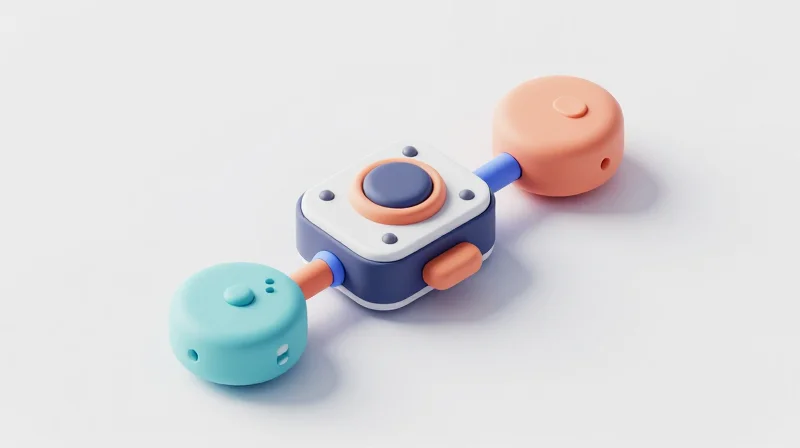
The Imperative of Modular Design
To remain relevant in a rapidly evolving telecommunications landscape, manufacturers must shift from monolithic PCB designs to modular architectures. By isolating the connectivity module from the main logic board, developers can swap radio components as regional network sunsets occur—such as the phased retirement of 2G and 3G infrastructure—without requiring a complete hardware redesign.
Comparative Strategies for Hardware Longevity
| Strategy | Hardware Impact | Longevity Benefit |
|---|---|---|
| Modular RF Front-ends | Interchangeable daughterboards | Seamless updates for 5G-IoT |
| Software Defined Radios | Firmware-based frequency tuning | Extended global roaming support |
| eSIM/iSIM Integration | Removes physical card slots | Supports dynamic network switching |
Navigating the 5G Transition
The integration of 5G-ready modules, specifically those supporting NB-IoT and LTE-M, is critical. These technologies offer superior power efficiency compared to traditional cellular protocols. Implementing a 'dual-mode' approach—where a device can failover between LPWAN for battery-sipping updates and high-speed data bursts for firmware-over-the-air (FOTA) updates—is the current gold standard for future-proofing.
Frequently Asked Questions
- How does FOTA impact hardware life?
Firmware-over-the-air updates allow manufacturers to patch security vulnerabilities and optimize power consumption algorithms remotely, effectively extending the functional lifespan of the physical device by years. - Why is iSIM replacing traditional SIM slots?
Integrated SIM (iSIM) technology reduces the PCB footprint and eliminates the mechanical failure points associated with physical trays, while offering greater flexibility for carrier switching in international markets. - Is LoRaWAN still relevant in a 5G world?
Yes, LoRaWAN remains essential for off-grid scenarios and private network implementations where cellular coverage is non-existent, serving as a reliable redundancy layer for high-end pet trackers.
Regulatory Compliance and Data Privacy
Regulatory Compliance for Pet Wearable Hardware
Deploying pet wearables requires strict adherence to regional telecommunications and hardware safety regulations. Manufacturers must navigate disparate certification requirements, including FCC standards in the United States, CE marking for the European Union, and TELEC in Japan. For devices utilizing Cellular or LoRaWAN modules, compliance with radio frequency (RF) exposure limits and specific frequency band allocations is mandatory to avoid market entry hurdles.
| Region | Key Certification | Primary Focus |
|---|---|---|
| USA | FCC Part 15 / PTCRB | RF emissions and cellular network interoperability |
| EU | CE / RED Directive | Safety, health, and radio equipment performance |
| Japan | TELEC / MIC | Technical compliance for radio frequency equipment |
Data Privacy and Consumer Security
As pet wearables collect increasingly sensitive location and health data, they become prime targets for cybersecurity threats. Implementing 'Security by Design' is no longer optional; it requires end-to-end encryption for data in transit and at rest. Furthermore, compliance with regulations like GDPR (General Data Protection Regulation) or CCPA is critical, mandating transparent data handling policies and user-controlled privacy settings for pet owners.
- How does end-to-end encryption impact battery life?
Modern microcontrollers often feature hardware-accelerated encryption modules (AES), which minimize power overhead while ensuring secure transmission of telemetry data. - What is the most critical data privacy step for pet manufacturers?
Ensuring that PII (Personally Identifiable Information) is strictly decoupled from animal health metrics, minimizing the data footprint stored on cloud servers. - Do regional privacy laws differ significantly?
Yes; for example, the EU's GDPR has stricter requirements for user consent and the 'right to be forgotten' compared to some regional frameworks, necessitating a globally modular privacy architecture.
The future of the pet wearable market depends on balancing connectivity power with miniaturization efficiency. By selecting the right hardware architecture today, manufacturers can secure a competitive edge. Contact our engineering team today to discuss your next-gen pet wearable development roadmap.
