
As global environmental mandates tighten and ESG reporting becomes a non-negotiable metric for manufacturers, the shift toward halogen-free electronics is accelerating. Once relegated to high-end niche applications, these materials are now essential for engineers looking to future-proof their designs against evolving IEC and REACH standards. This guide cuts through the technical jargon to help you weigh the true performance trade-offs.
Understanding Halogens: Why the Electronics Industry is Changing
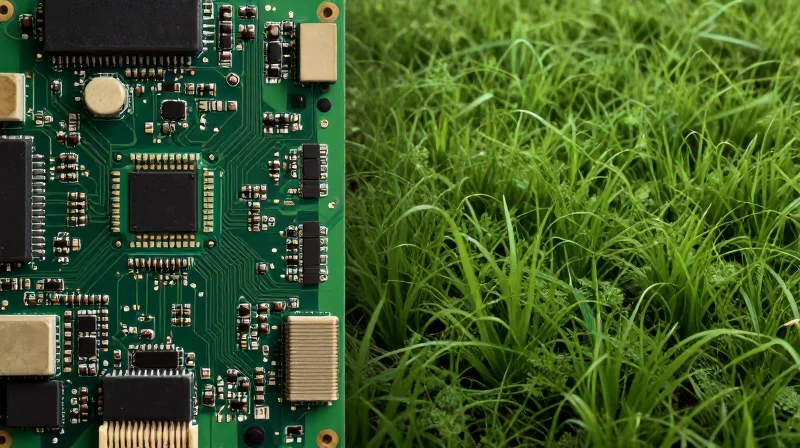
The Role of Halogens in Traditional Electronics
For decades, FR-4 (Flame Retardant 4) has been the industry standard for printed circuit board (PCB) construction. The primary mechanism for achieving its fire-resistant rating lies in the inclusion of halogenated compounds, most notably Brominated Flame Retardants (BFRs). These additives effectively suppress combustion by releasing radical species that interfere with the chemical reaction of a fire. However, the same chemical stability that makes them effective flame retardants also contributes to their persistence in the environment.
Environmental and Health Risks
The electronics industry faces increasing scrutiny over the lifecycle impacts of halogenated PCBs, particularly during disposal and recycling phases. When traditional FR-4 is incinerated at suboptimal temperatures or improperly handled in e-waste streams, it can release toxic substances, including dioxins and furans, into the atmosphere and soil. These pollutants are known bioaccumulators, posing significant risks to both ecological health and human endocrine systems.
Key Concerns Regarding Halogenated Materials
- Persistence
Halogenated compounds are highly resistant to natural degradation, leading to long-term accumulation in ecosystems. - Toxicity
Thermal decomposition of halogenated materials during waste processing can generate toxic byproducts like hydrogen bromide. - Bioaccumulation
These substances can enter the food chain, resulting in potential health implications for wildlife and human populations.
The Shift Toward Green Compliance
The transition toward halogen-free materials is not merely an environmental choice but a regulatory necessity. Directives such as REACH and RoHS place increasingly strict limitations on the use of specific brominated compounds. As Original Equipment Manufacturers (OEMs) prioritize sustainability to meet ESG (Environmental, Social, and Governance) goals, the industry is rapidly pivoting toward resin systems that utilize phosphorus and nitrogen-based flame retardants, which offer comparable safety without the associated toxicological profile.
| Feature | Traditional FR-4 | Halogen-Free FR-4 |
|---|---|---|
| Flame Retardant Basis | Bromine / Halogens | Phosphorus / Nitrogen |
| Environmental Impact | High (Toxic byproducts) | Low (Environmentally friendly) |
| Regulatory Status | Increasingly restricted | Preferred/Compliant |
| Thermal Stability | Standard | High performance |
Defining the Standard: What Makes a PCB 'Halogen-Free'?
The term 'halogen-free' in the context of printed circuit board (PCB) manufacturing is not a generic descriptor of total chemical absence, but a strictly quantified technical standard. The industry primarily adheres to the specifications defined in IEC 61249-2-21, which dictates the maximum allowable concentration of bromine and chlorine within the base laminate material.
The IEC 61249-2-21 Threshold Limits
To be classified as halogen-free, the laminate must meet specific purity levels. If a material exceeds these parts-per-million (PPM) limits, it fails the halogen-free compliance criteria regardless of its flame-retardant performance.
| Halogen Element | Threshold Limit (PPM) | Regulatory Reference |
|---|---|---|
| Bromine (Br) | 900 ppm | IEC 61249-2-21 |
| Chlorine (Cl) | 900 ppm | IEC 61249-2-21 |
| Total Halogen (Br + Cl) | 1500 ppm | IEC 61249-2-21 |
Frequently Asked Questions Regarding Halogen Standards
- Does 'halogen-free' imply that no bromine or chlorine exists at all?
No. The standard acknowledges that trace amounts can exist due to processing impurities or unintentional contamination. Therefore, it sets a maximum threshold of 900 ppm per element, rather than requiring zero concentration. - Why is the sum of bromine and chlorine limited to 1500 ppm?
Even if individual elements are below the 900 ppm limit, the combined toxicity profile of these halogens necessitates a stricter ceiling for total halogen content, ensuring that the cumulative environmental impact remains low. - How is compliance verified?
Compliance is verified through chemical analysis, typically using Ion Chromatography or Combustion/Oxygen Bomb analysis to ensure the laminate material, including resin and glass fabric, does not exceed the stipulated weight percentages.
Comparative Performance Analysis: Halogen-Free vs. Standard FR-4
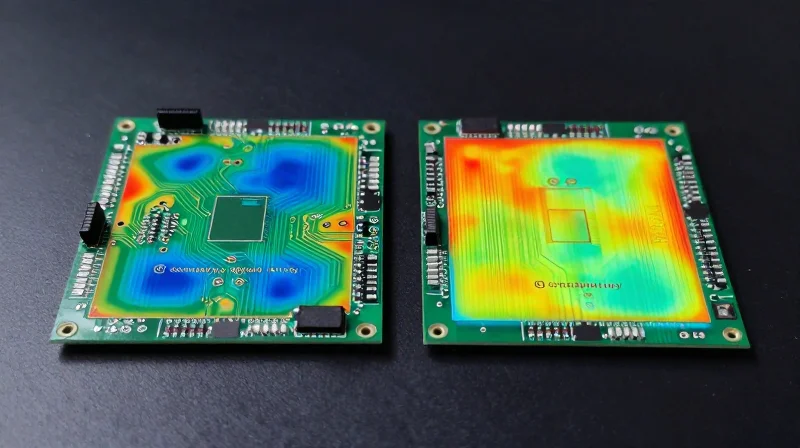
Performance Divergence in Modern Laminates
The transition to halogen-free materials is no longer merely a regulatory requirement; it represents a significant shift in PCB material science. While standard FR-4 has long relied on tetrabromobisphenol A (TBBPA) for flame retardancy, halogen-free alternatives employ phosphorus-based or nitrogen-based systems. These chemical differences fundamentally alter the physical properties of the laminate, necessitating careful consideration of thermal and environmental performance.
| Parameter | Standard FR-4 | Halogen-Free FR-4 |
|---|---|---|
| Flame Retardant Base | Brominated (TBBPA) | Phosphorus/Nitrogen |
| Glass Transition (Tg) | 130°C - 170°C | 150°C - 180°C |
| Moisture Absorption | 0.10% - 0.20% | 0.15% - 0.25% |
| Thermal Decomposition (Td) | 300°C - 330°C | 330°C - 360°C |
Key Performance Metrics Explained
The divergence in performance is largely driven by the inherent molecular structure of non-halogenated flame retardants. Engineers must be aware of how these changes impact assembly and long-term reliability in the field.
- Glass Transition Temperature (Tg)
Halogen-free materials typically offer a higher Tg, providing better dimensional stability at elevated temperatures, which is critical for complex lead-free reflow profiles. - Moisture Absorption
Due to the polar nature of phosphorus-based flame retardants, halogen-free laminates may exhibit slightly higher moisture absorption rates, which can impact dielectric consistency in high-frequency applications. - Thermal Decomposition (Td)
Halogen-free boards often demonstrate superior thermal decomposition temperatures, offering a wider safety margin during intensive thermal cycling or secondary rework processes.
Critical Engineering Considerations
Switching to halogen-free materials requires a holistic view of the PCB manufacturing process. Because the resin systems differ, the drilling characteristics and chemical desmear processes may need adjustment to optimize through-hole reliability. Furthermore, designers should evaluate the impact of the slightly higher dissipation factor (Df) often found in these materials when working on high-speed signal integrity projects, as it may necessitate re-simulation of critical high-frequency transmission lines.
Regulatory Drivers and Global Compliance Landscape

Regulatory Frameworks Governing PCB Materials
The shift toward halogen-free materials is not merely a design preference; it is a direct response to stringent international environmental mandates. Manufacturers must navigate a complex web of regulations that restrict the use of hazardous flame retardants to mitigate risks during electronics disposal, recycling, and incineration.
| Regulation | Region | Primary Focus | Impact on FR-4 |
|---|---|---|---|
| RoHS | Global (EU/Asia/US) | Restricted Substances | Limits PBB/PBDE flame retardants |
| REACH | EU | Chemical Registration | Strict control over chemical supply chains |
| WEEE | EU | E-waste Recovery | Increases demand for recyclable components |
Regional Impacts on the Global Supply Chain
Regional differences in environmental policy often dictate global product strategy. While the EU maintains the most rigid chemical oversight, Asian markets—particularly China—have aligned their 'China RoHS' standards to mirror European mandates to remain competitive in the global export market. This convergence forces manufacturers to adopt high-performance halogen-free laminates as a baseline to prevent supply chain fragmentation.
Common Compliance Inquiries
- Is 'Halogen-Free' explicitly mandated by REACH?
REACH does not explicitly ban all halogens, but it heavily regulates specific flame retardants, making the shift to halogen-free materials the most efficient strategy for long-term compliance. - How does IEC 61249-2-21 affect global trade?
As the industry standard for chlorine and bromine levels, compliance with this specification has become a prerequisite for securing contracts with major OEMs in the telecommunications and automotive sectors. - Do regional variations create hidden compliance costs?
Yes, maintaining dual inventories for halogenated and halogen-free products increases logistics complexity, justifying the industry-wide move toward standardizing on halogen-free FR-4.
Overcoming Fabrication Challenges with Halogen-Free Laminates
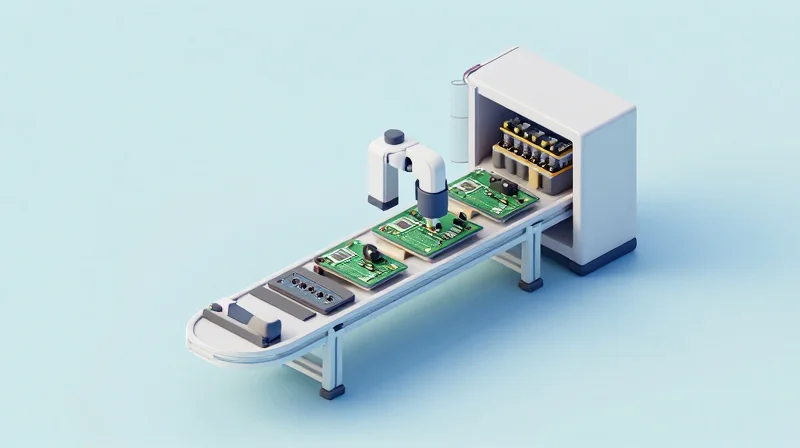
Dispelling the Fabrication Myth
A common misconception persists that halogen-free (HF) materials are inherently more difficult to process than standard FR-4. While HF resins exhibit different chemical properties, they are not 'difficult'; they simply demand a recalibration of existing manufacturing workflows. Manufacturers that prioritize precision in thermal management and mechanical stress control consistently achieve yields comparable to standard legacy materials.
Optimization Parameters for Fabrication
| Process Stage | Recommended Adjustment | Reasoning |
|---|---|---|
| Drilling | Reduce surface speed/increase feed | Mitigates resin smear and improves hole wall quality. |
| Lamination | Extend dwell time at peak temperature | Accommodates higher resin viscosity for uniform bonding. |
| Curing | Profile optimization | Ensures full cross-linking to maintain high Tg targets. |
Common Implementation FAQs
- Do halogen-free materials require new drilling equipment?
No. Most modern CNC drilling equipment can handle HF materials. The focus should be on optimizing drill bit geometry and using fresh bits to prevent resin buildup and nail-heading. - How does moisture sensitivity compare during assembly?
Some HF variants exhibit slightly higher moisture absorption. It is critical to adhere to strict baking protocols and moisture-sensitive level (MSL) storage requirements before reflow. - Are there challenges with plating adhesion?
Because the resin matrix is more thermally robust, the desmear process may require slightly more aggressive chemical activation to ensure copper-to-resin adhesion.
Ultimately, the transition to halogen-free materials is an exercise in process discipline. By auditing equipment capabilities and fine-tuning thermal parameters, fabricators can successfully integrate these eco-friendly materials without compromising board integrity or long-term reliability.
Long-Term Cost and Reliability Benefits
Economic Implications: Beyond the Unit Price
While halogen-free materials typically carry a moderate price premium compared to standard FR-4 due to the specialized flame-retardant chemistry required, focusing solely on the bill of materials (BOM) is a short-sighted metric. The true economic value emerges through total cost of ownership (TCO) analysis, where manufacturers benefit from streamlined compliance portfolios and reduced exposure to the evolving regulatory landscape of environmental safety.
| Cost Factor | Standard FR-4 | Halogen-Free Laminate |
|---|---|---|
| Initial Material Cost | Baseline (Lower) | 10-15% Premium |
| Regulatory Compliance Risk | High (PFAS/BFR Scrutiny) | Low |
| Market Access | Limited in Green Segments | Broad/Universal |
| End-of-Life Disposal | Hazardous Waste Treatment | Simplified Recycling |
Reliability and Longevity Benefits
Halogen-free laminates offer superior reliability in high-density interconnect (HDI) applications. The move toward phosphorous-based flame retardants often necessitates resin formulations that exhibit higher thermal stability, reducing the occurrence of delamination and conductive anodic filament (CAF) growth during high-stress operational cycles.
- How does halogen-free status impact product liability?
Using halogen-free materials mitigates risks associated with future environmental bans on brominated flame retardants, ensuring that products do not require forced re-design or sudden market withdrawals due to changing legislation. - Does the increased reliability justify the cost?
Yes, specifically in automotive and industrial sectors. The enhanced thermal performance reduces field failures in harsh environments, leading to lower warranty claim rates and increased brand reputation. - Is halogen-free becoming the industry standard?
Industry leaders and major OEMs are increasingly mandating halogen-free requirements, meaning that adoption effectively future-proofs supply chains against eventual industry-wide mandates.
Selecting the Right Material for Your Application
A Strategic Framework for Material Selection
Choosing between standard FR-4 and halogen-free variants involves evaluating the specific electrical and thermal demands of your application against environmental mandates. For high-speed or high-power density designs, the focus must shift toward dielectric constant stability and thermal reliability rather than solely relying on legacy material specifications.
| Requirement Type | Standard FR-4 Preference | Halogen-Free Preference |
|---|---|---|
| Signal Integrity | General Consumer Electronics | High-Speed/High-Frequency Designs |
| Power Density | Low/Medium Heat Dissipation | High Thermal Stress Environments |
| Regulatory Risk | Non-EU/Non-Automotive Markets | Global Compliance & Green Initiatives |
Decision Factors for Signal Integrity and Power
When designs demand tighter impedance control and minimal signal loss, halogen-free materials often outperform traditional FR-4 due to their advanced resin formulations. Furthermore, because halogen-free laminates typically exhibit a higher Glass Transition Temperature (Tg), they are superior in applications experiencing repeated thermal cycling or high-current stress, reducing the likelihood of delamination or barrel cracking.
Frequently Asked Questions
- Is halogen-free mandatory for all electronics?
While not universally mandated by law, many tier-one OEMs and industry leaders enforce halogen-free standards to future-proof products against tightening REACH and RoHS updates. - Will I face signal degradation if I switch to halogen-free?
Generally, the opposite is true. Many halogen-free formulations feature lower loss tangents, potentially improving signal integrity compared to standard, brominated FR-4. - Does the choice impact manufacturing throughput?
Halogen-free materials may require optimized lamination press cycles or modified drill parameters, but they do not inherently lower manufacturing throughput when the fabricator is properly equipped.
Transitioning to halogen-free technology is no longer just an environmental gesture—it is a strategic requirement for scaling in modern global markets. By balancing thermal performance with strict regulatory adherence, you can build smarter, more sustainable hardware. Contact our engineering team today to review your current material stack and prepare for the next generation of electronics manufacturing.
