
In the fast-paced world of IoT, the foundation of your smart lighting product is its Printed Circuit Board Assembly (PCBA). Selecting the wrong partner can lead to connectivity failures, supply chain bottlenecks, and costly redesigns. This guide empowers project leads to vet manufacturers effectively and ensure their smart lighting hardware is built for success.
Evaluating Connectivity and Firmware Compatibility
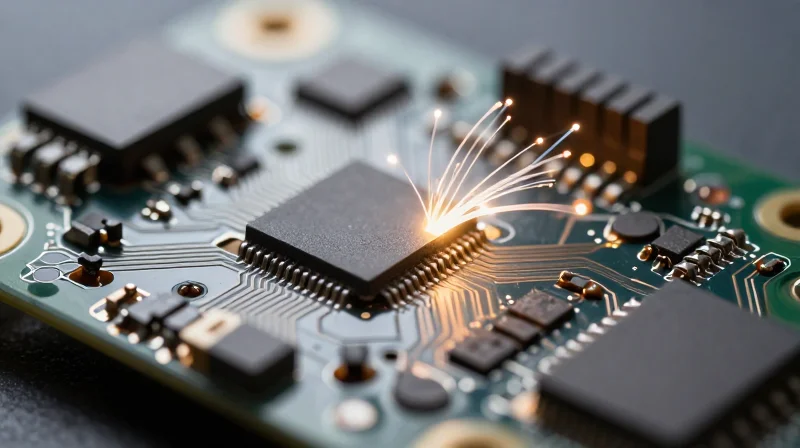
The foundation of a successful smart lighting product lies in its ability to maintain a stable, low-latency connection to a user’s local network. For small-batch production, you must prioritize modules that offer mature software SDKs, as these directly dictate your product's security posture and interoperability with major smart home ecosystems like HomeKit, Alexa, and Google Home.
Key Connectivity Considerations
| Feature | Why It Matters | Recommendation |
|---|---|---|
| Protocol Support | Ensures broad ecosystem compatibility. | 802.11b/g/n (2.4GHz) |
| Security Standards | Protects user data and network integrity. | WPA3, TLS 1.2+ |
| Antenna Options | Critical for signal in enclosed lighting fixtures. | IPEX connector or PCB antenna |
Firmware and SDK Compatibility
In a small-batch context, you cannot afford the overhead of maintaining custom firmware stacks from scratch. Choose modules that provide robust Over-the-Air (OTA) update support. An OTA-capable module allows you to patch security vulnerabilities and deploy new features remotely, which is essential for maintaining product quality long after the unit has left your assembly line.
- Does the module support Matter?
As the industry shifts toward universal standards, selecting a module that supports Matter over WiFi simplifies integration across different vendor platforms. - How does SDK maturity impact development time?
Mature SDKs come with established libraries for common lighting effects, reducing the time from prototype to small-batch deployment by months. - Is security hardware-level?
Look for modules with integrated Secure Boot and Flash Encryption to protect your custom firmware IP and the end-user's privacy.
Component Sourcing and Supply Chain Resilience
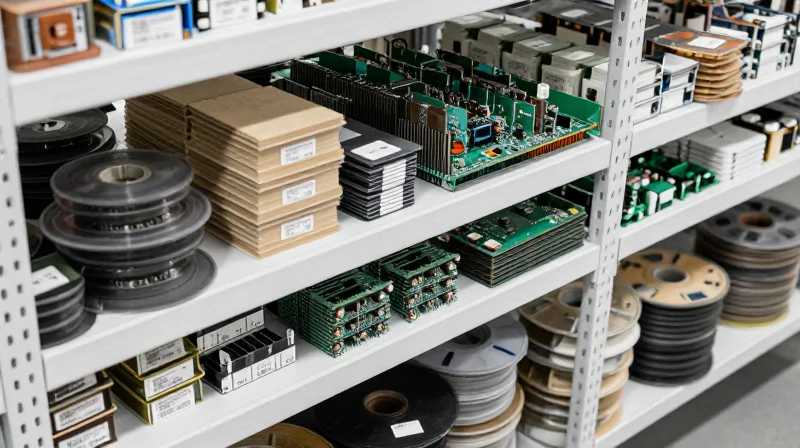
The Impact of Supply Chain Resilience on Small-Batch Production
In the world of smart lighting, sourcing authentic WiFi modules during market volatility can be the difference between a successful launch and indefinite project delays. Small-batch projects often lack the buying power of enterprise-scale manufacturing, making them particularly vulnerable to component shortages and the prevalence of counterfeit parts in the secondary market. By partnering with a PCBA manufacturer that leverages established relationships with authorized distributors, you safeguard your production schedule against these unpredictable supply shocks.
Comparative Sourcing Strategies
| Sourcing Channel | Reliability | Price Stability | Lead Time Risk |
|---|---|---|---|
| Authorized Distributors | High | Stable | Low |
| Independent Brokers | Variable | Volatile | Moderate |
| Secondary Markets | Low | High | High |
Sourcing and Procurement FAQ
- How can I ensure my WiFi modules are authentic?
Always verify that your PCBA partner exclusively uses authorized distributors or direct factory channels. Avoid purchasing modules from non-vetted third-party marketplaces, which are prime sources for refurbished or counterfeit chips. - What role does bill of materials (BOM) management play?
An active BOM management strategy involves identifying dual-source component alternatives early in the design phase. This allows your manufacturer to switch to equivalent parts without requiring a redesign if the primary WiFi module faces an extended lead time. - Does small-batch production hinder supply chain priority?
While smaller volumes may have less leverage, partnering with a boutique PCBA shop that maintains buffer stocks of common components can mitigate this disadvantage and provide continuity for your project.
Scalability: From Prototype to Mass Production

The Scalability Challenge
Scaling a smart lighting product involves more than simply increasing unit volume; it requires a manufacturing partner that can optimize your Bill of Materials (BOM) and maintain strict quality control standards as output rises. Transitioning from a few hundred units to tens of thousands often exposes hidden bottlenecks in PCB layout, component lead times, and firmware flashing efficiency that were negligible during the prototype phase.
Key Differences: Prototype vs. Mass Production
| Feature | Prototype Phase | Mass Production Phase |
|---|---|---|
| Component Selection | Focus on availability/speed | Focus on cost/reliability/lifecycle |
| Testing Methodology | Manual spot-checking | Automated Optical/Functional Testing |
| Firmware Loading | One-by-one manual flashing | High-speed batch programming |
| Supply Chain | Distributor-based sourcing | Direct factory negotiation |
Ensuring Seamless Growth
To ensure your WiFi module PCBA project survives the jump to mass production, you must verify that your partner utilizes DFM (Design for Manufacturing) feedback early in the design cycle. Partners who offer scalable production lines, automated testing, and robust supply chain buffers prevent costly redesigns mid-lifecycle.
- Why is early DFM input critical?
Design for Manufacturing identifies issues like panelization, component spacing, and thermal dissipation early, ensuring the board can be manufactured at high speed without compromising WiFi signal integrity. - How does batch programming affect scalability?
Manual flashing for every module is a bottleneck. Reliable partners use bed-of-nails fixtures or high-speed programming stations that can process entire panels simultaneously, significantly reducing assembly time. - How do you mitigate component obsolescence?
A high-volume partner proactively monitors the lifecycle of your WiFi chips, offering drop-in alternatives or end-of-life notices long before supply runs dry.
Design for Manufacturing (DFM) Best Practices
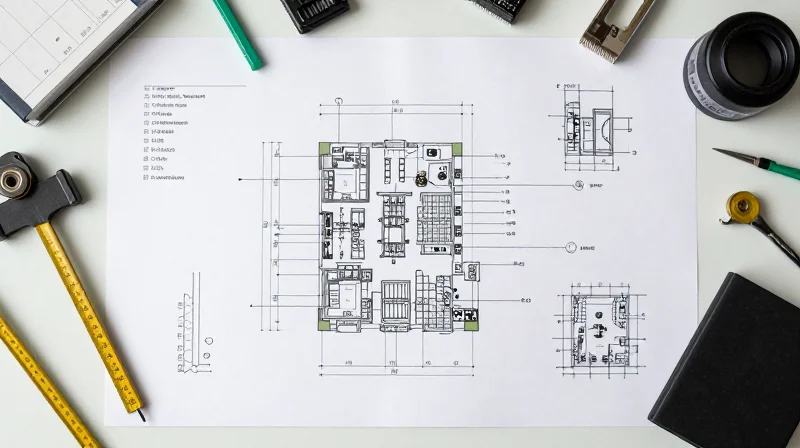
Strategic DFM: Optimizing WiFi Module PCBA Efficiency
DFM is not merely an optional review; it is the blueprint for cost-effective manufacturing. For smart lighting projects utilizing WiFi modules, DFM focuses on optimizing board layout for Automated Optical Inspection (AOI) and ensuring thermal dissipation standards are met to prevent component failure. By collaborating with an experienced PCBA partner during the early design phase, you can identify potential assembly risks before the first batch is even etched, saving significant capital on rework and redesigns.
Key DFM Considerations for Lighting Modules
| DFM Factor | Impact on Production | Recommended Strategy |
|---|---|---|
| Panelization | Increases throughput efficiency | Design for standard array sizes |
| Component Clearance | Reduces bridge/solder defects | Maintain 0.5mm minimum spacing |
| Thermal Vias | Prevents WiFi module overheating | Incorporate grid-patterned vias |
| Fiducial Marks | Improves pick-and-place accuracy | Use at least 3 marks per panel |
Frequently Asked Questions about DFM
- How does DFM affect my small-batch costs?
While it adds a small upfront engineering cost, DFM significantly lowers the total cost of ownership by eliminating expensive scrap rates and production delays caused by improper board design. - Why is antenna placement crucial in DFM?
WiFi modules require strict keep-out zones. DFM ensures that your copper pours and components do not interfere with the RF radiation pattern, which is critical for smart lighting connectivity. - Does my choice of WiFi module influence assembly?
Yes. Modules with castle-rated edges or BGA packages require specific soldering profiles. Your PCBA partner must be involved early to align their equipment capabilities with the module requirements.
Quality Assurance and Regulatory Compliance
Navigating Regulatory Compliance
Regulatory certification is not merely a formality; it is a legal requirement for market entry. For smart lighting products using WiFi, you must ensure that your PCBA partner prioritizes compliance with regional and international standards to avoid costly recalls or market bans.
| Certification | Region/Market | Significance |
|---|---|---|
| FCC | USA | Mandatory for radio frequency emissions. |
| CE | European Union | Confirms safety, health, and environmental compliance. |
| RoHS | Global | Restricts hazardous materials in electronics. |
| IC | Canada | Standards for radio apparatus compliance. |
Essential Testing Protocols
Reliability in smart lighting is defined by how well the hardware handles heat, electrical fluctuations, and continuous connectivity. Robust PCBA testing ensures that small-batch runs maintain the same performance integrity expected in full production.
- Functional Testing (FCT)
Validates that the WiFi module communicates correctly, firmware loads properly, and I/O pins function under load. - In-Circuit Testing (ICT)
Checks for manufacturing defects like shorts or opens, ensuring every component on the PCBA is correctly placed and soldered. - Thermal Stress Testing
Simulates extreme operating conditions to confirm that the PCBA maintains stable signal integrity without overheating.
Quality Control FAQ
- Does my PCBA need new certifications if I change the module brand?
Yes, changing the WiFi module often invalidates existing radio certifications, requiring a re-submission or a simplified 'class permissive change' filing. - How does RoHS affect component sourcing?
RoHS compliance mandates lead-free manufacturing; your partner must provide documentation proving every component, including solder paste, meets these environmental standards.
The Importance of Technical Support and Communication
Why Communication Dictates Project Success
The transition from a prototype to a functional smart lighting product is rarely linear. You will inevitably encounter firmware bugs, signal interference issues, or supply chain bottlenecks. Choosing a PCBA partner with dedicated engineering support means having a team that understands your specific RF layout requirements and can provide immediate feedback when design anomalies arise. A lack of transparent communication during the assembly phase often leads to costly board spins and missed market entry dates.
Comparing Support Tiers
| Support Feature | Basic Vendor | Premium Engineering Partner |
|---|---|---|
| Response Time | 24-48 Hours | Under 4 Hours |
| Technical Guidance | None (Assembly only) | RF Design & DFM Consulting |
| Problem Escalation | Ticketing System | Dedicated Account Manager |
| Documentation | Standard Datasheets | Custom API & Integration Support |
Critical Communication FAQ
- How do I verify the vendor's technical competence?
Ask for case studies regarding previous smart lighting projects and request access to their engineering team during the quoting process to evaluate their responsiveness. - What should be included in a support SLA?
A strong Service Level Agreement should define clear response times, escalation paths for technical blockers, and an agreed-upon method for bug tracking and reporting. - Why is local language support important?
Clear communication prevents misunderstandings regarding component sourcing and assembly specifications, which are critical for meeting regulatory compliance standards like FCC and CE.
Ultimately, your PCBA partner acts as an extension of your own engineering department. Prioritize vendors who value proactive communication over reactive service, as the speed at which they resolve hardware-level issues will directly dictate the stability of your smart lighting ecosystem.
Cost Management Without Compromising Quality

When sourcing small-batch WiFi module PCBAs, the lowest initial quote often conceals hidden expenses that can jeopardize project profitability. True cost management is achieved by evaluating the Total Cost of Ownership (TCO), where manufacturing yield, failure rates, and long-term support are calculated as integral parts of the per-unit price.
Beyond the Unit Price: Calculating Real Cost
A common trap in smart lighting projects is selecting a supplier based solely on component costs. When dealing with small batches, the costs associated with quality control failures—such as troubleshooting, shipping returns, and brand damage—frequently exceed the savings gained from cheaper components. To maintain quality, you must shift your focus toward reliable components and verified manufacturing workflows.
| Cost Factor | Short-Term Approach | TCO Strategic Approach |
|---|---|---|
| Components | Lowest quote generic parts | Tier-1 WiFi module brands with SDK support |
| Testing | Visual inspection only | Automated Optical Inspection (AOI) & Functional Test |
| Rework | High manual intervention | High first-pass yield (FPY) focus |
| Logistics | Bulk shipping | Pre-certified inventory management |
Frequently Asked Questions
- How does First-Pass Yield (FPY) impact overall budget?
A high FPY means fewer boards require rework or disposal. In small batches, every discarded board significantly increases the per-unit cost; investing in a partner with robust DFM practices initially saves money by eliminating rework expenses. - Should I source my own WiFi modules to save money?
While you may find cheaper module pricing, procurement risks such as counterfeit parts or lead-time fluctuations can stall production. A reputable PCBA partner provides supply chain stability and quality guarantees that justify the slight markup on the bill of materials. - What testing protocols are non-negotiable?
For smart lighting, an In-Circuit Test (ICT) combined with a functional test for radio frequency (RF) performance is essential. Neglecting these to save pennies can result in widespread connectivity issues in the field, leading to costly product recalls.
Vetting Your Potential PCBA Partner
When transitioning from prototyping to small-batch production, the reliability of your PCBA partner becomes the primary determinant of your smart lighting project's market success. A partner must do more than just populate boards; they must be an extension of your engineering team, capable of navigating the nuances of WiFi module placement, signal integrity, and surface-mount technology (SMT) precision.
Critical Vetting Checklist
- RF Experience
Ask for case studies regarding WiFi, Bluetooth, or Zigbee modules. Improper handling of sensitive RF modules during assembly can lead to signal degradation and range issues. - Small-Batch Scalability
Confirm they have dedicated lines or processes for low-volume runs. Some high-volume houses prioritize large orders, leading to extended lead times for smaller lighting projects. - Quality Management Systems (QMS)
Verify ISO 9001 certification. This ensures they have documented procedures for incoming material inspection, board assembly, and final functional testing. - Traceability Protocols
Inquire how they track components. If a WiFi module batch is defective, can they isolate which specific boards in your production run are affected?
Comparing Manufacturer Capabilities
| Evaluation Metric | Standard PCBA Shop | Specialized Smart-IoT Partner |
|---|---|---|
| RF/WiFi Module Handling | Basic assembly, no tuning | Shielding, interference testing |
| Small-Batch Flexibility | High minimum order quantity | Agile, low-volume ready |
| Functional Testing | Visual inspection only | Automated Test Equipment (ATE) |
Questions for the Facility Visit
If possible, conduct a virtual or physical facility audit. Use these targeted questions to peel back the layers of their operational competence:
- How do you handle moisture-sensitive devices (MSD)?
WiFi modules are often classified as MSL 3 or higher; ensure they have proper baking and vacuum-sealing protocols to prevent internal delamination during reflow. - What is your re-work policy?
Transparent partners will share their rework standards and specify when they escalate failures back to the engineering team rather than attempting manual fixes. - Can you provide a DFM (Design for Manufacturing) review?
A good partner will suggest improvements to your layout—such as component clearance or pad size optimization—before you commit to a batch.
Choosing the right PCBA partner for your smart lighting venture is a strategic decision that influences product performance and brand reputation. By prioritizing technical reliability, supply chain stability, and open communication, you can mitigate risk and accelerate your time-to-market. Ready to find the perfect manufacturing partner for your next lighting project? Contact our engineering team today for a comprehensive consultation.
