
In the hyper-competitive smart home market, a failure in your smart plug's PCB assembly doesn't just mean a product return—it represents a serious safety hazard and a catastrophic hit to your brand reputation. Selecting the right PCBA partner is the most critical decision in your hardware lifecycle. This guide cuts through the noise to provide an expert-level framework for vetting manufacturers who can guarantee safety, consistency, and compliance.
Understanding the Role of PCBA in Smart Home Safety
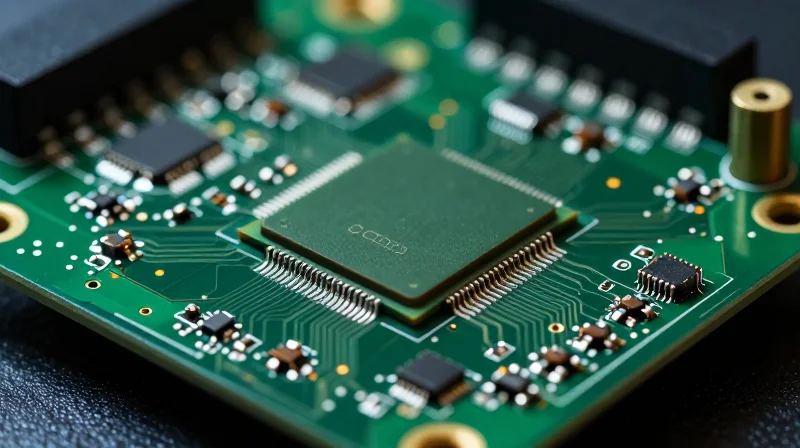
The Critical Role of PCBA in High-Voltage Environments
In a smart plug, the PCBA is not merely a controller; it is a power distribution component handling high-voltage alternating current (AC). It manages the relay switching, surge protection, and wireless communication modules. Because these devices are often left plugged in indefinitely, the PCBA must endure constant thermal stress and potential power fluctuations. If the design or assembly quality is subpar, the PCBA becomes a significant fire risk, potentially causing catastrophic failures under sustained load.
Manufacturing Deficiencies and Risk Mitigation
Quality assurance during the PCBA manufacturing process is the only barrier between a functional device and a safety hazard. Common defects such as cold solder joints, insufficient creepage distance, or poor component layout can lead to arcing, overheating, and short circuits.
| Common Defect | Potential Safety Impact | Risk Level |
|---|---|---|
| Cold Solder Joint | Intermittent contact leading to arcing and localized heat buildup. | High |
| Poor Creepage/Clearance | Electrical discharge between tracks, leading to short circuits. | Critical |
| Substandard Relay Selection | Inability to handle rated current causing contact fusion or fire. | High |
Frequently Asked Questions
- Why does solder quality matter so much in smart plugs?
Solder joints provide both mechanical stability and electrical conductivity. In high-voltage devices, weak joints under heat cycles can crack, leading to high-resistance points that generate dangerous levels of heat. - How does PCBA layout affect fire safety?
Proper layout ensures adequate isolation between high-voltage paths and low-voltage control circuits. Inadequate spacing significantly increases the risk of dielectric breakdown, which can cause internal sparks.
Navigating Regulatory Compliance: UL, ETL, and Beyond
For smart plug manufacturers, regulatory compliance is more than a legal requirement; it is a fundamental baseline for product safety. Smart plugs operate under high-voltage conditions, making them subject to rigorous scrutiny by regulatory bodies. A reliable PCBA partner must possess not only the certifications themselves but also the technical maturity to navigate the complex compliance lifecycle from prototype testing to mass production audits.
Key Global Safety Certifications
| Certification | Target Market | Primary Focus |
|---|---|---|
| UL (Underwriters Laboratories) | North America | Component safety and fire resistance |
| ETL (Intertek) | North America | Product safety testing and compliance |
| CE (Conformité Européenne) | European Union | Health, safety, and environmental standards |
| RoHS | Global | Restriction of hazardous substances |
The Importance of Certified Manufacturing Partnerships
Selecting a manufacturer that is already ISO 9001 certified provides a foundation for quality management, but it is insufficient for electrical products alone. Your PCBA provider must demonstrate proficiency in maintaining the integrity of certified designs. A minor change in component sourcing or layout during production can void these certifications, leading to massive recalls or legal liability.
Frequently Asked Questions on Compliance
- Can a manufacturer use generic, uncertified components to save costs?
No. Critical components like capacitors, relays, and transformers must be pre-certified by bodies like UL or VDE. Using uncertified components forces your finished product to fail certification audits immediately. - Does having an ISO 9001 factory mean my product is UL compliant?
Not necessarily. ISO 9001 covers general manufacturing processes, whereas UL compliance pertains to specific hardware design and safety testing. You need a partner with specific experience in passing the UL inspection factory audits. - What happens if a manufacturer changes the PCB material without notice?
Changing the PCB substrate or copper thickness can alter heat dissipation profiles, potentially causing the device to fail thermal safety tests required for certification renewal.
Evaluating Supply Chain Transparency and Component Sourcing
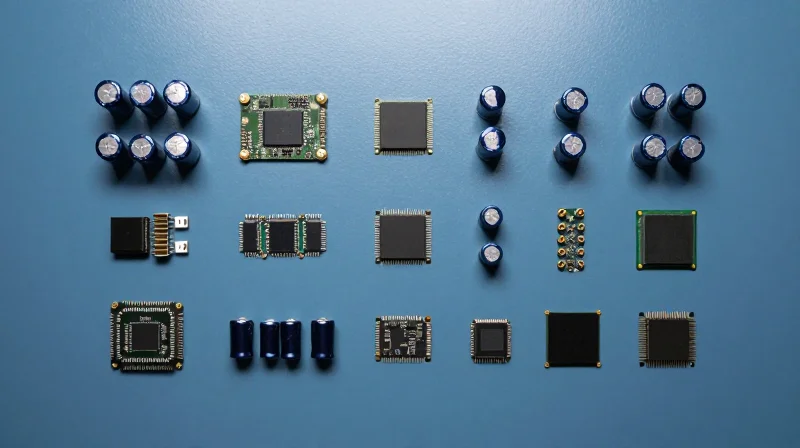
Verifying Component Authenticity
The integration of counterfeit components, particularly in high-voltage smart plugs, represents an existential risk to both end-user safety and your brand reputation. To mitigate this, you must demand full traceability from your PCBA manufacturer. Reliable partners maintain documented relationships with authorized distributors, ensuring that every integrated circuit, relay, and capacitor originates from reputable, verified channels rather than open-market brokers.
Traceability Standards and Risks
| Component Source | Risk Level | Verification Method |
|---|---|---|
| Authorized Distributor | Low | Certificate of Conformance (CoC) |
| Original Component Manufacturer | Negligible | Direct Account Verification |
| Independent Broker | Critical | Third-party X-ray and destructive analysis |
Operational Audits and Supply Chain Transparency
Transparency extends beyond the receipt of materials; it requires visibility into the manufacturer's internal storage and handling protocols. Humidity-sensitive devices (MSD) must be managed according to strict industry standards to prevent degradation before they are even soldered onto the board. Require your partner to provide an Approved Vendor List (AVL) and audit their procedures for checking incoming parts against known counterfeit databases.
- What is an Approved Vendor List (AVL)?
An AVL is a formal document listing all suppliers authorized by the manufacturer to provide critical components; it is essential for controlling the quality and consistency of raw materials. - How do I spot counterfeit parts in a prototype?
Look for inconsistent marking, signs of remarking (scratches or uneven surfaces on chips), or deviations in the electrical performance of passive components compared to the original datasheet. - Are independent testing labs necessary?
For high-stakes smart plug production, engaging an independent laboratory to perform destructive testing on random samples from every batch is a vital secondary verification layer.
Production Scalability: From Prototype to Mass Production

Transitioning from Prototype to Full-Scale Production
Scaling a smart plug PCBA design requires more than just increased volume; it demands a transition from manual or semi-automated assembly to high-speed surface mount technology (SMT) lines. A reliable manufacturer must demonstrate robust process control systems that prevent defects as cycle times shrink and throughput increases.
Key Indicators of Scalable Manufacturing Capability
| Capability Metric | Prototype/Low-Volume Expectation | Mass Production Requirement |
|---|---|---|
| Automated Optical Inspection | Manual or Basic Automated | Full In-line AOI with AI-based classification |
| Process Documentation | Ad-hoc Engineering notes | Standardized Process Control Plans (PCP) |
| Component Traceability | Batch-level tracking | Serialized board-level traceability |
| Capacity Planning | Flexible, responsive scheduling | Predictable lead times with buffer stock |
Frequently Asked Questions on Scalability
- How do I know if my manufacturer can handle a 10x volume increase?
Request a capacity audit report, including equipment utilization rates and their documented plan for multi-shift scaling. A reliable partner will proactively share their investment roadmap for new SMT lines. - Does scaling affect the defect rate?
Ideally, no. Increased volume often leads to better process stability, provided the manufacturer utilizes automated systems like In-Circuit Testing (ICT) and Flying Probe Testing to maintain consistent quality benchmarks. - What should I look for in their engineering support?
Look for a dedicated 'New Product Introduction' (NPI) team that transitions projects to the mass production team through formal documentation, ensuring the design-for-manufacturing (DFM) rules are never compromised.
The Importance of Advanced Testing Protocols

For smart home devices, which remain connected to high-voltage AC power indefinitely, quality assurance cannot rely on visual inspection alone. A reliable manufacturer must implement a multi-layered testing strategy that identifies both latent manufacturing defects and long-term reliability issues before the product leaves the factory floor.
Essential Testing Methodologies
- In-Circuit Testing (ICT)
ICT checks for opens, shorts, and correct component values. It is essential for verifying that every component on the PCBA is placed correctly and is within specified electrical tolerances. - Functional Testing (FCT)
FCT simulates the operating environment of the smart plug. It confirms the PCBA's firmware, communication protocols, and relay switching functions under load, ensuring the final product behaves as expected in a real-world home. - Automated X-Ray Inspection (AXI)
Since smart plugs use high-density surface mount technology, AXI is vital for inspecting solder joints under BGA chips or hidden pads where traditional optical systems cannot reach, preventing internal short circuits.
Comparative Analysis of Testing Coverage
| Testing Type | Primary Objective | Best Used For |
|---|---|---|
| ICT | Component Integrity | Rapid detection of assembly defects |
| FCT | Operational Logic | Validating firmware and connectivity |
| AXI | Structural Precision | High-density components and BGA joints |
Frequently Asked Questions Regarding PCBA Testing
- Why is FCT mandatory for smart plugs?
Because smart plugs rely on relay control and Wi-Fi/Bluetooth firmware, FCT ensures that the software-hardware handshake is perfect, preventing connection drops or power failure during use. - Does ICT make AXI obsolete?
No; they serve different purposes. ICT detects electrical faults, while AXI detects physical structural defects in solder joints that might pass electrical tests initially but fail due to thermal cycling later.
Communication and Quality Management Systems (QMS)
The Role of ISO 9001 and Beyond
A reliable PCBA manufacturer does not merely claim quality; they formalize it through standardized frameworks. ISO 9001 certification is the absolute baseline, indicating that the manufacturer has established documented processes, continuous improvement cycles, and standardized operational procedures (SOPs). For smart plug production, look for additional certifications like IATF 16949 or ISO 13485, which demonstrate a higher tier of process rigor that translates directly into product reliability.
Communication Structures and Transparency
Communication gaps are the primary cause of assembly errors and shipment delays. A professional partner provides a dedicated project manager (PM) who serves as a single point of contact. Furthermore, real-time access to production dashboards—or at minimum, weekly progress reports including defect rate trends and material status—is essential for mitigating risks in smart plug assembly.
| Feature | Reactive Manufacturer | Proactive Partner |
|---|---|---|
| Communication | Email-based, slow updates | Dedicated PM, real-time portal |
| QMS Oversight | Occasional spot checks | Rigorous internal audits & ISO compliance |
| Issue Resolution | Troubleshooting after failure | Preventative analysis & FMEA logs |
FAQs on QMS and Manufacturer Relations
- Why is ISO 9001 certification non-negotiable?
It guarantees that the manufacturer follows a globally recognized methodology for document control, management review, and corrective actions, reducing the likelihood of systemic manufacturing flaws. - What should I look for in a quality report?
A high-quality report should include First Pass Yield (FPY) metrics, details on any components salvaged or replaced, and objective evidence from automated optical inspection (AOI) logs. - How does early communication prevent production delays?
Proactive dialogue regarding DFM (Design for Manufacturing) feedback allows the manufacturer to flag potential assembly bottlenecks before they manifest, saving weeks of rework time.
Conducting an Effective Manufacturer Site Audit
The Anatomy of a Successful Site Audit
Whether conducted physically or via a comprehensive virtual walkthrough, a site audit must transcend surface-level observation. It requires a systematic investigation into the manufacturer’s 'hidden' operational metrics, focusing on traceability, environment control, and the seamless integration of their QMS with the actual assembly line floor.
Audit Checklist: Key Verification Areas
- ESD and Environmental Controls
Check for mandatory wrist straps, grounded flooring, anti-static smocks, and ambient humidity/temperature monitoring. Failure here risks latent PCBA defects. - Component Traceability
Ask to see the batch tracking system. Can they trace a specific smart plug back to the reel of capacitors used, including the date of manufacture and moisture sensitivity level (MSL) compliance? - Calibration Schedules
Inspect the calibration stickers on SMT pick-and-place machines, reflow ovens, and AOI systems. Ensure they are current and maintained by certified third-party entities. - Work Instruction Accessibility
Verify that visual aids and assembly instructions are posted directly at each workstation in the native language of the operators.
Physical vs. Virtual Audit Comparison
| Audit Type | Key Advantage | Primary Limitation |
|---|---|---|
| Physical Audit | Ability to touch equipment and inspect undocumented workspace cleanliness. | High logistical cost and travel time. |
| Virtual Audit | Rapid, recurring scheduling and real-time remote access to systems. | Reliance on the transparency of the camera-wielding host. |
Probing for Quality Culture
During your tour, look for the 'stop-work' attitude. If a defect is identified during a random sampling, observe how the line supervisor reacts. A reliable manufacturer will immediately halt the line, quarantine the batch, and initiate a root-cause analysis (RCA). If the operator is discouraged from flagging errors, you have identified a significant risk to your product quality.
Risk Mitigation Strategies for Hardware Founders

Strategic Risk Mitigation Framework
Hardware founders must treat PCBA manufacturing not merely as an outsourcing task, but as a long-term risk management operation. By addressing potential points of failure—specifically IP theft, component shortages, and quality drift—you can maintain stable production cycles.
| Risk Factor | Primary Mitigation Strategy | Owner |
|---|---|---|
| IP Theft/Leakage | NDAs & Restricted Gerber Access | Founder/Legal |
| Component Shortages | Multi-source BOM Strategy | Procurement |
| Quality Drift | Pre-shipment Inspection (PSI) | Quality Assurance |
| Production Delays | Buffer Stock & Lead Time Monitoring | Supply Chain Ops |
Managing Production and IP Risks
- How do I secure my IP during PCBA fabrication?
Never provide the complete BOM or full PCB source files to multiple factories simultaneously. Segment your design; provide only the necessary files for assembly to the CM, while keeping proprietary firmware or final assembly instructions in-house. - What is the best way to avoid material shortages?
Develop an Approved Vendor List (AVL) that features at least two alternatives for every critical component (MCUs, power ICs). Ensure your CM validates these alternatives against your performance specs before production starts. - How can I prevent unexpected quality defects?
Implement a 'Golden Sample' policy where a verified reference unit is sent to the factory. All mass production units must be compared against this benchmark during the FCT (Functional Testing) stage.
Proactive Quality Control Measures
Avoid relying solely on the manufacturer’s self-reported quality data. Employ an independent third-party inspection agency to perform on-site audits at key milestones: First Article Inspection (FAI), during-production inspection, and final AQL (Acceptable Quality Limit) sampling. By formalizing these checkpoints in your service-level agreement, you shift the burden of quality compliance onto the manufacturer, ensuring they remain accountable for every batch produced.
Selecting a PCBA partner is a long-term commitment that directly dictates the reliability of your smart home ecosystem. By prioritizing safety certifications, supply chain integrity, and technical scalability, you protect both your users and your market standing. Ready to build a product that stands the test of time? Contact our engineering team today for a comprehensive audit of your hardware manufacturing strategy.
