
In the high-stakes world of modern manufacturing, a CNC machine is only as precise as the electronics driving it. Choosing the wrong control board doesn't just result in failed parts—it triggers costly downtime and production bottlenecks. This guide empowers engineers and procurement managers to navigate the technical criteria necessary to select a board built for industrial-grade performance.
The Anatomy of a High-Precision CNC Control Board
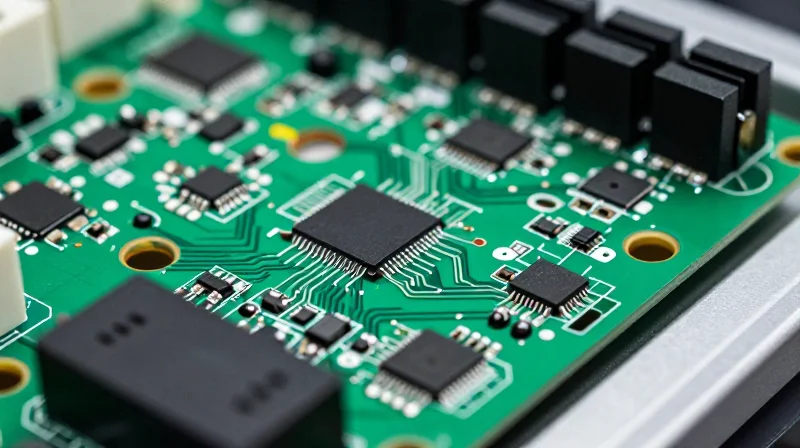
The Architecture of Industrial CNC Controllers
A high-precision CNC control board acts as the central nervous system of an automated machine, bridging the gap between digital G-code instructions and mechanical motion. Unlike standard embedded systems, these PCBAs are designed to handle high-frequency interrupt processing, real-time deterministic feedback, and rigorous electromagnetic compatibility (EMC) standards. The core architecture relies on high-speed motion control processors, specialized FPGA-based pulse generation, and robust galvanic isolation to ensure accuracy in the presence of industrial noise.
Comparative Hardware Specifications
| Feature | Consumer-Grade PCBA | High-Precision Industrial PCBA |
|---|---|---|
| Processing Determinism | Best effort (Latency spikes) | Strict Real-time (Jitter < 1µs) |
| Electromagnetic Immunity | Basic filtering | Heavy duty galvanic isolation & shielding |
| Pulse Frequency | Low to Medium | High (> 4MHz for precision stepping) |
| Component Grade | Commercial (0°C to 70°C) | Industrial (-40°C to 85°C) |
Critical Components for Precision Performance
- FPGA/DSP Integration
These components handle high-speed pulse width modulation (PWM) and trajectory planning without burdening the main CPU, allowing for sub-micron positioning accuracy. - Galvanic Isolation
Critical for protecting sensitive logic from high-voltage spikes generated by motors, spindle drives, and variable frequency drives (VFDs). - Precision Clocking
High-stability oscillators are required to maintain timing synchronization across multiple axes, preventing drift during long-cycle CNC operations.
For engineers selecting components for industrial automation, prioritizing boards that feature multi-layer PCB designs with dedicated ground planes is paramount. This configuration mitigates crosstalk and signal degradation, which are the primary culprits behind micro-jitters and lost steps in high-precision milling or laser cutting applications.
Prioritizing Signal Integrity in Electrically Noisy Environments
Mitigating Electromagnetic Interference in Industrial Environments
In industrial automation, high-precision CNC control boards are subjected to intense electromagnetic interference (EMI) and radio frequency interference (RFI) generated by high-power motors, VFDs, and switching power supplies. Maintaining signal integrity requires more than basic grounding; it necessitates a sophisticated board architecture designed to isolate low-voltage logic paths from high-power transient noise.
Strategic PCB Design Techniques
- Differential Signaling
Utilize LVDS or RS-422 for communication lines between the controller and servos to leverage common-mode rejection, effectively canceling out noise coupled onto the lines. - Ground Plane Segmentation
Implement strict separation between analog ground and digital ground planes to prevent return current noise from contaminating sensitive sensor feedback loops. - Layer Stack-up Optimization
Use multi-layer PCBs with internal ground planes that act as shields, placing high-speed signal traces on internal layers between ground planes to minimize radiation.
Comparison of Noise Mitigation Strategies
| Strategy | Primary Function | Complexity |
|---|---|---|
| Differential Signaling | Common-mode noise rejection | Low |
| Optical Isolation | Electrical decoupling of I/O | Medium |
| Shielded Impedance-Matched Traces | Reduction of crosstalk and EMI radiation | High |
Best Practices for Servo Motor Communication
The communication link between the controller and servo drives is the most vulnerable point for jitter and data loss. Selecting a board that supports hardware-level filtering and robust physical layer interfaces is non-negotiable for sub-micron accuracy.
// Recommended hardware filtering configuration for encoder inputs
void setup_encoder_filters() {
  // Enable low-pass RC filtering on differential inputs
  configure_hw_filter(ENCODER_PORT_A, 50 /* ns */);
  configure_hw_filter(ENCODER_PORT_B, 50 /* ns */);
  set_hysteresis(SCHMITT_TRIGGER_ENABLED);
}
Thermal Management and Environmental Resilience
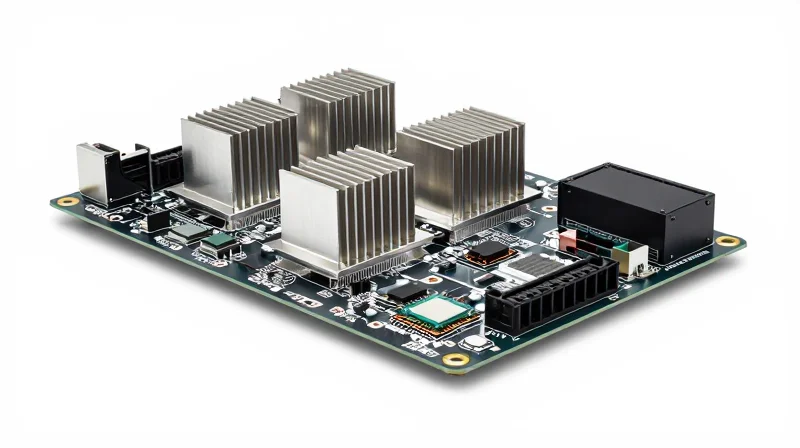
Optimizing Thermal Dissipation for High-Precision Components
CNC control boards often integrate high-frequency processors and power management ICs that generate significant localized heat. Without optimized thermal paths, this heat induces physical stress, accelerates component aging, and compromises the timing accuracy of crystal oscillators, leading to drift in CNC machining precision.
| Thermal Strategy | Mechanism | Ideal Application |
|---|---|---|
| Copper Pours/Vias | Conducts heat into inner board layers | High-density integrated circuits |
| Active Heat Sinks | Increases convective surface area | High-performance CPUs/FPGAs |
| Thermal Interface Materials | Eliminates air gaps for heat transfer | Power MOSFETs and drivers |
Environmental Resilience and Contaminant Protection
Shop floors are hostile environments characterized by conductive metal dust, oil mists, and high humidity. To ensure reliability, select PCBAs featuring rigorous conformal coating—such as acrylic or silicone-based materials—which prevents surface leakage currents and short-circuiting between high-density pads. Furthermore, board design should incorporate IP-rated enclosure integration paths to ensure the controller remains isolated from aggressive aerosols.
Thermal and Environmental FAQ
- Does conformal coating affect signal integrity?
When applied correctly by the manufacturer, high-quality dielectric conformal coatings have negligible impact on low-to-medium frequency signals, though they should be considered in extremely high-frequency RF transmission traces. - What is the primary risk of heat-induced drift?
Heat causes the clock reference crystal to fluctuate. Since CNC motion control relies on nanosecond timing synchronization, thermal drift directly translates into spatial inaccuracies in the machined part. - Are active cooling fans recommended for CNC boards?
Active fans are points of mechanical failure and can pull debris into the enclosure. Passive cooling using optimized heat sinks and heat-conductive chassis mounting is preferred for maximum reliability.
Evaluating Hardware Reliability and Component Lifecycle
The Economics of Reliability: MTBF and Component Selection
In high-precision industrial automation, the Mean Time Between Failures (MTBF) is the primary metric for assessing PCBA reliability. Selecting components—such as industrial-grade capacitors, hardened microcontrollers, and low-drift voltage regulators—that exceed standard operating temperature ranges is non-negotiable. Using 'consumer-grade' parts in a CNC environment often leads to premature component degradation due to the combined stress of high-frequency switching, vibrations, and constant thermal cycling.
Managing Component Lifecycle and Obsolescence
A CNC machine designed for a ten-year lifespan cannot rely on parts that reach End-of-Life (EOL) within three years. Engineers must verify the 'Product Longevity Program' status of all critical semiconductors. Partnering with suppliers who guarantee 10-15 year availability ensures that if a control board fails in the field, spare parts can be sourced without necessitating a costly system redesign.
| Parameter | Industrial Standard | Commercial Standard |
|---|---|---|
| Operating Temp | -40°C to +85°C | 0°C to +70°C |
| MTBF Expectation | High (>100,000 hrs) | Low (<25,000 hrs) |
| Lifecycle Support | 10+ Years | 1-3 Years |
Reliability Planning FAQ
- Why is MTBF critical for CNC PCBAs?
CNC systems are often mission-critical; a single component failure on a control board can halt entire production lines, making high MTBF essential for reducing costly downtime. - How do I mitigate EOL risks during the design phase?
Choose components from manufacturers that offer a long-term availability commitment and avoid 'bleeding-edge' silicon that may have short production cycles. - What role do passive components play in reliability?
Passives like electrolytic capacitors are common points of failure; using tantalum or high-grade solid polymer alternatives significantly extends the overall board lifespan.
Connectivity Standards: Fieldbus and Communication Protocols
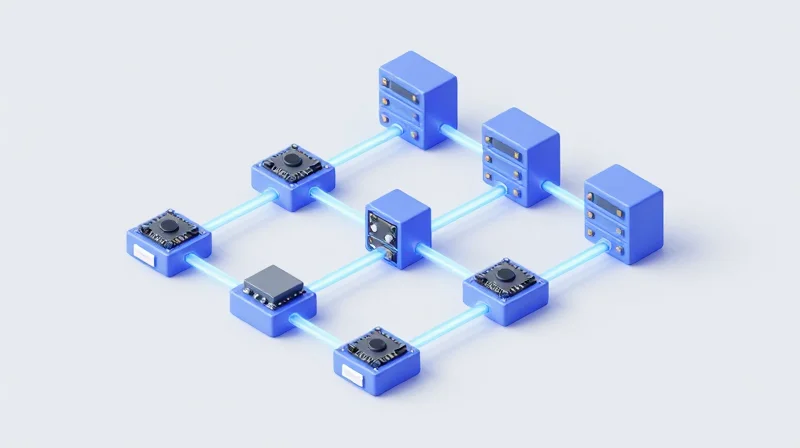
The Role of Protocol Selection in CNC Performance
Communication protocols serve as the nervous system of a CNC machine, bridging the PCBA controller with sensors, drives, and peripheral automation equipment. High-precision machining requires deterministic data transmission—where packets arrive at strictly defined time intervals—to prevent jitters in motor positioning. Selecting a protocol involves balancing the need for ultra-fast cycle times against the complexity of hardware implementation and the existing infrastructure of the factory floor.
| Protocol | Performance | Best Use Case | Complexity |
|---|---|---|---|
| EtherCAT | Ultra-High Speed | Real-time motion control | High |
| Modbus TCP | Moderate | HMI/PLC data exchange | Low |
| CANopen | Fast | Distributed I/O systems | Medium |
| PROFINET | High | Factory-wide integration | High |
Key Considerations for Protocol Integration
- Determinism Requirements
For high-precision multi-axis interpolation, choose protocols like EtherCAT that offer hardware-level synchronization, ensuring microsecond-level accuracy between drives. - Bandwidth and Latency
Evaluate the control board's processing overhead; some protocols require dedicated FPGA logic to handle high packet rates without starving the main processor. - Physical Layer Compatibility
Ensure the PCBA supports the appropriate physical interface, such as RJ45 for Ethernet-based protocols or D-sub connectors for CAN-based systems, while maintaining EMI immunity. - Interoperability
Consider whether the control board must act as a 'Master' or 'Slave' in the ecosystem and verify compatibility with existing third-party servo drives and PLCs.
Future-proofing your CNC control PCBA requires evaluating not just current needs, but the scalability of the communication stack. Moving toward Industrial Ethernet standards like EtherCAT provides a clear path for integrating advanced Industry 4.0 features, such as predictive maintenance and cloud-based diagnostics, which are increasingly difficult to manage on legacy fieldbus systems.
Processing Power and Motion Control Algorithms
The processing core of a CNC control board serves as the brain of the industrial machine. For high-precision applications, the selection of the PCBA is not merely about clock speed, but about the deterministic execution of complex motion control algorithms, such as multi-axis interpolation, look-ahead path planning, and dynamic jerk control, which collectively eliminate mechanical vibration and ensure superior surface finish.
The Role of Processing Architecture
Modern high-precision CNC controllers often utilize a dual-architecture approach. A primary General-Purpose Processor (GPP) manages communication, UI, and system logic, while a dedicated Motion Control Engine—typically implemented via FPGA (Field Programmable Gate Array) or high-performance DSP (Digital Signal Processor)—handles the real-time feedback loops. This separation prevents task jitter, ensuring that step pulse generation or fieldbus command cycles remain constant even under high computational loads.
Essential Motion Control Features
| Feature | Function | Benefit to Precision |
|---|---|---|
| Look-Ahead Buffer | Pre-calculates path vectors | Prevents deceleration at corners |
| S-Curve Accel/Decel | Smoothing velocity transitions | Reduces mechanical resonance |
| Dynamic Interpolation | Real-time coordinate pathing | Maintains tight positional accuracy |
Implementation Considerations
- Why is FPGA preferred over pure software control?
FPGAs provide hardware-level parallelism, allowing for microsecond-scale latency in motion loop updates, which is critical for high-speed machining where even millisecond delays lead to path errors. - How does path look-ahead improve surface finish?
Look-ahead allows the controller to anticipate path changes and adjust velocity profiles accordingly, eliminating 'dwell' marks at path discontinuities and smoothing complex 3D contours. - Does memory bandwidth impact precision?
Yes, high-speed RAM and dedicated bus architectures are necessary to handle large G-code look-ahead buffers without stalling, which would otherwise result in inconsistent feed rates and tool chatter.
Scalability and Modular Expansion Capabilities
The Imperative of Scalable Architecture
Selecting a control board based solely on immediate production requirements is a critical oversight. A high-precision CNC PCBA must serve as a foundational platform capable of scaling from simple 3-axis operations to complex multi-axis configurations without requiring a total hardware overhaul. This necessitates a modular hardware design that supports field-upgradable I/O modules, allowing manufacturers to add axis control, specialized sensors, or automated tool changers as their capabilities grow.
Comparative Analysis of Expansion Strategies
| Expansion Strategy | Integration Complexity | Hardware Flexibility | Primary Benefit |
|---|---|---|---|
| Backplane Bus | High | Very High | Seamless modular hardware expansion. |
| Distributed I/O (EtherCAT) | Medium | Excellent | Minimal cabling; easy component additions. |
| Fixed Port Allocation | Low | Very Low | Lowest cost; no future scalability. |
Software-Defined Modularity
Hardware is only half the equation; the PCBA must support a robust firmware and software ecosystem. The ability to push OTA (over-the-air) updates or field-load specialized motion algorithms is essential for adapting to new materials or high-speed machining requirements. When evaluating boards, verify the presence of an abstracted hardware-software interface, which ensures that adding new physical modules does not necessitate rewriting the base machine control logic.
Frequently Asked Questions on Expansion
- How does bus architecture impact long-term scalability?
A high-speed backplane or decentralized fieldbus architecture allows for 'plug-and-play' expansion, preventing the system from becoming a bottleneck as the machine grows. - What should I look for in processor headroom for future modular growth?
Ensure the PCBA utilizes an FPGA or high-end multi-core ARM processor that maintains at least 30-40% idle resource capacity, providing the overhead needed for future, more intensive motion control algorithms. - Can I mix and match I/O modules from different manufacturers?
Standardized fieldbus protocols like EtherCAT facilitate vendor-agnostic I/O expansion, though you must ensure the master controller firmware supports the necessary device profiles.
Compliance, Certification, and Industry Standards
Essential Regulatory Compliance for Industrial PCBAs
When selecting high-precision CNC control boards, you must verify that the components conform to rigorous global standards. Compliance is not merely a formality; it acts as a guarantee of electrical safety, electromagnetic compatibility (EMC), and environmental responsibility.
| Standard | Significance for CNC PCBAs | Market Requirement |
|---|---|---|
| CE Marking | Mandatory health, safety, and environmental protection. | European Economic Area |
| RoHS | Restriction of Hazardous Substances in electronics. | Global Compliance |
| ISO 9001 | Quality management system consistency. | General Manufacturing |
| UL Certification | Component safety for electrical hardware. | North American Markets |
Why EMC Compliance Matters for CNC Performance
CNC environments are rife with electrical noise generated by high-power motors and VFDs. PCBAs that meet EMC standards (such as IEC 61000) are engineered to prevent signal degradation and maintain high-precision interpolation despite severe electromagnetic interference.
Frequently Asked Questions
- Is CE marking enough for global machine deployment?
While CE covers the EEA, you must also consider UL/CSA standards for North America and CCC for China to ensure your control hardware faces no regulatory hurdles. - How does ISO certification of the PCBA manufacturer affect the board quality?
An ISO 9001 certified facility ensures standardized manufacturing processes, reducing defects, improving batch-to-batch consistency, and providing traceable documentation. - Do I need specific certification for high-precision motion control?
Beyond electrical compliance, look for boards that comply with functional safety standards like IEC 61508 or ISO 13849, which are vital for safety-critical motion control operations.
Selecting a control board is a fundamental decision that dictates the lifespan and precision of your CNC investment. By prioritizing signal integrity, durability, and scalability, you ensure your production line remains a competitive advantage. Ready to optimize your CNC performance? Contact our engineering team today for a consultation on selecting the ideal control solution for your specific manufacturing requirements.
