
In the race to modernize the power grid, the weakest link in your smart meter deployment is often the printed circuit board. For utility-grade assets expected to perform in harsh, non-climate-controlled environments for over a decade, choosing the right manufacturing partner is not just a procurement decision—it is a critical risk management strategy. This guide outlines how to vet partners for the highest tier of reliability.
Understanding Utility-Grade Reliability Requirements
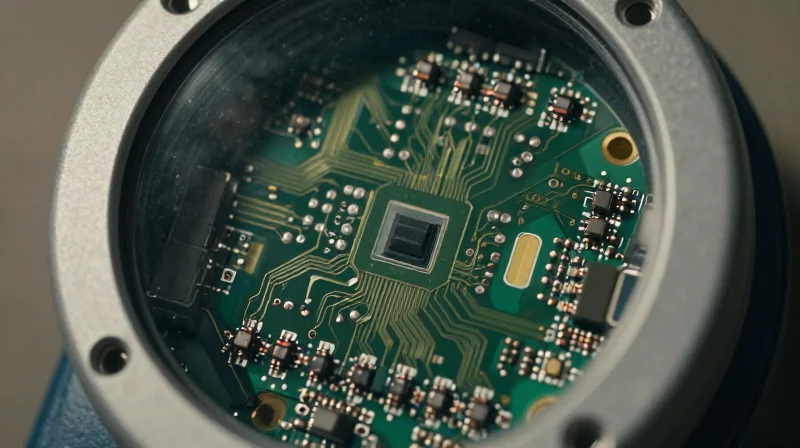
The Challenge of Twenty-Year Field Longevity
Unlike consumer electronics, smart grid electricity meters operate under stringent 'fit-and-forget' requirements. A manufacturer must guarantee board stability for 15 to 25 years. This necessitates a transition from standard FR-4 materials to high-Tg (glass transition temperature) laminates that resist delamination and conductive anodic filament (CAF) formation over prolonged exposure to atmospheric humidity and volatile temperature swings.
Comparative Material Selection for Utility Environments
| Requirement | Standard FR-4 | Utility-Grade High-Tg |
|---|---|---|
| Tg (Glass Transition) | 130-140°C | 170-180°C+ |
| Thermal Stability | Moderate | Excellent |
| CAF Resistance | Low | High |
| Service Life | 3-5 Years | 15-25 Years |
Key Reliability Considerations for Smart Grid PCBs
- How does moisture impact smart meter reliability?
Outdoor-mounted meters are prone to condensation. High-reliability PCBs must use conformal coating compatibility and non-hygroscopic base materials to prevent short circuits and electrochemical migration. - Why is thermal management critical?
Internal components generate heat, while external environments fluctuate. PCBs must feature robust thermal management, including optimized copper weights and thermal vias, to prevent structural degradation of solder joints. - What role does surface finish play?
ENIG or ENEPIG are preferred over HASL for utility applications to ensure superior solderability and resistance to surface corrosion over the multi-decade lifecycle.
Manufacturers failing to adhere to IPC Class 3 standards or failing to provide comprehensive process control documentation, such as cross-section analysis and ionic cleanliness testing, represent an unacceptable risk for critical smart grid infrastructure.
The Importance of Rigorous Quality Certifications

In the context of next-generation smart grid electricity meters, a PCB is not merely a component; it is a critical asset that must operate flawlessly for decades in harsh, uncontrolled environments. Quality certifications are the objective verification that a manufacturer possesses the systems, repeatability, and risk-mitigation protocols necessary to prevent field failures that could compromise grid stability or consumer trust.
Essential Certification Benchmarks
| Certification | Relevance to Smart Grid PCBs | Strategic Benefit |
|---|---|---|
| ISO 9001 | General Quality Management | Ensures consistent processes and documentation traceability. |
| IATF 16949 | Automotive Quality Standards | Mandates zero-defect strategies and robust failure analysis. |
| UL (Underwriters Laboratories) | Safety and Flammability | Confirms material integrity and resistance to electrical fires. |
Why IATF 16949 is the 'Gold Standard' for Utility Electronics
While ISO 9001 is a necessary baseline, high-reliability smart meter programs increasingly demand IATF 16949 compliance. Originally developed for the automotive industry, this standard enforces rigorous Advanced Product Quality Planning (APQP) and Failure Mode and Effects Analysis (FMEA). For utility providers, this means the manufacturer is trained to anticipate potential failure points during the design phase, significantly reducing the probability of catastrophic field failures in grid-connected devices.
Frequently Asked Questions
- Does ISO 9001 guarantee a reliable smart meter PCB?
No. ISO 9001 ensures a management system is in place, but it does not guarantee high-end technical process controls. It is a prerequisite, not a sufficient condition for mission-critical hardware. - Why is UL certification mandatory for smart grid components?
UL certifications verify that materials meet specific flammability and thermal endurance ratings, which are critical for equipment installed in diverse, often unmonitored, residential and commercial environments. - Should I require IATF 16949 from my PCB supplier?
If your project requires high-volume, long-lifespan reliability, choosing an IATF 16949 certified facility is a strong indicator that the supplier maintains the disciplined data tracking required to support the utility industry.
Evaluating Advanced Materials and Stackup Capabilities

The Role of High-Tg Laminates in Outdoor Reliability
Smart meter infrastructure faces extreme thermal cycling, ranging from freezing winter nights to blistering summer heat, often amplified by internal power dissipation. Manufacturers must specify high-Tg (Glass Transition Temperature) laminates, typically exceeding 170°C, to prevent Z-axis expansion and subsequent micro-via or barrel cracking. Failure to select substrates with low Coefficient of Thermal Expansion (CTE) directly compromises the solder joint integrity and inter-layer connectivity that define high-reliability hardware.
Comparative Analysis: Material Performance for Smart Grid Applications
| Material Property | Standard FR-4 | High-Tg/High-Reliability | Impact on Meter Longevity |
|---|---|---|---|
| Tg (Glass Transition) | 130°C - 140°C | 170°C - 180°C+ | Prevents delamination during temp spikes |
| CTE Z-Axis | Higher (>3.5%) | Lower (<2.5%) | Reduces stress on plated through-holes |
| CAF Resistance | Moderate | Superior | Prevents short-circuits in high-humidity |
Technical Considerations for Advanced Stackup Design
- Why is symmetrical stackup design essential?
A symmetrical construction prevents board warpage during the reflow process, ensuring that the finished assembly remains flat for precision mounting inside outdoor meter enclosures. - How does surface finish selection impact reliability?
For long-term reliability in utility environments, Electroless Nickel Immersion Gold (ENIG) or Immersion Silver are preferred over HASL to provide a flat, oxidation-resistant contact surface for high-density components. - What is the impact of CAF (Conductive Anodic Filament) formation?
In outdoor smart meters, moisture ingress can trigger electrochemical migration. High-reliability manufacturers use CAF-resistant resin systems to ensure the insulation resistance between copper features remains stable over years of operation.
Testing Protocols: Beyond Standard Visual Inspection
For smart grid electricity meters designed to operate for 15 to 20 years in uncontrolled outdoor environments, standard visual inspection is insufficient. Reliable manufacturers must implement a multi-layered testing strategy that combines structural validation with accelerated stress testing to detect latent defects that lead to field failures.
Advanced Structural Inspection Techniques
Structural integrity is the foundation of high-reliability electronics. Manufacturers should move beyond simple Automated Optical Inspection (AOI) to include processes that verify internal connection quality and sub-surface features.
| Testing Method | Primary Application | Reliability Insight |
|---|---|---|
| Flying Probe | Open/Short Verification | High flexibility for prototypes and complex mixed-signal boards. |
| X-Ray Inspection | BGA/Via Integrity | Detects hidden voids or misalignment in internal layers and dense components. |
| AOI | Surface Solder Joints | Rapid detection of missing, polarized, or tombstoned surface-mount components. |
Accelerated Environmental Stress Testing
To mimic decades of environmental wear in a few weeks, manufacturers must employ stress testing. Thermal cycling is arguably the most critical protocol, exposing the PCB to extreme temperature fluctuations to test the coefficient of thermal expansion (CTE) compatibility between components, solder, and board laminates.
- Why is thermal cycling critical for smart meters?
Smart meters experience significant diurnal temperature swings. Thermal cycling validates that solder joints won't develop fatigue cracks due to CTE mismatch over thousands of cycles. - How does X-ray inspection differ from AOI?
While AOI inspects external surface features, X-ray inspection is essential for seeing through opaque BGA packages to identify internal shorts or head-in-pillow soldering defects. - What should be expected in a testing report?
A high-reliability partner should provide automated reports detailing test coverage percentages, failure rates per batch, and specific corrective actions taken upon defect detection.
Ultimately, selecting a manufacturer involves auditing their failure analysis laboratory. The ability to perform cross-sectioning and micro-analysis when a unit fails in the field is a hallmark of a vendor capable of supporting long-term, utility-grade grid infrastructure.
Supply Chain Transparency and Traceability

The Imperative of End-to-End Traceability
In the context of smart grid electricity meters, which are expected to function reliably for over a decade in diverse outdoor environments, the integrity of every component is non-negotiable. High-reliability PCB manufacturers must move beyond simple batch tracking to a granular, component-level traceability model. This involves maintaining a digital thread that links every individual PCB back to its specific raw material lots, sub-components, and assembly personnel, effectively isolating risks should a field failure occur.
Mitigating Counterfeit Risks
Counterfeit electronic components pose a severe threat to grid security, potentially introducing hardware Trojans or components with substandard life spans. A reliable manufacturer must implement a strict 'Authorized Channel Only' procurement policy, supported by documented proof-of-origin for all high-risk items like ICs and capacitors. Auditors should verify the manufacturer's ability to provide a complete Certificate of Conformance (CoC) and original manufacturer documentation upon request.
| Feature | Basic Tracking | High-Reliability Traceability |
|---|---|---|
| Scope | Lot/Batch Level | Serialized/Component Level |
| Supplier Audit | Periodic/Generic | Documented Authorized Sources |
| Data Retention | 1-2 Years | 10+ Years (Life of Asset) |
| Response Time | Manual Search (Days) | Instant Digital Retrieval |
Frequently Asked Questions
- How long should traceability records be maintained for smart meters?
Given the 15-20 year service life of smart grid infrastructure, manufacturers should provide a long-term data retention policy that covers the entire expected lifespan of the meter deployment. - What is the role of blockchain in PCB supply chains?
Blockchain is increasingly used to create immutable records of provenance, ensuring that component data cannot be altered, which serves as a definitive defense against counterfeit injection. - Should I require a visit to the manufacturer's facility?
Yes, site audits are essential to verify that the manufacturer's internal software systems actually correlate physical PCBs with their digital traveler records, rather than just keeping paper logs.
Manufacturing Scalability and Lead Time Consistency
Assessing Scalability and Capacity Planning
For next-generation smart grid deployment, the ability to ramp from prototyping to mass production without deviation is critical. A manufacturer must demonstrate flexible production lines that accommodate rapid volume increases while maintaining identical process parameters. Evaluate the partner’s capacity utilization, automated line redundancy, and their ability to pivot between regional production hubs to mitigate potential bottlenecks in supply chains.
Ensuring Lead Time Consistency
Reliable lead times are not just about scheduling; they are a byproduct of mature manufacturing stability. Providers should offer transparent production scheduling, integrated material procurement, and localized inventory buffering to protect against market fluctuations.
| Capacity Metric | Scale Strategy | Risk Mitigation |
|---|---|---|
| Production Throughput | Automated assembly expansion | Multi-site manufacturing backup |
| Material Procurement | Vendor-Managed Inventory (VMI) | Long-lead component hedging |
| Quality Consistency | Standardized automated controls | Real-time SPC monitoring |
Frequently Asked Questions
- How do we verify if a manufacturer's scale-up process affects quality?
Demand a statistical process control (SPC) report that monitors critical parameters during a production ramp-up, ensuring that yield rates remain stable even as volume increases. - What indicators suggest a supplier might struggle with large-scale rollouts?
High dependence on manual labor for inspection, lack of redundant automated testing equipment, and an inability to provide a detailed, data-driven lead time forecast are major red flags. - Is localized production better for smart grid reliability?
Localized production often reduces lead time volatility and logistical risk, though the primary indicator of reliability is the manufacturer's ability to maintain a unified Quality Management System (QMS) across all global facilities.
Technical Support and Design for Manufacturing (DFM) Review
The Strategic Value of Proactive DFM
For next-generation smart meters, which require decade-long deployment lifecycles in harsh environmental conditions, the DFM process serves as the primary firewall against latent defects. A high-reliability PCB partner does not merely execute manufacturing; they act as an engineering extension that validates stack-up configurations, trace geometries, and component footprints before a single board is fabricated.
Key DFM Metrics for Smart Grid Reliability
| DFM Focus Area | Impact on Reliability | Risk if Ignored |
|---|---|---|
| Copper Weight/Thermal | Handles high-current surges | Trace delamination or melting |
| Solder Mask Dams | Prevents bridging on fine-pitch components | Intermittent short-circuit faults |
| Via-in-Pad Integrity | Ensures connectivity in high-density zones | Increased latent field failures |
Common DFM Consultation Queries
- How early should we involve the manufacturer?
Ideally, involve the manufacturer during the initial schematic and layout phase. Early input on stack-up and material selection (such as high-Tg FR-4) can significantly reduce redesign costs. - Does a DFM report cover assembly feasibility?
Yes, a robust DFM review includes Design for Assembly (DFA), identifying issues like poor component orientation, insufficient fiducials, or stencil thickness concerns that affect solder joint integrity. - How does DFM affect long-term maintenance?
By optimizing component placement and thermal management during the DFM phase, the manufacturer reduces heat concentration, directly increasing the Mean Time Between Failures (MTBF) of the metering unit.
Selecting a partner that provides a formal DFM feedback loop ensures that your design intent translates into a robust, manufacturable product. Engineers should prioritize manufacturers who provide detailed exception reports and suggest specific improvements rather than those who simply approve files without analysis.
Total Cost of Ownership vs. Unit Price
The Hidden Costs of Low-Cost PCB Procurement
While a lower unit price may appear advantageous during the initial procurement phase, it often masks significant liabilities in smart grid applications. High-reliability electricity meters are expected to operate for 15 to 20 years in uncontrolled environmental conditions. Choosing a manufacturer solely based on the lowest bid often leads to higher failure rates, which necessitate expensive manual field repairs, potential grid regulatory fines, and premature hardware decommissioning that far outweigh any initial savings.
TCO vs. Unit Price: Comparative Analysis
| Metric | Lowest Unit Price Approach | TCO Reliability Approach |
|---|---|---|
| Procurement Cost | Low | Moderate |
| Failure Rate | High | Minimal |
| Field Maintenance | Reactive & Costly | Proactive & Predictable |
| Lifecycle Longevity | 5-8 Years | 15-20+ Years |
| Reputational Risk | Significant | Negligible |
Strategic Reliability FAQ
- Why does field replacement cost more than the PCB itself?
Field replacement involves truck rolls, skilled labor costs, utility downtime, and logistical coordination, which can cost 10 to 50 times the price of the original board. - How do reliability-focused manufacturers save money long-term?
They implement rigorous DFM, use higher-grade substrates, and perform environmental stress screening, which drastically reduces the statistical probability of failure over the device's operational life. - Is a premium price always indicative of better quality?
Not necessarily; however, a manufacturer that provides detailed reliability reports, transparent material sourcing, and robust process controls is a better indicator of value than one simply offering a discount.
Ultimately, selecting a PCB manufacturer for smart grid infrastructure is an exercise in risk management. By shifting the focus from the bottom-line unit price to the long-term TCO, utility providers ensure stability and lower the lifetime cost of their meter fleet.
Selecting a PCB partner for smart grid infrastructure requires moving beyond simple price-per-unit metrics to prioritize long-term field survivability. By mandating rigorous certification, deep traceability, and comprehensive testing, you ensure your deployment remains resilient for years to come. Ready to secure your supply chain? Contact our engineering team today to discuss your next infrastructure project.
