
In the era of hyperscale data centers, the performance of your optical network hinges entirely on the quality of your transceiver PCBA. With signal speeds pushing beyond 800G, even the slightest manufacturing defect can result in catastrophic signal integrity failure. This guide provides a battle-tested framework for procurement leaders to vet and select manufacturing partners that prioritize precision, compliance, and thermal engineering.
The Impact of PCBA Quality on High-Speed Signal Integrity
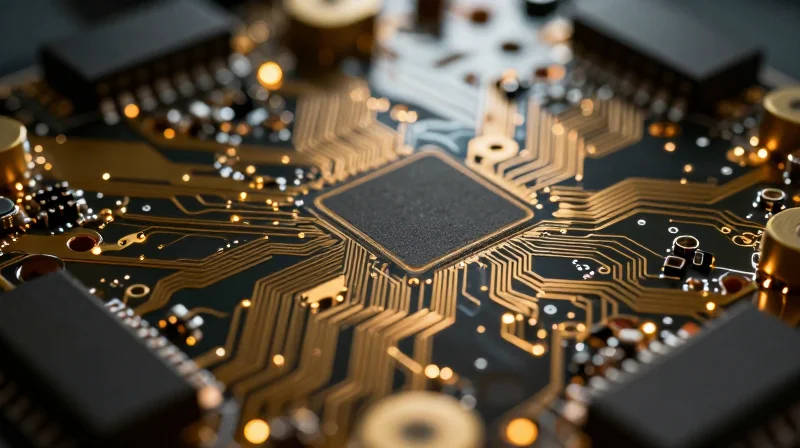
For modern data center infrastructure, the Printed Circuit Board Assembly (PCBA) acts as the foundation for high-speed signal propagation. When dealing with optical transceivers operating at 100G, 400G, or 800G, even minor deviations in manufacturing quality can lead to significant signal degradation, jitter, and bit error rates (BER). Reliability is not merely a design feature; it is a direct consequence of the manufacturer's ability to maintain tight tolerances during the fabrication process.
The Role of Precision in High-Frequency Signals
High-frequency signals are hypersensitive to the physical medium. If a PCBA manufacturer fails to maintain precise trace widths or consistent dielectric spacing, the resulting impedance mismatch causes signal reflections that corrupt data streams. High-speed transceivers demand sub-mil accuracy to ensure that the electromagnetic waves maintain their integrity from the photonic engine to the host interface.
| Quality Parameter | Impact on Signal Integrity | Consequence of Failure |
|---|---|---|
| Impedance Control | Ensures stable signal propagation | Signal reflections and eye-diagram closure |
| Material Dielectric Constant (Dk) | Reduces signal attenuation | Excessive insertion loss at high frequencies |
| Trace Geometry Uniformity | Prevents differential skew | Increased jitter and data corruption |
Material Selection and Manufacturing Integrity
Selecting a manufacturer requires a focus on advanced material handling. High-speed signals require specialized low-loss laminates that minimize dissipation factors. Furthermore, the manufacturing process must include rigorous controls for surface roughness and copper foil treatment. A superior PCBA partner will possess the specialized equipment necessary to measure these parameters consistently, ensuring that the physical hardware does not become the bottleneck for your data center's throughput.
Frequently Asked Questions
- Why is impedance control vital for optical transceivers?
Impedance mismatch creates reflections that bounce back through the circuit, resulting in constructive or destructive interference that corrupts the high-speed bit stream. - What material property matters most for high-speed PCBAs?
The Dissipation Factor (Df) and Dielectric Constant (Dk) are paramount; materials with low Df are essential to minimize energy loss as heat at high frequencies. - How does manufacturing precision impact jitter?
Manufacturing defects like inconsistent trace spacing cause differential skew, where the two halves of a differential signal arrive out of phase, leading to high jitter and timing errors.
Evaluating Manufacturing Certifications: ISO and Beyond
The Baseline: Essential Quality Certifications
For data center infrastructure, quality management is not merely a bureaucratic checkbox; it is a framework for process consistency. Manufacturers must demonstrate mastery over their assembly lines to minimize variance in signal integrity and component reliability. The absence of these certifications often signals a lack of traceable quality control protocols.
| Certification | Primary Focus | Relevance to Optical PCBA |
|---|---|---|
| ISO 9001:2015 | Quality Management Systems | Ensures repeatable assembly processes and defect reduction. |
| ISO 14001 | Environmental Management | Confirms sustainable practices and hazardous substance control. |
| AS9100 | Aerospace/High-Reliability | Strict risk management and full component traceability. |
Evaluating Industry-Specific Standards
Beyond general ISO standards, optical transceiver manufacturing demands adherence to IPC and specialized electronics certifications. These benchmarks ensure that soldering, component placement, and board cleaning processes meet the stringent requirements of high-frequency data transmission.
- Why is IPC-A-610 Class 3 critical?
Class 3 is the standard for high-performance electronic products. It dictates that failure is not an option, making it essential for critical data center infrastructure where downtime is costly. - Does ISO 14001 impact signal integrity?
Indirectly, yes. ISO 14001 certification often mandates cleaner, more controlled chemical processing environments, which reduces the risk of ionic contamination that can interfere with sensitive high-speed signals. - Is AS9100 overkill for a standard data center project?
While demanding, AS9100 provides the most robust traceability documentation. For 400G/800G optical modules where component provenance is vital, an AS9100-certified facility reduces the risk of counterfeit components entering your supply chain.
Beyond the Certificate: Verifying Implementation
Possessing a certificate is insufficient if the practices are not deeply embedded in the daily workflow. During your audit, request evidence of continuous improvement logs, internal audit schedules, and corrective action reports (CARs). A premier manufacturer will proactively showcase their data-driven approach to quality, viewing certifications as a foundation for performance rather than a finish line.
Thermal Management Capabilities as a Selection Filter
The Thermal Challenge in High-Density Optics
As data center architectures shift toward 400G, 800G, and beyond, power density within optical transceivers has increased exponentially. Manufacturers must move beyond standard assembly techniques to incorporate advanced thermal management strategies. A PCBA manufacturer that lacks the capability to handle localized heat concentrations risks early failure of photonic components and compromised bit error rates (BER).
Evaluating Thermal Capabilities
| Capability | Impact on Performance | Selection Criterion |
|---|---|---|
| Thermal Vias | Reduces localized hotspots near lasers | Density and diameter control |
| High-Tg Materials | Maintains structural integrity at high heat | Verification of glass transition temperature |
| Metal-Backed PCB | Enhances structural heat sinking | Bonding process expertise |
Thermal Management FAQ
- Why is the Glass Transition Temperature (Tg) of the laminate material crucial?
Materials with a high Tg prevent the substrate from softening or warping under constant thermal cycling, which is vital for maintaining tight impedance control in high-speed traces. - Does copper weight affect thermal management in transceivers?
Yes, heavier copper layers act as improved thermal spreaders, distributing heat away from sensitive components like the DSP and optical sub-assemblies across the PCB surface. - Should I require thermal simulation data from the manufacturer?
A high-tier manufacturer should be able to provide or validate thermal mapping models to ensure that the PCBA design will not encounter hotspots that exceed the operating temperature threshold of the optical engine.
Ensuring Supply Chain Transparency and Resilience

Auditing Component Sourcing and Provenance
The integrity of high-speed optical transceivers hinges on the authenticity of every passive and active component on the PCBA. Manufacturers must demonstrate a robust vendor management system that mandates full traceability from the silicon foundry or semiconductor manufacturer to the final assembly line. A reliable partner will utilize secure procurement channels, avoiding brokers and unauthorized distributors where counterfeit risks are significantly elevated.
Risk Mitigation Strategies
| Risk Factor | Mitigation Strategy | Verification Metric |
|---|---|---|
| Counterfeit Components | Authorized procurement only | Certificate of Conformance (CoC) |
| Single-Source Bottlenecks | Qualified multi-sourcing strategy | Approved Vendor List (AVL) diversity |
| Quality Drift | Strict batch tracking | Traceability logs per serial number |
Ensuring Supply Chain Resilience
Resilience is defined by the ability of a manufacturer to absorb disruptions without compromising the delivery schedule or product quality. This requires the implementation of dynamic inventory buffers and deep visibility into sub-tier supplier health. During your selection process, request an audit of their supply chain continuity plan.
- How can I verify if a manufacturer has a secure supply chain?
Request their ISO 28000 certification for supply chain security and ask to see their formal process for verifying the provenance of critical semiconductor components. - What defines a resilient PCBA manufacturer?
A resilient partner maintains redundant supply sources, high-transparency communication protocols, and a proactive inventory management strategy that hedges against geopolitical or logistical instability. - Should I require full component traceability?
Yes. For high-speed data center infrastructure, you should require lot-code traceability for all critical components, allowing for effective containment in the event of a quality recall.
Advanced Testing Protocols for Optical Assemblies
Multi-Layer Verification for Optical Integrity
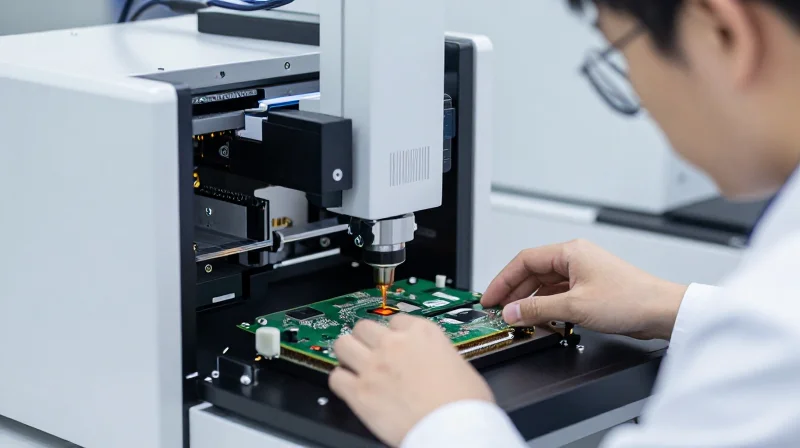
High-speed optical transceivers operate at extreme frequencies where even microscopic defects can lead to packet loss or link failure. A world-class manufacturer must employ a tiered inspection strategy that moves beyond basic visual checks to incorporate automated, high-resolution diagnostic systems capable of detecting structural anomalies within multi-layer PCBs.
Critical Inspection Technologies
| Method | Primary Application | Detection Capability |
|---|---|---|
| AOI (Automated Optical Inspection) | Surface mounting quality | Missing components, solder bridges, misalignment |
| AXI (Automated X-Ray Inspection) | BGA/Internal interconnects | Solder voids, head-in-pillow, hidden layer shorts |
| High-Frequency RF Testing | Signal integrity verification | Impedance mismatch, jitter, eye-diagram deviation |
Ensuring Performance Under Stress
Beyond physical inspection, high-speed optical assemblies require rigorous electrical validation. Manufacturers must demonstrate the ability to perform high-frequency RF testing using vector network analyzers (VNAs) to verify signal path consistency at speeds up to 400G or 800G. Failure to validate these parameters often leads to intermittent performance degradation that is difficult to troubleshoot after installation.
- Why is AXI mandatory for optical PCBAs?
Optical transceivers utilize high-density BGA packages; AXI allows for the inspection of hidden solder joints underneath these chips where AOI cannot reach. - What is the role of eye-diagram testing?
Eye-diagram testing is the gold standard for measuring the stability of high-speed digital signals, ensuring that jitter and noise levels fall within strict IEEE standards. - Should I require testing documentation?
Yes, always request serialized test data reports that prove each batch passed automated RF and structural testing protocols before shipping.
Scalability and DFM: Design for Manufacturing Success

The Strategic Role of DFM in Optical PCBA Scaling
Scaling production for high-speed optical transceivers—such as 400G and 800G modules—requires a design strategy that prioritizes manufacturability alongside signal integrity. DFM practices allow manufacturers to identify potential defects, such as impedance discontinuities or thermal bottlenecks, before full-scale production begins. By integrating these checks early, project stakeholders can significantly reduce scrap rates and accelerate time-to-market.
DFM Impact Comparison
| Metric | Without Early DFM Integration | With Optimized DFM Practices |
|---|---|---|
| Production Yield | Variable and often low | Consistently high (98%+) |
| Time-to-Market | Delayed due to iterative redesign | Compressed through streamlined ramp |
| Unit Cost | Inflated by rework and scrap | Optimized via material utilization |
Frequently Asked Questions
- How does DFM minimize assembly errors?
DFM optimizes pad geometry, stencil design, and component placement, ensuring that automated assembly equipment can handle tight tolerances without frequent line stops or misalignment. - Can DFM help in selecting more cost-effective materials?
Yes, manufacturers can advise on standard substrate materials and laminate thicknesses that meet high-speed signal performance requirements while avoiding the unnecessary premium of custom-spec materials. - What role does DFM play in high-density integration?
It addresses thermal management at the board layout level, ensuring that components are spaced appropriately to maintain operating temperatures and extend the lifespan of the optical engine.
Evaluating Financial Stability and Long-term Partnership
Financial Due Diligence in Manufacturing Partnerships
Selecting a manufacturer for high-speed optical PCBAs is not just a technical evaluation; it is a financial investment in your project's longevity. Financial instability in a supplier can lead to sudden insolvency, deferred investment in critical high-frequency testing equipment, or poor credit terms with component distributors, all of which directly jeopardize your delivery timelines.
| Financial Indicator | Significance for Optical PCBA Projects | Actionable Insight |
|---|---|---|
| Debt-to-Equity Ratio | Measures leverage and risk profile. | High ratios indicate potential liquidity issues during supply chain crunches. |
| Capital Expenditure (CapEx) | Reflects investment in new tech. | High CapEx ensures they can keep up with evolving 800G/1.6T standards. |
| Days Sales Outstanding | Efficiency of cash collection. | High numbers may suggest potential internal cash flow bottlenecks. |
Assessing Long-Term Partnership Viability
Beyond the balance sheet, true partnership longevity is defined by the manufacturer's strategic alignment with your data center roadmap. A stable partner demonstrates commitment to R&D, specialized human capital, and geographical risk mitigation.
- How do I verify a manufacturer's financial health?
Request audited financial statements for the past three fiscal years, perform third-party credit checks, and conduct site visits to observe operational capacity versus reported output. - Why is CapEx investment important for optical PCBAs?
High-speed optical manufacturing requires continuous investment in specialized assembly robots, thermal cycling chambers, and high-frequency vector network analyzers; without these, a manufacturer will fall behind as signal integrity requirements tighten. - How can I assess management stability?
Evaluate leadership turnover rates. High executive churn often indicates underlying cultural or strategic volatility that can disrupt long-term service level agreements.
Ultimately, your manufacturer should function as an extension of your own organization. Prioritize those who demonstrate transparency in their own supply chain dependencies and who show a clear history of long-term contract retention, as these factors are the strongest predictors of a stable and collaborative future.
Selecting the right manufacturer is a strategic investment in your network's future performance. By prioritizing signal integrity, thermal precision, and supply chain transparency, you protect your data center from avoidable downtime and costly failures. Ready to optimize your manufacturing strategy? Contact our engineering team today to discuss your project requirements and see how our facilities meet the highest standards of optical production.
