
In an era where indoor air quality is paramount, your air purifier's performance hinges on the invisible brain: the main controller PCBA. Engineers face the constant challenge of integrating precision sensors while maintaining low power consumption and rigorous long-term reliability. This guide provides an authoritative framework for evaluating PCBA solutions that exceed industry standards and customer expectations.
The Critical Role of the PCBA in Air Purification
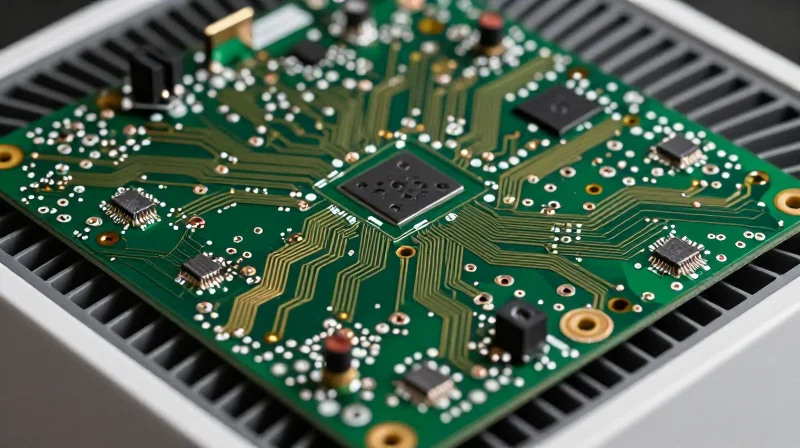
The main controller PCBA is the bridge between human intent and mechanical execution in air purification. Without a robust and highly responsive controller, an air purifier cannot react to transient changes in indoor air quality, rendering advanced filtration media ineffective due to inconsistent airflow or delayed response times.
Core Functions of the Main Controller
A reliable controller performs three critical functions simultaneously to maintain performance standards:
- Dynamic Sensor Integration
The PCBA must process inputs from PM2.5, VOC, and humidity sensors in real-time, utilizing sophisticated algorithms to translate raw voltage into actionable motor speed adjustments. - Precision Motor Control
By utilizing Pulse Width Modulation (PWM), the controller regulates brushless DC (BLDC) motors to ensure quiet, energy-efficient operation and precise airflow management. - Intelligent Filter Management
The board tracks filter usage through a combination of timer-based and flow-resistance monitoring, providing accurate alerts for timely replacement to prevent secondary pollution.
Operational Impact of PCBA Selection
| Component Feature | Effect on Reliable Performance | Performance Outcome |
|---|---|---|
| High-Speed Microcontroller | Faster sensor processing | Instant response to pollution spikes |
| EMI Shielding | Reduces signal interference | Prevention of erratic motor behavior |
| Solid-State Components | Increased durability | Longer operational lifespan |
Technical Reliability Considerations
To ensure long-term reliability, the PCBA must be designed to withstand the unique environment of an air purifier. This includes thermal management of the motor drive stage and protection against voltage fluctuations. A high-quality PCBA acts as the guardian of the purifier’s hardware, ensuring that the motor does not overheat during periods of heavy filtration load and that firmware updates remain secure and consistent.
Prioritizing Sensor Integration and Signal Integrity

The main controller PCBA acts as the central nervous system for air purification, where the accuracy of real-time air quality reporting hinges entirely on signal integrity. In environments with high electromagnetic interference (EMI) from motors and fans, maintaining high-fidelity communication with PM2.5, VOC, and humidity sensors is critical. Selecting a PCBA with robust filtering, optimized trace routing, and low-latency communication protocols is the defining factor in preventing data jitter and ensuring the purifier reacts correctly to environmental changes.
Optimizing Signal Path and Noise Immunity
Sensor signals are inherently sensitive to voltage fluctuations and crosstalk from the motor control circuits of the air purifier. To ensure reliable performance, the PCBA design must prioritize electrical isolation between high-power motor drivers and low-power sensing circuits. Engineers should evaluate boards based on their ability to suppress noise at the input stages through dedicated decoupling capacitors and proper ground plane segmentation.
| Noise Source | Impact on Sensors | PCBA Mitigation Strategy |
|---|---|---|
| PWM Fan Motor | Voltage ripples and EMI | LC filtering and opto-isolation |
| Switching Power Supply | High-frequency noise | Ferrite beads and shielding |
| Long Sensor Cables | Signal degradation | Differential signaling and shielded traces |
Critical Communication Protocols
The choice of communication interface dictates how quickly and reliably data is processed. For high-density sensor arrays, prefer protocols that offer built-in error handling or robustness against external interference.
- Why is I2C often considered risky for sensor cables?
I2C is designed for chip-to-chip communication on a single PCB; extending it via cables to remote sensors introduces capacitance issues and makes the signal highly susceptible to external noise. - What is the preferred alternative for off-board sensors?
RS-485 or UART with differential signaling is significantly more robust for long-distance communication within an air purifier chassis, as it minimizes signal corruption. - How does sampling rate impact filter life?
Erratic sensor data caused by signal noise leads to 'hunting' behaviors in the fan control loop, causing unnecessary mechanical wear and premature filter wear-and-tear due to incorrect airflow modulation.
Power Efficiency and Thermal Management Strategies
For an air purifier to maintain consistent performance over years of continuous operation, the PCBA must be engineered to minimize power consumption while effectively managing thermal dissipation. As modern units integrate high-speed processing for smart features, heat management becomes critical to preventing accelerated component aging and potential system failure.
Optimizing Power Consumption Architecture
Energy efficiency in the PCBA is not merely about meeting regulatory standards; it is about reducing internal stress. Implementing high-efficiency DC-to-DC converters and leveraging ultra-low-power microcontrollers (MCUs) that support sleep states during standby periods significantly lowers the thermal ceiling of the unit.
Thermal Management and Heat Dissipation Techniques
Excessive heat localized near sensitive capacitors and logic circuits is the primary driver of premature PCBA failure. Engineers must prioritize thermal path design to ensure heat generated by motor control drivers and power supply modules is effectively dissipated.
| Thermal Strategy | Implementation Method | Reliability Impact |
|---|---|---|
| Copper Pouring | Thicker PCB traces and thermal vias | Enhanced heat distribution across the board |
| Component Placement | Spatial separation of heat-generating components | Prevents localized hotspots and thermal runaway |
| Heatsink Integration | Direct thermal interface to power electronics | Lower operating temperatures for longer lifespan |
Common Considerations for Thermal Design
- How does fan speed correlate with PCBA thermal stress?
High-RPM operation requires increased current from the motor drive stage, which directly scales the heat generated on the PCBA; robust power stages are required to handle these peak loads without degradation. - Why is thermal zoning important for sensors?
Sensitive sensors, such as PM2.5 or VOC components, must be physically isolated from the heat-generating power supply section to prevent biased readings and thermal drift. - What role do capacitors play in long-term reliability?
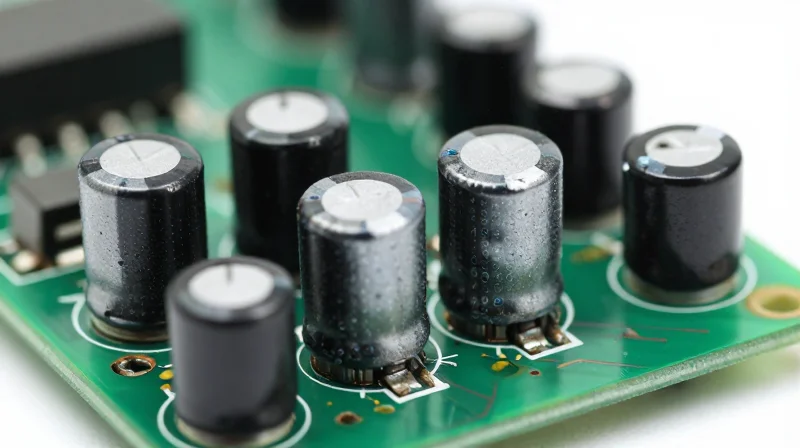
Electrolytic capacitors are highly sensitive to heat; utilizing high-temperature rated components (e.g., 105°C) and ensuring adequate airflow significantly improves the MTBF (Mean Time Between Failures) of the PCBA.
Evaluating Component Quality and Supply Chain Resilience
The Imperative of Component Quality
Air purifiers often operate 24/7, placing continuous stress on the main controller PCBA. Utilizing automotive or industrial-grade capacitors, inductors, and microcontrollers is not a luxury but a necessity to prevent premature failure. Low-grade components often suffer from dielectric breakdown or thermal instability, which can lead to erratic fan control, sensor drift, and ultimately, system failure during critical operation windows.
| Component Category | Standard Grade (Consumer) | Premium Grade (Reliable) |
|---|---|---|
| Electrolytic Capacitors | 105°C / 2000hr rating | 105°C / 10,000hr+ rating |
| Microcontrollers | Commercial temp (0-70°C) | Industrial temp (-40 to 85°C) |
| PCB Material | FR-4 (Standard) | High-Tg FR-4 (Thermal resistant) |
Ensuring Supply Chain Resilience
Supply chain volatility, including the risk of counterfeit components and long lead times, directly impacts product reliability. To maintain consistency, manufacturers should implement stringent vendor qualification processes and maintain an Approved Vendor List (AVL). Avoid sole-sourcing critical components to prevent production bottlenecks and ensure that all bill-of-materials (BOM) items have verified, traceable origins.
Common Questions on PCBA Reliability
- Why is component traceability important?
Traceability ensures that you can identify the source of a component if a batch failure occurs, preventing counterfeit parts from entering the supply chain and endangering device reliability. - How does PCB material affect long-term operation?
Using high-glass transition temperature (High-Tg) substrates prevents board warping and thermal-induced cracking over years of continuous heat exposure from nearby power conversion components. - Should I audit my PCBA assembly house?
Yes, periodic audits are essential to ensure the assembly house adheres to IPC-A-610 standards for soldering and component placement, which directly correlates to the board's mean time between failures (MTBF).
Certification Standards and Compliance Requirements
Critical Compliance Frameworks for Air Purifier Electronics
Air purifiers are classified as high-risk household appliances due to their continuous operation and high-voltage components. A PCBA designed for these systems must adhere to rigorous safety and electromagnetic standards to prevent electrical hazards and interference with other home electronics.
| Certification | Region/Scope | Primary Focus |
|---|---|---|
| UL 60335-2-65 | North America | Safety requirements for air-cleaning appliances. |
| CE (EMC/LVD) | European Union | Electrical safety and electromagnetic compatibility. |
| RoHS/REACH | Global/EU | Restriction of hazardous substances in electronics. |
| FCC Part 15 | United States | Limits on unintentional electromagnetic emissions. |
Addressing Global Market Regulations
When selecting or designing a PCBA, manufacturers must prioritize components that are pre-certified. Utilizing uncertified components significantly increases the testing burden and the likelihood of failure during product certification cycles. Compliance is not just a legal hurdle; it is a fundamental aspect of product reliability and user safety.
- Why is RoHS compliance mandatory for PCBA manufacturing?
RoHS (Restriction of Hazardous Substances) limits lead, mercury, cadmium, and other toxic materials. Failure to comply prevents market entry in the EU and creates significant environmental and legal liability. - Does the PCBA need separate certification from the final unit?
While a PCBA can carry a 'Component Recognition' (UR), the final product must still undergo comprehensive safety testing. However, choosing a recognized component simplifies the final assembly certification. - How does EMC compliance affect controller design?
Air purifiers often feature motors and high-speed processors that generate noise. Proper PCB layout, including grounding planes and filtering components, is essential to meet FCC and CE emissions limits.
To ensure long-term performance and market access, always document the bill of materials (BOM) compliance for every component. Verify that your contract manufacturer possesses the necessary ISO 9001 and ISO 14001 certifications, which signal a production environment capable of maintaining these stringent standards consistently.
Design for Manufacturing (DFM) Best Practices

Effective DFM goes beyond basic functionality; it bridges the gap between a prototype and a mass-producible asset. By standardizing component footprints, adhering to strict trace geometry rules, and simplifying assembly workflows, engineers can significantly reduce the 'cost of quality' and prevent failures in the field.
Core DFM Strategies for Controller Boards
- Component Standardization
Avoid using unique, hard-to-source components. Prioritizing industry-standard package sizes (like 0603 or 0805 passives) ensures compatibility with automated pick-and-place machines and simplifies inventory management. - Panelization Efficiency
Design your board layout to maximize panel utilization. A well-calculated array layout minimizes material waste during the PCB fabrication process, directly lowering the cost per unit. - Test Point Strategy
Incorporate accessible test points for In-Circuit Testing (ICT). Enabling rapid automated testing on the production line minimizes diagnostic time and ensures that only functional boards proceed to final assembly.
Assembly Optimization Comparison
| Parameter | Suboptimal Design | DFM Optimized Design |
|---|---|---|
| Component Pitch | Very fine (e.g., BGA <0.4mm) | Standard (0.5mm or larger) |
| Test Access | Limited probe access | Dedicated test points on bottom |
| Board Shape | Complex/Irregular | Rectangular with rail tabs |
| Solder Mask | Non-defined | Solder mask defined pads |
Reducing Defects through Layout Best Practices
To prevent common soldering defects like bridging or tombstoning, pay close attention to thermal relief and copper balancing. For air purifier controllers, where high-current traces for fan control are common, ensure solder masks are applied correctly to avoid shorts, and maintain adequate clearance between high-voltage AC lines and sensitive low-voltage control logic to ensure both manufacturing yield and long-term user safety.
Implementing Robust Firmware and OTA Capabilities
The Necessity of Secure Firmware Architecture
A secure air purifier main controller PCBA relies on a hardware-agnostic, modular firmware design that prioritizes data integrity and cryptographic verification. Because these devices interact with residential Wi-Fi networks and cloud services, the firmware must implement secure boot sequences to prevent unauthorized code execution and ensure that only authenticated firmware images are ever loaded onto the controller.
Critical Requirements for OTA Success
Effective Over-the-Air (OTA) updates are the cornerstone of lifecycle management. To avoid bricking devices in the field, the implementation must be fail-safe and resilient to power or network interruptions.
- A/B Partitioning
Utilize dual-flash bank storage where the new firmware is downloaded to a secondary partition while the device continues to run from the primary partition, ensuring a seamless swap only after verification. - Delta Updates
Implement binary diffing to transmit only the changed code segments, which significantly reduces bandwidth usage and transmission time for large firmware updates. - Rollback Mechanism
Include an automated safety trigger that detects post-update failure and forces the device to revert to the previous known-stable firmware version.
Comparison of Update Strategies
| Strategy | Reliability | Bandwidth Usage | Complexity |
|---|---|---|---|
| Single-Partition | Low | Low | Simple |
| A/B Partitioning | High | Moderate | Moderate |
| Cloud-Signed Delta | Highest | Very Low | High |
Best Practices for Deployment
When selecting a controller PCBA, ensure the chip supports hardware-accelerated encryption for TLS/SSL handshakes. This minimizes the latency impact of secure cloud communication on air quality sensor sampling rates. Furthermore, mandate that the manufacturer provides a clear roadmap for vulnerability patching, as zero-day threats in IoT devices can quickly render an air purifier a liability rather than an asset.
Selecting the Right PCBA Manufacturing Partner
Essential Criteria for Partner Audits
When vetting a PCBA manufacturer, move beyond initial quotes to evaluate their actual operational capacity and commitment to quality. A reliable partner must demonstrate not only advanced equipment capabilities but also a rigorous quality management system (QMS) that maintains consistency from prototype through mass production.
| Audit Category | Key Indicator | Importance |
|---|---|---|
| Technical Capability | SMT line precision | High for complex controller boards |
| Quality Assurance | ISO 9001/13485 certification | Critical for reliability |
| Supply Chain | Traceability documentation | Essential for component safety |
| Scalability | Lead time flexibility | Crucial for market demand spikes |
Questions to Ask Potential Partners
- How do you handle component sourcing and counterfeit prevention?
They must demonstrate a transparent supply chain, using only authorized distributors to ensure the integrity of microcontrollers and sensors. - Can you provide a DFM report before production begins?
A high-quality partner will proactively suggest board layout optimizations to improve yield and reduce manufacturing costs. - What is your typical defect rate and how do you track it?
Look for a documented PPM (parts per million) rate and a clear procedure for root cause analysis and corrective actions. - Is there support for automated functional testing (FCT)?
Since air purifier controllers rely on firmware, the partner should have the ability to program boards and perform end-of-line electrical testing.
Building a Long-Term Strategic Partnership
Treating a manufacturer as a simple vendor rather than a partner is a common pitfall. For air purifier projects, where software updates and sensor calibration are frequent, deep integration is key. Establish clear communication channels for engineering changes (ECOs) and ensure the manufacturer has the capacity to support your future firmware updates and hardware revisions.
Selecting the right main controller PCBA is the most critical decision in your product's lifecycle, directly impacting user satisfaction and brand reputation. By focusing on sensor fidelity, power efficiency, and strict quality control, you build a foundation for success. Ready to elevate your product performance? Contact our engineering team today to discuss your project requirements and get a custom design consultation.
