
In the high-stakes world of air purification technology, manufacturing speed and component reliability are the cornerstones of market leadership. As global supply chains face unprecedented volatility, companies are increasingly turning to strategic PCBA outsourcing to regain their competitive edge. By re-engineering the nexus between assembly cost and design intelligence, manufacturers can move beyond mere savings to achieve superior product lifespans and performance.
The Anatomy of a Modern PCBA Supply Chain

The Anatomy of a Modern PCBA Supply Chain
The contemporary PCBA supply chain has evolved from a linear, procurement-heavy model into an interconnected, real-time digital ecosystem. In the context of air purification manufacturing—where precision sensors and control circuits define product performance—this anatomy relies on four foundational pillars: proactive component lifecycle management, geographically diversified sourcing, API-driven demand planning, and rigorous quality assurance feedback loops.
Legacy Versus Modern Supply Chain Dynamics
| Feature | Legacy Model | Modern Outsourced Model |
|---|---|---|
| Inventory Strategy | Just-in-Case / High Stock | Just-in-Time / Demand-Driven |
| Communication | Email & Spreadsheet Silos | Integrated API / ERP Sync |
| Risk Profile | Reactive Mitigation | Predictive Analytics |
| Visibility | Point-of-receipt only | Real-time component tracking |
Frequently Asked Questions
- Why do legacy models fail in air purification projects?
Legacy models rely on static forecasting, which fails to account for the sudden spikes in demand for air quality sensors and the frequent obsolescence cycles of high-tech semiconductors. - How does visibility impact ROI?
Enhanced visibility reduces 'hidden' costs such as expedited freight fees and emergency buffer inventory, directly protecting the bottom line by preventing line-down incidents. - What is the role of digital integration?
Seamless data integration between your EMS partner and your ERP ensures that manufacturing schedules adjust automatically to component availability, minimizing lead-time slippage.
Identifying Hidden Costs in Electronics Manufacturing

Identifying Hidden Costs in Electronics Manufacturing
The primary threat to ROI in air purification PCBA manufacturing is not the unit cost of components, but the accumulation of 'silent killers'—inefficiencies that disrupt production flow and inflate the total cost of ownership. Without proactive management, quality variance and poor design integration turn profitable projects into expensive recovery efforts.
| Hidden Cost Driver | Impact on ROI | Mitigation Strategy |
|---|---|---|
| DFM Non-Compliance | High re-spin costs and delays | Early-stage DFM audits |
| Component Quality Variance | Increased field failures | Strict AVL qualification |
| Assembly Bottlenecks | Lost manufacturing capacity | Process optimization |
Addressing Design for Manufacturing (DFM) Deficits
Design-for-manufacturing (DFM) oversight is often the most significant hidden cost in air purification projects. When designs are finalized without considering assembly capabilities, manufacturers encounter board-level issues that require costly rework. By integrating DFM feedback during the prototype phase, organizations can eliminate non-manufacturable features before they impact mass production, significantly reducing time-to-market and engineering overhead.
Common Cost-Drain FAQs
- How does component variance affect air purifier performance?
Inconsistent component tolerances can lead to degraded sensor accuracy or premature failure of control circuits under the high-usage conditions typical of air purification systems. - What is the true cost of assembly delays?
Beyond simple downtime, assembly delays trigger expedited shipping fees, contract penalties, and, most critically, the loss of market windows which can permanently erode ROI. - Why do legacy models fail in modern PCBA manufacturing?
Legacy models rely on transactional interactions rather than integrated partnerships, leaving the manufacturer blind to design intent and the designer unaware of production limitations.
Case Study: Redesigning Air Purification Control Systems
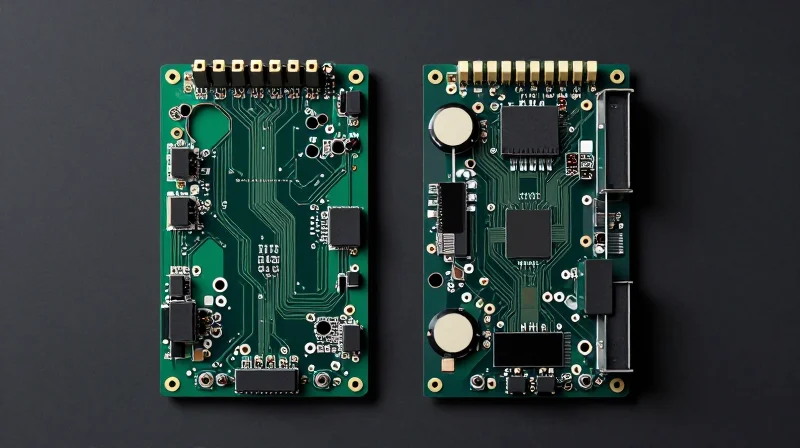
Case Study: Redesigning Air Purification Control Systems
A leading provider of residential air purification systems faced stagnating margins due to reliance on off-the-shelf, generic control boards. These boards lacked the efficiency required for advanced sensor integration, leading to high power consumption and unnecessary manufacturing overhead. By partnering with a specialized PCBA outsourcing provider, the company pivoted to a custom-designed control architecture optimized specifically for their hardware footprint.
Performance and Cost Metrics
| Metric | Legacy Generic Controller | Bespoke PCBA Design | Improvement |
|---|---|---|---|
| Unit Cost | $12.50 | $9.38 | 25% Reduction |
| Power Consumption | 4.2W | 3.1W | 26% Efficiency Gain |
| Assembly Time | 14 Minutes | 9 Minutes | 35% Throughput Increase |
Key Takeaways for Strategic Outsourcing
- Why was the bespoke design more cost-effective?
The custom design eliminated unnecessary components present in generic boards, reduced PCB real estate, and allowed for DFM (Design for Manufacturing) optimizations that streamlined assembly processes. - What role did the partner play?
The EMS partner provided DFM feedback that simplified the signal routing and component placement, directly contributing to higher yields and lower labor costs during final assembly. - What was the long-term impact on ROI?
Beyond the 25% unit cost reduction, the improved system reliability led to a 40% decrease in field returns, significantly bolstering brand reputation and long-term customer lifetime value.
The Synergy Between Energy Efficiency and Component Longevity
Thermal Dynamics and Component Integrity
In the high-stakes environment of air purification, the PCBA is the brain managing airflow, filtration status, and sensor arrays. Choosing components that operate at lower temperatures does more than save energy; it directly mitigates thermal stress on the PCB substrate and surrounding solder joints. By outsourcing to specialized partners, manufacturers gain access to advanced DFM (Design for Manufacturing) insights that ensure component selection prioritizes long-term thermal stability over short-term cost savings.
| Component Strategy | Thermal Impact | ROI Benefit |
|---|---|---|
| Standard Grade Parts | Higher heat dissipation | Shortened unit lifespan |
| High-Efficiency Components | Minimized thermal drift | Extended product reliability |
| Advanced Thermal Design | Lower operating delta | Reduced warranty claims |
Engineering Longevity: Frequently Asked Questions
- How does energy efficiency correlate with device lifespan?
Lower power consumption results in less internal heat generation within the chassis of an air purifier, which prevents the degradation of dielectric materials and solder integrity over time. - Can outsourcing partners help in selecting more reliable components?
Yes, expert contract manufacturers leverage predictive failure analysis to suggest components with higher MTBF (Mean Time Between Failures) ratings, directly influencing the reliability of the finished air purification unit. - Why is thermal management a key component of ROI?
Reducing thermal stress lowers the failure rate of sensitive control circuitry. This leads to a measurable decrease in field returns and maintenance costs, preserving the brand's reputation and consumer trust.
Investing in premium component procurement and thermal-aware PCBA design is not merely a technical adjustment; it is a financial strategy. When components run cooler, the entire system ecosystem—from sensor sensitivity to fan motor control—remains calibrated and durable, reinforcing the product's value proposition in a competitive market.
Selecting the Right PCBA Partner: Beyond Cost-Per-Unit
Evaluating Value Over Price
In the high-stakes air purification industry, where reliability directly correlates to user safety, selecting an assembly partner based solely on cost-per-unit often leads to hidden expenses like field failures and rework. A strategic partner should provide DFM (Design for Manufacturing) insights that reduce total cost of ownership (TCO) by optimizing assembly speed and minimizing defect rates before production begins.
Key Criteria for Strategic Partnership
| Evaluation Pillar | Strategic Indicator | ROI Impact |
|---|---|---|
| Technical Proficiency | Advanced DFM/DFT analysis | Faster time-to-market and lower scrap |
| Quality Systems | ISO 9001/13485 Compliance | Reduced liability and warranty claims |
| Communication | Real-time ERP integration | Reduced supply chain bottlenecks |
Frequently Asked Questions Regarding PCBA Selection
- Why is ISO 13485 certification relevant for air purifier PCBAs?
While primarily for medical devices, ISO 13485 signifies a rigorous quality management system that ensures traceability and reliability, which are critical for air purifiers operating in high-demand environments. - What role does transparency play in reducing project risk?
Full visibility into component sourcing and the sub-tier supply chain allows you to mitigate the impact of market volatility and potential counterfeit component risks. - How does early DFM collaboration drive ROI?
By identifying potential assembly hazards during the design phase, the partner prevents costly design changes mid-production, effectively shortening the manufacturing lifecycle.
Accelerating Time-to-Market Through Design Collaboration

The Competitive Advantage of Concurrent Engineering
Integrating PCBA partners during the design phase transforms the manufacturing relationship from a transactional interaction into a strategic partnership. By involving your contract manufacturer (CM) early, you leverage their expertise in Design for Manufacturing (DFM) and Design for Assembly (DFA) to preempt common bottlenecks, such as component sourcing limitations or layout-induced thermal inefficiencies, before they become costly production delays.
Operational Benefits of Collaborative Design
| Phase | Reactive Approach (Traditional) | Collaborative Approach (Strategic) |
|---|---|---|
| Prototyping | Multiple iterations due to DFM errors | Right-first-time design validation |
| Sourcing | Last-minute search for substitutes | Proactive component lifecycle management |
| Production | Line stoppages and rework | Seamless transition to mass assembly |
Strategies for Preempting Manufacturing Bottlenecks
In air purification manufacturing, where sensitive sensors and high-performance fan controllers must operate reliably, design collaboration focuses on reducing board complexity and ensuring thermal integrity. Early collaboration ensures that your board layout supports automated optical inspection (AOI) and high-speed pick-and-place processes, significantly reducing the throughput time on the assembly line.
- How does early collaboration impact time-to-market?
It compresses the product development lifecycle by eliminating redundant design cycles and resolving manufacturability issues during the CAD stage rather than the prototype stage. - What is the primary role of the partner in the design phase?
The partner identifies components that may be subject to supply chain volatility and proposes design adjustments that minimize PCB footprint without compromising air purification performance. - Does this approach increase upfront engineering costs?
While it requires more initial coordination, it provides significant long-term ROI by reducing scrap rates, shortening lead times, and preventing expensive late-stage design modifications.
Risk Mitigation in Global Sourcing
Geographic Diversification and Supply Chain Resilience
Reliance on a single manufacturing hub introduces catastrophic risk, particularly in the highly regulated air purification sector. To safeguard production continuity, firms should adopt a 'China Plus One' or regionalized manufacturing strategy. By splitting PCBA production across multiple geographic zones, manufacturers can insulate themselves from localized lockdowns, geopolitical shifts, or natural disasters that could otherwise halt entire product lines.
Inventory Management and Buffer Strategies
| Strategy | Risk Mitigated | Impact on ROI |
|---|---|---|
| Strategic Buffer Stock | Component lead time volatility | Higher carrying costs but ensures 99% uptime |
| Vendor Managed Inventory | Supply chain opacity | Optimizes cash flow while maintaining availability |
| Second-Source Qualification | Single-vendor dependency | Reduces long-term price gouging and supply gaps |
Frequently Asked Questions on Risk Mitigation
- How do I balance buffer stock costs with ROI goals?
Utilize a tiered approach where only long-lead-time or critical active components—such as microcontrollers used in air quality sensors—are held in excess, while common passives follow JIT principles. - Is multi-sourcing always cost-effective?
While multi-sourcing may reduce volume-based discounts, the cost is offset by avoiding production downtime, which can be exponentially more expensive than marginal increases in per-unit manufacturing costs. - What role does transparency play in risk management?
Real-time visibility into your partner's sub-tier supply chain is non-negotiable; you must ensure your PCBA assembler has a robust risk monitoring system for their own raw material suppliers.
Measuring Long-Term Success: KPIs to Watch

Defining Key Performance Indicators for PCBA Outsourcing
To maximize ROI in the air purification sector, organizations must move beyond simple unit-cost analysis. True long-term profitability is driven by tracking indicators that reveal hidden costs, quality trends, and the manufacturing partner’s responsiveness to shifting market demands.
| KPI Category | Primary Metric | Business Impact |
|---|---|---|
| Quality Assurance | First Pass Yield (FPY) | Reduces rework costs and prevents field failures |
| Supply Chain | On-Time Delivery (OTD) | Protects market position by avoiding stockouts |
| Cost Efficiency | Total Cost of Ownership (TCO) | Captures hidden logistics and inventory holding costs |
| Responsiveness | Engineering Change Order (ECO) Time | Ensures rapid adaptation to evolving regulations |
Critical Performance Trends
- First Pass Yield (FPY)
A high FPY is the strongest indicator of manufacturing stability. For air purification devices, where circuit board reliability directly impacts indoor air quality sensor accuracy, any dip in FPY should trigger immediate root-cause analysis. - Inventory Velocity
Measuring how quickly components transform into finished goods helps prevent capital entrapment and mitigates the risk of electronic component obsolescence—a frequent pain point in long-cycle air purification projects. - Warranty Return Rate
This is the ultimate long-term metric. A low return rate verifies that the PCBA assembly process remains consistent under real-world usage conditions, effectively protecting your brand reputation.
Strategic Monitoring Questions
- How often should we review these KPIs?
Quarterly business reviews are standard, but key quality metrics like FPY should be reviewed monthly to identify negative trends before they escalate into production failures. - Why is TCO better than Unit Price?
TCO accounts for shipping delays, administrative overhead, and defect rates. A low unit price often masks high operational expenses that erode your ROI over the life of the product.
By aligning your manufacturing strategy with expert PCBA partners, you transform your supply chain from a logistical burden into a core engine of growth. Whether you are scaling production or innovating for high-efficiency markets, strategic outsourcing is your pathway to higher margins and faster deployment. Are you ready to optimize your next production cycle? Contact our engineering consultation team today to request a comprehensive supply chain audit.
