
In the fast-paced world of high-reliability electronics, the Ball Grid Array (BGA) is the industry standard for miniaturization and performance. Yet, the complexity of BGA mounting poses significant risks to yield and longevity. Choosing the right manufacturing partner is not just a logistical decision—it is an engineering investment. This guide explores the essential criteria to ensure your partner delivers defect-free, high-performance assemblies every time.
Evaluating Technical Expertise in BGA Assembly

Evaluating BGA Expertise and Engineering Depth
When your project demands high-reliability performance, the assembly partner must demonstrate more than just basic manufacturing capability. The transition from standard SMT to fine-pitch BGA requires a deep understanding of material science, solder joint metallurgy, and the precise control of reflow thermal gradients. You must vet partners by examining their specific history with high-density interconnects (HDI) and their ability to mitigate the common failure modes inherent to non-visible solder joints.
Key Indicators of Technical Maturity
| Evaluation Criterion | High-Reliability Indicator | Red Flag |
|---|---|---|
| BGA Inspection | Comprehensive 3D X-Ray/CT Scanning | Visual-only or 2D X-Ray reliance |
| Profiling Methodology | Data-driven, multi-thermocouple validation | Guesswork or generic vendor profiles |
| Rework Capability | Automated split-vision BGA rework systems | Manual alignment or handheld heat guns |
| Design for Manufacturing | Active DFM feedback on pad geometry | Accepting designs without design rule check |
Frequently Asked Questions Regarding BGA Assembly
- Why is 3D X-ray inspection mandatory for high-reliability BGAs?
Because BGA joints are hidden, 2D X-ray systems often fail to distinguish between top and bottom layers. 3D X-ray (AXI) allows for precise analysis of head-in-pillow defects and solder voids, which are critical in failure-critical applications. - What role does the reflow profile play in long-term reliability?
Improper thermal ramping causes uneven intermetallic compound (IMC) formation. A sophisticated partner will demonstrate expertise in soak-zone optimization to prevent thermal shock and cold solder joints. - Should I require a BGA-specific DFM review?
Absolutely. A qualified partner will proactively suggest optimized solder mask defined (SMD) vs. non-solder mask defined (NSMD) pad configurations based on your specific PCB finish and board thickness.
The Necessity of Advanced SMT Equipment
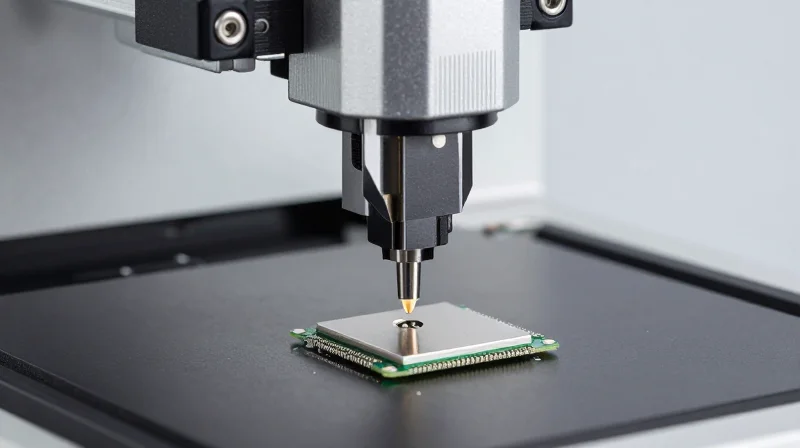
In high-reliability electronics, the Ball Grid Array (BGA) package presents unique challenges that cannot be overcome with legacy assembly equipment. Achieving the precision required for tight-pitch BGA components—where internal solder balls are hidden from optical inspection—demands a technological infrastructure capable of micro-precision placement and exact thermal management. Partners relying on outdated machinery often fail to maintain the necessary tolerances, leading to latent defects that can cause catastrophic failures in mission-critical applications.
Critical Technologies for BGA Excellence
| Equipment Category | Requirement for High-Reliability | Risk of Non-Compliance |
|---|---|---|
| Pick-and-Place Systems | Multi-axis motion control with advanced vision alignment. | Misalignment leading to bridging or open circuits. |
| Reflow Ovens | Multi-zone convection with closed-loop thermal profiling. | Cold joints, voids, or PCB warping from uneven heating. |
| AOI/AXI Systems | Automated X-ray inspection for BGA undersides. | Undetected hidden shorts or insufficient solder volume. |
Frequently Asked Questions Regarding Equipment Standards
- Why is Automated X-ray Inspection (AXI) essential?
Since BGA solder joints are physically obscured by the component body, AXI is the only reliable method to verify internal ball alignment, detect voids, and confirm proper collapse without destructive testing. - How does reflow zone count impact BGA reliability?
A higher number of reflow zones provides finer control over the heating and cooling ramps, which is critical for complying with specific lead-free solder paste profiles and preventing thermal shock to sensitive components. - Does high-speed placement compromise precision?
Modern advanced SMT platforms are designed to balance speed with high-resolution vision systems that perform real-time offset compensation during every cycle, maintaining micron-level accuracy even at high throughput.
Certification Standards: Benchmarking Quality
For high-reliability electronic projects, certifications represent more than just compliance; they are a benchmark of a contract manufacturer's internal discipline, process control, and commitment to quality. When dealing with Ball Grid Array (BGA) components, where solder joint integrity is hidden from visual inspection, these standards serve as the fundamental framework for quality assurance and defect prevention.
Essential Certifications for High-Reliability Projects
| Certification/Standard | Primary Focus | Significance for BGA Assembly |
|---|---|---|
| ISO 9001 | Quality Management Systems | Ensures consistent processes and documentation across all assembly stages. |
| AS9100 | Aerospace & Defense Quality | Provides rigorous risk management and traceability required for critical environments. |
| IPC-A-610 Class 3 | Acceptability of Electronics | Defines the highest performance class for electronics requiring continuous service. |
| ISO 13485 | Medical Devices Quality | Mandatory for high-reliability medical electronics and surgical equipment. |
Why IPC-A-610 Class 3 is Non-Negotiable
While IPC-A-610 Class 2 is sufficient for standard consumer electronics, high-reliability projects demand Class 3 compliance. Class 3 standards dictate tighter tolerances for solder fillet dimensions, voiding percentages in BGA joints, and cleanliness levels. Selecting a partner that strictly adheres to Class 3 ensures that your boards can withstand extreme thermal cycling, vibration, and mechanical stress without failure.
Frequently Asked Questions Regarding Standards
- Does an ISO 9001 certification automatically guarantee high-quality BGA assembly?
No. ISO 9001 focuses on general management systems. While it indicates organizational maturity, you must specifically verify the partner's compliance with industry-specific assembly standards like IPC-A-610 or IPC-J-STD-001 for soldering processes. - How does AS9100 benefit non-aerospace projects?
AS9100 builds upon ISO 9001 by adding intensive requirements for product safety, reliability, and complex supply chain traceability. Even for non-aerospace projects, these practices significantly reduce the likelihood of assembly errors. - Should I audit the partner's facility even if they hold these certifications?
Absolutely. Certifications verify that a system is in place, but an on-site audit allows you to confirm that those systems are actively practiced on the floor and that operators are properly trained and certified for high-density BGA soldering.
Advanced Inspection Protocols (X-Ray and AOI)

Advanced Inspection Protocols (X-Ray and AOI)
For Ball Grid Array (BGA) components, the solder joints are concealed beneath the package, making traditional visual inspection impossible. Ensuring the reliability of these connections requires a combination of 3D Automated Optical Inspection (AOI) for surface-level verification and 3D X-Ray inspection for internal void analysis and bridging detection. A partner lacking these capabilities cannot guarantee the long-term reliability required for mission-critical electronic projects.
Comparing Inspection Methodologies
| Inspection Type | Primary Function | Best For Detecting |
|---|---|---|
| 3D AOI | Surface/Component verification | Alignment, polarity, tombstoning, solder paste volume |
| 3D X-Ray (AXI) | Internal joint verification | Hidden voids, bridging, insufficient wetting, open joints |
Critical Inspection FAQ
- Why is 3D AOI insufficient for BGA assembly?
While 3D AOI is excellent for verifying external component placement and solder fillet shape, it cannot see through the BGA package. It cannot detect internal voids or shorts occurring between the underside of the chip and the PCB pads. - What defines a high-reliability X-Ray standard?
A high-reliability partner uses Automated X-Ray Inspection (AXI) with 3D computed tomography capabilities. This allows for cross-sectional views of solder balls, ensuring that void percentages remain within IPC Class 3 limits. - How often should inspection occur in a production run?
For high-reliability projects, 100% X-Ray inspection of BGA components is the gold standard. Sampling plans should only be used for low-risk, non-critical assemblies, never for high-density interconnects.
Process Control and Traceability

The Importance of End-to-End Traceability
In high-reliability electronics, traceability is not merely a record-keeping exercise; it is a critical tool for failure analysis and risk mitigation. A top-tier BGA assembly partner must maintain digital threads that link every component batch to a specific board serial number, allowing for immediate isolation of potential defects should a material batch be flagged by a supplier.
Key Traceability Requirements
- Component Lot Tracking
The partner must log manufacturer lot codes and date codes for all BGA components to ensure compliance with shelf-life requirements and enable rapid recall management. - Operator Accountability
Digital signatures or scan-in logs must identify the specific technicians and engineers handling the assembly at each critical workstation. - Machine Parameter Logging
Automated capture of reflow profiles and pressure settings for every thermal cycle provides a forensic record of the assembly environment.
Process Control: Ensuring Repeatability
Consistent BGA reliability is impossible without strict process controls that limit variability. High-reliability partners employ statistical process control (SPC) to monitor variables like paste deposition volume, reflow temperature ramp rates, and oxygen levels in nitrogen-purged ovens.
| Process Metric | Control Objective | Reliability Impact |
|---|---|---|
| Solder Paste Volume | ±5% tolerance | Prevents opens or bridges |
| Reflow Dwell Time | Verified profile | Ensures intermetallic growth |
| Oxygen Concentration | < 500 ppm | Reduces oxidation of balls |
Questions to Ask Potential Partners
- How do you handle Moisture Sensitive Level (MSL) components?
Partners should demonstrate automated dry-cabinet storage and precise floor-life tracking per IPC-J-STD-033. - Can you provide a full 'Birth Certificate' for a unit?
A high-reliability partner will be able to generate a report showing the complete history of an individual serial-numbered board, including material provenance and inspection results.
Supply Chain Resilience and Component Management
Mitigating Supply Chain Risks in High-Reliability Assembly
For high-reliability electronics, the assembly partner acts as your primary defense against supply chain instability. A robust strategy involves moving beyond simple procurement to active lifecycle management and deep visibility into the component sourcing ecosystem. By prioritizing partners with verified supply networks and stringent incoming quality control (IQC) protocols, you safeguard your project against the catastrophic failure modes associated with sub-standard or counterfeit components.
Anti-Counterfeit Measures and Procurement Integrity
The threat of counterfeit semiconductors is significant in BGA-intensive projects, where high-pin-count devices are targets for remarking and recycling. An elite assembly partner follows the AS6171 standard for the detection of suspect counterfeit parts. This process includes microscopic visual inspection, X-ray scanning, and solvent testing for marking permanency to ensure that every integrated circuit is authentic.
| Risk Factor | Mitigation Strategy | Partner Capability |
|---|---|---|
| Counterfeit Parts | AS6171 Inspection Protocols | Mandatory Component Validation |
| Component Obsolescence | Lifecycle Tracking/Monitoring | Proactive EOL Alerts |
| Supply Volatility | Strategic Buffer Stocking | Approved Vendor List (AVL) Control |
Supply Chain Resilience FAQ
- How does an assembly partner handle EOL components?
A high-reliability partner performs proactive lifecycle monitoring, notifying you of impending End-of-Life (EOL) notices to allow for last-time buys or design-in alternatives before parts become unavailable. - Why is the 'Approved Vendor List' (AVL) critical?
The AVL ensures that all sourced components come directly from franchised distributors or the manufacturers themselves, eliminating the risks associated with unauthorized secondary-market brokers. - What role does traceability play in component management?
Full material traceability—linking specific component date codes and lot numbers to serialized PCBs—is essential for rapid impact analysis and containment should a specific batch of components be flagged for quality issues.
Prototyping Capabilities and DFM Feedback

In high-reliability electronics, the prototype phase is not merely a functional verification exercise; it is an iterative optimization process. A partner who treats your prototype as a 'black box' is failing to provide the essential Design for Manufacturing (DFM) feedback required to ensure high-yield transitions to mass production. Early intervention prevents costly design spins and identifies latent defects that could lead to field failures in mission-critical applications.
Strategic DFM Analysis for BGA Reliability
A qualified assembly partner must conduct a rigorous pre-build analysis that extends beyond simple footprint verification. They should proactively provide feedback on thermal relief patterns, solder mask clearance, and pad-in-via strategies, which are critical for preventing head-in-pillow (HiP) defects—a leading cause of intermittent BGA failures.
| DFM Feature | Reliability Impact | Prototyping Goal |
|---|---|---|
| Solder Mask Defined Pads | Improved trace anchoring | Ensure pad-to-mask registration tolerance |
| Via-in-Pad Protection | Prevents solder wicking/voids | Validate epoxy plugging and planarization |
| Thermal Relief Design | Consistent heat distribution | Optimize reflow profile stability |
Common Prototyping Challenges and Solutions
- How does early DFM influence mass production costs?
Identifying solder paste stencil apertures or component placement issues during prototyping allows for corrections before expensive production tooling is finalized, drastically reducing scrap rates. - Why is cross-sectional analysis necessary in prototyping?
For high-reliability projects, non-destructive inspection is insufficient. Destructive cross-sectioning allows the assembly partner to analyze intermetallic compound formation, confirming that the solder joint interface is robust. - What role does thermal profiling play in BGA assembly?
The partner must generate a board-specific reflow profile using thermocouples attached to the BGA center, ensuring that peak temperatures do not exceed component thresholds while guaranteeing complete solder reflow.
Ultimately, your chosen partner should function as an extension of your engineering team. If the prototype report lacks actionable data on solder void percentages, alignment tolerances, or potential assembly stress points, the partner is not sufficiently equipped to support high-reliability hardware development.
Scalability and Partnership Philosophy
Assessing Scalability Beyond Throughput
True scalability is not merely about the number of pick-and-place machines a partner operates; it is about the fluidity of their process transition. An ideal partner maintains synchronized quality control and engineering support across prototype, pilot, and full-scale production phases, ensuring that the high-reliability standards established in the first run remain intact as volumes grow.
| Attribute | Short-term Focus | Scalable Partner Focus |
|---|---|---|
| Process Maturity | Ad-hoc adjustments | Automated, repeatable workflows |
| BGA Rework | Manual intervention | Validated, documented procedures |
| Documentation | Final delivery report | Real-time digital traceability |
Partnership Philosophy and Communication Transparency
High-reliability electronic projects demand a partnership grounded in radical transparency. When selecting a BGA assembly vendor, look for partners who treat DFM feedback as a two-way dialogue rather than a one-time checklist. A commitment to proactive communication, especially when deviations or supply chain pressures arise, is a primary indicator of their dedication to your project's longevity.
- How do you evaluate long-term compatibility?
Prioritize partners who demonstrate consistent staffing, low turnover in technical management, and a willingness to integrate their Quality Management Systems with yours. - What defines a scalable BGA process?
A scalable process includes consistent thermal profiling, automated optical inspection (AOI), and X-ray analysis capabilities that remain constant regardless of order volume. - Why is cultural transparency critical?
In high-reliability sectors, an 'open-door' policy regarding assembly failures and process adjustments prevents minor issues from compounding into catastrophic field failures.
Selecting the right BGA PCB assembly partner is the foundation of high-reliability hardware success. By prioritizing technical mastery, rigorous testing protocols, and clear communication, you mitigate risk and ensure project success. Are you ready to optimize your assembly process? Contact our engineering team today to discuss your next high-reliability project.
