
In an era of tightening global environmental regulations, choosing the right PCB manufacturing partner is no longer just about lead times and cost. For engineering managers, the selection process is now a strategic necessity to guarantee regulatory compliance and long-term sustainability. This guide explores the critical benchmarks for vetting manufacturers committed to halogen-free excellence and international standards.
The Strategic Importance of Halogen-Free Manufacturing

Why Halogen-Free Manufacturing Matters
The strategic importance of adopting halogen-free manufacturing lies in the elimination of toxic flame retardants, specifically brominated and chlorinated compounds, which pose significant risks to human health and environmental integrity during product disposal and recycling. As the electronics industry faces stricter global regulations like RoHS and REACH, integrating halogen-free materials is no longer an optional sustainability goal; it is a foundational requirement for market access and long-term brand viability.
Comparing Traditional vs. Halogen-Free Materials
| Feature | Traditional (Brominated) | Halogen-Free |
|---|---|---|
| Environmental Impact | High toxicity during incineration | Low emission, recyclable |
| Regulatory Risk | Increasingly restricted globally | Future-proof compliance |
| Material Stability | High thermal resistance | Improved thermal performance |
| Disposal Safety | Hazardous waste classification | Environmentally neutral |
Key Considerations for Sustainable Design
- How does halogen-free design improve product circularity?
Halogen-free boards ensure that electronic waste can be processed and recycled without the release of dioxins or furans, facilitating a safer circular economy for electronic components. - Are there performance trade-offs?
Modern halogen-free laminates have evolved to match or exceed traditional materials in terms of glass transition temperature (Tg) and coefficient of thermal expansion (CTE), ensuring no compromise in reliability. - What is the primary regulatory driver?
The global trend toward stricter waste electrical and electronic equipment (WEEE) directives is compelling OEMs to prioritize supply chains that avoid halogenated flame retardants entirely.
Navigating IPC-4101 Compliance

Understanding IPC-4101 Standards for Laminates
The IPC-4101 specification serves as the industry backbone for defining the properties of base materials used in rigid and multilayer printed boards. For designers targeting halogen-free (HF) solutions, compliance with the updated sheets—specifically those under the 'slash sheets'—is the primary mechanism for verifying that the laminate meets strict fire-retardant requirements without the use of brominated or chlorinated additives.
Key Performance Metrics in IPC-4101
| Metric | Significance | IPC-4101 Focus |
|---|---|---|
| Glass Transition Temperature (Tg) | Thermal stability during assembly | Sheet-specific threshold |
| Decomposition Temperature (Td) | Material integrity at peak soldering heat | Standardized testing |
| Dielectric Constant (Dk) | Signal integrity for high-speed designs | Controlled variance |
| Halogen Content | Compliance with environmental mandates | Strict ppm limitations |
Verifying Manufacturer Adherence
Compliance is not merely a label; it requires rigorous supply chain transparency and analytical documentation. When selecting a manufacturer, you must look beyond claims of 'RoHS compliance' to verify specifically that their materials align with IPC-4101 specifications for halogen-free performance.
- How do I confirm the laminate material is truly halogen-free?
Demand a Certificate of Conformance (CoC) and a formal Material Declaration (such as an IPC-1752A form) that specifically cites compliance with the halogen limits defined in the relevant IPC-4101 slash sheet. - Does a supplier's UL rating guarantee IPC-4101 compliance?
A UL flame rating indicates fire safety, but it does not confirm the absence of halogens. You must cross-reference the UL Yellow Card for the specific dielectric material against IPC-4101 material classification requirements. - What testing should I request during a site audit?
Request Ion Chromatography (IC) test reports, which are the industry standard for quantifying halogen concentration (specifically Chlorine and Bromine) to ensure they remain below the 900ppm threshold for each element.
Ensuring RoHS and REACH Compliance in Your Supply Chain
The Regulatory Baseline: RoHS and REACH
For manufacturers targeting halogen-free sustainability, compliance with the Restriction of Hazardous Substances (RoHS) and the Registration, Evaluation, Authorisation and Restriction of Chemicals (REACH) is non-negotiable. These frameworks define the minimum safety and environmental threshold for your PCB components. An expert manufacturer must provide full material declarations (FMDs) that verify the absence of heavy metals like lead, mercury, and cadmium, alongside restricted flame retardants, ensuring your product meets international safety standards.
Regulatory Comparison Overview
| Standard | Primary Focus | Scope |
|---|---|---|
| RoHS | Hazardous Materials | Restricts 10 specific substances in EEE |
| REACH | Chemical Safety | Management of all chemicals throughout lifecycle |
Vetting Your Supply Chain
To ensure long-term compliance, you must look beyond a manufacturer's self-certification. You require documented proof of third-party laboratory testing, such as X-ray Fluorescence (XRF) screenings, and verified Certificates of Conformity (CoC). When evaluating a partner, prioritize transparency in their supply chain management to prevent the 'hidden risk' of non-compliant trace elements entering the fabrication process.
- How do I verify valid CoC documentation?
Always request the most recent laboratory test reports directly from the manufacturer's quality department, ensuring the report covers your specific material batch. - Why does REACH matter for halogen-free designs?
REACH enforces a broader chemical safety strategy that often restricts substances not covered by RoHS, providing an extra layer of environmental protection for your halogen-free product. - What happens if a manufacturer fails a REACH audit?
Non-compliance can lead to immediate product recalls, severe financial penalties, and a complete ban from European and other international markets.
Vetting Supplier Documentation: Certificates of Conformance
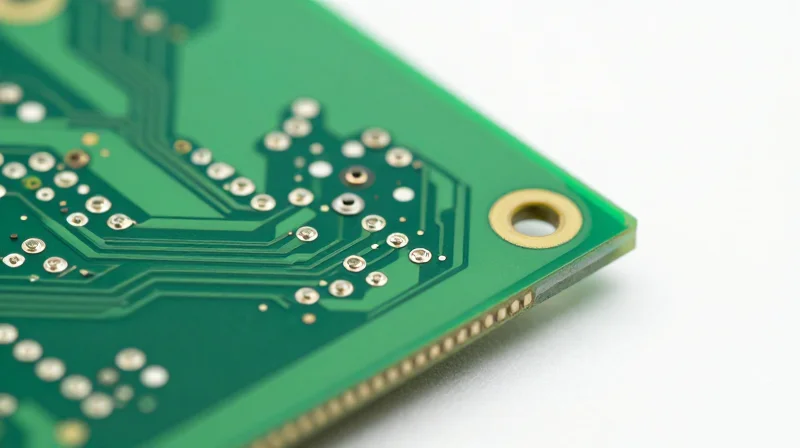
A Certificate of Conformance (CoC) serves as the formal declaration that the manufactured PCBs meet your specific halogen-free requirements. However, in an industry where non-compliant materials are often mislabeled, relying on a simple document is insufficient. You must treat the CoC as a starting point for a deeper technical audit of the manufacturer's quality management system.
Verifying Material Composition Reports
To confirm that your boards are truly halogen-free—typically defined as having a maximum bromine or chlorine content of 900 ppm and a total combined halogen content of 1,500 ppm—you must demand Full Material Disclosure (FMD) reports. These documents should trace the chemical composition back to the base laminate manufacturer, rather than just the PCB fabricator.
| Audit Item | Verification Method | Red Flag |
|---|---|---|
| CoC Validity | Match Batch/Lot Numbers | Generic/Undated Certificates |
| Material Data Sheet | Verify IPC-4101 slash sheet | Missing CAS numbers |
| Third-Party Testing | Request Lab Certification | Manufacturer-only testing |
Preventing Counterfeit Material Entry
- How do I ensure the laminate is authentic?
Cross-reference the batch number on the CoC with the raw material supplier’s own certificate. Authentic laminates from top-tier suppliers like Isola or Panasonic provide traceable identifiers that link directly to the manufacturing run. - Why is independent testing necessary?
Internal documentation can be falsified. Periodic spot-checks using Fourier-Transform Infrared Spectroscopy (FTIR) or Ion Chromatography (IC) on random samples confirm that the halogen content aligns with the submitted documentation. - What indicates a supply chain risk?
High-risk indicators include the use of 'equivalent' materials without prior approval, missing MSDS (Material Safety Data Sheets), or the inability of the supplier to provide a clear chain of custody from the resin manufacturer.
Ultimately, a manufacturer’s willingness to provide transparent, granular data regarding their sub-tier suppliers is the strongest indicator of their commitment to sustainable design. Never accept a 'compliance statement' that lacks granular chemical detail.
Evaluating Manufacturing Processes and Cleanliness

Evaluating Manufacturing Processes and Cleanliness
Ensuring the integrity of halogen-free PCB designs requires a manufacturing environment that strictly controls cross-contamination. Because halogen-free resins are highly sensitive to contamination from legacy halogenated flame retardants, manufacturers must maintain segregated production lines and rigorous cleaning protocols to guarantee material purity.
Critical Control Points for Production
When auditing a facility, focus on how they manage material flow. High-performance, halogen-free laminates can be compromised if processed on machines previously used for standard FR-4 containing bromine-based flame retardants.
| Control Area | Requirement | Auditor Focus |
|---|---|---|
| Material Storage | Complete segregation | Verify separate racking and labeling |
| Lamination Press | Dedicated cycles or deep cleaning | Request cleaning logs between material types |
| Equipment Maintenance | Residue elimination | Check for halogen detection testing protocols |
Cleanliness and Process Validation
- How do you verify if the manufacturer prevents cross-contamination?
Look for documentation of 'Campaign Manufacturing,' where the facility schedules halogen-free builds sequentially, followed by a validated deep-cleaning protocol for the equipment before switching back to standard materials. - What testing should verify environmental cleanliness?
Request Ion Chromatography (IC) test results. This analytical method detects traces of ionic contaminants, including residual halides, that may have transferred to the PCB surface during manufacturing. - Is physical plant cleanliness a differentiator?
Yes. A facility with high 'Housekeeping Standards'—such as HEPA-filtered cleanrooms and strict personnel garment requirements—is statistically less likely to introduce microscopic debris that could impact the dielectric performance of sensitive halogen-free substrates.
Supply Chain Transparency and Material Traceability
The Imperative of End-to-End Traceability
Traceability in the context of halogen-free PCBs extends beyond simple inventory tracking; it requires a digital thread that links raw material sourcing, laminate production, and the final fabrication steps. For designers committed to sustainable electronics, selecting a manufacturer capable of providing full material provenance is the only way to mitigate the risk of contamination from restricted substances like brominated flame retardants (BFRs) or chlorinated compounds.
Key Components of a Robust Traceability Program
- Material Batch Tracking
A high-quality manufacturer must link each batch of halogen-free laminate to specific serial numbers, allowing for rapid isolation of materials in the event of a quality deviation. - Full Substance Disclosure
Partners should provide Full Material Declarations (FMDs) that extend beyond standard certifications, accounting for all chemical constituents in prepregs, core materials, and copper foils. - Digitized Audit Trails
Prefer manufacturers that utilize automated ERP systems capable of generating automated reports that map every component back to its certified source.
Evaluating Traceability Capabilities
| Evaluation Criterion | Basic Manufacturer | Transparent Partner |
|---|---|---|
| Material Sourcing | Relies on supplier word | Direct link to original laminate mill |
| Data Accessibility | Manual request via email | Instant cloud-based document access |
| Contamination Risk | Minimal batch isolation | Granular lot-level segregation |
Verification Strategies
To verify that your manufacturer is truly capable of maintaining a halogen-free chain of custody, conduct periodic site audits focusing on material segregation. Ensure that the facility has dedicated storage and handling protocols to prevent cross-contact with traditional brominated resins. Request a 'mock recall' simulation, where the manufacturer must demonstrate how quickly they can track a specific resin lot back to the raw material supplier and identify every customer PCB batch derived from that specific supply.
Third-Party Audits and Independent Testing

The Role of Independent Validation in PCB Manufacturing
While internal quality management systems and supplier declarations provide a baseline, they are insufficient for verifying complex chemical compliance in a global supply chain. Independent testing acts as an objective safeguard, ensuring that the halogen-free status of PCB laminates, solder masks, and resins aligns with international standards like IEC 61249-2-21. By partnering with accredited third-party laboratories, OEMs can effectively mitigate the risk of greenwashing and verify that manufacturing processes remain free from cross-contamination during production.
Comparative Verification Methods
| Audit Type | Primary Focus | Strategic Value |
|---|---|---|
| On-site Process Audit | Cleanliness and material segregation | Prevents batch cross-contamination |
| Laboratory ICP-MS/IC Testing | Quantitative halogen content analysis | Definitive proof of material compliance |
| Supply Chain Traceability Review | Documentary trail from raw material | Ensures ethical and regulatory alignment |
Frequently Asked Questions
- How often should third-party audits be performed?
For high-reliability sectors, an annual on-site audit is recommended, supplemented by quarterly spot-check testing of material samples to account for changes in the manufacturer's supplier base. - What specific tests define 'halogen-free' validation?
Validation typically involves Ion Chromatography (IC) testing to detect the presence of chlorine and bromine levels, ensuring they remain below the industry-standard threshold of 900 ppm each. - Does an ISO certification replace the need for an audit?
No. ISO 9001 or 14001 certifications verify that a management system exists, but they do not specifically confirm the chemical composition of the PCBs being delivered to your production line.
Ultimately, selecting a manufacturer that welcomes external scrutiny is a strong indicator of organizational integrity. OEMs should demand transparency regarding the manufacturer's relationship with reputable testing houses, as this collaboration is a prerequisite for achieving long-term sustainability goals in electronic design.
Aligning Partnership Goals for Long-Term Sustainability
Moving Beyond Transactional Compliance
To achieve true sustainability in electronic design, the relationship with a PCB manufacturer must evolve from a vendor-client transaction to a collaborative partnership. Relying solely on regulatory checkboxes often leaves untapped potential for innovation in halogen-free material science and design efficiency. By aligning goals early, companies can shift their focus from 'meeting minimum requirements' to 'pioneering low-impact manufacturing standards.'
Framework for Strategic Alignment
| Focus Area | Transactional Approach | Partnership Approach |
|---|---|---|
| Material Innovation | Accepting standard materials | Joint R&D for next-gen laminates |
| Sustainability KPIs | Compliance audits only | Shared carbon-reduction roadmaps |
| Information Flow | Request-on-demand | Real-time supply chain integration |
Key Considerations for Long-Term Sustainability
- How do we ensure our goals remain synchronized as technology evolves?
Establish quarterly strategic business reviews that look beyond current order status to discuss upcoming material developments and long-term sustainability roadmaps. - What role does transparency play in long-term alignment?
Open-book communication regarding halogen-free supply chain challenges allows for proactive problem solving, ensuring that sustainability goals are not compromised by temporary market shortages. - Can we incentivize our manufacturer to lead in eco-innovation?
Yes, by integrating sustainability milestones into contractual agreements, you create a shared incentive structure that rewards manufacturers for reducing environmental footprints and implementing cleaner chemistries.
By viewing your PCB manufacturer as an extension of your own R&D and sustainability teams, you mitigate the risks associated with volatile material markets while securing a competitive advantage in the growing market for environmentally conscious electronic products.
Selecting a PCB manufacturing partner is a high-stakes decision that impacts both your brand reputation and regulatory standing. By prioritizing IPC-4101 standards and maintaining strict compliance, you build a resilient, future-proof electronics product. Contact our engineering team today to schedule an audit of your current supply chain requirements and ensure your next project meets the gold standard in sustainability.
