
In the high-stakes world of Industrial IoT, a single component failure can lead to catastrophic downtime. Selecting a manufacturing partner is not just about cost; it is about building a foundation of reliability that supports years of continuous field operation. Here is how to evaluate the elite manufacturers capable of meeting the rigorous demands of industrial environments.
The Crucial Role of Quality Certifications
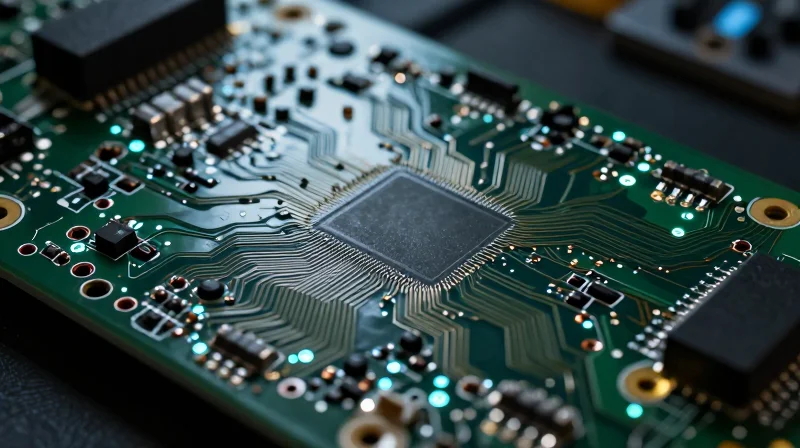
The Crucial Role of Quality Certifications
For industrial IoT (IIoT) applications where sensor nodes are deployed in harsh, mission-critical environments, hardware failure is not just an inconvenience—it is a financial and operational liability. Selecting an Industrial IoT PCB manufacturer requires verifying specific quality certifications that serve as evidence of repeatable, high-precision manufacturing. These certifications ensure that the manufacturer operates under strict documentation and testing regimes, significantly reducing the probability of field failures caused by board-level defects.
| Certification | Significance for IIoT | Primary Benefit |
|---|---|---|
| ISO 9001 | Quality Management Systems | Ensures consistent processes and continuous improvement. |
| IATF 16949 | Automotive Standards | Focuses on defect prevention and waste reduction. |
| IPC-A-610 | Electronics Assembly | The industry standard for PCB solder joint reliability. |
Why Compliance is Non-Negotiable
When evaluating potential manufacturing partners, certifications should be treated as the foundation of the vetting process. IPC-A-610 compliance, in particular, is critical because it dictates the visual and structural criteria for PCB assembly quality. Without these benchmarks, manufacturers lack the standardized framework required to manage thermal cycling, vibration resistance, and moisture ingress—factors that frequently cause sensor nodes to fail prematurely in industrial settings.
- Why is IATF 16949 relevant for general industrial IoT?
While originally designed for automotive, it represents the gold standard for high-reliability manufacturing, demanding lower tolerance levels and rigorous supply chain oversight that benefits any mission-critical sensor node. - Does ISO 9001 guarantee hardware performance?
It guarantees the *process* of manufacturing, ensuring that quality management protocols are documented and followed, which is the necessary prerequisite for achieving consistent physical performance. - What should I ask a manufacturer about their certifications?
Request their current registration certificates and ask how they integrate IPC class criteria into their specific production line automated optical inspection (AOI) protocols.
Assessing Long-Term Hardware Durability
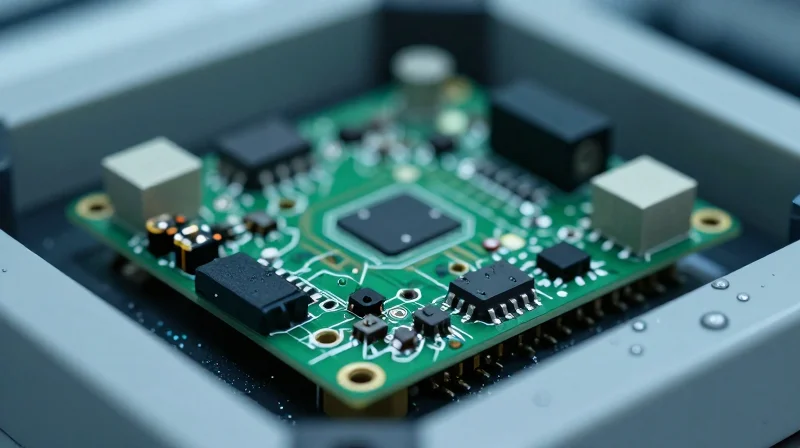
Assessing Long-Term Hardware Durability
Industrial IoT sensor nodes frequently operate in environments where vibration, extreme temperature cycling, and corrosive chemicals are standard. Selecting a manufacturer means verifying their ability to design for longevity, ensuring that components not only pass initial functional testing but also maintain integrity over a 5 to 10-year deployment lifecycle.
Environmental Protection and Ruggedization Techniques
| Protection Method | Best Use Case | Durability Benefit |
|---|---|---|
| Conformal Coating | High humidity/dust | Prevents shorting and corrosion |
| Potting/Encapsulation | High vibration/impact | Provides structural rigidity |
| Thermal Vias/Heat Sinks | High-power processors | Mitigates thermal degradation |
Frequently Asked Questions
- How do I verify a manufacturer's thermal management capabilities?
Request thermal mapping reports and ask if they use thermal simulation software during the design phase to identify potential heat-related failure points before fabrication. - Is potting always necessary for industrial IoT?
Not always. Potting is essential for high-vibration or high-impact environments, but it can make field repairs impossible and complicate thermal dissipation; consider conformal coating for lighter applications. - What testing standards indicate long-term reliability?
Look for manufacturers that perform Highly Accelerated Life Testing (HALT) and Highly Accelerated Stress Screening (HASS) to simulate years of environmental wear in a compressed timeframe.
Supply Chain Transparency and Component Sourcing

Mitigating Counterfeit Risks Through Traceability
In the industrial sector, a single counterfeit component can lead to catastrophic system failure. Reliable PCB manufacturers mitigate this by implementing a 'Chain of Custody' policy. This requires documenting the entire provenance of every component from the original manufacturer (OCM) or an authorized distributor. By enforcing strict adherence to AS6171 or similar testing standards, manufacturers can verify the authenticity of high-risk components like microcontrollers and power management ICs before they are even soldered onto the board.
Supply Chain Transparency Framework
| Strategy | Implementation Detail | Risk Mitigation |
|---|---|---|
| Approved Vendor List (AVL) | Sourcing only from authorized distributors | Prevents grey market and counterfeit influx |
| Full Lot Traceability | Logging date codes and batch numbers for every PCBA | Enables surgical recalls if a defect is detected |
| Component Obsolescence Planning | Proactive monitoring of product life cycles | Avoids last-minute redesigns due to discontinued parts |
Frequently Asked Questions
- How does an AVL protect my IIoT sensor node?
An Approved Vendor List restricts the procurement team to components sourced directly from manufacturers or franchised distributors, effectively eliminating the risks associated with unauthorized secondary markets. - Why is lot traceability critical for industrial sensors?
Traceability allows you to isolate specific manufacturing batches. If a field failure occurs, you can identify exactly which boards were affected based on the component lot codes, preventing unnecessary systemic downtime. - What should I look for in an audit regarding sourcing?
Verify that your manufacturer maintains an active 'Non-Conforming Material' process and proof of 'Certificate of Conformance' (CoC) documentation for every major component shipment.
Scalability: From Prototype to Mass Production
Transitioning from a functional prototype to high-volume production is the most critical inflection point in the IIoT hardware lifecycle. A manufacturer that performs well for a ten-unit test batch may lack the automated optical inspection (AOI) capabilities, component sourcing leverage, or process control rigor required to maintain reliability at 10,000 units. To ensure scalability without sacrificing the performance of your industrial sensor nodes, you must evaluate a partner’s infrastructure beyond their basic assembly capabilities.
Transition Metrics: Scaling Capability Comparison
| Capacity Factor | Prototype Capability | Production Capability |
|---|---|---|
| Assembly Process | Manual/Semi-automated | Fully Automated SMT Lines |
| Quality Control | Visual/Manual | 3D AOI & X-Ray Inspection |
| Component Sourcing | Market/Distributor | Direct OEM/Volume Pricing |
| Process Validation | Ad-hoc | Statistical Process Control (SPC) |
Strategic Questions for Scaling Potential
- Does the manufacturer offer DFM (Design for Manufacturing) feedback?
A superior partner will analyze your prototype design to identify cost-drivers and assembly bottlenecks before you move to production, ensuring lower yield losses during scale-up. - Is the production line flexible enough for volume ramping?
Ensure they have the capacity to handle surge volumes and the ability to reconfigure lines to manage the specialized requirements of sensor node encapsulation or firmware flashing. - How is quality maintained during peak capacity?
Ask for their defect rate statistics and how they handle non-conformance. A scalable partner should have automated, data-driven systems that do not rely solely on human intervention. - What is their strategy for obsolescence management?
Scaling involves long lead times. A reliable partner proactively monitors component lifecycles to prevent production halts caused by sudden EOL (End-of-Life) notices for critical ICs.
Ultimately, the right manufacturing partner functions as an extension of your own engineering team. By aligning your scaling roadmap with their technological infrastructure, you mitigate the risk of performance degradation, ensuring that your sensor nodes perform as reliably in the field as they did on the laboratory bench.
Testing Protocols for IIoT Devices

For industrial IoT (IIoT) applications, the cost of device failure often far exceeds the initial investment in the hardware. To ensure long-term sensor node performance, manufacturers must employ a multi-layered testing strategy that addresses both manufacturing defects and long-term operational stressors. By vetting your PCB manufacturer's testing infrastructure, you reduce the risk of field failures in harsh industrial settings.
Essential Quality Assurance Methodologies
| Test Method | Primary Objective | IIoT Application |
|---|---|---|
| AOI (Automated Optical Inspection) | Detect surface-level defects | Verification of fine-pitch components |
| Flying Probe Testing | Verify electrical connectivity | Testing complex, dense PCB layouts |
| Burn-in Testing | Identify infant mortality failures | Validating reliability for 24/7 operation |
Deep Dive into Specialized Testing
Automated Optical Inspection (AOI) uses high-resolution cameras to compare board assemblies against a master design, catching misalignments or solder bridges early. While AOI handles visual integrity, Flying Probe Testing is essential for electrical validation. Because it requires no custom test fixtures, it is highly adaptable for rapid iteration. Finally, Burn-in Testing—subjecting the board to elevated temperatures and power cycles—is non-negotiable for industrial reliability, as it flushes out marginal components that would otherwise fail early in the deployment life cycle.
Common Questions About IIoT Testing Protocols
- Is AOI sufficient to replace electrical testing?
No, AOI only verifies physical placement and soldering appearance. It cannot detect internal shorts, open circuits, or faulty passive component values, necessitating electrical testing like Flying Probe or ICT. - When is burn-in testing required?
Burn-in is recommended for any IoT node destined for mission-critical or high-availability applications where field maintenance is costly or impossible. - Does the manufacturer's testing scope impact time-to-market?
While rigorous testing adds lead time, automated processes like Flying Probe often balance this by reducing manual inspection bottlenecks and preventing costly field-return logistics.
Evaluating Engineering Support and DFM Capabilities

Selecting an IIoT PCB manufacturer is not merely about finding a facility with high throughput; it is about securing a partner who acts as an extension of your engineering team. The most reliable sensor nodes are the result of rigorous DFM analysis performed well before the first batch of boards is populated. By identifying potential manufacturing bottlenecks and layout flaws early, you eliminate the risk of late-stage production failures and excessive cost overruns.
The Role of Proactive DFM Analysis
DFM is the process of optimizing the design to simplify fabrication and assembly. For industrial IoT devices—which often involve complex multi-layer boards, miniaturized components, and sensitive sensor integration—DFM is non-negotiable. An expert manufacturer should review your Gerber files and BOM to highlight issues like non-standard drill sizes, insufficient solder mask clearances, or thermal management concerns that could compromise your sensor's sensitivity.
| DFM Focus Area | Impact on Sensor Nodes | Risk if Ignored |
|---|---|---|
| Copper Weight/Trace Width | Signal integrity for low-power radio | Excessive heat, signal noise, and power loss |
| Component Placement | Solder joint reliability in vibration | Intermittent connectivity or physical failure |
| Thermal Relief Design | Sensor accuracy and temperature drift | Thermal instability leading to false data |
Evaluating Engineering Support Quality
When evaluating potential partners, assess their engineering department's ability to offer consultative feedback rather than just executing your existing designs. A high-value manufacturer will proactively suggest material substitutions (e.g., higher TG FR-4 for harsh environments) or footprint modifications to improve yield without increasing costs.
- How early should a manufacturer be involved?
Ideally, engage your PCB partner during the NPI (New Product Introduction) stage to leverage their DFM expertise before your design is finalized. - What indicates a strong DFM capability?
A high-quality partner provides a comprehensive DFM report that includes specific, actionable recommendations rather than just a pass/fail notification. - Can DFM save on production costs?
Yes, by standardizing materials and optimizing panelization, DFM reports often identify ways to reduce board scrap rates and assembly time, directly impacting your bottom-line unit cost.
Communication and Geographic Strategy

Geographic Strategy: Domestic vs. Offshore Trade-offs
The decision to manufacture PCB assemblies for industrial IoT locally or internationally hinges on the specific lifecycle requirements of your sensor nodes. Domestic manufacturing excels in high-touch, agile environments where rapid design iteration and frequent communication are non-negotiable. Conversely, offshore manufacturing offers significant cost efficiencies at scale but introduces complexities in logistics and time-zone management.
| Feature | Domestic Manufacturing | Offshore Manufacturing |
|---|---|---|
| Lead Times | Short/Agile | Extended/Buffered |
| Communication | Synchronous/Real-time | Asynchronous/Remote |
| IP Protection | Highly Regulated | Requires Strict Contracts |
| Scalability | Moderate | High Capacity |
Key Considerations for Communication Channels
Effective collaboration with an IIoT PCB partner is contingent upon clear communication protocols that transcend geographic boundaries. You must establish centralized Project Management software, ensure English-proficient engineering teams are accessible during overlap hours, and define clear escalation paths for design-related bottlenecks.
- How does geographic distance impact DFM feedback loops?
Greater distances can introduce latency in design corrections; local partners provide near-instant feedback, while offshore partners often require defined batch-cycle reporting to maintain momentum. - What steps ensure IP security with remote manufacturers?
Always utilize non-disclosure agreements (NDAs) specific to the region, limit data sharing to 'need-to-know' layers, and audit the partner's internal document control and cybersecurity policies. - When is a hybrid model appropriate?
A hybrid approach—using domestic partners for prototyping and low-volume production, while transitioning to offshore partners for high-volume mass production—is often the most effective strategy for managing both cost and technical risk.
Finalizing the Partnership: The Due Diligence Checklist
Finalizing the Partnership: The Due Diligence Checklist
Transitioning from technical evaluation to a formal contract requires rigorous verification of a manufacturer's operational maturity, quality systems, and financial stability. Before finalizing your partnership, you must conduct a structured audit to confirm that the provider can maintain consistency for industrial-grade IoT sensor nodes over extended production cycles.
Core Audit Requirements
| Audit Area | Verification Focus | Key Indicator |
|---|---|---|
| Quality Systems | ISO 9001, IPC Class 3 compliance | Documented rework processes |
| Supply Chain | Component traceability/Authenticity | Zero-tolerance for counterfeit parts |
| Equipment | Modernity of SMT lines and inspection tools | Age of machinery < 5 years |
| Capacity | Scalability for fluctuating demand | Buffer capacity during peak periods |
Due Diligence FAQ
- How do I verify component provenance?
Ask for their Approved Vendor List (AVL) and their procurement policy regarding authorized distributors. Ensure they have a formal system to prevent the integration of counterfeit parts into industrial hardware. - What indicates a stable manufacturing process?
Look for high First Pass Yield (FPY) rates and detailed Statistical Process Control (SPC) documentation. A manufacturer should readily share these metrics if their processes are truly under control. - Is on-site auditing mandatory?
For high-reliability industrial nodes, yes. An on-site visit allows you to observe shop-floor cleanliness, anti-static (ESD) protocols, and the actual implementation of the quality processes discussed in their documentation. - How is Intellectual Property protected during the final handover?
Verify their IT security infrastructure, including how they handle Gerber files, BOMs, and source code. Look for evidence of restricted network access and document encryption policies.
Finally, ensure that the service level agreement (SLA) covers not just delivery timelines, but also specific quality thresholds and failure rate tolerances. A transparent partnership is defined by how the manufacturer handles non-conformances; prioritize those who demonstrate a proactive 'root cause' culture rather than a reactive fix-only approach.
Selecting an IIoT manufacturing partner requires diligent verification of their technical capabilities and commitment to quality standards. By prioritizing long-term durability and supply chain transparency, you ensure your sensor nodes deliver reliable performance in even the harshest environments. Ready to scale your next industrial project? Contact our engineering team today for a consultation on your hardware manufacturing strategy.
