
In the fast-paced world of commercial HVAC engineering, the controller is the brain, but the PCB is the nervous system. When systems are deployed in harsh environments—ranging from extreme temperature fluctuations to high-moisture industrial settings—standard consumer-grade boards simply fail. This guide outlines the strategic factors engineers and procurement managers must weigh to ensure high-efficiency, long-term operational success.
Evaluating Thermal Management Requirements
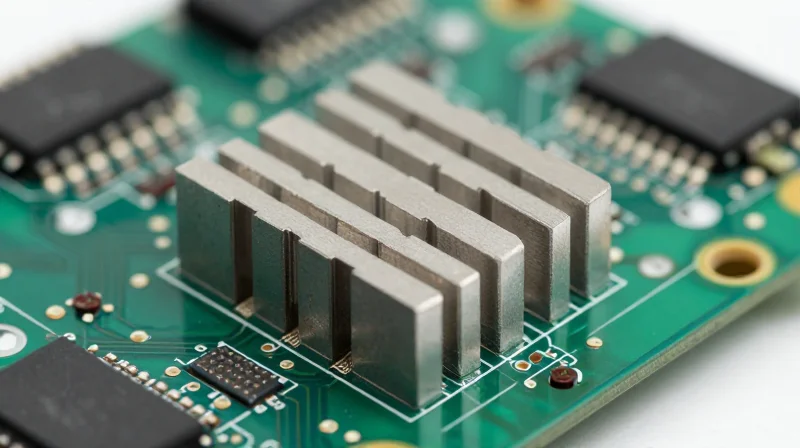
Determining Thermal Load and Substrate Selection
Effective thermal management begins with accurate load estimation. HVAC systems subject electronic controls to rapid temperature swings, which can induce thermal fatigue on standard FR-4 substrates. For high-efficiency units, design engineers must prioritize materials with high Glass Transition Temperatures (Tg) and superior Coefficient of Thermal Expansion (CTE) stability to prevent delamination and solder joint failure during continuous operational cycles.
| Substrate Type | Thermal Conductivity (W/mK) | Ideal Application |
|---|---|---|
| Standard FR-4 | 0.25 | Low-power sensor modules |
| High-Tg FR-4 | 0.30 - 0.40 | Standard control logic boards |
| Metal Core (MCPCB) | 1.0 - 3.0+ | Power stage and motor drives |
| Ceramic Substrates | 20.0 - 150.0 | High-density power electronics |
Strategies for Heat Dissipation
Beyond material selection, physical board architecture is paramount for heat dissipation. Implementing robust copper pours, thermal vias, and strategic component placement prevents localized hotspots. In high-efficiency HVAC designs, the integration of heavy copper weights (2oz to 4oz) significantly improves thermal mass, allowing the PCB to act as a heat spreader for high-switching frequency components.
Frequently Asked Questions
- Why is standard FR-4 often insufficient for commercial HVAC?
Standard FR-4 lacks the thermal conductivity and CTE matching required to survive thousands of heating and cooling cycles, often leading to board warping or internal via cracking over time. - When should an MCPCB be specified?
Use Metal Core PCBs when the design includes power-intensive components like IGBTs or MOSFETs that exceed the passive cooling capacity of conventional fiberglass-based boards. - How do thermal vias impact board layout?
Thermal vias provide a low-resistance path to transfer heat from the component pads to internal copper layers or an external heatsink; they must be strategically placed in a grid pattern to be most effective.
Environmental Protection and Conformal Coating Standards
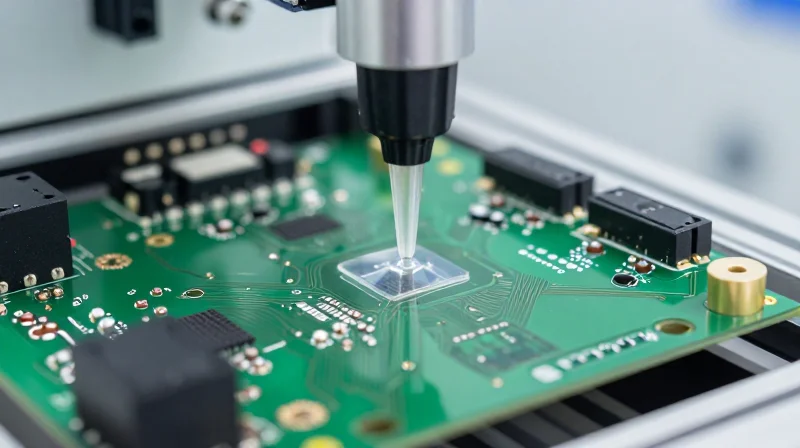
Navigating Environmental Protection Standards
In commercial HVAC applications, control boards are frequently exposed to variable temperature ranges, high humidity, and airborne contaminants. To ensure long-term reliability, engineers must specify PCBs that adhere to the IPC-CC-830 standard. This standard provides the benchmark for the qualification and performance of electrical insulating compounds used for conformal coating, ensuring that the protective layer maintains integrity under stress and prevents conductive path failures due to electrochemical migration.
Comparing Conformal Coating Materials
| Coating Type | Primary Benefit | Best Use Case |
|---|---|---|
| Acrylic (AR) | Easy to repair | General commercial HVAC control units |
| Silicone (SR) | High thermal resistance | High-heat variable speed drive controllers |
| Polyurethane (UR) | Superior chemical resistance | Outdoor units exposed to corrosive air |
| Parylene | Pin-hole free barrier | Mission-critical, small-form-factor sensors |
Addressing Common Environmental Failures
- How does moisture lead to PCB failure in HVAC systems?
Moisture acts as a conductor when combined with residual flux or airborne pollutants, leading to dendritic growth that causes short circuits between fine-pitch components. - Why is chemical resistance a critical selection factor?
Commercial HVAC systems are often installed in environments with ozone, cleaners, or acidic exhaust; a high-grade conformal coating prevents these chemicals from corroding copper traces and solder joints. - What is the role of IPC-CC-830 testing?
It verifies that the coating material will not crack, delaminate, or lose insulation resistance when exposed to thermal cycling and high humidity, which are standard operational conditions for HVAC systems.
Component Sourcing Reliability and Lifecycle Management
Mitigating Supply Chain Volatility in HVAC Manufacturing
Commercial HVAC systems often require operational lifespans exceeding 15 to 20 years, creating a significant mismatch with the rapid innovation cycles of the semiconductor industry. To mitigate supply chain risks, engineers must prioritize the selection of components with established 'Long-Life' or 'Product Longevity' programs provided by Tier-1 silicon manufacturers. Relying on commodity-grade parts for mission-critical control loops invites the risk of premature obsolescence and costly mid-lifecycle hardware redesigns.
Strategic Component Selection Matrix
| Component Category | Sourcing Strategy | Risk Factor |
|---|---|---|
| Microcontrollers | Focus on 10+ year longevity programs | High - Obsoletion halts production |
| Passive Components | Standardize on automotive-grade AEC-Q200 | Low - Cross-referencing is feasible |
| Power MOSFETs | Select wide-availability industry footprints | Medium - Specific thermal packaging needed |
Lifecycle Management Best Practices
- How do I ensure long-term component availability?
Design with components explicitly supported by manufacturer longevity programs and avoid 'bleeding edge' technology that lacks a proven roadmap for industrial support. - What is the role of BOM risk analysis?
Regular Bill of Materials (BOM) health checks using lifecycle databases can identify 'End-of-Life' (EOL) notices early, allowing time for last-time-buys or strategic component substitution. - Should I consider drop-in replacements?
Yes, designing for modularity and maintaining a list of pre-qualified, pin-compatible alternatives ensures that the system can remain functional even if a specific part becomes unavailable.
Effective lifecycle management moves beyond simple sourcing; it integrates design-for-availability (DFA) into the early stages of PCB development. By documenting design intent and maintaining rigorous change control, HVAC manufacturers can ensure that every board revision remains compatible with long-term maintenance requirements, ultimately reducing the total cost of ownership for building operators.
Ensuring Electromagnetic Compatibility (EMC) in HVAC Systems
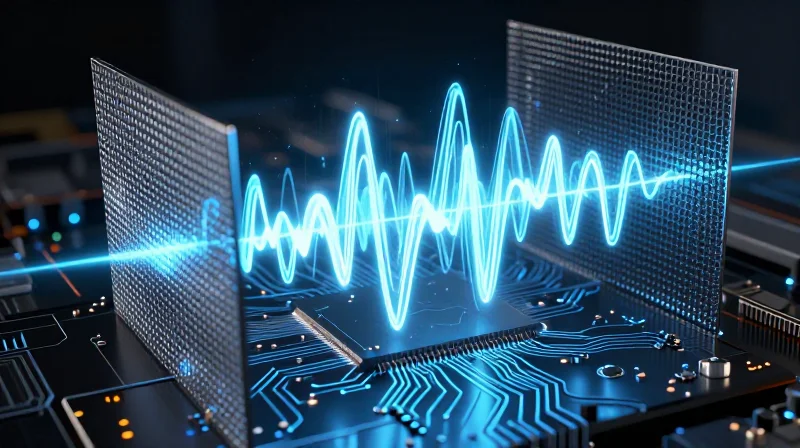
Mitigating EMI from HVAC Power Components
Commercial HVAC systems operate in electrically noisy environments characterized by variable frequency drives (VFDs), high-wattage compressors, and solenoid valves. To ensure high-efficiency control, the PCB design must prioritize signal integrity through rigorous partitioning, strategic grounding, and advanced filtering techniques to isolate sensitive low-voltage microcontrollers from high-transient power stages.
Best Practices for PCB Layout and Shielding
- Strict Partitioning
Physically separate the high-voltage AC input and switching power supply circuits from low-voltage digital control signals to minimize capacitive and inductive coupling. - Ground Plane Integrity
Utilize a solid, low-impedance ground plane to provide a return path for high-frequency currents, significantly reducing common-mode noise radiation. - Differential Signal Routing
Implement differential pair routing for high-speed communication buses like BACnet or Modbus to improve noise immunity against external electromagnetic fields. - Component-Level Filtering
Place transient voltage suppressors (TVS) and common-mode chokes as close to the board edge or connector ingress points as possible to catch interference before it propagates.
EMC Strategy Comparison Table
| Strategy | Primary Benefit | Implementation Complexity |
|---|---|---|
| Layer Stackup Optimization | Reduces loop area and crosstalk | Medium |
| Galvanic Isolation (Optocouplers) | Prevents surge damage/noise injection | High |
| Ferrite Beads | Suppresses high-frequency harmonics | Low |
| Faraday Cage/Shielding | Blocks external RF interference | High |
Frequently Asked Questions on HVAC EMC
- Why do VFDs cause EMI on nearby sensors?
VFDs generate high-frequency pulse-width modulated (PWM) switching transients that capacitively couple into poorly shielded sensor cables, creating false readings. - When is formal EMC testing required?
For commercial HVAC applications, compliance with FCC Part 15 (US) or CISPR 32/35 (International) is typically mandatory to ensure the device does not interfere with other critical building infrastructure.
Material Selection for High-Humidity and Corrosive Settings
Material Selection for High-Humidity and Corrosive Settings
In commercial HVAC applications, where boards are often subjected to condensation, moisture ingression, and corrosive gases, standard substrate selection is insufficient. The dielectric constant (Dk) and dissipation factor (Df) of standard FR-4 laminates can fluctuate under extreme humidity, leading to signal degradation and potential electrochemical migration (ECM). For high-efficiency HVAC controllers, transitioning to high-performance laminates or applying robust material treatment protocols is essential to prevent conductive filament formation.
| Feature | Standard FR-4 | High-Performance Laminate (e.g., Polyimide/Ceramic) |
|---|---|---|
| Moisture Absorption | Moderate (0.1% - 0.2%) | Very Low (< 0.05%) |
| Dielectric Stability | Variable with Humidity | Excellent Stability |
| Corrosion Resistance | Requires Conformal Coating | Inherently Superior |
| Operating Life | Limited in Condensing Env. | High Longevity |
Key Considerations for Harsh Environments
- Why does moisture absorption matter for dielectric stability?
Moisture absorption increases the dielectric constant of the laminate, which can shift the impedance of controlled-impedance traces and disrupt the timing of sensitive HVAC control signals. - What are the advantages of polyimide substrates?
Polyimide-based laminates offer superior thermal stability and moisture resistance compared to standard epoxy-glass substrates, making them ideal for high-humidity environments where thermal cycling is also present. - Is laminate selection enough to prevent corrosion?
While high-performance laminates mitigate moisture issues, they must be paired with secondary protections such as conformal coatings (e.g., Parylene or Acrylic) and proper PCB finish selection like Electroless Nickel Immersion Gold (ENIG) to prevent oxidation.
To achieve maximum reliability in HVAC control systems, design engineers should prioritize materials with a high Comparative Tracking Index (CTI). A high CTI rating indicates that the insulating material is less prone to forming conductive carbon paths under stress, providing a vital layer of defense against short-circuits caused by humidity-induced dendrite growth.
Testing Protocols for Industrial Reliability
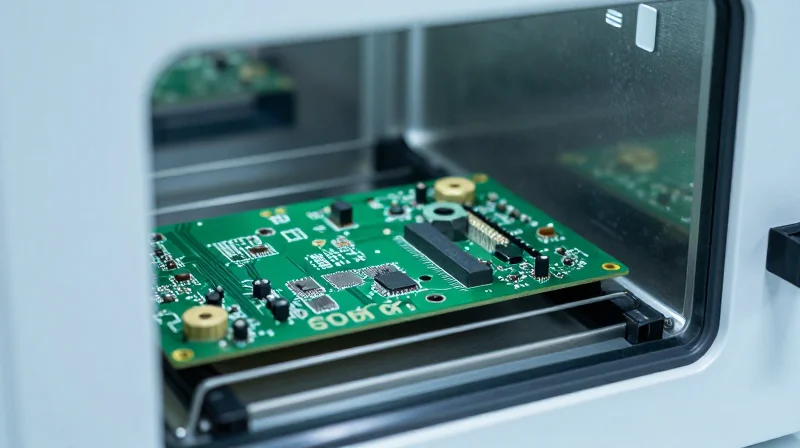
Validating PCB Integrity Under Stress
In commercial HVAC control systems, PCBs are exposed to constant thermal cycling, vibration, and electrical transients. To prevent premature field failures, manufacturers must transition from standard verification to accelerated stress testing protocols that reveal latent design defects before mass deployment.
Comparative Analysis of Reliability Testing Methodologies
| Testing Method | Primary Goal | Application Phase |
|---|---|---|
| HALT (Highly Accelerated Life Test) | Identify design limits and failure modes | Design/Prototype |
| HASS (Highly Accelerated Stress Screen) | Detect manufacturing defects in production | Mass Production |
| Thermal Cycling | Validate solder joint fatigue resistance | Validation |
Key Testing Protocols for HVAC Reliability
- Why is HALT critical for HVAC PCBs?
HALT exposes prototypes to stress levels well beyond their operational ratings—simulating years of thermal and vibrational wear in days—to find the exact threshold where components fail, allowing for preemptive design hardening. - What role does HASS play in manufacturing?
HASS acts as an ongoing quality gate during production. By applying aggressive, non-destructive stress to sampled units, it screens for hidden assembly flaws like cold solder joints or component defects that standard functional testing might miss. - How does moisture ingress testing affect reliability?
Given the high-humidity environment of HVAC units, PCBs must undergo salt fog and humidity testing to validate conformal coating integrity and prevent electrolytic corrosion between high-voltage traces.
Best Practices for Implementation
To achieve maximum reliability, integrate these testing protocols early in the design cycle. Use the data collected from HALT to refine layout constraints, ensuring that high-mass components are properly supported against vibration and that thermal paths are optimized for heat dissipation. By establishing rigorous pass/fail criteria based on these results, you create a robust quality framework that ensures commercial HVAC controllers withstand the rigors of multi-year operational lifespans.
Optimizing for Energy Efficiency and Power Integrity
In commercial HVAC control systems, power efficiency is not merely a design preference but a regulatory necessity. High-efficiency boards mitigate I²R power losses, reduce cooling requirements for the enclosure itself, and extend the lifespan of power semiconductors. Achieving this requires a holistic approach to power integrity (PI) and energy optimization from the schematic phase through to the physical copper routing.
Power Distribution Network (PDN) Design
A robust PDN minimizes voltage droop and ringing, ensuring that sensitive microcontrollers and power drivers operate within optimal efficiency bands. Implementing wide copper planes for power and ground returns reduces parasitic inductance and resistance. For high-current HVAC motor controllers, utilizing dedicated power planes rather than traces is essential to prevent localized heating and voltage drops.
Thermal Mitigation and Material Properties
| Parameter | Standard FR-4 | High-Efficiency Laminate | Impact on Efficiency |
|---|---|---|---|
| Dissipation Factor (Df) | ~0.020 | <0.010 | Reduced signal/power loss |
| Thermal Conductivity | Low | High (Ceramic-filled) | Better heat dissipation |
| CTE Alignment | Moderate | Excellent | Higher reliability under load |
Key Considerations for Energy-Efficient PCB Design
- How does copper weight affect efficiency?
Increasing copper weight (e.g., from 1oz to 2oz or 3oz) directly reduces DC resistance, minimizing thermal dissipation and voltage drops in high-current HVAC switching paths. - What is the role of vias in power integrity?
Vias should be optimized by increasing quantity and reducing length to lower impedance, preventing 'bottle-necking' of current flow between board layers. - Can decoupling capacitors improve energy ratings?
Strategic placement of low-ESR ceramic capacitors near switching nodes reduces noise-induced ripple, allowing power stages to run at higher efficiency without triggering over-voltage protection circuits.
Implementing Passive Component Selection
Selecting passive components with low Equivalent Series Resistance (ESR) and high temperature ratings is critical for HVAC systems operating in extreme environments. When designing power stages, prioritize inductors with high saturation currents and low DCR (Direct Current Resistance) to minimize energy waste as heat. By optimizing the transition from source to load, you ensure the HVAC system meets stringent energy standards while maintaining long-term hardware reliability.
Selecting the right PCB architecture is an investment in the operational lifespan of your HVAC equipment. By prioritizing thermal durability, environmental sealing, and reliable sourcing, you minimize downtime and maintenance costs. Ready to elevate your HVAC design? Contact our engineering team today for a comprehensive consultation on your next project.
