
In the fast-paced world of electronics, pushing the boundaries of miniaturization often leads designers toward High-Density Interconnect (HDI) technology. However, the sophistication of blind and buried via designs demands more than just a capable shop; it requires a manufacturing partner that views IPC-2226 not as a suggestion, but as the foundation of every layer stack-up. This guide provides the tactical blueprint for vetting partners to ensure your prototype scales flawlessly into high-volume production.
Understanding the High Stakes of HDI and IPC-2226 Standards
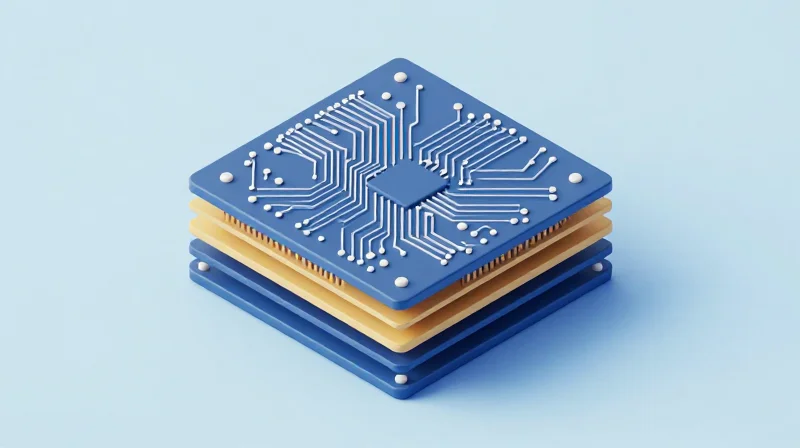
Why IPC-2226 Defines Reliability in HDI
The transition to high-density interconnect (HDI) technology fundamentally changes the physical stresses placed on a printed circuit board. Unlike standard multilayer boards, complex designs featuring blind and buried vias introduce significant challenges regarding thermal expansion, signal integrity, and structural fatigue. The IPC-2226 standard serves as the industry’s authoritative framework for design and fabrication, providing the necessary metrics to ensure that these micro-via structures remain conductive and intact through both the assembly process and the operational lifespan of the product.
Critical Risks of Non-Compliance
| Failure Mode | IPC-2226 Mitigation Strategy | Consequence of Deviation |
|---|---|---|
| Barrel Cracking | Strict aspect ratio control | Intermittent signal loss |
| Pad Lifting | Controlled thermal profiling | Complete board failure during reflow |
| Via-in-Pad Voiding | Plating thickness requirements | High resistance / impedance mismatches |
Frequently Asked Questions Regarding HDI Standards
- Why is the aspect ratio of blind vias critical?
A high aspect ratio makes uniform copper plating inside the via barrel difficult. IPC-2226 provides the threshold limits to prevent thin-wall plating that is prone to fatigue failure under thermal stress. - How does IPC-2226 influence manufacturer selection?
Selecting a manufacturer requires verifying their internal auditing processes against IPC-2226 requirements, as low-cost alternatives often shortcut the plating and registration checks essential for high-layer-count HDI. - Is IPC-2226 enough for high-reliability medical or aerospace boards?
While IPC-2226 sets the baseline, critical sectors often demand additional 'Class 3' requirements for increased inspection rigor and stricter tolerances for via registration.
Evaluating Laser Drilling Precision and Capabilities
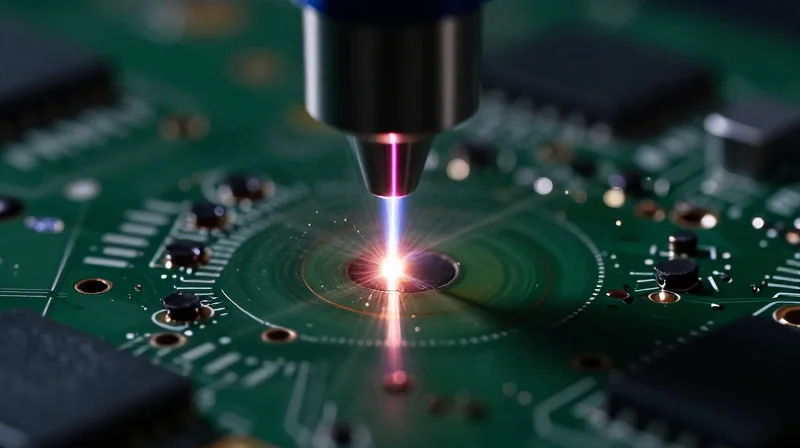
When vetting a PCB manufacturer for complex blind and buried via projects, you must look beyond general certification to specific technical performance metrics. Precision in laser microvia formation dictates the integrity of the conductive path and the overall mechanical reliability of the board during thermal cycling.
Assessing Critical Laser Microvia Metrics
| Metric | Significance | Target Capability |
|---|---|---|
| Depth Control | Preventing over-drilling into inner layers. | ± 5-10 micrometers |
| Aspect Ratio | Ensures reliable copper plating within the via. | Up to 1:1 or better |
| Registration Accuracy | Ensures via lands align with inner targets. | ± 25 micrometers or less |
Verification Questions for Suppliers
- How do you manage laser pulse energy and frequency to maintain consistent depth?
A high-quality manufacturer should describe their use of closed-loop energy monitoring and pulse control to prevent inconsistent hole depth across large panel areas. - What is your capability regarding via-in-pad (VIPPO) tolerances?
They should demonstrate specific experience with planarization and filling processes to ensure the via pad remains perfectly flat for subsequent component assembly. - Do you perform cross-sectional analysis as part of standard production controls?
Routine cross-sectioning is the industry standard for verifying aspect ratio health and ensuring there are no hidden micro-cracks at the base of the via.
Ultimately, the right partner will provide DFM (Design for Manufacturing) reports that proactively identify potential registration bottlenecks. Do not settle for manufacturers who lack documented statistical process control (SPC) data specifically for their laser ablation stages; high-density designs fail rapidly without precise microvia geometry.
Material Selection and Thermal Management
Material Compatibility and CTE Matching
In HDI designs involving blind and buried vias, the Coefficient of Thermal Expansion (CTE) of the dielectric material must be tightly matched to the copper foil and the substrate core. A mismatch in expansion rates during the high-heat cycles of soldering or operation causes significant stress on via barrels. This stress is the primary driver of copper fatigue and barrel cracking, especially in high-layer count designs where the vertical integration of stacked microvias amplifies thermal strain.
| Material Property | Importance for HDI | Risk if Ignored |
|---|---|---|
| CTE (Z-axis) | Must match copper expansion | Barrel cracking/delamination |
| Tg (Glass Transition) | Operating temperature margin | Excessive softening at reflow |
| Loss Tangent (Df) | Signal integrity at high frequency | Data loss/attenuation |
Advanced Thermal Management Strategies
Effective thermal management in complex boards extends beyond material selection to include strategic copper balancing. Manufacturers must utilize balanced stack-up designs that distribute copper weight symmetrically across the neutral axis of the board. This prevents warping and ensures that buried via structures remain structurally sound during thermal cycling.
Frequently Asked Questions on Thermal Reliability
- Why is Tg selection critical for buried vias?
A high Glass Transition temperature (Tg) is essential because blind and buried vias are often exposed to multiple lamination and assembly cycles, which can degrade the resin if the Tg is too low. - How does copper balancing affect reliability?
Uneven copper distribution causes uneven thermal stress; balanced copper ensures uniform expansion and contraction, which is vital for maintaining the integrity of microvia wall plating. - Does the manufacturer's material sourcing matter?
Yes, high-end HDI projects require materials with consistent dielectric constants and predictable thermal behavior, which is typically found only in premium, traceable laminates rather than generic base materials.
The Importance of Registration and Alignment Accuracy
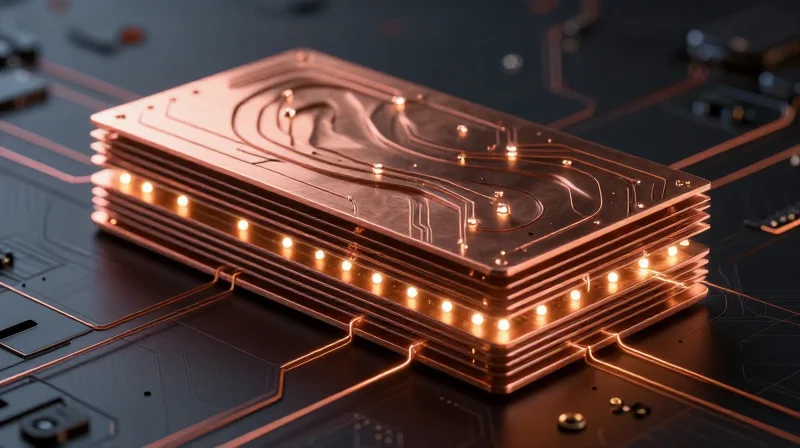
The Mechanics of Registration Accuracy
In HDI PCBs utilizing blind and buried vias, the physical registration—the precise alignment of features between inner and outer layers—is the primary determinant of yield and long-term reliability. Any misalignment, even within nominal tolerances, compromises the connectivity of microvias and the annular ring requirements specified by IPC standards. Advanced manufacturers must employ high-accuracy registration systems, such as X-ray drilling and automated optical inspection (AOI), to compensate for material movement during the lamination cycle.
Technical Infrastructure Requirements
Manufacturers handling complex stack-ups must demonstrate robust internal controls to manage dielectric shift and expansion. Key infrastructure components include:
- X-ray Target Recognition
Automated X-ray systems that identify inner layer targets in real-time, allowing for dynamic drill program adjustment based on actual material deformation. - Active Scaling Compensation
Advanced pre-lamination software that predicts material shrinkage and adjusts artwork dimensions to ensure post-lamination pads align perfectly with drilled holes. - Vacuum Lamination Presses
High-pressure vacuum lamination to minimize resin flow and prevent layer-to-layer swimming during the curing process.
Registration Performance Comparison
| Registration Feature | Standard Capability | High-Complexity Capability |
|---|---|---|
| Alignment Tolerance | +/- 75 microns | +/- 25 microns or less |
| Registration Method | Mechanical Pinning | X-ray Target Scaling |
| Via-in-Pad Accuracy | Moderate | High (Consistent Annular Rings) |
Verification and Quality Assurance
For complex projects, verify that your manufacturer utilizes cross-section analysis and impedance coupons to validate alignment after lamination. A manufacturer that cannot provide detailed statistical process control (SPC) data regarding their registration accuracy is likely unable to support the structural demands of high-layer-count blind and buried via designs.
Scaling from Prototype to Production: Consistency is Key
The gap between a functional prototype and a scalable product is often where complex boards fail. When working with blind and buried vias, mass production introduces variables that small batches do not, such as cumulative thermal stress, variation in plating consistency across panel arrays, and the degradation of drilling bits over extended shifts. Achieving high yields in production requires a manufacturer that treats consistency as a core engineering discipline rather than a baseline expectation.
Identifying Scalability Markers
To determine if a manufacturer is ready for your project's transition, evaluate their internal infrastructure against these key indicators of production stability:
| Indicator | Prototype Focus | Production Focus |
|---|---|---|
| Tool Life Management | Manual bit inspection | Automated bit change cycles based on hit counts |
| Registration | Optical alignment | X-ray drilling and automated optical inspection (AOI) feedback |
| Chemical Processing | Static batch tanks | Continuous automated plating lines with real-time analysis |
Critical Questions for Scaling
- How is plating uniformity maintained across larger panel formats?
Ask for their data on current density distribution. In mass production, copper thickness within blind via barrels must be uniform across the entire panel to prevent structural fatigue. - What is the manufacturer's yield tracking mechanism?
A mature facility should provide detailed Pareto analysis for scrap causes, proving they identify and eliminate root causes of defects rather than simply re-working failed units. - Do they utilize adaptive drilling programs?
Verify if the facility uses software that adjusts drill parameters based on real-time material feedback, ensuring consistency as drill bits wear during high-volume production runs.
By vetting these areas, you ensure that the complex blind and buried via stack-ups that worked in your prototype environment do not become yield-killing bottlenecks during mass rollout.
Quality Assurance: Beyond Visual Inspection
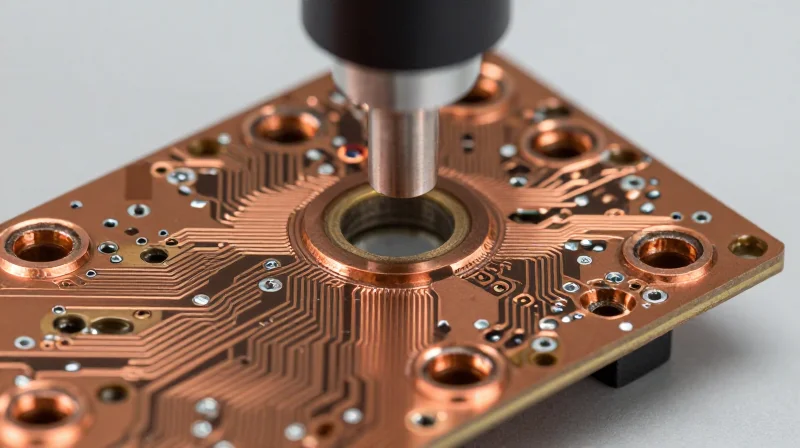
For HDI projects, visual inspection is insufficient to verify the complex interconnects inherent in blind and buried via designs. Because these vias are internal, structural failures—such as barrel cracks, plating voids, or registration drift—can remain invisible to standard AOI. Manufacturers must employ a rigorous multi-tiered verification strategy to ensure that the internal copper structures meet the IPC-6012 Class 3 standards essential for high-reliability applications.
Critical Validation Methodologies
| Testing Method | Primary Application | Detection Capability |
|---|---|---|
| X-Ray Inspection | Non-destructive | Registration offset, via misalignment, and voids |
| Micro-Sectioning | Destructive | Plating thickness, wrap-around, and etch back |
| TDR Testing | Electrical/Performance | Impedance consistency and via continuity |
X-ray inspection provides a vital non-destructive window into the internal stack-up, allowing engineers to verify layer registration without compromising the board. However, since X-rays do not reveal plating quality or structural anomalies like 'pad cratering,' micro-sectioning remains the gold standard for destructive audit testing. By taking a cross-section of a sacrificial coupon from the same panel, manufacturers can confirm that the copper deposition in the via barrel is uniform and free of inclusions.
Frequently Asked Questions on HDI Assurance
- Is AOI sufficient for blind via inspection?
No. AOI is limited to surface features. Internal structural integrity must be verified through X-ray, cross-sectioning, and automated electrical testing. - Why is TDR testing necessary for vias?
TDR (Time Domain Reflectometry) identifies impedance discontinuities. Since HDI vias often function as signal transitions, any inconsistency in copper geometry significantly impacts high-speed signal integrity. - How often should micro-sectioning be performed?
For complex HDI projects, coupon-based cross-sectioning should be performed at the start of production and at regular intervals to monitor plating bath health and drilling precision.
Supply Chain Transparency and Lead Time Reliability
Managing Material Vulnerabilities in HDI Manufacturing
High-Density Interconnect (HDI) projects with blind and buried vias require specialized laminates, laser-drillable materials, and specific copper foils that are often prone to supply chain volatility. A partner that maintains deep-tier visibility into their raw material pipeline acts as a buffer against global shortages, ensuring that a project is not stalled mid-stream due to a missing critical dielectric layer.
Quantifying Lead Time Predictability
| Indicator | Manufacturer A (Reactive) | Manufacturer B (Proactive) |
|---|---|---|
| Material Sourcing | Ad-hoc purchasing per order | Vendor-managed inventory (VMI) |
| Lead Time Buffer | Zero flexibility | Staged safety stock |
| Communication | Updates upon failure | Automated real-time tracking |
Assessing Logistical Agility
When selecting a PCB manufacturer for complex stack-ups, evaluate their logistical agility by reviewing their historical ability to pivot during supply chain disruptions. True partners provide a transparent portal or dedicated account management that offers visibility into every phase of the manufacturing process, from raw material arrival to final inspection.
- How does raw material volatility affect via integrity?
Sudden changes in material suppliers can lead to inconsistent Z-axis expansion coefficients, which jeopardize the structural integrity of laser-drilled blind and buried vias during reflow. - What transparency metrics should I request?
Demand clear communication regarding material batch consistency, expected lead time deviations, and a contingency plan for secondary material sourcing. - Why is material buffering crucial for HDI?
Specialized HDI materials are rarely stocked by distributors; a partner that commits to holding dedicated inventory significantly reduces the risk of long-lead bottlenecks.
Questions You Must Ask During the Vetting Process
Essential Technical Vetting Questions
Vetting a fabrication partner for blind and buried via technology requires moving beyond general capabilities to specific process validation. You must verify that their internal controls can handle the high aspect ratios and registration tolerances inherent in advanced HDI designs.
- What is your typical alignment tolerance for sequential lamination?
This is critical for buried via registration; ask for their specific machine capability (Cpk) rather than just the tolerance limit. - How do you manage aspect ratios for laser-drilled microvias?
Ensure they can maintain consistent hole quality at high aspect ratios to avoid plating voids in the barrel. - What plasma desmear processes do you utilize?
Effective desmear is mandatory to ensure reliable copper-to-copper interconnection within the buried via. - Can you provide a cross-section report for a similar layer count?
Reviewing actual cross-section data from a past project validates their ability to handle structural complexity and dielectric thickness control.
Capability Comparison Matrix
| Capability Metric | Baseline Requirement | High-End Requirement |
|---|---|---|
| Laser Microvia Size | 100um | 50um or less |
| Registration Accuracy | +/- 50um | +/- 25um |
| Aspect Ratio | 0.75:1 | 1:1 or higher |
Operational Verification
Beyond the technical specifications, probe their operational transparency. Ask for their 'first-pass yield' rates on HDI boards specifically. A reputable shop will have clear data on where failures occur in the lamination cycle and how they proactively mitigate registration drift before it impacts your production batch.
Selecting an HDI manufacturing partner is a critical decision that influences the performance and longevity of your final product. By focusing on IPC-2226 compliance, advanced laser technology, and manufacturing consistency, you mitigate risk and ensure a smoother path to market. Ready to start your next HDI design? Contact our engineering team today for a technical design review of your upcoming project.
