
Engineering life-sustaining portable medical devices is a challenge where there is zero margin for error. When selecting a PCB manufacturing partner for an oxygen concentrator, you aren't just buying hardware; you are choosing a partner responsible for the heartbeat of a patient's breathing support system. This guide breaks down the rigorous criteria required to vet a manufacturer capable of meeting strict clinical and regulatory standards.
Verifying Quality Management Systems and Certifications
The Necessity of ISO 13485 Certification
For portable medical oxygen concentrators, ISO 13485 is the non-negotiable gold standard. Unlike general manufacturing certifications, ISO 13485 is specifically designed to ensure the quality management systems (QMS) of medical device suppliers address regulatory requirements, risk management, and the high-reliability demands of life-sustaining equipment.
| Certification | Primary Focus | Relevance to Oxygen Concentrators |
|---|---|---|
| ISO 13485 | Medical Device QMS | Essential for legal and safety compliance. |
| ISO 9001 | General Quality | Insufficient; lacks medical-specific rigor. |
| IPC-A-600/610 | PCB Standards | Required for physical board reliability. |
Verifying Audit-Ready Documentation
A manufacturer’s ability to remain audit-ready reflects their operational maturity. You should request evidence of a closed-loop Corrective and Preventive Action (CAPA) system and documented evidence of traceability from raw material procurement to finished PCB assembly.
- How do I verify the validity of their ISO 13485 certification?
Always request the current certificate document and cross-reference the certificate number directly through the issuing registrar's online database to ensure it has not been revoked or expired. - What documentation should I ask for during a pre-qualification audit?
Request their Quality Manual, a summary of recent internal audits, their Management Review meeting minutes, and evidence of how they manage document control for engineering changes (ECOs). - Why is traceability critical for oxygen concentrator PCBs?
Because these devices are life-sustaining, should a component failure occur, you must be able to trace the specific batch of boards, the materials used, and the personnel involved to perform a focused, efficient recall or root-cause analysis.
Assessing Risk Management Systems
Beyond certification, evaluate if the manufacturer integrates ISO 14971 (Risk Management for Medical Devices) into their production flow. A robust manufacturer will perform a proactive Failure Mode and Effects Analysis (FMEA) on the PCB design, identifying potential failure points before production even begins. When vetting, ask specifically for examples of how they handled a design-related risk in previous medical projects to ensure their QMS is active and predictive, not merely administrative.
Evaluating Experience with Life-Critical Electronics
The Imperative of Proven Reliability
When manufacturing PCBs for life-critical oxygen concentrators, past performance is the most reliable predictor of future success. Manufacturers must demonstrate a deep history of delivering zero-failure components, as the patient’s respiratory stability depends entirely on the continuous, uninterrupted operation of the device's control board and sensor integration.
Key Performance Indicators for Life-Critical Experience
| Metric | Significance for Oxygen Concentrators |
|---|---|
| Mean Time Between Failures (MTBF) | Ensures the hardware is designed to outlast the operational cycle of the portable unit. |
| Field Failure Rates | Demonstrates the manufacturer’s ability to minimize early-life infant mortality and long-term fatigue. |
| Regulatory Recall History | A clean track record signals robust validation and verification processes throughout the production lifecycle. |
Frequently Asked Questions Regarding Experience
- Why is prior experience in 'portable' medical devices more important than general medical experience?
Portable oxygen concentrators introduce specific challenges such as mechanical vibration, thermal management in compact enclosures, and drop-impact resistance that stationary clinical equipment often does not encounter. - How do I evaluate a manufacturer's historical output?
Request a portfolio of similar life-critical projects, specifically looking for case studies involving high-reliability soldering, ruggedized component mounting, and clean-room assembly practices. - Can I rely on a manufacturer new to the medical sector if they have high-end consumer electronics experience?
Generally, no. The documentation requirements, traceability protocols, and risk management standards (ISO 14971) essential for medical devices differ drastically from the high-volume, lower-consequence workflows used in consumer electronics.
Supply Chain Transparency and Counterfeit Mitigation

The Risk of Counterfeit Components in Medical Devices
In the context of portable medical oxygen concentrators, the integration of counterfeit or substandard electronic components poses a direct threat to patient life. A failed capacitor or a sub-par integrated circuit can cause unexpected device shutdowns, potentially depriving a patient of vital oxygen. Manufacturers must implement a 'Zero-Trust' procurement strategy that mandates full traceability from the silicon level to the finished assembly.
Strategies for Supply Chain Integrity
- Authorized Distribution Channels
A reputable PCB manufacturer must source components strictly from authorized distributors or the original component manufacturers (OCMs). Using independent brokers should be prohibited unless the component is obsolete and has undergone rigorous third-party laboratory verification. - Digital Traceability (Serialization)
Demand a manufacturer that utilizes a Manufacturing Execution System (MES) capable of tracking individual component lot numbers and date codes for every serialized medical board produced. - In-Circuit Testing (ICT) and AOI
Automated Optical Inspection (AOI) and advanced ICT should be utilized not just for solder joint validation, but to flag components that deviate from expected electrical characteristics, which is often a sign of counterfeit substitution.
Comparison of Sourcing Models
| Sourcing Method | Risk Profile | Verification Effort | Suitability for Medical |
|---|---|---|---|
| Authorized Distributor | Minimal | Low (Certificate of Compliance provided) | Primary Standard |
| Contracted CM Procurement | Moderate | Medium (Requires audit of CM process) | Acceptable with oversight |
| Third-Party Broker | Critical | Extremely High (Requires destructive testing) | Avoid entirely |
To mitigate counterfeit risks, require your PCB manufacturing partner to present their 'Approved Vendor List' (AVL) policy. Ensure that your contract stipulates that no substitutions—specifically regarding critical semiconductors—can be made without written authorization and a full re-qualification of the device's reliability profile.
Advanced PCB Design for Reliability and Portability
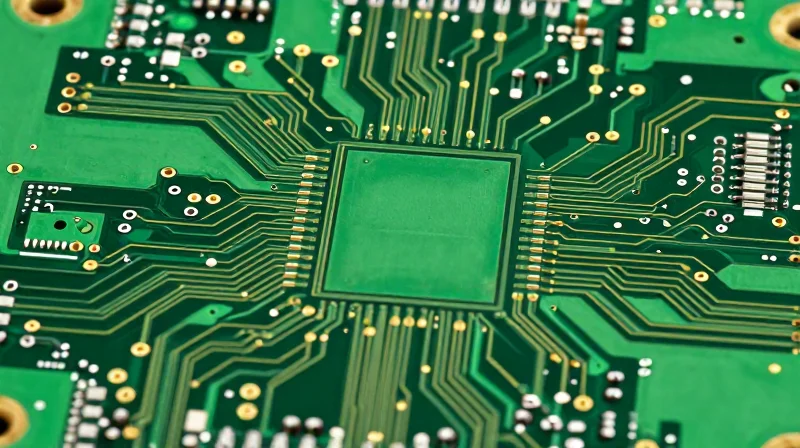
Optimizing Miniaturization While Maintaining Thermal Integrity
Portable oxygen concentrators demand high-density interconnect (HDI) technology to reduce the physical footprint of the control electronics. However, compact enclosures significantly limit natural convection, creating thermal challenges. Selecting a manufacturer with expertise in micro-via structures and advanced thermal dissipation materials is critical to prevent hotspot formation that can degrade sensitive components over long duty cycles.
Comparison of Thermal Management Strategies
| Strategy | Application | Impact on Portability |
|---|---|---|
| Heavy Copper Layers | High-current power distribution | Minimal size increase |
| Thermal Vias | Component localized cooling | Zero footprint impact |
| Metal Core PCBs | Large-scale heat dissipation | Increased weight and rigidity |
Advanced Design Considerations FAQ
- Why is layer stack-up optimization critical for medical portability?
Strategic stack-up design reduces trace length and EMI interference, allowing for a smaller form factor while maintaining the signal integrity required for oxygen sensor precision. - How do I ensure a manufacturer can handle HDI requirements?
Review their capabilities for laser-drilled micro-vias and their experience with IPC-6012 Class 3 standards, which govern high-reliability circuit board manufacturing. - What role does material selection play in reliability?
Using high-Tg (glass transition temperature) laminates is essential to ensure the PCB maintains structural and electrical stability under the fluctuating thermal conditions typical of continuous-use oxygen concentrators.
Long-Term Lifecycle and Obsolescence Management
Mitigating Obsolescence in Portable Medical Devices
Medical device lifespans often span 5 to 10 years, significantly outlasting the standard production lifecycle of consumer-grade electronic components. A capable PCB manufacturer must provide proactive lifecycle monitoring, identifying 'End of Life' (EOL) notifications long before they disrupt production schedules. By integrating strategic component engineering and last-time buy (LTB) protocols, manufacturers can safeguard the continuity of critical oxygen delivery systems against sudden component shortages.
Strategic Lifecycle Management Approaches
| Strategy | Implementation Benefit | Risk Reduction |
|---|---|---|
| Proactive PCN Monitoring | Advance notice of EOL | Prevents production halts |
| Component Cross-Referencing | Approved alternative parts | Avoids costly design re-spins |
| Strategic Buffer Stocking | Managed inventory holding | Ensures availability during market volatility |
Frequently Asked Questions
- How often should a manufacturer audit my bill of materials (BOM)?
A quarterly BOM audit is industry standard for medical devices to capture early obsolescence trends and market availability shifts. - What happens if a critical integrated circuit (IC) is discontinued?
The manufacturer should immediately propose form-fit-function compatible alternatives or assist in a controlled redesign process to certify the new component under existing regulatory approvals. - Does a 'Last-Time Buy' guarantee long-term supply?
No, it is a finite bridge. It should only be used as a temporary measure while the engineering team qualifies a permanent, sustainable component replacement.
Ultimately, selecting a manufacturer for your oxygen concentrator requires vetting their 'Product Change Notification' (PCN) management systems. Ensure they have established workflows for alerting you to silicon changes, as even minor firmware or hardware tweaks in sub-components may require expensive re-certification with agencies like the FDA or EMA.
Cleanroom Manufacturing and Environmental Controls
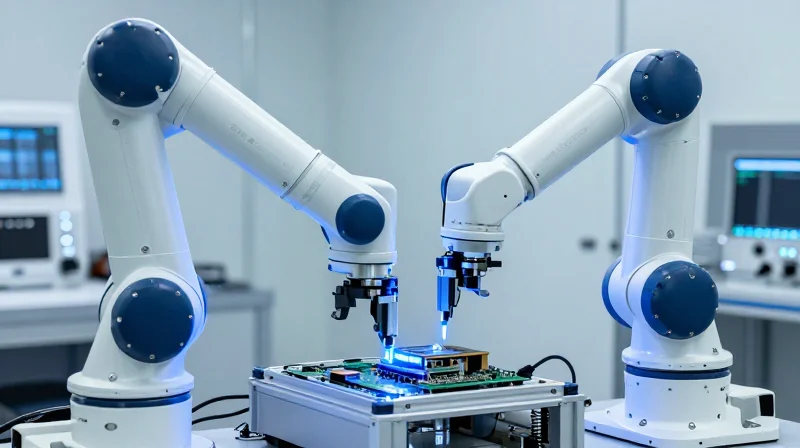
The Imperative of Cleanroom PCB Assembly
Portable medical oxygen concentrators rely on high-density interconnects that are hypersensitive to environmental contaminants. Particles, humidity, and chemical residues can cause dendrite growth or electrochemical migration, leading to intermittent failure in life-critical systems. A manufacturer utilizing ISO-certified cleanrooms—typically ISO Class 7 or 8—ensures that these sensitive assemblies are protected from microscopic debris during the critical soldering and coating stages.
Comparing Environmental Control Standards
| Control Feature | Standard Environment | Medical-Grade Cleanroom |
|---|---|---|
| Particle Count | Ambient | ISO Class 7/8 Certified |
| ESD Management | Basic | Advanced Ionization & Audited Systems |
| Chemical Cleaning | Standard Solvent | Ionic Purity Verification (IPC-6012) |
Critical Environmental Audit Points
- Does the facility use automated ionic contamination testing?
Verification using Rose (Resistivity of Solvent Extract) testing is mandatory to ensure that flux residues are removed, preventing future short circuits. - How is humidity monitored and controlled?
Excess moisture before reflow can lead to 'popcorning' in surface mount devices; a professional facility maintains strict moisture sensitivity level (MSL) storage protocols. - Is the conformal coating applied in a filtered environment?
Conformal coating must be free of trapped particulates that can create stress concentration points, potentially causing coating cracks over the device's 5-10 year lifespan.
When vetting a partner, request their specific ISO 13485 quality manual sections regarding environmental controls. A manufacturer that treats cleanroom protocol as a core competency—rather than a secondary feature—will provide the documented traceability needed for regulatory compliance and long-term field reliability.
Testing Protocols: From AOI to Functional Validation

The Multi-Tiered Testing Hierarchy
For portable oxygen concentrator devices, a failure is not merely a technical glitch but a potential medical emergency. Therefore, manufacturers must implement a 'zero-defect' testing strategy that transitions from non-destructive structural analysis to comprehensive functional verification.
| Testing Phase | Primary Objective | Key Equipment |
|---|---|---|
| AOI | Surface mount component integrity and polarity | Automated Optical Inspection Systems |
| AXI | Hidden solder joint analysis (BGA/QFN) | X-Ray Inspection (2D/3D) |
| ICT/FCT | Electrical continuity and performance | In-Circuit / Functional Test Fixtures |
| ESS | Stress testing under environmental limits | Thermal/Vibration Chambers |
Critical Inspection Stages
- Automated Optical Inspection (AOI)
AOI is the first line of defense, identifying misaligned components, solder bridges, and tombstoning immediately after reflow. For high-density portable medical boards, high-resolution AOI is mandatory to catch defects that the human eye will inevitably miss. - Automated X-Ray Inspection (AXI)
Since portable concentrators utilize BGA and QFN packaging to save space, standard optical inspection cannot verify inner solder joints. AXI is essential to detect head-in-pillow, voiding, and short circuits hidden beneath component packages. - Functional Circuit Testing (FCT)
This stage simulates the actual operational environment of the oxygen concentrator. It verifies the firmware's interaction with hardware, including voltage regulation, sensor calibration, and battery management system (BMS) performance.
Environmental Stress Screening (ESS)
Portable medical devices are subjected to varying altitudes, temperatures, and physical vibrations during daily use. Manufacturers must demonstrate capability in ESS—specifically cycling boards between temperature extremes while under functional load—to identify 'infant mortality' components that might fail prematurely in the field.
Communication and Collaborative Engineering Support
The Role of Integrated DFM Support
Early integration of your manufacturer's Design for Manufacturing (DFM) team is the most effective way to prevent costly design iterations and accelerate time-to-market. By involving engineering experts during the prototyping phase, you ensure that the PCB layout is optimized for the specific constraints of portable medical devices, such as high-density interconnections, thermal management, and vibration resistance.
Collaboration Protocols for Success
A proactive manufacturer does not merely receive gerber files; they act as a technical partner. Establishing clear communication channels and collaborative workflows is vital for maintaining high quality standards.
- How does early-stage DFM save costs?
Early DFM review identifies potential production bottlenecks, such as component placement issues or substrate material limitations, before physical tooling begins, avoiding expensive rework. - What constitutes effective engineering feedback?
Constructive feedback should include specific suggestions for material substitutions, stack-up optimization, and surface finish recommendations to meet medical-grade reliability targets. - Why is transparency in communication required?
Portable oxygen concentrators involve life-sustaining tech; transparency regarding material sourcing and process changes ensures your design stays within regulatory and performance parameters.
Collaboration Capability Comparison
| Engagement Metric | Reactive Manufacturer | Collaborative Partner |
|---|---|---|
| Design Review | Automated checks only | Deep engineering analysis |
| Technical Support | Email ticketing system | Direct access to DFM engineers |
| Process Visibility | Delayed status updates | Real-time portal integration |
| R&D Integration | Disconnected | Embedded feedback loop |
Prioritize selecting a partner who offers a dedicated technical liaison. This individual ensures your specific requirements for power efficiency and reliability—so critical in oxygen delivery systems—are aligned with the manufacturer's production capabilities.
Selecting the right PCB manufacturer is the single most critical decision in your product's journey to market. By prioritizing compliance, lifecycle stability, and rigorous testing, you ensure your device stands up to the challenges of real-world medical use. Ready to scale your medical device production? Contact our expert engineering team today to discuss your next oxygen concentrator project.
