
In the fast-paced world of electronic manufacturing, your choice of a turnkey box build partner can make or break your time-to-market. When precision is non-negotiable and complexity is high, identifying a partner who offers technical expertise alongside robust supply chain management is critical. This guide provides the strategic framework needed to evaluate and select a partner that elevates your production standards.
Defining the Scope: What Constitutes a Complex Box Build?
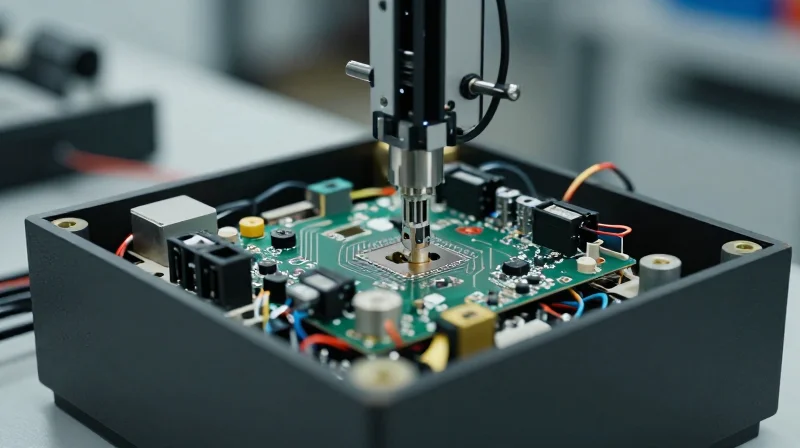
A box build, or system integration, encompasses the complete process of assembling an electronic product beyond the printed circuit board level. For high-precision systems, a complex box build is defined not merely by the number of components, but by the density of integration, the precision required in mechanical tolerances, and the stringency of testing protocols. Distinguishing between a standard enclosure assembly and a high-precision system integration is critical for alignment with a contract manufacturer's core competencies.
The Spectrum of Complexity in System Integration
| Complexity Level | Integration Requirements | Precision Demand |
|---|---|---|
| Low | Basic chassis, cable routing, simple fasteners | Standard industrial tolerance |
| Medium | Pneumatics, sensors, complex wiring harnesses | Tight mechanical alignment |
| High | Opto-electronics, fluidics, sensitive thermal management | Sub-micron/highly precise calibration |
Defining Your Project Boundaries
- Does the assembly require specialized cleanroom environments?
If your product is sensitive to particulate contamination during assembly or requires optical alignment, the partner must provide controlled-environment capabilities. - Is thermal management a critical performance factor?
Complex box builds often integrate heat sinks, liquid cooling, or high-airflow design; these necessitate advanced mechanical assembly skills and thermal testing. - How sophisticated are the testing requirements?
Scope definition must account for functional testing, burn-in protocols, and software loading, moving beyond simple continuity checks.
By accurately documenting these requirements—specifically addressing environmental constraints, electromechanical intricacy, and verification processes—you establish the technical baseline necessary to vet potential turnkey partners effectively. Failure to define these parameters early leads to misalignment in supply chain management, quality control, and ultimately, system reliability.
Technical Infrastructure and Manufacturing Capabilities
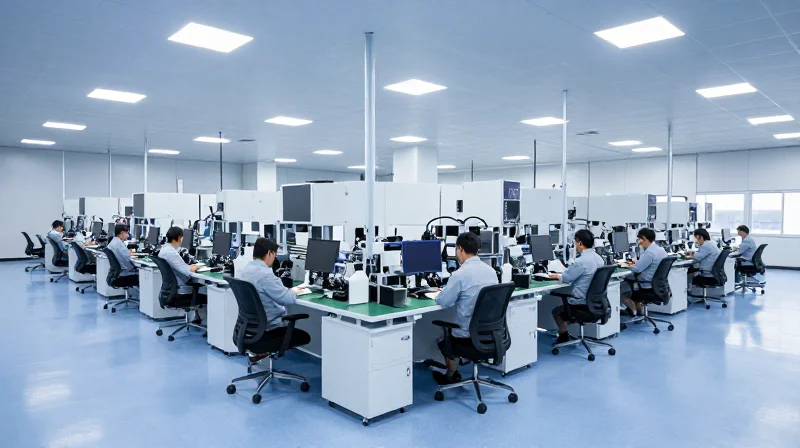
Technical Infrastructure and Manufacturing Capabilities
Selecting the right box build partner is not merely about finding a facility with assembly benches; it is about identifying a technical environment engineered for high-precision integration. A capable partner provides the intersection of advanced automated manufacturing tools, climate-controlled clean rooms, and sophisticated process controls. Evaluating these capabilities requires looking beyond simple throughput and focusing on repeatable, audit-ready assembly protocols that accommodate the specific tolerances and proprietary configurations of your electronic system.
Assessing Critical Manufacturing Infrastructure
| Capability Metric | Requirement for High-Precision | Key Indicator of Excellence |
|---|---|---|
| Environment | Electrostatic Discharge (ESD) compliance | ISO 14644-1 Clean Room Certification |
| Assembly | High-torque precision tooling | Calibrated automated torque systems with data logging |
| Interconnect | Automated wire processing | Full crimp-force monitoring and pull-test documentation |
Essential Questions for Partner Assessment
- How is proprietary assembly documentation integrated into your floor operations?
A high-precision partner should utilize digital work instruction systems that enforce step-by-step compliance, ensuring that operators follow the exact assembly sequence regardless of personnel changes. - What are your verification protocols for complex electro-mechanical builds?
Beyond functional testing, they must offer In-Circuit Testing (ICT), Flying Probe, or custom functional 'bed-of-nails' testing to validate connectivity and signal integrity post-assembly. - Does your infrastructure support NPI (New Product Introduction) and scaling?
Verify if the partner maintains dedicated NPI cells that allow for rapid prototyping and iterative design feedback before transitioning into full-scale production lines.
Ultimately, the infrastructure must be treated as an extension of your own engineering department. By auditing the partner's capability for real-time data acquisition and process validation, you minimize the risk of assembly defects that could compromise the reliability of high-stakes electronic systems.
Quality Certifications and Compliance Standards
Selecting a manufacturing partner for high-precision electronic systems requires more than assessing physical capacity; it demands a rigorous validation of their quality management systems (QMS). Compliance ensures that every assembly—from the first prototype to full-scale production—is executed under controlled conditions, minimizing the risk of failure in demanding field environments.
Essential Certifications for Precision Assembly
| Certification | Primary Focus | Relevance to Box Build |
|---|---|---|
| ISO 9001 | Quality Management Systems | Ensures consistent processes and continuous improvement. |
| AS9100 | Aerospace/Defense | Required for high-reliability, mission-critical systems. |
| ISO 13485 | Medical Devices | Mandatory for regulatory compliance in healthcare electronics. |
| IPC-A-620 | Cable/Wire Harness | The industry standard for build quality in wire assembly. |
The Role of IPC Standards in Electro-Mechanical Integration
Beyond facility-wide quality certifications, your partner should demonstrate proficiency in IPC standards, specifically IPC-A-620 for cable and wire harness assemblies. These standards define the acceptable physical condition of the assembly, focusing on crimp integrity, mechanical fastening, and thermal management. A partner that trains their technicians to these specific criteria ensures that your internal circuitry can withstand vibration, thermal cycling, and environmental stressors.
Frequently Asked Questions Regarding Compliance
- Does ISO 9001 guarantee a perfect product?
No, it guarantees a system is in place to manage quality; therefore, you must also audit the partner's internal inspection protocols and non-conformance management. - How often should I audit a certified partner?
Periodic audits (typically annual) are essential to verify that their documented QMS processes match the actual practices on the production floor. - Why does IPC-A-620 matter for simple box builds?
Even in simple assemblies, adherence to IPC standards prevents early-life field failures caused by poor routing, loose connectors, or improper shielding.
Supply Chain Transparency and Material Sourcing

Mitigating Supply Chain Risks and Component Shortages
In the high-precision electronics sector, supply chain instability can halt production lines for weeks. A capable turnkey partner does not simply react to shortages; they employ proactive procurement strategies. You should look for partners that maintain deep relationships with authorized global distributors and offer sophisticated inventory management tools, such as VMI (Vendor Managed Inventory) and bonded stock agreements, to insulate your project from market volatility.
Sourcing Strategy Comparison
| Strategy | Risk Level | Implementation Effort |
|---|---|---|
| Just-in-Time | High | Low |
| Strategic Buffer | Low | Medium |
| Multi-Source Qualification | Very Low | High |
Ethical Sourcing and Regulatory Compliance
Beyond logistical efficiency, your partner must uphold stringent ethical sourcing standards. High-precision assemblies often involve rare earth materials and minerals that fall under conflict-free initiatives. Verifying your partner’s compliance with REACH, RoHS, and the Dodd-Frank Act is not just a regulatory necessity—it is a brand protection measure.
- How do you audit your sub-tier suppliers?
A top-tier partner will maintain a documented supplier quality manual and conduct regular site audits to ensure adherence to ethical and environmental standards. - How is component obsolescence managed?
Partners should utilize lifecycle tracking software like SiliconExpert or IHS Markit to alert you to End-of-Life (EOL) notices long before they impact production. - What is the process for avoiding counterfeit parts?
Ensure the partner follows AS6171 or equivalent counterfeit detection standards, utilizing rigorous incoming inspection and authorized supply chain channels only.
Engineering Support and DFM Services

The Strategic Value of Early DFM Integration
Engineering support should not be an afterthought; it must be an integral part of the product lifecycle from the initial design phase. By leveraging Design for Manufacturing (DFM) services, your turnkey partner acts as an extension of your internal engineering team. This proactive approach identifies potential production bottlenecks, thermal management concerns, and mechanical assembly conflicts before the first prototype enters the manufacturing floor, effectively neutralizing cost-overrun risks associated with late-stage design modifications.
Evaluating DFM Competencies
| Evaluation Criterion | Reactive Service | Proactive DFM Partnership |
|---|---|---|
| Design Review | Post-failure analysis | Pre-build risk assessment |
| Material Selection | Compliant with BOM | Optimize for cost/lead-time |
| Tolerance Analysis | Accepts design as-is | Ensures assembly fit-up |
| Process Validation | Trial-and-error | Simulation-driven validation |
Engineering Support FAQs
- How does DFM affect high-precision assembly costs?
DFM optimizes component placement and assembly sequences to maximize machine utilization and minimize rework, directly lowering unit labor costs and reducing scrap rates. - Should my partner offer NPI (New Product Introduction) support?
Yes. A partner with robust NPI capabilities can bridge the gap between initial concept and mass production, providing engineering feedback that ensures the design is inherently scalable. - What technical documentation should I expect from engineering support?
You should receive detailed manufacturing reports, tolerance stack-up analyses, test coverage plans, and clear documentation regarding any deviations or suggested design refinements.
Ultimately, selecting a partner that offers deep engineering expertise turns your manufacturing provider into a competitive advantage. Look for a team that does not merely follow instructions, but interrogates the design for efficiency, reliability, and manufacturability to ensure the highest possible yield for your high-precision systems.
Scalability and Production Agility
Scaling from NPI to Full-Scale Production
The transition from a low-volume prototype to high-precision mass production is the most critical phase in the product lifecycle. A capable box build partner must demonstrate the flexibility to transition from a specialized NPI setup—where high engineering touch is required—to a high-throughput assembly line that maintains strict quality tolerances without sacrificing speed.
| Phase | Key Focus | Operational Requirement |
|---|---|---|
| NPI / Prototype | Agility and DFM feedback | Dedicated engineering support |
| Growth Phase | Process repeatability | Tooling and fixture design |
| Mass Production | Efficiency and lead time | Automated test and supply chain stability |
Evaluating Partner Agility
- What indicates true production scalability?
Look for modular assembly lines that allow the partner to allocate resources dynamically based on demand spikes, rather than rigid, static production cells. - How does technology investment impact my scale?
Partners who invest in automated optical inspection (AOI) and robotic assembly stations can guarantee repeatability at volume, whereas manual-heavy shops struggle to maintain precision as labor hours increase. - Is communication centralized?
Scalable partners utilize integrated ERP systems that provide you with real-time visibility into production status, ensuring that you can respond to market demand changes without manual coordination delays.
Ultimately, agility is defined by a partner's ability to minimize downtime during scale-up. Inquire about their process for 'capacity ramping'—do they have pre-qualified overflow manufacturing space, and how quickly can they mobilize cross-trained labor to meet sudden volume surges for your specific product architecture?
Communication and Project Management Protocols
Communication and Project Management Protocols
For high-precision electronic systems, a turnkey partner must offer more than just assembly capabilities; they must act as an extension of your internal engineering and operations teams. Robust protocols for project management mitigate the risks inherent in complex assemblies, such as misaligned build standards, documentation errors, or communication delays that could derail aggressive delivery schedules.
Key Pillars of Responsive Project Management
- Dedicated Point of Contact
Each project requires a designated Program Manager who acts as the primary conduit for all technical and logistical queries, ensuring continuity and accountability. - Real-Time Transparency
Utilize integrated ERP or manufacturing execution systems (MES) that provide you with real-time visibility into production status, inventory levels, and quality metrics. - Change Management Protocols
Formalized Engineering Change Order (ECO) processes must be established to handle design iterations without compromising the precision of existing assemblies.
Assessing Partner Reporting Structures
| Reporting Metric | Frequency | Strategic Value |
|---|---|---|
| Production Status | Weekly | Identifies potential bottlenecks early to maintain schedule. |
| Quality Yields | Per Batch | Ensures adherence to strict high-precision tolerances. |
| Supply Chain Updates | Bi-Weekly | Proactive management of lead-time volatility for critical components. |
During your selection process, request a sample project management plan or an anonymized case study detailing how they handled a critical project delay. Partners that proactively identify risks—rather than reacting to them after they have occurred—demonstrate the maturity necessary to support high-precision electronic systems assembly.
Final Audit and Site Visit Best Practices
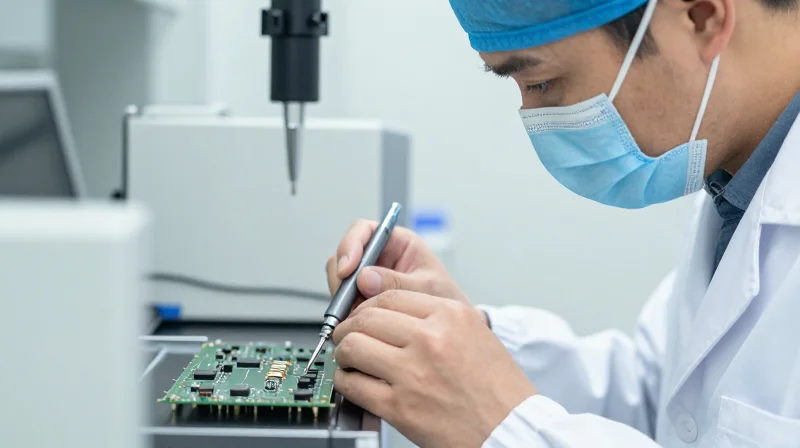
Essential On-Site Audit Protocols
A physical site visit is non-negotiable for high-precision electronic systems. During this audit, you are not just checking for general tidiness; you are verifying the maturity of their quality management systems, the calibration of their assembly tools, and the professional conduct of their engineering team.
- ESD Control Verification
Inspect grounding stations, floor treatments, and apparel. Failure to maintain strict ESD protocols can silently degrade high-precision components. - Traceability Infrastructure
Ask to see a live demonstration of their ERP system. Verify that they can trace a specific unit back to its individual component lot codes and assembly technician. - Calibration Standards
Review the calibration logs for torque drivers, soldering stations, and optical inspection equipment. Ensure all equipment has valid, up-to-date certification stickers.
Comparative Assessment Matrix
| Audit Category | Red Flag Indicator | Gold Standard Indicator |
|---|---|---|
| Inventory Control | Mixed production batches in bins | Dedicated staging areas with digital tracking |
| Equipment Maintenance | Outdated calibration stickers | Automated digital maintenance reminders |
| Workflow Routing | Disconnected production flow | Clear, documented stage-gate sign-offs |
Best Practices for Site Visit Engagement
To extract the most value from your visit, avoid the 'grand tour' trap. Spend time on the shop floor during an active shift, request to speak with a floor lead regarding a recent quality incident, and scrutinize their visual work instructions to confirm they are current and accessible to operators.
- Should I visit during production?
Always visit while the plant is in operation. Observing how operators handle stress and equipment during peak hours provides a realistic view of their capabilities. - Who should be on the audit team?
Include at least one lead engineer or quality manager who understands your product's specific technical nuances.
Selecting a turnkey box build partner requires a balance of technical rigor, quality assurance, and operational transparency. By following these vetting criteria, you mitigate project risk and ensure your electronic systems meet the high-precision requirements your customers demand. Ready to scale your production? Contact our engineering team today to discuss how we can support your next complex assembly project.
