IGBT Transistor: Unveiling the Power Behind Modern Electronics
2025.01.22
Just as the human heart pumps blood to power our bodies, the IGBT transistor powers many of today's technologies. It is a powerful electronic switch, and this article will explore the intricate design of the IGBT transistor, its workings, and its crucial role in modern electronics, ensuring you grasp its significance in our technology-driven world.
What is an IGBT Transistor?
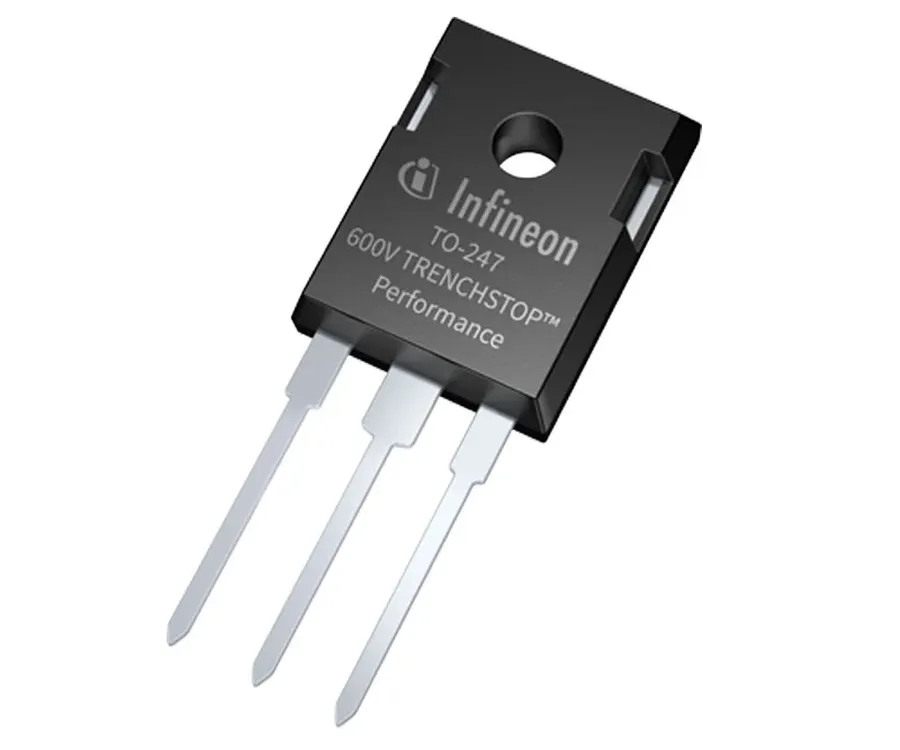
IGBT Transistor
The Insulated Gate Bipolar Transistor (IGBT) is a three-terminal semiconductor device renowned for its ability to handle high power with efficient control. It effectively merges the characteristics of a Bipolar Junction Transistor (BJT) and a Metal-Oxide-Semiconductor Field-Effect Transistor (MOSFET), resulting in a switch that excels in both high-voltage and high-current applications. The IGBT's structure allows for voltage control through its gate terminal, while also providing the current-handling capabilities of a BJT.
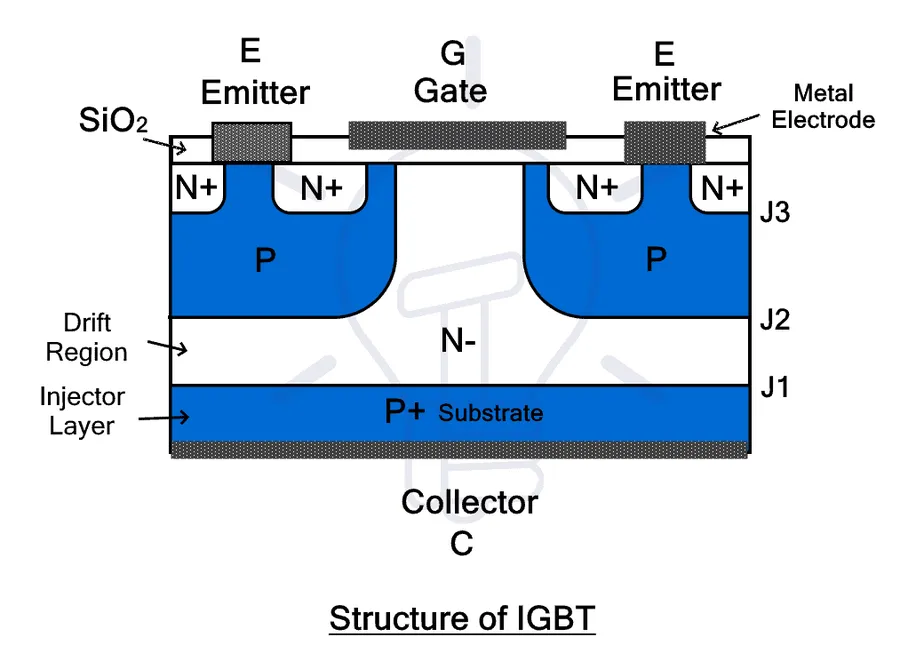
Fundamentally, an IGBT comprises three terminals: the Gate (G), Collector (C), and Emitter (E). The gate is insulated from the main current path by a layer of silicon dioxide, a key aspect that differentiates it from a traditional BJT. This insulation allows for simple, low-power voltage control over the main current flowing between the collector and emitter. An IGBT's internal structure can be conceptualized as a MOSFET controlling a BJT. The MOSFET section is responsible for the gate's high impedance and rapid switching capabilities, while the BJT part enables the substantial current handling that IGBTs are known for. This hybrid structure is what makes the IGBT a critical component in power electronics applications.
IGBT vs MOSFET: Key Differences
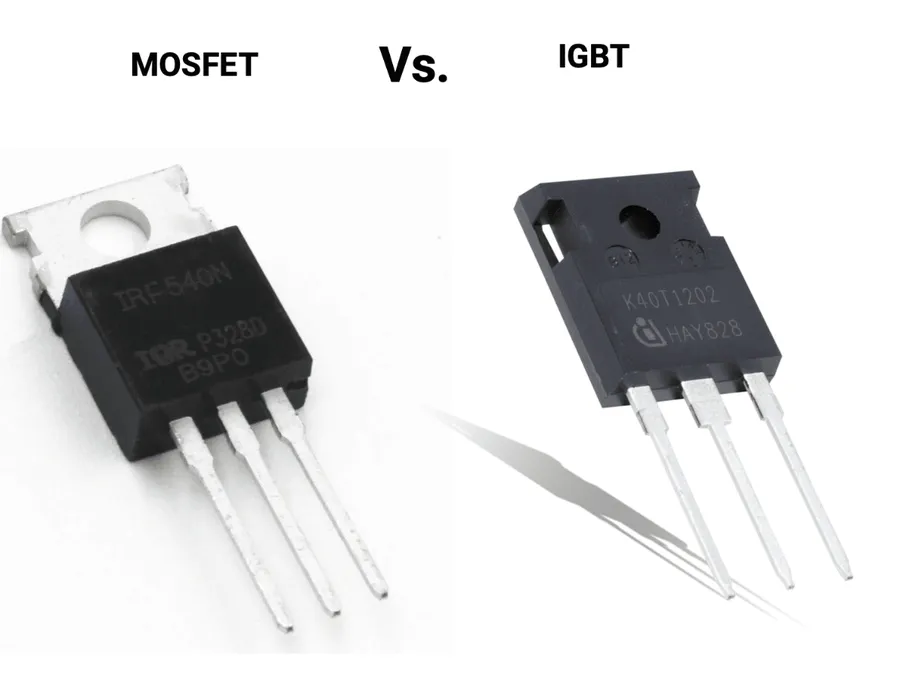
IGBT vs MOSFET
Insulated Gate Bipolar Transistors (IGBTs) and Metal-Oxide-Semiconductor Field-Effect Transistors (MOSFETs) are both crucial power semiconductor devices, yet they exhibit distinct operational characteristics and are suited for different applications. The fundamental difference lies in their internal structure and how they handle current and voltage. IGBTs combine the high-input impedance of MOSFETs with the high-current capabilities of bipolar junction transistors (BJTs), making them ideal for high-power applications, whereas MOSFETs excel in high-frequency switching and are more suitable for low to medium power scenarios.
Feature
IGBT
MOSFET
Structure
Hybrid (MOSFET input, BJT output)
Field-effect transistor
Voltage Handling
High (600V+)
Low to Medium (typically <600V)
Current Handling
High
Moderate
Switching Speed
Moderate
High
Conduction Losses
Lower at high currents
Higher at high currents
Input Impedance
High
High
Application Areas
High-power inverters, motor drives, renewable energy
Switching power supplies, low-power inverters, DC-DC converters
Cost
Generally higher
Generally lower
In essence, IGBTs are preferred where high voltage and current handling is necessary such as in industrial motor drives and high power inverters. Conversely, MOSFETs are preferred in applications that require high-frequency switching with moderate power, such as power supplies and DC-DC converters. The choice between IGBT and MOSFET depends on the specific requirements of the application, including voltage, current, switching frequency, and cost constraints.
How Does an IGBT Work? - The Internal Mechanism
IGBT Structure
The Insulated Gate Bipolar Transistor (IGBT) operates through a sophisticated combination of Metal-Oxide-Semiconductor Field-Effect Transistor (MOSFET) and Bipolar Junction Transistor (BJT) characteristics, enabling it to handle high currents with efficient switching capabilities. This unique hybrid structure allows the IGBT to function as a high-power switch controlled by a low-power gate signal.
At its core, the IGBT’s operation can be broken down into these key aspects:
Gate Control The IGBT's gate terminal, insulated by a layer of oxide, controls the flow of current. Applying a positive voltage between the gate and emitter terminals creates an electric field. This field establishes a conductive channel within the MOSFET structure, allowing current to flow.
MOSFET Functionality The gate-controlled MOSFET part of the IGBT is responsible for initiating and terminating the current flow. The MOSFET structure enables fast switching speeds, allowing the IGBT to turn on and off quickly. This capability is essential for applications that require precise control over power delivery.
BJT's Role in High Current Once the MOSFET has established a conductive channel, the BJT structure comes into play. The BJT portion facilitates the flow of high current between the collector and emitter terminals with lower on-state resistance compared to a pure MOSFET. This is crucial for minimizing power losses when handling high power applications.
Combined Action The combination of MOSFET and BJT actions means the IGBT can handle high currents like a BJT, while being controlled by a low-power voltage signal like a MOSFET. This combines the high-current handling and lower on-state resistance of a BJT with the easy, low power gate control of a MOSFET. This synergy allows for efficient power control with minimal gate drive power, and superior switching characteristics compared to a BJT alone.
Turn-Off Process When the gate voltage is removed, the conductive channel within the MOSFET collapses, and the BJT stops conducting, effectively turning off the IGBT. Due to the BJT's structure, there is a slight delay in this turn-off process due to the stored charge in the BJT’s base region, but it is controlled by the MOSFET’s rapid turn-off characteristics.
This integrated operation makes the IGBT a powerful and versatile device for a wide range of applications.
IGBT Applications: Powering Our World
IGBT Motor Drive
IGBT transistors have become indispensable in numerous high-power applications due to their efficient switching capabilities and high voltage handling. Their ability to control large amounts of electrical power with precision makes them a cornerstone in modern electronics and energy systems.
Motor Control IGBTs are widely used in variable-frequency drives (VFDs) for controlling the speed and torque of electric motors, ranging from small appliances to large industrial machinery. Their efficient switching reduces energy consumption and allows for precise motor control.
Renewable Energy Systems In solar and wind power systems, IGBTs are vital in power inverters that convert DC power from solar panels or wind turbines to AC power for the grid. Their high efficiency contributes to the overall effectiveness of these renewable energy sources.
Power Inverters IGBTs are essential in power inverters used in uninterruptible power supplies (UPS), electric vehicles, and various industrial applications. They convert DC power from batteries or other sources to AC power that can be used by various loads.
Welding Equipment IGBTs are incorporated into welding machines, enabling precise control of the welding current and improving the efficiency and accuracy of the welding process. They help to make the welding machines compact and energy efficient
Traction systems IGBTs are widely used in high-speed trains, electric locomotives and electric vehicles, controlling the large currents needed for traction, delivering smooth, reliable, and efficient performance in railway and automotive sectors.
Induction Heating IGBTs are used in induction heating systems for efficient energy conversion and precise temperature control, applied in industrial process heating and home appliances.
Advantages of IGBT Transistors
IGBT Inverter
IGBTs (Insulated Gate Bipolar Transistors) offer a compelling combination of advantages that make them essential components in modern power electronics. Their unique structure allows them to handle high voltages and currents while maintaining efficient switching capabilities, making them suitable for a wide array of applications.
High Voltage and Current Handling IGBTs are specifically designed to operate at high voltages, often exceeding 600V and handling substantial current levels, which is crucial for heavy-duty applications.
Efficient Switching Performance IGBTs exhibit relatively low switching losses, allowing them to switch at frequencies up to the tens of kHz, contributing to energy efficiency and reduced heat generation.
Lower Conduction Losses Compared to BJT Compared to traditional Bipolar Junction Transistors (BJTs), IGBTs have lower conduction losses due to the MOSFET input stage, leading to higher efficiency in high-power applications.
Gate Drive Simplicity The insulated gate of an IGBT requires minimal input current, simplifying the gate driver circuitry and reducing the overall system complexity.
Robustness IGBTs are robust against overcurrent conditions, exhibiting a saturation behavior that limits the peak current, providing a level of protection against electrical overloads. This characteristic enhance the overall reliability of the circuit in which it is applied.
Feature
IGBT
MOSFET
Voltage Handling
High (600V+)
Low to Medium (<600V)
Current Handling
High
Medium
Switching Speed
Moderate (up to tens of kHz)
Fast (MHz)
Conduction Losses
Lower (than BJT)
Low
Gate Drive Requirement
Low
Low
IGBT Transistor Parameters
Understanding the performance of an Insulated Gate Bipolar Transistor (IGBT) requires careful consideration of its key parameters. These parameters dictate the device's suitability for specific applications and its operational limits. They encompass voltage and current ratings, switching speed, and thermal characteristics, each playing a crucial role in the overall performance and reliability of the IGBT.
Parameter
Description
Significance
Collector-Emitter Voltage (VCE)
Maximum voltage the IGBT can withstand between the collector and emitter terminals.
Crucial for preventing device breakdown and ensuring reliable operation within a specified voltage range.
Collector Current (IC)
Maximum current that can flow through the collector-emitter path of the IGBT.
Dictates the power handling capability of the device, preventing damage due to excessive current flow.
Gate-Emitter Voltage (VGE)
Voltage applied between the gate and emitter terminals to control the switching of the IGBT.
Controls the activation and deactivation of the IGBT. Exceeding the maximum limit can damage the gate oxide layer.
Switching Speed (Turn-On and Turn-Off Time)
Time required for the IGBT to transition between its ON and OFF states.
Impacts the efficiency and performance of the application. Faster switching speeds reduce losses but can generate electromagnetic interference (EMI).
Thermal Resistance (Rth)
Resistance to heat flow from the semiconductor junction to the ambient environment or heatsink.
Indicates how efficiently heat is dissipated from the IGBT and is crucial to managing temperature and preventing device failure due to overheating.
Operating Temperature Range
The temperature range within which the IGBT is designed to operate safely.
Operating beyond these limits can degrade performance and lifespan, and can lead to catastrophic failure.
Short Circuit Withstand Time
The maximum duration an IGBT can withstand a short circuit before damage occurs.
Important for protection against fault conditions in power electronic circuits.
Frequently Asked Questions About IGBT Transistors
This section addresses common inquiries regarding Insulated Gate Bipolar Transistors (IGBTs), providing clear and concise answers to help users understand their functionality, applications, and comparisons with other semiconductor devices.
What are IGBT transistors primarily used for? IGBTs are primarily used in high-power applications that require efficient switching and high current handling, such as motor drives, inverters for renewable energy systems (solar and wind), industrial welding equipment, and electric vehicles. They are ideal for applications where both high voltage and high current control are needed.
Is an IGBT inherently better than a MOSFET, and when should each be used? IGBTs and MOSFETs are both transistors but designed for different applications. MOSFETs are faster and suitable for high-frequency applications. IGBTs are favored for high-voltage and high-current, lower frequency applications because they have lower conduction losses than MOSFETs at the higher voltage levels, making them more efficient in such uses, although their switching speed is slower than MOSFETs. The choice depends on the balance between switching speed and conduction losses required for a specific application.
What is the core purpose of an IGBT? The core purpose of an IGBT is to act as a high-efficiency electronic switch, controlling large amounts of power with minimal loss. Its gate terminal allows for precise control of current flow through the other two terminals, making it indispensable in various power electronic circuits.
How can an IGBT be used effectively as a switch? An IGBT functions as a switch by applying a voltage to its gate terminal. This voltage controls the current flow between the collector and emitter terminals. A sufficient gate voltage will enable the IGBT to conduct, effectively closing the switch; removing the gate voltage will stop conduction, opening the switch. By manipulating the gate voltage, engineers can achieve precise control over the switching process.
What are the typical voltage and current ranges for IGBTs? IGBTs are available in various voltage and current ratings. Typical voltage ratings range from 600V to over 6500V, while current ratings range from a few amps to several thousand amps. These specifications are application-specific, and manufacturers provide detailed datasheets outlining these parameters for each component.
How do temperature variations impact the performance of IGBTs? Temperature significantly affects the performance of IGBTs. Increased temperature can lead to reduced current handling capabilities, increased leakage currents, and lower switching speeds. Overheating can also cause permanent damage. Therefore, proper thermal management through heat sinks and cooling systems is crucial for reliable operation.
What are the main limitations of using IGBTs? While highly effective, IGBTs do have limitations. Their primary drawback is slower switching speeds compared to MOSFETs. Also, they exhibit a 'tail current' during turn-off, which can increase switching losses. Additionally, they are generally more expensive than MOSFETs. However, these factors must be considered in the context of the trade-offs between switching speed, voltage handling, and conduction losses for each specific application.
Future Trends of IGBT Technology
Silicon Carbide IGBT
The field of Insulated Gate Bipolar Transistor (IGBT) technology is dynamic, constantly evolving to meet the increasing demands of modern power electronics. Future trends point towards enhancements in performance, efficiency, and cost-effectiveness, driven by the need for more robust and sustainable energy solutions.
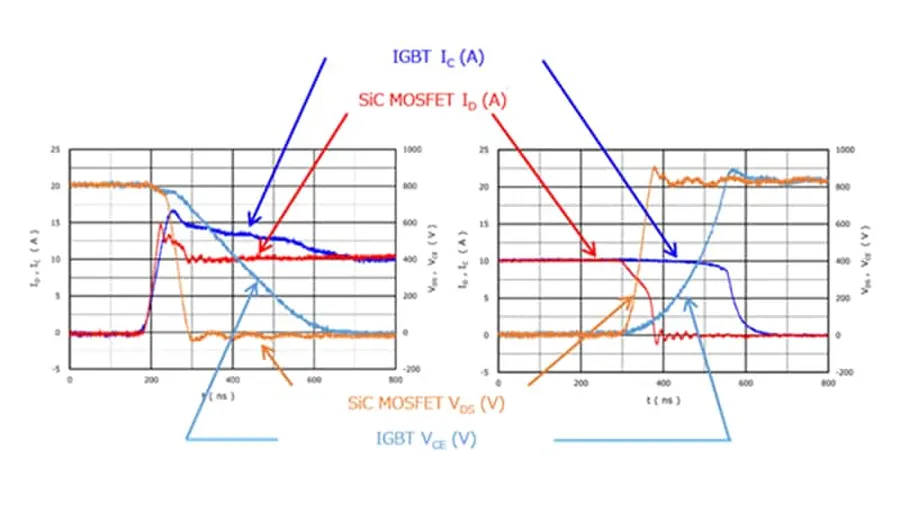
Wide Bandgap Materials The most significant trend is the shift towards wide bandgap (WBG) materials like Silicon Carbide (SiC) and Gallium Nitride (GaN) for IGBT fabrication. These materials offer higher breakdown voltages, faster switching speeds, and lower conduction losses compared to traditional silicon-based IGBTs. The transition to WBG materials is expected to enable more efficient and compact power converters.
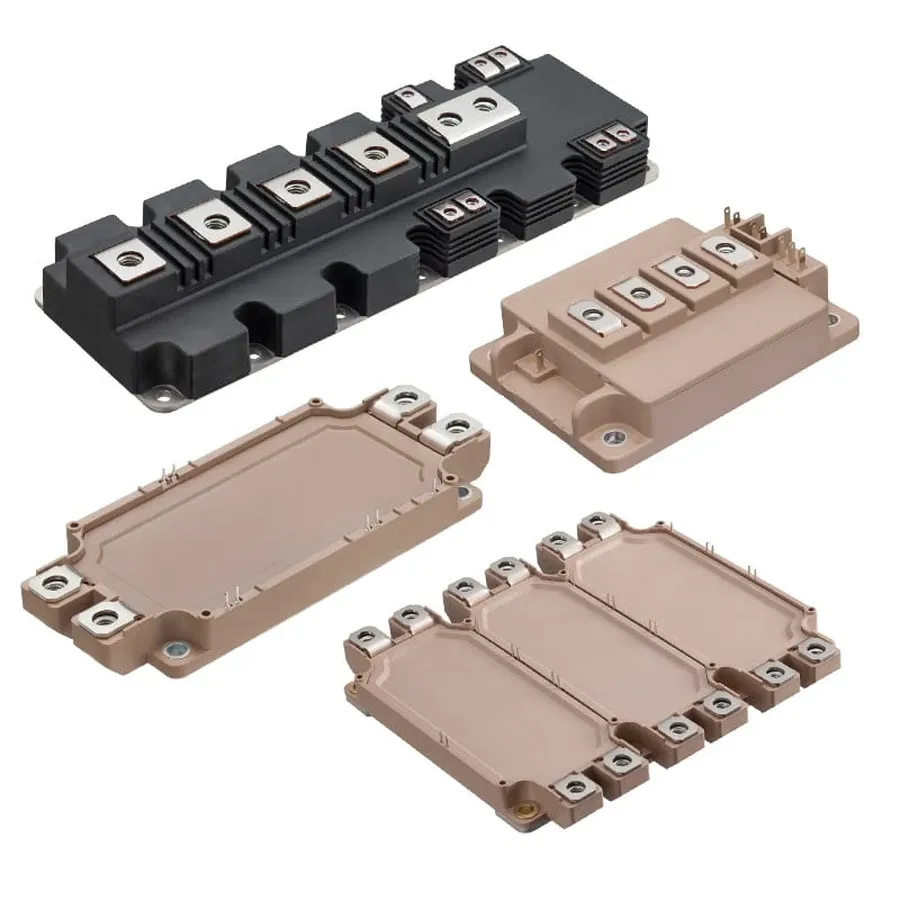
Advanced Packaging Techniques Advanced packaging technologies are crucial for improving thermal management and reliability of IGBT modules. This includes innovative cooling solutions, low-inductance interconnects, and integrated driver circuitry. Improved packaging allows IGBTs to operate at higher power densities and in more demanding environments.
Increased Integration and Miniaturization There is a strong trend toward greater integration of IGBTs with other components, such as gate drivers and protection circuitry. This leads to smaller and more efficient power modules. Miniaturization is driven by the need for compact solutions in applications such as electric vehicles and portable electronics.
Enhanced Control and Monitoring Capabilities Future IGBTs are expected to incorporate more sophisticated control and monitoring features. This includes integrated sensors for temperature and current, as well as advanced gate driver circuits that enable precise switching and fault detection. These improvements will enhance the performance and reliability of power systems.
Artificial Intelligence and Machine Learning Integration AI and machine learning are increasingly being used to optimize the design and operation of IGBT-based systems. Machine learning algorithms can be used for predictive maintenance, optimizing switching characteristics for specific applications, and enhancing overall system performance. This trend is expected to accelerate the development of smarter and more adaptable power electronics.
Applications in Emerging Technologies IGBT technology is set to play a pivotal role in emerging fields such as smart grids, renewable energy, and electric vehicles. The technology's ability to handle high power levels and efficient switching make it a suitable choice for powering these new technologies.
In conclusion, the IGBT transistor is a vital component in modern power electronics, combining the best aspects of MOSFETs and BJTs to efficiently manage high voltage and current. Understanding the functionality and applications of IGBTs provides critical insights into the future of industrial and renewable energy technologies, paving the way for continuous technological advancement.