Understanding Wire Wound Resistors: Types, Applications, and Advantages
2025.01.22
In our daily lives, electronic devices are ubiquitous, and resistors, often unnoticed, are indispensable components. Among the various types, the wire wound resistor stands out for its ability to handle high power and provide precise resistance. From audio amplifiers to industrial machinery, understanding the applications and capabilities of wire wound resistors is critical for efficient and safe electronic designs. This article dives into the nuances of wire wound resistors, exploring their construction, benefits, and where they shine compared to other resistor technologies.
What is a Wire Wound Resistor?
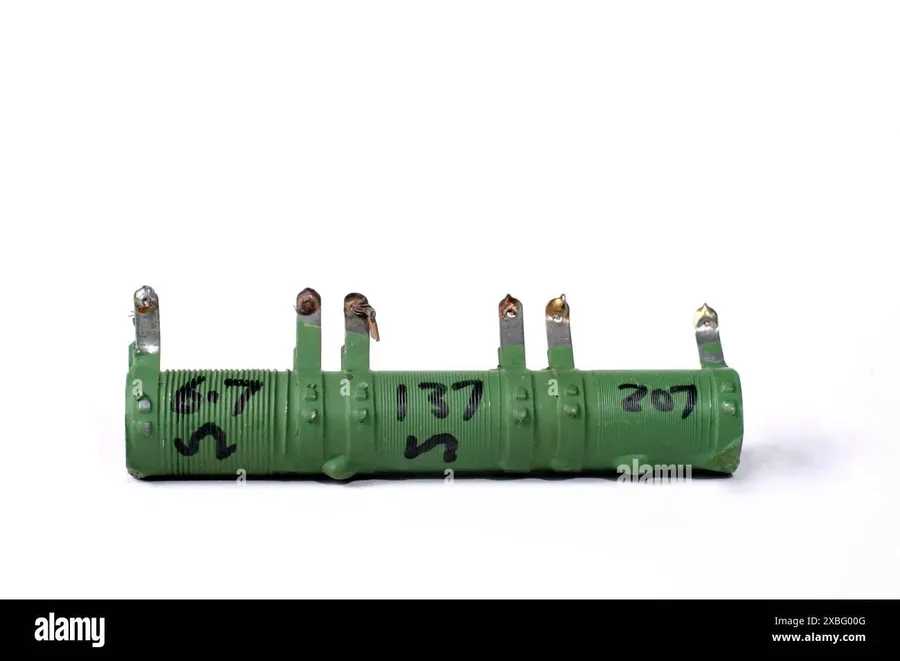
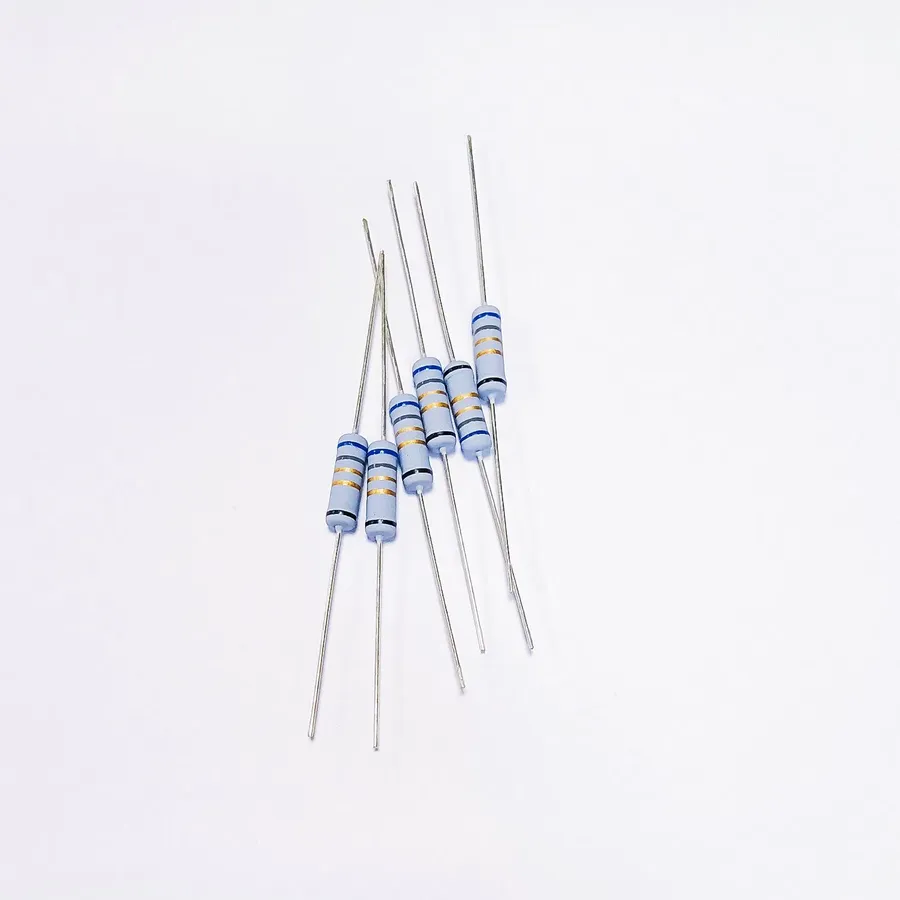
Wire Wound Resistor Detail
A wire wound resistor is a type of electrical resistor characterized by its construction: a resistive wire, typically a metal alloy, is precisely wound around an insulating core, and then terminated with conductive leads for circuit integration. This fundamental design imparts specific characteristics to the component, influencing its performance and applications.
The core construction involves three critical elements: the resistive wire, which provides the desired resistance value; the insulating core, made from materials such as ceramic or fiberglass, providing structural support and electrical isolation, and the terminals, which facilitate connection to a circuit. The precision and materials of these components directly affect the resistor's accuracy, stability, and power handling capability.
Construction and Materials of Wire Wound Resistors
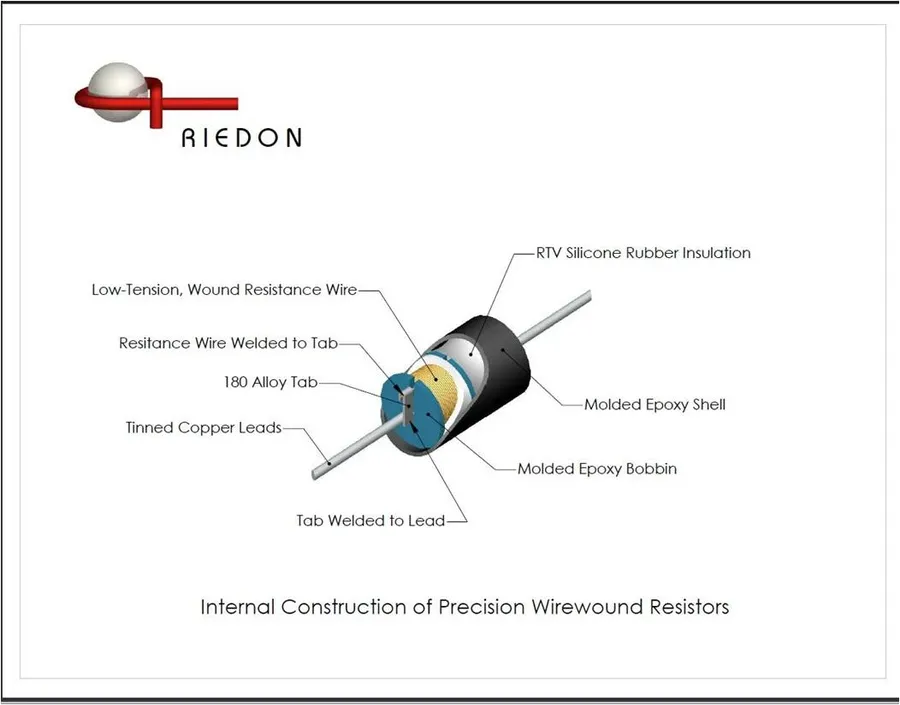
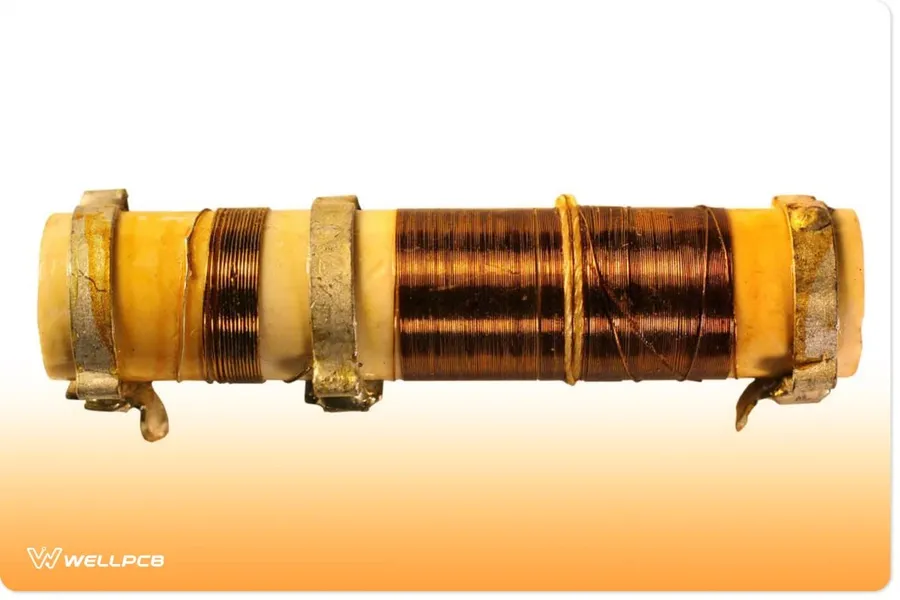
Wire Wound Resistor Structure
Wire wound resistors are fundamentally constructed using a resistive wire, an insulating core, and conductive terminals. The selection of materials for each component is crucial, directly impacting the resistor's performance characteristics, such as temperature coefficient, power handling, and overall reliability. This section provides a detailed analysis of the materials used and their influence.
Component
Material Options
Properties
Impact on Performance
Resistive Wire
Nichrome (Ni-Cr)
High resistivity, moderate temperature coefficient, good corrosion resistance
Suitable for high-temperature applications and provides a stable resistance value over a wide temperature range.
Resistive Wire
Copper-Nickel (Cu-Ni)
Moderate resistivity, low temperature coefficient, good solderability
Offers precise resistance with minimal change due to temperature variations, making it ideal for precision resistors.
Resistive Wire
Manganin
Very low temperature coefficient
Used where extreme accuracy and minimal temperature drift are required.
Insulating Core
Ceramic (Alumina)
High thermal conductivity, excellent electrical insulation, high mechanical strength
Facilitates efficient heat dissipation and provides a robust structure.
Insulating Core
Fiberglass
Good electrical insulation, lower thermal conductivity
A cost-effective option for general-purpose resistors, although thermal management is less efficient compared to ceramic cores.
Terminals
Tinned Copper
Good conductivity, solderability, and corrosion resistance
Ensures reliable electrical connections with minimal contact resistance.
The resistive wire, typically an alloy, is wound around the insulating core, and the terminals are connected to the ends of the wire. The choice of wire gauge and length determines the resistance value, while the core material plays a vital role in heat dissipation. The materials selected directly influence the wire wound resistor's stability, longevity, and suitability for specific applications.
Types of Wire Wound Resistors
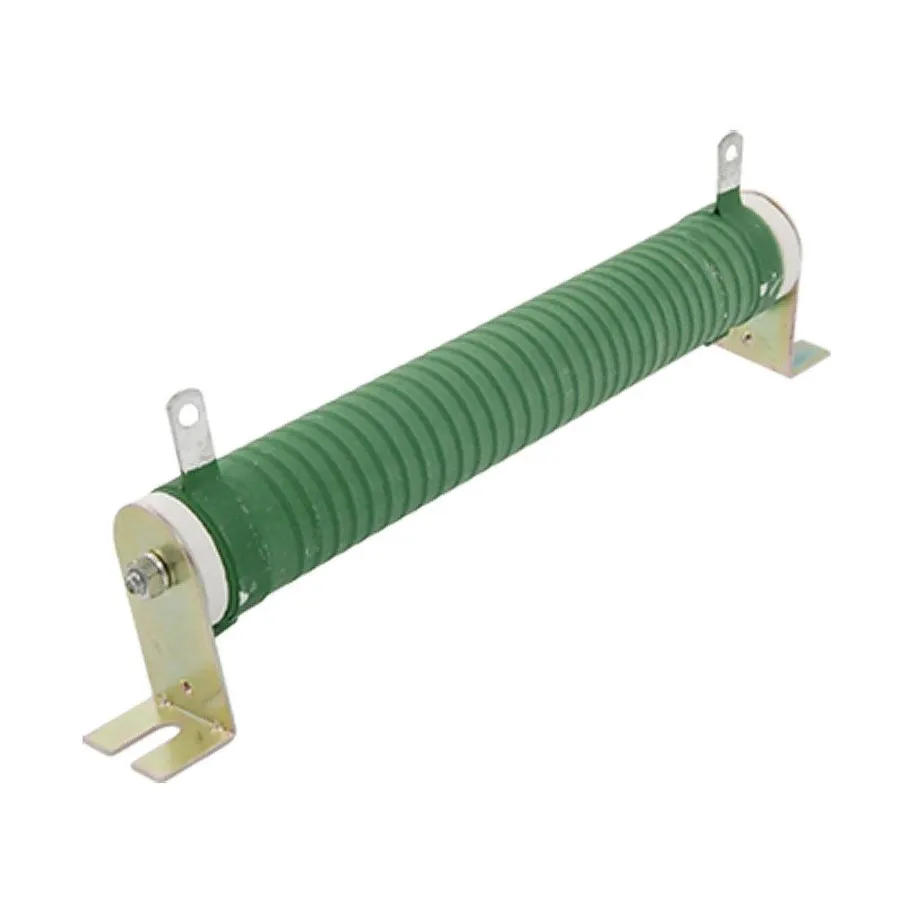
Variety of Wire Wound Resistors
Wire wound resistors are not a monolithic category; they are manufactured in a variety of configurations to meet specific application demands. These variations primarily address the trade-offs between inductance, power handling, and precision, with each type tailored for distinct performance requirements.
Standard Wire Wound Resistors These are the most basic type, characterized by their simplicity in construction. A resistive wire is wound around an insulating core and terminated with leads or terminals. They are suitable for general-purpose applications where high precision and low inductance are not primary concerns.
Low Inductance Wire Wound Resistors To mitigate the inherent inductance of wire wound resistors, specialized winding techniques are used, such as Ayrton-Perry winding. This method involves winding the wire in a way that the magnetic fields generated by adjacent turns cancel each other out, thereby reducing inductance. These are crucial in applications sensitive to inductance, such as high-frequency circuits.
Non-Inductive Wire Wound Resistors Further reducing inductance, non-inductive resistors are constructed with bifilar windings or other methods that completely neutralize the inductive effects. These are used in extremely sensitive electronic circuits, such as precision measurement tools or high-frequency applications where even minimal inductance can be problematic. They are also known as 'Ayrton-Perry winding resistors'.
High-Power Wire Wound Resistors Designed to handle significantly higher power dissipation, these resistors often utilize larger diameter wires, larger cores, and are encapsulated in heat-conductive materials to effectively dissipate heat. Applications include power supplies, motor control, and braking systems where substantial power must be managed reliably.
Type
Construction
Key Feature
Application
Standard
Single wire winding
Simple, general purpose
Basic circuits, general power applications
Low Inductance
Ayrton-Perry winding, or similar
Reduced inductance
High-frequency circuits, sensitive applications
Non-Inductive
Bifilar or other counter-winding
Extremely low inductance
Precision measurement, very high-frequency circuits
High Power
Large wire, robust construction, heat sink
High power handling
Power supplies, motor control, braking systems
Advantages of Wire Wound Resistors
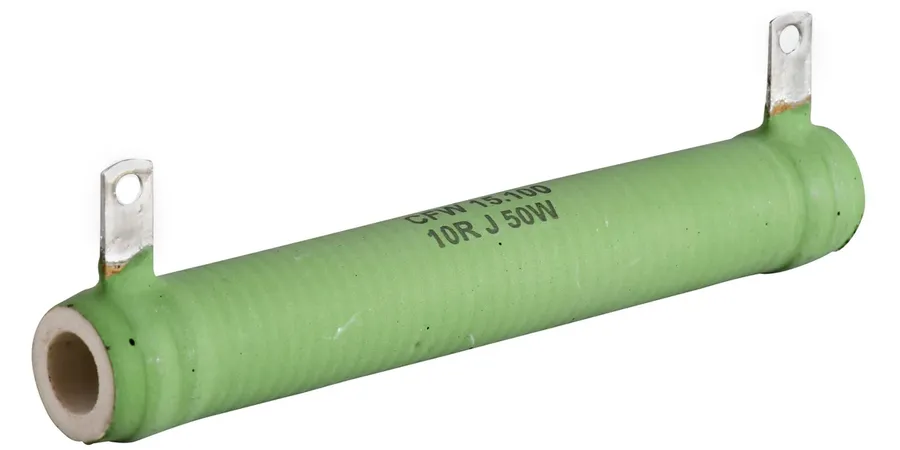
High Power Resistor
Wire wound resistors offer distinct advantages over other resistor types, primarily due to their unique construction. Their key benefits include high precision, exceptional power handling capability, and stable performance across a range of temperatures and surge currents.
High Precision Wire wound resistors can be manufactured to very tight tolerances, resulting in highly accurate resistance values. This precision is achieved by carefully controlling the wire's material, length, and diameter. Typical tolerances can range from ±0.01% to ±5% making them suitable for applications requiring stable resistance values.
Superior Power Handling These resistors are capable of dissipating significant amounts of power without significant change in their resistance value, and without damage due to their rugged construction, larger surface area for heat dissipation, and robust wire materials. This allows them to operate effectively in high-power applications and deal with peak power without overheating.
High Surge Current Capability Wire wound resistors can withstand high surge currents because of the wire construction can handle large amounts of energy absorption. This robustness is crucial in circuits exposed to sudden high current spikes.
Temperature Stability The resistance of wire wound resistors is inherently more stable over a wide temperature range compared to film or carbon resistors. The low-temperature coefficient of resistance is typically achieved through the use of specific resistance wire alloys, ensuring predictable behavior in varying environmental conditions. This stability is a significant advantage in precision applications where temperature changes might affect circuit performance.
Low Noise Wire wound resistors exhibit inherently low levels of noise. This is because their construction of the resistor is a single piece of solid wire. This is a very desirable feature in sensitive applications such as high precision measurement or audio circuits.
Applications of Wire Wound Resistors
Resistor on PCB
Wire wound resistors, owing to their unique characteristics such as high power handling, precision, and temperature stability, are indispensable in a wide array of applications. These components are crucial in scenarios demanding robustness and reliability, extending across diverse sectors from power electronics to precision instrumentation.
Power Supplies In power supplies, wire wound resistors are often employed as current-sensing resistors or as load resistors due to their ability to handle significant power dissipation without substantial changes in resistance values. This ensures stable and controlled power delivery.
Motor Control Wire wound resistors play a vital role in motor control circuits, specifically in applications like braking systems, where they are utilized to dissipate the generated kinetic energy, preventing damage and ensuring smooth, safe operation.
Braking Systems In industrial braking systems and in automotive applications, these resistors help in managing the large surges of energy generated during braking, thereby protecting the system from overloads and heat damage. Their high power capacity is crucial in this regard.
Precision Measurement Circuits Their high precision and temperature stability make wire wound resistors well-suited for precision measurement equipment. In applications where accurate resistance values are essential, such as in test and measurement apparatus, wire wound resistors ensure reliability and consistency.
Industrial Equipment Various industrial machines and control systems rely on wire wound resistors for current limiting, voltage division, and as protective elements in high-power applications. Their robust design ensures performance in demanding industrial environments.
Audio Systems In high-fidelity audio systems, wire wound resistors are sometimes preferred in critical paths, where their low noise and precision are beneficial for signal fidelity, especially where they are used in speaker crossovers and amplifier biasing.
Wire Wound Resistor vs Other Resistor Types (Ceramic, Film)
Resistor Comparison
Wire wound resistors, ceramic resistors, and film resistors each possess unique characteristics that make them suitable for different applications. A direct comparison reveals trade-offs in accuracy, power handling, temperature stability, and cost. This section provides a comparative analysis to help engineers select the appropriate resistor type for a given design.
Characteristic
Wire Wound Resistor
Ceramic Resistor
Film Resistor
Accuracy
High (0.01% - 5%)
Low (5% - 20%)
Moderate (0.1% - 2%)
Power Rating
High (1W - 1000W+)
Low to Medium (0.25W - 5W)
Low to Medium (0.125W - 2W)
Temperature Stability
Excellent (Low TCR)
Moderate
Good
Inductance
High (unless specially designed)
Low
Low
Pulse/Surge Capability
High
Low
Low
Cost
Moderate to High
Low
Low to Moderate
Typical Applications
Precision power circuits, current sensing, high-power braking
General purpose, low-cost applications
Precision measurement, audio circuits, general use
Wire Wound Resistor Symbol and Diagram
Wire wound resistors, fundamental components in electrical circuits, are represented by specific symbols in schematic diagrams to ensure clear communication among engineers and technicians. Understanding these symbols is crucial for interpreting electronic circuit designs and documentation.
The standard symbol for a wire wound resistor is a rectangle, often with jagged or saw-tooth lines running through it. This distinguishes it from other types of resistors, and the variations can indicate a number of features. These symbols are universally accepted, ensuring consistent interpretation across different design software and documentation.
Basic Resistor Symbol: The most common symbol is a rectangle with zig-zag lines inside, representing resistance. This signifies a generic resistor, and may not indicate it's a wire-wound type specifically.
Wire Wound Indication: Some diagrams may include additional notation or shading within the rectangle, or slightly altered jagged lines, to explicitly denote a wire wound resistor. However, this is not a hard-set standard and is more an engineering convention
Variable Wire Wound Resistor: A variable wire wound resistor (rheostat or potentiometer) is depicted with an arrow through the resistor symbol. This indicates an adjustable resistance value.
Terminal Identification: The terminals of the resistor are indicated by lines extending from the rectangle, signifying connection points to the circuit.
When reading schematics, look for these symbols within the circuit diagram. It is important to check the bill of materials (BOM) or accompanying documentation, to confirm resistor types when not explicitly stated in the diagram. Additionally, datasheets from component manufacturers often provide detailed specifications, including any specific symbol requirements and parameters related to the application.
Frequently Asked Questions About Wire Wound Resistors
This section addresses common queries regarding wire wound resistors, providing concise and authoritative answers based on fundamental principles of electrical engineering and materials science.
What exactly is a wire wound resistor? A wire wound resistor is a type of electrical resistor created by winding a resistive wire around an insulating core. The resistance value is determined by the wire's material, length, cross-sectional area, and temperature. These resistors are generally characterized by their high precision, ability to handle high power and surge currents, and stable performance across different temperatures.
What are the primary advantages of using wire wound resistors? Wire wound resistors offer several key benefits: high precision in resistance values, making them suitable for precision circuits; high power handling capability, allowing them to manage significant electrical loads; good tolerance to high surge currents without damage; and excellent thermal stability, maintaining consistent resistance over a wide temperature range.
When is it most appropriate to use a wire wound resistor? Wire wound resistors are best used in applications requiring high precision, high power dissipation, and good surge current capability. This makes them suitable for use in power supplies, motor control circuits, braking systems, and precision measurement instruments. They are not recommended for high-frequency applications due to their inherent inductance.
What are some common applications for wire wound resistors? Common applications for wire wound resistors include their usage in power supplies for load regulation, in motor control circuits for controlling speed and torque, in braking systems for dissipating excess energy, in precision measurement circuits where accuracy is paramount, and in audio equipment where linearity and low noise are essential.
How do wire wound resistors compare to ceramic resistors? Wire wound resistors generally offer higher precision, better power handling, and superior temperature stability compared to ceramic resistors. Ceramic resistors, however, are usually smaller and more cost-effective for general-purpose applications where these higher performance attributes aren't critical. Wire wound resistors have inductance, while ceramic resistors are generally less inductive at higher frequencies.
What are the limitations of wire wound resistors? While wire wound resistors excel in many areas, they do have limitations. Their inherent inductance makes them unsuitable for high-frequency applications, where their inductance can significantly impact circuit performance. They also tend to be physically larger and more costly than other resistor types like film or ceramic resistors.
Are there different types of wire wound resistors and what are their differences? Yes, there are variations such as standard, low inductance, non-inductive, and high-power wire wound resistors. Standard types are basic general-purpose resistors. Low-inductance types are designed to minimize inherent inductance by using special winding patterns. Non-inductive types nearly eliminate inductance through techniques like bifilar winding. High-power types are constructed to handle large amounts of power dissipation, typically with larger wire gauges and robust construction.
Wire wound resistors, although one of the oldest resistor designs, remain essential components in modern electronics due to their exceptional power handling capabilities and precision. Their applications stretch across industries from high-power industrial equipment to precise audio systems. Understanding their advantages and limitations versus other resistor types is essential for engineers and hobbyists to select the appropriate component for a specific task. As we continue to innovate in the field of electronics, the wire wound resistor will continue to play a vital role, driving technological advancements.