
In the fast-paced era of Industry 4.0, the human-machine interface (HMI) is no longer a peripheral afterthought; it is the vital control center of the modern smart factory. As operational demands for data-rich visualization and rugged durability grow, the traditional debate between resistive and capacitive touch technologies has shifted. This article provides a deep dive into the engineering considerations, performance trade-offs, and future trajectories for industrial touch panels.
Understanding the Foundation: Resistive HMI Technology
The Mechanics of Resistive Sensing
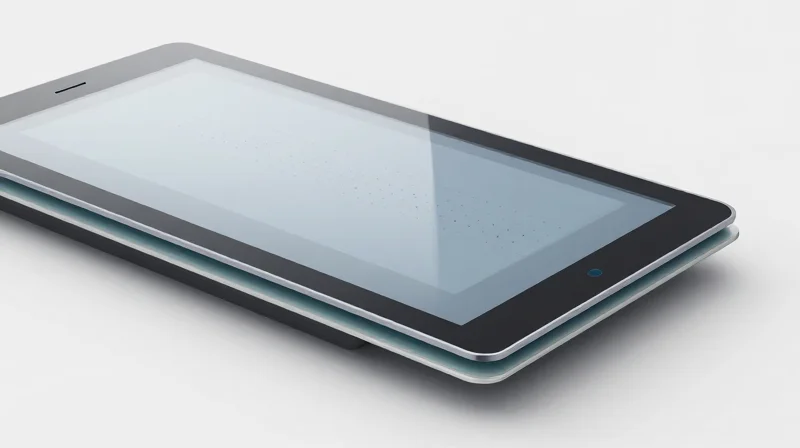
At its core, resistive HMI technology functions as a physical switch, requiring mechanical pressure to register input. A resistive touch panel consists of two primary layers: a flexible upper layer and a rigid lower substrate, separated by a thin gap filled with micro-spacers. Both internal surfaces are coated with a conductive material, typically Indium Tin Oxide (ITO). When an operator presses the screen, the flexible layer deforms, establishing electrical contact between the two layers at the precise coordinates of the pressure.
Key Operational Advantages
- Input Versatility
Because the system relies on physical displacement rather than electrical conductivity, it can be operated with fingers, gloved hands, styluses, or even blunt instruments. - Durability in Harsh Environments
Resistive panels are impervious to contaminants like dust, moisture, and grease, making them ideal for heavy manufacturing or outdoor kiosks. - Electrical Noise Immunity
The mechanical nature of the switch makes the panel inherently resistant to electromagnetic interference (EMI), a critical requirement for factory floors with high-voltage machinery.
Historical Context and Industrial Standardization
For decades, resistive technology served as the gold standard for industrial control systems. Its cost-effectiveness and simple integration into existing PCB designs provided engineers with a predictable, reliable interface. While newer capacitive technologies offer superior optical clarity and multi-touch capability, the resistive panel remains the preferred solution for applications where the operator's environment necessitates the use of Personal Protective Equipment (PPE) that would render capacitive screens unresponsive.
| Feature | Resistive Technology | Industrial Suitability |
|---|---|---|
| Input Method | Pressure-based | High (Gloves/Stylus) |
| Environment | Dust/Moisture resistant | High |
| EMI Tolerance | Excellent | High |
| Optical Clarity | Lower (due to layers) | Moderate |
The Rise of Capacitive Technology in Industrial Environments
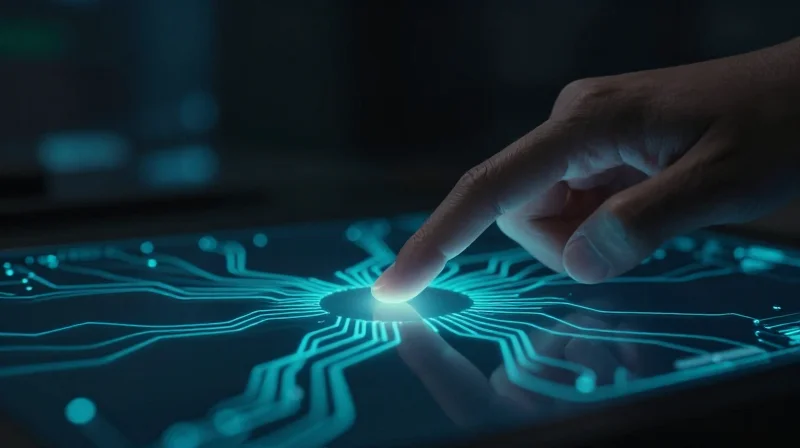
The industrial sector is witnessing a decisive shift from resistive touch technology to Projected Capacitive (PCAP) solutions. This migration is driven by the need for smarter, faster, and more durable human-machine interfaces that can thrive in modern, data-intensive manufacturing environments.
Why PCAP is Reshaping Industrial HMI Standards
Unlike resistive panels that require physical pressure to actuate two conductive layers, PCAP technology uses an electrostatic field to detect touch. This fundamental change allows for ultra-responsive interfaces that support gestures, such as pinching and zooming, which are standard in consumer electronics but increasingly critical for complex industrial software applications.
| Feature | Resistive Technology | PCAP Technology |
|---|---|---|
| Input Method | Pressure-based | Electrostatic |
| Touch Support | Single-touch | Multi-touch/Gesture |
| Surface Material | Flexible Film | Tempered Glass |
| Durability | Moderate/Wear-prone | High/Scratch-resistant |
Key Advantages in Challenging Environments
PCAP technology offers more than just aesthetic improvements; it is inherently more suited to rugged industrial conditions.
- Superior Optical Clarity
PCAP panels typically feature glass-on-glass construction, providing significantly better light transmission compared to the multiple film layers found in resistive panels. - Environmental Sealability
The use of a single glass front allows for a completely sealed, flush-mount design, making it easier to clean and resistant to chemicals, dust, and water ingress. - Extended Longevity
Without moving parts or pressure-sensitive membranes, PCAP sensors maintain consistent performance over millions of cycles, reducing downtime and maintenance costs.
Addressing Industrial Challenges
While PCAP initially faced skepticism regarding glove usage and moisture interference, modern industrial PCB controller designs have largely mitigated these concerns. Advanced algorithms now calibrate sensitivity to ignore water droplets and support thick, gloved-finger operation, ensuring that the transition to touch-capacitive technology does not compromise operational safety or usability in factory settings.
Durability and Environmental Robustness: A Comparative Analysis
Durability and Environmental Robustness: A Comparative Analysis
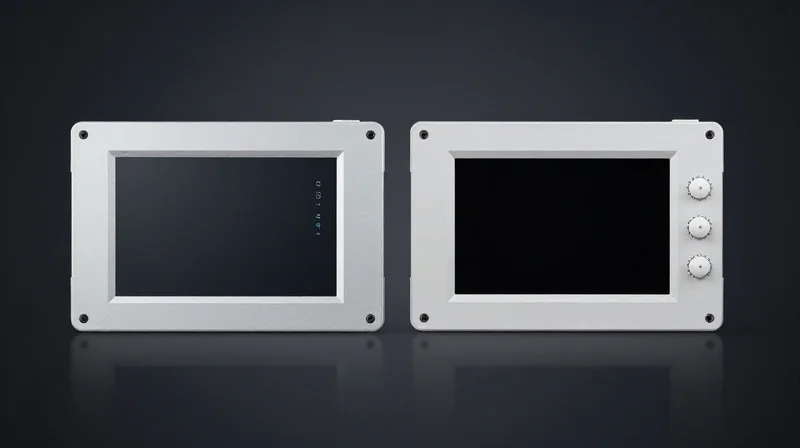
Industrial environments demand HMI solutions that maintain operational integrity despite exposure to harsh pollutants and mechanical stressors. While resistive technology offers an inherently sealed pressure-based mechanism, modern capacitive panels rely on advanced glass lamination to overcome susceptibility to environmental interference.
| Environmental Stressor | Resistive Technology | Capacitive Technology |
|---|---|---|
| Chemical Exposure | Excellent (Film surface is inert) | Superior (Hardened glass resists solvents) |
| Vibration/Impact | Moderate (Subject to mechanical wear) | High (Solid-state glass construction) |
| Fluid/Oil Ingress | Excellent (Sealed perimeter) | Requires firmware calibration (Water rejection) |
| Dust and Debris | Resistant (Pressure-actuated) | Excellent (Non-contact sensing) |
Performance under Mechanical and Chemical Stress
Resistive touch screens, characterized by their flexible polyester top layer, are highly resistant to chemical reagents. However, the mechanical nature of these panels creates a point of failure where the film can crease or tear under high-frequency vibration. In contrast, Projective Capacitive (PCAP) sensors utilize chemically strengthened glass. This provides a rigid barrier against physical impact and is far easier to clean and sterilize, making it the preferred choice for pharmaceutical and food processing plants.
FAQs on Environmental Hardening
- Does capacitive technology fail when exposed to water or oil?
Early capacitive panels struggled with moisture, but modern industrial PCAP controllers incorporate advanced noise-filtering algorithms that ignore liquid droplets, preventing false triggers. - Why is resistive technology still preferred in high-vibration applications?
Resistive panels do not require complex touch-sensing logic to register a change, making them highly predictable under severe mechanical shock, although capacitive solutions are closing this gap through advanced optical bonding. - How does chemical exposure affect PCB life?
High-quality industrial HMIs utilize gaskets and conformal coatings on the underlying PCB, ensuring that even if a touch surface is cleaned with harsh solvents, the sensitive electronics remain hermetically sealed.
User Experience: Precision, Clarity, and Multi-Touch Functionality
Redefining Interaction: The Shift to Capacitive Precision
The transition from resistive to projected capacitive (PCAP) touch technology represents a fundamental evolution in how operators interact with industrial machinery. While resistive panels require physical deformation of an outer layer, creating a tactile drag and requiring consistent pressure, capacitive screens rely on the conductive properties of the human body. This shift allows for significantly higher sensitivity and the ability to register light, precise taps, reducing operator fatigue during prolonged shifts.
Optical Clarity and Interface Aesthetics
Resistive touch screens inherently compromise optical quality due to the air gap between layers and the flexible film required for actuation. This often results in increased glare and reduced light transmission. In contrast, PCAP interfaces feature a continuous glass surface that provides high light transmission and exceptional image sharpness, essential for displaying complex diagnostic data or high-resolution HMI graphics without visual distortion.
| Feature | Resistive Technology | Capacitive (PCAP) Technology |
|---|---|---|
| Interaction Method | Physical Pressure | Conductive Touch |
| Optical Clarity | Moderate (Matte/Glaring) | High (Vibrant/Clear) |
| Multi-touch | Limited/Single point | Advanced (Gestures/Zoom) |
| Input Source | Stylus, Glove, Finger | Finger, Specialized Gloves |
Multi-Touch Functionality in Industrial Workflows
Multi-touch functionality is no longer a consumer-grade luxury but a requirement for modern industrial efficiency. PCAP technology enables gesture-based controls such as pinch-to-zoom, two-finger rotation, and multi-user inputs, allowing operators to navigate complex SCADA systems with the same fluidity as modern mobile devices. This reduces menu nesting and accelerates response times in critical environments.
- How does capacitive touch handle gloved input?
Advanced PCAP controllers now feature adjustable sensitivity profiles that allow for reliable operation even through heavy-duty industrial gloves. - Does multi-touch interfere with industrial safety?
No, when implemented correctly with software "palm rejection" algorithms, multi-touch prevents accidental activations while enabling complex command sequences. - Why is optical clarity critical for HMI?
High clarity reduces the cognitive load on operators by ensuring that icons, alerts, and critical process values are readable at varying angles and lighting conditions.
PCB Design Considerations for Advanced HMI Integration
Strategic PCB Layout for Capacitive Integration
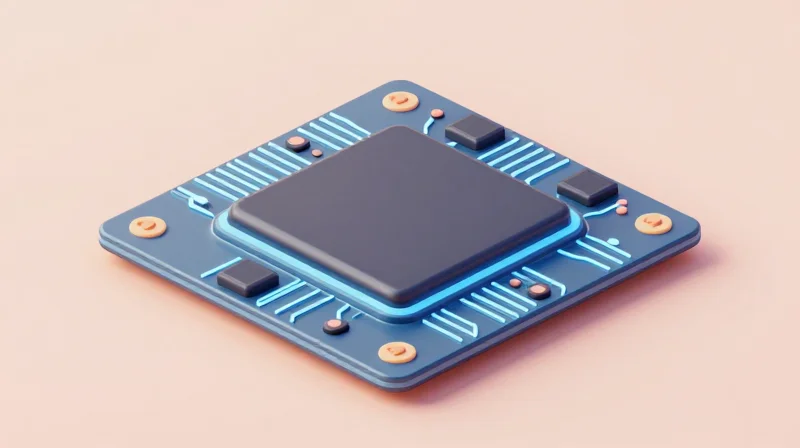
Capacitive touch sensors operate by detecting minute changes in electrical capacitance, making them inherently vulnerable to electromagnetic interference (EMI) and power supply noise. To ensure operational stability in factory settings, designers must prioritize signal integrity through controlled impedance paths, aggressive grounding schemes, and isolated power planes.
Key Design Considerations for EMI Resilience
- Proximity of Sensing Lines
Trace length between the touch sensor and the controller should be minimized to reduce loop area and parasitic capacitance, effectively lowering the noise sensitivity of the touch signal. - Ground Plane Strategy
Utilize dedicated ground layers beneath the touch controller to provide a stable reference and shield against high-frequency transients typical in industrial motor-heavy environments. - Differential Signal Routing
Implement differential routing for communication interfaces like I2C or SPI to reject common-mode noise generated by external industrial equipment.
Comparative Requirements: PCAP vs. Resistive Controllers
| Design Factor | PCAP Requirements | Resistive Requirements |
|---|---|---|
| Controller Logic | Complex MCU/DSP for noise filtering | Simple ADC interface |
| Signal Shielding | Critical (Active Shielding) | Low sensitivity to noise |
| PCB Footprint | Requires integrated filter components | Minimalist trace routing |
| ESD Protection | High-voltage transient suppression required | Standard input protection |
Best Practices for Power Supply Conditioning
The power integrity of the touch controller is the primary determinant of signal-to-noise ratio (SNR). Using dedicated LDO regulators to provide a clean, noise-isolated power source is mandatory for capacitive sensors. Below is an example snippet for implementing a basic noise-filtering circuit on the PCB schematic:
// Recommended filtering for VDD_TOUCH line
L1 = Ferrite_Bead_120ohm_100MHz;
C1 = 10uF_X7R_Ceramic;
C2 = 0.1uF_X7R_Ceramic;

// Place capacitors as close as possible to the Controller VDD pin
Connect(VCC_IN, L1);
Connect(L1, VDD_TOUCH_PIN);
Connect(C1, VDD_TOUCH_PIN, GND);
Connect(C2, VDD_TOUCH_PIN, GND);
Cost-Benefit Analysis for System Integration
Economic Drivers of HMI Selection
Selecting between capacitive and resistive technologies requires an analysis beyond simple hardware unit pricing. While resistive panels traditionally present lower initial capital expenditure (CAPEX), the total cost of ownership (TCO) is heavily influenced by maintenance frequency, environmental durability, and operational downtime risks in industrial settings.
| Cost Factor | Resistive Technology | Capacitive Technology |
|---|---|---|
| Initial Procurement | Low | Moderate-High |
| Replacement Frequency | High (Mechanical Wear) | Low (Solid State) |
| Integration Complexity | Simple/Low Cost | High (Requires EMI Shielding) |
| Maintenance Effort | Periodic Calibration | Minimal |
Long-Term Lifecycle Considerations
The long-term value proposition of projected capacitive touch (PCAP) often outweighs the entry-level savings of resistive screens in high-traffic applications. Resistive membranes are prone to physical degradation and eventual failure due to constant mechanical pressure, leading to higher hidden costs associated with field maintenance and system downtime.
- Does capacitive integration require higher initial R&D spend?
Yes, capacitive integration often necessitates specialized PCB design for noise immunity and more complex firmware development to manage touch sensitivity, increasing early-stage engineering costs. - When is the resistive option more cost-effective?
Resistive panels are economically superior in low-usage environments or scenarios where operators frequently wear thick gloves that are incompatible with standard capacitive sensors without specialized high-cost controller configurations. - How does environmental durability impact ROI?
Capacitive panels, featuring glass-on-glass construction, significantly reduce replacement intervals in high-abrasion or high-chemical exposure zones, providing a faster return on investment through extended mean time between failures (MTBF).
Risk-Adjusted Decision Making
When calculating the financial impact of HMI integration, stakeholders must weigh the cost of potential production halts. Using a cheaper resistive panel in a critical, high-cycle assembly line can lead to significant fiscal losses if the unit requires frequent repair. Investing in robust capacitive PCB architectures generally yields a more stable financial outlook over a 5 to 10-year asset lifecycle.
Future Trajectories: Where HMI Technology is Heading
The Next Frontier: Beyond Physical Contact
The industrial HMI landscape is shifting away from purely mechanical or contact-based input paradigms. While current trends favor Projected Capacitive (PCAP) for its durability, the immediate future emphasizes 'touch-less' interaction and advanced sensory integration to maximize worker safety and hygiene.
Key Emerging Technologies
- Glove-Optimized PCAP Algorithms
Advanced firmware now utilizes adaptive sensitivity and multi-frequency sensing to distinguish between deliberate gloved inputs and environmental interference or liquid spillage. - Contactless Gesture Control
Integrating infrared or ultrasonic proximity sensors into the bezel allows operators to trigger commands with hand gestures, reducing wear and improving sanitation in food and pharmaceutical manufacturing. - AI-Driven Predictive Maintenance
Modern HMI controllers now monitor signal-to-noise ratios in real-time, alerting maintenance staff to PCB component degradation or touch surface damage before a failure occurs.
Comparative Roadmap: PCAP vs. Emerging Standards
| Capability | Modern PCAP | Next-Gen Hybrid |
|---|---|---|
| Input Mode | Touch / Multi-touch | Touch + Gesture + Haptic |
| Environmental Resilience | High (IP67+) | Superior (Non-contact) |
| Feedback Mechanism | Visual UI | Multimodal (Audio/Haptic/AI Alert) |
The Role of Intelligent PCBs
The future PCB design for HMIs is transitioning toward 'smart' modules. These boards incorporate onboard edge-computing processors that process touch events locally, significantly reducing latency and offloading the main system controller. By integrating machine learning models directly into the HMI controller, the device can effectively 'self-calibrate' to account for changing moisture levels or electromagnetic interference (EMI) typical in high-voltage manufacturing environments.
Selecting the Right Interface for Your Industry 4.0 Project
Choosing between Projected Capacitive (PCAP) and Resistive touch technologies is rarely about choosing the 'better' sensor, but rather matching physical properties to the operational reality of the factory floor. Engineers must prioritize environmental integrity and user experience to ensure longevity and high system availability in complex industrial environments.
Key Decision Matrix for Touch Technology Selection
| Parameter | Resistive Touch | Capacitive (PCAP) Touch |
|---|---|---|
| Environmental Seal | Excellent (IP69K capable) | High (IP67 standard) |
| Input Method | Stylus, Gloved Hand, Bare finger | Bare finger, Specialized thin gloves |
| Durability | Sensitive to punctures | High scratch resistance (Glass) |
| Optical Clarity | Moderate (due to film layers) | Superior (High transmittance) |
| EMI Resistance | Immune to noise | Requires advanced filtering |
When to Choose Resistive Technology
Resistive technology remains the workhorse for heavy-duty industrial applications where tactile input consistency is paramount. It is the ideal choice for environments involving heavy gloves, high levels of airborne metal particulates, or extreme electromagnetic interference (EMI). Because it relies on pressure, it operates flawlessly regardless of moisture or conductive liquids on the screen surface.
When to Choose Projected Capacitive (PCAP) Technology
PCAP is the industry standard for modern, smartphone-like human-machine interaction. It should be selected for high-visibility HMI stations, user-facing interfaces, or cleanroom environments where multi-touch gestures and high-resolution graphical feedback enhance operator productivity. Modern PCAP controllers have improved significantly in handling noise, making them viable in more challenging factory zones than previously possible.
Frequently Asked Questions
- Can PCAP work with industrial gloves?
Modern controllers allow for 'glove-mode' sensitivity adjustments, though this is limited to thin nitrile or medical-grade gloves; thick leather or high-insulation safety gloves typically require resistive hardware. - How does EMI affect the PCB layout?
Capacitive panels require careful grounding and shielded flex cables to prevent false triggers in EMI-heavy zones, whereas resistive panels are naturally passive and generally immune to high-frequency noise. - Is the long-term maintenance cost lower for PCAP?
PCAP has a higher initial cost but offers superior scratch resistance and glass durability, leading to lower replacement frequency in high-usage environments compared to traditional resistive films.
Choosing the right HMI technology is a defining decision for the longevity and efficiency of your industrial systems. While resistive panels offer low-cost reliability in specific niches, the precision and versatility of capacitive technology are clear leaders for the future of smart manufacturing. Ready to modernize your facility's control systems? Contact our engineering team today for a consultation on selecting the perfect interface solution for your next project.
