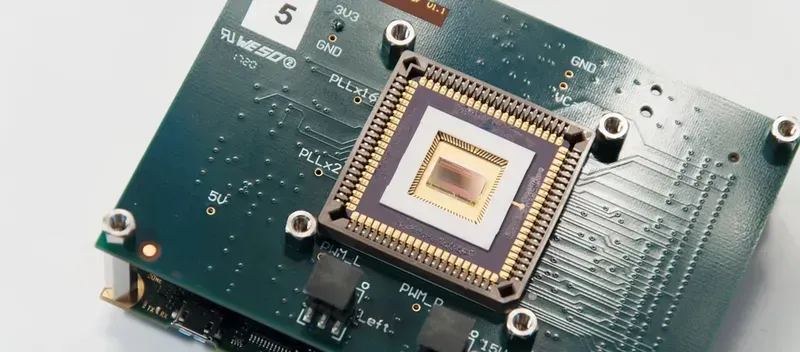
Industrial Sensor Signal Conditioning Board Solution
2025.08.03
In the intricate world of industrial automation and control, the accuracy and reliability of data are paramount. Sensors, the eyes and ears of any system, tirelessly collect vital information from the physical environment. However, the raw signals generated by these sensors are often weak, noisy, or incompatible with digital processing units. This is where the critical role of a robust Industrial Sensor Signal Conditioning Board Solution comes into play. At Zero One Solution Limited, we understand that transforming these raw signals into clean, usable data is not just an enhancement—it's a necessity for precise control, efficient operation, and informed decision-making.
The Criticality of Signal Conditioning in Industrial Sensors
In the demanding realm of industrial automation and control, the accuracy and reliability of data derived from sensors are paramount. Raw analog signals from industrial sensors are inherently susceptible to a myriad of environmental interferences and intrinsic limitations, making them unsuitable for direct processing by digital control systems. This fundamental challenge underscores the indispensable role of signal conditioning in transforming imprecise sensor outputs into robust, usable data, thereby ensuring the integrity and efficacy of critical industrial operations.
Noise Interference Industrial environments are replete with sources of electromagnetic interference (EMI) and radio frequency interference (RFI) from motors, power lines, and machinery. These external disturbances superimpose unwanted noise onto delicate sensor signals, obscuring the true measurement. Without proper conditioning, this noise can lead to erroneous readings, system instability, and costly operational failures.
Impedance Mismatch Sensors often possess high output impedance, while subsequent processing stages, such as analog-to-digital converters (ADCs), typically require low input impedance for optimal signal transfer. An impedance mismatch results in signal attenuation and distortion, compromising measurement accuracy. Signal conditioning circuits, particularly buffer amplifiers, are crucial in resolving this discrepancy, ensuring maximum power transfer and signal fidelity.
Low Amplitude Signals Many industrial sensors, such as thermocouples or strain gauges, produce signals with very low amplitudes (millivolts or microvolts). These weak signals are highly vulnerable to noise and are often below the detectable threshold of data acquisition systems. Amplification, a core function of signal conditioning, boosts these faint signals to a measurable range, improving the signal-to-noise ratio and overall system sensitivity.
Non-Linearity and Offset Sensor outputs are not always perfectly linear with respect to the measured physical parameter, and they may exhibit inherent offsets. This non-linearity can lead to inaccuracies across the sensor's operating range. Signal conditioning circuits, including linearization and offset compensation techniques, are employed to correct these deviations, ensuring that the sensor's output accurately reflects the physical quantity being measured.
Signal Conversion for Digital Processing Modern control systems operate predominantly in the digital domain, necessitating the conversion of analog sensor signals into digital data. Signal conditioning boards integrate Analog-to-Digital Converters (ADCs) to facilitate this transformation, ensuring that the analog signal is properly prepared (amplified, filtered, and linearized) before conversion, thereby maximizing the resolution and accuracy of the digital output.
The efficacy of any industrial automation system hinges on the precision and reliability of its sensor data. Consequently, investing in robust signal conditioning solutions is not merely an enhancement but a fundamental requirement for achieving optimal performance, ensuring safety, and extending the operational lifespan of industrial equipment. Zero One Solution Limited, with its deep expertise in PCB design and manufacturing, recognizes these critical challenges and provides tailored, high-performance signal conditioning board solutions designed to meet the rigorous demands of industrial environments.
What is an Industrial Sensor Signal Conditioning Board?
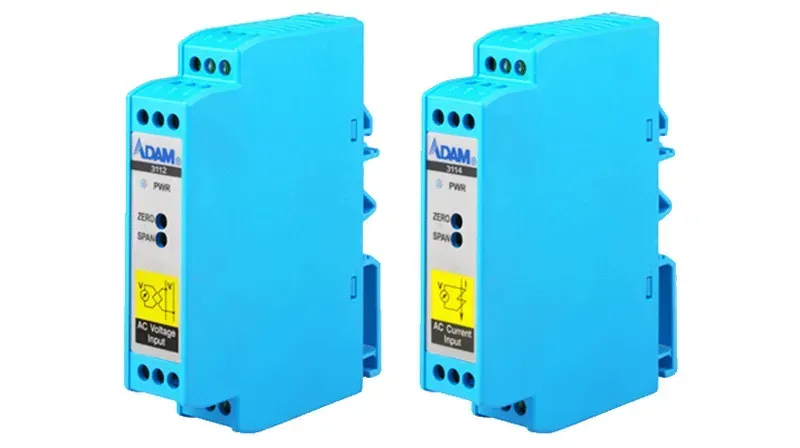
Industrial Sensor Signal Conditioning Board
An Industrial Sensor Signal Conditioning Board is a crucial electronic circuit board designed to transform raw, often weak, noisy, or non-linear signals from industrial sensors into robust, standardized, and usable electrical signals. This transformation is essential for accurate data acquisition, reliable control, and seamless integration into industrial control systems. Without effective signal conditioning, the valuable data captured by sensors can be compromised, leading to erroneous measurements, system malfunctions, and reduced operational efficiency.
Primary Functions of a Signal Conditioning Board These boards perform several vital operations to ensure signal integrity: amplification boosts low-level signals; filtering removes unwanted noise and interference; linearization corrects non-linear sensor outputs; and analog-to-digital conversion (ADC) translates analog sensor data into a digital format for processing by microcontrollers or PLCs.
Importance in the Industrial Ecosystem In industrial environments characterized by electrical noise, temperature variations, and long cable runs, signal conditioning boards are indispensable. They ensure that sensor data is accurate, reliable, and consistent, forming the bedrock for effective process control, predictive maintenance, and quality assurance. Their role is pivotal in maintaining operational safety and optimizing industrial throughput.
Function
Description
Benefit in Industrial Applications
Amplification
Increases the voltage or current of a low-amplitude sensor signal.
Enables processing of weak signals, improving measurement sensitivity and range.
Filtering
Removes unwanted noise, interference, and spurious signals from the sensor output.
Ensures clean, accurate data, preventing false readings and system errors.
Linearization
Corrects the non-linear response of certain sensors (e.g., thermocouples, RTDs).
Provides accurate readings across the sensor's operating range, simplifying data interpretation.
Isolation
Electrically separates the sensor circuit from the control system.
Protects sensitive electronics from ground loops, transient surges, and provides safety.
Analog-to-Digital Conversion (ADC)
Converts the conditioned analog signal into a digital format.
Facilitates seamless integration with digital control systems, microcontrollers, and PLCs for data processing and automation.
Key Components and Design Considerations for Industrial Sensor Signal Conditioning Boards
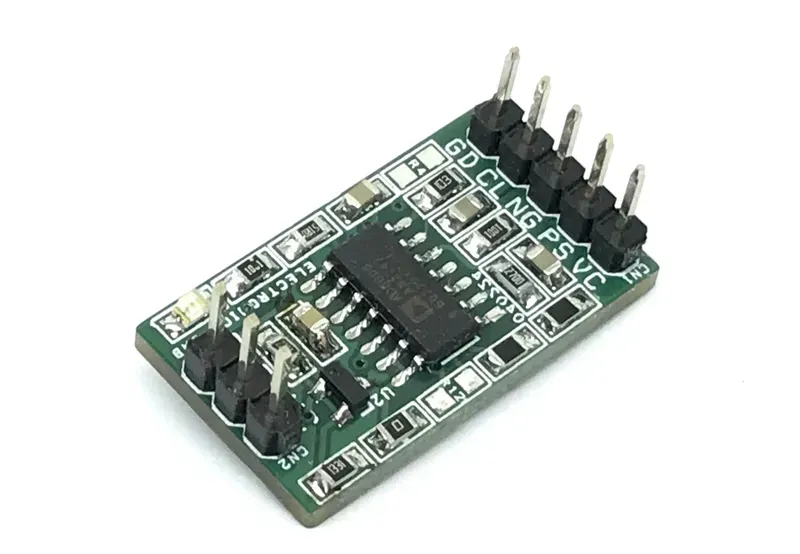
Signal Conditioning Board Components
Designing a reliable and high-performance industrial sensor signal conditioning board necessitates a deep understanding of both critical component selection and intricate design considerations. These boards are the backbone of accurate data acquisition in harsh industrial environments, making precise engineering paramount. Achieving optimal signal integrity, noise immunity, and long-term stability hinges on a meticulous approach to every aspect, from the choice of active and passive components to the layout and thermal management strategies.
Essential Components The core functionality of an industrial sensor signal conditioning board relies on a suite of specialized electronic components. Operational amplifiers (Op-Amps) are crucial for amplification and buffering, offering high gain and low noise. Filters, including active and passive types, are indispensable for removing unwanted noise and interference from the sensor signal, ensuring data clarity. Analog-to-Digital Converters (ADCs) transform the conditioned analog signal into a digital format, enabling processing by microcontrollers or industrial control systems. Digital isolators provide galvanic isolation, protecting sensitive control circuitry from high voltages and ground loops prevalent in industrial settings, thereby enhancing safety and reliability. Other vital components may include voltage references for stability, multiplexers for multiple sensor inputs, and protection circuitry against overcurrents and transients.
Noise Reduction Techniques Noise is a persistent challenge in industrial environments. Effective noise reduction involves a multi-faceted approach. This includes careful grounding schemes (e.g., star grounding), proper shielding of sensitive traces, differential signaling to cancel common-mode noise, and strategic placement of decoupling capacitors close to IC power pins. Filtering, both analog (e.g., low-pass, high-pass) and digital, plays a significant role in mitigating various noise sources, from broadband electronic noise to specific frequency interference like 50/60 Hz line noise. The selection of low-noise components, such as precision Op-Amps and voltage references, is also fundamental.
Thermal Management Strategies Industrial environments often feature extreme temperature fluctuations, which can significantly impact component performance and board longevity. Effective thermal management involves designing for efficient heat dissipation. This includes using appropriate PCB materials with good thermal conductivity, incorporating thermal vias, wide copper traces, and heat sinks for power-dissipating components. Simulation tools are often employed to predict thermal hotspots and optimize component placement. Derating components—operating them below their maximum specified limits—is also a common practice to ensure reliability across a wide temperature range.
EMI/EMC Compliance Electromagnetic Interference (EMI) and Electromagnetic Compatibility (EMC) are critical for industrial systems to operate reliably without disrupting or being disrupted by other electronic devices. Design considerations for EMI/EMC compliance include proper PCB stack-up, impedance control on high-speed traces, careful routing to minimize loop areas, and the use of EMI filters on power and data lines. Shielding enclosures and ferrites can also be employed. Compliance with industry standards like IEC 61000-4 ensures the board can withstand and operate effectively in electromagnetically noisy environments.
Robust Component Selection for Industrial Environments The choice of components extends beyond electrical specifications; their resilience to industrial conditions is paramount. This means selecting industrial-grade components rated for extended temperature ranges (-40°C to +85°C or wider), high vibration, and shock. Components should also have high Mean Time Between Failures (MTBF) and be readily available to ensure long-term support and maintenance. Factors like packaging (e.g., hermetically sealed vs. plastic), humidity resistance, and resistance to corrosive agents are also vital considerations for specific applications.
Zero One Solution Limited's Expertise in Signal Conditioning PCB Solutions
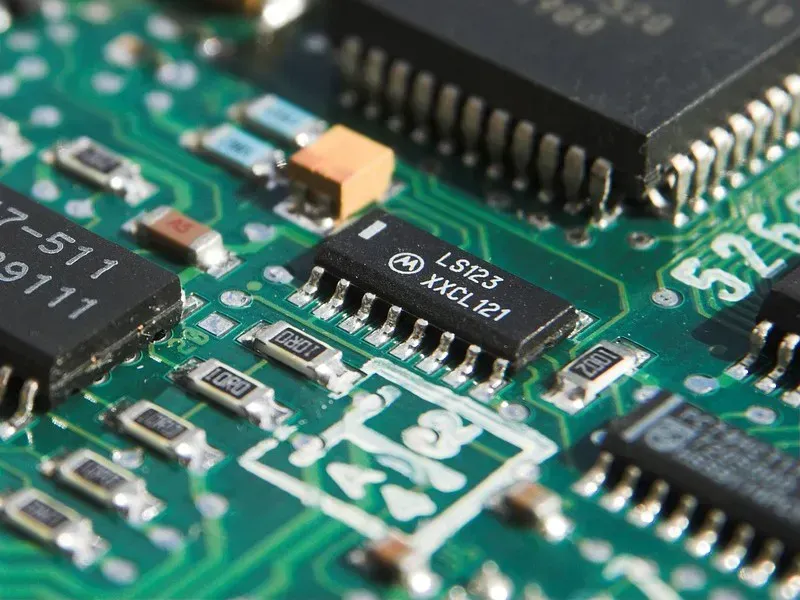
Engineer Designing PCB
Zero One Solution Limited stands at the forefront of providing bespoke, high-performance PCB solutions specifically engineered for industrial sensor signal conditioning. Leveraging over a decade of specialized experience since our inception in 2011, we understand that optimal sensor performance hinges on precise and reliable signal conditioning. Our commitment to rapid prototyping and a comprehensive one-stop service from initial PCB design to manufacturing and assembly ensures that your innovative industrial applications can accelerate from concept to market with unmatched efficiency and quality.
Custom PCB Design for Industrial Rigor We excel in designing signal conditioning boards tailored to the unique demands of industrial environments, including robust noise immunity, wide operating temperature ranges, and resistance to harsh conditions. Our designs meticulously integrate amplification, filtering, linearization, and ADC functionalities to deliver pristine data.
Rapid Prototyping for Accelerated Development Our core strength lies in rapid-response R&D prototype manufacturing. This capability significantly reduces your product development cycles, allowing for iterative design improvements and faster validation of your sensor conditioning solutions. We prioritize speed without compromising precision or reliability, ensuring quick turnaround times for critical projects.
Comprehensive One-Stop PCBA Services From initial schematic capture and layout to high-volume manufacturing and assembly, Zero One Solution Limited offers an end-to-end solution. This integrated approach streamlines your supply chain, reduces coordination complexities, and ensures consistent quality control across all stages of production. Our global PCBA supply chain network, anchored in Shenzhen and Dubai, provides seamless access to worldwide resources and support.
Service Aspect
Zero One Solution Limited's Advantage
Benefit to Clients
PCB Design Expertise
Specialized in industrial-grade signal conditioning boards
Optimized performance, reliability, and longevity in harsh environments
Rigorous testing and adherence to industry standards
Guaranteed performance and durability of finished products
Global Reach
Strategic locations in Shenzhen and Dubai
Efficient access to global resources and responsive customer support
Our engineering team, comprised of veteran experts with decades of experience, employs advanced simulation tools and adheres to stringent industry standards (e.g., IPC, ISO) to ensure every signal conditioning board meets the highest benchmarks for performance and reliability. We are not just a manufacturer; we are a strategic partner dedicated to empowering your industrial innovations through superior PCB solutions.
Advantages of Partnering with Zero One Solution Limited for Your Signal Conditioning Needs
Partnering with Zero One Solution Limited for your industrial sensor signal conditioning board needs offers a distinct competitive edge, transforming complex design and manufacturing challenges into streamlined, efficient processes. Our specialized approach empowers businesses to significantly reduce time-to-market and achieve superior product performance through our comprehensive, integrated services and deep industry expertise, ensuring optimal signal integrity from concept to mass production.
Accelerated Product Development Our rapid prototyping capabilities and one-stop service model, encompassing PCB design, manufacturing, and assembly, dramatically shorten development cycles. This agility allows clients to iterate quickly, validate designs, and bring innovative solutions to market faster, gaining a crucial first-mover advantage. For instance, a client requiring a custom signal conditioning board for a new industrial IoT sensor reduced their development time by 30% through our integrated process, from initial schematic capture to a fully assembled and tested prototype within weeks, rather than months.
Cost-Effectiveness Through Integrated Solutions By providing end-to-end services, Zero One Solution Limited eliminates the complexities and costs associated with managing multiple vendors. Our optimized supply chain and manufacturing efficiencies translate into significant cost savings for clients, reducing both material and labor expenditures while maintaining stringent quality control. This integrated approach ensures competitive pricing without compromising on component quality or assembly precision, providing up to 15% cost reduction compared to fragmented outsourcing models, especially for mid-volume production runs.
Access to a Global PCBA Supply Chain Network Strategically located in Shenzhen, China, and with a branch office in Dubai, we leverage a robust global network of component suppliers and manufacturing resources. This enables us to source high-quality, reliable components at competitive prices and ensures resilience against supply chain disruptions, critical for industrial applications where component availability and longevity are paramount. Our global presence facilitates efficient logistics and reduces lead times for critical materials, ensuring project continuity and scalability for clients worldwide.
Expert Engineering and Design Support Our team of veteran engineers, with decades of experience in PCB design and manufacturing, provides unparalleled technical support from concept to completion. We offer design-for-manufacturability (DFM) and design-for-assembly (DFA) insights, optimizing your signal conditioning board for both performance and production efficiency. This proactive engineering partnership minimizes design errors, reduces rework, and ensures that your solution meets the most demanding industrial standards, reflecting our commitment to technical excellence and client success.
Applications of Advanced Signal Conditioning in Various Industries
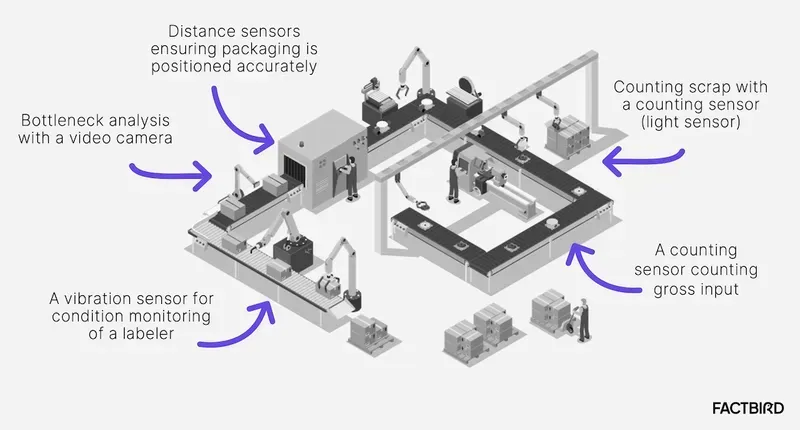
Automation Production Line Sensor
Advanced signal conditioning boards are indispensable across a myriad of industrial sectors, transforming raw sensor data into reliable, actionable insights crucial for precision control, automation, and predictive maintenance. These specialized PCBs are the bedrock of modern industrial systems, ensuring that measurements from harsh environments are accurately captured and processed, enabling smarter operations and enhanced safety. Their versatility makes them a critical component in the evolution of Industry 4.0, underpinning data-driven decision-making in diverse applications.
Manufacturing Automation In automated manufacturing, signal conditioning boards convert outputs from proximity sensors, accelerometers, and temperature sensors into standardized signals for PLCs and robotic arms. This ensures precise motion control, quality inspection, and machine health monitoring, minimizing downtime and optimizing production efficiency. For instance, in high-speed assembly lines, conditioned signals from vision sensors are critical for accurate component placement and defect detection.
Process Control For industries like chemical processing, oil & gas, and pharmaceuticals, signal conditioning is vital for pressure, flow, and level sensors. It ensures stable and accurate readings, allowing for precise control of critical parameters, preventing hazardous conditions, and maintaining product consistency. Without robust conditioning, minute fluctuations could lead to significant operational disruptions or safety incidents.
Robotics Robotics heavily relies on conditioned signals from force/torque sensors, encoders, and gyroscopes for accurate position feedback, collision avoidance, and compliant manipulation. Advanced conditioning ensures real-time data integrity, which is paramount for a robot's precise movements and safe interaction within dynamic industrial environments, from automotive manufacturing to logistics.
Energy Management In smart grids and renewable energy systems, signal conditioning boards are used with current, voltage, and power sensors to monitor energy consumption, optimize distribution, and manage load. This ensures efficient energy utilization, early detection of anomalies, and improved grid stability. Accurate data from conditioned signals is essential for optimizing renewable energy generation and storage.
Environmental Monitoring For air quality, water quality, and weather monitoring systems, signal conditioning processes data from gas sensors, pH probes, and meteorological instruments. This enables accurate environmental assessment, regulatory compliance, and early warning systems for pollution or extreme weather events, safeguarding both public health and industrial assets.
Future Trends in Industrial Sensor Signal Conditioning
Smart Sensor Chip
The landscape of industrial sensor signal conditioning is undergoing a transformative evolution, driven by advancements in digital technologies and the demand for smarter, more efficient industrial systems. As industrial automation and the Internet of Things (IIoT) continue to expand, the future of signal conditioning boards will be defined by enhanced intelligence, seamless connectivity, and predictive capabilities, moving beyond mere analog conversion to integrated digital processing at the edge. Zero One Solution Limited remains at the forefront of these innovations, consistently integrating cutting-edge trends into our PCB design and manufacturing capabilities to empower next-generation industrial applications.
Smart Sensors with Integrated Signal Conditioning The trend towards smart sensors integrates signal conditioning directly within the sensor module itself, providing pre-processed, linearized, and often digitized outputs. This reduces external component count, simplifies system design, and enhances overall reliability by minimizing noise and interference. Such integration facilitates plug-and-play functionality and distributed intelligence within industrial networks, simplifying deployment and maintenance overhead for complex systems. Zero One Solution Limited is actively developing compact, high-density PCB designs to accommodate these integrated solutions, leveraging advanced miniaturization techniques and multi-layer board capabilities.
Edge Computing Integration for Real-time Analytics Integrating signal conditioning with edge computing capabilities allows for real-time data processing and analytics directly at the sensor node, reducing latency and bandwidth requirements for cloud communication. This enables immediate decision-making, predictive maintenance, and optimized process control. Our design philosophy emphasizes robust, low-power solutions that can handle the computational demands of edge processing while maintaining industrial-grade reliability, ensuring that critical data insights are available precisely where and when they are needed most, even in harsh operational environments.
Wireless Signal Conditioning for Enhanced Flexibility The adoption of wireless communication protocols (e.g., LoRaWAN, Zigbee, 5G) in signal conditioning boards is eliminating the constraints of wired connections, offering unprecedented flexibility in sensor placement and reducing installation costs. This is particularly crucial in remote or hazardous industrial environments. Zero One Solution Limited incorporates advanced RF design principles and antenna integration into our PCB solutions, ensuring robust and reliable wireless data transmission while adhering to stringent industrial communication standards and minimizing power consumption for extended operational life.
Trend Category
Key Technological Advancement
Impact on Industrial Systems
Zero One Solution Limited's Focus
Intelligence & Autonomy
Integrated AI/ML on-chip for anomaly detection
Predictive maintenance, self-calibrating systems
Developing PCBs for high-performance embedded processors and memory
Connectivity
5G & LPWAN (LoRaWAN, NB-IoT) for data transmission
Integrating diagnostic circuits and robust communication interfaces for remote management
Frequently Asked Questions About Industrial Sensor Signal Conditioning Boards
Understanding the intricacies of industrial sensor signal conditioning boards is crucial for optimizing system performance and reliability. Below are some frequently asked questions that address common concerns and provide expert insights into the selection, design, and implementation of these vital components.
Why is signal conditioning absolutely necessary for industrial sensors? Raw signals from industrial sensors are often weak, noisy, and non-linear, making them unsuitable for direct processing by control systems. Signal conditioning boards amplify these low-level signals, filter out unwanted noise, linearize sensor outputs, and convert analog signals to digital, ensuring accuracy, reliability, and compatibility with downstream processing units. Without proper conditioning, measurement errors, system instability, and equipment damage are highly probable, leading to operational inefficiencies and safety risks.
What are the primary functions of an industrial sensor signal conditioning board? The core functions include amplification (boosting weak signals), filtering (removing electrical noise and interference), linearization (correcting non-linear sensor responses), isolation (protecting sensitive electronics from high voltages or ground loops), and analog-to-digital conversion (transforming analog signals into digital data for microcontrollers and PLCs). Some advanced boards also offer excitation for sensors, multiplexing for multiple inputs, and calibration features.
How do I select the right signal conditioning board for a specific industrial application? Selecting the right board requires careful consideration of several factors: the type of sensor (e.g., thermocouple, RTD, strain gauge, pressure sensor), the sensor's output characteristics (voltage, current, resistance), the required measurement accuracy and resolution, environmental conditions (temperature, humidity, EMI), power supply constraints, and the interface requirements of the control system (e.g., analog output, digital communication protocols like Modbus, EtherCAT). Customization is often key to achieving optimal performance.
What are the common challenges in designing industrial signal conditioning boards? Key design challenges include mitigating noise and electromagnetic interference (EMI), ensuring thermal stability and drift minimization across varying temperatures, achieving high precision and linearity, managing power consumption efficiently, and ensuring robust protection against transient voltages and overcurrents in harsh industrial environments. Additionally, adhering to strict industry standards (e.g., IEC, UL) for safety and performance is paramount.
Can Zero One Solution Limited provide custom signal conditioning board solutions? Absolutely. Zero One Solution Limited specializes in providing bespoke PCB solutions for industrial sensor signal conditioning. Our rapid prototyping capabilities and one-stop service, from design to manufacturing and assembly, enable us to tailor boards to specific sensor types, application requirements, and environmental challenges. Leveraging our deep expertise and global supply chain, we deliver high-performance, reliable, and cost-effective custom solutions that accelerate product development and market entry for our clients.
In conclusion, the efficacy of industrial operations hinges significantly on the quality and integrity of sensor data, which is directly impacted by superior signal conditioning. Zero One Solution Limited's Industrial Sensor Signal Conditioning Board Solutions embody our commitment to precision, reliability, and rapid innovation. As a trusted partner in PCB solutions, we empower industries to overcome complex signal challenges, accelerating their product development cycles and ensuring their systems operate with unparalleled accuracy. We invite you to partner with Zero One Solution Limited to transform your sensor integration challenges into competitive advantages. Contact us today to discuss your specific needs and discover how our expertise can drive your next industrial breakthrough.