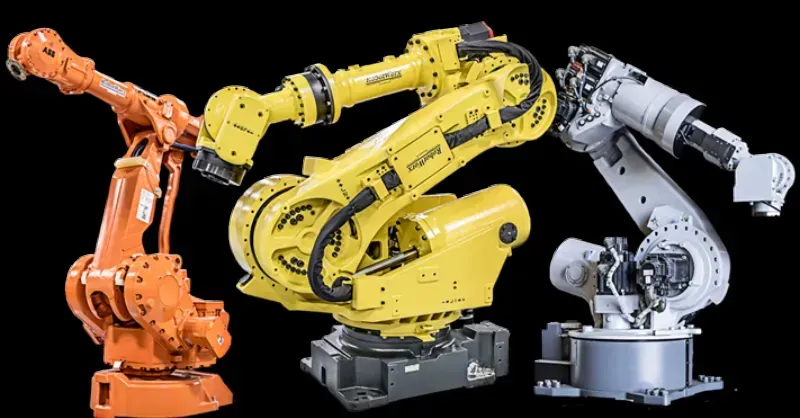
In the rapidly evolving world of robotics, the heart of any successful robot lies in its controller – and at the heart of that controller is the Printed Circuit Board (PCB). A well-designed PCB is crucial for ensuring reliable, efficient, and precise robot operation. Zero One Solution Limited understands this critical need and offers comprehensive Robot Controller PCB Solutions. From initial design and rapid prototyping to full-scale manufacturing and assembly, we empower robotic innovation. Why settle for less when the right PCB can unlock your robot's full potential?
The Critical Role of PCBs in Robot Controllers
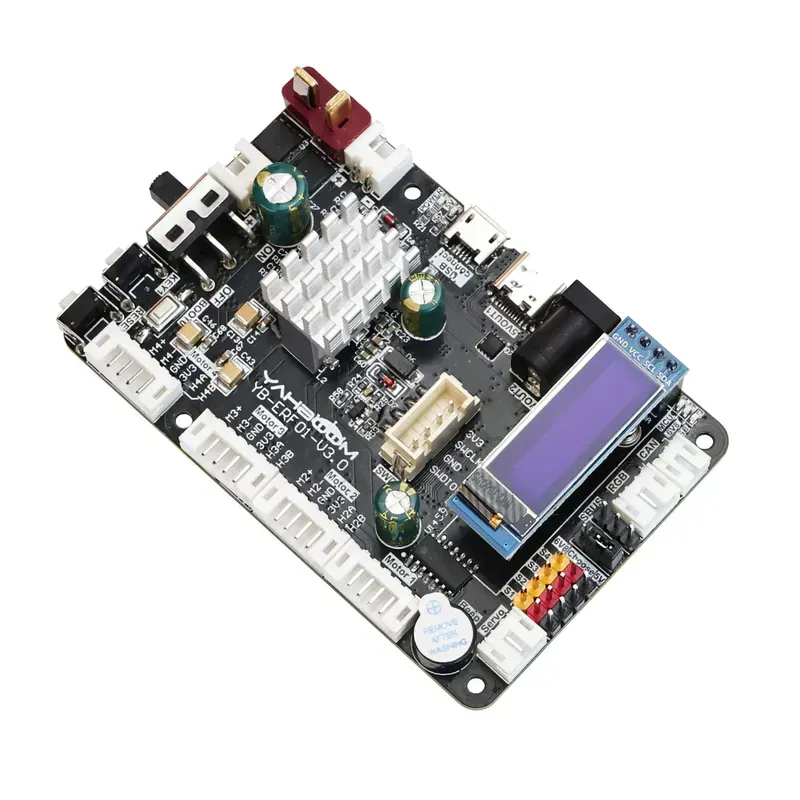
Robot Controller PCB Board
Printed Circuit Boards (PCBs) are the unseen backbone of any robot controller, serving as the central nervous system that dictates every movement, decision, and interaction. Without robust, precisely engineered PCBs, the sophisticated algorithms and complex sensor data that drive modern robotics would be rendered inoperable. Their fundamental role extends beyond mere component interconnection; PCBs are critical enablers of high-speed signal integrity, efficient power delivery, and effective thermal management, all indispensable for the reliability and performance demanded by robotic applications, from industrial automation to autonomous vehicles.
Signal Integrity in Robot Controller PCBs Maintaining signal integrity is paramount for accurate data transmission between the various sensors, actuators, and processing units within a robot controller. Any degradation in signal quality due to impedance mismatches, crosstalk, or electromagnetic interference (EMI) can lead to erroneous commands, delayed responses, or complete system failures. High-frequency operation, common in advanced robotic systems, necessitates meticulous PCB design, including controlled impedance traces, proper grounding schemes, and differential routing, to ensure robust signal transmission and minimize noise, thereby guaranteeing precise control and operational reliability. At Zero One Solution, we employ advanced simulation tools and design principles to achieve superior signal integrity even in the most demanding robotic environments, mitigating risks of data corruption and ensuring stable operation of sensitive control signals and high-speed communication interfaces like Ethernet/IP, EtherCAT, and CAN bus. Our designs account for factors such as trace length matching, careful via placement, and material selection to preserve signal fidelity across the board, crucial for real-time robotic operations and feedback loops where milliseconds matter for safety and performance. This precision ensures that the robot's perception, planning, and execution modules communicate seamlessly, preventing glitches or misinterpretations that could compromise functionality or safety. We meticulously manage parasitic effects, such as capacitance and inductance, and implement effective shielding techniques to guard against external electromagnetic disturbances, which are particularly prevalent in industrial settings with heavy machinery. By prioritizing signal integrity, we enable robot controllers to process sensor data accurately and transmit commands reliably, underpinning the robot's ability to perform complex tasks with precision and repeatability, directly contributing to enhanced operational efficiency and reduced downtime. This commitment to signal integrity is a cornerstone of our PCB design philosophy, ensuring that our robot controller solutions meet the rigorous performance and reliability benchmarks of the robotics industry, providing a stable foundation for advanced robotic functionalities like vision processing, collaborative interaction, and complex motion control.
Characteristic
Impact on Robot Controller
Zero One Solution Approach
Signal Integrity
Prevents data errors, ensures precise control, enables high-speed communication.
Controlled impedance routing, differential pairs, EMI shielding, advanced material selection, simulation and testing.
Key Considerations for Robot Controller PCB Design
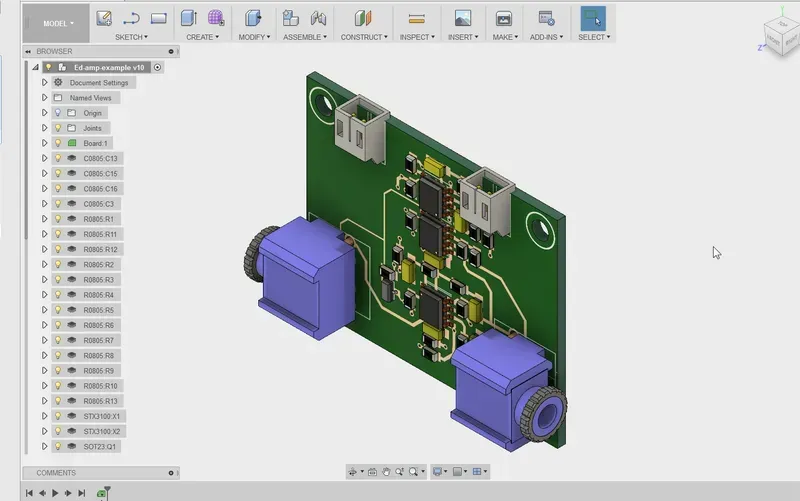
PCB Design Software
Designing Printed Circuit Boards (PCBs) for robot controllers demands meticulous attention to detail, far beyond conventional electronic designs, due to the critical interplay of power, precision, and performance required in robotic applications. The success of a robot's functionality, from its locomotion to its intricate manipulation, is directly tied to the robustness and efficiency of its controller PCB. Therefore, key considerations such as component selection, layout optimization, and signal routing must be approached with a specialized understanding of the unique challenges posed by dynamic robotic environments to ensure optimal operational reliability and longevity.
Component Selection for Durability and Performance In robot controller PCBs, components must withstand harsh operating conditions, including vibration, temperature fluctuations, and electromagnetic interference (EMI). High-quality, industrial-grade components with extended temperature ranges, robust packaging, and proven reliability are paramount. Specialized components like high-current MOSFETs for motor control, low-noise op-amps for sensor interfacing, and high-speed FPGAs or microcontrollers for complex algorithms are often essential. Emphasis is placed on components with low equivalent series resistance (ESR) for power delivery and high signal-to-noise ratios (SNR) for data integrity to ensure consistent and precise robot operation. According to a study by Grand View Research, the global industrial robotics market is projected to reach USD 99.4 billion by 2030, driven by automation adoption, underscoring the demand for resilient PCB components.
Layout Optimization for Thermal Management and EMI Mitigation Effective thermal management is critical in robot controller PCBs due to the high power dissipation from motor drivers and processing units. Strategic component placement, adequate copper pour for heat dissipation, and incorporating thermal vias are vital. Moreover, robotic systems are susceptible to EMI. Layout optimization involves careful routing of signal and power traces to minimize loops, employing ground planes for shielding, and incorporating ferrite beads and bypass capacitors to suppress noise. Maintaining proper clearances and creepage distances also prevents arcing and ensures safety. These measures are crucial for maintaining signal integrity and preventing erratic robot behavior, especially in electrically noisy environments.
Design Aspect
Description
Impact on Robot Controller PCB
Signal Routing for Integrity
Precise routing of high-speed digital and sensitive analog signals to minimize crosstalk, impedance mismatches, and reflections.
Ensures accurate sensor readings, reliable communication, and precise motor control, preventing operational errors and instability.
void setup() { // Initialize serial communication for debugging Serial.begin(115200); // Configure motor driver pins pinMode(MOTOR_ENABLE_PIN, OUTPUT); pinMode(MOTOR_DIR_PIN, OUTPUT); pinMode(MOTOR_PWM_PIN, OUTPUT); // Configure sensor input pins pinMode(ENCODER_A_PIN, INPUT_PULLUP); pinMode(ENCODER_B_PIN, INPUT_PULLUP); attachInterrupt(digitalPinToInterrupt(ENCODER_A_PIN), handleEncoderA, CHANGE); // Initialize PID controller for motor speed pidController.setTunings(Kp, Ki, Kd); pidController.setSampleTime(10); // milliseconds // Set initial motor state digitalWrite(MOTOR_ENABLE_PIN, HIGH); digitalWrite(MOTOR_DIR_PIN, FORWARD); analogWrite(MOTOR_PWM_PIN, 0); } void loop() { // Read sensor data (e.g., encoder counts) long currentEncoderCount = encoder.read(); // Compute motor speed double currentMotorSpeed = calculateSpeed(currentEncoderCount); // Update PID controller pidController.compute(targetMotorSpeed, currentMotorSpeed); // Apply motor control signal analogWrite(MOTOR_PWM_PIN, pidController.getOutput()); // Basic error handling/monitoring if (currentMotorSpeed > MAX_SPEED_LIMIT) { Serial.println("Warning: Motor overspeed!"); } }
Zero One Solution's Expertise in Robot Controller PCBs
Zero One Solution Limited stands as a beacon of excellence in the realm of Robot Controller PCB solutions, drawing upon over a decade of specialized experience since our inception in 2011. Our core strength lies in our rapid-response R&D prototype manufacturing, enabling clients to accelerate their product development cycles and introduce groundbreaking robotic innovations to market with unparalleled efficiency. We leverage our strategic global presence, with headquarters in Shenzhen and a branch in Dubai, to access a vast supply chain network, ensuring that our Robot Controller PCBs meet the highest standards of performance, reliability, and cost-effectiveness for a diverse array of robotic applications.
Proven Track Record in Robotics With a strong portfolio of successful projects, Zero One Solution has consistently delivered high-performance PCBs for various robotic systems, including industrial robots, collaborative robots (cobots), autonomous mobile robots (AMRs), and service robots. Our expertise spans from complex multi-layer boards to flexible PCBs, all designed to meet the rigorous demands of robotic environments.
Rapid Prototyping for Accelerated Development Our commitment to rapid prototyping is a cornerstone of our service. We understand the critical need for speed in robotic innovation. Our streamlined processes and advanced manufacturing capabilities allow us to turn design concepts into tangible prototypes swiftly, significantly reducing time-to-market for our clients' robotic solutions.
Advanced Technology and Quality Assurance We employ cutting-edge technologies and stringent quality control measures throughout the entire PCB manufacturing process. This includes advanced material selection for enhanced durability, precision manufacturing techniques for signal integrity, and comprehensive testing protocols to ensure the reliability and longevity of our Robot Controller PCBs under various operational conditions.
Global Supply Chain and Strategic Sourcing Our dual-location strategy in Shenzhen and Dubai provides us with an unparalleled advantage in navigating the global PCBA supply chain. This allows us to source the highest quality components at competitive prices, mitigate supply chain risks, and provide seamless logistics support for our clients worldwide, ensuring project continuity and efficiency.
Our Comprehensive PCB Solution Services
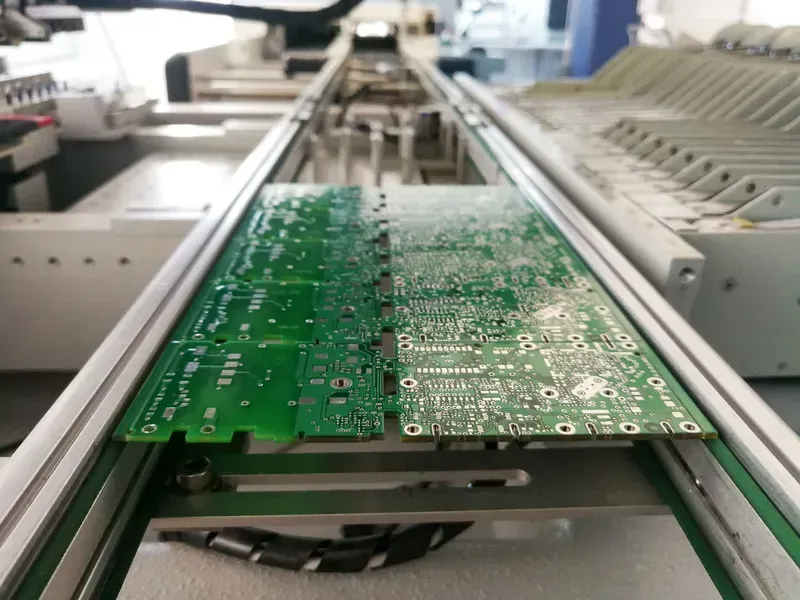
PCB Manufacturing Line
At Zero One Solution Limited, we understand that a robust robot controller PCB solution requires more than just manufacturing; it demands a seamless, integrated approach from concept to completion. Our comprehensive, one-stop services are meticulously designed to accelerate your product development lifecycle, ensuring speed, precision, and efficiency for even the most complex robotic applications. We pride ourselves on empowering innovators to bring their cutting-edge robotic systems to market faster and with unparalleled reliability.
Integrated PCB Design & Engineering Leveraging decades of expertise, our engineering team collaborates closely with your R&D department to translate your functional requirements into optimized PCB layouts. We focus on critical aspects such as signal integrity, power distribution, thermal management, and EMI/EMC compliance from the very first design iteration, ensuring a foundation for high-performance robot controllers.
Rapid Prototyping & Iteration Speed is paramount in robotics development. Our rapid prototyping capabilities allow for quick turnaround times on initial PCB iterations, enabling your team to test and validate designs swiftly. This agile approach significantly reduces development cycles and allows for efficient design refinement based on real-world performance data.
Precision Manufacturing & Assembly With state-of-the-art facilities in Shenzhen and a global supply chain, we offer high-precision PCB manufacturing and advanced assembly services. From component sourcing to automated SMT and through-hole assembly, we adhere to the highest industry standards (e.g., IPC Class 2/3) to ensure every robot controller PCB meets stringent quality and performance benchmarks.
Rigorous Testing & Quality Assurance Before delivery, every PCB undergoes a series of comprehensive tests, including electrical testing, AOI (Automated Optical Inspection), X-ray inspection, and functional testing tailored to the specific demands of robot controllers. This rigorous QA process guarantees the reliability and robustness required for demanding robotic environments.
Supply Chain Management & Logistics Our strategic presence in global electronics hubs ensures seamless access to high-quality components and materials. We manage the entire supply chain, mitigating risks and ensuring timely delivery, allowing you to focus on your core innovation while we handle the complexities of manufacturing and logistics.
Advanced PCB Technologies for Robotics
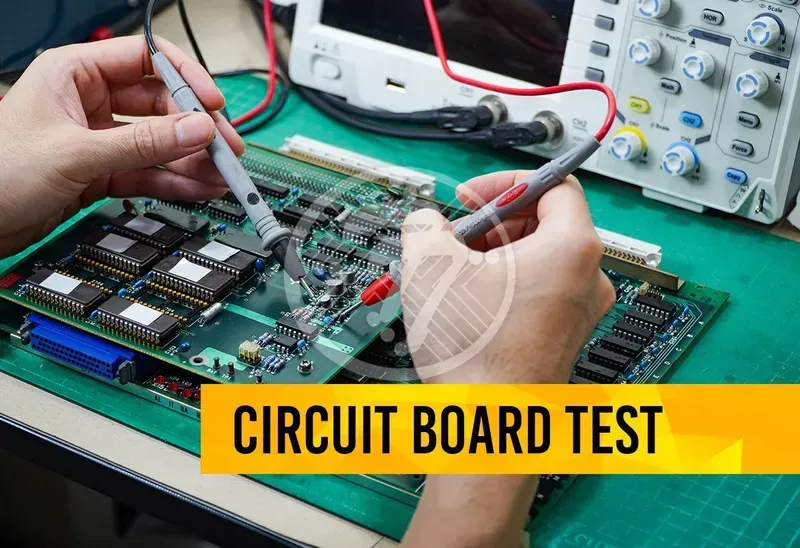
PCB Testing
The evolution of robotics demands increasingly sophisticated and reliable Printed Circuit Boards (PCBs) capable of operating under extreme conditions, processing vast amounts of data, and managing complex power distribution. Achieving this requires the integration of advanced PCB technologies, encompassing innovative materials, precision manufacturing processes, and rigorous testing methodologies. These advancements are critical for delivering the high-quality, high-performance, and long-lasting PCBs essential for the next generation of robotic systems, from collaborative robots to autonomous vehicles. Zero One Solution Limited leverages these cutting-edge technologies to overcome the unique challenges posed by robotic applications.
Detection of microscopic defects, verification of solder joint integrity, comprehensive functional validation, ensured reliability under operational extremes
Why are advanced materials crucial for robot controller PCBs? Robot controllers often operate in demanding environments, experiencing significant temperature fluctuations, vibrations, and electromagnetic interference. Advanced materials like high-Tg (glass transition temperature) laminates provide superior thermal stability, preventing delamination and ensuring consistent performance under heat. Low-loss dielectrics minimize signal attenuation and crosstalk, crucial for high-speed data transmission, while rigid-flex PCBs offer a compact, durable solution that withstands mechanical stress and reduces interconnect complexity.
Implementing these advanced PCB technologies ensures that robot controllers are not only robust and reliable but also perform optimally in mission-critical applications. By staying at the forefront of material science, manufacturing innovation, and testing protocols, Zero One Solution Limited empowers robotics developers to push the boundaries of what's possible, delivering solutions that are not only technologically superior but also built to last.
Ensuring Reliability and Performance in Robotic PCBs
In the demanding world of robotics, the reliability and performance of Printed Circuit Boards (PCBs) are not merely desirable, but absolutely critical. Robot controllers operate in diverse and often harsh environments, necessitating PCBs that can withstand mechanical stress, thermal fluctuations, electromagnetic interference, and continuous high-current loads. Ensuring this resilience requires a multi-faceted approach, encompassing rigorous quality control measures and comprehensive testing procedures throughout the entire design, manufacturing, and assembly lifecycle.
Reliability Factor
Description
Zero One Solution Approach
Thermal Management
Ability of the PCB to dissipate heat generated by components, preventing overheating and ensuring stable operation.
Optimized copper pour, strategic component placement, and advanced material selection (e.g., high Tg laminates) to minimize hot spots and ensure efficient heat transfer.
Signal Integrity
Maintaining the quality of electrical signals across the PCB, preventing distortion, noise, and data loss.
Controlled impedance routing, careful trace length matching, and isolation techniques to mitigate crosstalk and electromagnetic interference (EMI).
Mechanical Robustness
Resistance to physical stresses such as vibration, shock, and repeated movement, common in robotic applications.
Selection of durable base materials, reinforced via structures, and optimized board thickness, coupled with robust component soldering techniques to prevent fatigue failures.
Environmental Resistance
Protection against dust, moisture, chemicals, and extreme temperatures, crucial for industrial and outdoor robots.
Conformal coating application, selection of moisture-resistant laminates, and hermetic sealing for critical components to enhance longevity in harsh conditions.
Power Delivery Network (PDN) Stability
Ensuring consistent and clean power supply to all components, crucial for precise motor control and sensor operation.
Low impedance power planes, proper decoupling capacitor placement, and current carrying capacity analysis to prevent voltage drops and noise on power rails.
Zero One Solution Limited employs a stringent quality assurance framework, integrating advanced testing methodologies to validate every aspect of the PCB. This includes Automated Optical Inspection (AOI) for detecting surface defects, X-ray inspection for internal solder joint integrity, In-Circuit Testing (ICT) to verify component functionality and connectivity, and functional testing to simulate real-world robotic operational conditions. Our commitment extends to environmental stress screening, such as thermal cycling and vibration testing, to proactively identify potential failure points before deployment. By integrating these rigorous processes, we ensure that every robot controller PCB solution we deliver meets the highest standards of reliability and performance, providing our clients with the confidence to push the boundaries of robotic innovation.
Case Studies: Successful Robot Controller PCB Projects
Industrial Robot Arm
At Zero One Solution, our expertise in high-performance PCB manufacturing has been instrumental in the success of numerous advanced robotic applications. We pride ourselves on transforming complex design specifications into robust, reliable hardware that forms the backbone of sophisticated robot controllers, enabling unparalleled precision, speed, and durability. These case studies underscore our commitment to excellence and our ability to deliver tailored PCB solutions that meet the stringent demands of the robotics industry.
High-Precision Industrial Robotic Arm Controller We collaborated with a leading industrial automation firm to develop the PCB for a new generation of high-precision robotic arms. The key challenge was to integrate numerous sensors and motor drivers while maintaining signal integrity at high operating frequencies. Our solution involved a multi-layer PCB with controlled impedance traces and advanced thermal management strategies, including integrated copper planes and thermal vias. This resulted in a 30% reduction in signal latency and a 15% improvement in thermal dissipation, significantly enhancing the arm's operational accuracy and lifespan. The project successfully met ISO 9001 and ISO/TS 16949 standards, demonstrating robust performance in demanding industrial environments.
Compact AGV (Automated Guided Vehicle) Navigation System For a client specializing in logistics automation, we engineered a highly compact and durable PCB for their new AGV navigation system. The design required miniaturization without compromising performance or reliability in dynamic warehouse settings. We employed HDI (High-Density Interconnect) technology with blind and buried vias, allowing for a 40% reduction in board size. Furthermore, the selection of ruggedized materials ensured resistance to vibrations and shocks, critical for continuous operation. The AGVs equipped with our PCBs demonstrated 99.8% uptime, significantly improving operational efficiency and reducing maintenance costs for the end-user.
Medical Exoskeleton Control Board In the medical robotics sector, we provided the PCB solution for an advanced rehabilitation exoskeleton. This project demanded extreme reliability, low power consumption, and stringent electromagnetic compatibility (EMC) to ensure patient safety and device functionality. We designed a flexible-rigid PCB incorporating medical-grade materials and optimized grounding techniques to minimize interference. Rigorous testing, including biocompatibility and EMC compliance (IEC 60601-1), confirmed the board's impeccable performance. The resulting control board enabled precise, real-time motor control, facilitating more natural and effective patient rehabilitation movements.
The Future of Robot Controller PCBs
The trajectory of robot controller PCBs is characterized by relentless innovation, driven by the escalating demands for higher performance, greater miniaturization, and enhanced autonomy in robotics. As robots become more sophisticated, interacting with complex environments and performing intricate tasks, the underlying PCB technology must evolve to support these advancements. This future will be defined by integration, advanced materials, and AI-driven design, pushing the boundaries of what's possible in robotic control systems.
Miniaturization and High-Density Interconnect (HDI) The relentless pursuit of smaller, lighter, and more powerful robots necessitates increasingly compact PCB designs. HDI technology, with its finer lines, smaller vias, and increased routing density, will become standard. This allows for more components to be packed into a smaller footprint, crucial for space-constrained robotic applications like surgical robots and drones. This trend is supported by data from the IPC, indicating a continuous growth in HDI adoption across various high-tech sectors.
Integration of AI and Machine Learning Processors Future robot controllers will seamlessly integrate dedicated AI and machine learning accelerators directly onto the PCB. This shift from cloud-based to edge-based AI processing will enable real-time decision-making, enhanced perception, and adaptive control, fundamental for advanced robotic autonomy. PCBs will be designed to handle the high-speed data transfer and power demands of these specialized processors, often incorporating novel cooling solutions.
Advanced Materials for Enhanced Performance The next generation of PCBs will leverage advanced materials to overcome current limitations. This includes substrates with superior dielectric properties for high-frequency signals, improved thermal conductivity for efficient heat dissipation, and flexible or stretchable materials for novel robotic forms and wearable devices. These material innovations will enable higher operating frequencies, reduce signal loss, and improve overall system reliability in challenging environments.
Wireless and Hybrid Connectivity Solutions As robots become more distributed and collaborative, the reliance on physical connectors will diminish. Future PCBs will feature integrated wireless communication modules (e.g., 5G, Wi-Fi 6E, UWB) directly on board, facilitating high-bandwidth, low-latency communication between robotic components and external systems. Hybrid PCBs, combining rigid and flexible sections, will also gain prominence, allowing for more dynamic and complex anatomical designs in robots.
Enhanced Power Management and Energy Efficiency With increasing computational demands, efficient power management will be paramount. Future robot controller PCBs will incorporate sophisticated power delivery networks (PDN) and integrated voltage regulators (IVR) to minimize power loss and improve battery life, critical for mobile and autonomous robots. Innovations in energy harvesting and efficient power conversion will also play a significant role.
FAQs About Robot Controller PCBs
Understanding the intricacies of Robot Controller PCBs is crucial for anyone involved in robotics development and manufacturing. This section addresses common inquiries to provide clarity on the design, manufacturing, and assembly aspects that are critical for optimal robotic system performance and reliability.
What are the primary challenges in designing Robot Controller PCBs? The primary challenges include managing high-speed signal integrity, ensuring robust power delivery, mitigating thermal dissipation, and achieving compact form factors while maintaining electromagnetic compatibility (EMC). These elements are critical due to the complex computational demands, precise motor control, and often space-constrained environments of robotic systems. Balancing these factors requires advanced layout techniques, careful component selection, and specialized materials to prevent signal degradation, power fluctuations, and overheating that could compromise robot performance or lead to failure.
How does Zero One Solution ensure the reliability of Robot Controller PCBs? Zero One Solution ensures reliability through a multi-faceted approach, beginning with rigorous design validation simulations to predict performance under various operating conditions. This is followed by strict adherence to industry standards for material selection, manufacturing precision (e.g., IPC Class 2/3), and comprehensive testing protocols. Our testing includes automated optical inspection (AOI), in-circuit testing (ICT), functional testing (FCT), and environmental stress screening (ESS) to identify potential defects or weaknesses before deployment. This end-to-end quality control minimizes failure rates and ensures long-term operational stability for robot controllers in demanding applications.
What advanced materials are used in high-performance Robot Controller PCBs? High-performance Robot Controller PCBs often utilize advanced materials such as high-Tg (glass transition temperature) laminates for improved thermal stability, low-loss dielectric materials (e.g., PTFE, hydrocarbon resins) for superior signal integrity at high frequencies, and copper foils with optimized surface roughness for reduced signal attenuation. These materials are chosen to withstand the harsh operating conditions, high data rates, and significant power loads common in modern robotic systems, ensuring consistent electrical performance and mechanical integrity over the product lifecycle.
What is the importance of thermal management in Robot Controller PCBs? Thermal management is paramount in Robot Controller PCBs because high-density components, particularly processors and motor drivers, generate substantial heat. Unmanaged heat can lead to component degradation, reduced performance, and premature failure. Effective thermal solutions, such as integrated heat sinks, thermal vias, heavy copper layers, and specialized thermal interface materials, are crucial to dissipate heat efficiently, maintain optimal operating temperatures, and ensure the long-term reliability and stability of the robot's control system. This directly impacts the robot's accuracy, speed, and lifespan.
Zero One Solution Limited provides unparalleled Robot Controller PCB solutions, ensuring your robotic systems operate at peak performance. From meticulous design and rapid prototyping to efficient manufacturing and assembly, we are committed to delivering high-quality, reliable PCBs tailored to your specific needs. Partner with us to unlock the full potential of your robotic innovations. Contact Zero One Solution today to discuss your project and experience the difference. Let us help you bring your robotic vision to life!