In today's rapidly evolving technological landscape, interactive touch screen technology has become ubiquitous, transforming industries from retail and education to healthcare and industrial automation. At the heart of every interactive touch screen lies a sophisticated motherboard, the central nervous system that dictates performance, reliability, and overall user experience. Zero One Solution Limited, a leading PCB solution provider specializing in rapid prototyping, offers comprehensive services from PCB design to manufacturing and assembly, empowering clients to create cutting-edge interactive touch screen solutions. This article delves into the critical aspects of interactive touch screen motherboard solutions, exploring design considerations, manufacturing processes, and the crucial role of expert assembly in ensuring optimal performance and longevity.
Introduction: The Rise of Interactive Touch Screen Technology
The ubiquity of interactive touch screen technology has profoundly transformed user interfaces across a multitude of industries, evolving from niche applications to an indispensable part of daily life. This widespread adoption is underpinned by the motherboard, which serves as the foundational core, dictating performance, reliability, and the very capabilities of the interactive system. Its design and execution are paramount, as it orchestrates all critical functions, from processing touch inputs to driving high-resolution displays, making it the central nervous system for any responsive and immersive touch experience.
From consumer electronics like smartphones and tablets to sophisticated industrial controls and medical devices, interactive touch screens offer intuitive human-machine interaction. This shift is driven by the desire for seamless and efficient engagement, which relies heavily on a robust and intelligently designed motherboard. As a leading PCB solution provider, Zero One Solution Limited recognizes the critical role of these intricate electronic brains in delivering responsive, reliable, and high-performance interactive experiences.
What makes interactive touch screens so pervasive today? Interactive touch screens have become pervasive due to their intuitive nature, providing a direct and natural interface for users. They eliminate the need for peripheral input devices, reduce complexity, and offer real-time feedback, making digital interactions more accessible and engaging across diverse demographics and applications. The advancements in display technology, processing power, and touch sensitivity have also made them highly responsive and visually appealing, further driving their adoption.
Industry
Impact of Interactive Touch Screens
Motherboard Demands
Retail & POS
Enhanced customer experience, self-service kiosks, digital signage.
High reliability, connectivity (USB, Ethernet), robust power management, moderate processing.
Stable performance, multimedia support, low power consumption, diverse connectivity for peripherals.
Healthcare
Patient monitoring, diagnostic imaging, medical device control, telehealth.
High precision, regulatory compliance, long-term reliability, low-latency processing, robust data security features.
Key Design Considerations for Interactive Touch Screen Motherboards
Designing a robust and high-performing motherboard for interactive touch screens demands meticulous attention to several critical factors that collectively ensure optimal functionality, responsiveness, and long-term reliability. At the heart of an interactive touch screen system, the motherboard orchestrates the seamless interplay between user input, display output, and computational processing. Therefore, a comprehensive understanding of core design considerations – from processor selection to power management – is paramount for engineers aiming to deliver cutting-edge interactive experiences that resonate with user expectations and industry standards. This foundational approach mitigates potential bottlenecks and enhances the overall system's efficiency and user experience.
Processor Selection and Performance Scaling The choice of processor significantly impacts the interactive touch screen's responsiveness and ability to handle complex applications. For basic interactive kiosks, a cost-effective ARM-based SoC (System-on-Chip) might suffice, offering a balance of performance and power efficiency. For high-end applications like large-format interactive displays or multi-touch tables requiring intensive graphics and real-time data processing, x86-based processors (e.g., Intel Core i-series or AMD Ryzen) are often preferred due to their superior computational power and broader software compatibility. Consideration must be given to clock speed, core count, integrated graphics capabilities, and thermal design power (TDP) to match the application's demands while managing heat dissipation effectively. A mismatch here can lead to sluggish performance or premature component failure.
Memory Requirements: RAM and Storage Adequate Random Access Memory (RAM) is crucial for smooth multitasking and fluid application performance, especially in interactive environments where multiple processes may run concurrently. For typical interactive displays, 4GB to 8GB of DDR4 RAM is a common starting point, with high-performance systems potentially requiring 16GB or more. The type and speed of RAM (e.g., LPDDR4X for power efficiency in mobile applications, DDR5 for high bandwidth) also play a role. For storage, eMMC, SATA SSDs, or NVMe SSDs are prevalent choices. NVMe SSDs offer the highest speed, beneficial for rapid boot-up and application loading, while eMMC provides a cost-effective and compact solution for embedded systems.
Display Interface Compatibility and Bandwidth The motherboard's display interfaces must align with the chosen touch screen's resolution, refresh rate, and physical connectivity. Common interfaces include HDMI, DisplayPort, and LVDS. HDMI is widely adopted for consumer-grade displays and offers high-resolution video and audio transmission. DisplayPort provides higher bandwidth, supporting multiple displays or very high resolutions (e.g., 8K) and often features daisy-chaining capabilities. LVDS (Low-Voltage Differential Signaling) is prevalent in embedded industrial displays, offering robust, long-distance transmission. Ensuring the interface supports the required bandwidth for the display's specifications is critical to prevent visual artifacts or lag.
Touch Controller Integration and Protocols The touch controller is the bridge between the touch sensor and the main processor, converting touch inputs into digital signals. Integration involves selecting a compatible touch controller chip and ensuring proper communication protocols (e.g., I2C, SPI, USB HID). For projected capacitive touch (PCAP) screens, which are dominant in modern interactive displays due to their multi-touch capabilities and durability, the touch controller's sensitivity, noise immunity, and multi-touch point support are vital. Firmware development for the touch controller is often necessary to calibrate the touch response, support gestures, and ensure accurate and responsive interaction.
Power Management and Efficiency Efficient power management is critical for interactive touch screen motherboards, especially in applications where energy consumption or heat generation is a concern. This involves careful selection of power delivery components (VRMs, regulators), optimizing power states (e.g., S0, S3, S5), and implementing intelligent power distribution. Features like Power-over-Ethernet (PoE) can simplify cabling in certain installations. For battery-powered or fanless designs, low-power components and advanced power saving modes are essential. Proper power design not only extends component lifespan but also reduces operating costs and environmental impact, addressing a significant pain point for long-term deployments.
PCB Material Selection and Layer Stack-up Optimization
FR-4 PCB Material
Optimizing printed circuit board (PCB) material selection and layer stack-up is paramount for the performance and reliability of interactive touch screen motherboards. The choice of PCB substrate directly impacts signal integrity, thermal management, and manufacturability, while a meticulously designed layer stack-up is crucial for mitigating electromagnetic interference (EMI) and crosstalk, ensuring the precise and responsive operation demanded by modern interactive displays.
Material Type
Key Properties
Typical Applications for Interactive Touch Screens
FR-4 (Flame Retardant 4)
Cost-effective, good electrical properties, widely available, Tg ~135-180
HNFC
General-purpose interactive displays, less demanding applications
High-Tg FR-4
Higher glass transition temperature (Tg), improved thermal stability, better reliability under heat
Industrial touch panels, automotive displays, high-power density boards
Rogers (e.g., RO4000 series)
Low dielectric constant (Dk) and dissipation factor (Df), excellent signal integrity at high frequencies, good thermal stability
High-speed data transmission, RF modules, advanced interactive displays requiring superior signal performance
Polyimide
High temperature resistance, excellent flexibility (for flex PCBs), good chemical resistance
Flexible interactive displays, wearable tech, compact and irregular form factor touch screens
Understanding Layer Stack-up Optimization for Enhanced Performance Layer stack-up refers to the arrangement of copper and insulating layers that make up a PCB. Strategic optimization is vital for signal integrity (SI) and electromagnetic compatibility (EMC) in complex interactive touch screen motherboards. A typical stack-up might include ground planes positioned adjacent to signal layers to provide clear return paths and minimize loop areas, thereby reducing inductance and crosstalk. Power planes are also critical for stable voltage delivery and decoupling noise. For high-speed signals common in display interfaces, controlled impedance traces are a necessity, achieved by precise trace width, dielectric constant of the material, and distance to the reference plane. Balancing cost, performance, and manufacturability is key in this iterative design process.
Thermal Management Strategies for High-Performance Motherboards
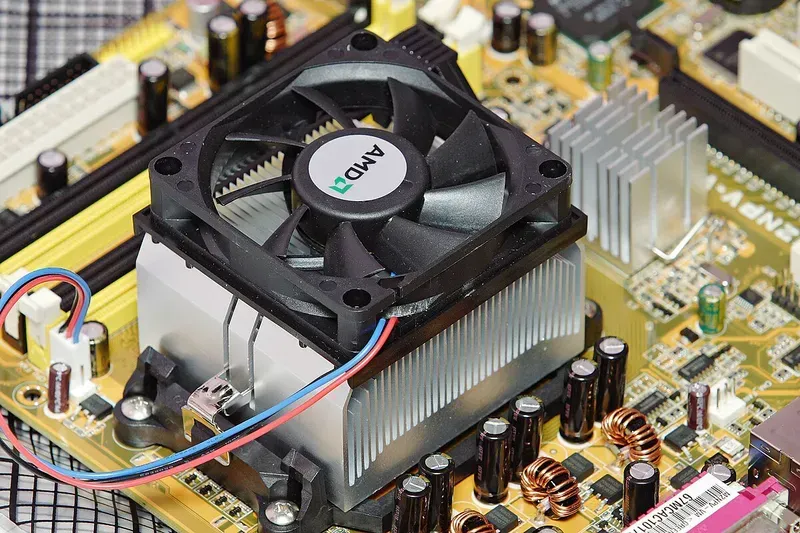
Motherboard Heat Sink
Effective thermal management is paramount for the long-term reliability and optimal performance of high-performance interactive touch screen motherboards. As these systems integrate increasingly powerful processors and components within compact form factors, dissipating heat efficiently becomes a critical design challenge. Insufficient thermal management can lead to reduced component lifespan, system instability, and degraded user experience, making a robust thermal strategy an indispensable part of the design and manufacturing process.
Why is thermal management critical for interactive touch screen motherboards? Interactive touch screen motherboards often operate in demanding environments, with powerful processors generating significant heat in confined spaces. Effective thermal management prevents overheating, which can lead to component degradation, system crashes, and reduced lifespan. It ensures stable performance, accurate touch response, and overall system reliability, especially in applications requiring continuous operation or high processing loads like digital signage or industrial control.
What are common heat sources in interactive touch screen motherboards? The primary heat sources on an interactive touch screen motherboard include the central processing unit (CPU), graphics processing unit (GPU), voltage regulators (VRMs), memory modules (RAM), and high-speed data transfer chips. These components consume power and convert a significant portion of it into heat, which must be effectively dissipated to maintain operational temperatures within safe limits.
How does heat sink selection impact thermal performance? Heat sink selection is crucial for passive and active cooling solutions. A well-designed heat sink maximizes the surface area for heat dissipation through convection. Factors like material (aluminum, copper), fin geometry, and size must be optimized for the specific component's thermal design power (TDP) and the available airflow within the enclosure. Proper mounting and thermal interface material (TIM) are also vital for efficient heat transfer from the component to the heat sink.
What role do thermal vias play in PCB thermal management? Thermal vias are plated holes in the PCB that conduct heat from components on one layer to copper planes on other layers, typically ground or power planes, which act as heat spreaders. By creating a low-thermal-resistance path, thermal vias efficiently move heat away from hot spots, distributing it over a larger area of the PCB or directly to a heat sink, significantly improving localized thermal dissipation.
Touch Controller Integration: Capacitive vs. Resistive Touch Technology
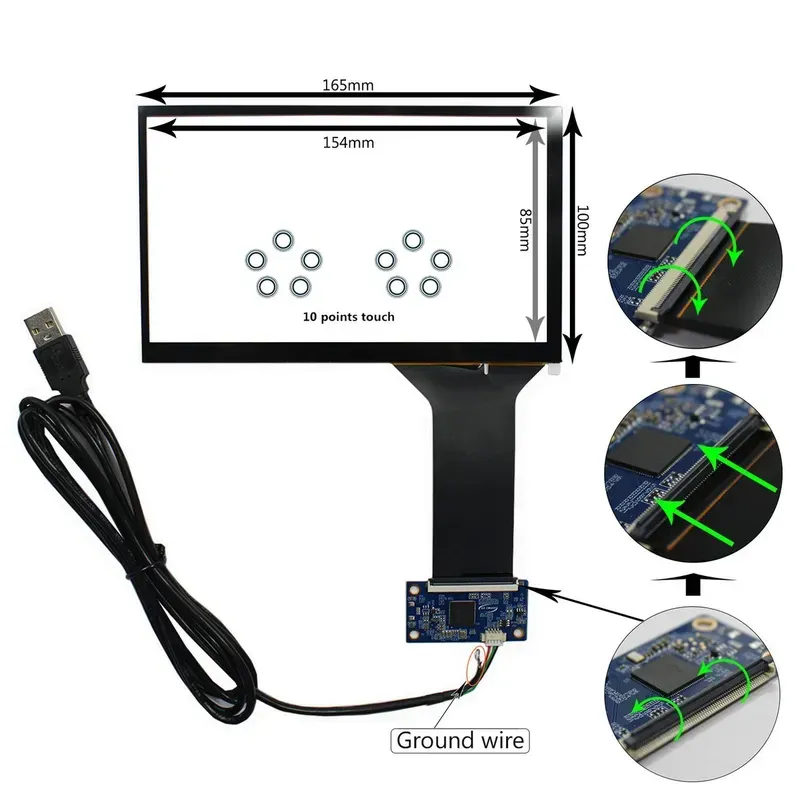
Capacitive Touch Screen Controller
Optimizing touch controller integration is paramount for delivering intuitive and responsive interactive touch screen experiences. The choice between capacitive and resistive touch technologies fundamentally dictates the design and performance characteristics of the motherboard, impacting everything from cost and durability to multi-touch capabilities and environmental resilience. A deep understanding of these technologies and their seamless integration with the motherboard's firmware is critical for achieving precise and reliable touch input.
Feature
Capacitive Touch Technology
Resistive Touch Technology
Interaction Method
Detects changes in electrical current when a conductive object (like a finger) touches the screen.
Responds to pressure when two conductive layers make contact.
Multi-touch Support
Generally supports multi-touch (gestures, pinch-to-zoom).
Typically single-touch, though some advanced designs offer limited multi-touch.
Clarity/Brightness
High optical clarity, bright display.
Lower optical clarity due to multiple layers, dimmer display.
Durability
More durable, scratch-resistant glass surface.
Less durable, susceptible to scratches and wear from pressure.
Activation
Requires a conductive touch (finger, specialized stylus).
Activates with any pressure (finger, gloved hand, stylus, blunt object).
Cost
Generally higher manufacturing cost.
Lower manufacturing cost.
Firmware Considerations for Touch Controller Integration The firmware running on the touch controller chip is a critical interface between the hardware and the operating system. It handles raw touch data processing, noise filtering, calibration, and gesture recognition. For capacitive touch, advanced algorithms in the firmware compensate for environmental factors, while for resistive, precise calibration routines are essential to maintain linearity and accuracy over time. Seamless firmware-hardware co-design is vital for achieving the desired touch responsiveness and stability.
Manufacturing and Assembly Processes: Ensuring Quality and Reliability
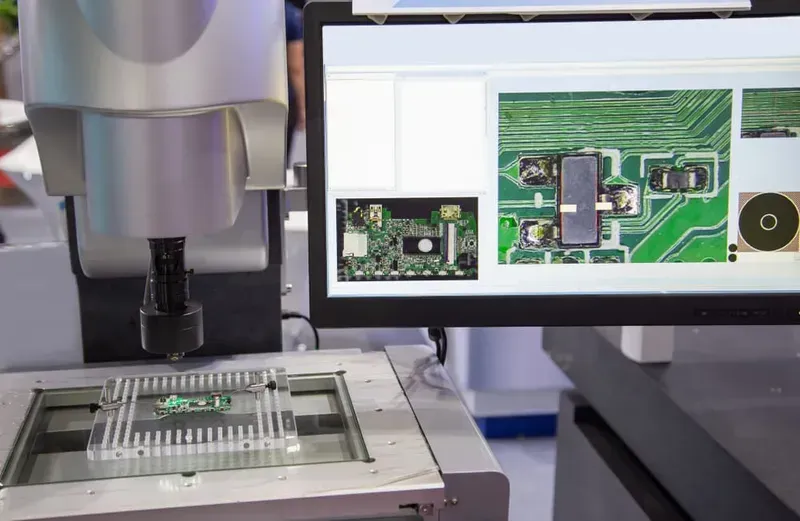
Automated Optical Inspection AOI
The seamless functionality and long-term reliability of interactive touch screen motherboards hinge critically on meticulous manufacturing and assembly processes. Beyond innovative design, the precise execution of these stages ensures that every component is optimally integrated, from the foundational PCB fabrication to advanced quality control. This dedication to process excellence is paramount for delivering robust and high-performance solutions capable of withstanding the demands of continuous interactive use.
PCB Fabrication: The Foundation The journey begins with the bare Printed Circuit Board (PCB) fabrication. This involves etching the circuit patterns onto copper-clad laminate, drilling precise holes for components, and applying protective solder mask layers. Advanced techniques like laser drilling are employed for high-density interconnect (HDI) boards, ensuring the intricate pathways required for modern touch screen motherboards are flawlessly created. Rigorous cleanliness and precise registration are crucial at this stage to prevent defects that could compromise signal integrity later on.
Process Step
Description
Key Benefit for Motherboard Quality
Component Placement (SMT)
Automated pick-and-place machines precisely position surface-mount devices (SMDs) onto solder paste-applied pads on the PCB.
High accuracy, speed, and consistency, critical for miniature components and complex layouts found in touch screen motherboards, reducing human error and improving yield.
Soldering: Secure Connections Following component placement, reflow soldering is typically used for SMT components, where the board passes through a controlled oven profile that melts the solder paste, forming robust electrical and mechanical connections. For through-hole components, wave soldering or selective soldering might be employed. Precise temperature control and proper solder paste composition are vital to prevent issues like tombstoning or bridging, ensuring reliable circuit connections under operational stresses.
Quality Control Method
Purpose
Impact on Interactive Touch Screen Motherboard Reliability
Automated Optical Inspection (AOI)
High-speed cameras scan the PCB after soldering to detect defects such as missing components, incorrect polarity, shorts, and open circuits.
Early detection of manufacturing flaws prevents costly rework later, ensuring the visual and structural integrity necessary for responsive touch input and display functionality.
In-Circuit Testing (ICT) ICT uses a bed-of-nails fixture to apply test signals to individual components and nets on the assembled board, verifying electrical connectivity and component values. This method can identify shorts, opens, incorrect component placement, and faulty components that might not be visible to AOI. For interactive motherboards, ICT confirms the integrity of critical power rails and signal lines before functional testing, ensuring the underlying electronics are sound.
Quality Control Method
Purpose
Impact on Interactive Touch Screen Motherboard Reliability
Functional Testing
Simulates the motherboard's operational environment to verify overall system performance, including display output, touch responsiveness, and peripheral connectivity.
Ensures the motherboard meets its specified performance criteria in real-world scenarios, guaranteeing a smooth and intuitive user experience for interactive applications.
Environmental Stress Testing (EST) Boards undergo thermal cycling, humidity exposure, and vibration testing to simulate harsh operating conditions and accelerate potential failures. This proactively identifies weaknesses in design or manufacturing that could lead to field failures. For interactive touch screens, this ensures the motherboard can withstand varying climates and usage environments, extending product lifespan.
Zero One Solution Limited: Your Partner for Interactive Touch Screen Motherboard Solutions
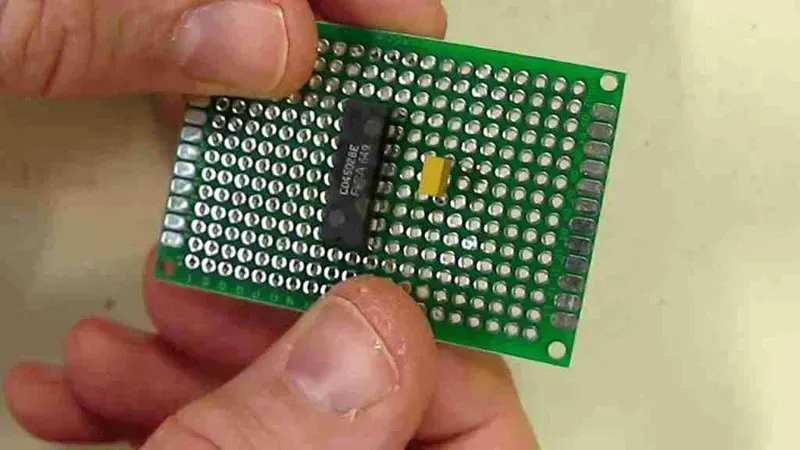
PCB Prototype Sample
At Zero One Solution Limited, we understand that the backbone of any cutting-edge interactive touch screen lies in its motherboard. With over a decade of specialized experience since our founding in 2011, we are your premier partner for developing robust, high-performance interactive touch screen motherboard solutions. Our commitment to rapid-response R&D prototyping, coupled with a comprehensive one-stop service from design to assembly, empowers businesses to accelerate their product development cycles and maintain a competitive edge in rapidly evolving markets.
Unparalleled Expertise in PCB Design Our seasoned engineering team, with extensive experience in Silicon Valley, excels in designing intricate multi-layered PCBs optimized for interactive touch screen applications. We meticulously address signal integrity, power distribution, and thermal management, ensuring your motherboard delivers exceptional performance and reliability.
State-of-the-Art Manufacturing Capabilities Leveraging our strategic position in Shenzhen, China's electronic manufacturing hub, we possess advanced manufacturing facilities capable of producing complex interactive touch screen motherboards with precision. We adhere to stringent quality control standards throughout the fabrication process, from material selection to final board production.
Precision Assembly Services Our sophisticated assembly lines, including SMT and through-hole technologies, are equipped for high-volume and low-volume production runs. We ensure accurate component placement and superior solder joint integrity, critical for the long-term reliability of interactive touch screen devices. Every assembled board undergoes rigorous testing, including AOI and ICT, to guarantee flawless functionality.
Rapid Prototyping for Accelerated Development Understanding the critical need for speed in product innovation, Zero One Solution Limited specializes in rapid prototyping. We can quickly turn your concepts into functional prototypes, allowing for agile testing and iteration, significantly reducing your time-to-market and enabling you to seize opportunities faster.
Comprehensive One-Stop Solution From initial design consultation and schematic capture to PCB layout, manufacturing, component sourcing, and final assembly, we offer an integrated one-stop solution. This streamlined approach minimizes vendor management, reduces complexities, and ensures seamless project execution, giving you a singular, accountable partner for your interactive touch screen motherboard needs.
Case Studies: Successful Interactive Touch Screen Projects
At Zero One Solution Limited, our commitment to innovation and rapid prototyping has enabled numerous clients to bring groundbreaking interactive touch screen products to market efficiently and reliably. These case studies underscore our capability to navigate complex design challenges, optimize manufacturing processes, and deliver high-performance interactive touch screen motherboard solutions tailored to diverse industry needs.
Interactive Retail Kiosk for Enhanced Customer Engagement A leading retail technology firm approached us to develop a robust motherboard for their next-generation interactive retail kiosks. The challenge was to ensure seamless touch responsiveness, high-resolution display support, and reliable operation in a public environment. We designed a custom motherboard integrating an advanced touch controller and optimized for low power consumption, resulting in a highly stable and engaging user experience that significantly boosted customer interaction in retail spaces. Our rapid prototyping capabilities allowed for quick iterations and a compressed development timeline, enabling the client to deploy their kiosks ahead of schedule.
Medical Diagnostic Device with Intuitive Touch Interface For a medical device manufacturer, we engineered a specialized interactive touch screen motherboard for a portable diagnostic unit. This project demanded extreme precision, EMI compliance, and long-term reliability. We selected medical-grade PCB materials and implemented meticulous signal integrity design to prevent interference, crucial for accurate diagnostic readings. The integrated touch solution provided healthcare professionals with an intuitive and responsive interface, improving workflow efficiency and diagnostic accuracy. Our adherence to stringent quality control measures ensured the device met all necessary regulatory standards.
Automotive Infotainment System with Multi-Touch Capabilities A prominent automotive supplier partnered with us to create a high-performance motherboard for their in-vehicle infotainment system. Key requirements included broad operating temperature range, vibration resistance, and support for multi-touch gestures. We designed a compact, robust motherboard utilizing automotive-grade components and optimized for thermal management within confined spaces. The resulting system provided a fluid, responsive, and reliable interactive experience for drivers and passengers, enhancing safety and entertainment. Our expertise in high-volume manufacturing ensured consistent quality and cost-effectiveness.
Industrial Control Panel with Ruggedized Touch Screen We collaborated with an industrial automation company to develop a ruggedized touch screen motherboard for their factory floor control panels. The environment presented challenges such as dust, humidity, and extreme temperatures. Our solution involved designing a motherboard with enhanced environmental protection, robust connectivity options, and a highly durable touch interface that could withstand continuous operation under harsh conditions. This led to increased operational efficiency and reduced downtime for the client's manufacturing processes, demonstrating our ability to deliver solutions for demanding industrial applications.
Future Trends in Interactive Touch Screen Motherboard Technology
The trajectory of interactive touch screen technology continues its rapid ascent, with the motherboard at its core constantly evolving to support groundbreaking innovations. As we peer into the future, several pivotal trends are set to redefine user interaction, demanding sophisticated motherboard solutions capable of integrating advanced functionalities like haptic feedback, ultra-flexible displays, and next-generation touch sensing, pushing the boundaries of immersive and intuitive user experiences.
How will haptic feedback enhance interactive touch screen motherboards? Haptic feedback integration will be a significant advancement, providing tactile responses that mimic physical sensations. Motherboards will need to incorporate specialized haptic drivers and processing units to control micro-actuators, enabling users to
What role will flexible displays play in future interactive touch screen motherboards? Flexible displays will necessitate motherboards capable of supporting their dynamic physical properties. This means advancements in substrate materials for PCB manufacturing, flexible interconnect technologies, and highly miniaturized components that can withstand bending and twisting without compromising performance, opening doors for foldable and rollable devices.
How will advanced touch sensing technologies impact motherboard design? Advanced touch sensing, including pressure sensitivity, multi-force sensing, and gesture recognition, will demand more complex and powerful touch controller integration directly onto the motherboard. This includes higher data throughput capabilities, dedicated AI/ML co-processors for real-time gesture interpretation, and enhanced noise reduction circuitry to ensure accuracy and responsiveness in diverse environmental conditions.
What impact will AI and machine learning have on interactive touch screen motherboards? AI and machine learning integration will empower motherboards to process and interpret user interactions with unprecedented intelligence. This will involve incorporating specialized neural processing units (NPUs) or leveraging existing CPU/GPU cores for on-device AI, enabling predictive touch, personalized user interfaces, and more sophisticated natural language processing for voice commands, leading to highly adaptive and intuitive systems.
How will connectivity evolve for future interactive touch screen motherboards? Future interactive touch screen motherboards will feature highly advanced and pervasive connectivity options. This includes integrated 5G/6G modules for ultra-low latency wireless communication, Wi-Fi 7 for higher bandwidth and reliability, and more robust wired interfaces like USB4 and Thunderbolt for high-speed data transfer and display output. Enhanced security protocols will also be paramount to protect sensitive user data.
What are the challenges in designing motherboards for these future trends? Designing motherboards for these future trends presents several challenges, including miniaturization without compromising performance, managing increased power consumption from advanced processors and sensors, ensuring thermal stability in compact designs, and developing flexible and durable PCB materials and assembly processes that can withstand repeated bending or dynamic stresses. Furthermore, the integration of diverse technologies requires sophisticated system-on-chip (SoC) solutions and robust software-hardware co-design.
In conclusion, the interactive touch screen motherboard solution is a crucial element in creating seamless and intuitive user experiences across various industries. Zero One Solution Limited stands ready to partner with you, offering comprehensive PCB solutions from design to assembly, ensuring your interactive touch screen products meet the highest standards of performance, reliability, and innovation. Contact us today to discuss your project and leverage our expertise to bring your vision to life. Let Zero One Solution Limited be your trusted partner in navigating the complexities of PCB design and manufacturing, empowering you to create interactive touch screen solutions that redefine user engagement.