Keltron Capacitor Price List: A Comprehensive Guide for Buyers
2025.01.02
In the world of electronics, capacitors are indispensable components, and Keltron stands out as a reliable brand. From powering small circuits to stabilizing complex machinery, Keltron capacitors are widely used. This article delves into the current Keltron capacitor price list, exploring various types, specifications, and where to procure them, so you have the information you need to power your projects, similar to how understanding the societal impact of innovations guides technological progress. Let’s get started.
Understanding Keltron Capacitors
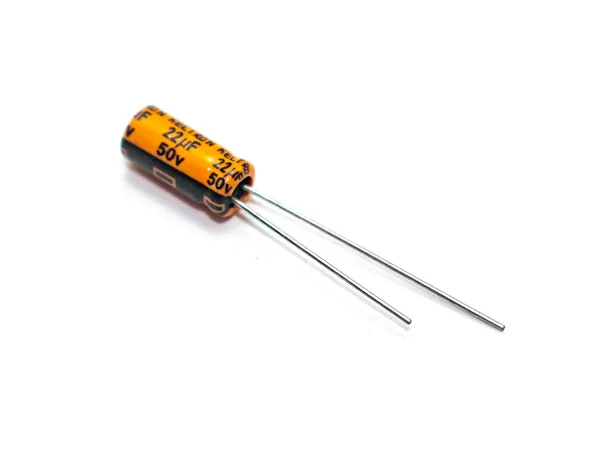
Keltron capacitors
Keltron capacitors, manufactured by the Kerala State Electronics Development Corporation Limited (Keltron), are crucial passive electronic components widely used in various applications. These capacitors are known for their reliability and cost-effectiveness, making them a popular choice for both hobbyist electronic projects and industrial applications where energy storage and filtering is required.
Capacitors store electrical energy in an electric field, and this capacity is measured in farads (F), or more commonly in microfarads (µF), nanofarads (nF) or picofarads (pF) due to the scale in most applications. Keltron capacitors, available in different types such as electrolytic, film, and ceramic, are indispensable in circuit designs for tasks like power supply stabilization, signal coupling, and timing circuits. The applications range from household electronic gadgets to complex industrial equipment, underscoring the significance of Keltron capacitors in the Indian electronics market. Their design and manufacturing adhere to strict quality control measures, and are valued for maintaining the specific electrical properties of capacitance, voltage, temperature, and tolerance
Types of Keltron Capacitors Available
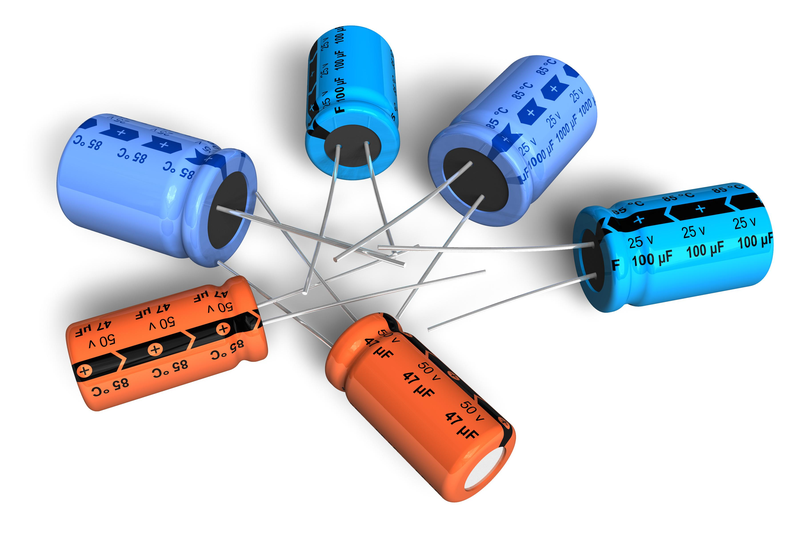
Electrolytic capacitors
Keltron offers a diverse range of capacitors to meet various electronic application needs, encompassing electrolytic, film, and ceramic types. Each type exhibits unique characteristics that make them suitable for specific purposes. Understanding these distinctions is critical when selecting the appropriate capacitor.
Capacitor Type
Characteristics
Typical Applications
Electrolytic Capacitors
High capacitance values, polarized, good for filtering and energy storage, typically larger in size.
Power supplies, audio amplifiers, decoupling, smoothing circuits.
Film Capacitors
Non-polarized, good for high-frequency applications, lower losses compared to electrolytic capacitors, can have various forms.
High-frequency circuits, audio equipment, timing circuits, motor control.
Ceramic Capacitors
Small size, non-polarized, low cost, suitable for high-frequency applications but have lower capacitance values.
Bypass capacitors, decoupling, filters, general-purpose applications where size is a concern.
The choice of capacitor type significantly impacts circuit performance. For example, electrolytic capacitors are chosen where high capacitance is needed for energy storage and smoothing in power supply circuits. Film capacitors provide better performance in audio circuits, where low losses and precise characteristics are essential. Conversely, ceramic capacitors are often favored for their compact size and low cost, commonly used for decoupling high-frequency noise. The selection process must therefore consider specific requirements of the application.
Factors Affecting Keltron Capacitor Prices
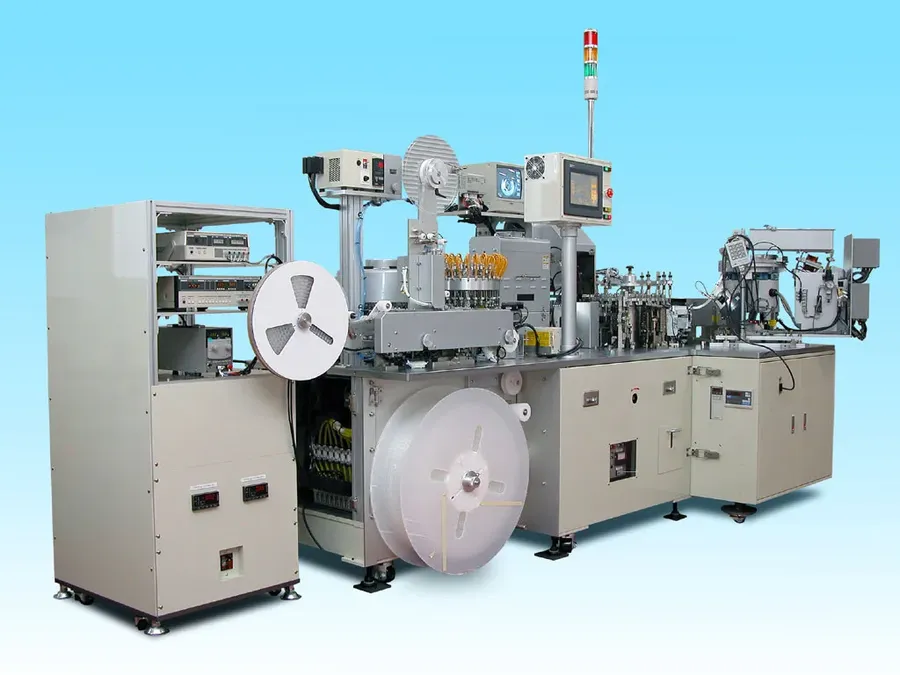
Capacitor production line
The price of Keltron capacitors, like all electronic components, is not uniform and is influenced by several key parameters. Understanding these factors is crucial for cost-effective procurement and ensuring that the chosen capacitor meets the application's requirements without unnecessary expense.
Factor
Description
Impact on Price
Capacitance
Measured in Farads (F), this indicates the capacitor's ability to store an electrical charge.
Higher capacitance typically leads to higher prices due to the increased material and manufacturing complexity required.
Voltage Rating
The maximum voltage that the capacitor can safely withstand.
Higher voltage ratings generally result in higher prices, because higher voltage ratings require more robust construction and materials.
Size
Physical dimensions of the capacitor.
Larger capacitors generally cost more due to increased material usage and handling costs, although miniaturized capacitors with advanced features can also command higher prices
Tolerance
The acceptable deviation from the stated capacitance value, usually expressed as a percentage.
Tighter tolerance capacitors have more precise manufacturing processes and often cost more.
Operating Temperature
The range of temperatures within which the capacitor can operate reliably.
Capacitors designed for extreme temperature ranges typically involve specialized materials and manufacturing, which increases costs.
Type of Dielectric
The insulating material between capacitor plates (e.g., ceramic, film, electrolytic).
The type of dielectric impacts price based on cost of materials and manufacturing complexity. Electrolytics are usually cheaper, while ceramic and film capacitors often cost more.
Lead Type
Axial, radial, SMD (Surface Mount Device)
SMD components tend to be cheaper than axial and radial components due to automation in manufacturing
Keltron Electrolytic Capacitor Price List
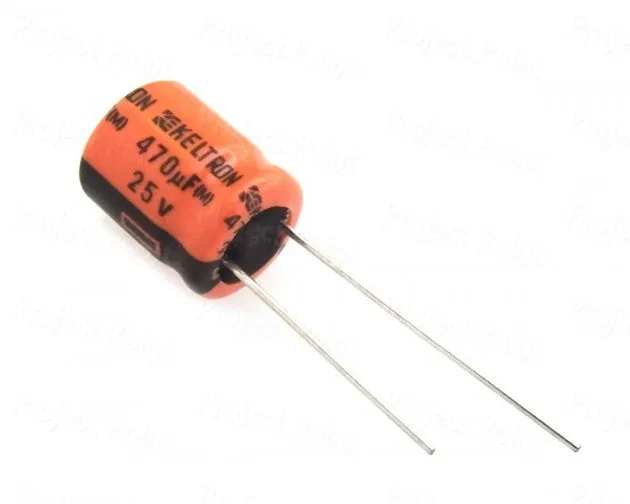
Keltron electrolytic capacitors
This section provides a detailed price list for Keltron electrolytic capacitors, categorized by their capacitance and voltage ratings. This information is crucial for buyers aiming to procure the right components for their electronics projects, repairs, or manufacturing needs. The price list includes common models, and it's important to note that prices can fluctuate due to market conditions and supplier variations.
Capacitance (µF)
Voltage (V)
Typical Price Range (INR)
Model Example
1
50
2-5
KEC-1uF-50V
4.7
50
3-6
KEC-4.7uF-50V
10
16
3-7
KEC-10uF-16V
10
25
4-8
KEC-10uF-25V
10
50
5-9
KEC-10uF-50V
22
16
4-9
KEC-22uF-16V
22
25
5-10
KEC-22uF-25V
22
50
6-12
KEC-22uF-50V
22
450
15-30
KEC-22uF-450V
47
16
5-10
KEC-47uF-16V
47
25
6-11
KEC-47uF-25V
47
50
7-13
KEC-47uF-50V
100
16
7-14
KEC-100uF-16V
100
25
8-15
KEC-100uF-25V
100
50
10-18
KEC-100uF-50V
220
16
10-20
KEC-220uF-16V
220
25
12-22
KEC-220uF-25V
470
16
15-25
KEC-470uF-16V
1000
16
20-35
KEC-1000uF-16V
1000
25
25-40
KEC-1000uF-25V
1000
35
30-50
KEC-1000uF-35V
1000
50
40-60
KEC-1000uF-50V
2200
25
45-75
KEC-2200uF-25V
4700
25
60-100
KEC-4700uF-25V
10000
25
80-150
KEC-10000uF-25V
10000
63
120-200
KEC-10000uF-63V
Where to Buy Keltron Capacitors
Electronic component store
Securing genuine Keltron capacitors is crucial for reliable electronic circuits. This section outlines reputable sources, both online and offline, where you can purchase authentic Keltron capacitors, along with vital tips for avoiding counterfeit products. With the increasing market presence of counterfeit electronic components, sourcing from authorized distributors and retailers is paramount. For consumers who purchase components in larger quantities, direct contact with Keltron or its authorized channel partners is the most appropriate avenue to ensure authenticity.
Online Retailers in India Several established online retailers in India stock a range of Keltron capacitors. Examples include major e-commerce platforms specializing in electronic components. Always verify the seller's reputation and look for certifications or authorization documents when available. Check user reviews to ensure the reliability of the supplier. It is advisable to order from authorized dealers or official distributors to reduce the risk of purchasing counterfeit products.
Online Retailers Internationally For international buyers, various global online marketplaces offer Keltron capacitors. These platforms often provide a wider selection and competitive pricing. However, exercise extreme caution when using such marketplaces. Ensure the seller has a high rating and positive feedback from prior customers. Consider the country of origin of the components. If the price is extremely low, it should be considered as a red flag. Direct authorized distributors should be the primary channel.
Authorized Distributors and Dealers in India Keltron has a network of authorized distributors and dealers across India. Purchasing from these authorized sources guarantees that you will be getting genuine components. Contact Keltron directly through its official website or customer service channels to locate the nearest authorized dealer. This method not only ensures authenticity but also offers technical assistance and after-sales service.
Offline Electronic Component Stores in India Many physical electronic component stores in major Indian cities stock Keltron capacitors. Purchasing components from these retailers allows for physical inspection before purchasing, and to obtain any immediate advice needed for the particular application. Be sure to verify that the retail outlet is an established and reliable supplier, and not a reseller or distributor of potentially counterfeit products.
Tips for Verifying Authenticity To verify the authenticity of Keltron capacitors, closely inspect the product for brand markings, packaging, and build quality. Look for the manufacturer’s logo, part number, and date codes. Compare the capacitor with specifications and images available on the Keltron official website. Buy products with manufacturer's warranty. If possible, test the capacitors’ electrical characteristics using a multimeter or LCR meter to verify they meet the stated specifications. If you have concerns, seek verification from a Keltron representative or an authorized dealer.
Comparing Keltron Capacitors with Other Brands
Capacitors from different brands
When selecting capacitors for electronic applications, comparing brands is crucial to ensure optimal performance, reliability, and cost-effectiveness. Keltron capacitors, while recognized for their quality and availability, often compete with other established brands. This section analyzes these comparisons, focusing on key metrics that influence a user's decision.
Feature
Keltron Capacitors
Brand X (Example)
Brand Y (Example)
Price
Moderate to Mid-Range
Can be lower or higher depending on features.
Often Higher, premium pricing
Performance
Reliable within specified parameters. Specifications sheet needs to be reviewed
Potentially higher performance with less drift over time.
Known for high-precision and low-drift characteristics
Reliability
Good track record, but depends on batch, proper storage and handling
Strong reliability, good tolerance to temperature changes
High consistency, extended service life
Availability
Generally good availability in India.
Wide availability in India and international markets
May have distribution limitations in certain regions
Range
Offers a solid range of electrolytic, film and ceramic capacitors
Offers more specialized capacitors
Specializes in niche, high performance capacitors
Technology
Uses standard manufacturing processes
May utilize advanced manufacturing techniques
May use proprietary materials for higher performance
Customer Support
May be available
Strong customer support
Excellent service known for application support
It is crucial to note that the performance and reliability of capacitors from any brand are contingent upon proper storage, handling, and operation within their specifications. Always verify datasheets and ensure the chosen capacitor is well within its specified operational limits.
Frequently Asked Questions About Keltron Capacitors
This section addresses common queries regarding Keltron capacitors, offering clear and concise answers to help users make informed decisions. These FAQs cover aspects of quality, cost, and practical application, ensuring a comprehensive understanding.
Are Keltron capacitors a reliable choice? Keltron capacitors are generally considered reliable for general-purpose applications. Their performance and longevity are adequate for most standard electronic circuits and projects. While they may not be the top-tier choice for extremely demanding applications, they offer good value for money and adhere to industry standards. For critical applications, always verify the specifications against the circuit requirements.
What is the average cost of a capacitor, and how does Keltron compare? The average cost of a capacitor varies widely, depending on the type (ceramic, electrolytic, film, etc.), capacitance, voltage rating, tolerance, and manufacturer. Keltron capacitors are typically positioned in the mid-range price bracket, offering a balance between cost and performance. Prices can range from a few cents for basic ceramic capacitors to several dollars for high-voltage, high-capacitance electrolytic or film capacitors. Specific prices can be determined by consulting a Keltron capacitor price list from a retailer.
Which type of capacitor is generally the most expensive? High-performance film capacitors and high-voltage, high-capacitance electrolytic capacitors typically command the highest prices. These types often incorporate advanced materials and manufacturing processes to achieve tight tolerances, high reliability, and specific performance characteristics, making them more costly to produce. Additionally, supercapacitors and specialized high-temperature capacitors can also be at the higher end of the cost spectrum.
What are the physical dimensions of a 1000uF 35V capacitor? The physical size of a 1000uF 35V capacitor varies depending on the manufacturer and capacitor type (e.g., radial lead, surface mount). However, it typically has a diameter of around 10-13 mm and a height of 16-21 mm for radial leaded electrolytic capacitors. It is essential to consult the specific datasheet of the Keltron 1000uF 35V capacitor to ascertain its exact dimensions before designing a circuit or performing a replacement.
How can I identify a genuine Keltron capacitor and avoid counterfeits? To ensure you are purchasing genuine Keltron capacitors, always buy from authorized distributors or reputable electronics retailers. Examine the capacitor packaging for the correct Keltron branding and part number, as well as check the physical capacitor for clean printing and finish. Comparing the markings with a Keltron datasheet will verify its authenticity. Be wary of deals that seem suspiciously cheap, as they are often an indication of counterfeits.
How do capacitance and voltage ratings affect the price of Keltron capacitors? Capacitance and voltage rating are primary factors affecting the price of Keltron capacitors. Higher capacitance and higher voltage ratings typically lead to higher prices due to increased material requirements and more complex manufacturing processes. For example, a 1000uF capacitor will generally cost more than a 100uF capacitor with the same voltage rating, and a 450V capacitor will cost more than a 25V capacitor of the same capacitance.
Where can I find the most up-to-date Keltron capacitor price list? The most accurate and up-to-date price list for Keltron capacitors can be found on the websites of authorized Keltron distributors, large online electronics retailers (such as Mouser or Digi-Key), and some specialized electronic component platforms. These lists are often downloadable as PDF or available as a searchable database on the website. Remember to confirm the prices and availability from a reliable source before placing any order, as prices are subject to change.
Practical Tips for Selecting the Right Keltron Capacitor
Selecting the correct Keltron capacitor for a specific application is crucial for optimal circuit performance and reliability. This involves careful consideration of several key parameters to ensure the capacitor meets the demands of your electronic project. A mismatch can lead to performance issues or even failure.
Identify Application Requirements Begin by understanding the capacitor's role in your circuit. Is it for filtering, decoupling, energy storage, or timing? Different applications impose different requirements for capacitance, voltage, and type.
Determine Capacitance Value Capacitance is measured in Farads (F), typically microfarads (µF) or picofarads (pF) for most electronic circuits. Calculate the required capacitance using relevant circuit equations or by referencing datasheets of the integrated circuits you are using. A capacitor's capacitance will directly impact how much charge it can store, which must be appropriate for your application.
Determine Voltage Rating The voltage rating indicates the maximum voltage the capacitor can safely withstand. Always choose a capacitor with a voltage rating that exceeds the maximum voltage in your circuit, including any transient or peak voltages. Underrating a capacitor's voltage can lead to catastrophic failure. A good practice is to choose a voltage rating at least 20% higher than the highest voltage it will be subjected to.
Select the Appropriate Capacitor Type Keltron offers various types of capacitors, including electrolytic, film, and ceramic capacitors. Each type has unique characteristics such as stability, tolerance, temperature coefficient, and frequency response, which are important to consider. For instance, electrolytic capacitors are generally used for high capacitance values, while ceramic capacitors are used for high frequency applications.
Consider Operating Temperature The capacitor's operating temperature range should be compatible with your application environment. Capacitance and other parameters may vary with temperature, particularly with electrolytic capacitors. Datasheets provide information on the capacitor's performance across different temperatures. If your circuit is subject to extreme temperature fluctuations, then consider using capacitors with a wider operating temperature range.
Check for Tolerance and Stability Capacitor tolerance indicates how much the actual capacitance value may vary from the nominal value. Consider the impact of this variation on your circuit performance. Also, evaluate the capacitor's stability over time, temperature, and frequency.
Physical Size and Mounting Ensure the physical dimensions and mounting type of the capacitor are compatible with your circuit board and housing. Surface-mount or leaded components may be required depending on your design.
Troubleshooting Common Capacitor Issues
Capacitors, while generally reliable, can sometimes fail or exhibit problems that affect circuit performance. Effective troubleshooting involves identifying the symptoms, diagnosing the cause, and implementing the correct replacement procedure. This section will guide you through these steps to ensure your electronic devices operate optimally.
Symptom: No or Weak Power Delivery If a circuit is not powering on correctly or the power is weak, a failed capacitor could be the culprit. The capacitor may have lost its ability to store charge, resulting in an inadequate power supply. Check if the output voltage is stable and within the specified range.
Symptom: Overheating of Components Capacitors that are shorted or have increased internal resistance can generate excessive heat which can damage nearby components. Look for signs of thermal damage such as discoloration or deformation on or around the capacitor. Carefully touch(when power is off and the capacitor is discharged) the suspect capacitor with care to check for excessive heat.
Symptom: Unusual Noise or Hum Failing capacitors, especially in power supply circuits, can introduce audible noise, like humming or buzzing. This often indicates that the capacitor's performance is degrading or that it is experiencing a failure mode. Such noise is often accompanied by voltage fluctuations, which may also affect other parts of the circuit.
Symptom: Bulging or Leaking Capacitor Visual inspection often reveals the state of a capacitor. Electrolytic capacitors may bulge or leak electrolyte when they fail or are stressed beyond their specifications. Any physical deformation or leakage is a clear indication that the capacitor needs immediate replacement.
Diagnosis: Use a Multimeter to Test Capacitors A multimeter with capacitance measurement capabilities can test the capacitance value of the component. If the measured capacitance deviates significantly from the labeled value(taking the tolerance into account), the capacitor is likely faulty. Note that ESR (Equivalent Series Resistance) is also a crucial parameter in many applications, and a faulty ESR reading may indicate a capacitor is failing even if capacitance seems within tolerance.
Procedure: Capacitor Replacement Ensure the power to the circuit is completely off before attempting a capacitor replacement. Discharge the capacitor with a proper discharge tool or resistor to prevent electrical shock or circuit damage. Note the polarity of the capacitor(if polarized) before removing it and replace it with a new capacitor with the same specification and polarity. Proper soldering techniques should be used to ensure a solid and reliable connection. If you are not familiar with soldering, it is often better to have the repair done by an experienced professional.
Understanding the [keltron capacitor price list] is crucial for any project involving electronics. By knowing the types, factors influencing pricing, and reputable suppliers, you can make informed decisions. Whether you're a hobbyist or a professional, using the correct Keltron capacitor is key to achieving the desired performance and longevity in your applications, just as understanding societal structures is vital for effective policy making. Remember to always prioritize quality and verify the authenticity of your purchased components for optimal results.