If your hardware team is sending a medical PCBA to an SMT factory for the first time, you will likely face a common question: with similar components and a comparable design, why does the medical board quote come with a higher price tag and a much larger stack of process documentation? The core answer isn't just about "better solder joints." It's about what you can prove when a problem occurs. Medical devices directly impact patient safety and have no room for "recall and redo" in clinical scenarios. Today, from the manufacturing and quality control perspective of AnyPCBA, we break down the three core differences between medical and standard consumer electronics PCBA manufacturing.
Difference 1: ISO 13485 is Not Just a Certificate, It's System Logic
Standard consumer electronics typically only require the factory to have ISO 9001 certification, while medical devices mandate ISO 13485.
The difference is not simply that "the requirements are stricter." It is a complete restructuring of the underlying logic: ISO 13485 revolves entirely around risk management.
On AnyPCBA's medical PCBA production lines, this means:
Full Parameter Recording: The temperature, speed, pressure, and other parameters of every process, along with the source and batch of every component, must be recorded and verifiable.
Closed-Loop Control: Design changes must go through a strict Engineering Change Order (ECO) process. Process anomalies must have a closed loop of Corrective and Preventive Actions (CAPA).
Quality Upfront: For a manufacturer, the quality system must be able to "explain how every single board was made," rather than fabricating paperwork after an incident occurs.
Difference 2: Traceability Must Extend to Every Single Board
If a consumer electronics product has a batch issue, the standard practice is to "swap the batch and start over." Medical devices don't have that luxury. Therefore, the granularity of manufacturing traceability for medical boards is extremely high.
Which production line, which pick-and-place machine, which batch of materials, and which reflow oven temperature profile—all must precisely correspond to a specific PCBA.
At AnyPCBA, we use our MES (Manufacturing Execution System) for full-process control:
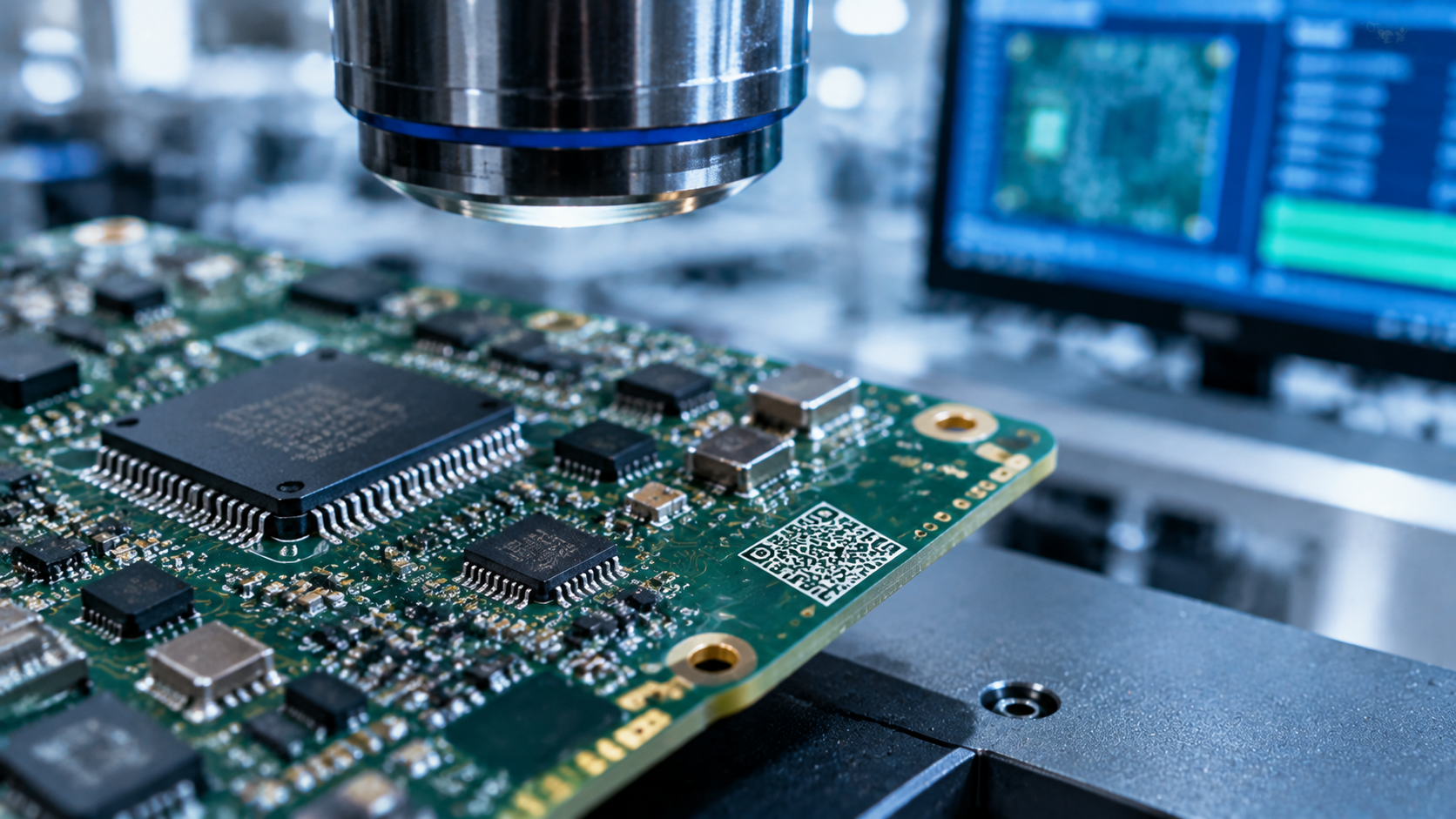
Every board has a unique Serial Number (SN) or QR code, making its movement fully traceable.
Orders are physically bound to fixed production lines, fixed stencils, and fixed squeegees.
These practices might be considered "bonus points" for consumer electronics projects, but for medical projects, they are non-negotiable "basic requirements."
Difference 3: Process Discipline is Worth More Than Production Speed
Medical boards usually have lower volumes, but the discipline required is near absolute. The First Article Inspection (FAI) cannot be skipped.
This is not just a "quick glance." It involves a complete, documented workflow of verifying materials, polarity, solder joints, dimensions, and functionality. If the machine is adjusted midway through production, the FAI process must be re-executed.
Furthermore, the process environment for medical boards is far more strictly controlled than for consumer electronics:
Moisture-Sensitive Device (MSD) Management: Strict baking and time-limit management are followed to eliminate popcorn effects caused by moisture absorption.
ESD Daily Checks: Strict Electrostatic Discharge protocols ensure the working environment is absolutely safe.
High-Reliability Soldering: We use nitrogen reflow soldering by default to reduce solder oxidation and improve the yield of BGAs and fine-pitch components, strictly adhering to the IPC-A-610 Class 3 acceptance standard for high-reliability electronics.
X-Ray Inspection: For hidden solder joints like BGAs, 100% sampling or full inspection via X-Ray is performed.
The "machine adjustment time" and "inspection time" that are often compressed in consumer electronics scheduling are default actions for medical boards. Saving a few hours here is never worth the cost of a broken traceability chain in a medical incident.
Practical DFM Advice for Hardware Engineers
When choosing a medical PCBA manufacturer, rather than listening to how "fast" they claim to be, ask them these three hard questions:
What is the specific scope covered by your ISO 13485 system?
What level of granularity can your traceability reach for a single board, and how can you prove it?
How is the First Article Inspection process handled after a machine adjustment?
Specific answers mean a smooth collaboration. Vague answers mean you should be cautious, no matter how low the quote is.
About AnyPCBA
AnyPCBA not only possesses mature advanced SMT production lines and an MES traceability system, but also provides one-stop services ranging from 2 to 64 layer precision PCB manufacturing to high-reliability PCBA assembly. Whether it's medical devices, automotive electronics (IATF 16949), or industrial control and communications, our DFM team can help you eliminate risks at the front end of your design.