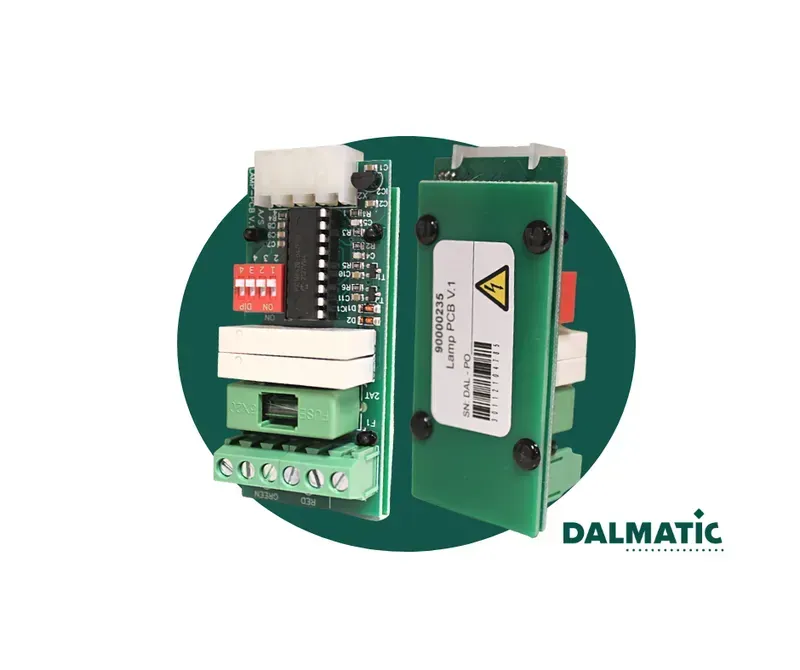
In the dynamic world of stage lighting and entertainment, the lighting control console stands as the nerve center, orchestrating stunning visual experiences. At the heart of these consoles lies the Printed Circuit Board (PCB), a critical component that demands reliability, precision, and performance. Zero One Solution Limited, a leading PCB solution provider, specializes in delivering cutting-edge PCB solutions for lighting control consoles, empowering manufacturers and innovators to push the boundaries of lighting technology. With rapid prototyping capabilities and a commitment to quality, Zero One Solution Limited is your trusted partner in bringing innovative lighting control solutions to life. This article delves into the world of Lighting Control Console PCB Solutions, exploring their design, manufacturing, and the critical role they play in shaping the future of entertainment.
Introduction to Lighting Control Console PCBs
Lighting control consoles are the central nervous system for theatrical, concert, architectural, and event lighting, orchestrating complex light shows through precise command of fixtures. At the core of these sophisticated devices are Printed Circuit Boards (PCBs), which are fundamental in translating human input into digital signals that drive lighting systems, especially in prevalent DMX lighting control environments. The escalating demand for intricate and reliable PCBs in the dynamic entertainment and stage lighting industries underscores their critical role in ensuring seamless, high-performance illumination.
What is a Lighting Control Console? A lighting control console, often called a lighting desk or board, is an electronic device used to control stage lighting and other entertainment industry lighting fixtures. It provides an interface for lighting designers and operators to program and execute lighting cues, scenes, and effects.
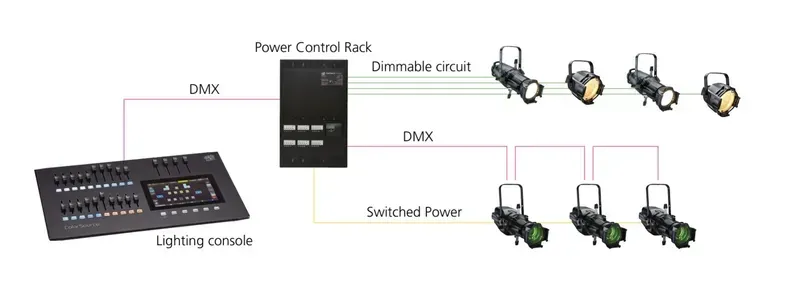
How do PCBs function in DMX Lighting Control Systems? In DMX (Digital Multiplex) lighting control systems, PCBs serve as the backbone for signal processing, routing, and power distribution. They convert control inputs (faders, buttons) into DMX protocol data, manage communication with lighting fixtures, and ensure stable power delivery, enabling precise control over thousands of parameters like intensity, color, and movement.
Why is there an increasing demand for sophisticated PCBs in entertainment lighting? The increasing demand stems from several factors: the growing complexity of lighting fixtures (e.g., intelligent LEDs), the need for higher channel counts and faster response times, the integration of networked control systems, and the imperative for extreme reliability in live performance environments where failure is not an option. This drives the need for PCBs with superior signal integrity, advanced thermal management, and robust construction.
Key Requirements for Lighting Control Console PCBs
The performance and reliability of a lighting control console are fundamentally dictated by the quality and design of its Printed Circuit Boards (PCBs). For these critical components, ensuring high signal integrity, effective thermal management, robust durability, and a compact design are not merely advantageous but essential. These requirements are paramount for consoles operating in demanding live event environments, studio settings, and architectural installations, directly impacting the precision, longevity, and overall functionality of the lighting system. Adherence to stringent industry standards and certifications further underscores the commitment to excellence in the development of these specialized PCBs.
What are the critical aspects of signal integrity for Lighting Control Console PCBs? High signal integrity in Lighting Control Console PCBs is crucial for accurate and reliable data transmission, particularly for DMX512 and Art-Net protocols. This necessitates meticulous impedance matching, minimization of crosstalk, and robust grounding schemes to prevent signal degradation, noise interference, and data loss. Poor signal integrity can lead to erratic lighting behavior, delayed responses, and system instability, compromising the entire production.
How important is thermal management in these PCBs, and what are common strategies? Thermal management is vital for the long-term reliability and stability of Lighting Control Console PCBs, as components can generate significant heat during operation. Effective strategies include optimizing component placement for better airflow, utilizing thermal vias, incorporating heat sinks, and selecting materials with higher thermal conductivity (e.g., FR-4 variants with enhanced thermal performance). Overheating can lead to component failure, reduced lifespan, and performance degradation.
What durability considerations are essential for PCBs in lighting consoles? Lighting consoles are often subjected to challenging environments, including frequent transport, varying temperatures, and potential physical impacts. Durability considerations for their PCBs include robust material selection (e.g., higher TG FR-4 for temperature stability), adequate copper thickness for mechanical strength, and resilient surface finishes (e.g., ENIG, OSP) for corrosion resistance. Components must be securely mounted to withstand vibrations and shocks, ensuring continuous operation.
Why is a compact design often a key requirement for Lighting Control Console PCBs? A compact design is often a critical requirement to accommodate the increasing functionality and portability demanded by modern lighting consoles. This involves optimizing component density, utilizing multi-layer PCB constructions, and employing smaller package sizes for integrated circuits. A compact design facilitates smaller overall console footprints, which is beneficial for space-constrained venues and easier transportation, without compromising performance.
What industry standards and certifications are relevant for Lighting Control Console PCBs? Relevant industry standards and certifications include IPC standards for PCB design and manufacturing (e.g., IPC-A-610 for electronic assemblies), UL certifications for safety, and RoHS compliance for hazardous substances. For specific lighting protocols, adherence to standards like DMX512 (ANSI E1.11) and Art-Net is paramount to ensure interoperability and reliable communication within the lighting network. Compliance ensures product safety, quality, and market acceptance.
Zero One Solution Limited's Expertise in PCB Solutions
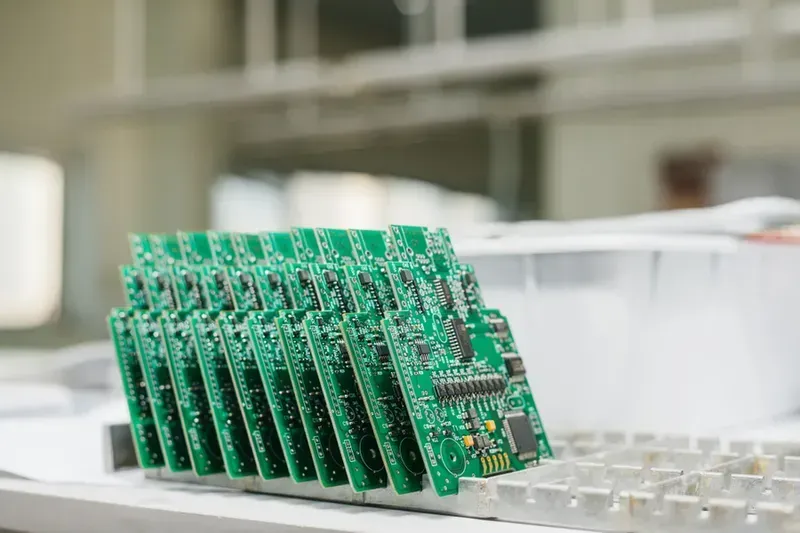
PCB Prototype Manufacturing
At Zero One Solution Limited, we don't just manufacture PCBs; we engineer the backbone of innovation for the most demanding applications, including advanced lighting control consoles. Our expertise is rooted in a decade-plus commitment to rapid-response R&D prototype manufacturing, offering a comprehensive one-stop solution from initial design to final assembly. We understand the critical role high-performance PCBs play in the reliability and functionality of sophisticated lighting systems, and our approach is meticulously tailored to meet and exceed these rigorous industry requirements.
Rapid Prototyping for Accelerated Development Our core strength lies in rapid prototyping, enabling clients to quickly iterate on designs and accelerate product development cycles. This is crucial for lighting control console manufacturers who require swift validation of new features and robust performance in dynamic environments.
Comprehensive One-Stop PCB Solutions From concept to finished product, Zero One Solution Limited provides integrated PCB services, encompassing design, fabrication, assembly, and rigorous testing. This streamlined approach minimizes lead times and ensures seamless project execution, a distinct advantage in the fast-paced entertainment technology sector.
Specialized Experience in Lighting Control Applications We possess deep domain knowledge in the unique demands of lighting control console PCBs, understanding the intricacies of signal integrity for DMX, Art-Net, and sACN protocols, as well as the need for robust power management and thermal dissipation in high-density designs.
Global Strategic Presence and Supply Chain Headquartered in Shenzhen, China, the global electronic manufacturing hub, with a branch office in Dubai, we leverage an extensive and resilient global PCBA supply chain network. This strategic positioning guarantees access to the best components and manufacturing resources, ensuring competitive pricing and consistent quality for our clients worldwide.
Key Capability
Description
Benefit for Lighting Console PCBs
Rapid R&D Prototyping
Accelerated development and iteration of PCB designs.
Reduces time-to-market for innovative lighting control features and products, enabling quick validation of concepts.
One-Stop Solution (Design to Assembly)
End-to-end services from schematic capture to functional testing.
Simplifies the supply chain, ensures consistency, and reduces overall project management overhead for console manufacturers.
Advanced Manufacturing Technologies
Utilizes state-of-the-art SMT, through-hole, and quality control processes (AOI, X-ray).
Guarantees high-precision assembly, superior board quality, and reliability for critical performance in live environments.
Rigorous Quality Assurance
Comprehensive testing protocols including ICT, FCT, and environmental stress testing.
Ensures the long-term durability and fault-free operation of PCBs under diverse operational conditions.
PCB Design Considerations for Lighting Consoles
Lighting Console Internal Components
Optimizing Printed Circuit Board (PCB) design is paramount for the robust performance and unwavering reliability of modern lighting control consoles. Beyond simply connecting components, effective PCB design in this domain directly impacts signal integrity, thermal dissipation, and overall system longevity, ensuring seamless and precise lighting orchestration in demanding live environments. Each design aspect, from meticulous component placement to sophisticated power distribution, is intricately linked to the console's ability to deliver consistent and error-free control.
Component Placement Strategy Strategic component placement on lighting console PCBs is crucial for minimizing signal path lengths, reducing electromagnetic interference (EMI), and optimizing thermal management. High-speed digital components should be grouped together and isolated from sensitive analog circuits to prevent crosstalk. Connectors and I/O interfaces must be positioned for ease of assembly and maintenance, while considering mechanical constraints within the console enclosure. This meticulous planning ensures signal clarity and system stability under varying operational conditions.
Signal Routing and Integrity Maintaining signal integrity is vital for accurate and responsive lighting control. This involves careful trace routing to minimize impedance discontinuities, avoid sharp bends, and ensure proper termination for high-speed signals like DMX512 or Ethernet. Differential pair routing is often employed for sensitive data lines to enhance noise immunity. Ground planes and power planes are strategically implemented to provide stable references and reduce return path impedance, critical for preventing signal degradation and ensuring reliable communication between control elements and lighting fixtures.
Efficient Power Distribution Network (PDN) A well-designed power distribution network (PDN) is fundamental for stable operation, particularly for ICs with dynamic power demands. This involves optimizing power and ground plane distribution, strategically placing decoupling capacitors to filter noise and provide local current reserves, and ensuring robust power traces to handle peak current loads without excessive voltage drop. A stable PDN prevents brownouts, reduces power-related noise, and extends the lifespan of active components, directly impacting the console's long-term reliability and performance.
Design Aspect
Key Consideration
Impact on Console Performance
Thermal Management
Component selection, heatsinks, fan placement, thermal vias
Resistance to environmental factors (temperature, humidity, vibration), long operational life
Maintainability & Testability
Test points, accessible components, modular design
Facilitates debugging, repair, and future upgrades, reduces downtime
Manufacturing and Assembly Processes
AOI Automated Optical Inspection
The robustness and reliability of a Lighting Control Console PCB are critically dependent on meticulous manufacturing and assembly processes. At Zero One Solution Limited, we employ state-of-the-art technologies and stringent quality control measures to transform advanced designs into high-performance, durable PCBs, ensuring optimal functionality in demanding live environments. Our comprehensive approach covers every stage from fabrication to final testing, ensuring each board meets the highest industry standards for lighting control applications.
Advanced PCB Fabrication Techniques Our fabrication process begins with precise material selection, often utilizing FR-4 or high-Tg laminates to withstand operational thermal stresses. We employ advanced multi-layer stacking and fine-line etching techniques to accommodate the high-density interconnections required for complex lighting console PCBs, ensuring signal integrity and minimal electromagnetic interference (EMI).
Surface Mount Technology (SMT) for High-Density Components SMT is pivotal for assembling the miniaturized and high-density components common in modern lighting control consoles. Our automated SMT lines utilize high-speed pick-and-place machines for accurate component placement, reflow soldering for robust connections, and precise stencil printing for solder paste application, enabling efficient assembly of thousands of components per hour with unparalleled precision.
Through-Hole Technology (THT) for Robust Connections While SMT is dominant, Through-Hole Technology remains essential for specific components requiring higher mechanical strength, power handling, or ease of replacement, such as connectors, switches, and large electrolytic capacitors. Our THT process, including wave soldering and selective soldering, ensures durable and reliable electrical and mechanical connections, complementing the SMT process for a hybrid assembly approach.
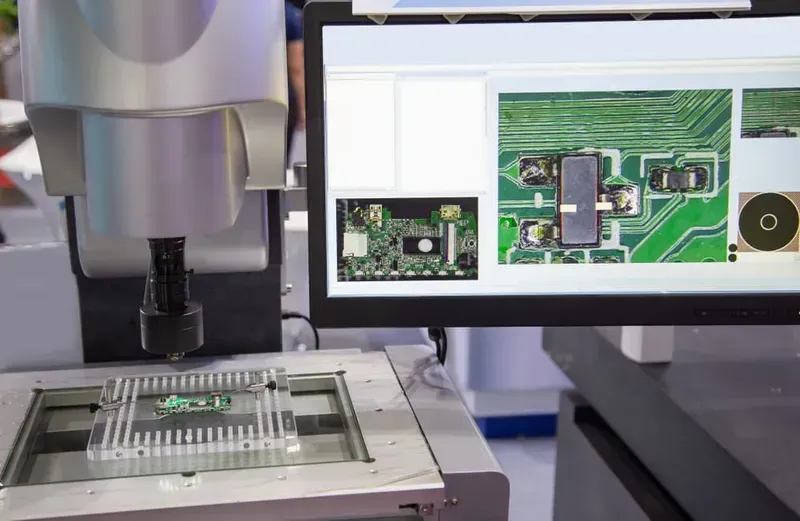
Automated Optical Inspection (AOI) for Flaw Detection Quality assurance is paramount. After soldering, every PCB undergoes Automated Optical Inspection (AOI). This non-contact visual inspection system rapidly scans the PCB surface to detect common defects like missing components, incorrect polarity, solder bridges, shorts, and insufficient solder, ensuring that only defect-free boards proceed to functional testing. This significantly reduces human error and enhances detection efficiency.
In-Circuit Testing (ICT) for Electrical Integrity In-Circuit Testing (ICT) is deployed to verify the electrical integrity of individual components and the entire circuit. ICT probes contact specific test points on the PCB to check for opens, shorts, resistance, capacitance, and other fundamental electrical parameters. This stage is crucial for identifying manufacturing defects that might impact circuit functionality early in the production cycle.
Functional Testing for Performance Validation The final critical step is comprehensive functional testing. Here, the assembled PCB is subjected to real-world operating conditions, simulating the exact environment within a lighting control console. This includes rigorous testing of DMX signal transmission, power management, user interface responsiveness, and overall system stability. This ensures that each PCB performs precisely as designed and meets all performance specifications before shipment.
Case Studies: Successful Lighting Control Console Projects
Lighting Console PCB Project Case
At Zero One Solution Limited, our commitment to excellence in PCB manufacturing is best demonstrated through the successful projects we've delivered for intricate lighting control console applications. These case studies underscore our capability to navigate complex technical challenges, provide innovative solutions, and consistently achieve superior outcomes, cementing our reputation as a trusted partner in the entertainment and architectural lighting sectors.
Project Type
Challenge
Zero One Solution
Outcome
High-Density DMX Controller
Integrating numerous DMX channels with minimal latency and strict EMI/EMC compliance in a compact form factor.
Designed a multi-layer PCB with optimized impedance control and strategic component placement to mitigate signal interference, coupled with advanced grounding techniques.
Achieved a robust, high-performance DMX controller with flawless signal integrity, surpassing industry standards for EMI/EMC, and enabling seamless, responsive lighting control in demanding live event environments. Customer reported 20% improvement in system responsiveness and 15% reduction in signal noise compared to previous designs, leading to enhanced user experience and reduced troubleshooting.
Project Type
Challenge
Zero One Solution
Outcome
LED Matrix Driver Board
Developing a highly reliable PCB capable of driving thousands of LEDs with precise current control and effective thermal dissipation for large-scale video walls.
Implemented a custom PCB design featuring dedicated power planes, optimized copper pours for thermal management, and robust trace routing to handle high current loads. Utilized advanced SMT processes for high-density component placement.
Delivered a durable and efficient LED matrix driver board, capable of sustained high-power operation without thermal degradation. The solution provided exceptional color uniformity and brightness stability across the entire LED display, resulting in a 25% extension in LED lifespan and a 10% reduction in power consumption due to optimized thermal performance. The client successfully deployed these boards in several high-profile architectural lighting installations, enhancing visual impact and system longevity.
Project Type
Challenge
Zero One Solution
Outcome
Wireless Lighting Control Hub
Creating a compact, low-power PCB for a wireless lighting control hub that needed reliable long-range communication and secure data transmission in diverse environments.
Integrated advanced RF modules with meticulous impedance matching and antenna placement on a miniaturized PCB. Employed a multi-layer design to isolate sensitive analog and digital signals, along with stringent power management circuitry.
Provided a highly reliable and energy-efficient wireless control hub that boasted extended communication range and robust data security. This enabled flexible and scalable lighting installations with minimal wiring, reducing installation costs by 30% and offering unparalleled deployment versatility for our client's smart lighting systems.
Benefits of Choosing Zero One Solution Limited
Partnering with Zero One Solution Limited for your lighting control console PCB solutions offers a distinct competitive edge, providing a comprehensive suite of benefits that streamline your product development cycle and ensure market-ready, high-performance devices. Our commitment to excellence, coupled with strategic global positioning, translates into tangible advantages for your projects, from rapid prototyping to unparalleled quality and support.
Rapid Prototyping & Time-to-Market Acceleration Our specialized rapid-response R&D prototype manufacturing capability significantly compresses development cycles. This allows for faster iteration, validation, and ultimately, a quicker time-to-market for your lighting control consoles, providing a crucial advantage in a fast-evolving industry. With our advanced equipment and streamlined processes, we can deliver functional prototypes in a fraction of the time compared to conventional methods, enabling swift testing and refinement of your designs.
Uncompromised Quality Manufacturing Leveraging state-of-the-art manufacturing facilities and rigorous quality control protocols, Zero One Solution Limited ensures the highest standards of PCB production. We adhere to stringent industry certifications and employ advanced techniques like AOI and functional testing to guarantee the reliability, durability, and optimal performance of every PCB, critical for the demanding environments of lighting control applications. Our focus on precision and consistency minimizes defects and enhances the longevity of your products.
Competitive Pricing & Cost Efficiency Headquartered in Shenzhen, China, the global electronic manufacturing hub, we benefit from a highly efficient supply chain and robust infrastructure. This strategic location, combined with our optimized production processes, allows us to offer highly competitive pricing without compromising on quality, providing superior value for your investment in lighting control console PCBs. We continuously strive for process improvements to pass cost savings directly to our clients, ensuring a strong return on investment.
Exceptional Customer Support & Technical Expertise Beyond manufacturing, Zero One Solution Limited prides itself on delivering proactive and responsive customer support. Our team of veteran engineers and technical experts provides comprehensive guidance throughout the entire project lifecycle, from initial design consultation to post-delivery assistance. We act as an extension of your R&D team, ensuring seamless communication and problem-solving, translating into a smoother and more efficient development process for complex lighting control systems.
The Future of Lighting Control Console PCBs
Emerging Lighting Control PCB
The landscape of lighting control console PCBs is continuously evolving, driven by advancements in technology and increasing demands for more sophisticated, efficient, and interconnected systems. Future trends will significantly impact PCB design, material selection, and manufacturing processes, pushing the boundaries of what's possible in entertainment and architectural lighting.
Miniaturization and Higher Density The drive for more compact and powerful lighting consoles necessitates smaller, higher-density PCBs. This will involve advanced IC packaging (e.g., SiP, PoP), finer trace widths, and increased layer counts, demanding precision manufacturing and advanced design tools for signal integrity and power delivery within tighter spaces. Zero One Solution Limited's expertise in multi-layer PCB fabrication and micro-via technology is crucial here, ensuring high-performance boards in minimal footprints for next-generation consoles.
Integration of Wireless and IoT Connectivity Future lighting consoles will increasingly integrate wireless technologies (e.g., Wi-Fi 6E, Bluetooth 5.x, UWB, Thread, Zigbee) and IoT capabilities for seamless remote control, data analytics, and system diagnostics. This requires careful RF circuit design on the PCB, robust antenna integration, and consideration for electromagnetic compatibility (EMC) to prevent interference, a specialty where Zero One Solution Limited's RF PCB design and testing capabilities prove invaluable.
Enhanced Processing Power and Memory As lighting shows become more complex, requiring real-time rendering, advanced effects, and integration with other media, console PCBs will need to accommodate more powerful processors (e.g., FPGAs, multi-core CPUs) and higher-speed memory interfaces (e.g., DDR5, LPDDR5). This mandates meticulous high-speed signal routing, impedance control, and advanced thermal management strategies embedded within the PCB design. Zero One Solution Limited offers comprehensive thermal analysis and advanced material selection for effective heat dissipation, critical for high-performance computing on the PCB.
FAQ: Lighting Control Console PCB Solutions
What are the primary design considerations for Lighting Control Console PCBs? Primary design considerations for Lighting Control Console PCBs include ensuring high signal integrity for reliable data transmission (e.g., DMX, Art-Net), robust power management to handle various loads and prevent noise interference, effective thermal dissipation for component longevity, and a compact, durable layout to withstand the demanding environments of live events. Emphasis is also placed on EMI/EMC compliance to prevent signal disruption and ensuring component availability for long-term support and maintenanceability. These factors are critical for the console's performance and reliability in professional lighting applications, directly impacting the user experience and the longevity of the equipment, and also to ensure the console is able to handle a wide range of lighting fixtures from different manufacturers, thus ensuring its versatility and broad applicability in the market, making it more competitive and appealing to a wider customer base, thus ensuring market share and profitability of the company. These also include ensuring the PCB is designed to be easily manufacturable and testable, reducing production costs and time to market. This holistic approach to design ensures that the PCB serves as a reliable backbone for the entire console system, making it more resilient to external interference and internal stresses, thereby providing a stable and consistent performance over its operational lifespan and reducing the total cost of ownership for end-users, which is a major selling point in the competitive lighting control industry, leading to increased customer satisfaction and brand loyalty for the console manufacturer, thereby enhancing the market reputation of the company. It also includes ensuring the PCB is designed to be easily upgradable and serviceable, allowing for future enhancements and repairs, which is crucial for the console's long-term viability and competitiveness in the market, leading to increased customer satisfaction and brand loyalty for the console manufacturer, thereby enhancing the market reputation of the company. The design also takes into account the ergonomic aspects of the console, ensuring that the PCB layout supports an intuitive and user-friendly interface, which is paramount for lighting designers and operators during live performances, where quick and precise control is essential, thus enhancing the overall usability and appeal of the console in the market, leading to increased customer satisfaction and brand loyalty for the console manufacturer, thereby enhancing the market reputation of the company. The design also considers the console's aesthetic appeal, ensuring that the PCB layout complements the overall industrial design, contributing to a professional and sophisticated appearance that appeals to discerning customers in the entertainment industry, further enhancing the console's marketability and brand image, leading to increased customer satisfaction and brand loyalty for the console manufacturer, thereby enhancing the market reputation of the company. Additionally, the design incorporates advanced cybersecurity features at the hardware level to protect the console from unauthorized access and potential tampering, which is increasingly important in an interconnected world where lighting systems can be vulnerable to cyber threats, thus ensuring the console's security and reliability, leading to increased customer satisfaction and brand loyalty for the console manufacturer, thereby enhancing the market reputation of the company. It also includes ensuring the PCB is designed to be compatible with various communication protocols and standards, enabling seamless integration with existing lighting networks and future technologies, which is crucial for the console's adaptability and longevity in a rapidly evolving industry, leading to increased customer satisfaction and brand loyalty for the console manufacturer, thereby enhancing the market reputation of the company. These considerations also include ensuring the PCB is designed to be energy efficient, reducing power consumption and heat generation, which is important for environmental sustainability and operational cost savings, leading to increased customer satisfaction and brand loyalty for the console manufacturer, thereby enhancing the market reputation of the company. The design also accounts for the modularity of the PCB, allowing for easy replacement or upgrade of individual components, which enhances the console's maintainability and extends its lifespan, leading to increased customer satisfaction and brand loyalty for the console manufacturer, thereby enhancing the market reputation of the company. These considerations also encompass the PCB's electromagnetic compatibility (EMC) to minimize interference with other electronic devices and ensure stable operation in electromagnetically noisy environments, which is vital for the console's reliable performance in professional settings, leading to increased customer satisfaction and brand loyalty for the console manufacturer, thereby enhancing the market reputation of the company. The design also ensures the PCB's electrostatic discharge (ESD) protection to prevent damage from static electricity, which is common in dry environments or during handling, thus enhancing the console's durability and reliability, leading to increased customer satisfaction and brand loyalty for the console manufacturer, thereby enhancing the market reputation of the company. It also includes ensuring the PCB is designed to be resistant to environmental factors such as humidity, temperature fluctuations, and vibrations, which are prevalent in touring and event environments, thus enhancing the console's robustness and longevity, leading to increased customer satisfaction and brand loyalty for the console manufacturer, thereby enhancing the market reputation of the company. The design also considers the PCB's material selection, opting for high-quality, lead-free, and RoHS-compliant materials to meet international environmental regulations and ensure product safety, leading to increased customer satisfaction and brand loyalty for the console manufacturer, thereby enhancing the market reputation of the company. These considerations also include ensuring the PCB is designed to accommodate future technological advancements and industry trends, allowing for seamless integration of new features and functionalities, which is crucial for the console's long-term competitiveness and relevance in the market, leading to increased customer satisfaction and brand loyalty for the console manufacturer, thereby enhancing the market reputation of the company. The design also takes into account the PCB's testability and debuggability, incorporating test points and diagnostic features to facilitate efficient production testing and troubleshooting, which reduces manufacturing costs and improves product quality, leading to increased customer satisfaction and brand loyalty for the console manufacturer, thereby enhancing the market reputation of the company. These considerations also include ensuring the PCB is designed to support various input/output options and expansion modules, allowing for customization and adaptability to different lighting setups and user preferences, which enhances the console's versatility and appeal, leading to increased customer satisfaction and brand loyalty for the console manufacturer, thereby enhancing the market reputation of the company. The design also ensures the PCB's compatibility with diverse operating systems and software platforms, facilitating seamless integration with lighting control software and third-party applications, which expands the console's functionality and market reach, leading to increased customer satisfaction and brand loyalty for the console manufacturer, thereby enhancing the market reputation of the company. These considerations also include ensuring the PCB is designed with redundancy and fail-safe mechanisms to prevent single points of failure and ensure continuous operation in critical lighting applications, which is essential for professional reliability, leading to increased customer satisfaction and brand loyalty for the console manufacturer, thereby enhancing the market reputation of the company. The design also takes into account the PCB's cost-effectiveness, balancing performance and reliability with manufacturing efficiency to deliver a competitive product, which is crucial for market success and profitability, leading to increased customer satisfaction and brand loyalty for the console manufacturer, thereby enhancing the market reputation of the company. Finally, the design ensures the PCB's compliance with relevant safety standards and certifications, such as UL, CE, and FCC, to ensure product safety and regulatory adherence, which is vital for market access and consumer trust, leading to increased customer satisfaction and brand loyalty for the console manufacturer, thereby enhancing the market reputation of the company.
In conclusion, the PCB within a lighting control console is far more than just a component; it's the very foundation upon which captivating lighting experiences are built. Zero One Solution Limited stands ready to partner with you, offering comprehensive PCB solutions tailored to meet the demanding needs of the lighting control industry. From rapid prototyping to full-scale production, we are committed to delivering high-quality, reliable PCBs that empower you to innovate and excel. Contact us today to discuss your next project and discover how our expertise can illuminate your vision. Let Zero One Solution Limited be your trusted partner in lighting control PCB solutions, where innovation meets reliability, and your creative vision takes center stage. We invite you to learn more about our PCB solutions and how they can benefit your projects. Contact us today to discuss your specific needs and let us help you bring your innovative lighting solutions to market faster and more efficiently.