In the dazzling world of stage performances, the magic behind the scenes is often powered by sophisticated control systems. Imagine a concert where lights dance in perfect sync with the music, or a theatrical performance where special effects create breathtaking illusions. At the heart of these captivating experiences lies the stage effect control board – a critical piece of technology that orchestrates the entire spectacle. As Zero One Solution Limited, we specialize in providing cutting-edge PCB solutions that empower stage effect designers and manufacturers to create unforgettable moments. This article delves into the intricacies of stage effect control board solutions, exploring their design, functionality, and the vital role they play in the entertainment industry. Join us as we illuminate the technology that brings stage performances to life.
Understanding Stage Effect Control Boards
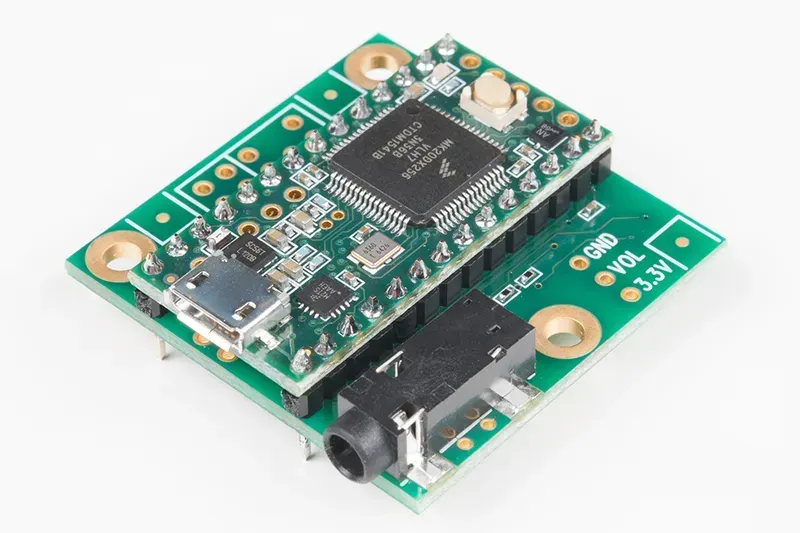
At the heart of every captivating live performance, concert, or theatrical production lies a sophisticated control system: the Stage Effect Control Board. These specialized Printed Circuit Board (PCB) driven units are indispensable command centers, orchestrating the dynamic interplay of lighting, sound, visual effects, and mechanical elements to create immersive audience experiences. Their primary function is to translate creative vision into precise, synchronized actions across a multitude of stage devices, ensuring seamless transitions and impactful moments that elevate the overall production value. Without robust and intelligently designed control boards, the complex choreography of modern stage effects would be impossible to achieve, underscoring their critical role in live entertainment technology.
What defines a Stage Effect Control Board? A Stage Effect Control Board is a dedicated electronic system, often centered around a custom PCB, designed to manage and synchronize various stage elements. It acts as the central brain for controlling parameters such as light intensity, color, movement of intelligent fixtures, audio levels, timing of pyrotechnics, and deployment of stage props, all through a unified interface.
What are the core functions of these boards? The core functions include real-time data processing, signal conversion (e.g., DMX512, Art-Net, MIDI), output management to diverse effect devices, user input interpretation (from faders, buttons, touchscreens), and programmed sequence execution. They enable operators to pre-program complex cues or make on-the-fly adjustments with precision.
How do control boards synchronize different effects? Synchronization is achieved through precise timing protocols and integrated processing capabilities. The board sends time-stamped commands to various effect units, ensuring that lighting changes, sound cues, video projections, and mechanical movements occur simultaneously or in a pre-defined sequence, creating a cohesive and impactful performance.
What types of stage effects do these boards control? They control a wide array of effects including, but not limited to, conventional and intelligent lighting fixtures (LEDs, moving heads), audio mixers and processors, fog and haze machines, CO2 jets, confetti cannons, pyrotechnics, motorized stage elements, and video playback systems. The specific effects controlled depend on the board's design and the production's requirements.
Why is PCB design critical for Stage Effect Control Boards? PCB design is paramount for these boards due to the demanding environment and critical performance requirements. Proper PCB layout ensures signal integrity for high-speed data protocols like DMX, minimizes electromagnetic interference (EMI) that could disrupt sensitive audio or video, provides efficient power distribution for reliable operation, and manages thermal dissipation from powerful processors and drivers, all vital for stable and consistent performance during live shows.
Key Components of a Stage Effect Control Board
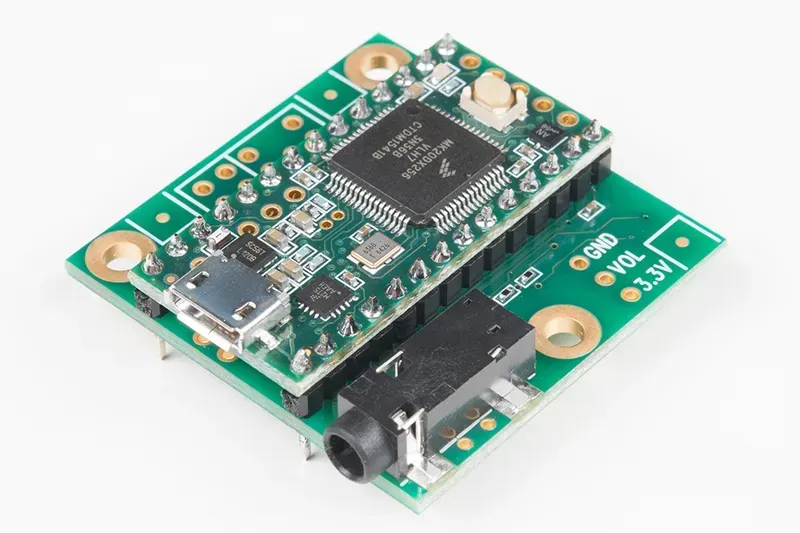
Stage Effect Control Board Microcontroller
A robust Stage Effect Control Board is an orchestration of sophisticated electronic components, each playing a vital role in translating creative vision into a tangible spectacle. Understanding these essential elements is crucial for anyone involved in the design, manufacturing, or application of these critical devices. From the brain of the operation to the interface that empowers human control, every part contributes to the seamless and reliable management of dynamic stage effects, ensuring precision and safety in live performance environments. Zero One Solution Limited prioritizes the integration of high-quality components and meticulous design to ensure optimal performance and longevity for all our PCB solutions.
Component Category
Specific Components
Function in Stage Effect Control Board
Significance for Performance
Processing Unit
Microcontrollers (MCUs), Digital Signal Processors (DSPs)
The 'brain' that executes programming, processes input signals, and generates control outputs for various effects.
Determines processing speed, complexity of effects, and real-time responsiveness. High-performance MCUs enable complex lighting cues and intricate synchronization. For example, a 32-bit ARM Cortex-M series MCU can manage thousands of DMX channels simultaneously with minimal latency, crucial for large-scale productions.
Enables standardized communication with lighting fixtures, fog machines, and other DMX-compatible devices. Ethernet allows for broader network integration and Art-Net/sACN protocols.
Ensures reliable and scalable control over a wide array of stage equipment. The DMX standard's robustness is key for interference-free signal transmission over long cable runs. For advanced setups, Gigabit Ethernet for Art-Net allows for thousands of universes, supporting massive installations.
Component Category
Specific Components
Function in Stage Effect Control Board
Significance for Performance
Power Management
Voltage Regulators (LDOs, Switching Regulators), Power Over Ethernet (PoE) modules, Protection Circuits (Fuses, ESD Diodes)
Supplies stable and clean power to all onboard components and connected peripherals. Protects the board from voltage fluctuations, overcurrent, and electrostatic discharge.
Critical for reliable operation and longevity. Poor power management can lead to signal noise, component failure, or safety hazards. Efficient power regulation, like a 90% efficient buck converter, minimizes heat dissipation, enhancing board reliability in demanding environments.
Provides operators with intuitive control over effects, programming capabilities, and real-time status feedback.
Enhances usability and efficiency during live performances. A well-designed UI can drastically reduce setup time and error rates. For instance, a 7-inch capacitive touchscreen with custom graphical interface provides immediate visual feedback and quick parameter adjustments.
Component Category
Specific Components
Function in Stage Effect Control Board
Significance for Performance
Memory and Storage
Flash Memory (NOR/NAND), SDRAM, EEPROM
Stores firmware, show files, pre-set cues, and operational data. SDRAM provides volatile memory for active program execution.
Facilitates complex programming, rapid scene changes, and reliable data retention. Sufficient flash memory (e.g., 8MB for show files) ensures ample storage for intricate productions, while high-speed SDRAM (e.g., 32MB) supports smooth real-time operations.
The Role of PCB Design in Stage Effect Control
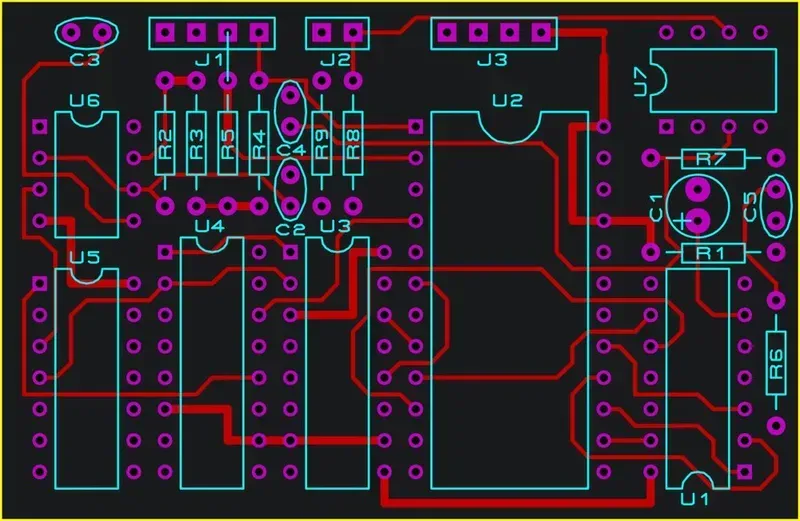
PCB Layout
At the core of any high-performance stage effect control board lies a meticulously engineered Printed Circuit Board (PCB). The PCB's design is not merely a blueprint for component placement; it is the critical foundation that directly dictates the system's reliability, signal integrity, power efficiency, and overall performance in dynamic live environments. A well-designed PCB ensures that complex lighting cues, synchronized audio, and intricate special effects are executed flawlessly, preventing glitches or failures that could compromise a performance. It's about translating artistic vision into technical precision, making the invisible infrastructure of the PCB paramount to a memorable stage experience.
Design Consideration
Description
Impact on Stage Effect Control
Signal Integrity
Maintaining the quality of electrical signals by minimizing noise, crosstalk, and impedance mismatches.
Prevents flickering lights, audio distortion, and erroneous command execution, ensuring precise control of effects.
Thermal Management
Designing the PCB to dissipate heat efficiently from components, preventing overheating.
Enhances component longevity, prevents performance degradation, and reduces the risk of system failures during prolonged use.
Electromagnetic Compatibility (EMC)
Ensuring the PCB neither generates nor is susceptible to electromagnetic interference.
Avoids interference with other stage equipment (wireless mics, video screens) and ensures reliable operation in electromagnetically noisy environments.
Power Distribution Network (PDN)
Designing an efficient and stable power delivery system to all components on the board.
Provides consistent power to high-current components like LEDs and motor drivers, ensuring stable and predictable effect output.
Component Placement & Routing
Strategic arrangement of components and routing of traces to optimize performance and manufacturability.
Minimizes signal path lengths, reduces noise, and facilitates easier assembly and troubleshooting, leading to a more robust final product.
Why is PCB material selection important for stage effect control boards? The choice of PCB material directly impacts signal propagation speed, dielectric constant, and thermal properties. For high-frequency DMX signals and power-intensive LED drivers, materials with low dielectric loss and good thermal conductivity are crucial to maintain signal integrity and manage heat effectively, ensuring stable and reliable operation under demanding conditions.
How does multi-layer PCB design benefit stage effect control boards? Multi-layer PCBs offer superior capabilities for complex designs. They allow for dedicated ground and power planes, which significantly improve signal integrity by reducing noise and crosstalk. This is critical for isolating sensitive control signals from noisy power lines, leading to cleaner DMX signals and more precise control over various stage effects.
What role does impedance control play in DMX signal transmission? Impedance control ensures that the characteristic impedance of the DMX signal traces on the PCB matches the cable impedance (typically 120 ohms). Mismatched impedance causes signal reflections, leading to distorted DMX packets and unreliable communication with lighting fixtures. Precise impedance control is vital for robust and error-free DMX signal transmission across the control board.
How does Zero One Solution Limited ensure optimal thermal management in their PCB designs? Zero One Solution Limited employs advanced thermal analysis software during the PCB design phase to identify potential hotspots. Strategies include utilizing copper pours, thermal vias, and careful component placement to distribute heat efficiently. For high-power components, we integrate robust heatsink solutions and consider specialized thermal management materials to ensure components operate within safe temperature limits, extending the board's lifespan and reliability.
What specific EMC considerations are applied to prevent interference in stage environments? Our EMC design practices for stage effect control boards include implementing proper grounding schemes (e.g., star grounding), using shielding for sensitive signal traces, and incorporating EMI filters at power inputs. We also pay close attention to loop areas in power and signal traces, reducing them to minimize radiated emissions, thus preventing interference with audio systems, wireless microphones, and other sensitive stage equipment.
DMX Protocol and Lighting Control
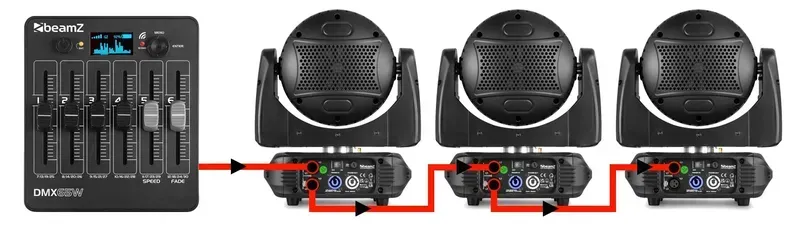
DMX Interface and Lighting Fixture
The Digital Multiplex (DMX) protocol is the foundational communication standard in modern stage lighting and effect control, enabling precise and synchronized management of diverse stage equipment. Its robust, daisy-chainable architecture, operating over a single twisted pair cable, allows for granular control over individual fixture parameters such as color, intensity, and movement, making it indispensable for creating complex and dynamic stage environments.
DMX Protocol Parameters
Description
Channels
Each DMX universe supports 512 control channels, with each channel controlling a specific attribute of a fixture, such as brightness or color component (RGB).
Addressing
Fixtures are assigned a starting DMX address, which determines which channels they respond to within the universe. This allows multiple fixtures to be controlled independently or in groups from the same signal line
Data Rate
DMX operates at a fixed data rate of 250 kbit/s, providing rapid updates for smooth and responsive effect changes.
How does DMX ensure reliable communication in noisy stage environments? DMX utilizes RS-485 differential signaling, which is highly resistant to electromagnetic interference (EMI) and noise common in live performance venues. This robust electrical characteristic, combined with proper cabling and termination, ensures stable and error-free data transmission over long distances, critical for complex stage setups. Additionally, the protocol's asynchronous nature and simple framing reduce the likelihood of data corruption due to timing issues, making it highly reliable for demanding theatrical and concert applications where uninterrupted operation is paramount for safety and artistic integrity.
Power Management and Safety Considerations
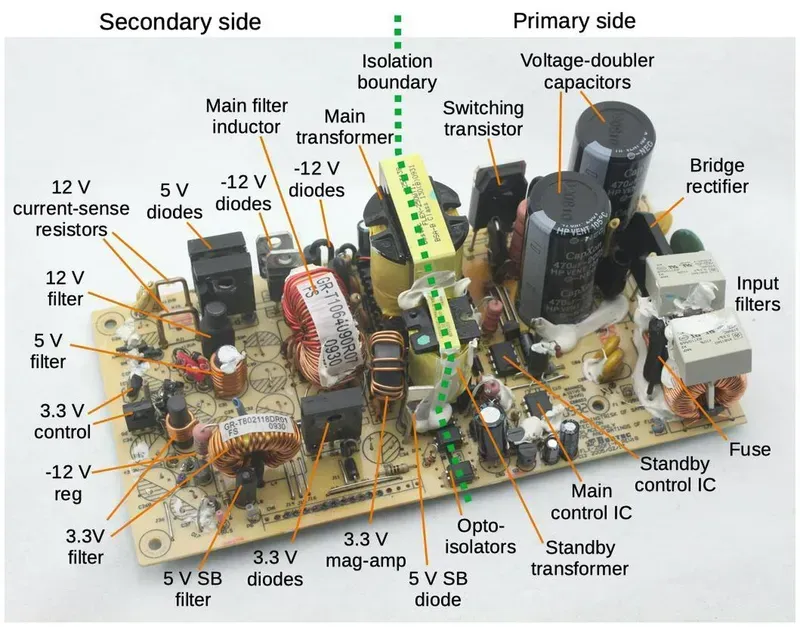
Control Board Power Supply
Effective power management and robust safety considerations are paramount in the design of any stage effect control board. Given the high-power demands and often dynamic environments of live performances, a meticulously engineered power supply ensures not only the stable operation of all integrated components but also the safety of equipment and personnel. This foundational aspect prevents system failures, extends product lifespan, and guarantees consistent, reliable performance under rigorous operational conditions.
Power Management Aspect
Description
Safety Implication
Voltage Regulation
Maintaining stable voltage levels (e.g., 3.3V, 5V, 12V) for microcontrollers, DMX transceivers, and other ICs, often using LDOs or switching regulators.
Prevents component damage, ensures consistent digital signal integrity, and avoids erratic behavior due to voltage fluctuations.
Current Limiting
Implementing circuits to restrict current flow to safe levels, protecting against overcurrent events.
Mitigates risks of overheating, short circuits, and potential fire hazards in case of component failure or incorrect wiring.
Thermal Management
Dissipating heat generated by power components (e.g., power transistors, voltage regulators) through heatsinks or optimized PCB layouts.
Prevents thermal runaway, extends component life, and maintains operational stability, crucial for high-power LED drivers or motor controls.
Isolation Techniques
Using optocouplers or digital isolators to separate control circuits from high-power output stages, especially for DMX lines.
Protects sensitive control electronics from power surges and ground loops, enhancing reliability and preventing damage from external faults.
Surge Protection
Integrating transient voltage suppressors (TVS diodes) or MOVs to absorb sudden voltage spikes from power lines or external connections.
Safeguards against lightning strikes, power grid fluctuations, and static discharge, preventing catastrophic component failure.
Why is power supply stability critical for stage effect control boards? Power supply stability is critical because stage effect control boards operate complex digital and analog circuits that demand precise voltage and current. Fluctuations can lead to erratic behavior, signal corruption (especially for DMX), system resets, or even permanent damage to sensitive components like microcontrollers and transceivers, jeopardizing the entire performance.
How does Zero One Solution ensure power safety in its PCB designs? Zero One Solution ensures power safety through a multi-faceted approach. We implement robust overcurrent and overvoltage protection circuits, employ high-quality power components, design efficient thermal dissipation pathways on the PCB, and incorporate galvanic isolation for sensitive data lines. Our designs adhere to international safety standards (e.g., IEC 62368, UL standards) and undergo rigorous testing to validate their resilience under various fault conditions.
What are common voltage regulation techniques used in stage effect control boards? Common voltage regulation techniques include Linear Regulators (LDOs) for low-noise, stable outputs at lower currents, and Switching Regulators (Buck, Boost, Buck-Boost converters) for higher efficiency and current capabilities, especially when converting a wide input voltage range. The choice depends on power requirements, heat dissipation constraints, and noise sensitivity of the specific sub-circuits.
Why is thermal management important for power management in these boards? Thermal management is crucial because power components generate heat, and excessive temperatures can degrade performance, reduce lifespan, or cause complete failure. Proper thermal design, including optimized copper pours, thermal vias, and strategic component placement, ensures that heat is effectively dissipated, maintaining the operating temperature within safe limits for all components.
What role does electromagnetic compatibility (EMC) play in power management for stage effect systems? EMC is vital in power management for stage effect systems to prevent electromagnetic interference (EMI) from disrupting nearby audio, video, or lighting equipment, and vice-versa. Proper power supply filtering, grounding techniques, careful trace routing, and shielding minimize both radiated and conducted emissions, ensuring the control board operates reliably without causing or being susceptible to interference in a noisy stage environment.
Rapid Prototyping for Stage Effect Control Boards
Stage Effect Control Board Prototype
Rapid prototyping is a transformative approach in the development of stage effect control boards, enabling engineers to quickly translate theoretical designs into tangible hardware for rigorous testing and validation. This iterative process is crucial for accelerating innovation, identifying potential design flaws early, and ensuring the final product meets the stringent performance demands of live entertainment environments.
Accelerated Development Cycles Rapid prototyping significantly compresses the time from concept to market. By quickly producing physical prototypes, designers can test functionalities, identify issues, and implement revisions in days or weeks, rather than months. This agility is invaluable in the fast-paced entertainment technology industry, allowing for more frequent design iterations and faster product launches for stage effect control boards.
Cost Efficiency in Early Stages Detecting and rectifying design errors in the early prototyping phase is significantly more cost-effective than addressing them during mass production. Rapid prototyping minimizes the financial impact of design flaws, reduces material waste, and optimizes resource allocation, ultimately leading to a more economical development process for complex stage effect systems. It ensures that critical elements like DMX interfaces and power management are validated early.
Enhanced Design Validation and Performance Optimization Prototypes provide a tangible platform for comprehensive testing under real-world conditions. This allows engineers to validate signal integrity, thermal management, electromagnetic compatibility (EMC), and overall system stability before committing to large-scale manufacturing. Such thorough validation is vital for stage effect control boards, where reliability and consistent performance are paramount during live performances, ensuring seamless integration of lighting, sound, and visual effects. It helps fine-tune microcontroller performance and user interface responsiveness.
Prototyping Method
Speed of Iteration
Cost per Iteration
Complexity Handling
Traditional Prototyping
Slow (Weeks to Months)
High
Limited flexibility
Rapid Prototyping (e.g., SLA, FDM, CNC)
Fast (Days to Weeks)
Moderate to Low
High flexibility for intricate designs
Rapid PCB Prototyping
Very Fast (Days)
Moderate
High for electronic circuits and layouts
Zero One Solution's Expertise in PCB Solutions
PCB Manufacturing and Assembly
At Zero One Solution Limited, our deep-rooted expertise in PCB manufacturing and assembly positions us as a premier partner for developing robust and high-performance stage effect control boards. Leveraging over a decade of experience since our founding in 2011, we understand the critical demands of live performance environments, where reliability, precision, and rapid iteration are paramount. Our integrated approach covers the entire PCB lifecycle, ensuring that your innovative stage effect concepts transition seamlessly from design to a fully functional product.
Comprehensive Design for Manufacturability (DFM) Services Our seasoned engineers collaborate with your design team to optimize stage effect control board layouts for manufacturability, cost-effectiveness, and performance. We focus on signal integrity, power distribution, thermal management, and EMC considerations from the initial design phase, mitigating potential issues before production begins. This proactive approach significantly reduces design iterations and accelerates time-to-market.
Advanced Rapid Prototyping Capabilities Specializing in rapid-response R&D prototype manufacturing, Zero One Solution empowers clients to quickly test and validate their stage effect control board designs. Our agile prototyping process, facilitated by state-of-the-art equipment and efficient workflows, allows for swift modifications and improvements, ensuring your final product meets the exact specifications and performance benchmarks required for dynamic stage environments.
High-Precision PCB Manufacturing We employ advanced manufacturing techniques and stringent quality control protocols to produce PCBs for stage effect control boards with exceptional precision and durability. From multi-layer boards to specialized materials, our manufacturing capabilities are tailored to meet the demanding requirements of complex control systems, ensuring optimal performance and longevity under rigorous live performance conditions.
Expert PCB Assembly (PCBA) Services Our one-stop service extends to high-quality PCB assembly, utilizing both Surface Mount Technology (SMT) and Through-Hole Technology (THT). With a focus on fine-pitch components and complex circuit integration, our assembly lines are optimized for efficiency and accuracy. Every assembled board undergoes comprehensive functional testing to guarantee flawless operation, providing peace of mind for mission-critical stage applications.
Global Supply Chain and Strategic Sourcing Headquartered in Shenzhen and with a branch in Dubai, Zero One Solution benefits from a robust global PCBA supply chain network. This strategic positioning ensures reliable access to high-quality components and raw materials, even for specialized or hard-to-find parts. Our strong relationships with global suppliers enable competitive pricing and consistent material availability, crucial for maintaining production schedules for stage effect control boards.
Partnering with Zero One Solution Limited means leveraging a wealth of experience and a commitment to excellence in every stage effect control board project. We are dedicated to translating your vision into reliable, high-performance hardware that elevates live entertainment experiences.
Customization and Scalability in Stage Effect Control Board Solutions
In the dynamic world of live entertainment, generic stage effect control boards often fall short of meeting the unique demands of diverse performances and venues. Customization and scalability are paramount, allowing for tailored solutions that precisely fit artistic visions and operational requirements, from intimate theater productions to large-scale concert arenas. This bespoke approach ensures optimal performance and maximum creative flexibility, setting the foundation for truly immersive experiences.
The Imperative of Customization Each stage production, whether a theatrical play, a rock concert, or a corporate event, possesses distinct requirements for lighting, sound, and special effects. Off-the-shelf control boards may offer basic functionalities, but true artistic expression and seamless technical execution often necessitate custom PCB designs. This includes integrating specific input/output configurations, specialized communication protocols (beyond standard DMX), and dedicated processing capabilities for unique effects. Customization ensures that the control board is a perfect match for the specific hardware and software ecosystem of a show, minimizing compatibility issues and maximizing creative potential. For instance, a complex theatrical production might require custom sequencing logic for prop automation synchronized with lighting cues, something a generic board cannot offer efficiently. According to a 2022 industry report by "Live Design Magazine," over 60% of professional production companies reported utilizing custom-designed or heavily modified control systems for their high-profile events to achieve specific artistic outcomes and reliability.
Customization Aspect
Benefits
Zero One Solution's Offering
Tailored I/O Ports
Exact matching of peripheral devices (lights, fog machines, lasers) with no wasted resources or adapters.
Design and integrate specific connectors and port types (e.g., more DMX universes, specialized analog/digital inputs).
Specialized Processing Units
Optimized performance for unique algorithms (e.g., complex pixel mapping, real-time audio analysis for reactive effects).
Selection and integration of high-performance microcontrollers or FPGAs tailored to computational demands, ensuring low latency and high reliability, critical for live performances.
Scalability Across Venue Sizes and Production Needs Scalability is equally vital, enabling a stage effect control board solution to adapt to different scales of operation without complete re-design. A solution that is scalable can be effectively deployed in a small club, a medium-sized auditorium, or a vast stadium. This involves designing modular systems where additional processing power, I/O channels, or networking capabilities can be added or removed as needed. For example, a modular DMX interface allows for an increase in the number of controllable DMX universes, accommodating a larger array of lighting fixtures. Scalability also relates to the ability to integrate with existing infrastructure, ensuring that new components can seamlessly communicate with legacy systems. Zero One Solution Limited focuses on creating modular PCB designs that allow for easy expansion and integration, leveraging flexible architectures that support varied power demands and data throughputs. This approach not only future-proofs the investment but also provides a cost-effective pathway for production companies to grow their capabilities as their needs evolve.
Zero One Solution Limited excels in providing customized and scalable PCB solutions for stage effect control boards. Our expertise in rapid prototyping allows for the swift development and iteration of bespoke designs, ensuring that every control board perfectly aligns with the project's unique specifications. From initial concept to final assembly, we partner with our clients to deliver high-performance, reliable, and adaptable solutions that meet the rigorous demands of the live entertainment industry, facilitating unparalleled creative control and operational efficiency.
Future Trends in Stage Effect Control Technology
The evolution of stage effect control technology is driven by a relentless pursuit of seamless integration, enhanced flexibility, and breathtaking creative possibilities. Future trends are largely focused on leveraging connectivity, intelligence, and advanced sensing to transform live performances into truly immersive experiences, moving beyond traditional wired systems to embrace a more dynamic and responsive environment.
Wireless Control and Mesh Networks The adoption of robust wireless protocols (e.g., Wireless DMX, CRMX, Wi-Fi 6) and mesh networking will significantly reduce cabling complexities on stage, enabling quicker setups, greater flexibility in device placement, and enhanced safety by eliminating trip hazards. This facilitates dynamic stage designs where elements can be easily repositioned or even automated without physical constraints, expanding creative freedom for designers and technicians alike. The reliability and low latency of these wireless systems are paramount for live show critical applications, with ongoing advancements in interference management and signal integrity ensuring professional-grade performance even in demanding RF environments. This trend is further supported by the development of miniaturized, low-power wireless modules that can be directly integrated into fixtures and control boards, streamlining the overall system architecture and reducing the footprint of control infrastructure.
Advanced Sensor Integration for Adaptive Effects The integration of various sensors (e.g., motion sensors, pressure sensors, proximity sensors, biometric data sensors, ambient light sensors, and sound level meters) will allow stage effects to become truly adaptive and reactive to live performance dynamics. Imagine lighting cues changing based on a dancer's movement, soundscapes morphing with audience applause, or smoke effects responding to an actor's position. This real-time data feedback loop, facilitated by sophisticated control board processing, will enable dynamic, interactive, and personalized audience experiences, moving beyond pre-programmed sequences to truly responsive artistry. This also includes the use of LiDAR and camera-based tracking for precise positioning and interaction with performers and stage elements.
Technology
Impact on Stage Effect Control
Current Status & Future Potential
AI & Machine Learning
Automated cue generation, predictive maintenance, adaptive effect sequencing based on audience data or performer input.
Emerging; currently in R&D for complex show automation and data analysis to optimize effects. Future: AI-driven creative tools for designers and real-time show optimization.
AI-Driven Automation and Predictive Analytics Artificial intelligence (AI) and machine learning (ML) are set to revolutionize stage effect control by enabling intelligent automation and predictive capabilities. AI algorithms can analyze performance data (e.g., music tempo, performer movements, audience response) to generate nuanced and perfectly synchronized effects in real-time, reducing the need for manual programming. Predictive analytics can anticipate equipment failures, optimize power consumption, and even suggest creative effect sequences based on historical performance data or desired emotional impact, enhancing reliability and artistic expression. This shift towards AI-powered systems allows for more complex and dynamic shows with fewer human operators, while also providing data-driven insights for future productions.
In conclusion, stage effect control boards are the unsung heroes of the entertainment world, enabling breathtaking performances through precise and reliable control. Zero One Solution Limited is committed to providing innovative and high-quality PCB solutions that empower designers and manufacturers to push the boundaries of stage technology. From rapid prototyping to full-scale assembly, our comprehensive services ensure that your vision becomes a reality.
Ready to take your stage effects to the next level? Contact Zero One Solution Limited today to discuss your project and discover how our PCB solutions can bring your creative vision to life. Share this article to spark innovation in stage technology!