Magnetic Resonance Imaging (MRI) Control Board Solution
2025.07.30
In the rapidly evolving landscape of medical technology, Magnetic Resonance Imaging (MRI) stands as a cornerstone of modern diagnostics, offering unparalleled insights into the human body. At the heart of every sophisticated MRI system lies a complex, high-precision control board, orchestrating the intricate dance of magnetic fields and radio waves. For medical device manufacturers, the reliability, accuracy, and speed of developing these critical components are paramount. Zero One Solution Limited, a leader in rapid-response PCB assembly solutions since 2011, understands these demands. How can you ensure your next-generation MRI systems are built on a foundation of uncompromised electronic excellence? This article delves into how our specialized MRI control board solutions can empower your innovation.
The Critical Role of MRI Control Boards
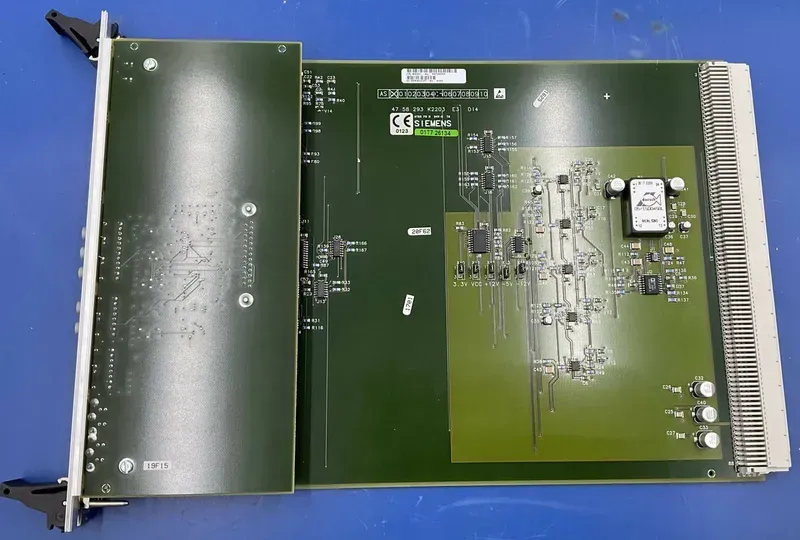
MRI Machine Control Board
The control board is the undeniable central nervous system of any Magnetic Resonance Imaging (MRI) machine, directly dictating its operational efficiency, image quality, and overall system stability. In the highly demanding field of medical imaging electronics, where precision is not merely a preference but an absolute necessity, the performance and reliability of these control boards are paramount. A robust MRI control board design and manufacturing process are fundamental to ensuring consistent, high-resolution diagnostic imagery, which is critical for accurate medical diagnoses and patient care. Compromises in this core component can lead to signal degradation, system instability, and ultimately, misdiagnosis, underscoring its indispensable nature within the MRI system.
Image Quality and Resolution The control board processes and coordinates the complex RF pulses and gradient magnetic fields essential for MRI image acquisition. Its precision directly impacts the signal-to-noise ratio, spatial resolution, and contrast, ultimately determining the diagnostic clarity of the images. Any inaccuracies can result in artifacts or blurred images, hindering diagnostic accuracy. A study published in "Magnetic Resonance in Medicine" (2020) highlighted that control board precision is a primary factor in achieving sub-millimeter resolution necessary for advanced clinical applications, underscoring the critical link between board quality and diagnostic output.
Key Function
Impact on MRI System
Consequence of Failure
Signal Generation & Control
Precise timing and amplitude of RF pulses and gradient fields.
Image distortion, poor resolution, system instability, and failed scans.
System Stability and Reliability An MRI control board manages a multitude of interconnected subsystems, from power delivery to data acquisition. Its ability to maintain stable operations under high electrical loads and varying environmental conditions is crucial for preventing system malfunctions and ensuring patient safety. Reliability is paramount, as MRI downtime can significantly impact healthcare operations and patient outcomes. The demanding operational cycles of MRI machines, often running 24/7 in clinical environments, necessitate a control board engineered for sustained performance and minimal failure rates. A report from the ECRI Institute (2021) identified control board failures as a leading cause of unscheduled downtime in MRI systems, directly impacting patient throughput and hospital revenue.
Key Function
Impact on MRI System
Consequence of Failure
Data Acquisition & Processing
Rapid and accurate capture, digitization, and initial processing of MR signals.
Loss of data, erroneous reconstruction, delayed diagnosis, and re-scans.
Operational Efficiency Beyond image quality, the control board influences the overall speed and efficiency of MRI scans. Optimized design allows for faster data throughput, quicker image reconstruction, and reduced scan times, which directly translates to higher patient throughput and operational cost savings for healthcare providers. Efficient control boards are essential for modern clinical settings where patient volume and rapid diagnosis are priorities. For instance, advanced control board architectures can reduce scan times by up to 20% for certain protocols, as demonstrated by leading medical device manufacturers.
Key Function
Impact on MRI System
Consequence of Failure
Power Management & Distribution
Efficient and stable power delivery to all MRI components.
Overheating, component damage, system shutdown, and safety risks.
Developing Magnetic Resonance Imaging (MRI) control boards presents a unique set of engineering challenges that demand highly specialized expertise and precision. These boards are the brain of MRI systems, tasked with generating, transmitting, and processing complex high-frequency signals while operating in a magnetically intense environment. The inherent complexities necessitate a meticulous approach to design and manufacturing to ensure uncompromised image quality, patient safety, and system reliability, making the development process significantly more demanding than typical PCB design.
Signal Integrity and High-Frequency Performance MRI control boards handle extremely high-frequency signals, which requires exceptional signal integrity. Any impedance mismatch, crosstalk, or reflections can lead to signal degradation, affecting image resolution and diagnostic accuracy. This necessitates advanced PCB material selection (e.g., low-loss laminates), precise trace routing, and controlled impedance design techniques to maintain signal fidelity up to gigahertz ranges.
Noise Reduction and Electromagnetic Compatibility (EMC) The intricate nature of MRI relies on detecting subtle magnetic resonance signals. Consequently, the control board must be designed to minimize electromagnetic interference (EMI) and radio frequency interference (RFI) to avoid corrupting these sensitive signals. Achieving stringent EMC compliance involves meticulous grounding strategies, shielding techniques, filtering, and careful component placement to prevent self-generated noise and external interference.
Power Management and Thermal Dissipation MRI systems consume significant power, and the control boards themselves generate heat. Effective power management is crucial to ensure stable voltage rails for sensitive analog and digital components, while efficient thermal dissipation is vital to prevent component degradation and system instability. This often requires multi-layer PCBs with dedicated power and ground planes, thermal vias, and integration with heat sinks or active cooling solutions to manage heat generated by high-power components.
Zero One Solution Limited: Your Partner in MRI Innovation
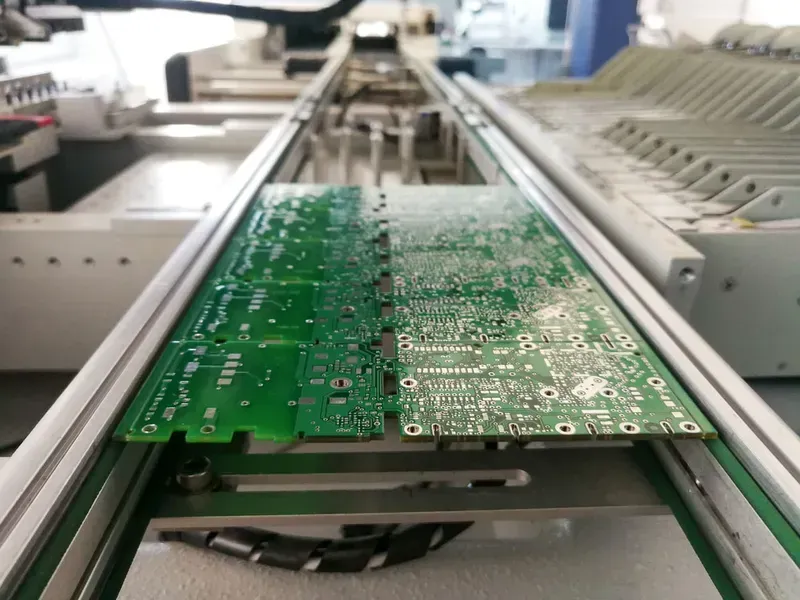
PCB Manufacturing Line
Zero One Solution Limited stands at the forefront of medical imaging electronics, offering unparalleled expertise in PCB solutions specifically tailored for Magnetic Resonance Imaging (MRI) control boards. Our integrated one-stop service, encompassing everything from initial PCB design to rapid prototyping, manufacturing, and final assembly, is meticulously engineered to empower medical device manufacturers to accelerate their product development cycles and bring groundbreaking MRI innovations to market with unmatched efficiency and reliability. We are not just a supplier; we are a strategic partner committed to translating complex medical requirements into high-performance electronic solutions.
Comprehensive One-Stop Solutions Zero One Solution Limited provides a seamless, end-to-end service for MRI control board development. This integrated approach covers every phase: initial conceptualization and PCB design, material selection, advanced manufacturing processes, and precise assembly. By consolidating these critical stages under one roof, we eliminate coordination complexities and potential bottlenecks, ensuring a streamlined development pipeline for our clients. Our expertise spans high-density interconnect (HDI) PCBs, rigid-flex PCBs, and specialized materials crucial for high-frequency and low-noise MRI applications, all delivered with an unwavering commitment to quality and precision.
Key Features of Our MRI Control Board Solutions
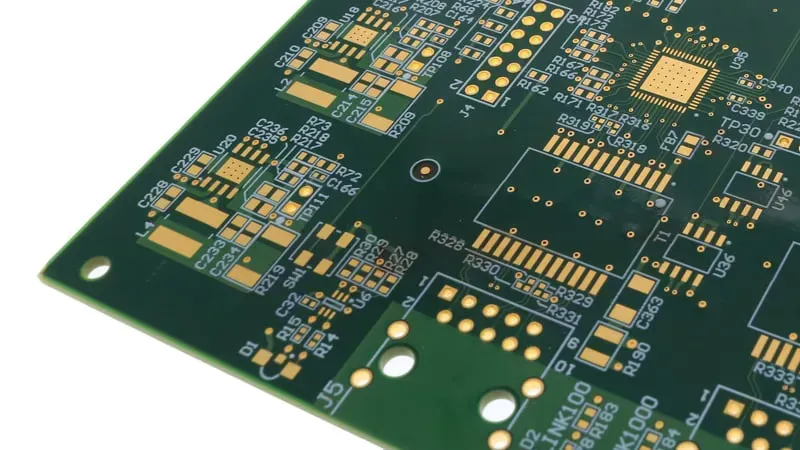
Multi-Layer PCB Close-Up
At the heart of every high-fidelity Magnetic Resonance Imaging (MRI) system lies a meticulously engineered control board, a critical component that dictates image clarity, diagnostic accuracy, and patient safety. Zero One Solution Limited's MRI control board solutions are specifically designed to meet the rigorous demands of medical imaging, incorporating advanced features that ensure unparalleled performance, reliability, and precision. Our expertise in high-frequency PCB design and manufacturing for medical imaging electronics positions us as a leader in providing robust solutions that accelerate innovation in the medical device industry.
Advanced Materials for High-Frequency Performance We utilize specialized low-loss dielectric materials, such as Rogers or similar high-frequency laminates, to minimize signal attenuation and dispersion, crucial for maintaining signal integrity at the multi-MHz frequencies characteristic of MRI systems. This ensures the accurate transmission of RF pulses and reception of subtle resonance signals, directly impacting image resolution and clarity. Our material selection process prioritizes stability across varying environmental conditions, ensuring consistent performance over the lifespan of the medical device.
Multi-Layer PCB Design for Superior Signal Integrity Our MRI control boards leverage sophisticated multi-layer PCB architectures (e.g., 10-layer or more) to optimize signal routing, minimize crosstalk, and enhance electromagnetic compatibility (EMC). Dedicated ground and power planes are strategically integrated to create clean power delivery networks (PDN) and establish robust shielding, effectively mitigating noise interference that can corrupt sensitive MRI data. This meticulous design approach safeguards the integrity of high-speed data paths and critical control signals.
Optimized Thermal Management Strategies High-density component placement and rapid signal processing generate significant heat within MRI control boards. Zero One Solution implements advanced thermal management techniques, including thermal vias, copper pours, and strategic component layout, to efficiently dissipate heat. This prevents localized hotspots, ensures operational stability, and extends the lifespan of critical electronic components, maintaining optimal performance even during prolonged scanning procedures.
Feature
Benefit in MRI Control Board Solutions
Technical Specification (Typical)
Low-Noise Circuit Design
Enhances signal-to-noise ratio (SNR) for clearer images
< 10 nV/√Hz noise density at 100 kHz
Precision Component Placement
Ensures consistent electrical characteristics and reduces parasitic effects
Automated optical inspection (AOI) with < 20µm accuracy
Robust Power Delivery Networks (PDN)
Provides stable and clean power to sensitive analog and digital circuits
Voltage ripple < 1% across dynamic loads
Stringent EMC Compliance
Minimizes interference with other medical equipment and improves system reliability
IEC 60601-1-2 compliant design principles
High-Density Interconnect (HDI)
Facilitates complex circuit integration in compact form factors
Microvias (50-100µm) and fine pitch components (0.4mm)
Quality Assurance and Regulatory Compliance for Medical Devices
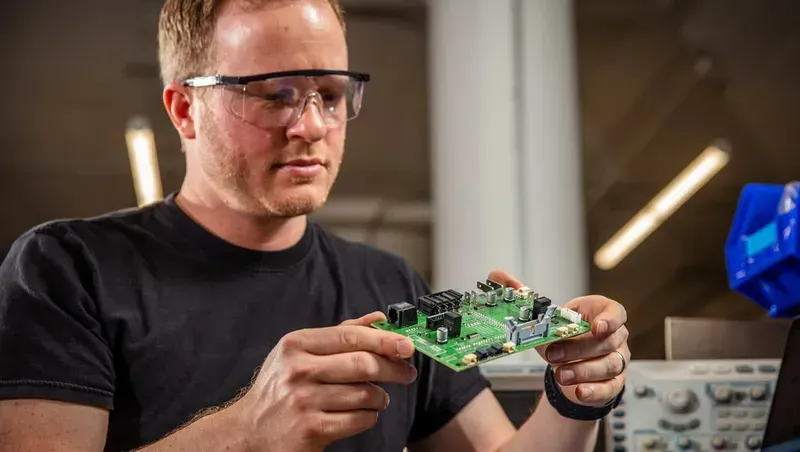
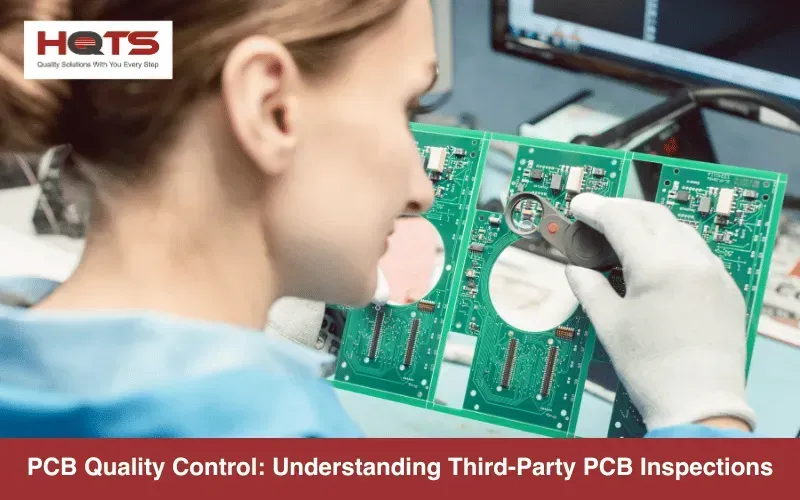
PCB Quality Inspection
In the highly regulated medical device industry, particularly for critical components like Magnetic Resonance Imaging (MRI) control boards, unwavering quality assurance and stringent regulatory compliance are not merely best practices—they are absolute necessities. Zero One Solution Limited prioritizes these aspects, understanding that the reliability, accuracy, and safety of MRI systems directly hinge on the integrity of their control boards. Our commitment extends beyond manufacturing; we embed a culture of precision and adherence to international standards throughout our entire PCB design, manufacturing, and assembly processes, ensuring that every MRI control board solution we deliver meets the highest benchmarks for medical imaging electronics.
How does Zero One Solution Limited ensure quality control for MRI control boards? Zero One Solution Limited employs a multi-faceted quality control system for MRI control boards, beginning with material selection and extending through every stage of design, fabrication, and assembly. This includes rigorous incoming material inspection, in-process quality checks using advanced automated optical inspection (AOI) and X-ray inspection (AXI), functional testing tailored to MRI specifications, and comprehensive final product validation. Our processes are designed to identify and mitigate potential defects proactively, ensuring superior performance and reliability critical for medical applications.
What regulatory standards do you comply with for medical device PCB solutions? We strictly adhere to international regulatory standards essential for medical device PCB solutions, most notably ISO 13485:2016, which specifies requirements for a comprehensive quality management system for the design and manufacture of medical devices. Our compliance ensures that our MRI control boards meet the stringent safety, performance, and documentation requirements mandated by regulatory bodies worldwide, facilitating our clients' product certification processes.
How do you manage risk in the development and manufacturing of MRI control boards? Risk management is integrated into our entire workflow, from initial design concepts to final production. We conduct thorough risk assessments, including Failure Mode and Effects Analysis (FMEA), to identify potential failure points and implement mitigation strategies. This proactive approach minimizes risks associated with high-frequency signal integrity, thermal management, electromagnetic compatibility (EMC), and component reliability, ensuring the robust and safe operation of MRI control boards.
What specific tests are performed on MRI control boards to ensure their reliability? Beyond standard electrical tests, our MRI control boards undergo specialized testing to validate their reliability in demanding medical environments. This includes signal integrity testing to ensure accurate data transmission, thermal cycling and shock testing to assess performance under varying temperature conditions, vibration testing to simulate operational stresses, and highly specific EMC/EMI testing to confirm minimal electromagnetic interference, crucial for clear MRI image acquisition.
Accelerating Time-to-Market with Rapid Prototyping
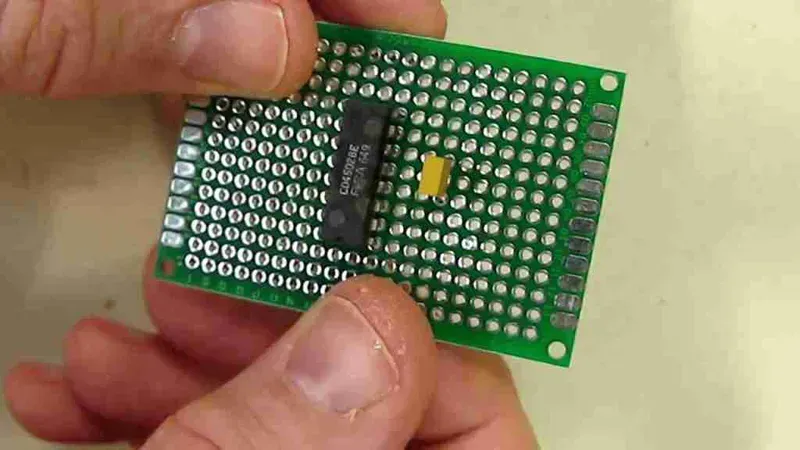
Rapid Prototyping PCB Sample
In the highly competitive medical device market, rapid time-to-market is not just an advantage; it's a necessity. Zero One Solution Limited's rapid-response R&D prototype manufacturing capability is a cornerstone of our value proposition, specifically designed to dramatically reduce development cycles for complex MRI control boards. Our streamlined processes and advanced facilities empower clients to quickly iterate, test, and refine their designs, ensuring that innovative MRI solutions reach patients faster and more efficiently.
How does rapid prototyping specifically benefit MRI control board development? Rapid prototyping for MRI control boards allows for quick validation of complex designs, especially concerning signal integrity, power delivery, and thermal management. This iterative process helps identify and resolve potential issues early, significantly reducing costly redesigns and delays inherent in the development of high-precision medical electronics. It accelerates the transition from conceptual design to functional prototypes.
What are the key elements of Zero One Solution's rapid prototyping process for MRI PCBs? Our rapid prototyping process integrates agile design reviews, accelerated material procurement, high-speed PCB fabrication, and expedited assembly lines. We leverage advanced manufacturing techniques and a deep understanding of MRI system requirements to compress timelines without compromising quality or performance. This includes efficient component sourcing and optimized assembly workflows.
How does this approach impact the cost-efficiency of MRI control board projects? By facilitating faster iterations and early error detection, rapid prototyping minimizes the need for extensive rework later in the development cycle, which is typically far more expensive. This efficiency reduces overall project costs, optimizes resource allocation, and allows medical device manufacturers to achieve a higher return on investment by launching products sooner.
Global Reach and Local Support
Zero One Solution Limited's strategic global footprint, anchored by our Shenzhen headquarters and Dubai branch, is not merely a logistical advantage but a fundamental component of our commitment to delivering unparalleled MRI control board solutions. This dual presence ensures seamless access to the intricate global PCBA supply chain, providing clients with responsive, localized support regardless of their geographical location, and reinforcing our capability to serve international clients seeking cutting-edge medical imaging electronics.
Why is a global presence critical for MRI control board solutions? A global presence ensures access to diverse talent pools, specialized material suppliers, and advanced manufacturing technologies spread across different regions. For MRI control boards, this means leveraging the best components for signal integrity and performance while mitigating single-source dependencies and geopolitical risks. It also allows for optimized logistics and faster delivery, crucial for complex medical device development cycles.
The intricate demands of Magnetic Resonance Imaging require nothing less than perfection in electronic design and manufacturing. Zero One Solution Limited stands as your trusted partner in delivering cutting-edge MRI control board solutions, combining our extensive experience in rapid prototyping with a deep understanding of medical-grade PCB requirements. By choosing Zero One, you're not just getting a PCB; you're gaining a strategic advantage in accelerating your product development, ensuring superior performance, and navigating the complexities of regulatory compliance. Partner with us to transform your MRI innovations from concept to reality. Contact Zero One Solution Limited today to discuss your specific MRI control board needs and discover how our expertise can elevate your next medical imaging breakthrough.