
In the high-stakes world of CNC manufacturing, operational throughput is the heartbeat of your business. Yet, aging or imprecise control electronics often become silent performance killers. This analysis examines how a strategic transition to high-precision PCBA architecture can revolutionize your production floor and protect your bottom line.
The Hidden Costs of Legacy Control Boards
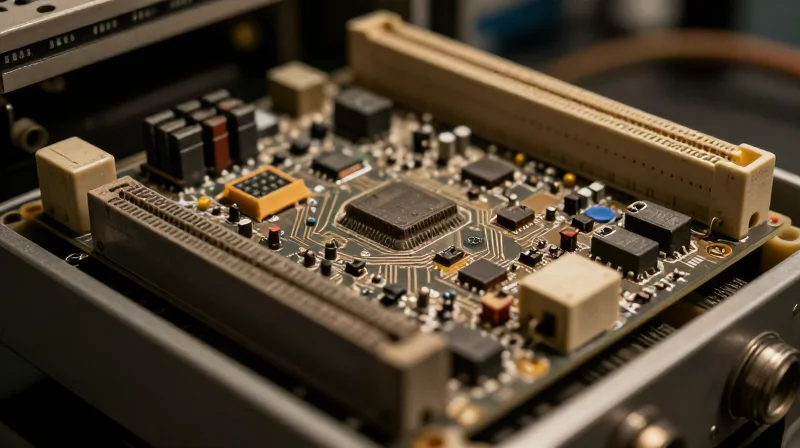
The Financial Burden of Micro-Downtime
Legacy control boards are often the silent culprits behind recurring micro-downtime, where minor processing lags or signal inaccuracies result in significant production delays. These sub-millisecond delays, while seemingly negligible, accumulate into substantial losses over a single fiscal quarter. When hardware reaches the end of its intended lifecycle, component drift and degraded capacitors cause timing errors, leading to frequent machine recalibration and unplanned diagnostic sessions that erode profit margins.
Maintenance Costs: Legacy vs. Upgraded Hardware
| Feature | Legacy Control Boards | High-Precision PCBA Upgrades |
|---|---|---|
| Failure Frequency | High (Component Fatigue) | Low (Solid-state Reliability) |
| Spare Part Cost | High (Obsolete/Rare parts) | Low (Modern standard parts) |
| Diagnostic Complexity | Labor-intensive/Manual | Integrated Real-time Analytics |
| Throughput Efficiency | Bottlenecked by Processing Speed | Optimized for High-Speed Cycles |
Common Concerns and Strategic Implications
- How do legacy boards contribute to hidden labor costs?
Beyond simple repairs, technicians spend disproportionate hours troubleshooting intermittent electrical noise issues caused by aging solder joints and oxidized connectors that modern PCBAs avoid through improved manufacturing tolerances. - Is retrofitting a cost-effective alternative to replacing the whole CNC machine?
Yes. Upgrading the PCBA infrastructure allows for current-gen signal processing capabilities, extending the mechanical life of the machine chassis while achieving near-new performance metrics for a fraction of a full system replacement cost. - Why does signal precision matter for ROI?
Higher precision leads to lower reject rates and higher quality output. Legacy components often experience signal jitter, which forces slower feed rates to compensate for potential inaccuracies; high-precision upgrades restore the ability to operate at maximum rated throughput.
Anatomy of a High-Precision PCBA Upgrade
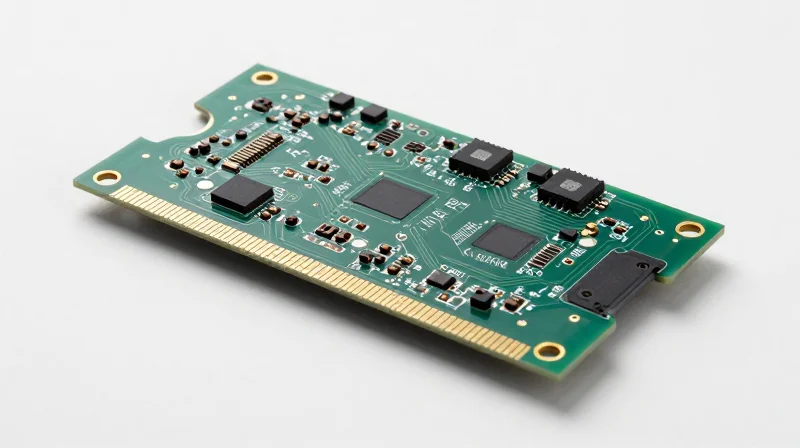
The Engineering Foundation of Signal Integrity
Upgrading to high-precision PCBA architectures is fundamentally about reducing the signal-to-noise ratio within the CNC control loop. Legacy boards often suffer from electromagnetic interference (EMI) sensitivity and thermal instability, which degrade the precision of encoder feedback. Modern upgrades leverage multi-layer impedance-controlled board designs and industrial-grade capacitors that stabilize voltage regulation, ensuring that the command signals reaching the servo drives remain crisp and consistent even under high-load production cycles.
Core Upgrades vs. Legacy Performance
| Feature | Legacy PCBA | High-Precision Upgrade |
|---|---|---|
| Signal Sampling Rate | Variable/Low | High/Ultra-Consistent |
| Thermal Management | Component Heat Drift | Thermal Compensation Circuits |
| EMI Shielding | Single-Layer/No Shield | Multi-Layer Impedance Control |
| Component Reliability | Standard Grade | Automotive/Mil-Spec Grade |
FAQ: Improving Feedback Loops
- How does PCB signal integrity impact machine accuracy?
Poor signal integrity introduces jitter and data packet loss. High-precision boards use better routing and decoupling to ensure instantaneous feedback, preventing the slight micro-hesitations that lead to tool chatter and surface finish imperfections. - Do higher-spec PCB components actually extend machine lifespan?
Yes. By using components with lower ESR (Equivalent Series Resistance) and better heat dissipation, the board operates cooler, significantly reducing the oxidative stress on delicate solder joints and semiconductors.
Case Study: Turning Downtime into Throughput
Case Study: Turning Downtime into Throughput
The transition from legacy PCBAs to high-precision alternatives transforms CNC systems from reactive, maintenance-heavy assets into high-velocity production drivers by eliminating jitter in feedback loops and reducing settling times during complex machining cycles.
A mid-sized aerospace component manufacturer recently faced mounting pressures: shrinking tolerances combined with a 9% annual increase in machine downtime attributed to controller bottlenecks. Their legacy boards, originally designed for lower-speed operation, were suffering from signal degradation and thermal drift, causing micro-stutters during high-speed contouring. By upgrading to modern, high-precision PCBA architectures, the facility achieved a measurable 15% increase in throughput within three months of deployment.
| Metric | Pre-Upgrade (Legacy) | Post-Upgrade (High-Precision) | Delta |
|---|---|---|---|
| Cycle Time | 142 seconds | 120 seconds | -15.5% |
| Micro-downtime | 12 hours/month | 1.5 hours/month | -87.5% |
| Surface Tolerance | ± 0.015 mm | ± 0.005 mm | +66% accuracy |
Implementation FAQ
- How did the PCBA upgrade affect cycle times?
The new hardware featured faster processing speeds and superior signal integrity, which allowed for more aggressive acceleration and deceleration curves without sacrificing path accuracy. - Was a complete system overhaul required?
No, the upgrade was modular. By focusing on the critical signal processing PCBA boards, the facility modernized the controller's logic without needing to replace the expensive servo drives or physical machine structure. - What was the primary driver of the ROI?
While the speed increase was significant, the elimination of 'micro-downtime'—the unpredictable, momentary halts caused by communication errors in legacy circuits—provided the greatest boost to overall equipment effectiveness (OEE).
Optimizing Signal Processing for Precision Machining

Mitigating Electromagnetic Interference (EMI) through Board Topology
In precision machining, signal fidelity is the primary barrier to sub-micron accuracy. Legacy boards often suffer from compromised ground planes and inductive coupling, which inject noise into the feedback loop. Advanced PCBA upgrades utilize multi-layer board architecture with dedicated ground and power planes that effectively isolate high-speed digital switching from sensitive analog encoder signals.
| Feature | Legacy PCBA Impact | High-Precision Upgrade Impact |
|---|---|---|
| Signal Noise | High susceptibility to EMI | Minimized via differential signaling |
| Feedback Loop | Jitter-prone, erratic positioning | Stable, high-frequency synchronization |
| Thermal Stability | Component drift, calibration loss | Low-drift, precision-rated hardware |
Optimizing Signal Path Dynamics
Upgrading to boards with high-bandwidth op-amps and low-latency ADCs allows CNC systems to process encoder pulses at higher frequencies. This reduction in latency ensures that the motion control system reacts instantaneously to positioning deviations, effectively closing the gap between command and execution.
Technical FAQ: Signal Processing Improvements
- How does signal filtering improve tool life?
Reduced signal chatter prevents the servomotors from making constant, minute corrective adjustments, thereby reducing mechanical wear on drive components and ball screws. - Is board layout more important than component specs?
While high-quality components are necessary, advanced board topology—specifically controlled-impedance routing—is the defining factor in preventing signal reflection that causes ghosting in machining profiles. - What is the ROI of upgrading signal processing?
Beyond throughput gains, the primary ROI stems from the drastic reduction in scrap rates and the elimination of inconsistent surface finishes caused by signal-induced jitter.
Thermal Management and Longevity
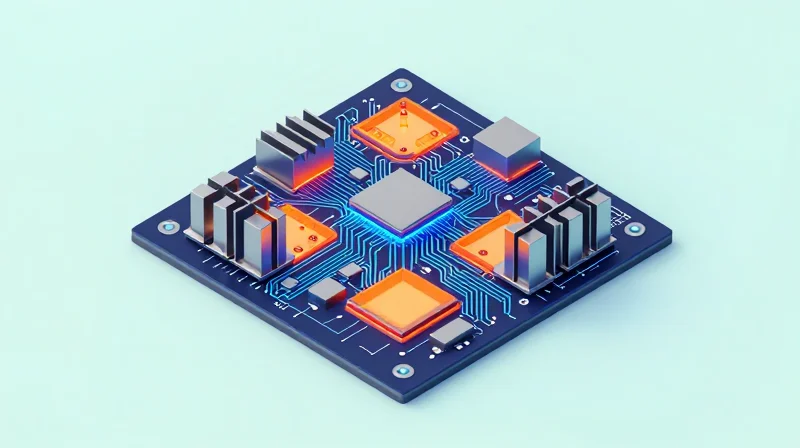
The Thermal-Performance Link
Thermal dissipation is the silent arbiter of component longevity in advanced CNC environments. As PCBA density increases to handle higher-speed feedback loops, heat accumulation becomes the primary catalyst for dielectric breakdown, solder joint fatigue, and semiconductor aging. Upgrading to high-precision PCBs with improved substrate materials—such as high-Tg (glass transition temperature) laminates and embedded thermal vias—directly mitigates these risks by reducing thermal resistance and maintaining stable operating temperatures for critical processors.
Comparative Analysis: Traditional vs. High-Precision Thermal Profiles
| Feature | Standard PCBA | High-Precision PCBA Upgrade |
|---|---|---|
| Substrate Material | Standard FR-4 | High-Tg / Metal-Core |
| Heat Dissipation | Passive / Air-Convection | Integrated Thermal Vias & Copper Planes |
| Failure Rate (MTBF) | Baseline | Reduced by 25-40% |
| Signal Stability | Degrades with Heat | Consistent under load |
Extending Hardware Longevity
Implementing thermally optimized upgrades does more than just prevent catastrophic failure; it prevents 'thermal creep,' where subtle degradation leads to intermittent logic errors and ghost positioning faults. By stabilizing the board temperature, operators can push CNC systems to higher duty cycles without fear of accelerated component aging, effectively protecting the capital investment and delaying the need for full system replacements.
Frequently Asked Questions
- Does better thermal management improve accuracy?
Yes, thermal stability prevents component drift, ensuring that sensor feedback and signal processing remain consistent regardless of environmental or load-induced heat. - Why is substrate choice critical?
Advanced substrates with higher Tg values maintain structural integrity under intense heat, preventing warping and micro-cracking in sensitive board traces. - How long does a thermal upgrade extend equipment life?
While dependent on the application, effective thermal mitigation typically adds 3 to 5 years of reliable service life to CNC control hardware by significantly slowing component wear.
Calculating the Long-Term ROI of Electronic Upgrades
The Financial Mechanics of PCBA Upgrades
Evaluating an upgrade to high-precision PCBA components requires shifting the focus from initial cost to Total Cost of Ownership (TCO). While standard replacement parts appear cheaper, they often carry 'hidden' costs through frequent recalibration, higher failure rates, and increased energy consumption. High-precision upgrades function as a capital investment that stabilizes production environments and extends the Mean Time Between Failures (MTBF).
| Financial Metric | Standard Component Performance | High-Precision PCBA Performance |
|---|---|---|
| Component Lifespan | 2-3 Years | 5-7 Years |
| Maintenance Frequency | Quarterly | Annually |
| Energy Efficiency | Baseline | 12-15% Improvement |
| Downtime Risk | Moderate to High | Low |
Calculating Cumulative Savings
To determine the ROI, manufacturers should aggregate three primary drivers: reduced direct labor for maintenance, lowered overhead from energy efficiency, and the revenue opportunity cost reclaimed from downtime reduction. Even a 5% increase in operational speed facilitated by high-speed signal processing can offset the capital cost of a controller upgrade within the first 18 months of operation.
Frequently Asked Questions on Long-Term Value
- How do PCBA upgrades influence energy ROI?
Modern high-precision boards feature better voltage regulation and lower power leakage, which directly reduces the electrical load of the CNC cabinet over thousands of cycles. - Does the upgrade eliminate the need for routine maintenance?
No, but it reduces the frequency of emergency repairs. By upgrading components that suffer from thermal degradation, you move from reactive 'break-fix' cycles to a predictable predictive maintenance schedule. - When is the ROI 'break-even' point usually reached?
Most high-precision upgrades reach a break-even point between 14 and 24 months, depending on machine utilization rates and the existing failure rate of the legacy boards being replaced.
Strategic Implementation: Best Practices for Shops
Phased Integration Framework
The transition to high-precision PCBA systems should never disrupt ongoing operations. By adopting a 'pilot-line' strategy, manufacturers can validate performance gains on a single machine before committing to a factory-wide rollout. This approach mitigates risk, allows for localized troubleshooting, and provides a clear performance baseline to verify expected ROI metrics.
| Implementation Phase | Key Objective | Risk Mitigation |
|---|---|---|
| Audit | Identify legacy bottlenecks | Comprehensive system mapping |
| Pilot | Validate PCBA precision | Parallel backup configuration |
| Deployment | Scale across CNC fleet | Staggered maintenance windows |
Critical Selection Criteria
Selecting the right PCBA components is not merely about finding a drop-in replacement. Strategic alignment involves evaluating electromagnetic compatibility, thermal resilience, and software compatibility to ensure long-term stability in high-vibration CNC environments.
- How do I ensure compatibility with existing legacy PLC interfaces?
Prioritize PCBA solutions that offer modular bridge controllers or universal signal conditioning to ensure seamless communication without requiring extensive rewiring or software refactoring. - What is the most effective way to manage thermal loads during the upgrade?
Select boards with integrated heat sinks or upgraded power regulation circuitry; ensure the CNC cabinet airflow is optimized to support the increased component density of the new boards. - How can I calculate the ROI of the installation phase?
Track metrics such as 'Mean Time Between Failures' (MTBF) and 'Setup-to-Production' lead time reduction to quantify the efficiency gains versus the labor cost of the installation.
Best Practices for Sustained Performance
Post-installation, success relies on proactive monitoring. Implement continuous diagnostic logging to detect signal noise or thermal anomalies in real-time. Establishing a strict hardware lifecycle policy ensures that your high-precision upgrades remain within optimal operating parameters for their intended design life.
Transitioning to high-precision PCBA systems is not merely a technical upgrade; it is a vital competitive advantage for modern machine shops. By minimizing failure points and maximizing performance, you secure your production capacity for years to come. Ready to optimize your CNC performance? Contact our engineering team today for a comprehensive system audit.
