
In today’s volatile global economy, OEMs are under constant pressure to deliver complex hardware faster while managing razor-thin margins. The traditional, fragmented approach to manufacturing is no longer sustainable. By transitioning to integrated turnkey systems assembly, forward-thinking manufacturers are discovering that outsourcing the entire box build process is not just a tactical choice—it is a strategic necessity for long-term growth.
The Evolution of Modern OEM Manufacturing
The Shift Toward Integrated Turnkey Assembly
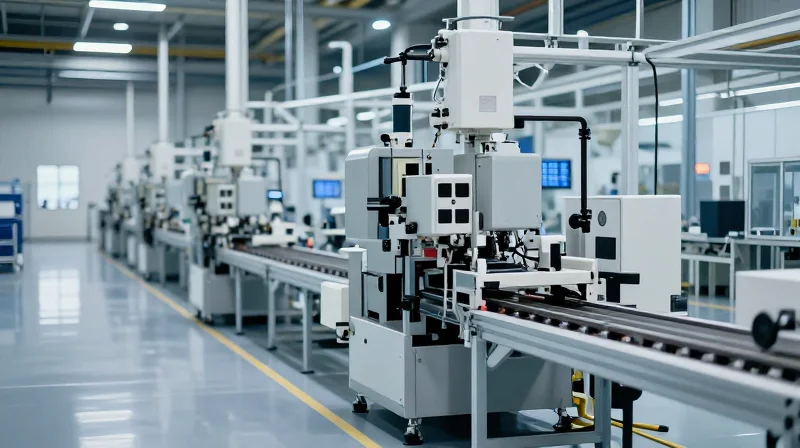
Historically, original equipment manufacturers (OEMs) relied on vertical integration, maintaining complex internal production lines to ensure quality and supply chain control. However, the rise of global competition and rapid technological turnover has made this model increasingly costly and inefficient. Today, the industry has pivoted toward integrated turnkey systems assembly. By outsourcing the entire production lifecycle to specialized partners—from procurement and engineering to assembly and testing—OEMs are effectively converting high fixed costs into variable, performance-based expenditures.
Comparative Manufacturing Models
| Attribute | Legacy Vertical Model | Modern Turnkey Model |
|---|---|---|
| Capital Allocation | High (Equipment & Facilities) | Low (Scalable Opex) |
| Risk Profile | Operational Ownership | Shared Strategic Risk |
| Time-to-Market | Slower (Internal R&D lags) | Accelerated (Leveraging partner expertise) |
| Supply Chain | In-house Management | Integrated Partner Logistics |
Strategic Drivers of Evolution
- Why is the turnkey model now the preferred choice?
Modern OEMs must focus on their core competencies—innovation and design—rather than the commoditized aspects of logistics, assembly, and testing. - How does this shift impact financial agility?
By leveraging specialized providers, OEMs can scale production volume instantly without the need for incremental capital investment in facility expansion or labor management. - What is the primary risk mitigation benefit?
Turnkey partners possess deep expertise in regulatory compliance and quality assurance, significantly reducing the financial impact of production errors and supply chain disruptions.
As the market demands shorter product lifecycles, the reliance on external turnkey integration allows OEMs to remain fluid. By offloading the burden of production, firms are not only reducing their overhead but are fundamentally re-engineering their financial profiles to achieve superior ROI in a volatile economic environment.
Deconstructing the Box Build Process

The Anatomy of a Turnkey Box Build
A turnkey box build transcends simple assembly by integrating every phase of electromechanical production under one roof, effectively eliminating the friction associated with managing multiple vendors and disparate logistics chains. By consolidating procurement, PCB integration, enclosure fabrication, and final testing into a single unified process, companies can leverage economies of scale and significantly reduce cycle times.
Core Stages of the Integration Workflow
| Stage | Key Activities | Financial Impact |
|---|---|---|
| Procurement | Component sourcing and vendor management | Reduced overhead and inventory carrying costs |
| PCB Integration | Assembly of electronics into custom enclosures | Lowered labor costs and improved quality control |
| Final Testing | Functional, burn-in, and safety verification | Minimized RMA rates and warranty exposure |
| Packaging | Custom labeling, branding, and direct shipping | Accelerated time-to-market and logistics savings |
Frequently Asked Questions Regarding Box Build Efficiency
- How does box build integration improve ROI?
By offloading the complexity of multi-tier supply chain management to an integrated partner, OEMs avoid hidden administrative costs and minimize the financial impact of production bottlenecks. - What role does testing play in the financial outcome?
Comprehensive in-process testing ensures that defects are identified at the assembly level rather than the field level, protecting the brand's reputation and avoiding costly recall or repair scenarios. - Can turnkey assembly scale with demand?
Turnkey providers maintain flexible manufacturing cells that allow for rapid scaling, enabling OEMs to match production volume to market demand without incurring permanent capital expenditure.
Financial Impact: Reducing Overhead and Capital Expenditure

Shifting the Capital Burden
In-house assembly lines demand significant, front-loaded capital expenditure (CapEx) to acquire specialized machinery, floor space, and infrastructure. By transitioning to a turnkey systems provider, businesses effectively convert these rigid asset investments into flexible operating expenses (OpEx). This strategic pivot preserves cash flow, allowing organizations to redeploy capital toward core competencies such as R&D, market expansion, and talent acquisition rather than maintenance and depreciation of factory equipment.
Direct vs. Indirect Cost Savings
| Cost Category | In-House Assembly Impact | Turnkey Outsourcing Impact |
|---|---|---|
| Equipment & Tooling | High initial CapEx; depreciation risks | Eliminated via service provider assets |
| Facility Overhead | Increased footprint and utility costs | Consolidated into per-unit pricing |
| Supply Chain Logistics | Complex management of multiple vendors | Streamlined; provider manages procurement |
| Labor Costs | Fixed payroll and training overhead | Scalable; tied directly to production volume |
Financial Strategy FAQs
- How does turnkey assembly affect scalability costs?
Turnkey solutions offer elastic scalability; you pay for production capacity only when you need it, avoiding the financial drag of idle equipment during demand troughs. - Does outsourcing reduce procurement overhead?
Yes, specialized providers leverage volume purchasing power and pre-existing vendor relationships, effectively lowering component costs and administrative burdens associated with managing dozens of individual suppliers. - What is the long-term impact on R&D ROI?
By removing the distraction and financial sink of managing an assembly line, internal teams can focus resources on product innovation, leading to a higher Return on Investment per development cycle.
Mitigating Supply Chain Vulnerabilities
Leveraging Economies of Scale for Procurement
One of the most significant financial advantages of partnering with an integrated turnkey provider is the immediate access to aggregated procurement power. While internal manufacturing teams often struggle with purchasing leverage due to limited volume, professional assembly partners manage multi-client portfolios. This scale allows them to negotiate bulk pricing, secure preferential lead times, and maintain stronger relationships with component manufacturers and distributors, effectively shielding the OEM from the localized inflation of parts pricing.
Strategic Mitigation of Material Shortages
Material shortages represent a catastrophic risk to product ROI, frequently resulting in idle production lines and lost market share. Integrated service providers utilize sophisticated supply chain visibility tools to anticipate fluctuations before they manifest as critical shortages. By employing strategies such as buffer stock management, vendor-managed inventory (VMI), and pre-approved secondary sourcing, these partners ensure production continuity regardless of global supply chain disruptions.
| Risk Category | In-House Approach | Turnkey Assembly Partner |
|---|---|---|
| Component Sourcing | Isolated, limited negotiation power | Global reach, high-volume discounts |
| Lead-Time Variance | High risk of line stoppages | Buffered inventory and secondary sources |
| Market Fluctuation | Reactive, high-cost spot buys | Proactive, long-term supply contracts |
Supply Chain Resilience FAQ
- How does a turnkey partner manage obsolete components?
Professional partners provide lifecycle management, proactively identifying EOL (End-of-Life) components and recommending pin-compatible alternatives or lifetime buy opportunities to prevent manufacturing halts. - Can turnkey services reduce the cost of quality assurance during shortages?
Yes, by utilizing centralized quality management systems, partners ensure that even when sourcing from alternative vendors due to shortages, the components meet rigorous engineering specifications, preventing the costly rework associated with counterfeit or inferior parts.
Case Study: Scaling Production Efficiency for a Hardware OEM
The Challenge: Navigating Production Bottlenecks
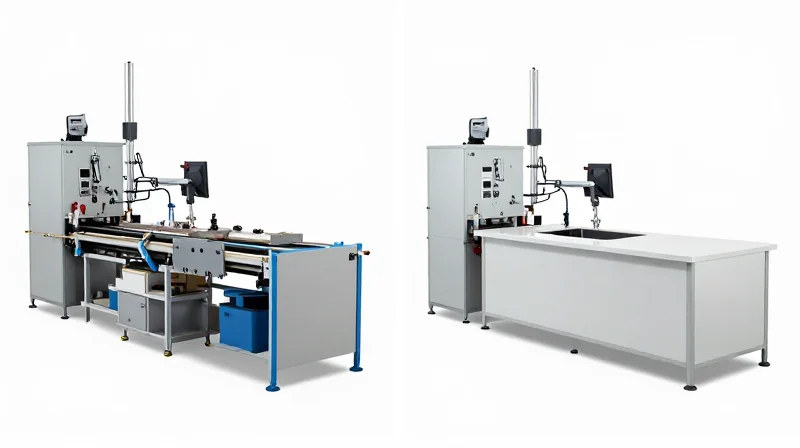
A leading mid-sized hardware OEM faced stagnating growth due to inefficient in-house assembly processes. Fragmented procurement, high labor turnover, and frequent delays in final systems testing were creating a massive drain on capital. The company struggled with inconsistent product quality and rising overhead costs, which eroded their profit margins despite strong market demand.
The Turnkey Transformation
To address these systemic issues, the OEM consolidated its fragmented assembly workflow into a single, integrated turnkey partnership. By outsourcing the entire process—from component sourcing and PCB population to final box build and testing—the OEM shifted from a high-fixed-cost structure to a variable-cost model. This transition allowed internal teams to focus on R&D and core design innovation rather than logistics management.
| Metric | Pre-Turnkey (In-House) | Post-Turnkey (Integrated) |
|---|---|---|
| Time to Market | 14 Weeks | 9 Weeks |
| Operational Overhead | High | Low |
| Quality Yield | 92% | 99.8% |
| Capital Investment | Significant | Minimal |
Key Lessons and Results
- How did the OEM realize immediate ROI?
By offloading inventory management and procurement, the OEM drastically reduced carrying costs and freed up working capital that was previously tied up in excess component safety stock. - What was the impact on production consistency?
The turnkey partner utilized automated testing and specialized assembly lines, which eliminated the quality variability experienced during manual in-house assembly. - Did the OEM lose control over its IP?
No; through robust data sharing and strictly managed production protocols, the OEM maintained full control over design standards while benefiting from the partner's manufacturing expertise.
Accelerating Time-to-Market Through Streamlined Workflows
Eliminating Bottlenecks Through Synchronized Workflows
The primary cause of delayed product launches is the friction inherent in fragmented supply chains and siloed assembly processes. By moving to a turnkey assembly model, OEMs consolidate design validation, component sourcing, and final assembly into a unified workflow. This cohesion eliminates the 'hand-off' delays that occur when coordinating between disparate vendors, allowing teams to move from prototype to production-ready status with seamless precision.
Comparison: In-House vs. Turnkey Assembly Speed
| Process Milestone | In-House Assembly | Turnkey Integrated Assembly |
|---|---|---|
| Procurement Cycle | Weeks (Multiple Vendors) | Days (Leveraged Partnerships) |
| Prototyping Iterations | Slow (Internal Bottlenecks) | Rapid (Dedicated Expert Teams) |
| Assembly Ramp-up | High Learning Curve | Immediate Scaling Capability |
| Quality Verification | Manual / Intermittent | Automated / Continuous |
Rapid Prototyping as a Competitive Advantage
Turnkey providers maintain advanced infrastructure specifically designed for high-velocity iteration. When assembly specialists are involved in the early design stages—a practice known as Design for Manufacturing (DFM)—they can identify potential production hurdles before a single physical unit is built. This foresight prevents costly rework and late-stage design modifications, ensuring that the transition to market is swift and reliable.
Strategic Implementation FAQs
- How does turnkey assembly improve prototype turnaround times?
Turnkey providers utilize existing standardized components and pre-vetted supply channels, which removes the need for custom vendor onboarding and lead-time delays common with in-house prototyping. - Can an integrated model handle sudden market demand surges?
Yes, professional assembly services are built for scalability. They offer the buffer capacity required to rapidly increase production volumes without the need for an OEM to invest in their own additional capital equipment. - Does this approach sacrifice quality for speed?
On the contrary, turnkey systems typically employ more rigorous, data-driven quality control protocols than internal departments, reducing failure rates and costly product returns.
Quality Assurance and Regulatory Compliance

The Hidden Costs of Non-Compliance
Regulatory failure is more than a legal burden; it is a direct drain on ROI. When a product fails certification mid-production, the financial impact includes lost inventory, expensive retrofitting, and potentially crippling market recalls. Professional turnkey assembly providers embed compliance protocols directly into their manufacturing workflows, treating quality assurance as a fundamental component of the assembly process rather than a final gatekeeping hurdle.
Risk Mitigation Comparison
| Risk Factor | In-House Assembly | Integrated Turnkey Partner |
|---|---|---|
| Certification Lead Times | High (Trial and Error) | Low (Standardized Processes) |
| Compliance Documentation | Fragmented/Manual | Automated/Traceable |
| Recall Financial Risk | Maximum (Full Liability) | Mitigated (Managed Quality Systems) |
Core Advantages of Expert Quality Oversight
- How does integrated testing reduce long-term costs?
By utilizing automated optical inspection (AOI) and in-circuit testing (ICT) during assembly, partners identify defects at the component level, preventing costly failures in final system integration. - What is the role of supply chain traceability?
Turnkey partners maintain rigorous records of all sub-components, ensuring that every piece of the assembly meets regional compliance requirements like RoHS or REACH, thereby avoiding unexpected supply chain disruptions. - Can professional partners accelerate certification?
Yes, experienced assembly houses are often pre-certified for specific industry standards (ISO 9001, AS9100), which streamlines the certification of the final product and provides a clear path to market entry.
By shifting the responsibility for quality control to an integrated assembly partner, OEMs can optimize their capital allocation—investing in product innovation and market growth rather than the high overhead required to manage continuous, fluctuating regulatory updates.
Strategic Considerations for Selecting an Assembly Partner
Critical Attributes for Strategic Alignment
When evaluating potential assembly partners, OEMs must look beyond simple labor costs and assess the vendor's ability to act as a technological extension of their own internal team. A partner that offers deep engineering expertise and agile manufacturing workflows is more likely to provide a sustainable competitive advantage.
- Scalability and Flexibility
Does the provider have the infrastructure to scale production volumes rapidly as your market demand shifts without compromising lead times? - Engineering Proactivity
Look for partners who offer Design for Manufacturing (DFM) support, as they can identify cost-saving optimizations during the early design phase. - Integrated Supply Chain Management
A high-value partner manages component procurement, vendor relationships, and logistics, effectively shielding your operations from market volatility.
Comparative Analysis: Transactional vs. Strategic Partnerships
| Feature | Transactional Supplier | Strategic Turnkey Partner |
|---|---|---|
| Primary Value | Lowest unit cost | Lowest total cost of ownership |
| Engineering Input | None/Basic | Comprehensive DFM/DFT support |
| Communication | Reactive | Proactive/Collaborative |
| Scalability | Rigid | Dynamic/Resilient |
Evaluating Long-Term Financial Viability
To truly maximize ROI, vetting must include an audit of the partner's financial health and their investment in Industry 4.0 technologies. Automation and digitized tracking systems represent significant capital expenditure for the partner, but they translate directly into higher yields and lower defect rates for the OEM. Prioritize partners who view process automation not just as a labor substitute, but as a mechanism for continuous improvement and waste reduction.
Outsourcing your box build assembly is more than a cost-saving measure—it is a transformation of your manufacturing strategy that allows you to focus on your core innovation. By partnering with an expert team, you can achieve superior product quality and a faster, more resilient supply chain. Ready to optimize your manufacturing bottom line? Contact our team of experts today for a comprehensive consultation on your next project.
