
In the high-stakes world of respiratory care, device reliability is not just a metric—it is a patient-critical necessity. Manufacturers often overlook the pivotal role of motor control PCBs in the total cost of ownership. By shifting the focus from initial component costs to long-term field reliability, companies can dramatically reduce failure rates and secure a significant competitive advantage.
The Direct Link Between PCB Integrity and Patient Safety
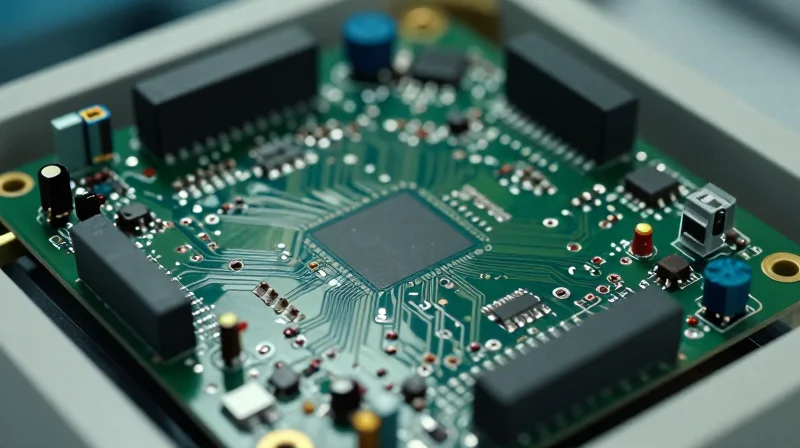
The Motor Control Board: The Heartbeat of CPAP Therapy
In CPAP therapy, the motor control board is not merely a component; it is the life-critical system that regulates the precise pressure delivery required for respiratory stability. Any degradation in PCB integrity—whether through thermal fatigue, signal noise, or poor power distribution—directly correlates to the failure of the blower assembly. When this board malfunctions, the device may exhibit pressure fluctuations, unexpected shutdowns, or total loss of therapy, forcing a clinical crisis where the patient is left without the necessary airway support.
Impact of Component Failure on Patient Outcomes
| Failure Mode | Technical Root Cause | Clinical Impact |
|---|---|---|
| Inconsistent Pressure | Voltage Regulation Drift | Ineffective therapy; patient fatigue |
| Total Blower Failure | MOSFET or Driver IC Short | Immediate termination of respiratory support |
| Sensor Malfunction | Trace Corrosion/EMI | Risk of airway over-pressure or suffocation |
Frequently Asked Questions Regarding PCB Safety
- How does PCB signal noise affect long-term reliability?
Signal noise in the motor control loop can lead to intermittent feedback loops, causing the controller to 'hunt' for the correct pressure, which accelerates mechanical wear on the blower and triggers premature field failures. - Why is thermal management critical for CPAP safety?
Continuous operation generates significant heat. If the PCB layout does not adequately manage thermal dissipation, solder joints can undergo thermal cycling stress, eventually leading to intermittent connectivity that poses a severe safety risk during sleep hours.
Hidden Costs: Calculating the Financial Impact of Field Failures

The Real Cost of a Failed PCB
When a printed circuit board (PCB) fails in the field, the financial impact is rarely limited to the BOM cost of the replacement board. For CPAP manufacturers, the total cost of quality (CoQ) is an exponential function of when the failure is detected and how many units are affected.
| Cost Category | Direct Impact | Long-term Impact |
|---|---|---|
| Logistics | Reverse supply chain/shipping | Increased warehousing overhead |
| Technical Support | RMA processing labor | Escalated engineering troubleshooting |
| Regulatory | Corrective Action (CAPA) costs | Increased FDA audit risk |
| Brand Reputation | Customer churn | Lowered market valuation |
Quantifying Hidden Expenditures
- Regulatory and Compliance Overhead
Each field failure requires rigorous documentation and potential formal filings. The cost of internal labor required to manage a Corrective and Preventive Action (CAPA) process often dwarfs the cost of the hardware itself. - Customer Acquisition Cost (CAC) vs. Retention
A single failure can turn a loyal patient into a detractor. Losing a patient to a competitor due to equipment unreliability negates the investment made in initial clinical marketing and sales. - The Premium of Emergency Logistics
Field failures rarely happen during a convenient scheduled maintenance window. Rapid dispatching of replacement devices incurs premium expedited shipping fees and disrupts standard inventory cycles.
Strategic Mitigation Through Design
Manufacturers that fail to address PCB reliability at the design stage effectively subsidize the failure rate through their balance sheets. Investing in advanced thermal management, high-reliability component selection, and robust PCB layout practices is not just a technical requirement—it is a critical financial hedge against catastrophic field performance liability.
Engineering for Resilience: Advanced PCB Design Principles

Advanced Thermal Management for High-Uptime Electronics
CPAP devices generate significant localized heat through motor drivers and power conversion stages. To prevent premature component aging or thermal shutdown, engineers must implement sophisticated thermal relief patterns and copper pours that serve as effective heat sinks, ensuring continuous, stable operation for patients requiring overnight support.
Optimizing Signal Integrity and EMC Compliance
In a medical environment with dense circuitry, high-frequency signals driving the blower motor can introduce electromagnetic interference (EMI). Employing controlled impedance routing, multi-layer stack-ups with dedicated ground planes, and strict adherence to signal isolation principles is mandatory to maintain data integrity between sensors and the central processing unit.
| Design Principle | Resilience Benefit | ROI Impact |
|---|---|---|
| Thermal Vias | Reduced junction temperature | Extended component lifespan |
| Differential Pairs | Superior noise rejection | Lower field support costs |
| Component Derating | Higher reliability margins | Fewer warranty returns |
Strategic Component Selection
- How does component derating prevent failure?
By operating components at 60-70% of their rated voltage and temperature capacity, you significantly reduce the MTBF (Mean Time Between Failures) risk in high-stress, high-heat environments. - Why is PCB material selection critical for CPAP hardware?
Medical-grade FR-4 materials with high Glass Transition Temperatures (Tg) are essential to prevent board delamination or warping under sustained thermal cycles during continuous use. - What is the role of conformal coating in these designs?
Conformal coating provides a necessary barrier against the humidity and condensation naturally produced during breathing therapy, protecting sensitive solder joints from corrosion.
Materials Matter: The Role of Substrate Quality
The Thermal Performance Imperative
In CPAP manufacturing, the substrate is not merely a mounting surface; it is a thermal management component. Standard FR-4 materials often degrade under the continuous, 24/7 operating cycles required for respiratory support, leading to delamination or trace fatigue. High-Tg (Glass Transition Temperature) laminates are essential for maintaining mechanical integrity when the PCB is subjected to the repetitive heat cycles common in long-term clinical use.
Substrate Material Comparison
| Material Type | Tg Value | Thermal Stability | Recommended Use |
|---|---|---|---|
| Standard FR-4 | 130°C - 140°C | Low | Consumer electronics |
| Mid-Tg FR-4 | 150°C - 170°C | Moderate | Portable medical devices |
| High-Tg/Specialty | 175°C+ | High | Life-critical CPAP hardware |
Mitigating Field Failures Through Material Choice
Using the wrong substrate leads to microscopic cracks at the via-barrel interface, which often go undetected during functional testing but manifest as intermittent connectivity issues in the field. By upgrading to laminates with a low Coefficient of Thermal Expansion (CTE), manufacturers can prevent these failures, effectively protecting the high-cost investment of the motor control assembly.
Frequently Asked Questions Regarding Substrate Selection
- Why is Tg (Glass Transition Temperature) so important for CPAP boards?
Tg is the point at which the resin in a PCB substrate begins to soften. If a device runs near this temperature, the PCB expands significantly, causing stress on through-hole components and vias, leading to inevitable field failure. - Does switching to high-Tg materials significantly increase unit cost?
While the raw material cost of high-Tg laminates is higher, the ROI is realized through the drastic reduction in warranty claims, logistics costs for replacements, and the preservation of brand reliability. - How does substrate quality impact signal integrity?
High-performance laminates offer more stable dielectric constants across varying temperatures, which prevents signal drift in sensitive pressure-sensing circuits used in respiratory therapy.
Optimizing Manufacturing Throughput and Yields
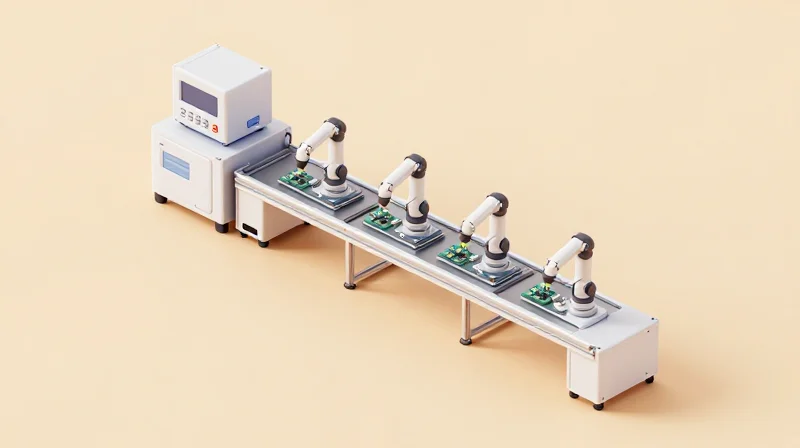
Driving Throughput Through Design for Manufacturing (DFM)
Manufacturing throughput for CPAP devices is fundamentally limited by the assembly process's susceptibility to variability. By implementing rigorous DFM principles—such as optimizing pad geometries for automated optical inspection (AOI) and standardizing component footprints—manufacturers can significantly reduce the 'bottleneck time' associated with rework and manual intervention. When a PCB is designed to accommodate the tolerances of pick-and-place machinery rather than just electrical requirements, assembly speed increases, and the likelihood of soldering defects drops precipitously.
Yield Enhancement Strategies
| Design Factor | Impact on Yield | Throughput Optimization |
|---|---|---|
| Test Point Accessibility | High: Enables rapid ICT coverage | Reduces total inspection time |
| Component Clearance | Medium: Minimizes reflow bridging | Increases line speed |
| Thermal Relief Usage | High: Ensures robust solder joints | Prevents late-stage rework |
Common Manufacturing Bottlenecks
- How does PCB panelization impact ROI?
Efficient panelization maximizes the number of boards per substrate sheet, reducing material waste and lowering the per-unit cost throughout the manufacturing cycle. - Why is solder mask design critical for high-yield production?
Improper solder mask dams between fine-pitch pins often result in bridges during reflow; optimizing these spaces is essential for high-volume yield consistency. - Can design choices decrease the need for manual touch-up?
Yes, utilizing solder-thief pads and ensuring balanced thermal paths prevents uneven cooling, which is the primary cause of common joint defects that require manual correction.
The ROI of Reliability: From Warranty Claims to Margin Growth
The Financial Impact of Component Reliability
In CPAP manufacturing, the cost of a failed PCB extends far beyond the price of the board itself. When a device fails in the field, manufacturers incur significant hidden costs related to shipping, diagnostic labor, expedited replacement units, and the depreciation of brand reputation. By shifting investment toward advanced, high-reliability PCB components during the design phase, companies can drastically reduce the frequency of these reactive financial drains, thereby increasing long-term profit margins.
| Cost Driver | Reactive Strategy (Low Upfront Cost) | Proactive Strategy (Premium PCB Design) |
|---|---|---|
| Warranty Claims | High volume of field returns | Minimal, predictable failure rate |
| Supply Chain | Frequent last-minute rework | Streamlined inventory management |
| Customer Retention | Risk of patient churn | High reliability ensures loyalty |
Shifting the Margin Curve
The margin growth realized through proactive design is a result of moving the cost-of-quality curve. While unit costs increase due to the selection of superior capacitors, high-Tg laminates, and robust thermal management systems, the total cost of ownership over the three-to-five-year lifespan of a CPAP unit drops significantly. Manufacturers who prioritize design integrity effectively eliminate the 'warranty tax' on every unit shipped, allowing for more predictable quarterly earnings and a stronger competitive position.
Strategic Reliability FAQ
- Does premium PCB design justify the initial BOM increase?
Yes. The reduction in warranty-related overhead often recovers the incremental BOM costs within the first 12 months of a product's lifecycle. - How does PCB longevity affect long-term brand equity?
Reliability is the primary metric for respiratory therapy devices; a board that avoids failure builds trust with healthcare providers, driving higher recurring revenue through device refills and patient adherence. - Is there a measurable link between manufacturing yields and field performance?
High-yield processes are typically a proxy for stable design; design for manufacturability (DFM) minimizes latent defects that lead to premature field failures.
Regulatory Compliance and Quality Assurance Standards
Navigating Medical-Grade Compliance Frameworks
For CPAP manufacturers, regulatory compliance is not merely a legal hurdle but a critical design parameter that dictates the reliability of life-sustaining equipment. Integrating IEC 60601-1 requirements at the schematic capture phase prevents costly design iterations late in the development cycle, directly protecting ROI by ensuring certification readiness.
| Standard | Focus Area | Design Impact |
|---|---|---|
| ISO 13485 | Quality Management Systems | Traceability, documentation, and process consistency |
| IEC 60601-1 | Basic Safety & Performance | Creepage, clearance, and electrical insulation design |
| IPC-A-610 Class 3 | Electronic Assemblies | Stringent inspection criteria for high-reliability medical boards |
Strategic Quality Assurance in PCB Design
Achieving superior quality requires embedding automated design-for-manufacturability (DFM) and design-for-test (DFT) checks into the PCB lifecycle. By automating compliance verification, manufacturers reduce human error and ensure that every board meets the high-performance thresholds required by medical regulatory bodies.
- How does early-stage DFM save costs?
By identifying clearance issues or trace sensitivity early, companies avoid the massive capital expenditure of a board spin necessitated by failing compliance testing. - Why is traceability essential in PCB fabrication?
Under ISO 13485, every component and material batch must be traceable to address potential recalls or field failures without shutting down entire production lines. - What role does IPC Class 3 play in CPAP longevity?
Adopting Class 3 standards mandates stricter soldering and assembly quality, reducing the likelihood of premature field failures in humid respiratory environments.
Partnering for Success in Medical Device Engineering
Choosing a strategic electronics manufacturing services (EMS) provider for CPAP systems requires more than just evaluating production capacity. Because CPAP devices operate in high-humidity environments and require continuous, silent operation, your partner must possess specialized expertise in medical-grade PCB assembly (PCBA) and rigorous environmental testing protocols.
Core Competencies for Medical Device Partners
| Capability | Impact on Durability | CPAP Context |
|---|---|---|
| Conformal Coating | Protects against moisture/mold | Essential for high-humidity airflow |
| Component Traceability | Reduces supply chain risk | Required for FDA/ISO compliance |
| In-Circuit Testing (ICT) | Prevents field failures | Verifies motor control logic |
Evaluating Your Manufacturing Partner
- Does the partner have specific ISO 13485 certification?
Verification of ISO 13485 is non-negotiable for medical devices, ensuring that quality management systems are specifically tailored to the safety requirements of life-supporting equipment. - How do they handle DFM (Design for Manufacturing) feedback?
A superior partner will actively review your PCB Gerber files for potential failure points—such as trace clearance issues or thermal hotspots—before production begins, saving significant long-term costs. - What is their approach to obsolescence management?
Proactive lifecycle management prevents costly redesigns when critical components reach end-of-life, maintaining the integrity of the original design for years.
Ultimately, the partnership should transition from a transactional vendor model to a collaborative engineering relationship. By integrating the manufacturer’s assembly floor insights into your design phase, you reduce the probability of field returns and protect your brand's reputation for reliability in the critical field of sleep apnea therapy.
Prioritizing high-quality motor control PCBs is a strategic business decision that pays dividends in both patient safety and financial stability. By reducing field failures, you not only improve operational margins but also build the trust essential to the medical device industry. Ready to optimize your hardware roadmap? Contact our engineering team today to discuss your next-generation CPAP design.
