
In today’s competitive industrial landscape, the smallest component often dictates the largest operational cost. For commercial HVAC facilities, the printed circuit board (PCB) is the heart of system intelligence, yet it is frequently overlooked during budget planning. We explore why prioritizing high-quality PCB engineering is no longer a luxury but a strategic financial necessity for maximizing infrastructure ROI.
The Hidden Link Between PCB Quality and System Downtime
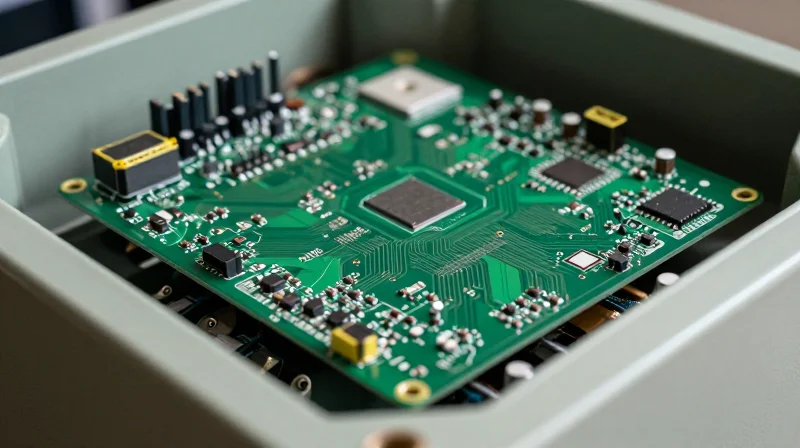
The Hidden Link Between PCB Quality and System Downtime
In commercial HVAC systems, the printed circuit board (PCB) serves as the brain of the operation, managing everything from airflow modulation to thermal safety thresholds. When low-grade PCBs—often characterized by substandard substrate materials, inadequate thermal relief, or inferior electrolytic capacitors—are employed, they become the primary failure point. These components degrade rapidly under the extreme thermal cycling and high-vibration environments typical of commercial climate control systems, leading to intermittent controller faults that manifest as costly, unplanned downtime.
Comparative Analysis: Standard vs. Advanced PCB Engineering
| Feature | Low-Cost Standard PCB | Advanced Engineered PCB |
|---|---|---|
| Component Grade | Consumer/General Purpose | Industrial/High-Reliability |
| Thermal Management | Limited Copper Weight | Heavy Copper & Heat Sinks |
| MTBF (Failure Rate) | High (Frequent Repair) | Low (Extended Lifespan) |
| Downtime Risk | High | Negligible |
Frequent Failure Drivers
- Why do capacitors fail prematurely in HVAC boards?
Inferior electrolytic capacitors often lack high-temperature ratings, causing them to dry out or leak when exposed to the sustained heat generated within an HVAC control cabinet. - What role does solder joint integrity play?
Thermal fatigue causes expansion and contraction, which can fracture weak solder joints on poorly designed boards, leading to intermittent signal loss and system resets. - How does PCB thickness impact system longevity?
Thinner substrates are prone to board flex under vibration, creating micro-cracks in conductive traces that are nearly impossible to diagnose without replacing the entire assembly.
Material Science: Why Industrial-Grade Components Matter
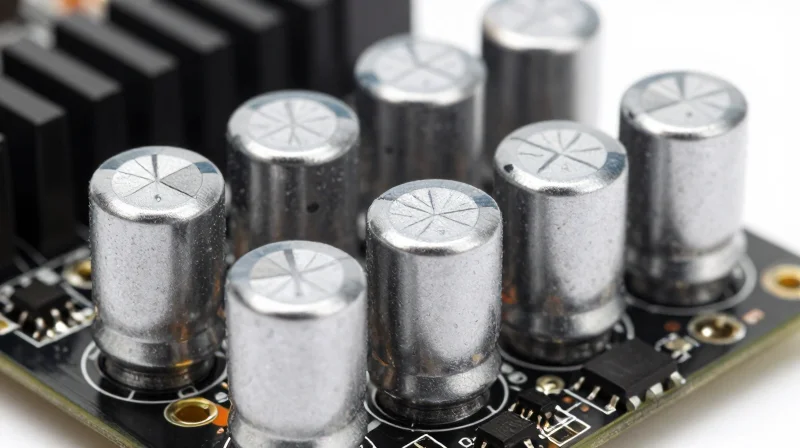
The Material Foundation: Beyond Standard FR-4
While standard FR-4 (Flame Retardant 4) is sufficient for consumer electronics, commercial HVAC environments demand higher performance standards. Industrial-grade substrates utilize improved resin systems and reinforcement weaves that offer higher Glass Transition Temperatures (Tg) and superior Dielectric Constant (Dk) stability, ensuring consistent performance even as components cycle through extreme temperature swings.
| Material Property | Consumer FR-4 | Industrial Grade PCB |
|---|---|---|
| Glass Transition (Tg) | 130°C - 140°C | 170°C - 180°C |
| Thermal Expansion | High (Stress prone) | Low (Stability focus) |
| Service Life | Short (3-5 years) | Extended (10+ years) |
Thermal Management and Environmental Resilience
Commercial HVAC systems operate in varying environmental conditions, often including high humidity and corrosive air quality. Advanced PCBs utilize metal-core or high-thermal-conductivity substrates to dissipate heat away from sensitive microcontrollers, preventing premature solder joint fatigue. Additionally, applying industrial-grade conformal coatings or using moisture-resistant laminates prevents short-circuiting caused by condensation—a frequent cause of HVAC control board failure.
Frequent Inquiries Regarding PCB Material Selection
- Why does a higher Tg (Glass Transition Temperature) matter?
A higher Tg ensures the board remains rigid and structurally sound at higher operating temperatures, preventing the warping and copper trace separation that typically causes circuit failure. - How does moisture resistance affect maintenance frequency?
Moisture ingress often leads to dendritic growth and localized corrosion on PCB traces; using humidity-resistant substrates and professional-grade sealing reduces the likelihood of these failures, effectively eliminating unplanned service visits. - Is the higher initial cost of industrial materials justified?
Yes. While premium materials cost more upfront, the dramatic reduction in replacement frequency and maintenance labor hours typically results in a lower Total Cost of Ownership (TCO) within the first three years of operation.
Energy Efficiency and PCB Precision

The Role of Precision Circuitry in Energy Optimization
Energy efficiency in commercial HVAC systems is inherently tied to the precision of the Printed Circuit Board (PCB) at the system's core. High-precision circuitry ensures that the electrical signals powering sensors and actuators are clean, stable, and accurate. When a PCB utilizes advanced signal conditioning, it minimizes noise interference, allowing the HVAC system to interpret environmental data with surgical precision. This accuracy enables more granular control over system outputs, preventing the energy waste associated with constant over-compensating or 'hunting' in heating and cooling loops.
Optimizing Motor Drives through Signal Integrity
Advanced PCB engineering significantly impacts the performance of Variable Frequency Drives (VFDs) and brushless DC motors. By employing high-quality gate drivers and minimizing parasitic capacitance, modern PCB designs allow for faster, cleaner switching frequencies. This reduction in electrical transition loss translates into higher motor efficiency, lowered heat production, and extended mechanical lifespan. The following table illustrates the performance gap between generic and precision-engineered PCB control modules.
| Feature | Generic PCB Control | Advanced Precision PCB |
|---|---|---|
| Switching Efficiency | Moderate (Significant Heat Loss) | High (Minimal Switching Loss) |
| Sensor Sensitivity | Low (High Signal-to-Noise Ratio) | Ultra-High (Low Signal-to-Noise) |
| Energy Waste | High (System Hunting) | Low (Predictive Modulation) |
Common Inquiries Regarding PCB Efficiency
- How does PCB signal integrity impact electricity bills?
Better signal integrity leads to more precise motor speed adjustments, reducing the energy draw of blowers and compressors by preventing inefficient rapid cycling. - Does PCB thermal management affect energy consumption?
Yes. When PCBs overheat, their electrical resistance increases, resulting in power loss; efficient heat sinking on the board itself maintains optimal component performance and lowers power dissipation. - Can upgrading control boards reduce mechanical wear?
Precision-engineered boards offer 'soft-start' capabilities and smoother modulation, which significantly reduce the physical stress on HVAC motors and compressors, lowering maintenance costs alongside energy usage.
Calculating Total Cost of Ownership (TCO)
The TCO Framework for Advanced HVAC Control Systems
Total Cost of Ownership (TCO) in commercial HVAC is frequently misunderstood as simply the purchase price of the unit. For facility managers, however, the real financial impact is hidden in the operational expenditures (OPEX) incurred over a 10-year cycle. Advanced PCB engineering represents a capital expenditure (CAPEX) that acts as a hedge against the exponential costs of component failure, premature system replacement, and labor-intensive troubleshooting.
| Cost Category | Standard PCB System | Advanced PCB System |
|---|---|---|
| Initial Acquisition | Lower | Higher |
| Mean Time Between Failure (MTBF) | Short (2-3 years) | Long (7-10 years) |
| Emergency Maintenance Costs | High (Frequent Site Visits) | Low (Predictable Maintenance) |
| Energy Variance | High (Sensor Drift) | Low (High Accuracy) |
Balancing Upfront Investment with Lifecycle Savings
While advanced circuitry—utilizing high-Tg substrates, conformal coatings, and low-drift components—requires a higher initial investment, the ROI is realized through the avoidance of 'catastrophic maintenance' events. A standard board may fail due to thermal fatigue or moisture ingress, resulting in emergency technician dispatches that cost significantly more than the price delta of the original hardware upgrade. Over a 10-year span, systems with engineered-for-reliability PCBs often show a 30-40% reduction in total service calls.
Strategic Considerations for TCO Analysis
- How does PCB quality affect labor costs?
High-quality boards reduce the frequency of troubleshooting intermittent faults, which are often the most time-consuming and expensive issues for HVAC technicians to diagnose. - What is the role of sensor precision in TCO?
Advanced PCBs maintain precise calibration over time; degraded standard boards cause sensors to drift, leading to inefficient compressor cycling that drives up energy bills and accelerates mechanical wear. - Should I factor in downtime costs?
Yes. In commercial environments, downtime for server rooms or retail spaces carries a massive opportunity cost that far outweighs the component price difference of a more reliable PCB.
Strategies to Mitigate Thermal Stress and Vibration
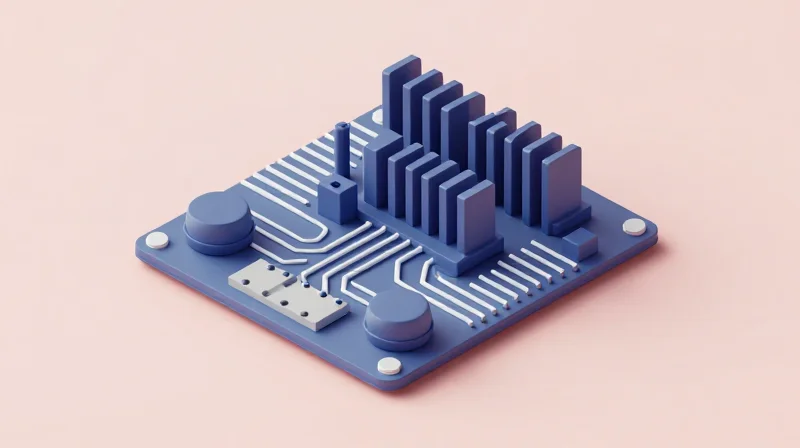
Strategies to Mitigate Thermal Stress and Vibration
In commercial HVAC applications, PCB assemblies are subjected to continuous thermal cycling and mechanical oscillation, both of which accelerate component fatigue. By integrating advanced heat-sinking materials and strategic structural stiffening, engineers can drastically reduce the mechanical stress on solder joints and critical interconnections, ultimately minimizing unscheduled downtime.
Tactical Engineering Approaches
- Thermal Vias and Copper Pours
Utilizing high-density arrays of thermal vias connected to internal ground planes facilitates efficient heat transfer away from power-intensive components, preventing local hotspots that degrade substrate integrity. - Underfill and Conformal Coating
Applying structural underfills for BGA components and high-dielectric conformal coatings protects against vibration-induced shear stress and prevents moisture-induced oxidation in fluctuating HVAC climates. - Component Partitioning
Isolating high-mass components—such as large electrolytic capacitors—from sensitive microprocessors prevents resonance-based fatigue and ensures structural stability during high-RPM compressor operation.
| Mitigation Method | Primary Benefit | ROI Impact |
|---|---|---|
| Thermal Vias | Lower Junction Temps | Extended MTBF |
| Structural Underfill | Vibration Damping | Reduced RMA Costs |
| Stiffener Ribs | Flex Resistance | Lower Field Maintenance |
Vibration Analysis Integration
Modern PCB design for HVAC should incorporate finite element analysis (FEA) early in the development cycle. By simulating harmonic responses to mechanical vibration, engineers can identify resonant frequencies that threaten board integrity. Once identified, board-to-chassis mounting points can be adjusted, or material thickness increased, to move natural frequencies outside the operating range of the HVAC equipment.
Proactive Maintenance Through Smart Electronics

Modern commercial HVAC systems have moved beyond basic controls into the realm of intelligent, communicative nodes. By embedding advanced diagnostic capabilities directly onto the Printed Circuit Board (PCB), maintenance engineers can monitor real-time electrical health metrics—such as voltage ripples, impedance changes, and component temperature gradients—before they manifest as mechanical system failures.
Leveraging On-Board Diagnostics for Predictive Health
Predictive maintenance relies on high-fidelity data streams. Advanced PCBs equipped with integrated sensors and localized processing units can identify anomalous electrical signatures indicative of impending failure. For instance, monitoring the PWM (Pulse Width Modulation) signal consistency to a variable frequency drive (VFD) can pinpoint capacitor degradation long before the drive stops functioning, allowing for scheduled component replacement during off-peak hours rather than emergency service during a site outage.
| Maintenance Strategy | Data Source | Primary Benefit | Cost Impact |
|---|---|---|---|
| Reactive | None | None | High (Emergency labor) |
| Preventative | Service logs | Consistent schedule | Moderate |
| Predictive | PCB telemetry | Failure avoidance | Low (Optimized life) |
Core Metrics for Proactive Monitoring
- How does PCB-level monitoring reduce overall labor costs?
By providing precise, granular data, technicians no longer spend hours performing 'guess-and-check' diagnostics; they arrive at the site with the exact replacement component needed. - What specific PCB data points indicate an impending drive failure?
Increased ripple current in the DC bus and rising operating temperatures of power semiconductors are primary indicators of capacitor aging and cooling system inefficiency. - Can firmware updates replace hardware maintenance?
While firmware can optimize control loops to reduce component strain, it cannot fix physical degradation; however, it can improve the accuracy of health reporting, extending the effective monitoring window.
Integrating these smart electronics requires a focus on robust data communication protocols like BACnet or Modbus, ensuring that PCB telemetry reaches facility management systems without latency. This connectivity is the cornerstone of a high-ROI HVAC strategy, effectively transforming the PCB from a passive control module into a vital asset for long-term operational health.
Future-Proofing Your Facility Infrastructure
Strategic Scalability Through Modular PCB Design
Future-proofing facility infrastructure begins with selecting HVAC hardware built on modular PCB architectures. By decoupling control logic from power-handling components, facilities can upgrade communication protocols or add sensor arrays without replacing the entire HVAC unit. This strategy converts fixed assets into dynamic systems that evolve alongside technological advancements.
IoT Readiness and Connectivity Lifecycle
| Feature | Legacy Design | Future-Proof PCB |
|---|---|---|
| Connectivity | Hardwired/Proprietary | Modular/API-Ready |
| Software Updates | Manual Physical Reset | Over-the-Air (OTA) |
| Sensor Integration | Fixed capacity | Expandable I/O ports |
Anticipating Technological Shifts
- Why is firmware updateability critical for HVAC longevity?
Modern HVAC systems rely on complex algorithms. Over-the-air (OTA) updateable PCBs allow for performance optimizations and security patches to be applied remotely, preventing premature hardware obsolescence. - How does PCB modularity impact ROI?
Modular designs allow facility managers to swap out specific logic boards to enable advanced features like edge computing or AI-driven energy management, significantly deferring the need for complete capital equipment replacement. - What role do open-standard interfaces play?
Utilizing PCBs with industry-standard communication protocols (such as BACnet or Modbus) ensures that current HVAC units can talk to future building management systems, protecting against vendor lock-in.
Investing in advanced, scalable PCB engineering shifts the HVAC maintenance paradigm from reactive repair to strategic infrastructure management. By prioritizing hardware that supports digital transformation, facility operators ensure their systems remain efficient, compliant, and cost-effective throughout their 10-year service life.
Prioritizing engineering excellence at the PCB level ensures that your HVAC systems remain an asset rather than a liability. By investing in resilient, high-quality electronics, you secure lower operational overhead and a significantly longer infrastructure lifespan. Ready to optimize your facility’s performance? Contact our engineering team today for a comprehensive reliability audit.
