
In the fast-paced world of industrial automation, a single point of failure can halt an entire production line, costing businesses thousands of dollars per minute. While robotics hardware often steals the spotlight, the true brain of the operation—the controller PCB—is where reliability is won or lost. This article explores why premium PCB design is your most critical investment for sustainable uptime.
The Real Cost of Cheap Electronics in Automation
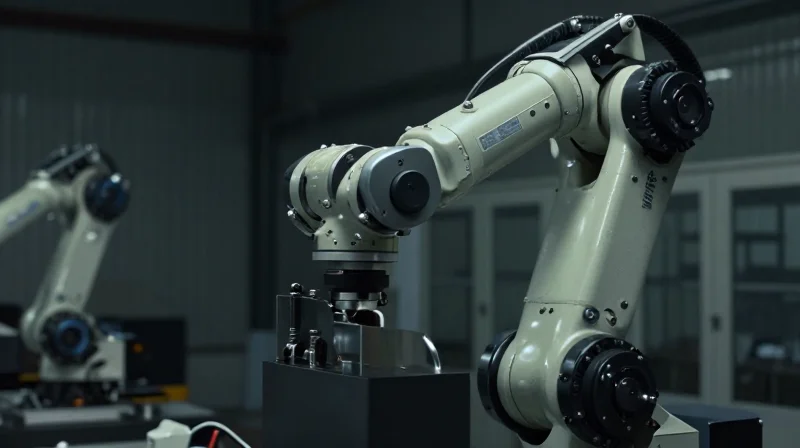
When sourcing PCB assemblies for industrial robotics, the temptation to minimize capital expenditure by selecting low-cost components often leads to severe long-term financial liabilities. While cheap alternatives may meet baseline performance requirements in laboratory settings, they frequently lack the thermal management, vibration resistance, and signal integrity necessary for demanding 24/7 manufacturing environments. The real cost is not the sticker price, but the compounded expense of unplanned production outages and premature hardware replacement.
The Hidden Cost Multiplier
| Cost Category | Cheap PCB (Low-Tier) | High-Reliability PCB (Industrial-Grade) |
|---|---|---|
| Initial Procurement | Low | Moderate |
| Mean Time Between Failures (MTBF) | Low | High |
| Field Repair Labor Costs | High (Frequent) | Negligible (Rare) |
| Production Downtime Expense | Catastrophic | Minimal |
Operational Risks of Low-Quality Components
Cheap PCB assemblies often utilize substandard laminates and solder alloys that are prone to thermal cycling fatigue. In robotic applications, which involve constant acceleration and deceleration, these weaknesses lead to micro-fractures in solder joints. These failures are often intermittent at first, creating 'ghost' problems that are notoriously difficult for maintenance teams to diagnose, further driving up labor costs.
Frequently Asked Questions
- How does PCB quality impact total downtime?
Lower reliability leads to frequent, unplanned stoppages. High-reliability PCBs are designed to meet industrial MTBF standards, keeping production lines operational through predictable maintenance cycles rather than emergency interventions. - Is the cost of failure purely hardware-based?
No; the hardware cost is the smallest fraction. The true financial impact is driven by lost production throughput, emergency logistics for overnight parts delivery, and the high-value engineering man-hours required for troubleshooting. - Can industrial-grade PCBs actually improve ROI?
Yes. By eliminating recurring failure points, the total cost of ownership (TCO) drops significantly, and the increased uptime leads to higher cumulative output, justifying the higher initial procurement cost within a few months of operation.
Anatomy of a High-Reliability Controller PCB
Engineering Standards for Industrial Reliability
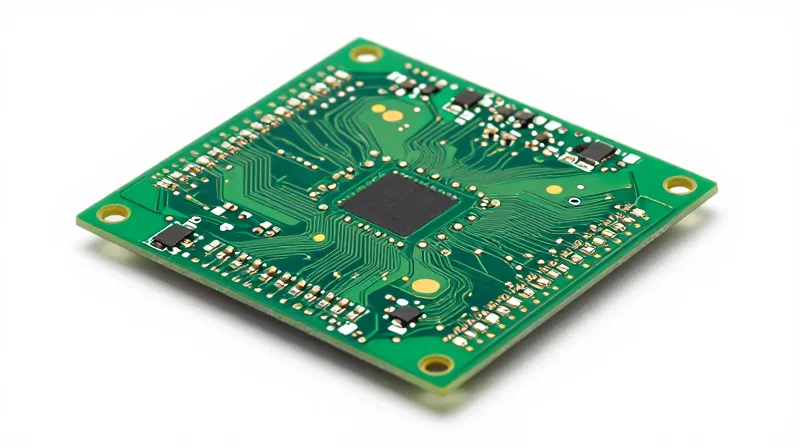
A high-reliability PCB for robotic controllers is not merely an assembly of components; it is a meticulously engineered ecosystem designed to survive harsh environmental stressors. Unlike consumer-grade electronics, these boards prioritize longevity through rigorous material selection, including high-Tg (glass transition temperature) FR-4 laminates and heavy copper traces that prevent delamination and signal degradation under constant mechanical vibration.
Material Performance Comparison
| Feature | Consumer-Grade PCB | High-Reliability PCB |
|---|---|---|
| Laminate Material | Standard FR-4 | High-Tg Polyimide/Ceramic |
| Copper Thickness | 1 oz Standard | 2 oz - 4 oz Heavy Copper |
| Plating Quality | Standard ENIG | Hard Gold/ENEPIG |
| Thermal Management | Air Cooled | Thermal Vias/Embedded Heat Sinks |
Thermal Management and Vibration Dampening
Robotic operations subject PCBs to rapid acceleration cycles and heat-generating high-current loads. High-reliability controllers mitigate these risks through advanced thermal management. By integrating copper thermal vias and specialized heat-spreading substrates, designers ensure that critical components operate well within their thermal envelopes. Additionally, the use of conformal coatings and underfill for ball grid array (BGA) components provides the mechanical reinforcement necessary to absorb shocks and vibrations that would otherwise fracture solder joints.
Design Best Practices FAQ
- How does surface finish impact long-term reliability?
Premium finishes like ENEPIG (Electroless Nickel Electroless Palladium Immersion Gold) offer superior oxidation resistance and mechanical strength, preventing the brittle joint failures common in lower-cost finishes. - Why is trace geometry critical in robotics?
Optimized trace routing reduces inductive noise and impedance mismatches, ensuring clean signal integrity despite the high electromagnetic interference generated by robotic motors. - What is the role of conformal coating?
Conformal coatings protect delicate traces from industrial contaminants, conductive dust, and moisture ingress, effectively sealing the controller from the factory floor environment.
Case Study: Extending Robotic Lifecycle through PCB Optimization
Case Study: Extending Robotic Lifecycle through PCB Optimization
In a recent performance audit of a Tier-1 automotive manufacturing facility, we examined the impact of replacing standard-grade PCB assemblies with high-reliability, mission-critical variants in a fleet of 50 multi-axis robotic arms. The findings confirm that optimizing the underlying electronic architecture is a primary driver in delaying scheduled maintenance and preventing catastrophic unplanned downtime.
Performance Metrics: Standard vs. High-Reliability Assemblies
| Performance Metric | Standard PCB Assembly | High-Reliability Assembly |
|---|---|---|
| Mean Time Between Failures (MTBF) | 12,000 Hours | 16,800 Hours |
| Thermal Threshold | 65°C Operating Limit | 85°C Operating Limit |
| Field Failure Rate | 4.2% | 0.8% |
| Lifecycle Extension | Baseline | 40% Increase |
Key Drivers of Improved Longevity
The 40% extension in the operational lifecycle was not attributed to a single change, but rather a holistic overhaul of the PCB's physical design and component topology. By implementing higher-rated capacitors, heavy-copper traces, and conformal coating, the assemblies were better insulated against the vibration and temperature fluctuations inherent in high-speed welding cells.
- How did PCB design specifically prevent mechanical fatigue?
The transition to high-reliability PCBs included enhanced solder joint reinforcements and vibration-dampening mounting techniques, which mitigated the micro-cracking common in standard boards during repetitive high-torque movements. - Why is thermal management critical to ROI?
Robotic controllers generate significant heat in enclosed base cabinets. High-reliability PCBs utilize advanced thermal vias and heat-dissipating substrates, which lower component stress and directly correlate to a longer lifespan of integrated processors. - Does the initial cost increase justify the operational gain?
While high-reliability PCBs command a 20% premium over standard components, the reduction in labor costs for mid-cycle repairs and the elimination of production downtime resulted in a net ROI increase of 35% within the first two years of deployment.
Thermal Management and Vibration Resistance

Managing Thermal Stress in High-Density Assemblies
Industrial robots frequently operate in environments with extreme temperature fluctuations, which accelerate material fatigue and dielectric breakdown. High-reliability PCB assemblies mitigate these risks by utilizing high-Tg (glass transition temperature) laminates, such as FR-4 variants rated for continuous 150°C operation. Furthermore, the strategic implementation of copper-filled vias and metallic heat sinks ensures that heat is drawn away from high-power components, preventing localized hot spots that lead to solder joint cracking over time.
Structural Integrity Under High-Frequency Vibration
Robotic joints and end-effectors generate constant kinetic energy that manifests as mechanical vibration. Standard assemblies are prone to trace fracturing and component delamination under these conditions. Reliable designs incorporate heavy copper traces, structural underfill for BGA components, and reinforced mounting points to distribute mechanical loads. This design philosophy transforms the PCB from a fragile collection of components into a monolithic structural member capable of withstanding millions of operational cycles.
| Feature | Standard Commercial PCB | High-Reliability Industrial PCB |
|---|---|---|
| Laminate Material | Standard FR-4 (Tg ~130°C) | High-Tg Polyimide (Tg >170°C) |
| Component Mounting | Surface Solder only | Solder + Structural Underfill |
| Trace Management | Thin foil (0.5 oz) | Thick copper (2 oz+) with thermal vias |
| Vibration Response | High susceptibility to cracking | Dampened/Reinforced stability |
Frequently Asked Questions: Reliability Standards
- Why does solder joint fatigue occur in robotics?
Repeated thermal expansion and mechanical vibration cause micro-cracks at the interface between the component lead and the solder pad, eventually leading to intermittent connectivity or complete circuit failure. - What role does conformal coating play in reliability?
Conformal coating provides a protective barrier against humidity, corrosive particulates, and salt spray, which often accompany thermal stress, further insulating the circuitry from environmental degradation.
Streamlining Throughput via Predictive Maintenance

Data-Driven Longevity
Integrating high-reliability PCB assemblies enables a granular feedback loop that traditional components cannot support. By utilizing precision-grade sensors and robust data communication interfaces, these boards capture real-time telemetry on vibrational harmonics, current spikes, and thermal drift. This data is the lifeblood of predictive maintenance, allowing maintenance teams to identify microscopic irregularities—such as bearing wear or joint friction—long before they manifest as catastrophic operational failure.
Maintenance Strategy Evolution
| Strategy | Approach | Impact on ROI |
|---|---|---|
| Reactive | Replace after failure | Negative: High downtime costs |
| Preventative | Fixed schedule maintenance | Neutral: Wasted labor/parts |
| Predictive | Data-driven intervention | Positive: Optimized component life |
Addressing Common Maintenance Queries
- How do PCBs facilitate early detection?
High-reliability boards feature superior signal integrity and high-resolution ADCs (Analog-to-Digital Converters) that minimize noise in sensor data, allowing algorithms to detect subtle shifts in motor current or thermal profiles indicative of mechanical stress. - Does advanced monitoring shorten PCB lifespan?
On the contrary, robustly designed high-reliability PCBs are built with thermal-management substrates and vibration-hardened soldering processes that ensure the intelligence platform outlasts the mechanical actuators it monitors. - Can this transition reduce unplanned downtime?
Yes, by shifting maintenance windows to coincide with predicted wear cycles, operators can eliminate the 'surprise' downtime that typically disrupts supply chains and reduces facility throughput.
By shifting from manual oversight to an automated, PCB-enabled telemetry architecture, manufacturers maximize throughput while simultaneously extending the capital investment period for their robotic assets.
Supply Chain Stability and Quality Assurance
The Intersection of Supply Chain and Reliability
High-reliability PCB assemblies are only as stable as the components that populate them and the processes used to assemble them. Even the most sophisticated thermal management design or vibration-resistant layout will fail if the underlying supply chain is compromised by counterfeit components, inconsistent soldering alloys, or poor environmental controls during fabrication. Ensuring ROI requires a holistic view that mandates transparency from raw material sourcing to final functional testing.
Vetting Manufacturing Partners
Partnering with a contract manufacturer (CM) is not merely a transactional procurement process but a strategic alliance for operational continuity. A reliable CM must demonstrate deep integration with industrial compliance standards to prevent quality drift.
| Evaluation Criterion | Impact on Reliability | Red Flag |
|---|---|---|
| Traceability | Ensures genuine component pedigree | Lack of batch-level documentation |
| Standards Compliance | IPC-A-610 Class 3 adherence | No formal quality certifications |
| Audit Transparency | Verifies process repeatability | Restricted access to facility processes |
Quality Assurance FAQ
- How does component sourcing affect PCB lifespan?
Counterfeit or substandard components often exhibit premature dielectric breakdown and inconsistent electrical characteristics, which accelerate failure under the high-stress conditions of industrial robotics. - Why is IPC-A-610 Class 3 critical for robotics?
Class 3 standards are defined for 'high-performance electronic products' where continued performance or performance-on-demand is critical; equipment downtime cannot be tolerated, and the end-use environment is harsh. - Can supply chain audits improve ROI?
Yes. By identifying risks early, you prevent the massive costs associated with field failures, recalls, and unplanned production line stoppages, thereby maximizing the overall lifecycle ROI of your robotic systems.
Calculating the Long-Term ROI
Moving Beyond Unit Cost: The TCO Paradigm
When assessing PCB assemblies for industrial robotics, focusing solely on the per-unit cost creates a distorted view of financial performance. High-reliability assemblies command a premium upfront due to rigorous material selection, advanced thermal design, and stringent quality assurance. However, true long-term ROI is realized by shifting the analysis to Total Cost of Ownership (TCO), which incorporates maintenance labor, unplanned downtime expenses, and the projected service life of the robotic system.
| Financial Metric | Standard-Grade PCB | High-Reliability PCB |
|---|---|---|
| Initial Procurement Cost | Low | Moderate to High |
| Failure Rate (MTBF) | High | Low |
| Downtime Impact Costs | Significant | Negligible |
| Maintenance Labor | Frequent/Emergency | Scheduled/Predictive |
Calculating Your Break-Even Point
Calculating the break-even point requires quantifying the hidden costs of failure. An industry standard formula identifies that one hour of unplanned robotic downtime can cost thousands in lost throughput. If a high-reliability board extends the Mean Time Between Failures (MTBF) by 30% compared to standard components, the initial price delta is typically recovered within the first two unplanned outages avoided.
- How do I quantify the cost of downtime?
Multiply your hourly operational output value by the estimated repair time, including logistics, disassembly, and line recalibration costs. - Is the TCO calculation inclusive of maintenance?
Yes, high-reliability boards reduce the frequency of manual interventions, allowing for labor resources to be reallocated from reactive repairs to optimized preventative maintenance cycles. - Does component longevity impact resale value?
Long-term reliability enhances the residual asset value of robotic hardware, as systems with proven track records for durability are more desirable in secondary markets.
The Future of Industrial Robotics Reliability

AI-Driven Design for Longevity
Artificial Intelligence is revolutionizing the PCB design phase by moving beyond static simulations. By utilizing machine learning algorithms, engineers can now predict thermal fatigue and mechanical stress points before a single prototype is manufactured. This digital twin approach ensures that PCB assemblies are optimized for the specific vibrations and temperature fluctuations common in next-generation robotic arms, significantly extending their operational lifespan.
Next-Generation Materials and Endurance
The shift toward advanced material science is essential for maintaining PCB performance as robotic systems become smaller and more powerful. High-frequency, high-temperature substrates and advanced conformal coatings are setting new benchmarks for environmental resistance.
| Material Innovation | Key Benefit | Industrial Impact |
|---|---|---|
| Ceramic-Filled Laminates | Superior Thermal Conductivity | Reduced internal stress in high-load motors. |
| Nanotechnology Coatings | Enhanced Corrosion Resistance | Protection against chemical spills and humidity. |
| Flexible Polyimide | High Vibration Tolerance | Seamless operation in high-speed, moving robotics. |
Frequently Asked Questions on Robotic Reliability
- How does AI impact PCB assembly reliability?
AI enables predictive stress modeling, allowing designers to eliminate potential failure points in the circuit architecture long before the PCB reaches the factory floor. - Will advanced materials significantly increase upfront costs?
While unit costs for high-performance materials are higher, the total cost of ownership (TCO) decreases sharply due to the drastic reduction in unplanned maintenance and downtime expenses. - What is the biggest threat to future industrial PCBs?
As robots become faster and more compact, thermal management and micro-vibration fatigue remain the two most critical challenges to long-term operational integrity.
Prioritizing high-reliability PCB assemblies is not merely an engineering choice; it is a strategic business decision that pays dividends in throughput and operational longevity. Stop sacrificing profit to avoidable maintenance. Contact our engineering team today for a comprehensive audit of your current assembly strategy and start maximizing your ROI.
