
In the high-stakes world of industrial automation, the failure of a single PCB can halt an entire assembly line, resulting in massive downtime costs. Selecting a partner for robotic arm control systems isn't just about price; it is about engineering reliability. This guide cuts through the noise to help you identify manufacturing partners capable of meeting the rigorous demands of modern precision robotics.
Understanding the Rigorous Demands of Robotic Control PCBs
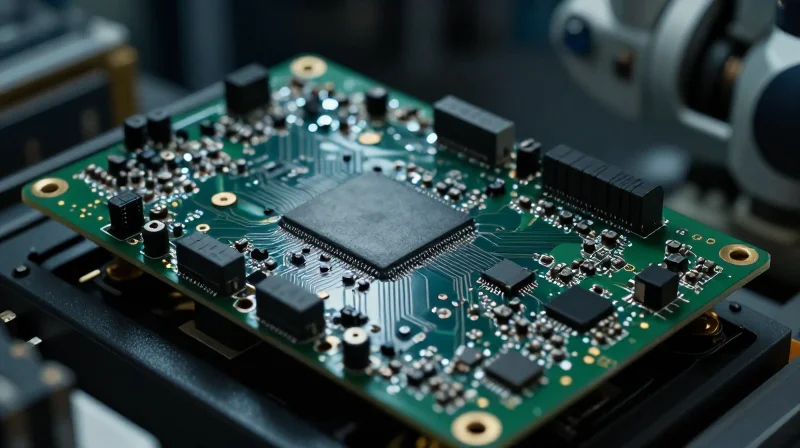
The Engineering Mandate for Robotic Control
Robotic arm controllers are the nervous system of industrial automation. Unlike consumer electronics, these PCBs must maintain millisecond-level synchronization while being subjected to high-frequency vibrations, significant thermal cycling, and intense electromagnetic interference (EMI) environments. Selecting an assembly partner requires verifying their capability to manufacture boards that exceed standard reliability metrics.
Critical Performance Pillars
| Parameter | Robotic Requirement | Impact of Failure |
|---|---|---|
| Signal Integrity | Low-latency communication | Erratic motion or e-stop |
| Thermal Management | High-wattage dissipation | Component degradation |
| Vibration Tolerance | Robust solder joints | Intermittent connectivity |
Addressing Mechanical and Thermal Extremes
Mechanical fatigue is the silent killer of industrial robotics. Controllers located near articulating joints experience continuous kinetic shock. An ideal partner will employ advanced assembly techniques—such as conformal coating to protect against particulate ingress and heavy-duty underfill for ball grid array (BGA) components—to ensure long-term structural integrity under cyclic loading.
Common Challenges and Solutions
- How does thermal management influence board longevity?
Industrial controllers generate concentrated heat. Proper assembly involves heat-dissipating vias and optimized metal core substrates to prevent localized hotspots that trigger premature dielectric breakdown. - Why is EMI shielding vital for robotic precision?
Robotic environments often feature high-current motors and power lines. Proper layer stack-up and strategic component placement are required to ensure the control signals remain uncorrupted by surrounding electrical noise. - What characterizes a vibration-resistant assembly?
Beyond component choice, it involves specialized solder alloys that offer superior ductility and mechanical bonding strength to withstand fatigue from high-acceleration movements.
The Critical Importance of IPC Class 3 Standards

Why IPC Class 3 is Non-Negotiable for Robotics
In the context of industrial robotics, where hardware failure can lead to catastrophic downtime, operator injury, or costly product defects, IPC Class 3 is the industry gold standard for 'High-Performance Electronic Products.' Unlike Class 2, which is sufficient for consumer electronics, Class 3 is specifically engineered for systems where continued performance is critical and equipment downtime is not an option. Robotic controllers operate in high-vibration, high-heat, and sometimes electrically noisy environments, making the stringent material quality, solder joint integrity, and inspection criteria defined by Class 3 essential.
IPC Class 2 vs. Class 3: Key Performance Indicators
| Parameter | IPC Class 2 | IPC Class 3 |
|---|---|---|
| Inspection Criteria | Acceptable for cosmetic imperfections | Zero tolerance for functional defects |
| Solder Joint Fill | Minimum 50% vertical fill | Minimum 75% vertical fill |
| Vibration/Shock Resistance | Standard industrial grade | Enhanced for mission-critical reliability |
| Conformal Coating | Optional/Basic protection | Rigorous application standards |
Common Questions Regarding IPC Compliance
- Does choosing IPC Class 3 significantly increase production costs?
While IPC Class 3 demands higher-grade raw materials and more rigorous inspection processes, the initial cost increase is easily justified by the prevention of costly field failures, recalls, and maintenance expenses in robotic applications. - How can I verify a partner's IPC Class 3 capabilities?
Request their IPC certification records, evidence of staff training certifications (CIT/CIS), and specific documentation showing how their inspection processes (such as automated optical inspection) are calibrated to meet Class 3 standards. - Is Class 3 always the right choice for every robotic component?
While internal control logic boards are prime candidates for Class 3, peripheral components might sometimes qualify for Class 2. However, for the primary robotic arm controller and mission-critical motion drivers, Class 3 is the only acceptable baseline.
Supply Chain Transparency and Risk Mitigation
Establishing a Secure and Traceable Supply Chain
For industrial robotic arm controllers, supply chain integrity is as critical as the PCB design itself. A partner must employ a robust Quality Management System (QMS) that integrates comprehensive component traceability, ensuring that every batch of capacitors, microcontrollers, and interconnects can be audited back to the original component manufacturer (OCM) or authorized distribution channel.
Mitigating Counterfeit Risks
Counterfeit components pose an existential threat to long-term reliability in precision motion control. Effective mitigation requires a multi-layered verification strategy that goes beyond simple visual inspections.
| Strategy | Description | Impact on Quality |
|---|---|---|
| AS6171 Compliance | Adherence to standards for test methods to detect counterfeit parts. | High: Prevents sub-standard silicon usage. |
| Authorized Sourcing | Sourcing 100% of parts from franchised distributors. | High: Guarantees full manufacturer warranties. |
| Batch Lot Tracking | Logging every component lot code to specific serial-numbered boards. | High: Enables rapid, surgical recall capability. |
Frequently Asked Questions
- How does my partner handle component obsolescence?
A superior partner utilizes active Lifecycle Management tools to monitor EOL (End of Life) alerts for critical components, allowing for timely Last-Time-Buy (LTB) actions or design-in alternatives before production is impacted. - What documentation should I expect for full traceability?
You should receive Certificate of Conformance (CoC) documentation for every shipment, alongside detailed build records that map component lot codes and date codes to the specific PCB serial numbers produced. - Is internal testing sufficient to prevent counterfeit parts?
No, internal testing is only the last line of defense. True mitigation happens at the procurement stage by vetting vendors and establishing an approved vendor list (AVL) strictly limited to reputable global distributors.
Advanced Quality Assurance and Testing Protocols
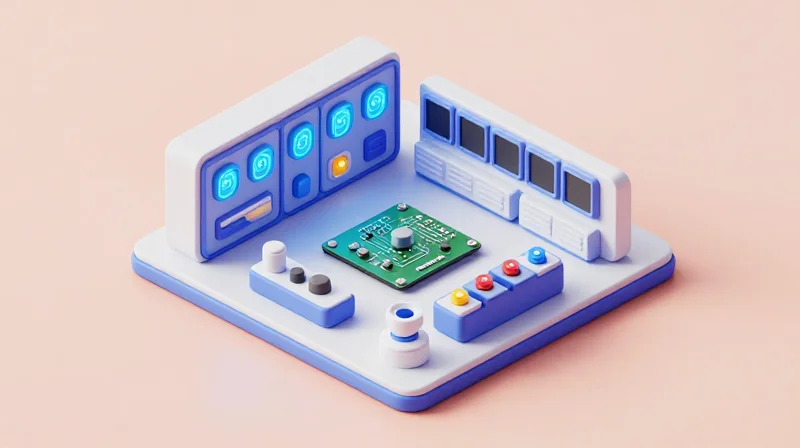
Multi-Layered Verification for Mission-Critical Reliability
For robotic arm controllers, simple visual inspection is insufficient. The ideal assembly partner must employ a rigorous, multi-staged testing hierarchy that combines automated optical checks, volumetric structural analysis, and dynamic functional verification to eliminate latent defects.
Core Inspection Technologies
| Testing Method | Primary Function | Robotic Application Benefit |
|---|---|---|
| AOI (Automated Optical Inspection) | High-speed 2D/3D component scanning | Detects solder bridges and alignment errors early |
| AXI (Automated X-Ray Inspection) | Non-destructive interior structural imaging | Verifies hidden BGA/QFN solder joint integrity |
| ICT (In-Circuit Testing) | Electrical probing of board nets | Confirms component values and net connectivity |
Functional and Environmental Stress Testing
Beyond component-level checks, functional circuit testing (FCT) is essential. Your partner should simulate real-world operational loads, ensuring the controller responds correctly to motor feedback and communication protocols. Furthermore, specialized testing for vibration resistance and thermal cycling confirms that the PCB will maintain signal integrity during the high-acceleration maneuvers typical of robotic arms.
Frequently Asked Questions on Testing Protocols
- Is Flying Probe testing enough for robotic controllers?
While useful for prototypes, Flying Probe lacks the throughput for production and cannot verify high-speed signal timing. Bed-of-nails or advanced FCT is preferred for mass production. - Why is X-ray inspection mandatory for industrial robotics?
Modern robotics rely on high-density BGA packages. Since solder joints under these components are invisible, AXI is the only way to ensure reliable interconnection. - How do I audit my partner’s testing capability?
Request their calibration records for testing equipment and ask for a sample 'Test Coverage Report' that details which components are verified by which methodology.
Evaluating Engineering Support and Design for Manufacturing (DFM)
The Strategic Role of Early-Stage DFM Feedback
For precision industrial robotics, board layout is as critical as the circuit design itself. An ideal partner provides comprehensive DFM analysis long before the first production run. This proactive engineering engagement ensures that your layout maximizes signal integrity, thermal management, and solder joint robustness, thereby preventing costly re-spins or field failures caused by assembly-induced defects.
What to Evaluate in Engineering Support
- Proactive DFM Reporting
Does the partner provide a detailed DFM report highlighting potential issues such as tombstoning risks, thermal relief problems, or assembly clearance violations, and do they suggest specific design adjustments? - DFX (Design for Excellence) Capabilities
Beyond just manufacturing, a top-tier partner assesses Design for Testability (DFT) to ensure that in-circuit testing (ICT) or flying probe points are accessible and optimized for high-density controller boards. - Direct Engineering Access
The ability to communicate directly with the assembly house's process engineers—rather than going through a sales gatekeeper—is vital for complex robotic designs requiring custom assembly techniques.
Engineering Support Tier Comparison
| Feature | Transactional Partner | Strategic Engineering Partner |
|---|---|---|
| DFM Analysis | Post-order automated check | Pre-design consultation |
| Communication | Sales Portal | Dedicated Engineer/AE |
| Problem Solving | Rejects design | Collaborates on solution |
| Lifecycle Focus | Build-to-print | Continuous process improvement |
When auditing a potential partner, request samples of previous DFM reports. Look for specific feedback regarding robotic-grade requirements, such as component placement tolerance for high-vibration environments and thermal dissipation strategies for power-dense controller modules. A partner that merely accepts files without questioning your design may lack the expertise required to ensure the long-term reliability of mission-critical robotics.
Scalability: From Prototype to Full-Scale Production

Scaling Production: Ensuring Consistent Precision
Transitioning from a prototype build to full-scale production requires a partner that views manufacturing not as a static event, but as a scalable process. For high-precision robotic controllers, small deviations in assembly can lead to significant performance degradation in the field. A capable partner must demonstrate robust facility capacity, automated workflow integration, and a flexible supply chain capable of handling sudden spikes in demand while maintaining identical quality standards for every unit produced.
Comparison of Scale-Up Capabilities
| Feature | Prototype Capability | Full-Scale Production Requirement |
|---|---|---|
| Assembly Focus | Flexibility & Speed | Repeatability & Throughput |
| Component Sourcing | Fast-Turn Distribution | Direct Mill/Strategic Inventory |
| Quality Control | Manual Inspection | In-line AOI & Automated Testing |
| Supply Chain | Spot Buy Strategy | VMI & Long-term Agreements |
Key Considerations for Scalability
- How does equipment automation support my production growth?
Advanced SMT lines with high-speed pick-and-place machines ensure uniform solder paste deposition and component placement, reducing human error as volume increases. - Is the facility footprint adequate for sudden demand shifts?
An ideal partner maintains scalable floor space and sufficient machinery redundancy to manage unexpected surges in product demand without requiring a change in vendor. - Does the partner offer Vendor Managed Inventory (VMI)?
VMI programs mitigate supply chain volatility by holding pre-purchased components in stock, ensuring your robotic controller production never stalls due to lead-time delays.
Finally, assess the partner's ability to evolve their process documentation. As you scale, the 'Golden Sample' established during the prototype phase must be codified into a rigid Standard Operating Procedure (SOP). A partner that effectively manages data-driven feedback loops—where production issues found on the factory floor are instantly funneled back to engineering for DFM improvements—is a critical asset for long-term project success.
The Role of Certifications in Building Trust
Why Certifications Matter in Industrial Robotics
For precision industrial robotic arm controllers, there is no margin for error. Certifications act as a rigorous third-party validation that a manufacturing facility adheres to standardized protocols, risk mitigation strategies, and quality control metrics. Engaging a partner without these credentials introduces significant supply chain risk, as you lose objective proof of their ability to handle complex, high-reliability assemblies.
| Certification | Primary Focus | Relevance to Robotics |
|---|---|---|
| ISO 9001 | Quality Management Systems | Essential baseline for consistent process control. |
| AS9100 | Aerospace/Defense Standards | High-rigor requirements for complex, mission-critical electronics. |
| ISO 13485 | Medical Devices | Extreme traceability and strict documentation standards. |
| IPC-A-610 | Electronic Assembly Standards | The industry benchmark for PCB assembly workmanship quality. |
Key Certifications to Require
While ISO 9001 is the foundational requirement, top-tier robotics manufacturers should look for partners that align their quality systems with more specialized standards. AS9100, for instance, builds upon ISO 9001 but adds stringent requirements for risk management and configuration control, which are vital when manufacturing controllers that must operate flawlessly for thousands of hours.
- Does a lack of certification disqualify a potential partner?
Not necessarily, but it shifts the burden of proof entirely onto you. Without certification, you must invest significantly more time in comprehensive on-site audits and deep-dive process vetting. - Why is IPC Class 3 compliance important?
For mission-critical industrial controllers, IPC Class 3 standards mandate the highest level of performance and reliability, ensuring the assembly can withstand harsh operating environments. - Should I require environmental certifications like ISO 14001?
Yes, if your brand prioritizes sustainability or if you are selling into markets with strict environmental regulations like RoHS and REACH, ISO 14001 demonstrates an organized approach to compliance.
Ultimately, certifications provide a roadmap for transparency. When evaluating your PCB assembly partner, ask for their latest audit reports and verify the validity of their certificates. A reliable partner will be eager to demonstrate their compliance, as it reflects their investment in the same quality culture that your robotics products require.
Conducting an Effective On-Site Facility Audit
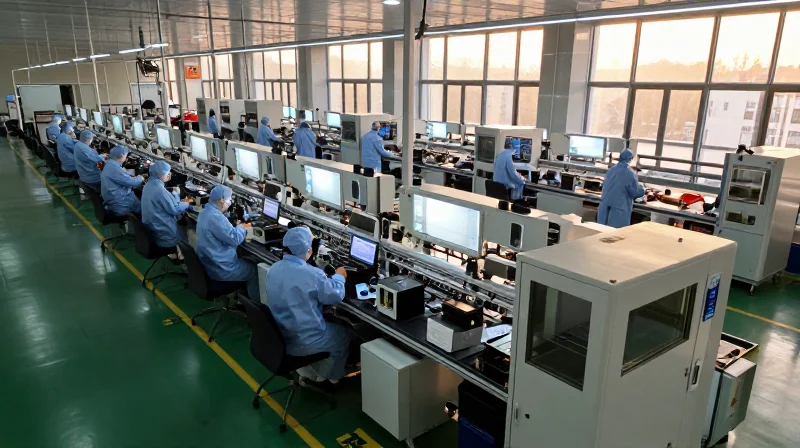
The Anatomy of a High-Precision Facility Audit
An on-site visit is not merely a formality; it is a critical opportunity to observe the 'hidden' realities of the factory floor. When manufacturing controllers for precision robotics, you are looking for evidence of process discipline, rigorous environmental controls, and a visible commitment to continuous improvement that cannot be captured in brochures or ISO certificates.
Key Observation Points for Robotic Controller Production
- ESD and Contamination Control
Observe if staff are properly grounded and if the production floor is strictly zoned to prevent static discharge and dust buildup, both of which are fatal to high-density robotic controller boards. - Equipment Calibration and Maintenance Logs
Check the physical stickers on placement machines and reflow ovens. Recent calibration dates indicate a proactive approach to maintaining the tight tolerances required for complex industrial assemblies. - Traceability Infrastructure
Ask for a walkthrough of their material tracking process. Can they trace a specific component from a finished robotic controller back to its original reel and batch number in real-time? - Workstation Ergonomics and Workflow
An organized floor with logical, unidirectional workflow prevents cross-contamination and minimizes human error during manual assembly or inspection stages.
Audit Checklist: What to Look For
| Audit Area | Red Flag | Indicator of Excellence |
|---|---|---|
| Component Storage | Open reels, unsealed moisture-sensitive devices. | Temperature/humidity controlled cabinets, vacuum-sealed storage. |
| Inspection Process | Reliance on manual inspection only. | Automated Optical Inspection (AOI) integrated at multiple stages. |
| Maintenance | Outdated equipment, dusty machinery. | Clean machinery, clear preventative maintenance schedules posted. |
| Culture | Staff appearing rushed or confused. | Defined standard operating procedures clearly visible at stations. |
Expert Tip for Your Site Visit
To truly gauge the culture, ask the floor manager to explain a past non-conformance event. A partner that hides mistakes is a risk; a partner that can walk you through their root-cause analysis (RCA) and corrective actions is an asset that will protect your robotic controller project from quality drift.
Selecting a PCB assembly partner for your industrial robotic arm requires a meticulous audit of technical capability and ethical supply chain practices. By prioritizing IPC Class 3 standards and robust testing, you safeguard your brand's reputation for reliability. Ready to elevate your robotic control systems? Contact our engineering team today to discuss your project requirements and see why we are the trusted partner for precision automation.
