
In today's volatile economic climate, hardware startups are facing unprecedented supply chain challenges. As timelines compress and market demands fluctuate, the age-old debate between turnkey and consigned assembly has shifted from a matter of preference to a critical strategic decision. This article dissects the operational realities of both models to help your team navigate the path from prototype to mass production.
The Evolution of Modern Electronics Manufacturing

The Shift Toward Supply Chain Resilience
Modern electronics manufacturing has transitioned from a purely linear model to a complex, risk-mitigation-focused ecosystem. Historically, hardware firms prioritized lean manufacturing and Just-in-Time (JIT) delivery to minimize inventory costs. However, recent global supply chain disruptions—ranging from semiconductor shortages to logistical bottlenecks—have exposed the fragility of these systems, forcing companies to move toward more robust, diversified assembly models.
Comparative Strategies in PCB Assembly
| Strategy | Primary Advantage | Best Suited For |
|---|---|---|
| Turnkey Assembly | Operational efficiency | Rapid prototyping and scaling |
| Consigned Assembly | Cost control/Supply visibility | High-volume, stable production |
Navigating Manufacturing Readiness
- Why are manufacturers reconsidering Turnkey solutions?
Turnkey models reduce administrative overhead and leverage the buying power of the CM, providing better access to restricted components during supply crunches. - What drives the continued demand for Consigned assembly?
Companies with specific IP requirements or proprietary supply agreements prefer consigned models to maintain absolute control over their component quality and inventory flow. - How does market readiness impact assembly choice?
Early-stage products often favor the agility of Turnkey services to reduce Time-to-Market, while mature products in competitive markets favor the granular cost control found in Consigned models.
Ultimately, the evolution of PCB assembly is not about choosing one model over the other, but about building a hybrid intelligence where data-driven procurement dictates the assembly strategy. As firms continue to modernize, the integration of real-time supply chain transparency will become the primary benchmark for market readiness in the consumer electronics sector.
Defining Consigned Assembly: The Traditional Approach
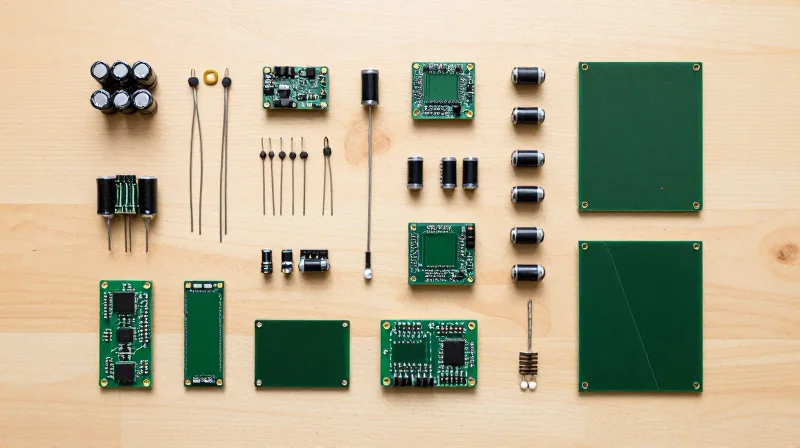
Defining the Consigned Assembly Model
In the consigned PCB assembly model—often referred to as 'kitting'—the original equipment manufacturer (OEM) takes full responsibility for sourcing, purchasing, and managing the inventory of all electronic components required for a build. These components are then 'consigned' or delivered to the contract manufacturer (CM), whose sole responsibility is the physical assembly, soldering, and testing of the printed circuit boards.
This traditional approach establishes a clear division of labor. The OEM acts as the supply chain manager, leveraging their own purchasing power and vendor relationships, while the CM functions strictly as a labor provider. This methodology is frequently favored by startups and mid-sized companies seeking granular control over their bill of materials (BOM).
Strategic Pros and Cons of Consignment
| Feature | Advantage | Disadvantage |
|---|---|---|
| Cost Control | Direct procurement allows for better price negotiation. | High administrative overhead for purchasing and logistics. |
| Inventory Risk | OEM retains ownership and can repurpose parts. | Risk of obsolescence and carrying costs rest with OEM. |
| Supply Chain | Visibility into specific component lead times. | Complexity in managing multiple distributors and shipments. |
Frequently Asked Questions
- Why do companies choose the consigned model?
Companies choose this model to maintain complete control over their BOM, avoid markups from CMs on components, and leverage existing volume discounts they have negotiated with specific suppliers. - What are the hidden costs of consignment?
The hidden costs involve significant 'soft' expenses, including shipping fees, the time spent managing component obsolescence, tracking shipments across multiple suppliers, and the potential for manufacturing delays if parts are incorrectly kitted. - Is consignment better than turnkey for prototypes?
For early-stage prototypes, consignment can be beneficial if the OEM is sourcing specialized or hard-to-find components, though it requires a higher degree of logistical coordination compared to an outsourced turnkey solution.
The Turnkey Advantage: Speed and Operational Simplicity

The Turnkey Advantage: Speed and Operational Simplicity
In a fast-moving consumer electronics landscape, the turnkey model serves as a strategic accelerant. By transferring the burden of sourcing, procurement, and logistical coordination to a specialized contract manufacturer, hardware firms can pivot away from backend inventory management and toward core product innovation. This model minimizes the 'hidden' costs of supply chain volatility, such as component shortages and customs delays, which often plague teams attempting to manage multi-vendor consigned projects in-house.
Comparative Efficiency: Turnkey vs. Consigned
| Feature | Consigned Model | Turnkey Model |
|---|---|---|
| Sourcing Responsibility | Customer | Manufacturer |
| Inventory Risk | High (Customer owned) | Low (Integrated) |
| Logistics Effort | Extensive | Minimal |
| Time-to-Market | Slower | Faster |
Addressing Common Misconceptions
- Does turnkey manufacturing mean less control over components?
While you delegate the procurement process, you retain control through a defined Approved Vendor List (AVL). Manufacturers follow your specifications while applying their procurement scale to secure components. - Is the turnkey model always more expensive?
While unit prices may reflect a markup on components, the 'Total Cost of Ownership' is often lower in turnkey when accounting for reduced shipping costs, diminished labor for kitting, and avoided production downtime due to missing parts. - How does turnkey impact production scaling?
Turnkey partners provide elastic scaling capabilities. As your demand grows, their existing supplier relationships and bulk purchasing power allow for rapid increases in volume that would be difficult to manage independently.
Comparative Cost Analysis: Upfront vs. Hidden Expenses

Total Cost of Ownership: A Financial Breakdown
While consigned assembly often appears cheaper on a line-item basis due to direct control over component purchasing, the total cost of ownership frequently favors turnkey models when accounting for labor, inventory carrying costs, and the high price of supply chain failures.
| Expense Category | Consigned Assembly | Turnkey Assembly |
|---|---|---|
| Component Procurement | High internal labor/overhead | Included in service margin |
| Inventory Risk | Borne entirely by customer | Managed by contract manufacturer |
| Shipping & Logistics | Multiple points of origin/costs | Consolidated single-point delivery |
| Obsolescence Impact | High financial loss potential | Mitigated by lifecycle management |
Uncovering Hidden Operational Expenses
In a consigned model, hardware firms often overlook the 'hidden' costs of procurement personnel, multi-vendor shipping fees, and the impact of component shortages. Managing parts lists involves significant administrative burden and the risk of ordering incorrect revisions or counterfeit parts, which can lead to catastrophic production halts. Conversely, the turnkey model absorbs these variables, effectively shifting the administrative and risk burden from the OEM to the manufacturer.
Frequently Asked Questions
- Why does consigned assembly often incur higher hidden costs?
Costs hidden in consigned models include the expense of employing procurement staff, costs associated with tracking multiple shipments, inventory warehousing, and the financial impact of parts arriving damaged or obsolete. - Does the turnkey premium justify the reduction in risk?
For most high-complexity products, yes. Turnkey providers leverage bulk purchasing power and established logistics networks, which often offset the higher per-unit markup through significant savings in time-to-market and reduced operational overhead. - How is component obsolescence managed differently?
Turnkey manufacturers provide proactive lifecycle monitoring, whereas consigned customers are often unaware of end-of-life (EOL) announcements until they attempt to place a new order, leading to expensive last-time buys or costly redesigns.
Supply Chain Resilience in an Unpredictable Market
The Turnkey Advantage in Mitigating Market Volatility
Supply chain resilience has shifted from a competitive advantage to a fundamental survival requirement in consumer electronics. While consigned models leave startups vulnerable to sudden market shifts and limited leverage with distributors, turnkey providers operate as strategic buffers. By maintaining established credit lines, long-term stocking agreements, and sophisticated demand forecasting tools, turnkey manufacturers shield their clients from the most severe impacts of component shortages.
Vendor Relationships and Purchasing Leverage
Turnkey providers possess significant bargaining power that individual startups cannot replicate. Because they manage high-volume procurement across diverse clients, they are prioritized by franchised distributors and component manufacturers during supply constraints. This 'preferred partner' status allows them to bypass the gray market, ensuring component authenticity and timely arrival of critical parts.
| Risk Factor | Consigned Model Exposure | Turnkey Resilience Strategy |
|---|---|---|
| Component Shortages | High: Startup lacks leverage | Low: Bulk purchasing power |
| Lead Time Volatility | High: Reactive procurement | Low: Proactive buffer inventory |
| Vendor Relations | None: Ad-hoc ordering | Strong: Strategic partnerships |
Frequently Asked Questions Regarding Supply Resilience
- How does a turnkey provider handle sudden spikes in component lead times?
They utilize real-time inventory visibility across multiple global sources and leverage existing relationships to secure allocations, often substituting qualified alternatives before the startup even identifies a bottleneck. - Does the turnkey model guarantee protection against counterfeit components?
Yes, by exclusively sourcing from franchised distributors and Tier-1 suppliers, turnkey providers ensure full traceability, effectively eliminating the risks associated with procuring from unauthorized third-party marketplaces.
Scaling for Growth: When to Transition Models

The Inflection Point: Identifying Operational Scalability
The transition from consigned to turnkey PCB assembly is rarely about a single metric, but rather the cumulative pressure on internal resources as demand shifts from prototyping to mass market production. For most startups, the inflection point occurs when the administrative overhead of procurement and logistics begins to impede the engineering team's ability to focus on product innovation.
When to Pivot from Consigned to Turnkey
- Complex Bill of Materials (BOM)
As your BOM grows beyond 50 unique line items, the risk of human error in procurement increases exponentially. Turnkey providers utilize integrated ERP systems to manage complex sourcing more effectively. - Supply Chain Volatility
If you are spending more than 20 hours a week chasing component shortages or managing multiple freight forwarders, your business has outgrown the consigned model. - Cash Flow and Inventory Constraints
Consigned models require you to hold stock or manage partial shipments. A shift to turnkey allows you to move to a just-in-time model, freeing up capital tied up in sitting inventory.
Comparative Efficiency Matrix
| Operational Metric | Consigned Model | Turnkey Model |
|---|---|---|
| Procurement Labor | High (Manual) | Low (Integrated) |
| Inventory Risk | Full (Buyer) | Minimal (Vendor) |
| Lead Time Management | Fragmented | Synchronized |
| Scaling Potential | Limited | Highly Scalable |
Ultimately, the shift is about de-risking your supply chain. While consigned manufacturing offers initial flexibility for early-stage development, it creates a bottleneck during rapid growth. Transitioning to a turnkey partner enables the transition from a 'maker' mindset to a 'market-ready' production environment, ensuring that component sourcing, logistics, and quality assurance are managed at an industrial standard.
Quality Assurance and Vendor Accountability
Quality assurance (QA) in electronics manufacturing is intrinsically linked to the supply chain model. In a turnkey assembly model, the manufacturer assumes full responsibility for the sourcing, incoming inspection, and validation of every component. Conversely, the consigned model shifts the burden of quality control back to the OEM, as they are ultimately responsible for the performance and authenticity of the components they provide to the assembly house.
Comparative Analysis of Quality Control Responsibility
| Feature | Turnkey Model | Consigned Model |
|---|---|---|
| Component Sourcing | Manufacturer-managed | Client-managed |
| Incoming Quality Inspection | Provider responsibility | Client responsibility |
| Defect Accountability | Consolidated under assembler | Fragmented across vendors |
| Supply Traceability | Full chain of custody | Variable; depends on client diligence |
Mitigating Risk Through Vendor Accountability
A primary risk in electronics manufacturing is the influx of counterfeit components. Turnkey providers mitigate this through established relationships with authorized distributors and rigorous vetting processes for secondary vendors. Under a consigned model, a startup is often at the mercy of the quality of their own procurement, and if faulty parts cause a board failure, the assembler is generally absolved of liability, leaving the OEM to bear the full cost of re-work and production delays.
Frequently Asked Questions on QA Protocols
- Does a turnkey model automatically guarantee zero defects?
No, but it consolidates the liability. If a defect occurs due to a component failure in a turnkey project, the contract manufacturer is expected to manage the warranty replacement and re-assembly process. - How is traceability handled in consigned assembly?
Traceability is the responsibility of the OEM. Clients must provide detailed documentation for every component lot, which can become a massive administrative hurdle as the product scales. - Why is vendor accountability critical for market readiness?
Market readiness depends on consistent delivery. If a component is faulty and not caught until final testing, a lack of vendor accountability leads to weeks of supply chain disruption, delaying product launch schedules.
Selecting the Right Manufacturing Partner
Choosing between turnkey and consigned assembly is not merely a tactical decision; it is a fundamental shift in how a company manages risk and operational overhead. Selecting an Electronic Manufacturing Services (EMS) provider requires a rigorous assessment of their core competencies against your specific product lifecycle requirements.
Evaluation Framework for EMS Providers
| Criteria | Key Indicator | Significance |
|---|---|---|
| Technical Capability | Advanced SMT/Testing | Ensures scalability for complex, miniaturized designs. |
| Communication | Real-time ERP Access | Provides visibility into WIP and inventory status. |
| Geographical Fit | Transit Lead Times | Reduces logistics costs and simplifies site visits. |
Key Considerations for Partnership Selection
- How does technical capacity influence the partnership?
Your partner must support your current technology requirements, such as high-density interconnect (HDI) boards or specialized chip-on-board assembly, while offering a roadmap for future product iterations. - Why is geographic proximity critical for new product introduction (NPI)?
During the NPI phase, rapid iteration is common. Proximity allows for face-to-face troubleshooting, reduced shipping delays, and better alignment with local labor laws and IP protection standards. - What indicates transparency in communication?
A high-performing partner provides a centralized digital dashboard that tracks raw material procurement, assembly milestones, and quality yield metrics in real-time, preventing the 'black box' manufacturing experience.
Ultimately, the partnership must be viewed as an extension of your internal engineering team. Whether you prioritize the turnkey model for its simplified logistics or the consigned model for its granular control over BOM costs, the provider's ability to integrate with your internal processes is the true metric of success.
Choosing between turnkey and consigned assembly is not just a logistical decision; it is a fundamental pillar of your long-term business viability. While consigned models offer perceived control, the agility provided by turnkey solutions often proves superior for scaling in modern markets. Evaluate your startup's current operational bandwidth and reach out to our team of manufacturing experts today to discuss an optimized production strategy for your next product launch.
