
As 5G deployments scale globally, the pressure to maintain signal integrity while curbing infrastructure costs has never been higher. Engineers are moving beyond traditional fabrication methods, realizing that the real cost of a base station is not in its upfront build, but in its lifecycle performance. This article explores how precision PCB engineering directly dictates your network's financial and operational success.
The Direct Correlation Between PCB Design and Signal Loss
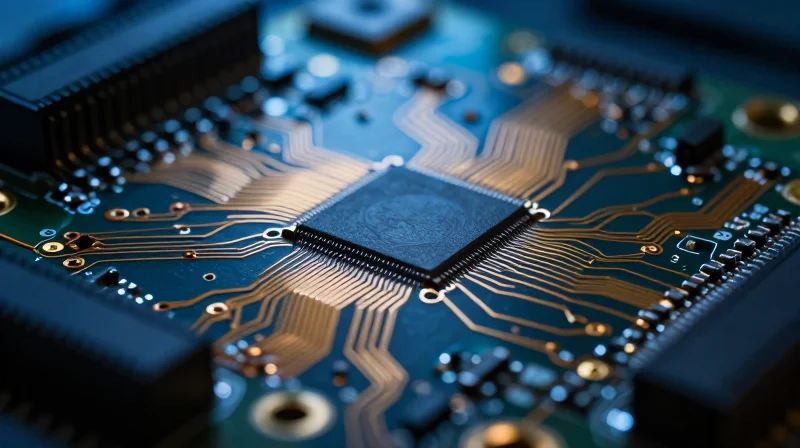
The Physics of High-Frequency Signal Degradation
At 5G frequencies, PCB interconnects cease to function as simple conductors and behave instead as complex transmission lines. Signal loss, primarily manifesting as insertion loss, is driven by the interplay between conductor resistive losses (the skin effect) and dielectric dissipation. As frequencies increase into the millimeter-wave range, even minor geometrical variations in the trace width or gaps in the reference plane can trigger reflections, turning the PCB into a source of signal degradation rather than a reliable conduit.
Minimizing Impedance Mismatches Through Precision Layout
Impedance discontinuities are the primary culprits behind signal reflections that erode Return Loss (S11) performance. To maximize ROI, engineers must move beyond standard design rules to prioritize electromagnetic field containment.
| Design Factor | Impact on Signal | ROI Implication |
|---|---|---|
| Trace Surface Roughness | Increases resistive loss at high frequencies | Higher power consumption at base stations |
| Dielectric Constant (Dk) Stability | Causes phase jitter and timing errors | Reduced data throughput efficiency |
| Via Stubs | Creates parasitic capacitance/reflections | Increased maintenance and re-transmission costs |
Design Best Practices for 5G Reliability
- How does PCB material selection impact 5G ROI?
Utilizing low-loss, high-frequency laminates reduces signal attenuation, allowing for longer trace runs and lower power requirements at the amplifier stage, directly improving system-level efficiency. - Why is trace geometry control critical in 5G boards?
Precise control over trace impedance (typically 50 Ohms) ensures that signal energy is transferred efficiently rather than reflected, minimizing the need for costly signal conditioning components. - What role does ground plane integrity play?
Solid, uninterrupted ground planes prevent electromagnetic interference (EMI) and maintain a consistent return path, which is essential to prevent crosstalk and maintain signal purity in high-density 5G arrays.
Material Science: The ROI of High-Performance Dielectrics
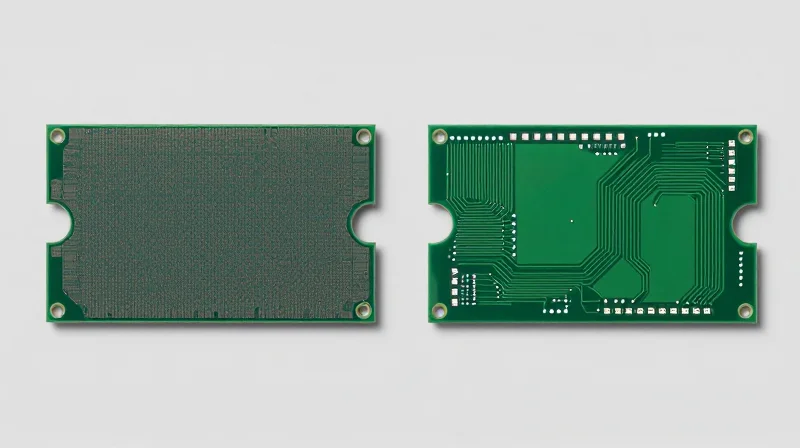
The Economic Trade-off: Standard vs. Specialized Dielectrics
In the race to deploy 5G, manufacturers often face the dilemma of choosing between cost-effective standard FR-4 laminates and specialized, high-frequency dielectric materials. While the initial procurement cost for advanced materials is higher, the ROI is realized through significantly lower insertion loss, thermal stability, and reduced signal retransmission requirements. High-performance dielectrics, typically featuring low dissipation factors (Df) and consistent dielectric constants (Dk), are essential for maintaining signal integrity at the millimeter-wave (mmWave) frequencies critical to 5G performance.
| Material Type | Typical Df (Dissipation Factor) | Manufacturing Complexity | Signal Performance | Long-Term ROI |
|---|---|---|---|---|
| Standard FR-4 | High (0.015+) | Low | Poor | Low (High signal degradation) |
| Mid-Loss Laminates | Medium (0.008-0.010) | Moderate | Acceptable | Medium (Cost-optimized) |
| High-Performance/PTFE | Very Low (<0.002) | High | Excellent | High (Superior stability) |
Ensuring Long-Term Signal Stability
Signal stability is the primary driver of operational ROI. Fluctuations in dielectric constant due to environmental temperature shifts can cause phase errors and impedance mismatches, forcing hardware to work harder to maintain throughput. Materials with low thermal coefficients of dielectric constant minimize these drifts, effectively extending the lifespan of infrastructure and reducing field maintenance costs associated with signal degradation.
Frequently Asked Questions
- Why is the Dissipation Factor (Df) critical for 5G ROI?
A high Df results in greater energy conversion into heat, which dissipates the signal. Minimizing Df reduces the need for costly signal amplification and repeaters throughout the network. - Can standard PCBs be used for sub-6 GHz 5G deployments?
Yes, but they are often insufficient for high-density mmWave applications where signal integrity demands strict control over dielectric properties to prevent packet loss. - How does material selection impact manufacturing yields?
Advanced materials require tighter process controls during etching and lamination, which may initially lower yields but often leads to fewer post-production failures and reduced field-return costs.
Advanced Fabrication Techniques for Mass Manufacturing

Optimizing Fabrication for 5G Reliability
Transitioning from legacy subtractive manufacturing to precision-based, additive fabrication processes is essential for maintaining the sub-decibel signal integrity required in 5G infrastructure. By leveraging additive manufacturing, engineers can create complex antenna structures that were previously impossible to machine, effectively reducing signal reflection and insertion loss while minimizing scrap rates through precise material deposition.
Comparison of Fabrication Methodologies
| Technique | Cost Efficiency | Signal Impact | Scrap Rate |
|---|---|---|---|
| Chemical Etching | High | Moderate | Moderate |
| Laser Direct Structuring | Medium | High | Low |
| Additive Manufacturing | Long-term High | Exceptional | Negligible |
Key Considerations in Mass Manufacturing
- How does precision etching reduce signal attenuation?
Precision etching minimizes surface roughness at the copper-dielectric interface, which is critical for reducing the 'skin effect' that causes signal loss at high 5G frequencies. - Can additive manufacturing sustain mass production volumes?
While traditionally for prototyping, modern industrial-grade 3D printing and automated additive systems have scaled to support high-volume manufacturing, allowing for rapid design iterations without the need for expensive re-tooling. - What is the ROI impact of reducing scrap rates?
Beyond direct material savings, lower scrap rates improve manufacturing throughput and uptime, accelerating the ROI by maximizing the yield of high-frequency components that meet strict performance tolerances.
Analyzing the True Total Cost of Ownership (TCO)
Moving Beyond Capital Expenditure
In the race to deploy 5G, stakeholders often focus exclusively on Bill of Materials (BOM) costs. However, true TCO is defined by the endurance of the infrastructure under harsh operational conditions. Investing in premium PCB materials and robust fabrication techniques initially may increase upfront spend, but it drastically reduces the fiscal burden of post-deployment field service and unexpected outages.
| Cost Driver | Low-Cost Approach | High-Performance Approach |
|---|---|---|
| Material Quality | High signal loss/degradation | Superior stability/reliability |
| Field Service Rate | High frequency (Reactive) | Low frequency (Proactive) |
| Downtime Impact | Significant revenue loss | Minimal interruption |
The Economic Multiplier of Service Reliability
Maintenance costs in 5G environments are amplified by the difficulty of reaching dense antenna arrays. A single service call often necessitates specialized equipment and high-altitude or remote access, costs which can quickly eclipse the savings realized from cheaper manufacturing materials. By optimizing hardware for longevity—specifically through heat dissipation and signal integrity—operators reduce the necessity of physical interventions.
- How does material choice influence long-term TCO?
High-performance dielectrics maintain electrical properties over time, whereas low-grade materials degrade under thermal cycling, forcing premature replacement. - Is downtime the largest hidden cost?
Yes, network downtime due to hardware failure incurs SLA penalties and customer churn, often exceeding the total initial hardware budget. - What is the ROI of precision fabrication?
Precision etching minimizes impedance mismatches, ensuring consistent signal performance and reducing the frequency of signal-drop related maintenance.
Case Study: Reducing Field Maintenance Through Robust Design

Case Study: Strategic Design for Field Reliability
A Tier-1 telecommunications provider faced mounting operational expenses due to intermittent signal failures in high-density 5G arrays. Post-deployment analysis identified that thermal cycling and moisture ingress at interconnect points were the primary drivers for 60% of field service dispatches. By transitioning to a modular, thermally-conductive enclosure design and hermetically sealed connector interfaces, the provider successfully reduced maintenance interventions by 45% over an 18-month deployment period.
Comparative Impact on Operational Metrics
| Metric | Legacy Design | Optimized Design |
|---|---|---|
| Annual Field Failure Rate | 8.5% | 2.1% |
| Average Repair Cost/Unit | $1,450 | $420 |
| Signal Stability (MTBF) | 12 Months | 36 Months |
Technical Insights and Best Practices
- How did material selection influence reliability?
The transition from standard polymer housings to high-thermal-conductivity materials prevented localized overheating, which was the primary catalyst for micro-fractures in signal-processing components. - What role did modularity play in cost reduction?
Modular designs allowed field technicians to replace sub-assemblies rather than entire units, cutting average on-site service time by 65% and eliminating the need for complex, on-site calibration. - How does robust design affect long-term ROI?
While the initial unit cost was 15% higher, the reduction in lifetime maintenance expenses resulted in a TCO break-even point within just 14 months of operation.
The project demonstrates that upfront investment in signal integrity and structural robustness is not merely a technical requirement but a strategic financial lever for 5G infrastructure scaling.
The Financial Impact of Signal Integrity Failures

The Economic Calculus of Signal Failure
Signal integrity issues in high-frequency 5G deployments are not merely technical hurdles; they are major fiscal liabilities. When signal-to-noise ratios fail to meet stringent latency requirements, network operators incur exponential costs starting with localized field service interventions, progressing to massive infrastructure reworks, and culminating in the loss of customer lifetime value.
| Failure Stage | Economic Impact | Financial Metric |
|---|---|---|
| Pre-Deployment Validation | High rework costs in manufacturing | Increased COGS |
| Post-Deployment Maintenance | Emergency field truck rolls | Rising OPEX |
| Subscriber Experience | Churn due to inconsistent throughput | Declining ARPU |
Quantifying the Cost of Churn
In 5G, subscriber loyalty is anchored to performance reliability. Signal interference and intermittent connectivity caused by suboptimal material choice or etching tolerances directly manifest as a decline in Net Promoter Scores (NPS). The cost of acquiring a new subscriber to replace one lost to performance-related churn is often 5 to 7 times higher than the initial cost of integrating higher-grade, signal-stable components into the hardware design.
Frequently Asked Questions
- How does signal integrity affect operational expenditure?
Poor signal integrity forces frequent truck rolls and manual network tuning, which can increase field maintenance costs by over 40% compared to robustly designed hardware. - Is the initial material cost premium justified?
Yes. While premium substrates or precision manufacturing techniques carry a higher upfront cost, they significantly lower the total cost of ownership by eliminating recurring field failures. - What is the primary indicator of signal failure financial loss?
The primary indicator is the 'Cost of Repair' (CoR) ratio, which tracks the cumulative cost of physical site visits against the initial BOM cost of the equipment.
Best Practices for Future-Proofing 5G Base Stations
Architecting for Modularity and Upgradability
To mitigate the rapid pace of technological obsolescence, design engineers must prioritize modular architectures. By isolating the Radio Frequency (RF) front-end from the baseband processing units, operators can perform targeted upgrades to antenna arrays or compute modules without requiring a complete site overhaul. This approach significantly lowers the Total Cost of Ownership (TCO) by extending the hardware lifecycle while maintaining peak signal performance.
Strategies for Cost-Effective Scalability
| Design Strategy | ROI Impact | Performance Benefit |
|---|---|---|
| Software-Defined Radios (SDR) | High: Avoids hardware swaps | Rapid deployment of new waveforms |
| Integrated Antenna Modules | Medium: Lower assembly costs | Improved beamforming precision |
| Edge-Computing Integration | High: Reduced backhaul reliance | Lower latency for localized data |
FAQs on 5G Infrastructure Longevity
- How does virtualization influence future-proofing?
Virtualizing the RAN (vRAN) allows engineers to transition processing tasks from proprietary hardware to commercial off-the-shelf (COTS) servers, enabling performance scaling through software updates rather than physical component replacements. - What role does thermal management play in base station lifespan?
Advanced thermal dissipation materials prevent component degradation under heavy compute loads, which directly reduces the frequency of field maintenance calls and extends the usable life of high-performance chipsets. - Can AI-driven maintenance reduce long-term costs?
Yes, implementing predictive maintenance algorithms allows for proactive signal integrity management, identifying failures before they cause site outages, thereby minimizing operational downtime.
Optimized PCB fabrication is not merely a technical choice but a vital financial strategy for 5G deployment success. By prioritizing signal integrity at the design phase, operators can drastically reduce field maintenance costs and ensure reliable connectivity for the long term. Contact our engineering team today to discuss how we can optimize your infrastructure project for maximum ROI.
