
In today’s competitive medical device landscape, every day saved in production translates to lives improved and market dominance secured. Yet, many OEMs remain trapped in the cycle of fragmented PCBA procurement, resulting in logistical bottlenecks and hidden costs. This article explores the strategic shift toward full box build solutions and how they empower companies to optimize their entire value chain.
The Evolution of Medical Device Production
From Disconnected Assembly to Integrated Turnkey Solutions
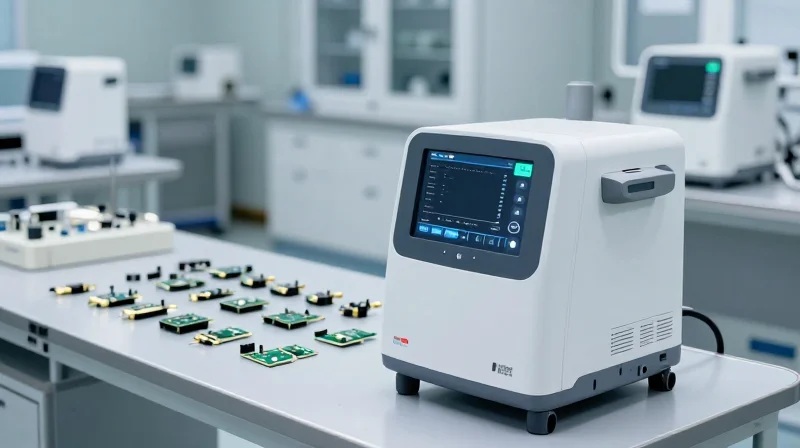
Historically, medical device manufacturing relied on decentralized assembly processes, where components were manufactured in silos, shipped to multiple sub-contractors, and finally integrated at a separate facility. This fragmented approach introduced significant overhead, quality risks, and long lead times. Today, the industry has transitioned toward the Full Box Build model—a comprehensive, turnkey manufacturing strategy where the entire product, including electronics, mechanical housing, and firmware, is assembled, tested, and packaged under one roof.
Comparison of Manufacturing Models
| Feature | Traditional Model | Full Box Build |
|---|---|---|
| Supply Chain | Fragmented / Complex | Consolidated / Lean |
| Quality Oversight | Multi-Site Management | Centralized Control |
| Lead Time | Higher due to logistics | Optimized / Reduced |
| Scalability | Difficult to synchronize | Seamless and rapid |
Strategic Drivers of Modern Efficiency
The mandate for efficiency in medical device manufacturing is driven by increasingly stringent regulatory requirements and the necessity to accelerate time-to-market. By adopting full box build strategies, manufacturers can harmonize assembly flows, minimize inventory handling, and leverage integrated Quality Management Systems (QMS) that trace every sub-component back to the final assembly point.
- What defines a 'Full Box Build'?
It is an end-to-end manufacturing process where the partner handles the complete assembly, testing, software loading, and retail packaging of the finished medical device. - How does this increase ROI?
ROI is maximized by reducing logistics costs, mitigating the risk of component supply chain interruptions, and accelerating the production cycle to get products to market faster. - Is traceability improved?
Yes, centralized assembly allows for superior traceability, as the manufacturer maintains rigorous documentation and control over the entire BOM (Bill of Materials) throughout the production lifecycle.
Hidden Costs of Fragmented Procurement
The Hidden Multiplier of Supplier Complexity
When medical device manufacturers handle procurement in silos—sourcing PCBAs, enclosures, wiring harnesses, and sub-assemblies from disparate vendors—the true cost of production extends far beyond the invoice price of individual components. Each new supplier adds an exponential layer of administrative burden, including non-recurring engineering (NRE) management, multiple quality audits, and complex logistics coordination.
| Cost Driver | Fragmented Model | Full Box Build Solution |
|---|---|---|
| Administrative Overhead | High: Multiple POs and invoices | Low: Single integrated contract |
| Quality Oversight | Variable: Multiple audit points | Consistent: Single source accountability |
| Logistics Burden | High: Complex inbound freight | Low: Optimized, consolidated shipping |
| Risk Exposure | High: Fragmented supply chain | Low: Streamlined, transparent pipeline |
Operational Bottlenecks in Disintegrated Manufacturing
Beyond procurement costs, fragmentation induces systemic inefficiencies in the production workflow. Managing individual touchpoints for quality control requires dedicated internal staff to bridge the gap between PCBA functionality and final enclosure fitment. When these elements arrive at an OEM facility separately, the burden of secondary assembly and final verification falls on internal resources, often leading to yield loss that is difficult to trace back to a specific component supplier.
- How does vendor fragmentation impact inventory carrying costs?
Managing multiple vendors forces companies to maintain higher safety stock levels for every discrete component to buffer against varying lead times, tying up significant capital in excess inventory. - Why is quality control more difficult in a fragmented supply chain?
Without a full box build partner, accountability for interface failures between sub-assemblies often becomes a 'finger-pointing' scenario between component suppliers, delaying root cause analysis and corrective actions. - What is the primary ROI driver in full box build strategies?
The ROI stems from collapsing the supply chain, which reduces headcount requirements for procurement and quality assurance while minimizing the total cost of ownership through economies of scale and consolidated logistics.
What Defines a True Full Box Build Solution?

A comprehensive box build solution goes far beyond mere assembly; it encompasses the complete lifecycle of a medical device, from raw component sourcing to the final, serialized shipment. By centralizing the production ecosystem, manufacturers eliminate the bottlenecks inherent in fragmented supply chains, ensuring that every mechanical and electronic element is integrated under a single, unified quality management system.
Core Pillars of a Turnkey Box Build
- Strategic Procurement and Sourcing
Full box build partners manage the entire bill of materials (BOM), mitigating supply chain risk through robust vendor vetting and advanced inventory management. - Integrated Mechanical Assembly
This involves precise housing installation, cable harness routing, and component integration, all performed in a controlled environment compliant with medical standards. - Software Integration and Validation
Beyond hardware, the solution includes firmware installation, software calibration, and functional validation to ensure seamless system interaction before the device leaves the factory floor. - End-to-End Quality Testing
A turnkey approach mandates rigorous testing protocols, including electrical safety, functional verification, and environmental stress screening to guarantee reliability.
Traditional vs. Turnkey Manufacturing Efficiency
| Attribute | Fragmented Model | Turnkey Box Build |
|---|---|---|
| Supplier Management | Multiple vendors; high overhead | Single partner; streamlined communication |
| Quality Control | Disjointed; risk of interface failure | Integrated; system-level accountability |
| Inventory Risk | High; fragmented WIP storage | Low; lean, synchronized flow |
| Time to Market | Delayed by manual integration | Accelerated; ready for deployment |
Ultimately, the definition of a true full box build solution is one that assumes total ownership of the product build process. By consolidating mechanical, electrical, and software disciplines, manufacturers reduce the 'hidden' costs of internal logistics and quality assurance, thereby maximizing the return on investment and ensuring the highest level of regulatory compliance.
Case Study: Medical OEM Transformation
Case Study: Streamlining Production for a Diagnostic Imaging OEM
A mid-sized medical diagnostic imaging manufacturer faced critical scaling issues. By relying on a fragmented supply chain—where PCBAs were produced in one facility, mechanical enclosures in another, and final integration handled internally—the company suffered from excessive lead times and mounting quality overhead. The implementation of an end-to-end full box build partnership transformed their operational model.
| Metric | Legacy Model | Full Box Build Solution |
|---|---|---|
| Supplier Management | 12+ vendors | Single point of contact |
| Lead Time | 24 Weeks | 14 Weeks |
| Quality Variance | High (Inter-site logistics) | Low (Integrated Testing) |
| Direct Labor Cost | High (In-house assembly) | Optimized (Outsourced scaling) |
Operational Impact and ROI Analysis
The OEM observed an immediate 18% reduction in total cost of ownership (TCO) within the first year. By consolidating the supply chain, they eliminated the costs associated with inter-facility shipping, warehousing buffer inventory for components, and redundant quality inspections. The partner facility handled the full assembly, including firmware flashing and regulatory-standard electrical safety testing, which moved the burden of throughput management away from the OEM's internal team.
- How did the OEM mitigate quality risks during the transition?
The partner established a unified Quality Management System (QMS) that integrated automated testing at each stage of the box build, ensuring that defects were caught before final enclosure. - What was the biggest driver of ROI?
Inventory synchronization was the primary driver; by allowing the contract manufacturer to manage the entire BOM, the OEM reduced 'excess and obsolete' component write-offs by 25%. - Does full box build impact regulatory compliance?
Yes, it improves it. By keeping the manufacturing process under one validated roof, the OEM simplified their submission processes for medical device compliance bodies.
Streamlining Supply Chain and Risk Management

From Fragmented Sourcing to Unified Orchestration
The traditional medical device manufacturing model often relies on a web of disparate suppliers for components, sub-assemblies, and final packaging. This fragmentation creates significant blind spots in the supply chain, as communication silos lead to delayed information regarding component shortages or quality non-conformances. By transitioning to a full box build partner, manufacturers centralize procurement and logistics, creating a 'single source of truth' that drastically reduces administrative overhead and minimizes the risk of production bottlenecks.
Comparative Visibility: Traditional vs. Integrated Models
| Feature | Traditional Multi-Vendor | Integrated Full Box Build |
|---|---|---|
| Supply Chain Visibility | Fragmented; high manual tracking | Unified; real-time digital tracking |
| Risk Response Time | Slow; requires multi-party coordination | Rapid; single point of accountability |
| Quality Oversight | Variable across different facilities | Consolidated; rigorous end-to-end QC |
| Inventory Management | High carrying cost; excess stock | Just-in-time; optimized stock levels |
Risk Management and Mitigation Strategies
Risk in the medical device sector is multifaceted, ranging from component obsolescence to regulatory compliance volatility. A full box build provider acts as a strategic risk buffer, utilizing sophisticated ERP systems and supply chain intelligence to predict disruptions before they cascade into manufacturing halts. When the manufacturer holds the full responsibility for the final assembly, they are incentivized to maintain a more robust buffer stock and establish long-term, direct relationships with component original equipment manufacturers (OEMs).
- How does consolidation impact production speed?
By eliminating the time spent shipping sub-assemblies between multiple contract manufacturers, the total lead time is significantly compressed, allowing for faster time-to-market. - Does centralized management improve regulatory compliance?
Yes, centralized documentation and unified quality management systems ensure consistent record-keeping and traceability, which are essential for FDA and ISO regulatory audits. - Can a single vendor effectively manage global supply chain risks?
A high-tier full box build provider typically leverages a global network and diverse sourcing strategies to mitigate regional geopolitical risks that would otherwise paralyze a smaller company.
Quality Assurance and Regulatory Compliance
In the medical device industry, quality is not a feature but a non-negotiable requirement. Full box build solutions streamline compliance by centralizing manufacturing responsibilities under a single quality management system (QMS), such as ISO 13485. By leveraging a single partner to handle mechanical assembly, PCB integration, and final testing, manufacturers minimize the risks associated with fragmented supply chains, where compliance gaps often emerge.
The Role of ISO 13485 in Integrated Manufacturing
An ISO 13485-certified contract manufacturer provides a robust framework that covers the entire lifecycle of a medical device. Through a full box build approach, the partner ensures that every phase—from incoming inspection of raw components to final software validation—adheres to strict regulatory documentation. This unified approach eliminates the need for redundant audits of multiple component suppliers, effectively reducing the administrative burden on the OEM.
Validation and Verification Strategies
| Testing Phase | Compliance Focus | Risk Mitigation |
|---|---|---|
| Incoming QC | Component traceability | Preventing counterfeit parts |
| In-Process | Calibration of assembly tools | Ensuring process stability |
| Final Functional | Safety/Regulatory standards | Validating system integrity |
Frequently Asked Questions Regarding Compliance
- How does a full box build reduce the risk of regulatory audit failure?
Centralized production provides a 'single source of truth' for all Device History Records (DHR), ensuring that traceability is maintained from component level to finished device without silos. - Can a full box build partner support software validation under IEC 62304?
Yes, modern medical contract manufacturers integrate software verification within the box build process, ensuring firmware/software versions are synchronized with the hardware assembly phase. - What is the primary benefit of consolidated testing?
It shifts quality checks to earlier stages, identifying potential failures before high-value assemblies are completed, which significantly protects ROI and prevents costly recalls.
Accelerating Time-to-Market Through Integration

Synchronized Development Cycles
By centralizing the entire manufacturing process under a single partner, medical OEMs can eliminate the 'hand-off' delays common in fragmented production models. Full box build integration allows concurrent engineering, where prototyping, design for manufacturing (DFM) reviews, and supply chain procurement happen in parallel rather than as sequential hurdles. This concurrency is critical for capturing early market share in competitive therapeutic landscapes.
Impact of Integration on Launch Velocity
| Phase | Fragmented Approach | Full Box Build Approach |
|---|---|---|
| Prototyping | Extended lead times via multiple vendors | Rapid iteration with integrated technical teams |
| Component Sourcing | Delayed availability due to siloed procurement | Synchronized inventory management |
| Final Assembly | Multi-stage integration risks | Single-point-of-contact assembly efficiency |
Strategic Advantages of Rapid Prototyping
Integrating prototyping into the broader box build strategy transforms the development phase from a trial-and-error cycle into an accelerated refinement process. When a full box build partner manages the prototyping stage, they ensure that early-stage models are built with final-assembly intent. This reduces 'design for production' conflicts that frequently derail timelines when a design is handed off from a boutique engineering firm to a mass manufacturer.
Frequently Asked Questions
- How does a full box build reduce the product launch timeline?
It minimizes logistical bottlenecks by synchronizing complex PCB assembly, mechanical housing, and final functional testing into one unified production schedule. - Can rapid prototyping during full box build impact regulatory compliance?
Yes, it enhances it. Early involvement of regulatory experts ensures that design iterations maintain compliance with ISO 13485 and IEC 60601 standards throughout the rapid development process. - Does single-partner integration sacrifice quality for speed?
On the contrary, it enables more robust end-to-end testing protocols, ensuring that speed-to-market is supported by higher reliability and fewer integration defects.
Strategic Considerations for Transitioning
Evaluating Internal Readiness for Outsourced Assembly
Before committing to a full box build partner, engineering managers must perform a rigorous audit of their current production environment. Transitioning is not merely a transfer of labor; it is a fundamental shift in operational philosophy that moves your team from tactical execution to strategic oversight. Successful transitions hinge on identifying where your internal team provides core value—typically in R&D and design validation—versus where manufacturing overhead erodes potential ROI.
| Strategic Metric | Keep In-House | Transition to Partner |
|---|---|---|
| IP Sensitivity | High/Critical | Low/Modular |
| Volume Predictability | Steady/Low | Scalable/High |
| Capital Expenditure | Available Budget | Asset-Light Requirement |
| Regulatory Complexity | Proprietary Processes | Standardized Compliance |
Key Questions for Decision-Making
- Is our current facility a competitive advantage or a cost center?
If your floor space is occupied by manual assembly that could be automated or outsourced, you are losing the opportunity to reinvest that space and budget into next-gen R&D. - How does this transition affect our regulatory certification cycle?
A high-quality contract manufacturing partner will operate under established ISO 13485 certifications, potentially simplifying your audit path by inheriting verified quality management systems. - Can we maintain oversight without direct control?
Transitioning requires robust digital integration, such as ERP/MES visibility, to ensure that outsourcing does not create a 'black box' of production data.
Transitioning is a collaborative process that necessitates a phased approach. Begin by mapping out the technical debt associated with your current assembly processes. By migrating non-core functions to an expert box build partner, you effectively de-risk your supply chain while simultaneously freeing up capital to focus on the high-margin activities that drive medical device innovation.
Transitioning to a full box build solution is more than a logistical choice; it is a strategic decision that drives long-term profitability and agility. By consolidating your manufacturing lifecycle, you can focus on core innovation while your partner handles the complexities of production. Are you ready to optimize your medical device manufacturing workflow? Contact our engineering team today for a comprehensive production audit.
