
In the fast-paced world of large-scale manufacturing, every millisecond of downtime and every gram of excess material chips away at your bottom line. Traditional weighing systems often suffer from thermal drift and signal noise, leading to frequent calibration cycles and costly production bottlenecks. Today, we explore how high-precision PCBA signal conditioning acts as the bridge between raw analog sensor data and peak operational efficiency.
The Hidden Costs of Traditional Weighing Architectures
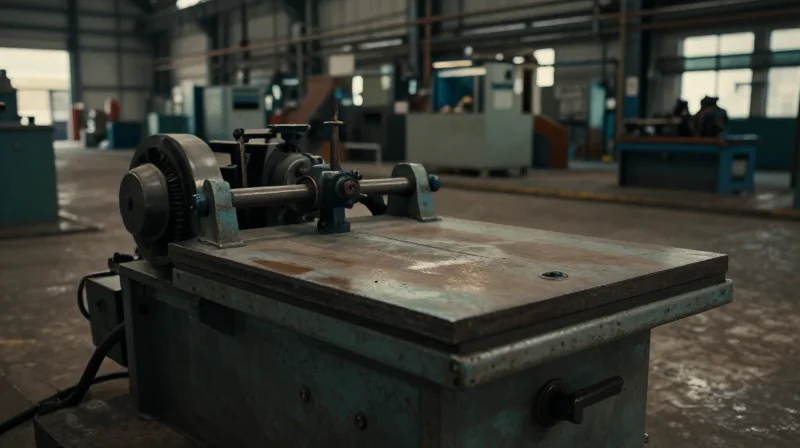
In many industrial settings, weighing systems are viewed as static components rather than dynamic, precision-critical sensors. Traditional architectures frequently rely on legacy signal conditioning that fails to isolate the true weight signal from background noise, thermal drift, and mechanical vibrations. This oversight creates a silent profit drain, where cumulative inaccuracies result in significant material overfill or underfill, directly eroding the Return on Investment (ROI) intended by automation.
Technical Limitations of Legacy Signal Processing
The fundamental flaw in standard weighing setups lies in the reliance on analog signals that are susceptible to Electromagnetic Interference (EMI) and Radio Frequency Interference (RFI). When load cells operate in high-speed manufacturing environments, electrical noise can introduce latency and error-prone readings that the controller cannot distinguish from physical weight changes. Furthermore, passive filtering techniques often resolve noise at the expense of measurement speed, causing throughput bottlenecks.
| Issue | Impact on Accuracy | Operational Consequence |
|---|---|---|
| Thermal Drift | High | Frequent recalibration requirements |
| Signal Noise (EMI) | Medium | Inconsistent weight data and spikes |
| Mechanical Vibration | Very High | Measurement instability and slow settling |
Common Questions on Weighing System Degradation
- Why does thermal variance affect load cell precision?
Load cell strain gauges are inherently sensitive to temperature changes, which can expand or contract the metal elements, creating artificial resistance shifts interpreted as weight fluctuations. - How does signal latency impact ROI?
Signal latency forces the system to wait longer for the scale to settle before confirming a weight, directly reducing cycles per minute and limiting the throughput of the entire line. - Is standard digital filtering sufficient for modern automation?
Usually, no. Standard software filters often introduce a lag that compromises high-speed precision; high-precision integration requires hardware-level signal conditioning and advanced algorithmic compensation.
Anatomy of a High-Precision PCBA Solution
Engineering for Signal Integrity
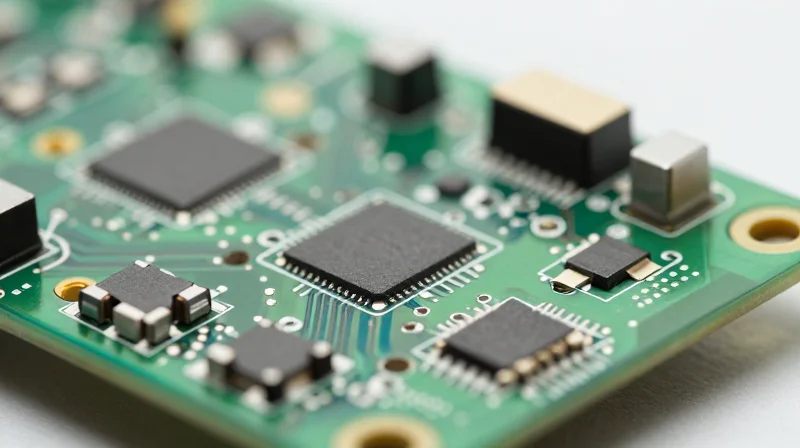
High-precision weighing relies on the seamless conversion of millivolt signals into high-resolution digital data. A robust PCBA solution achieves this by isolating the analog front-end (AFE) from high-frequency digital switching noise, typically through multi-layer PCB stack-ups with dedicated ground planes and differential signaling paths.
Core Technical Specifications
| Component | Design Priority | ROI Impact |
|---|---|---|
| ADC Selection | 24-bit Sigma-Delta with low drift | Increased measurement repeatability |
| Reference Voltage | Ultra-low temperature coefficient (< 5ppm/°C) | Stability across climate shifts |
| Input Filtering | Active common-mode rejection | Reduced electromagnetic interference (EMI) |
Thermal Stability and Noise Mitigation
Thermal management is paramount; localized heat sources on a circuit board cause mechanical stress and voltage offsets that ruin precision. By utilizing low-TC (temperature coefficient) resistors and strategic component placement away from heat-generating power rails, the system maintains consistent accuracy despite operational duty cycles.
- How does PCB layout affect weighing accuracy?
Improper routing introduces parasitic resistance and capacitance, which translate into signal bias. Optimized trace length and symmetric differential pairs are essential for preserving the micro-volt signal integrity. - Why prioritize high-resolution ADCs?
A 24-bit ADC provides the dynamic range necessary to capture minute weight changes while simultaneously filtering out mechanical vibrations and electrical noise. - Can digital filtering replace analog hardware?
Digital filtering is a powerful post-processing tool, but it cannot fix issues caused by aliasing or electromagnetic noise induced at the front end; robust analog design remains the foundation of high-precision measurement.
Reducing Calibration Cycles Through Active Drift Compensation
The Economics of Calibration Drift
In high-precision automated weighing systems, drift—caused by thermal expansion, component aging, and electromagnetic interference—is the primary driver for manual recalibration cycles. Traditional systems often rely on periodic mechanical intervention, which incurs significant labor costs and operational downtime. Active drift compensation shifts this burden from human operators to software-defined logic, utilizing real-time sensor fusion to dynamically adjust the signal chain and maintain accuracy between scheduled service intervals.
Comparison of Calibration Strategies
| Feature | Traditional Reactive Calibration | Active Drift Compensation |
|---|---|---|
| Interval Frequency | Daily/Weekly | Quarterly/Annual |
| Labor Requirement | High (Manual) | Low (Automated) |
| Downtime Impact | Significant | Minimal |
| Accuracy Stability | Variable | Constant |
Implementing Software-Defined Compensation
The efficacy of an active compensation system hinges on the integration of an onboard thermal reference and a high-resolution ADC. By establishing a baseline performance model under controlled conditions, the system can continuously compute offset adjustments. When ambient temperature fluctuations occur, the onboard controller executes corrective coefficients to neutralize gain errors before they affect final output, effectively extending the maintenance cycle by up to 300%.
Frequently Asked Questions
- Does software compensation replace physical calibration entirely?
No, it does not replace periodic physical verification required for regulatory compliance; however, it significantly delays the need for manual adjustment by maintaining peak performance standards during standard operations. - How does this impact overall ROI?
By reducing the frequency of technician-led calibration, facilities recapture hundreds of hours of production capacity per year, directly lowering the Total Cost of Ownership (TCO) for the weighing hardware. - Is the compensation logic hardware-agnostic?
While the algorithms can be ported, optimal performance requires tightly coupled hardware where the thermal sensors and ADCs are calibrated as a matched set during production.
Minimizing Material Waste via Real-Time Precision

The Economics of Precision: Converting Accuracy into Margin
In automated manufacturing, every milligram of over-dispensing equates to lost margin. High-precision load cell integration allows control systems to operate at the absolute lower threshold of tolerance, effectively eliminating the 'buffer zone' that traditional systems require to avoid quality control rejections. By leveraging advanced signal filtering and instantaneous A/D conversion, automated systems can arrest flow precisely at the target setpoint, ensuring that raw material consumption aligns perfectly with expected yields.
| Parameter | Traditional Weighing | High-Precision Integration | Economic Impact |
|---|---|---|---|
| Setpoint Overshoot | High (0.5% - 1%) | Negligible (<0.05%) | Direct material recovery |
| Reaction Latency | Slow (System Lag) | Real-time (Ultra-low latency) | Increased throughput |
| Yield Variance | Significant | Minimal | Reduced rework costs |
Frequently Asked Questions
- How does real-time processing reduce material loss?
By minimizing the time constant between weight detection and actuator closure, the system prevents the 'drift' that causes over-filling during the transition phase of bulk material delivery. - Can micro-gram precision be maintained in harsh environments?
Yes, through the implementation of active noise cancellation and vibration-dampening logic, which isolates the sensor signal from external mechanical noise, maintaining sub-milligram integrity even on dynamic factory floors. - Is the investment in high-precision hardware offset by material savings?
In high-value commodities (e.g., pharmaceuticals or rare additives), the reduction in raw material waste typically results in a complete ROI within 6 to 12 months.
Optimizing Throughput: The Impact on System Downtime
In high-speed automated weighing environments, system downtime is often the most significant drain on ROI. When sensors lack high-precision stability, technicians are forced into reactive maintenance cycles, debugging drift, or investigating inconsistent readings caused by environmental factors. Transitioning to high-precision, software-compensated load cells changes the operational paradigm from reactive troubleshooting to predictive, uninterrupted production.
Quantifying Downtime Reduction
By selecting load cells that inherently resist thermal stress and vibration interference, plants can extend maintenance intervals significantly. The following table contrasts the traditional maintenance model with a high-precision integrated model.
| Maintenance Factor | Traditional Load Cells | High-Precision Integrated Sensors |
|---|---|---|
| Recalibration Frequency | Monthly or per-batch | Quarterly or semi-annually |
| Troubleshooting Time | High (Intermittent drift) | Negligible (Active compensation) |
| Operational Uptime | 92-95% | 99.5%+ |
Strategies for Eliminating Redundant Troubleshooting
- How does built-in active compensation affect maintenance?
Active compensation modules on the PCB level negate the effects of thermal drift and electronic noise, eliminating the false positives that usually trigger unnecessary maintenance calls. - Why does sensor resolution impact uptime?
Higher resolution sensors allow for a wider buffer before the system hits tolerance thresholds, preventing 'out-of-spec' alarms that require manual system resets. - Can remote diagnostics mitigate downtime?
Modern high-precision load cells with digital output allow for remote health monitoring, enabling maintenance teams to schedule service during planned gaps rather than responding to emergency failures.
Ultimately, the integration of high-precision weighing hardware acts as an insurance policy against production instability. By reducing the noise and environmental sensitivity inherent in standard sensors, manufacturers shift their resources from fixing broken processes to optimizing throughput, thereby maximizing the total return on the system investment.
Calculating Your ROI: From Prototype to Production

Transitioning from Prototype to Production ROI
The transition from a high-precision prototype to a production-scale automated system requires shifting focus from technical capability to long-term operational expenditure (OPEX) reduction. To calculate true ROI, one must measure the cumulative impact of reduced calibration intervals, diminished material scrap rates, and improved system uptime against the initial investment in bespoke PCBA hardware.
| Metric | Prototype Focus | Production ROI Driver |
|---|---|---|
| Precision | Verification of sensitivity | Reduction in giveaway/waste |
| Calibration | Establishing drift baselines | Lower labor costs/downtime |
| System Health | Component validation | Extended Mean Time Between Failure |
Quantifying Financial Gains
To effectively calculate your return, establish a baseline using legacy hardware performance data and compare it against the following operational improvements enabled by high-precision load cell integration.
- How does material waste reduction impact the balance sheet?
By achieving micro-gram accuracy, you minimize overfilling and product giveaway, directly converting saved raw material volume into pure margin per unit produced. - What is the role of active drift compensation in OPEX?
Active compensation eliminates the 'hidden' costs of manual recalibration, such as technician time, line stoppages, and administrative overhead, allowing for longer continuous production runs. - How does high-precision integration affect long-term maintenance?
Integrating robust, board-level signal processing reduces reliance on external filtering and redundant troubleshooting, resulting in a higher Mean Time Between Failures (MTBF) and lower spare parts inventory costs.
Calculating the Payback Period
Payback Period = (Initial Hardware Investment + Implementation Costs) / (Monthly Material Savings + Monthly Labor/Maintenance Savings)By applying this formula, facilities can move beyond anecdotal performance gains and establish a concrete financial forecast. Ensure that your calculation accounts for the increased throughput achieved during periods previously lost to maintenance downtime.
Future-Proofing Your Manufacturing Line
Architecting for Scalability and Modular Integration
Future-proofing starts with the adoption of modular hardware frameworks. By selecting high-precision load cells with standardized digital communication interfaces—such as IO-Link or EtherCAT—manufacturers can decouple their weighing components from legacy PLC architectures. This modularity ensures that as production requirements evolve, individual sensors can be swapped or upgraded without requiring a complete overhaul of the weighing automation framework, effectively extending the lifecycle of the entire line.
Transitioning to IoT-Enabled Predictive Maintenance
Moving from scheduled recalibration to predictive maintenance is essential for high-precision environments. By integrating load cells that provide internal diagnostic data, such as sensor fatigue tracking and thermal drift compensation logs, operators can transition to a proactive maintenance model. Leveraging cloud-based analytics allows for the real-time monitoring of sensor health, enabling the line to trigger maintenance alerts only when performance metrics deviate from baseline, rather than relying on arbitrary time-based service intervals.
| Strategy | Legacy Approach | Future-Proof Approach |
|---|---|---|
| Sensor Integration | Hard-wired analog signals | Digital fieldbus (IO-Link/EtherCAT) |
| Maintenance | Periodic manual check | Condition-based monitoring |
| Data Handling | Local storage only | Cloud-connected edge diagnostics |
Frequently Asked Questions
- How does digital communication improve long-term ROI?
Digital protocols offer superior noise immunity and data transparency, reducing the need for costly troubleshooting of analog signal degradation and enabling remote diagnostic capabilities. - Is cloud connectivity necessary for local weighing lines?
While not mandatory for operation, cloud connectivity is crucial for longitudinal trend analysis, allowing your team to identify subtle performance shifts that precede hardware failure. - Can current high-precision load cells integrate with future AI-driven lines?
Yes, provided the chosen load cell outputs raw diagnostic data in an open-standard format; this data acts as the training input for machine learning models that optimize throughput.
By shifting to high-precision signal conditioning, manufacturers can move beyond reactive maintenance and achieve a level of stability that directly scales profit margins. Ready to eliminate calibration fatigue and enhance your production precision? Contact our engineering team today to schedule a consultation on optimizing your weighing infrastructure.
