
In the high-stakes world of product development, time isn't just money—it is the deciding factor between market leadership and obsolescence. When design flaws are discovered late in the manufacturing phase, the financial consequences are catastrophic. This article explores how accelerating your iteration cycle to 24-72 hours transforms R&D from a cost center into a strategic asset.
The Hidden Cost of Slow Iteration Cycles
The Exponential Cost of Delayed Discovery
The primary hidden cost of slow iteration is not the time lost, but the value of the 'correction multiplier.' In the early stages of R&D, a prototype adjustment might require only a minor software patch or a 3D-printed component modification. By the time a product reaches pre-production or mass manufacturing, the same error necessitates tooling changes, supply chain disruptions, and the potential scrapping of thousands of defective units.
| Development Stage | Cost to Fix Error | Primary Constraint |
|---|---|---|
| Conceptual Prototyping | 1x | Design Logic |
| Validation Prototyping | 10x | Component Sourcing |
| Pilot Manufacturing | 100x | Tooling & Logistics |
| Full Mass Production | 1000x+ | Total Product Recall |
Efficiency Trade-offs
When iteration cycles extend beyond 72 hours, the engineering team loses momentum. This 'context switching' fatigue leads to lower quality output, as engineers must constantly re-familiarize themselves with previous design iterations rather than maintaining a fluid, data-driven feedback loop.
- How does slow iteration affect market competition?
Extended cycles provide competitors with a larger window to launch similar solutions, effectively diluting your first-mover advantage and ROI potential. - Does 24-72 hour assembly increase project risk?
On the contrary, rapid iteration reduces risk by validating assumptions early, ensuring that manufacturing decisions are based on proven performance rather than theoretical projections. - Is the cost of rapid prototyping justified?
Yes; when compared to the cost of a late-stage engineering change order (ECO), the incremental investment in rapid assembly is negligible and often pays for itself through avoided manufacturing downtime.
The Economics of Speed: Why 72 Hours Matters

The Psychology of Cognitive Momentum
The 72-hour window is a critical threshold for sustaining cognitive momentum. When an engineer completes a design and receives physical hardware within three days, the mental model of the product remains intact. In contrast, wait times exceeding one week force engineers to context-switch, leading to a 're-learning' phase that degrades performance and obscures subtle design nuances.
Comparative Impact of Feedback Loops
| Cycle Time | Engineer Engagement | Error Discovery Cost | Innovation Velocity |
|---|---|---|---|
| 72 Hours | High (Active Recall) | Minimal | Exponential |
| 2 Weeks | Moderate (Context Loss) | Significant | Linear |
| 4+ Weeks | Low (Disconnected) | Prohibitive | Stagnant |
Economic Implications of Rapid Prototyping
The economics of speed are not merely about shipping faster; they are about capital efficiency. By compressing the build-measure-learn loop, companies reduce the 'cost of carry' for incomplete projects. Fast prototypes act as a physical hedge against market uncertainty, allowing teams to pivot before major capital expenditure on tooling or mass production begins.
Frequently Asked Questions
- Does speed sacrifice quality?
No; rapid iteration actually improves quality by allowing for multiple stress tests and refinements that a singular, delayed prototype cannot accommodate. - Why is 72 hours the 'Goldilocks' zone?
It is short enough to maintain team focus and high-velocity iteration, yet long enough to perform essential quality checks and vendor coordination. - How does this reduce total development costs?
By identifying failures early in the R&D stage, companies avoid the astronomical expenses of re-tooling and product recalls during the manufacturing phase.
Case Study: Turning Prototype Failure into Market Success

Case Study: The Thermal Failure That Almost Cost Millions
A leading consumer electronics firm faced a pivotal moment during the design of a high-performance portable device. Traditional vendor lead times for their complex chassis would have delayed feedback by three weeks. By switching to an internal 72-hour assembly workflow, engineers identified a critical thermal integration flaw that would have resulted in catastrophic device throttling—and potential product recall—once the units reached mass production.
Quantifying the Impact of Early Detection
| Detection Phase | Estimated Correction Cost | Risk Level |
|---|---|---|
| Prototype Stage (72h Cycle) | $15,000 (Iteration) | Minimal |
| Pre-Production Tooling | $450,000 (Rework) | Moderate |
| Mass Manufacturing | $5,000,000+ (Recall/Brand Damage) | Critical |
Key Lessons from the Rapid Iteration Framework
- How does 72-hour assembly alter engineering behavior?
Engineers are more likely to test 'high-risk' design assumptions when they know a physical validation unit is only days away, rather than weeks. - Why is thermal validation a primary candidate for rapid prototyping?
Thermal behavior is notoriously difficult to simulate perfectly in CAD; physical testing provides empirical data that prevents costly post-tooling redesigns. - What is the most significant ROI driver in this scenario?
The ROI is found in 'avoided waste'—the massive cost of scrapping finished tooling and the preservation of the product launch schedule.
Ultimately, the company shifted from a culture of 'design-freeze-wait' to 'build-test-pivot.' By the time the final design reached the factory floor, the team had already validated five distinct thermal iterations, ensuring the product was both robust and market-ready.
Integrating Agile Principles into Hardware R&D
Overcoming the Waterfall Bias in Physical Engineering
Hardware development has historically been shackled by the waterfall methodology, where long lead times and high retooling costs enforced a 'perfect the first time' mindset. Integrating agile into this domain requires moving from sequential phases to parallelized, iterative loops. By adopting 24-72 hour prototype assembly, engineering teams can break the cycle of extended validation, allowing for real-time adjustments that mirror the flexibility of software development.
Agile Hardware Comparison
| Attribute | Traditional Waterfall | Agile R&D Integration |
|---|---|---|
| Feedback Cycle | Weeks to Months | 24-72 Hours |
| Failure Handling | Expensive Late-Stage Fixes | Inexpensive Early-Stage Pivots |
| Risk Profile | High (Binary Outcome) | Low (Incremental Mitigation) |
| Design Philosophy | Fixed Requirements | Continuous Evolution |
Strategic Implementation of Rapid Iteration
Successfully implementing agile in hardware relies on modular design architectures. When product components are decoupled, engineering teams can perform targeted prototype assemblies on specific subsystems without waiting for the full integration of the entire unit. This creates a continuous flow of physical data, empowering teams to validate performance characteristics far earlier in the development lifecycle.
Frequently Asked Questions
- How does 72-hour assembly impact total development cost?
While rapid prototyping carries a higher unit cost, it drastically reduces the total development budget by eliminating costly mass-manufacturing retooling and preventing late-stage design flaws. - Can all hardware projects benefit from agile methods?
Almost any product involving electronics or mechanical assemblies benefits from modular iteration; however, it requires a supply chain capable of high-velocity throughput to be effective. - Does agility compromise product quality?
No; agile hardware actually improves quality by providing more testing cycles, allowing for more robust refinements than a single, high-stakes final build.
Minimizing Manufacturing Rework Through Early Validation
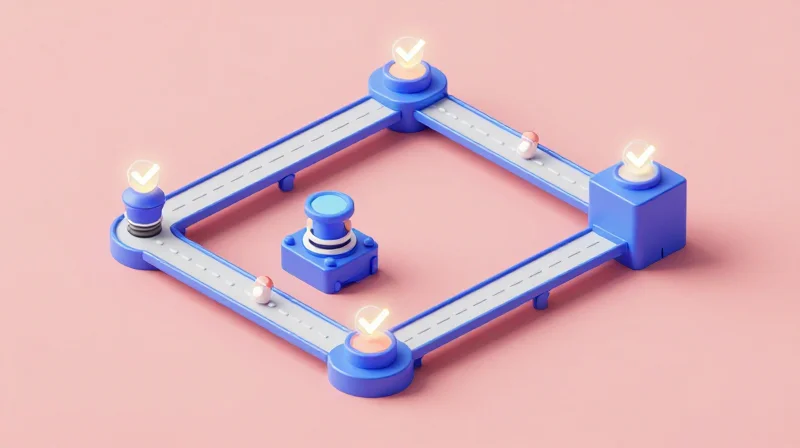
The high cost of hardware manufacturing rework is almost always traced back to late-stage discovery of design errors. When engineering teams rely on 24-72 hour prototype cycles, they collapse the validation timeline, allowing for empirical verification of assembly feasibility, thermal management, and mechanical tolerances long before the transition to high-volume production.
The Cost Economics of Validation Timing
| Development Stage | Cost to Fix Error | Impact on Schedule |
|---|---|---|
| Concept/Rapid Prototype | 1x (Baseline) | Minimal |
| Design for Manufacturing (DFM) | 10x | Moderate |
| Tooling/Pre-Production | 100x | Significant Delay |
| Full-Scale Manufacturing | 1000x | Recall/Product Failure |
Strategies for Seamless Manufacturing Transitions
To ensure that a prototype's success translates to manufacturing floor efficiency, teams must focus on these core pillars:
- Assembly Sequence Validation
Utilize short-cycle prototypes to perform 'dry runs' of the assembly line. This helps identify reachability issues, cable routing congestion, and fastener access problems early. - Component Tolerance Analysis
Use rapid iterations to test parts produced by different vendors against your CAD specifications to ensure manufacturing variance does not result in stack-up errors. - Fixture Verification
Test jigs and assembly fixtures using initial rapid prototypes to confirm that production equipment aligns perfectly with the intended hardware footprint.
Frequently Asked Questions
- How does 72-hour assembly prevent future rework?
By testing physical hardware weekly instead of monthly, engineers catch interference and thermal issues while the design is still 'malleable,' before the cost of changing tooling becomes prohibitive. - Does this replace the need for DFM reviews?
No, it enhances them. Rapid prototyping provides the physical data required to turn theoretical DFM models into validated assembly reality.
Leveraging Advanced Fabrication Technologies
The Convergence of Additive and Subtractive Manufacturing
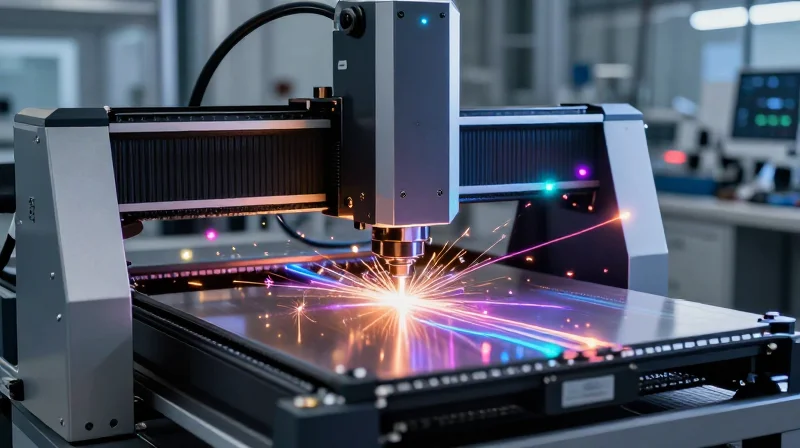
Achieving a 24-72 hour prototype window requires a hybrid approach to fabrication. By strategically combining additive manufacturing (3D printing) for complex geometries and high-speed CNC machining for structural integrity and tight-tolerance components, engineering teams can bypass the weeks-long lead times associated with traditional injection molding or casting processes.
| Technology | Primary Advantage | Role in 24-72hr Turnaround |
|---|---|---|
| High-Speed CNC | Material Fidelity | Production-grade parts in hours |
| SLA/SLS 3D Printing | Geometric Complexity | Rapid iterations of housing/brackets |
| Direct Metal Laser Sintering | Thermal Performance | Validating internal heat sinks |
Strategic Sourcing and Digital Thread Integration
The speed of the assembly is only as fast as the data transfer. Leveraging a digital thread—where CAD models are automatically pushed to manufacturing execution systems (MES)—minimizes communication delays. Advanced sourcing platforms now provide instant Design for Manufacturing (DFM) feedback, ensuring that iterations are manufacturable the moment they are designed.
Technical FAQ: Implementing Rapid Fabrication
- How does DFM feedback reduce rework?
Automated DFM analysis catches geometric violations before parts are sent to machines, preventing wasted material and ensuring the first physical build is functional. - Can I achieve production-level tolerances in 48 hours?
Yes, through optimized 5-axis CNC machining, engineers can achieve sub-micron tolerances on mission-critical metal components, allowing for genuine testing under real-world conditions. - What is the biggest bottleneck in rapid assembly?
Material availability and secondary operations like anodizing or coating. Standardizing on common, in-stock materials significantly increases the likelihood of meeting the 72-hour threshold.
Quantifying the ROI: Financial Impact and Competitive Advantage
The financial impact of rapid prototyping extends far beyond simple cost-savings on individual components; it fundamentally shifts the project's net present value by compressing the development horizon. When teams move from weeks to hours in assembly time, they eliminate the costly 'waiting-room' phase of R&D, where engineering resources sit idle awaiting hardware. By accelerating the feedback loop, organizations reduce burn rates, minimize the impact of design flaws, and secure a first-mover advantage that compound over the product's entire lifecycle.
Financial Metrics: Traditional vs. Agile Prototyping
| Metric | Traditional Model | 24-72 Hour Model |
|---|---|---|
| Total Development Cost | High (Due to rework) | Lower (Early validation) |
| Time-to-Market | Extended | Compressed |
| Opportunity Cost | High | Minimized |
| Market Share Capture | Reactive | Proactive |
Competitive Advantages of High-Velocity Iteration
Speed is the ultimate buffer against market volatility. By delivering functional hardware within three days, firms can conduct user testing cycles that peers cannot match. This velocity enables a deeper understanding of user requirements, leading to higher product-market fit and drastically reducing the risk of a high-cost failure at launch.
- How does rapid assembly lower long-term costs?
By identifying design or manufacturing issues during the prototype phase, teams avoid the exponentially higher costs of fixing errors during production tooling or post-launch recalls. - What is the primary ROI driver?
The primary driver is the early realization of revenue; shaving months off development means entering the market ahead of competitors, capturing early-adopter segments and extending the product's peak revenue window. - Does faster prototyping sacrifice quality?
No, it actually improves quality by allowing for more frequent design iterations, which results in a more polished, validated, and resilient end-product.
Rapid prototyping is no longer a luxury; it is a fundamental requirement for companies that want to thrive in competitive markets. By compressing your development cycles and catching flaws early, you eliminate waste and build better products faster. Ready to streamline your R&D process? Contact our engineering team today to see how our 24-72 hour assembly service can transform your next development project.
