In our fast-evolving world, energy storage solutions are more crucial than ever. Among the innovative technologies, the Maxwell ultracapacitor stands out, not only for its high power density but also for its ability to charge and discharge rapidly, and its long life span. This article delves deep into the world of Maxwell ultracapacitors, exploring their unique characteristics, applications, and why they're revolutionizing various industries. From powering electric vehicles to stabilizing grid systems, join us as we discover the future of energy storage.
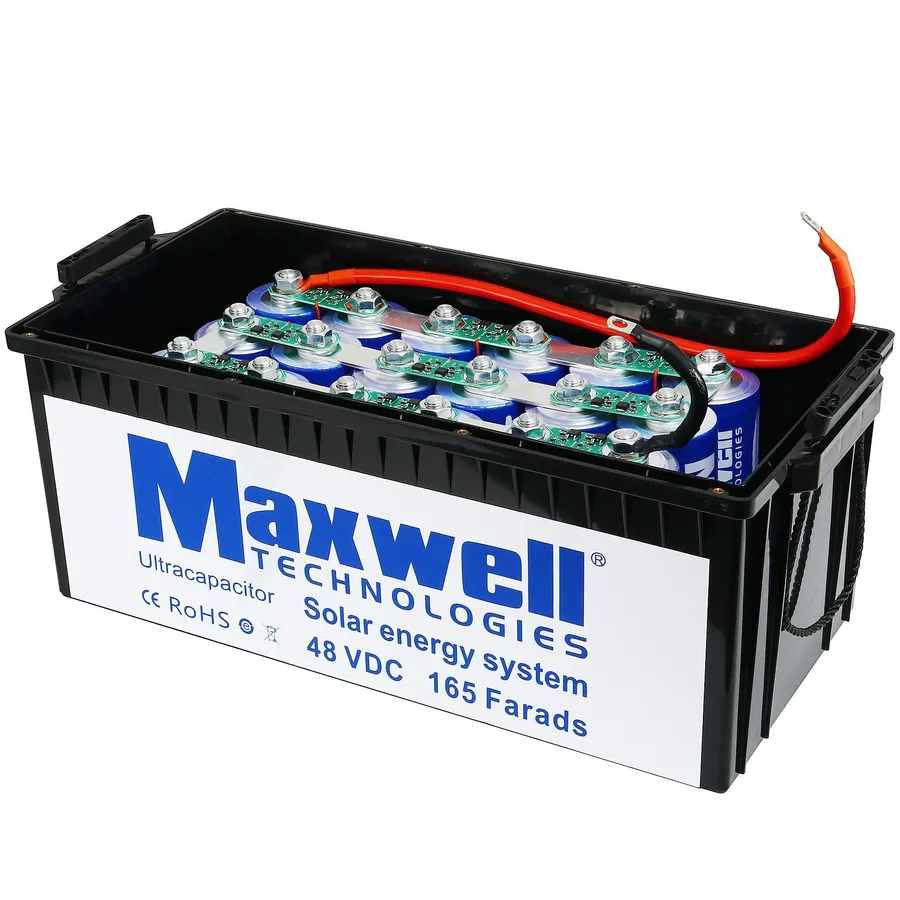
Maxwell ultracapacitors, also known as supercapacitors or electrochemical double-layer capacitors (EDLCs), are energy storage devices that bridge the performance gap between conventional capacitors and batteries. They excel at providing high power bursts and exhibit exceptional charge-discharge cycle longevity, distinguishing them from traditional energy storage solutions.
Unlike batteries, which store energy through chemical reactions, ultracapacitors store energy electrostatically by accumulating ions on the surface of a porous electrode material. This mechanism enables them to charge and discharge much faster than batteries. Compared to conventional capacitors, ultracapacitors possess a significantly higher energy storage capacity owing to their specialized electrode materials and large surface areas. This unique combination of high power and high energy storage makes them suitable for diverse applications.
Key features of Maxwell ultracapacitor construction include: two electrodes typically made of high-surface-area materials like activated carbon, a separator to prevent electrical contact between the electrodes, and an electrolyte that enables ion transport between the electrodes. These components are carefully engineered to maximize performance.
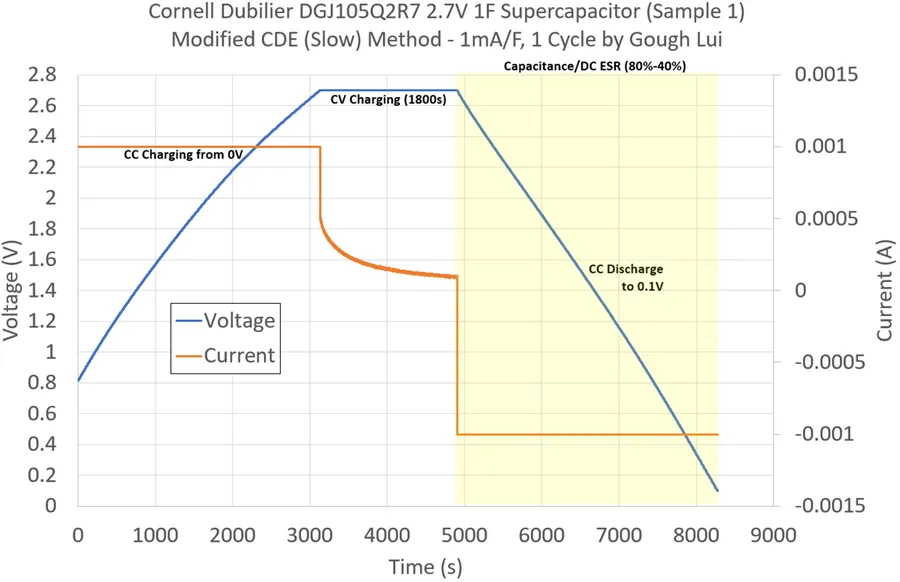
Maxwell ultracapacitors offer significant advantages over traditional energy storage devices, primarily due to their unique electrochemical characteristics. They excel in applications demanding high power delivery, rapid energy cycling, and extended operational lifetimes, distinguishing themselves from batteries and conventional capacitors.
| Feature | Maxwell Ultracapacitors | Batteries |
|---|---|---|
| Power Density | Very High | Moderate |
| Energy Density | Moderate | High |
| Charge/Discharge Rate | Extremely Fast | Slow to Moderate |
| Cycle Life | Very Long (Millions) | Limited (Hundreds to Thousands) |
| Operating Temperature | Wide | Narrower |
| Maintenance | Minimal | May require monitoring/balancing |
| Safety | Very Safe | Potential for thermal runaway |

Maxwell ultracapacitor cells are characterized by their voltage, capacitance, and performance parameters. Understanding these specifications is crucial for selecting the appropriate cell for a given application. These specifications determine the energy storage capability and power delivery potential of each cell.
| Parameter | Description | Typical Values | Relevance |
|---|---|---|---|
| Nominal Voltage | The standard operating voltage of the cell. | 2.7V, 3.0V | Impacts the number of cells required in series for a given system voltage. |
| Capacitance | The cell's ability to store electrical charge. | 3F to 3000F+ | Determines the amount of energy the cell can store. |
| ESR (Equivalent Series Resistance) | The internal resistance of the cell | milliohms to single-digit ohms | Impacts the charge/discharge rate and efficiency |
| Power Density | The rate at which the cell can deliver power. | kW/kg or kW/L | Important for applications requiring high power output. |
| Energy Density | The amount of energy the cell can store per unit mass or volume. | Wh/kg or Wh/L | Indicates how long the cell can provide power. |
| Operating Temperature Range | The temperature range within which the cell functions optimally | -40°C to 65°C | Determines the environmental conditions under which the cell can operate safely. |
| Cycle Life | The number of charge-discharge cycles the cell can withstand before significant degradation. | 500,000+ cycles | A measure of the cell's long-term reliability. |
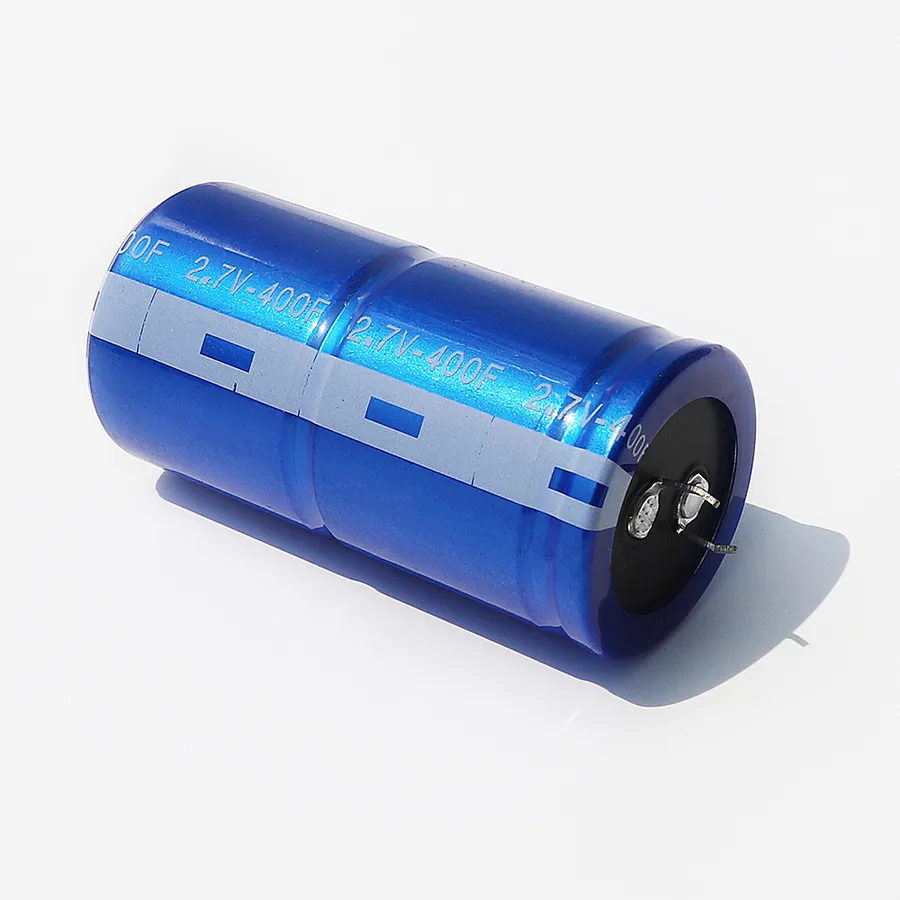
Maxwell ultracapacitor cells are available in various voltage and capacitance ratings to meet diverse application requirements. The most common nominal voltages are 2.7V and 3.0V. Capacitance ranges vary widely, from small 3F cells for low-energy, fast-response applications to very high-capacitance cells of 3000F and more for applications requiring higher energy storage. The choice of cell is primarily determined by the voltage and energy requirements of the target system.
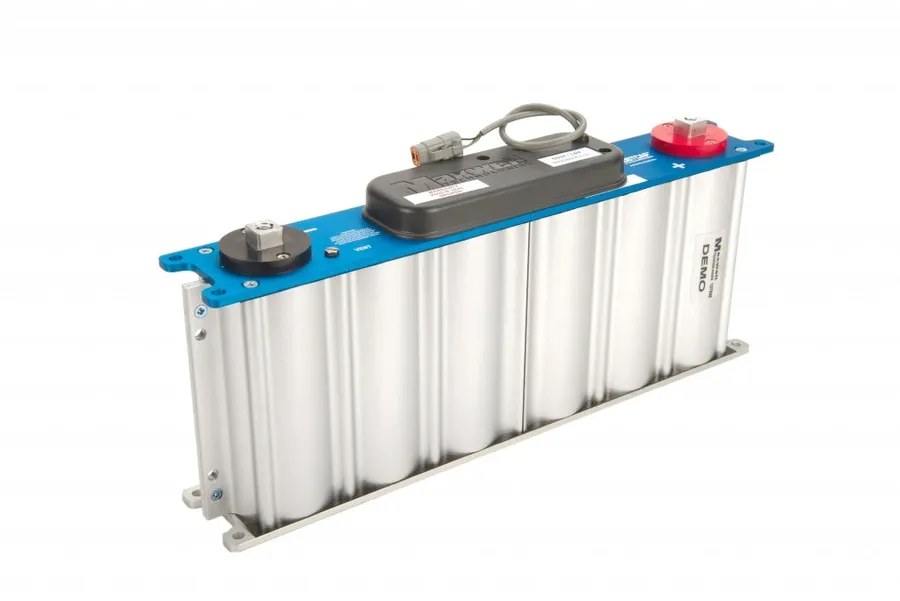
Maxwell ultracapacitor cells are not typically used in isolation for high-power applications; instead, they are assembled into modules to meet the voltage and energy requirements of various systems. These modules combine multiple cells in series and/or parallel configurations to achieve desired output characteristics, enabling their use in larger and more demanding applications.
The design of these modules is crucial to optimize performance, manage heat, and ensure safe operation across different conditions.
| Module Voltage | Typical Application | Configuration | Key Consideration |
|---|---|---|---|
| 5V | Small electronics, portable devices | Series of 2-3 cells | Compact size, low energy density |
| 16V | Automotive accessories, small industrial systems | Series of 5-6 cells | Moderate power requirements, durability |
| 24V | Light electric vehicles, industrial automation | Series of 8-10 cells | Balance between voltage and current |
| 48V | Hybrid vehicles, heavy machinery | Series of 16-20 cells | High power, robust thermal management |
| Higher than 48V | Large-scale energy storage, grid stabilization | Multiple strings of series cells, often in parallel | Very high voltage/current, advanced cooling needs |
Module construction includes several factors, from cell selection and arrangement to thermal management and interconnection materials. These choices are essential to maintaining performance and reliability in a variety of operating conditions. For instance, in high-current applications, the internal resistance of the module becomes a significant factor that determines overall system performance.
The integration of modules into a larger system requires consideration of factors such as voltage matching, system impedance, and thermal characteristics to prevent damage and maximize efficiency. The selection and design of a suitable module is crucial for any given application.
Maxwell ultracapacitors, owing to their unique performance characteristics, are deployed across a wide spectrum of applications, from automotive systems to large-scale industrial equipment and renewable energy integration. Their ability to rapidly store and release energy, coupled with high power density and long cycle life, makes them ideally suited for applications where traditional batteries fall short.
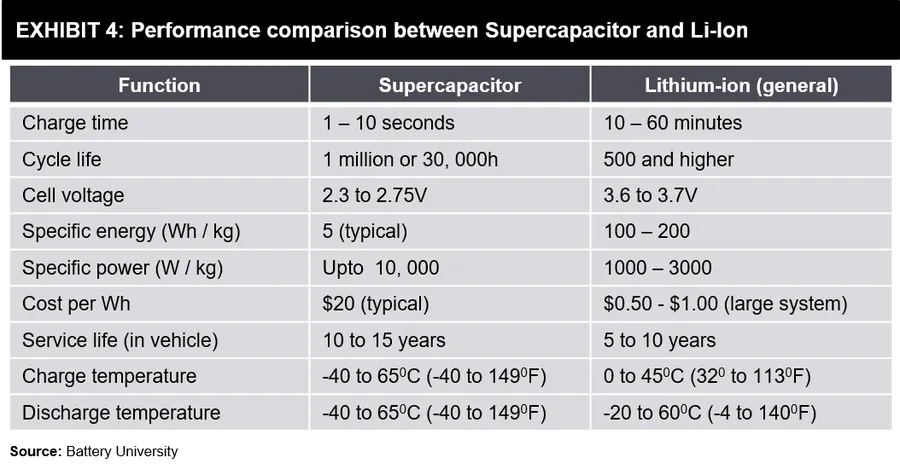
Maxwell ultracapacitors and batteries, while both serving as energy storage devices, exhibit fundamental differences in their operational characteristics, making them suitable for distinct applications. Ultracapacitors excel in power delivery and rapid cycling, whereas batteries are generally preferred for long-duration energy storage.
| Feature | Maxwell Ultracapacitors | Batteries (Lithium-ion) |
|---|---|---|
| Energy Density | Lower (5-10 Wh/kg) | Higher (100-250 Wh/kg) |
| Power Density | Higher (10,000 W/kg) | Lower (250-1,000 W/kg) |
| Charge/Discharge Rate | Very Fast (seconds) | Slower (minutes to hours) |
| Cycle Life | Very Long (millions of cycles) | Shorter (hundreds to thousands of cycles) |
| Operating Temperature | Wider Range (-40°C to 65°C) | More Limited (0°C to 60°C) |
| Lifespan | Longer (10+ years) | Shorter (2-5 years) |
| Cost | Higher upfront cost | Lower upfront cost |
| Safety | Safer, less prone to thermal runaway | Risk of thermal runaway |
| Maintenance | Low maintenance | Maintenance required |
| Applications | Regenerative braking, hybrid vehicles, peak power assist | Electric vehicles, portable electronics, grid storage |
Lithium-ion batteries are a common type of battery used in a wide range of devices, including electric vehicles and portable electronics, and offer a good balance of energy and power density. However, their cycle life is shorter and they require longer charge times than ultracapacitors. Other battery types, such as lead-acid and nickel-metal hydride, have their own specific characteristics and applications, with ultracapacitors offering more competitive advantages in certain high-power, high-cycle scenarios.
The trajectory of Maxwell ultracapacitor technology is marked by continuous innovation aimed at enhancing performance, reducing costs, and expanding application domains. Research and development efforts are focused on improving energy density, power density, cycle life, and operational temperature ranges, while also exploring novel materials and manufacturing techniques.
One significant area of advancement is material science. Researchers are actively investigating new electrode materials, such as advanced carbon nanomaterials, metal oxides, and conducting polymers, to increase the energy storage capacity and power delivery capabilities of ultracapacitors. These new materials promise to boost energy density to levels that can make ultracapacitors viable in an expanded range of applications. For example, efforts are underway to improve the capacitance per unit area by utilizing hierarchical porous carbon structures which improve electrolyte accessibility to the electrode surface, and therefore increase ion storage.
Another key focus is the development of hybrid energy storage systems that seamlessly integrate ultracapacitors with batteries or fuel cells. This approach leverages the complementary strengths of different technologies. Ultracapacitors excel in providing bursts of high power for rapid acceleration or regenerative braking, while batteries offer higher energy density for extended operating ranges. By combining these technologies, system designers can optimize performance and efficiency. For example, in EV applications, a hybrid energy storage system that incorporates both battery and ultracapacitor can enhance vehicle performance by capturing energy during braking for later use and providing the power for rapid acceleration.
Furthermore, advancements in manufacturing processes, such as roll-to-roll manufacturing, are aimed at reducing production costs and improving the scalability of ultracapacitor production. This should make these devices more economically competitive with batteries in several sectors.
The future of Maxwell ultracapacitors also involves their integration with smart grids and renewable energy systems. They can provide crucial grid stabilization services, compensate for the intermittency of renewable sources such as solar and wind and are uniquely suited for the energy capture involved in regenerative braking. As we move to a more sustainable energy infrastructure, ultracapacitors will become a more integral part of many energy storage solutions.
Acquiring Maxwell ultracapacitors requires careful consideration of several factors to ensure you obtain genuine products that meet your application needs. This section provides guidance on identifying reliable sources, including authorized distributors and online platforms, and highlights key purchasing considerations such as warranty and technical specifications.
This section addresses common questions regarding Maxwell Ultracapacitors, aiming to clarify their practical usage, maintenance, safety, and dispel any misconceptions. We leverage frequently asked questions and implicit user needs from related searches to provide comprehensive answers.
Maxwell ultracapacitors represent a significant leap forward in energy storage technology, offering superior performance and versatility compared to traditional batteries. From automotive to industrial applications, they're revolutionizing how we store and utilize energy. By combining high power density, rapid charging, and an extended lifespan, Maxwell ultracapacitors are not just a technology of today but are also paving the way for the sustainable and efficient energy solutions of the future. The ongoing innovations and diverse applications are set to further solidify their position as a cornerstone in energy storage and management.

