Just as the rhythmic beat of a drum guides a musical performance, electronic devices require precise timing signals to function. The ceramic resonator, a seemingly simple component crafted from piezoelectric ceramics, plays a vital role in generating these signals. Like a microscopic metronome, the ceramic resonator sets the pace for countless electronic systems, from the humble microcontroller to sophisticated communication circuits. This article demystifies the workings of ceramic resonators, explores their diverse applications, and compares them to other timing devices, unlocking their potential for a world increasingly reliant on precise timing.
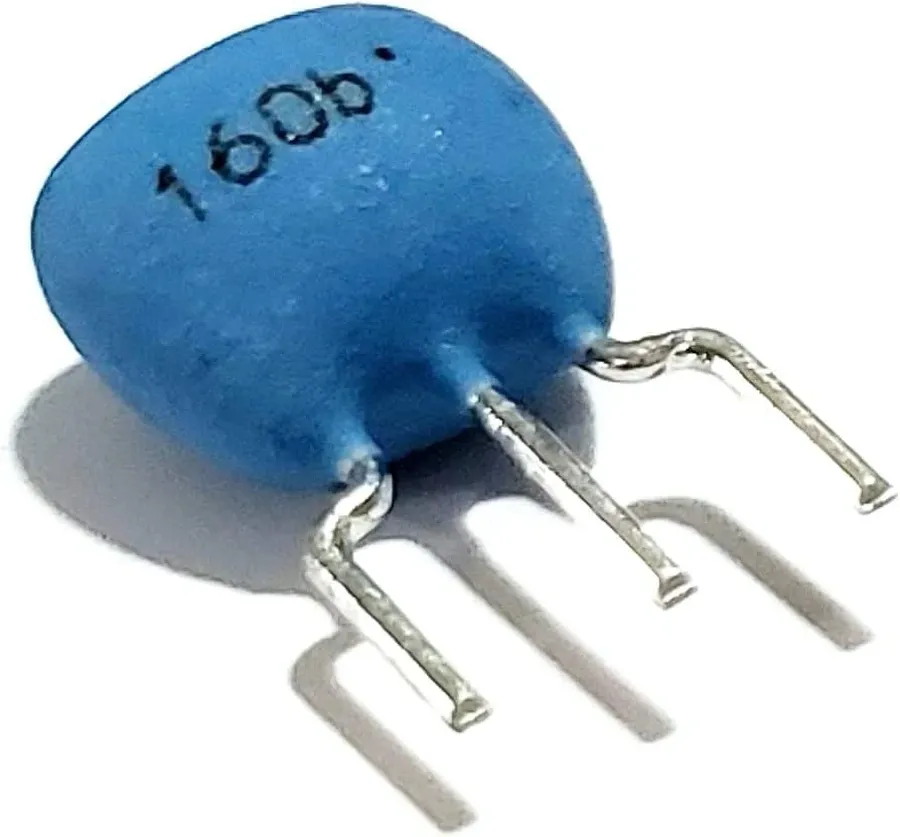
A ceramic resonator is a compact, passive electronic component crafted from piezoelectric ceramic material, engineered to oscillate at a specific frequency when subjected to an electrical signal. This precisely controlled vibration serves as a stable timing reference for a variety of electronic circuits, particularly in applications requiring a reliable clock signal but where the extreme accuracy of a crystal oscillator is not essential.
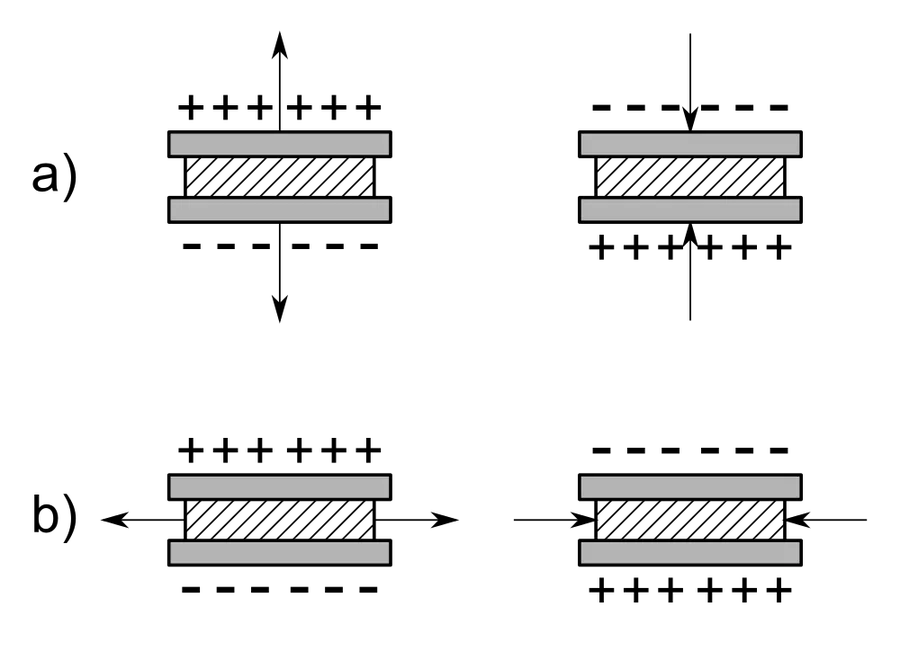
Ceramic resonators operate based on the piezoelectric effect, a phenomenon where mechanical stress applied to certain materials generates an electrical charge, and conversely, applying an electrical field induces mechanical deformation. In a ceramic resonator, this effect is harnessed using a specifically formulated piezoelectric ceramic material, typically a lead zirconate titanate (PZT) ceramic or similar compound.
When an alternating electrical signal is applied to the ceramic element, the material undergoes rapid, minute deformations corresponding to the frequency of the electrical signal. Conversely, when the ceramic is subjected to mechanical stress, such as through the vibrations, it will produce an electrical charge. The ceramic resonator will resonate most strongly at its specific resonant frequency, acting similarly to a tuned circuit.
The resonant frequency is primarily determined by the physical dimensions, material composition, and geometry of the resonator. This mechanical vibration is transformed into a stable electrical oscillation when properly integrated within a circuit, serving as a timing reference. The interlinked nature of mechanical stress and electrical charge within the piezoelectric material is the fundamental operating principle of a ceramic resonator, allowing it to convert electrical energy into mechanical energy, and back again, with a high degree of precision at its resonant frequency.
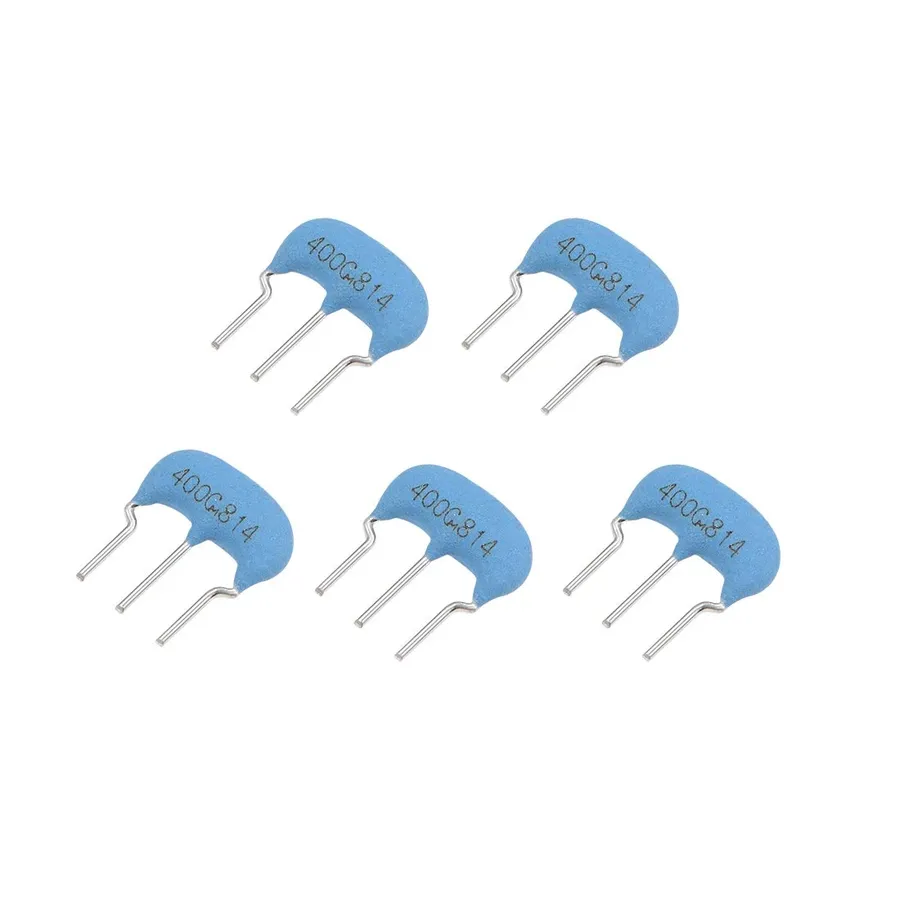
Ceramic resonators are available in two primary configurations: 2-pin and 3-pin. These configurations differ in their internal structure and external connection points, directly impacting their application and required circuit design. The key distinction lies in the presence of integrated capacitors in the 3-pin variant, which are absent in the 2-pin version. Understanding these differences is crucial for selecting the appropriate resonator for a given application.
| Feature | 2-Pin Ceramic Resonator | 3-Pin Ceramic Resonator |
|---|---|---|
| Number of Pins | 2 | 3 |
| Integrated Capacitors | No | Yes (typically two, connected between each pin and the central ground pin) |
| Circuit Design | Requires external load capacitors | Load capacitors are integrated, simplifying circuit design |
| Application | Suitable for designs where external tuning and load capacitors are necessary | Ideal for applications needing a simple oscillator circuit with a low component count |
| Stability | Slightly more susceptible to noise due to the lack of integrated capacitors | More stable in certain circuit configurations due to the presence of integrated capacitors |
In essence, the 2-pin configuration functions as a simple piezoelectric element, requiring external capacitors to establish the correct resonant frequency and ensure stable oscillation. Conversely, the 3-pin variant, with its integrated capacitors, streamlines the circuit design process, enabling easier integration into systems where space and component count are critical. The integrated capacitors in 3-pin resonators simplify the oscillator circuit, often allowing a direct connection to a microcontroller or microprocessor clock input. It's important to remember that these internal capacitors are designed to operate within a certain range, and may be suitable for some applications but not others, when selecting ceramic resonators.
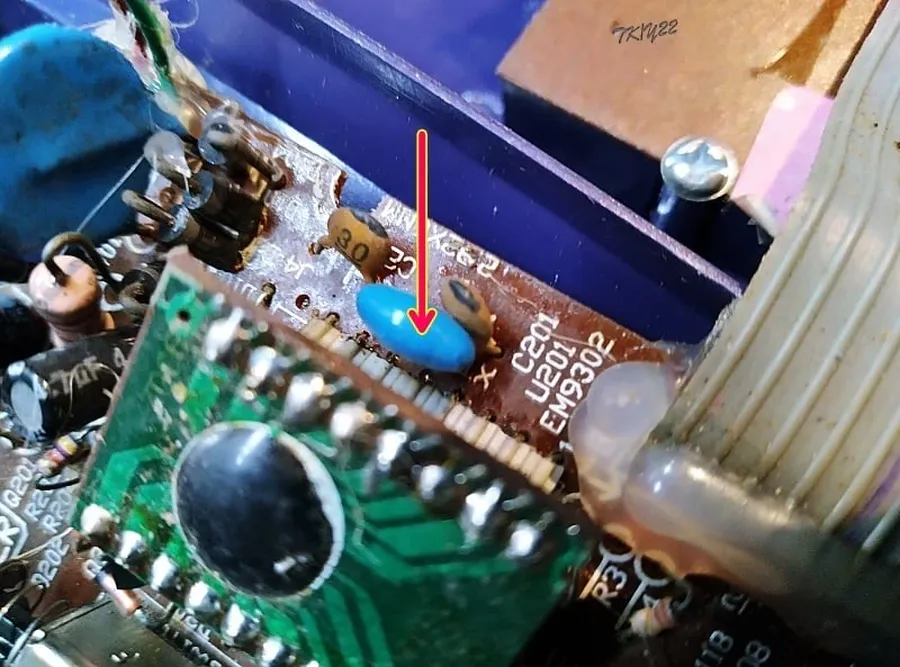
Ceramic resonators are indispensable components in a wide array of electronic devices, providing a stable frequency reference essential for timing and synchronization. Their compact size, cost-effectiveness, and relatively stable performance make them suitable for diverse applications, especially where high precision quartz crystals may be overkill or cost-prohibitive.
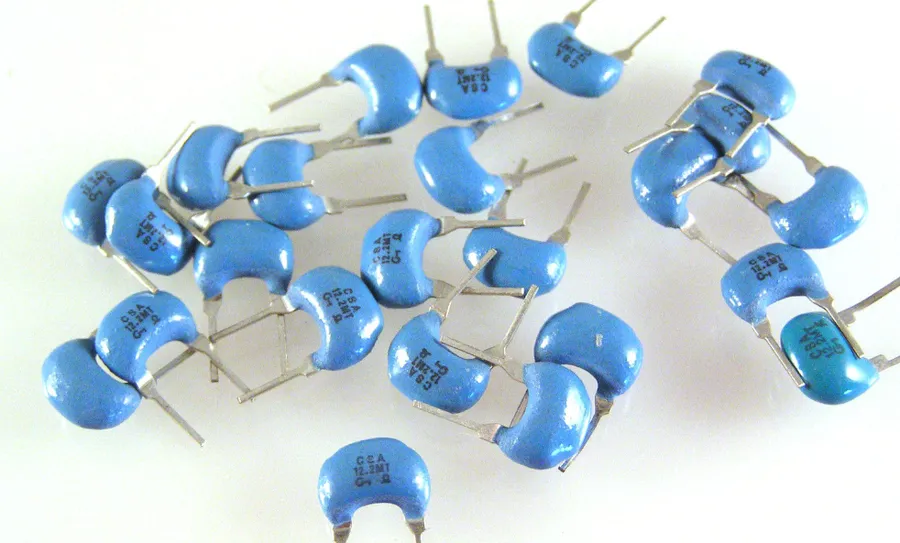
Ceramic resonators and quartz crystals are both piezoelectric devices used for generating stable frequencies in electronic circuits, but they differ significantly in their performance characteristics and applications. Understanding these differences is crucial for selecting the appropriate component for a given design. Quartz crystals, known for their high precision and stability, are often the choice for applications demanding accurate timing. Conversely, ceramic resonators, while less precise, offer a more cost-effective and compact solution for less stringent applications.
| Feature | Ceramic Resonator | Quartz Crystal |
|---|---|---|
| Accuracy | Moderate (0.1% to 0.5% typical) | High (0.001% to 0.01% typical) |
| Stability | Moderate, sensitive to temperature and aging | Very high, less sensitive to temperature and aging |
| Cost | Lower | Higher |
| Size | Compact | Larger, can be miniaturized with more cost |
| Frequency Range | Typically up to 20 MHz | Wide range, from kHz to hundreds of MHz |
| Startup Time | Generally faster | Can be slower, depending on crystal and circuit design |
| Load Capacitance | Typically higher | Typically lower |
| Applications | Microcontrollers, consumer electronics, low precision timing circuits | High-precision timers, communication systems, high-accuracy microprocessors |
The accuracy and stability of ceramic resonators are critical for their reliable performance in electronic circuits. These characteristics define how closely a resonator's oscillation frequency matches its specified value and how consistently it maintains this frequency over time and under varying conditions. Several factors can influence these parameters, necessitating careful consideration in design and application.
To mitigate the adverse effects of these factors, several methods are employed. Temperature compensation circuits can counteract temperature variations, while high-stability resonators with lower aging rates are available for long-term applications. Careful circuit design and component selection are crucial in reducing the effects of load capacitance, and protective packaging minimizes the impact of mechanical stress. Understanding and addressing these factors is paramount for achieving reliable and accurate performance from ceramic resonators in diverse electronic applications.
Selecting the appropriate ceramic resonator for a specific application requires careful consideration of several key specifications. These parameters directly influence the performance and stability of the oscillator circuit. Key considerations include frequency tolerance, operating temperature range, load capacitance, and aging effects. Ignoring these specifications can lead to unpredictable circuit behavior, reduced performance or even malfunction.
| Parameter | Description | Importance |
|---|---|---|
| Frequency Tolerance | The allowable deviation of the actual resonant frequency from the specified nominal frequency, usually expressed in percentage or ppm. | Critical for accurate timing and frequency generation. Directly impacts the stability of the oscillator and the precision of the timing reference. |
| Operating Temperature Range | The range of temperatures over which the resonator will operate within its specified performance limits. | Essential for reliable operation across different environmental conditions. Performance characteristics such as resonant frequency and stability may vary with temperature. |
| Load Capacitance | The external capacitance required for the resonator to operate at its specified resonant frequency. | Determines the frequency of oscillation. Matching the load capacitance to the datasheet specification is critical for achieving desired performance. |
| Aging | The gradual change in the resonant frequency of the ceramic resonator over time. | Affects long-term stability. Needs to be factored in for applications where long-term accuracy is required |
| Resonance Mode | Ceramic resonators can operate in series or parallel resonant modes. Choosing the appropriate mode based on the circuit requirements is crucial. | Incorrect mode selection can lead to unstable operation or failure to oscillate. |
| Package Type and Size | Physical dimensions and form factor of the resonator for compatibility with PCB layout. | Must align with physical board space and mounting methods. A compact package helps to reduce the overall size of the device |
Effectively integrating ceramic resonators into electronic circuits requires careful attention to design and layout to ensure stable and reliable oscillation. This section provides practical guidance on proper trace routing, component placement, and noise mitigation strategies.
Ceramic resonators, leveraging their resonant frequency characteristics, are integral components in filter design, particularly in applications requiring band-pass filtering. Their ability to selectively pass or reject specific frequency ranges makes them suitable for signal processing and conditioning tasks. By carefully selecting resonators with the appropriate resonant frequency and impedance, engineers can create effective filters for various electronic systems.
The ceramic resonator, a fundamental component in modern electronics, provides a cost-effective and reliable means of generating precise timing signals. From powering the clocks in our microcontrollers to serving as the heart of complex communication systems, ceramic resonators are indispensable. Although not as accurate as quartz crystals, their ease of use, affordability, and stability make them an ideal choice for a vast range of applications. Understanding their principles, advantages, and limitations allows engineers to harness their potential for innovative and reliable electronic designs. As technology advances, ceramic resonators will continue to play a vital role, resonating at the core of our increasingly connected world, demonstrating the crucial role of ceramic technology in shaping our daily lives.

