
In the fast-paced world of large-scale security deployments, the hidden costs of subpar hardware can cripple your bottom line. While initial savings on mainboards might seem attractive, the long-term reality is often a cascade of maintenance failures and premature replacements. This article analyzes how investing in high-performance PCBA design transforms these liabilities into long-term assets.
The Hidden Costs of Low-End Hardware in Security Infrastructure
The False Economy of Budget Components
Many enterprises default to off-the-shelf, low-end Printed Circuit Board Assemblies (PCBA) to minimize initial capital expenditure. However, these units are rarely engineered for the rigorous demands of 24/7 high-definition video processing. Under continuous thermal stress and data throughput, these cheaper components inevitably suffer from accelerated degradation, leading to premature field failure and cascading maintenance costs that quickly eclipse the initial purchase savings.
Comparative Analysis of Hardware Reliability
| Feature | Consumer-Grade PCBA | Enterprise-Grade PCBA |
|---|---|---|
| Component Tolerance | Standard/Variable | High Precision/Industrial |
| Thermal Management | Minimal Heat Dissipation | Advanced Thermal Dissipation |
| MTBF Rating | Low (12-18 months) | High (48+ months) |
| Failure Cost Impact | High (Site Visits/Downtime) | Low (Predictive Maintenance) |
The Hidden Costs of Field Failure
- What are the primary drivers of increased TCO with low-end hardware?
The total cost of ownership is driven by high failure rates, recurring labor costs for physical on-site replacements, and the logistical overhead of inventory management for replacements. - How does downtime impact security ROI?
Downtime results in security blind spots, which can lead to catastrophic losses, increased insurance premiums, and non-compliance penalties, rendering the 'savings' from cheap hardware effectively irrelevant. - Why does PCBA quality matter in CCTV scaling?
Scaling a system with inferior components leads to an exponential increase in maintenance tickets, creating a 'technical debt' that prevents teams from focusing on strategic infrastructure improvements.
Optimizing ROI through advanced PCBA manufacturing ensures that hardware uptime matches the lifecycle expectations of the surveillance system. By investing in superior materials and robust design, organizations shift their budget from emergency 'fire-fighting' to planned, strategic growth.
Anatomy of a High-Performance Mainboard
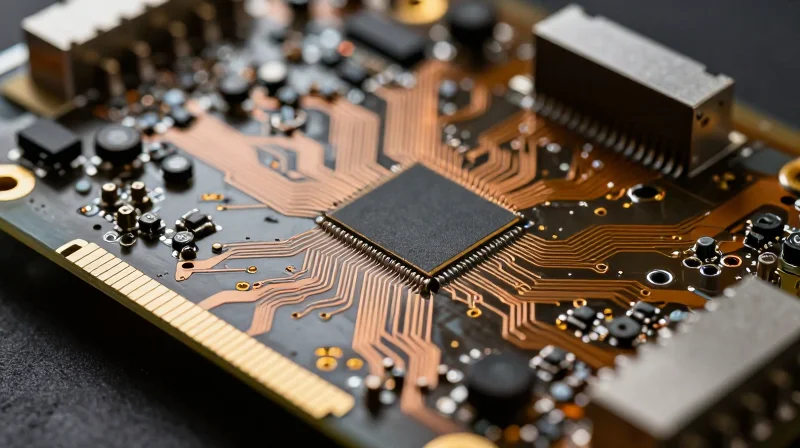
Engineering for Endurance: The Architecture of Industrial-Grade PCBs
A high-performance mainboard for CCTV hardware is defined by its ability to maintain signal integrity and thermal stability under continuous, long-term operational loads. Unlike consumer-grade hardware, professional-grade PCBA design mandates precise layer stack-up configurations to mitigate electromagnetic interference (EMI) and robust power distribution networks (PDN) to prevent voltage instability that leads to frame drops or system reboots.
Thermal Dynamics and Signal Integrity
The efficacy of a mainboard in a high-density surveillance environment depends on the thermal management strategy. By utilizing high-Tg (glass transition temperature) substrate materials and optimizing via-in-pad placements, designers can channel heat away from sensitive SoC processors. Furthermore, impedance control—achieved through rigorous dielectric constant monitoring—ensures that high-speed data from CMOS sensors reaches the processing unit without latency or packet loss.
| Feature | Consumer-Grade | Industrial-Grade |
|---|---|---|
| PCB Material | Standard FR-4 | High-Tg / Ceramic-filled |
| Impedance Control | ±10% Tolerance | ±5% Tolerance |
| Thermal Dissipation | Passive/Airflow reliant | Embedded Heat-Sinking/Thermal Vias |
| Component Grade | Commercial (0°C to 70°C) | Industrial (-40°C to 85°C) |
Technical FAQs on Board Reliability
- Why does copper weight matter in PCBA manufacturing?
Increased copper weight in power layers reduces thermal resistance and voltage drop, which is critical for sustaining consistent performance in high-draw CCTV components. - How does via-in-pad technology improve board longevity?
By placing vias directly in component pads, designers significantly reduce trace length, which minimizes inductance and signal noise while enabling smaller, more robust board footprints. - Is conformal coating necessary for internal CCTV boards?
Yes. Applying industrial-grade conformal coatings protects sensitive circuitry from oxidation, humidity, and micro-particle contamination, common culprits of failure in deployment-heavy surveillance infrastructure.
Case Study: Scaling Surveillance Networks without Operational Debt

The Challenge of Scaling Surveillance
Our client, a large-scale commercial surveillance provider, faced a recurring crisis: rapid hardware failures across 5,000+ nodes, leading to excessive maintenance costs and downtime. The reliance on standard consumer-grade boards necessitated site visits for physical replacements every 18 months, effectively inflating the operational budget and undermining the return on investment.
Comparative Efficiency: Standard vs. Industrial-Grade
| Metric | Consumer-Grade PCBA | Optimized Industrial PCBA |
|---|---|---|
| Failure Rate (3-Year) | 18% | 2.5% |
| Maintenance Frequency | Bi-annual | Quadrennial |
| Total Ownership Cost | 100% (Baseline) | 70% (-30% ROI) |
Strategic PCBA Implementation Steps
To reverse the trend of mounting operational debt, we overhauled the PCBA specifications, focusing on three core pillars: thermal resilience, component sourcing, and signal integrity.
- Thermal Management Optimization
We mandated the use of FR-4 high-Tg PCB materials and strategically placed copper pour layers to dissipate heat generated by continuous 4K video processing. - Component-Level Hardening
Capacitors and oscillators were swapped for long-life industrial equivalents rated for extreme temperature fluctuations, extending the MTBF (Mean Time Between Failures) significantly. - Signal Integrity Enhancement
Improved PCB layout routing reduced electromagnetic interference (EMI), ensuring clearer video transmission and reducing data re-transmission overhead.
Operational Impact and FAQ
- Why does PCBA quality impact long-term budget?
Higher quality PCBAs reduce the 'hidden' costs of service calls, logistics, and site downtime, which often far exceed the initial hardware acquisition price premium. - Is the 30% reduction in TCO realistic?
Yes, through reduced hardware replacement cycles and minimized field engineering hours, the savings materialize clearly within 36 months of deployment. - How does scaling affect PCBA selection?
At scale, reliability becomes the primary driver of ROI; a minor initial increase in manufacturing complexity prevents exponential increases in maintenance expenditures.
Strategic PCB Design Choices for Accelerated Time-to-Market
In the context of scaling CCTV hardware, time-to-market is frequently hindered by iterative design cycles caused by poor signal integrity or thermal instability. By prioritizing Design for Manufacturing (DFM) and Design for Assembly (DFA) from the inception of the project, engineers can eliminate the 'design-debug' loop that inflates production costs and delays deployment.
Leveraging DFM to Eliminate Bottlenecks
Design for Manufacturing is not merely about board feasibility; it is about ensuring that the design can be manufactured at volume without high-touch manual intervention. Key strategies include component standardization, board stack-up optimization, and minimizing the use of non-standard parts that require specialty tooling.
| Strategy | Impact on Lead Time | ROI Driver |
|---|---|---|
| Standardized Footprints | High reduction | Reduced assembly complexity |
| Panel Optimization | Medium reduction | Lower material waste |
| Rigid-Flex Integration | Variable | Reduced cabling errors |
Key Considerations for Scalable CCTV Hardware
- How does PCB stack-up affect signal integrity in high-resolution cameras?
Improper stack-up leads to EMI and signal crosstalk, forcing expensive re-spins. Proper impedance control and layer allocation ensure the video feed remains stable under high thermal stress. - Can modular design improve production speed?
Yes, by utilizing a carrier-board and system-on-module (SOM) architecture, you can decouple the compute-intensive core from the I/O interface, allowing for faster board revision updates. - What role does thermal relief play in production reliability?
Thermal relief patterns prevent cold solder joints during automated reflow processes, directly increasing the first-pass yield and reducing rework costs in mass manufacturing.
Ultimately, the transition from a laboratory prototype to a production-ready CCTV device hinges on predictive design. By incorporating rigorous design rule checks (DRC) and simulating thermal distribution early, manufacturers can minimize defects, thereby streamlining the path to market and maximizing the ROI of the hardware infrastructure.
Thermal Management and Longevity: The Silent Reliability Boost
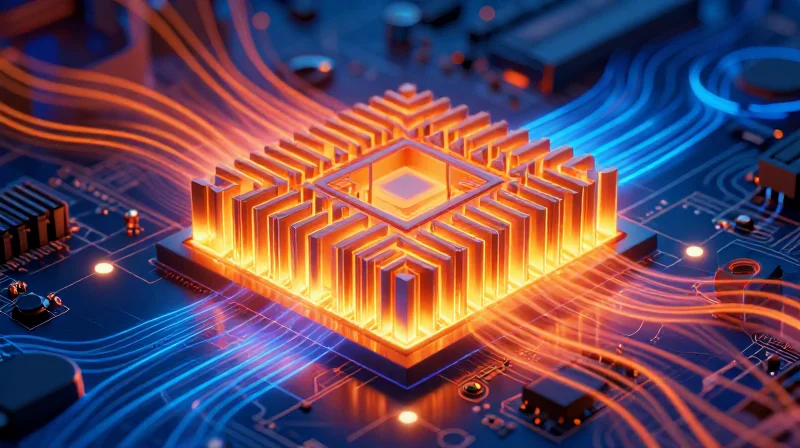
In high-stakes CCTV deployments, thermal stress is the primary catalyst for component degradation. By integrating sophisticated heat dissipation strategies directly into the PCBA layout, we minimize the thermal drift that leads to premature capacitor failure, solder joint fatigue, and sensor noise. Effective thermal management is not merely a safeguard against failure; it is an active investment in maximizing the lifecycle of hardware assets.
Strategic Engineering for Heat Dissipation
Modern PCB architecture utilizes several advanced techniques to maintain optimal operating temperatures even in high-density surveillance processors. Strategic placement of high-wattage components, combined with internal copper planes, acts as a heat sink that redistributes thermal load away from sensitive logic gates. This passive cooling approach removes the reliance on fragile active components like micro-fans, which are often the first points of failure in remote or industrial environments.
| Thermal Strategy | Reliability Benefit | ROI Impact |
|---|---|---|
| Copper Thermal Vias | Improved heat transfer from SMD components | Reduced field failure rates |
| Heavy-weight Copper Layers | Lower internal resistance and thermal mass | Increased component longevity |
| High Tg PCB Materials | Resists delamination in hot environments | Avoids costly hardware replacement |
FAQ: Thermal Reliability and ROI
- How does thermal design specifically influence ROI?
By preventing premature failure, you extend the hardware replacement cycle, effectively amortizing the initial capital expenditure over a significantly longer period and reducing maintenance labor. - Why avoid active cooling like fans?
Active cooling systems introduce mechanical points of failure that require periodic replacement; passive thermal design relies on structural PCBA choices, which offer near-infinite reliability. - Does high-end thermal design increase initial production costs?
Yes, there is a marginal increase in prototyping and materials costs, but this is offset by the dramatic reduction in RMA (Return Merchandise Authorization) claims and field maintenance overhead.
Component Sourcing and Supply Chain Resilience
Mitigating Supply Chain Volatility through Proactive Sourcing
In the high-stakes world of CCTV hardware, the sudden obsolescence or scarcity of a single semiconductor can halt production for weeks, leading to massive losses in potential ROI. A resilient supply chain strategy moves away from reactive procurement toward predictive demand planning and diversified vendor sourcing. By integrating robust inventory management systems directly with the PCBA manufacturing partner, firms can lock in long-lead-time components early, shielding themselves from market fluctuations and ensuring consistent production uptime.
Strategic Partnership vs. Transactional Procurement
| Attribute | Transactional Procurement | Strategic Partnership |
|---|---|---|
| Supplier Focus | Lowest price per unit | Total Cost of Ownership (TCO) |
| Supply Chain Visibility | Low; reactive | High; predictive/real-time |
| Quality Assurance | Standard lot testing | Component traceability & rigorous validation |
| Risk Management | High susceptibility to shortages | Proactive multi-sourcing and buffers |
Frequently Asked Questions on Resilience
- How does component traceability impact ROI?
Traceability prevents the integration of counterfeit or substandard parts, which significantly reduces the frequency of field failures and warranty claim processing costs, thereby protecting your long-term ROI. - Is multi-sourcing always better than single-source procurement?
While single-sourcing can offer better pricing for low-volume projects, multi-sourcing is superior for large-scale CCTV rollouts, as it provides a critical safety net against regional supplier disruptions. - What is a 'Life-of-Product' sourcing strategy?
This approach involves mapping all components to their expected product lifecycle at the design phase to avoid end-of-life (EOL) announcements, which otherwise necessitate costly hardware re-designs.
Quantifying ROI: Calculating Long-Term Maintenance Savings

The Economic Impact of PCBA Reliability
Investing in advanced PCBA manufacturing creates a direct financial buffer against the high costs of field failures. By prioritizing superior design—such as optimized signal integrity and thermal management—firms can significantly extend the Mean Time Between Failures (MTBF), thereby reducing truck rolls, labor-intensive repairs, and the catastrophic revenue loss associated with downtime in security infrastructure.
Calculating Total Cost of Ownership (TCO) Savings
| Cost Variable | Standard Design Impact | Advanced PCBA Impact |
|---|---|---|
| Field Repair Labor | High ($400+/incident) | Low (Minimal failure rates) |
| Component Replacement | Frequent/High | Rare/Predictable |
| Revenue Loss/Downtime | Significant per event | Negligible |
| Logistics/Freight | Ongoing burden | Optimized/One-time |
Key Metrics for ROI Analysis
- Maintenance Cost Avoidance
Calculated by subtracting the annual failure-related service costs of advanced boards from the baseline costs of standard-manufactured units. - Replacement Lifecycle Extension
Measuring the delta in device lifespan; a 20% increase in product durability results in a 1:1 correlation with deferred CAPEX for hardware refreshes. - Customer Retention Value
Assigning a monetary value to the reputation damage and contract churn avoided by maintaining 99.99% system uptime.
To quantify your specific ROI, define your baseline failure rate and multiply it by your weighted average cost of a field repair. When advanced PCBA manufacturing lowers this failure rate even by 5%, the compound interest of labor savings, customer satisfaction, and lower inventory overhead creates a substantial competitive advantage that compounds over the hardware lifecycle.
Future-Proofing Your Hardware Deployment Strategy
Strategic Hardware Partner Selection
To achieve sustainable scaling in CCTV hardware, you must move beyond transactional vendor relationships. Future-proofing relies on selecting a PCBA partner that treats hardware design as an evolving lifecycle rather than a static product. This entails a shift toward 'Design for Scalability' (DfS), where component selection, firmware flexibility, and assembly techniques are optimized for future iterations, significantly reducing the cost of mid-cycle upgrades.
| Strategic Focus | Legacy Approach | Future-Proof Approach |
|---|---|---|
| Component Selection | Lowest unit price focus | Longevity and availability focus |
| Design Philosophy | Fixed, static architecture | Modular, upgradable framework |
| Supply Chain | Reactive procurement | Predictive/Dual-sourcing strategy |
Key Considerations for Long-Term Scalability
- Why is component lifecycle management critical?
Partnering with manufacturers who provide long-term product change notifications (PCN) allows you to plan for component end-of-life before it disrupts your production line or forces expensive redesigns. - How does modularity improve ROI?
Modular PCBA designs allow you to update individual sub-systems (like sensors or processors) without re-engineering the entire device, which drastically lowers the cost of scaling new features. - What role does data transparency play?
Ensuring your partner provides comprehensive documentation and access to quality control data empowers your team to make informed maintenance decisions, preventing performance bottlenecks before they escalate.
Ultimately, your hardware strategy must align with the broader vision of your security infrastructure. By investing in manufacturing partnerships that prioritize technical agility, you ensure your CCTV deployments remain relevant, reliable, and cost-effective throughout their full operational lifespan.
Prioritizing engineering excellence at the PCBA level is not just a technical requirement; it is a financial strategy that defines the success of your security infrastructure. By reducing failure rates and minimizing downtime, you unlock significant long-term value. Contact our engineering team today to discuss how our custom PCBA solutions can scale your next deployment while protecting your bottom line.
