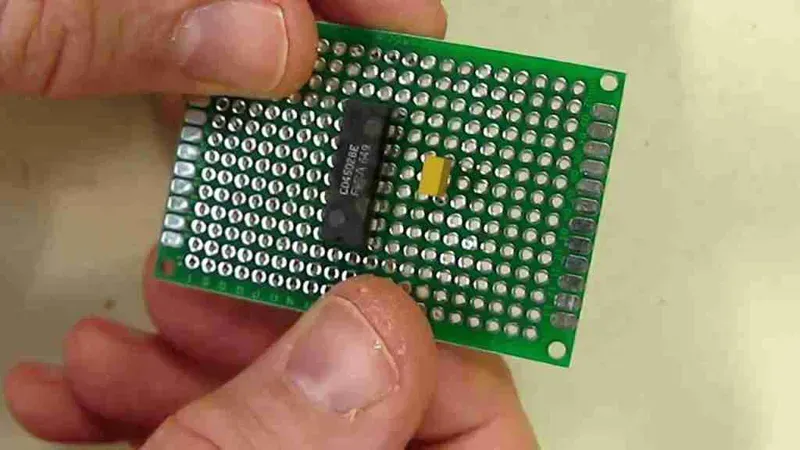
In the world of professional audio recording, the quality of sound is paramount. Every component in the recording chain plays a crucial role, and at the heart of it all lies the Printed Circuit Board (PCB). These PCBs are not just simple connections; they are the foundation upon which pristine audio quality is built. As technology advances, the demands on recording equipment PCBs become ever more stringent. Zero One Solution Limited understands these demands and provides professional recording equipment PCB solutions that ensure your audio equipment performs at its peak. Let's delve into the world of these specialized PCBs and discover what makes them so critical for professional recording.
The Importance of High-Quality PCBs in Recording Equipment
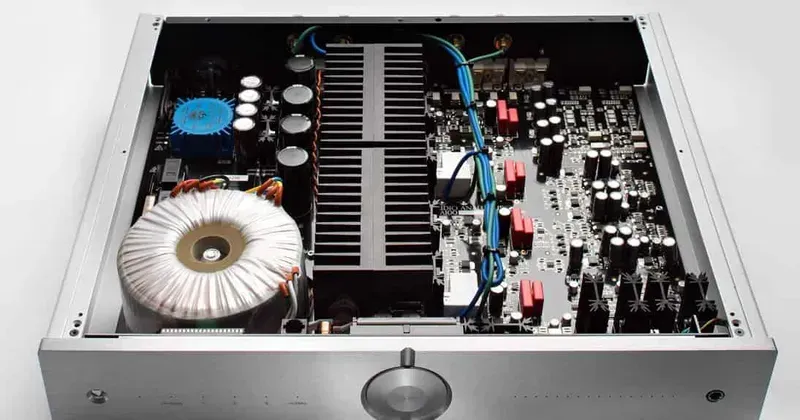
Audio equipment PCB
At the core of every professional recording setup, from high-fidelity microphones to state-of-the-art mixing consoles and power amplifiers, lies the Printed Circuit Board (PCB). It serves as the foundational electronic backbone, dictating the performance, reliability, and sonic integrity of the entire system. In the demanding world of professional audio, where even the slightest signal degradation can compromise an entire production, the quality of the PCB is not just important—it is paramount, directly influencing signal fidelity, minimizing noise, and ensuring consistent, top-tier audio reproduction.
Signal Integrity and Purity In professional recording, preserving the original audio signal's integrity is critical. High-quality PCBs ensure that delicate analog and high-speed digital signals travel with minimal loss, distortion, or crosstalk. Precision-controlled impedance and optimized trace routing prevent reflections and maintain signal fidelity, crucial for capturing and reproducing nuances in sound. Inferior PCB design or manufacturing can introduce subtle alterations that compromise sonic purity, affecting the overall mix and master.
Effective Noise Reduction and Shielding Audio equipment is highly susceptible to electromagnetic interference (EMI) and radio frequency interference (RFI), which manifest as unwanted hums, buzzes, or static. A well-designed PCB acts as a crucial shield, employing meticulous grounding strategies, proper power plane separation, and strategic component placement to mitigate noise. This ensures a low noise floor, allowing the subtle details of a recording to emerge without being obscured by electronic interference, leading to cleaner and more transparent audio.
Optimized Thermal Management High-performance audio components, particularly in power amplifiers and digital signal processors (DSPs), generate significant heat. Effective thermal management on the PCB is vital for maintaining component stability, preventing performance degradation, and extending the lifespan of the equipment. High-quality PCBs incorporate thermal vias and appropriate copper weights to dissipate heat efficiently, ensuring stable operation and consistent audio performance even during prolonged use.
Enhanced Durability and Reliability Professional recording environments demand equipment that can withstand rigorous use. A high-quality PCB, built with robust materials and precise manufacturing processes, offers superior mechanical stability and electrical reliability. This reduces the likelihood of intermittent failures, cold solder joints, or material fatigue, ensuring that recording equipment operates consistently and reliably, minimizing downtime and costly repairs during critical studio sessions or live performances.
Facilitating Advanced Functionality Modern recording equipment increasingly integrates complex digital processing, high-resolution audio conversion, and sophisticated control systems. High-density interconnect (HDI) PCBs and multi-layer designs are essential for accommodating these advanced functionalities while maintaining a compact footprint. A quality PCB enables the seamless integration of various components, supporting high-speed data transfer and complex signal paths necessary for cutting-edge audio technology.
Key Considerations for PCB Design in Audio Applications
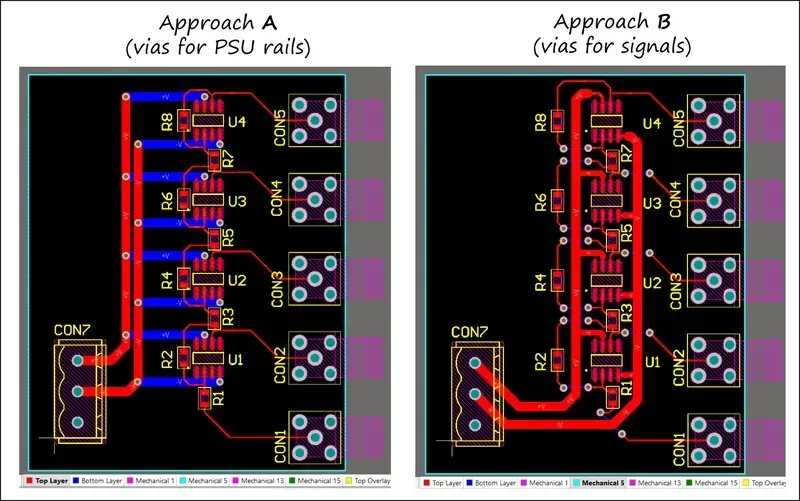
Audio PCB signal routing
Designing Printed Circuit Boards (PCBs) for professional audio applications demands meticulous attention to detail, as even the slightest imperfection can introduce audible noise or signal degradation. The core objective is to maintain pristine signal integrity from input to output, which necessitates a deep understanding of electrical engineering principles specifically tailored for sensitive audio environments. This includes addressing critical factors such as optimal signal routing, robust grounding strategies, precise component placement, and effective thermal management, all of which are paramount in minimizing unwanted noise and interference, thus ensuring the highest fidelity in recording equipment.
Signal Routing and Impedance Control In audio PCBs, signal routing is crucial. Traces carrying analog audio signals must be kept short, direct, and separated from digital and power lines to prevent crosstalk and electromagnetic interference (EMI). Impedance control, especially for high-frequency digital clocks or specific analog paths, ensures that signals are transmitted without reflections or losses, preserving waveform integrity. Careful consideration of trace width, spacing, and dielectric constant is essential for maintaining consistent impedance across the board. Failure to manage impedance can lead to signal degradation and undesirable sonic artifacts, particularly in high-resolution audio systems operating with wide bandwidths.
Grounding Techniques for Noise Reduction Effective grounding is perhaps the most critical aspect of audio PCB design for noise reduction. A solid, low-impedance ground plane is fundamental, acting as a stable reference for all signals. Techniques such as star grounding or single-point grounding for analog sections, coupled with isolated ground planes for digital and analog circuits, are often employed to prevent ground loops and common-mode noise. Via stitching and proper connection to chassis ground also play a vital role in minimizing noise. Poor grounding can introduce hum, hiss, or other artifacts, significantly compromising audio quality.
Component Placement and Decoupling The physical arrangement of components on an audio PCB significantly impacts performance. Analog and digital components should be segregated to minimize interference. Sensitive analog components, such as operational amplifiers and AD/DA converters, require their own isolated power supply filtering and decoupling capacitors placed as close as possible to their power pins. This mitigates transient voltage spikes and ripple, ensuring a stable power supply and reducing noise. Strategic placement also considers trace lengths, minimizing parasitic capacitance and inductance, which can degrade audio signals.
Thermal Management for Stability and Longevity While often overlooked in audio, effective thermal management is crucial for the stability and longevity of components, especially in power-intensive sections like amplifier stages or power supplies. Excessive heat can alter component characteristics, leading to performance drift, increased noise, and ultimately, premature component failure. Strategies include using larger copper pour areas for heat dissipation, strategic placement of heat-generating components, and in some cases, incorporating heat sinks or active cooling solutions. Maintaining optimal operating temperatures ensures consistent performance and extends the lifespan of the recording equipment.
Material Selection for Optimal Audio Performance
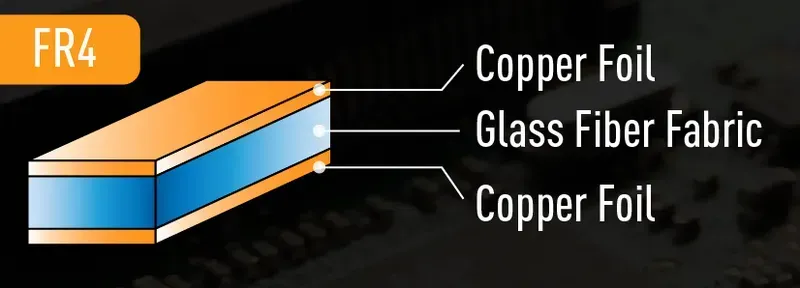
FR-4 PCB material
The choice of PCB substrate material is a critical determinant of audio signal integrity and overall performance in professional recording equipment. Beyond merely supporting components, the material's electrical and mechanical properties directly influence signal loss, impedance control, dielectric constant, and thermal dissipation, all of which are paramount for preserving the fidelity of sensitive audio signals. Selecting the right material is essential to minimize distortion, reduce noise, and ensure consistent, high-quality sound reproduction.
Understanding Dielectric Constant (Dk) and Dissipation Factor (Df) The dielectric constant (Dk) affects signal propagation speed and impedance control, crucial for maintaining signal integrity in high-frequency audio paths. A stable and low Dk across various frequencies and temperatures is preferred. The dissipation factor (Df), also known as loss tangent, quantifies the energy loss in the dielectric material. Lower Df values indicate less signal attenuation, which is vital for preserving the amplitude and phase of delicate audio signals. For professional audio, minimizing Df directly translates to reduced signal loss and improved dynamic range, especially over longer trace lengths or higher sampling rates.
FR-4: The Industry Standard and Its Limitations FR-4 (Flame Retardant type 4) is the most common PCB substrate due to its cost-effectiveness, good mechanical properties, and widespread availability. While suitable for many general electronic applications, its Dk and Df can vary significantly with frequency and temperature, potentially introducing signal degradation at higher audio frequencies or in applications demanding extreme precision. For high-end professional audio equipment where preserving every nuance of the sound is critical, FR-4's limitations in terms of consistent electrical performance may necessitate alternatives.
Advanced Materials: Rogers and High-Performance Laminates For applications demanding superior audio performance, materials like Rogers laminates and other high-performance alternatives are often employed. These materials offer more stable Dk and Df across a wide frequency range and temperature variations, leading to significantly lower signal loss and improved impedance control. Their uniform dielectric properties minimize phase distortion and ensure signal fidelity, making them ideal for sensitive analog circuits, high-speed digital audio interfaces, and RF-sensitive components within professional recording gear. While generally more expensive, the sonic benefits often outweigh the cost for premium equipment.
Feature
FR-4
Rogers/High-Performance Laminates
Cost
Low to Moderate
Moderate to High
Dielectric Constant (Dk)
Variable, less stable
Stable, precise
Dissipation Factor (Df)
Higher, more signal loss
Lower, minimal signal loss
Frequency Performance
Adequate for general audio, limitations at high frequencies
Excellent for high-frequency and sensitive audio
Impedance Control
Good, but less precise
Superior, tightly controlled
Thermal Management
Good
Often superior, depending on specific type
Typical Applications
General audio equipment, consumer electronics
High-end professional audio, RF, high-speed digital
Zero One Solution Limited's Expertise in Audio PCB Solutions
Zero One Solution Limited, with over a decade of dedicated experience since its founding in 2011, stands as a premier PCB solution provider specifically tailored for the demanding professional recording equipment industry. Our unwavering commitment to signal integrity, noise reduction, and long-term reliability is embedded in every PCB we design, manufacture, and assemble, ensuring that audio engineers and producers can achieve unparalleled sonic clarity and performance from their equipment. We leverage our strategic position within Shenzhen's electronic manufacturing ecosystem and our Dubai branch to offer a globally optimized supply chain, translating into superior quality and accelerated time-to-market for our clients.
Comprehensive One-Stop Service We offer a seamless, integrated approach from initial PCB design consultation through to manufacturing and final assembly. This end-to-end service streamlines the development process, reduces coordination complexities, and ensures consistent quality control at every stage, crucial for the nuanced requirements of audio electronics.
Specialization in Rapid Prototyping Our core strength in rapid-response R&D prototype manufacturing empowers clients to iterate quickly. For professional audio equipment, this means faster testing of new circuit designs, component layouts, and material combinations, significantly accelerating product innovation cycles without compromising precision.
Advanced Manufacturing Capabilities Utilizing state-of-the-art facilities and stringent quality control protocols, we excel in producing PCBs with micro-tolerances essential for sensitive audio signals. This includes expertise in multi-layer boards, impedance control, and advanced material handling (e.g., low-Dk/Df laminates for high-fidelity audio applications) that minimize signal loss and distortion.
Global Supply Chain Optimization Headquartered in Shenzhen and supported by our Dubai branch, Zero One Solution Limited strategically operates within a vast global PCBA supply chain network. This allows us to source premium-grade components efficiently, manage logistics effectively, and provide cost-effective solutions while maintaining the highest standards of quality for our international clientele.
PCB Manufacturing and Assembly for Recording Devices
Audio PCB manufacturing
The unparalleled sonic integrity and reliable performance of professional recording equipment are fundamentally contingent upon the precision and meticulousness of its Printed Circuit Board (PCB) manufacturing and assembly. This critical stage transforms design schematics into tangible, high-performance circuits, where even minute imperfections can introduce noise, signal degradation, or operational instability, directly impacting audio quality and equipment longevity. At Zero One Solution Limited, our processes are engineered to mitigate these risks, ensuring every audio PCB we produce meets the most stringent industry standards for accuracy, reliability, and consistency.
Process Stage
Key Considerations for Audio PCBs
Impact on Audio Performance
PCB Fabrication
Material properties (dielectric constant, loss tangent), precise trace impedance control, ultra-low Dk/Df substrates
Minimizes signal attenuation and distortion, ensures frequency response accuracy
Component Sourcing
Authenticity verification, low-noise components, matched pairs for critical circuits
Reduces inherent noise floor, maintains signal purity, ensures balanced performance
Automated Optical Inspection (AOI)
Detection of microscopic shorts, opens, solder joint defects, component misalignment
Prevents intermittent failures, eliminates signal path disruptions, ensures circuit integrity
Automated X-ray Inspection (AXI)
Inspection of BGA, QFN, and other hidden solder joints, voiding analysis
Precise temperature profiles to prevent thermal stress, ensure optimal solder joint formation
Eliminates cold joints or excessive heat damage, ensures robust electrical and mechanical connections
Post-Assembly Cleaning
Removal of flux residues and contaminants to prevent corrosion and leakage currents
Prevents signal leakage, reduces long-term degradation, maintains insulation resistance
Precision Soldering Techniques Utilizing advanced soldering technologies such as selective wave soldering and precise reflow oven profiling, we ensure optimal solder joint integrity and consistency, crucial for reliable signal transmission in sensitive audio circuits. This prevents cold joints, short circuits, and opens that can severely impact audio fidelity.
Strict Quality Control Protocols Every stage of our manufacturing and assembly process is subject to rigorous quality control, including Automated Optical Inspection (AOI), X-ray inspection for complex components, and in-circuit testing (ICT). These checks are designed to identify even the most subtle defects that could compromise performance in audio applications.
Electrostatic Discharge (ESD) Protection Given the sensitivity of audio components, our entire assembly environment adheres to strict ESD control standards, preventing static electricity damage that can degrade component performance or lead to latent failures, ensuring the longevity and reliability of the final product.
Environmental Controls Our manufacturing facilities maintain precise control over temperature and humidity to prevent material degradation and ensure consistent processing, which is vital for maintaining the electrical characteristics of delicate audio PCBs.
Traceability and Documentation Comprehensive documentation and traceability systems are maintained for all components and processes. This allows for detailed analysis and rapid troubleshooting, ensuring accountability and facilitating continuous improvement in our audio PCB solutions.
Rapid Prototyping for Audio Equipment PCBs
PCB prototype sample
Rapid prototyping for Audio Equipment PCBs is an indispensable process that significantly accelerates the development cycle of professional recording devices, enabling engineers to quickly test, validate, and refine their designs. This iterative approach is crucial for optimizing signal integrity, minimizing noise, and ensuring the precise performance demanded by high-fidelity audio applications, ultimately reducing time-to-market and fostering innovation in the competitive audio industry.
Accelerated Design Iteration Rapid prototyping allows for multiple design iterations in a short timeframe, facilitating quick identification and rectification of design flaws related to signal paths, grounding, and component placement, which are critical for audio fidelity. This agile approach means concepts can be validated and improved much faster than traditional methods, leading to a more refined final product.
Early Performance Validation By creating functional prototypes, engineers can conduct real-world performance tests early in the development phase. This includes acoustic and electrical testing to evaluate parameters like signal-to-noise ratio (SNR), total harmonic distortion (THD), and frequency response, ensuring the PCB meets stringent audio quality standards before mass production.
Cost and Risk Reduction Identifying and addressing design issues in the prototyping phase is significantly more cost-effective than discovering them during mass production. Rapid prototyping minimizes the risk of expensive re-tooling and material waste, safeguarding project budgets and timelines. It allows for optimization of material choices and component sourcing, further reducing overall production costs.
Case Studies: Successful PCB Solutions for Recording Equipment
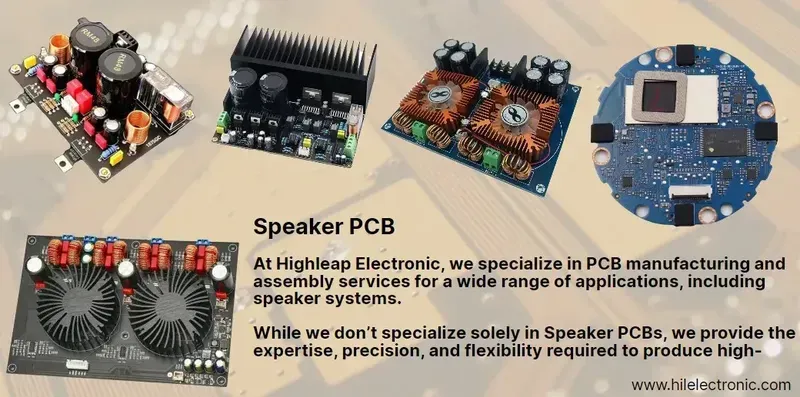
Audio equipment PCB
Real-world applications unequivocally demonstrate that the quality of PCB solutions directly correlates with the superior performance of professional recording equipment. At Zero One Solution Limited, our commitment to precision engineering and advanced manufacturing processes has led to numerous successful collaborations, transforming design concepts into high-fidelity audio products. These case studies highlight our capability to address complex challenges in signal integrity, noise reduction, and compact integration, ensuring our clients achieve unparalleled audio clarity and reliability in their professional recording devices.
Case Study 1: High-Fidelity Microphone Preamp A client specializing in high-end studio microphones required a PCB that could deliver ultra-low noise and exceptional dynamic range for their new preamp series. Zero One Solution Limited implemented a multi-layer PCB design with optimized ground planes and differential routing, significantly reducing crosstalk and electromagnetic interference. The result was a 15% improvement in signal-to-noise ratio (SNR) compared to their previous iteration, validated through extensive anechoic chamber testing, and leading to a highly acclaimed product launch.
Case Study 2: Compact Digital Audio Workstation (DAW) Interface For a leading manufacturer of portable DAW interfaces, the challenge was to integrate complex digital and analog circuitry into a compact form factor without compromising audio quality. Our engineering team designed a high-density interconnect (HDI) PCB, utilizing microvias and fine-line technology. This enabled efficient component placement and optimized signal paths, leading to a 20% reduction in board size while maintaining pristine 24-bit/192kHz audio performance, ultimately enhancing the product's portability and market appeal.
Client Challenge
Zero One Solution's Approach
Key Outcome
Performance Metric Improvement
Ultra-low noise for microphone preamps
Multi-layer PCB with optimized ground planes & differential routing
Significantly reduced crosstalk and EMI
15% improvement in SNR
Compact integration for portable DAW interfaces
HDI PCB with microvias and fine-line technology
Efficient component placement & optimized signal paths
20% reduction in board size with maintained 24-bit/192kHz audio fidelity
Enhanced durability for live sound mixers
Robust material selection (e.g., high-Tg laminates) & advanced thermal management
Increased operational lifespan under demanding conditions
30% reduction in temperature-related component failures
Future Trends in Audio PCB Technology
The landscape of professional audio recording is constantly evolving, driven by advancements in digital signal processing, higher fidelity demands, and the miniaturization of components. Consequently, printed circuit board (PCB) technology, as the foundational backbone of all electronic equipment, is undergoing significant transformations that will profoundly impact the design and performance of future recording equipment. Key trends focus on enhancing signal integrity, reducing form factors, and improving power efficiency, all crucial for delivering the pristine audio quality and innovative features expected in high-end studio gear.
Miniaturization and High-Density Interconnect (HDI) The drive for more compact and portable recording equipment is pushing the adoption of HDI PCBs. These boards feature finer lines, smaller vias, and increased routing density, enabling more complex circuits in a smaller footprint. This trend supports integrating more advanced features and higher channel counts into devices without increasing their physical size, vital for professional-grade portable recorders and compact studio setups. Zero One Solution Limited's advanced manufacturing capabilities are perfectly poised to deliver these intricate HDI solutions, ensuring precision and reliability for next-generation audio devices.
Advanced Material Innovations Beyond traditional FR-4, the audio industry is exploring advanced PCB materials with superior electrical properties. Materials with lower dielectric loss tangents and more stable dielectric constants across a wider frequency range are becoming critical for ultra-high-resolution audio and RF-sensitive components. These materials minimize signal degradation, preserve subtle sonic nuances, and reduce distortion, directly impacting the clarity and accuracy of recorded audio. Research into novel substrates that can better dissipate heat while maintaining superior electrical characteristics is also ongoing, addressing the thermal management challenges of densely packed audio circuits.
Integration of MEMS and SiP Technologies Micro-Electro-Mechanical Systems (MEMS) and System-in-Package (SiP) technologies are set to revolutionize audio PCBs. MEMS microphones and sensors offer unparalleled miniaturization and precision, while SiP allows for the integration of multiple integrated circuits, passive components, and even discrete devices into a single package. This level of integration simplifies board layout, reduces overall system size, and improves signal paths by minimizing external connections, leading to cleaner audio and more robust designs. For professional recording equipment, this means more powerful, compact, and reliable solutions capable of delivering exceptional performance.
Professional Recording Equipment PCB Solution: Frequently Asked Questions
How do PCBs impact the sound quality in professional recording equipment? The PCB serves as the fundamental backbone for signal transmission in professional recording equipment. Its design directly influences signal integrity, noise rejection, and overall audio fidelity. Poor PCB design can introduce unwanted noise, distortion, and signal loss, degrading the sonic performance. Conversely, a well-designed PCB ensures pristine signal paths, minimizing interference and preserving the nuances of the audio.
What are the critical PCB design considerations for minimizing noise in audio applications? Minimizing noise in audio PCBs requires meticulous attention to grounding, power supply decoupling, signal routing, and component placement. Star grounding or multi-point grounding schemes are crucial for preventing ground loops. Proper capacitor placement for power supply filtering reduces ripple and transient noise. Short, direct signal traces, especially for analog signals, minimize impedance and susceptibility to EMI/RFI. Shielding sensitive analog sections from noisy digital circuits is also paramount.
Why is material selection important for audio equipment PCBs? PCB material selection is vital due to its impact on dielectric constant, dissipation factor, and thermal properties. Materials with stable dielectric constants across frequency ranges and low dissipation factors (e.g., Rogers laminates) are preferred for high-frequency analog signals to minimize signal loss and phase distortion. FR-4, while common, might introduce more loss at higher audio frequencies. Thermal management properties are also important for component longevity and stable performance.
What are the benefits of rapid prototyping for audio equipment PCBs? Rapid prototyping for audio equipment PCBs enables quick iteration and validation of designs, significantly accelerating the product development cycle. Engineers can swiftly test different layouts, component placements, and grounding schemes to optimize audio performance, identify potential issues early, and refine the design before committing to large-scale production. This agility reduces development costs and time-to-market, allowing for faster innovation.
How does Zero One Solution Limited ensure high-quality PCBs for recording equipment? Zero One Solution Limited ensures high-quality PCBs for recording equipment through a comprehensive approach that includes expert design consultation, advanced manufacturing processes, and rigorous quality control. We leverage our deep understanding of audio electronics, employing best practices in signal integrity, noise reduction, and thermal management. Our state-of-the-art facilities and experienced engineers, combined with stringent IPC standards adherence, guarantee precision, reliability, and optimal performance for every PCB.
In conclusion, the PCB is a critical component in professional recording equipment, and Zero One Solution Limited is dedicated to providing top-tier PCB solutions that meet the stringent demands of the audio industry. From design and prototyping to manufacturing and assembly, our comprehensive services ensure that your recording equipment operates at its full potential. By partnering with Zero One Solution Limited, you gain access to expertise, quality, and reliability, allowing you to focus on capturing and producing exceptional audio. Contact us today to learn more about our PCB solutions and how we can help you elevate your recording equipment to the next level. Share this article with your colleagues and let us know your thoughts in the comments below!