In an era defined by the proliferation of unmanned aerial vehicles (UAVs), commonly known as drones, the need for robust counter-drone measures has never been more critical. As drones become increasingly integrated into various sectors, including commercial delivery, surveillance, and even recreational activities, the potential for misuse and security breaches grows exponentially. This is where radar anti-drone systems step in as a vital defense mechanism, providing early detection and mitigation capabilities. At the heart of these sophisticated systems lies the Printed Circuit Board (PCB), the unsung hero that enables the intricate circuitry and functionality required for effective drone detection and neutralization. Zero One Solution Limited, a leading provider of PCB solutions, specializes in rapid prototyping and one-stop services from PCB design to manufacturing and assembly, stands at the forefront of empowering innovators in this rapidly evolving field. How do PCB solutions enable radar anti-drone systems to accurately detect, track, and neutralize unauthorized drones? This article delves into the crucial role of PCB solutions in radar anti-drone systems, highlighting the design considerations, manufacturing processes, and technological advancements that enable effective drone detection and neutralization.
Introduction: The Growing Need for Anti-drone Systems
The proliferation of Unmanned Aerial Vehicles (UAVs), commonly known as drones, has ushered in an era of unprecedented aerial accessibility, yet simultaneously introduced significant security and privacy challenges. From unauthorized surveillance and contraband delivery to potential threats against critical infrastructure and public safety, the versatility of drones necessitates robust countermeasures. Radar anti-drone systems are emerging as the frontline defense, offering superior detection and tracking capabilities that are crucial for safeguarding airspace in an increasingly complex threat landscape. The foundational element enabling the precision and performance of these advanced systems lies within their highly specialized Printed Circuit Boards (PCBs).
Why is the need for anti-drone systems growing? The increasing availability and affordability of drones, coupled with their diverse applications (both legitimate and illicit), have led to a surge in unauthorized drone activities. This poses significant risks to national security, public safety, privacy, and commercial operations, driving an urgent demand for effective detection and neutralization technologies.
What are the primary threats posed by drones? Drones can be exploited for various nefarious purposes, including espionage and unauthorized surveillance, delivery of illicit materials (e.g., drugs, explosives), disruption of critical infrastructure (e.g., airports, power plants), interference with public events, and even direct attacks. Their small size and low altitude flight capabilities make them difficult to detect by traditional air defense systems.
How do radar-based systems address drone threats effectively? Radar systems offer a distinct advantage in anti-drone applications due to their ability to detect and track small, fast-moving objects at long ranges, regardless of weather conditions or time of day. Unlike visual or acoustic methods, radar provides precise range, velocity, and angular data, enabling early warning and accurate threat assessment for effective interception or neutralization.
What makes radar anti-drone technology superior to other detection methods? Radar provides all-weather, day-and-night operational capabilities, unlike optical systems. It is also less susceptible to environmental noise than acoustic systems and offers a significantly larger detection range than most other methods. Its ability to provide real-time, precise 3D tracking data is paramount for effective counter-drone operations.
What is the role of PCBs in anti-drone radar systems? PCBs serve as the foundational electronic platform for radar systems, integrating critical components such as RF transceivers, high-speed digital signal processors (DSPs), and power management units. They are responsible for transmitting and receiving radar signals, processing vast amounts of data for target detection and tracking, and enabling the system's overall functionality, performance, and reliability.
Understanding Radar Anti-drone Technology
Radar anti-drone technology represents the vanguard in comprehensive airspace security, offering unparalleled detection and tracking capabilities for unmanned aerial vehicles (UAVs). Unlike passive methods, radar actively transmits electromagnetic waves to pinpoint a drone's presence, speed, and trajectory, even in challenging environmental conditions. This active sensing capability is critical for establishing a robust defense against the increasing proliferation of drones in sensitive airspace.
How Radar Systems Detect Drones Radar operates on the principle of transmitting radio waves and analyzing the echoes reflected by objects. For anti-drone applications, specialized radars emit pulses that, upon striking a drone, return a distinctive signature. This reflected signal is then processed to determine critical parameters like range, azimuth, elevation, and velocity, allowing for precise real-time tracking. Modern anti-drone radars often employ advanced techniques such as Frequency Modulated Continuous Wave (FMCW) or Pulse-Doppler radar to enhance detection sensitivity and mitigate clutter from the environment. According to a 2023 report by MarketsandMarkets, the anti-drone market is projected to reach USD 3.8 billion by 2028, largely driven by advancements in radar and counter-UAV technologies.
Detection Method
Advantages
Disadvantages
Radar
All-weather capability, long-range detection, precise tracking, effective in low visibility
Higher cost, potential for false positives from birds/clutter (mitigable with advanced algorithms)
Visual (Optical/Thermal)
High-resolution identification, passive detection (no emissions)
Limited range, susceptible to weather (fog, rain), dependent on line of sight, ineffective at night (optical)
Very short range, susceptible to ambient noise interference, less effective against quiet drones (e.g., fixed-wing)
RF (Radio Frequency)
Detects drone control signals, identifies drone type
Limited to drones using RF communication, can be evaded by autonomous drones, susceptible to jamming
Why is radar superior to other detection methods for anti-drone applications? Radar's superiority stems from its active sensing, which allows it to operate effectively regardless of lighting conditions or adverse weather. Unlike visual systems dependent on line-of-sight and light, or acoustic systems limited by ambient noise and range, radar provides robust, long-range, and all-weather detection and tracking. It offers precise positional data crucial for effective counter-measures, making it a cornerstone for comprehensive airspace security.
The Crucial Role of PCBs in Radar Anti-drone Systems
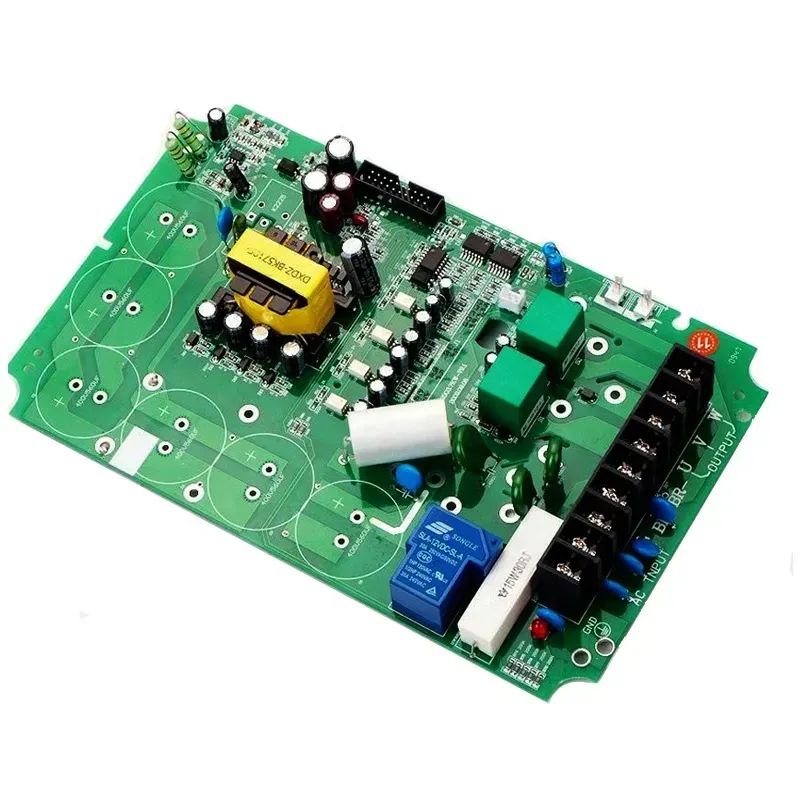
Radar Anti-drone System PCB
Printed Circuit Boards (PCBs) are the foundational technological component underpinning the advanced functionality of radar anti-drone systems. They serve as the critical infrastructure for integrating complex electronic components, enabling high-speed signal processing, precise data analysis, and robust communication that are indispensable for effective drone detection, tracking, and neutralization. Without highly specialized and meticulously engineered PCBs, the sophisticated capabilities of modern radar systems would simply not be achievable, making them truly the backbone of anti-drone technology.
Why are PCBs so critical for radar anti-drone system performance? PCBs provide the physical and electrical interconnections for all components within a radar system, including RF transceivers, high-speed processors, memory, and power management units. Their design directly impacts signal integrity, power distribution, thermal management, and electromagnetic compatibility (EMC), all of which are paramount for the accurate and reliable operation of sensitive radar electronics in harsh operating environments.
How do PCBs facilitate signal processing and data analysis in radar systems? Modern radar systems rely on sophisticated digital signal processing (DSP) to filter noise, detect subtle echoes, and extract target information. PCBs are designed to handle high-frequency analog and digital signals with minimal loss and interference, often employing multiple layers, controlled impedance traces, and specialized dielectric materials. This enables the rapid acquisition, conversion, and processing of vast amounts of raw radar data into actionable intelligence, such as drone type, speed, and trajectory.
What specific PCB characteristics are vital for high-frequency radar applications? For high-frequency radar, PCBs demand materials with low dielectric loss (Df) and stable dielectric constant (Dk) across a wide temperature range to minimize signal attenuation. Controlled impedance routing is essential to prevent signal reflections and ensure power transfer efficiency. Furthermore, precise layer stack-up and component placement are crucial for maintaining signal integrity, reducing crosstalk, and managing electromagnetic interference (EMI), all of which are critical for accurate radar performance.
How does PCB design impact the reliability and longevity of an anti-drone radar system? Robust PCB design and manufacturing practices are directly correlated with system reliability. Proper thermal management, facilitated by effective PCB layout and material selection (e.g., copper planes for heat dissipation), prevents component overheating and extends lifespan. Additionally, adherence to stringent manufacturing standards and quality control (e.g., IPC Class 2/3) ensures mechanical integrity and electrical performance, reducing the likelihood of field failures in critical anti-drone applications.
Key PCB Design Considerations for Anti-drone Radar
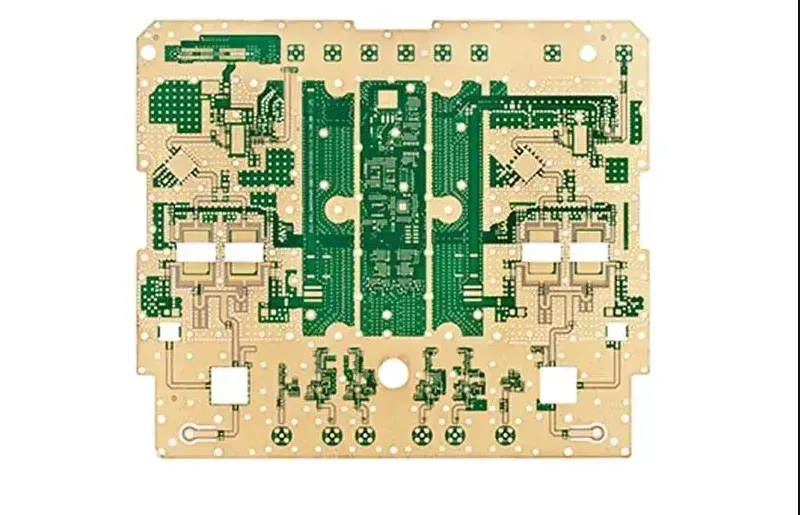
High-Frequency PCB Board
Designing Printed Circuit Boards (PCBs) for radar anti-drone systems demands a meticulous approach, as the performance of these critical defense technologies hinges directly on the integrity and precision of their underlying electronics. Achieving optimal radar functionality requires a profound understanding of high-frequency signal propagation, power management, and environmental robustness, making specialized PCB design considerations paramount. From material selection to intricate routing, every design decision profoundly impacts the system's detection accuracy, range, and reliability in challenging operational environments.
Design Aspect
Critical Considerations
Impact on Radar Performance
High-Frequency Performance
Low dielectric loss tangent, stable dielectric constant, minimal dispersion across wide frequency bands (e.g., K, Ka, W-band).
Ensures accurate signal transmission and reception, crucial for precise target detection and tracking. Mitigates signal attenuation and distortion at radar operating frequencies, directly affecting range and sensitivity.
Impedance Control
Precise trace width, spacing, dielectric thickness, and material selection to maintain 50-ohm or 75-ohm impedance for RF lines.
Minimizes signal reflections (VSWR), ensuring maximum power transfer and preserving signal integrity. Critical for preventing false positives and ensuring clear radar returns. Improves system efficiency and reduces noise.
Signal Integrity (SI)
Careful routing to minimize crosstalk, reflections, and electromagnetic interference (EMI); use of differential pairs, ground planes, and proper termination.
Guarantees that high-speed digital and analog signals are transmitted accurately without degradation, preventing data errors and system instability. Essential for reliable data processing from radar echoes and control signals. Reduces bit error rates in digital communication between components, enhancing system responsiveness and accuracy.
Thermal Management Radar systems generate significant heat, especially from RF power amplifiers and high-speed processors. Effective thermal management through proper component placement, thermal vias, heatsinks, and specialized substrate materials (e.g., metal-core PCBs) is crucial to prevent overheating, ensuring long-term reliability and stable performance. Inadequate thermal dissipation can lead to component degradation, frequency drift, and reduced system lifespan, directly impacting operational readiness and maintenance costs for anti-drone solutions. For instance, a 10
{
"level": 2,
"pos": 4,
"heading": "Thermal Management and Component Placement",
"content": [
{
"type": "text",
"data": {
"text": "Radar systems generate considerable heat, particularly from high-power RF components and processors. Effective thermal management is vital to maintain component reliability and stable electrical characteristics. This involves careful consideration of the PCB material's thermal conductivity, the strategic use of thermal vias to dissipate heat to ground planes, and integrating external cooling solutions like heat sinks or fans. Optimal component placement minimizes signal path lengths and avoids hotspots, contributing to enhanced overall system efficiency and longevity."
}
}
]
},
{
"level": 2,
"pos": 5,
"heading": "Material Selection and Layer Stack-Up",
"content": [
{
"type": "text",
"data": {
"text": "The choice of PCB substrate materials is paramount for high-frequency radar applications. Materials with low dielectric loss tangent (Df) and stable dielectric constant (Dr) across a wide temperature range, such as Rogers series laminates or high-performance FR-4 variants, are preferred. These materials ensure minimal signal attenuation and consistent impedance control at gigahertz frequencies. The layer stack-up configuration is equally critical, influencing impedance matching, signal isolation, and electromagnetic compatibility (EMC). A well-designed stack-up utilizes multiple ground and power planes to create robust reference planes for high-speed signals and shield sensitive traces from noise."
}
}
]
},
{
"level": 2,
"pos": 6,
"heading": "High-Speed Routing and Power Integrity",
"content": [
{
"type": "text",
"data": {
PCB Manufacturing Processes and Quality Control for Radar Anti-drone Systems
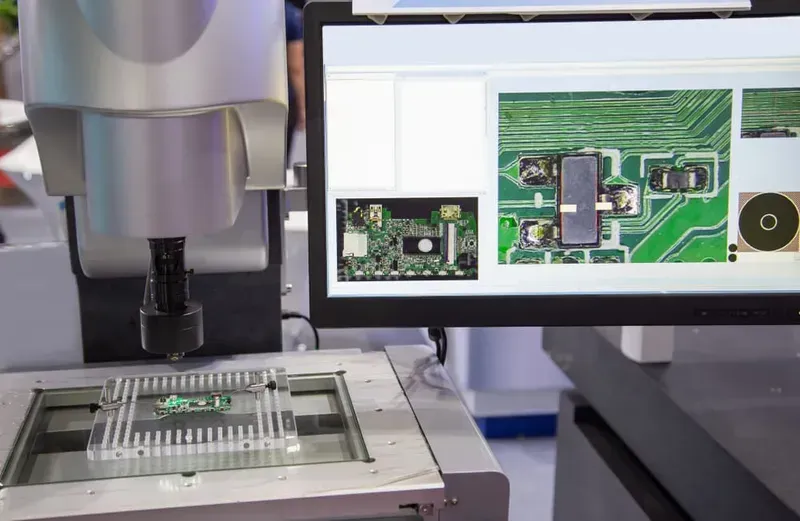
PCB Automated Optical Inspection
The efficacy of a radar anti-drone system hinges significantly on the meticulous manufacturing and stringent quality control of its Printed Circuit Boards (PCBs). These complex boards, designed for high-frequency signal processing and robust performance, demand a specialized approach during their production lifecycle to ensure reliability and optimal functionality in demanding operational environments.
Material Selection The foundational step involves choosing high-performance laminates such as PTFE (Teflon), ceramic-filled hydrocarbons, or specialized FR-4 with low dielectric loss. These materials are crucial for maintaining signal integrity and minimizing attenuation at the high frequencies typical of radar applications.
Fabrication Precision fabrication processes are critical. This includes accurate drilling for vias, precise etching for intricate trace patterns, and multi-layer lamination under controlled pressure and temperature to achieve the desired layer stack-up and impedance control. Advanced techniques like laser drilling are often employed for micro-vias in HDI boards.
Component Assembly (PCBA) Assembly involves the precise placement and soldering of high-frequency components, often utilizing surface mount technology (SMT) for miniaturization and performance. Techniques like reflow soldering for SMT and wave soldering for through-hole components must be tightly controlled to prevent defects such as voids or cold joints that could compromise electrical connections.
Testing and Validation Rigorous testing is paramount. This encompasses various stages to validate electrical performance and structural integrity. Critical tests include functional testing to ensure the PCB performs as designed, and environmental testing (e.g., thermal cycling, vibration) to confirm resilience under harsh conditions. For radar applications, specific RF performance tests like S-parameter measurements are indispensable.
Quality Control Procedure
Description
Importance for Radar Anti-drone PCBs
Automated Optical Inspection (AOI)
High-speed camera systems scan PCBs for defects such as shorts, opens, missing components, or incorrect polarity after etching and assembly.
Crucial for detecting subtle defects in fine-pitch components and high-density layouts, ensuring signal integrity and preventing electrical failures at high frequencies.
In-Circuit Testing (ICT)
Utilizes a bed-of-nails fixture to apply test signals to individual components and nets, verifying electrical connections and component values.
Confirms proper component placement, solder joint quality, and the absence of shorts or opens within the circuit, which are vital for reliable signal transmission in radar systems.
X-ray Inspection
Used for inspecting solder joints on BGA (Ball Grid Array) and other hidden components that are inaccessible by AOI.
Ensures the integrity of critical solder connections beneath components, which are common in high-performance radar modules and directly impact system reliability.
Dielectric Withstanding Voltage (DWV) Test
Applies high voltage between traces to check for insulation breakdown.
Verifies the insulation integrity, preventing arcing or short circuits, especially critical in high-power radar transmitter sections.
Time Domain Reflectometry (TDR)
Measures impedance variations along traces by analyzing reflected signals.
Absolutely essential for confirming precise impedance control on high-frequency transmission lines, directly impacting the performance and accuracy of radar signals.
Zero One Solution Limited: Your Partner for Anti-drone PCB Solutions
Shenzhen PCB Prototype Manufacturing
Zero One Solution Limited stands at the forefront of providing comprehensive PCB solutions for the demanding requirements of radar anti-drone systems. Our 13 years of expertise as a veteran engineer in Silicon Valley positions us uniquely to understand the intricacies of high-performance PCB design, rapid prototyping, and efficient manufacturing, all crucial for the swift evolution of anti-drone technologies.
Rapid Prototyping Excellence We specialize in rapid-response R&D prototype manufacturing, enabling our clients to accelerate product development cycles for cutting-edge anti-drone radar systems. Our streamlined processes ensure quick turnaround times without compromising on precision or quality, vital for iterative design and testing.
One-Stop Integrated Services From initial PCB design and material selection to high-precision manufacturing and meticulous assembly, Zero One Solution Limited offers a seamless, integrated solution. This holistic approach minimizes logistical complexities and ensures consistency across all stages of production for your radar anti-drone system PCBs.
Key Service Area
Zero One Solution Limited's Advantage
Impact on Anti-drone PCB Projects
PCB Design Expertise
20 years of Silicon Valley engineering experience ensures optimal high-frequency performance and signal integrity for radar applications.
Guarantees robust and reliable radar signal processing, critical for accurate drone detection and tracking.
Rapid Prototyping & NPI
Accelerated R&D cycles with quick-turn PCB fabrication and assembly for innovative anti-drone concepts.
Significantly reduces time-to-market for new anti-drone system iterations and technological advancements.
Strategically headquartered in Shenzhen, China, the global epicenter of electronic manufacturing, and with a robust branch office in Dubai, Zero One Solution Limited is perfectly positioned within the global PCBA supply chain network. This strategic presence guarantees seamless access to a vast array of resources, advanced manufacturing capabilities, and efficient logistics, ensuring that your anti-drone PCB solutions are not only of the highest quality but also cost-effective and delivered promptly. Partner with us to leverage unparalleled expertise and a global operational footprint for your next-generation radar anti-drone system PCB requirements.
Case Studies: Successful Anti-drone PCB Projects
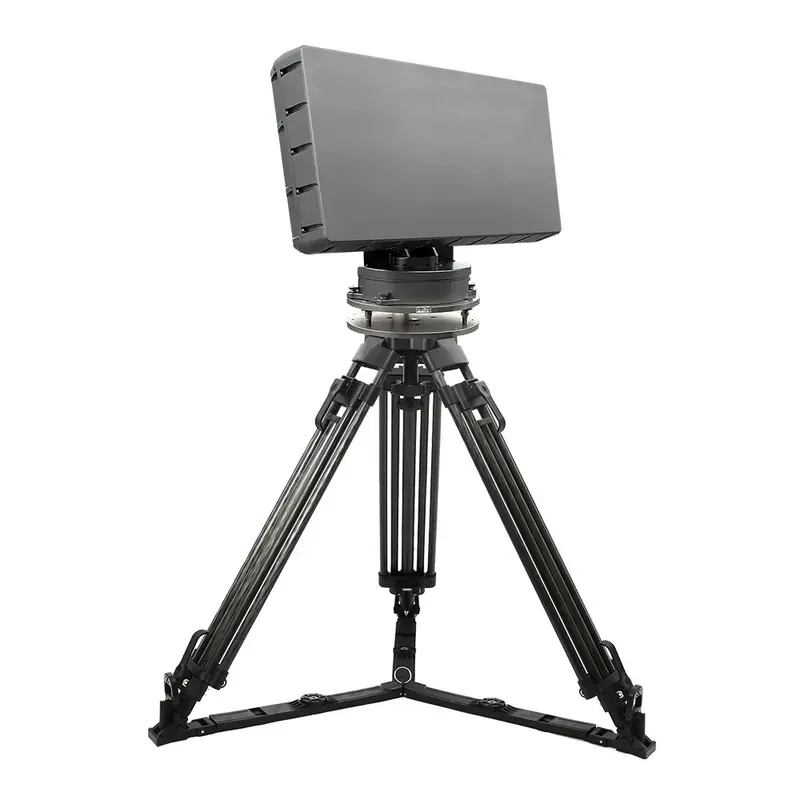
Anti-drone Radar System
Zero One Solution Limited's extensive experience in high-performance PCB solutions is best demonstrated through our successful collaborations on cutting-edge anti-drone radar systems. Our rapid prototyping capabilities and stringent quality control processes have been pivotal in enabling clients to achieve robust and reliable anti-drone defense, accelerating their time-to-market with confidence. These case studies underscore our commitment to precision engineering and our ability to meet the demanding requirements of defense and security applications.
Project Type
Zero One Solution's Contribution
Key Technical Challenge Overcome
Outcome for Client
High-Frequency Phased Array Radar
Provided design optimization for signal integrity and thermal management, rapid prototyping of multi-layer PCBs with specialized materials (e.g., Rogers)
Managing signal loss and impedance matching at Ka-band frequencies while dissipating significant heat from integrated RF components
Enabled rapid iteration and validation of antenna array designs, reducing development cycles by 30% and achieving superior target resolution and range.
:Compact X-band Anti-drone Radar Module
Manufactured and assembled high-density interconnect (HDI) PCBs for miniaturized radar transceivers, ensuring precise component placement and fine-pitch soldering
Achieving extreme component density and maintaining signal integrity in a highly constrained form factor for portable anti-drone units
Successful integration of high-performance radar capabilities into a highly compact, deployable system, leading to a major contract win.
:Advanced Counter-UAS Jamming System
Developed and produced high-power RF amplifier PCBs with enhanced thermal conductivity for continuous operation under demanding conditions
Controlling thermal runaway in high-power amplification stages while ensuring minimal electromagnetic interference (EMI)
Delivered a highly reliable and efficient jamming module that significantly extended the effective range and operational duration of the counter-UAS system.
The Future of Anti-drone Technology and PCB Innovation
The relentless evolution of drone technology necessitates a parallel advancement in anti-drone countermeasures. The future of anti-drone systems will be defined by enhanced autonomy, precision, and integration, all of which are intrinsically linked to breakthroughs in printed circuit board (PCB) innovation, enabling more sophisticated signal processing, real-time data analysis, and seamless system integration for superior threat neutralization capabilities.
What emerging trends are shaping the future of anti-drone technology? Emerging trends include the integration of Artificial Intelligence (AI) and Machine Learning (ML) for advanced threat detection and classification, the development of swarming drone countermeasures, non-kinetic neutralization methods (e.g., electronic warfare), and the deployment of network-centric, interconnected anti-drone systems for comprehensive airspace protection. Miniaturization and increased power efficiency are also critical drivers.
How will PCB innovation specifically enable these future anti-drone advancements? PCB innovation will enable these advancements through ultra-high-frequency material development for next-generation radar, advanced substrate technologies for embedded components, high-density interconnect (HDI) for complex AI processors, and superior thermal management solutions for high-power electronic warfare modules. Furthermore, flexible and rigid-flex PCBs will allow for more compact and versatile system designs, crucial for mobile and deployable anti-drone platforms.
What role does AI play in the next generation of anti-drone systems and their PCBs? AI plays a pivotal role in enabling more intelligent drone detection, tracking, and identification, significantly reducing false positives and enhancing response times. For PCBs, this translates to the need for boards capable of supporting high-performance AI accelerators, often requiring specialized materials for high-speed data transmission, advanced power delivery networks (PDN) to handle fluctuating power demands, and sophisticated thermal dissipation solutions for integrated AI chips operating at peak efficiency.
Conclusion: Enabling Safer Skies with Advanced PCB Solutions
The escalating threat posed by unauthorized drones necessitates sophisticated countermeasures, with radar-based anti-drone systems emerging as a cornerstone of modern security. At the core of these advanced systems lies the Printed Circuit Board (PCB), an indispensable component that dictates performance, reliability, and ultimately, the effectiveness of drone detection and neutralization. The journey from conceptual design to a functional radar anti-drone system is heavily reliant on precise PCB engineering, encompassing critical considerations from high-frequency signal integrity to robust thermal management, all meticulously executed during the manufacturing and quality control phases.
Why are High-Frequency PCBs Critical for Radar Anti-drone Systems? High-frequency PCBs are paramount in radar anti-drone systems because radar operates by emitting and receiving high-frequency electromagnetic waves. Maintaining signal integrity and minimizing losses at these frequencies is crucial for accurate detection, ranging, and tracking of drones. Specialized materials with low dielectric loss and precise impedance control are essential to ensure the radar's sensitivity and range are not compromised, directly impacting the system's ability to detect small, fast-moving targets at considerable distances.
How Does PCB Design Influence the Reliability of Radar Anti-drone Systems? PCB design profoundly influences the reliability of radar anti-drone systems by impacting thermal management, electromagnetic compatibility (EMC), and mechanical robustness. A well-designed PCB effectively dissipates heat from high-power components, preventing overheating and extending component lifespan. Proper grounding and shielding strategies mitigate electromagnetic interference, ensuring stable signal processing. Furthermore, selecting appropriate materials and manufacturing processes enhances the board's resistance to environmental stressors like vibration and temperature fluctuations, crucial for dependable operation in diverse deployment scenarios.
What Role Does Rapid Prototyping Play in Developing Advanced Anti-drone PCB Solutions? Rapid prototyping plays a pivotal role in accelerating the development cycle of advanced anti-drone PCB solutions. It allows engineers to quickly iterate on designs, test performance parameters, and validate concepts without incurring significant time or cost penalties. This iterative process, facilitated by rapid manufacturing and assembly capabilities, enables faster identification and rectification of design flaws, leading to optimized performance and reduced time-to-market for critical anti-drone technologies. For a company like Zero One Solution Limited, rapid prototyping is a core competency that directly supports innovation in this dynamic field.
Zero One Solution Limited stands as a committed partner in this vital domain, providing unparalleled expertise in PCB design, manufacturing, and assembly. Our focus on rapid-response R&D prototype manufacturing, coupled with a strategic global supply chain presence, empowers innovators to bring cutting-edge radar anti-drone solutions to fruition with unmatched efficiency and quality. By delivering robust and high-performance PCB solutions, Zero One Solution Limited is actively contributing to enabling safer skies and more secure environments against the evolving challenges of unmanned aerial systems.
In conclusion, the PCB solution is at the heart of radar anti-drone systems, enabling the accuracy and reliability necessary to counter unauthorized drone activity. Zero One Solution Limited stands ready to partner with companies developing these critical security technologies. From initial design and rapid prototyping to full-scale PCB manufacturing and assembly, we offer the expertise and resources to accelerate your innovation. Contact Zero One Solution Limited today to discuss your radar anti-drone system PCB requirements and discover how our comprehensive solutions can help you safeguard airspace and mitigate drone-related risks. Let us help you turn your vision into reality with our cutting-edge PCB solutions.