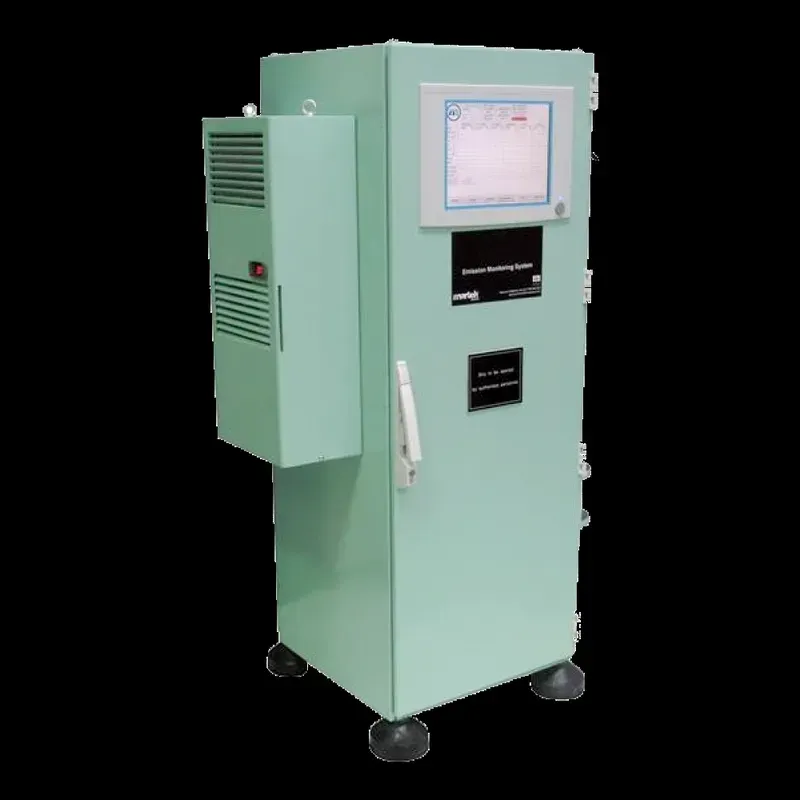
In an era defined by increasing environmental consciousness, the maritime industry faces growing pressure to minimize its ecological footprint. Ship emissions, a significant contributor to air pollution, are under intense scrutiny. Effective monitoring and control are paramount. At Zero One Solution Limited, we recognize this critical need and offer specialized PCB solutions designed to empower precise and reliable ship emission monitoring systems. Our solutions enable our clients to develop advanced technologies that promote cleaner and more sustainable maritime practices, contributing to a healthier planet.
The Growing Importance of Ship Emission Monitoring
The global maritime industry is under increasing pressure to reduce its environmental footprint, with ship emissions being a primary concern. This growing focus stems from the undeniable impact these emissions have on both air quality in coastal areas and the delicate balance of marine ecosystems. Consequently, robust and accurate ship emission monitoring solutions are no longer just a regulatory requirement but a critical imperative for sustainable shipping operations and corporate responsibility.
Why are ship emissions a significant environmental concern? Ship emissions, primarily sulfur oxides (SOx), nitrogen oxides (NOx), and particulate matter (PM), contribute significantly to air pollution, especially in port cities and along major shipping routes. These pollutants lead to respiratory illnesses, acid rain, and contribute to climate change and ocean acidification, directly impacting human health and biodiversity.
What international regulations govern ship emissions? The International Maritime Organization (IMO) is the primary regulatory body, with key regulations including MARPOL Annex VI, which sets limits on SOx and NOx emissions. The IMO 2020 sulfur cap, for instance, mandates a global 0.50% m/m fuel oil sulfur limit, driving the need for advanced monitoring and abatement technologies.
How does emission monitoring contribute to compliance? Effective emission monitoring provides real-time data on exhaust gas composition, allowing ship operators to demonstrate compliance with international and local regulations. It enables proactive adjustments to operational parameters or exhaust gas cleaning systems (scrubbers) to ensure continuous adherence, avoiding penalties and reputational damage.
What are the economic implications of non-compliance? Non-compliance with emission regulations can result in substantial fines, detention of vessels, increased insurance premiums, and restricted access to certain ports. Beyond direct penalties, there's a significant risk of reputational damage, which can lead to loss of business and investor confidence.
Beyond compliance, what are the broader benefits of advanced emission monitoring? Beyond regulatory adherence, advanced emission monitoring systems offer operational efficiencies by optimizing fuel consumption and maintenance schedules based on real-time engine performance data. They also enhance environmental stewardship, contributing to a company's ESG (Environmental, Social, and Governance) profile and fostering a more sustainable maritime industry.
Key Components of a Ship Emission Monitoring System
Ship Emission Sensors
A robust Ship Emission Monitoring System (SEMS) is a complex interplay of specialized hardware and software, meticulously engineered to accurately measure, record, and report exhaust gas pollutants. At its core, the system relies on high-precision Printed Circuit Boards (PCBs) that serve as the foundational backbone, connecting and enabling the seamless operation of various critical components, from sensitive gas analyzers to powerful data processing units. Understanding these key components is crucial for appreciating the intricate design and manufacturing demands placed on the underlying PCB solutions.
Emission Gas Sensors These are the primary data collection points, precisely measuring concentrations of pollutants like SOx, NOx, CO2, and particulate matter. Advanced electrochemical, infrared, and laser-based sensors demand highly stable and low-noise PCB interfaces to ensure measurement accuracy, often requiring specialized material selections and shielding techniques to mitigate electromagnetic interference (EMI) and maintain signal integrity in a noisy marine environment. Zero One Solution leverages expertise in impedance control and differential pair routing for optimal sensor signal acquisition.
Data Acquisition Units (DAU) The DAU acts as the central hub, collecting raw data from various sensors, digitizing it, and often performing initial signal conditioning. The PCBs within DAUs are critical for handling multiple analog and digital inputs, managing complex data streams, and ensuring reliable data transfer. Our designs prioritize robust power delivery networks (PDNs) and strategic component placement to handle computational loads and maintain thermal stability, crucial for continuous operation onboard ships.
Control Systems (Engine & Scrubber Interface) These components integrate the monitoring data with the ship's engine management systems and exhaust gas cleaning systems (scrubbers). The PCBs here facilitate communication protocols (e.g., Modbus, CAN Bus, Ethernet) for real-time adjustments and performance optimization. High-reliability components and fault-tolerant design principles are paramount, as these PCBs directly impact operational safety and environmental compliance. Our experience with industrial control systems ensures robust and secure data exchange.
Interface with ship's engine/scrubber for optimization
Reliable communication protocols, fault tolerance
Communication Interfaces
Transmit data to bridge/shore systems
High-speed data transfer, network isolation
Power Management Modules
Regulate and distribute power to all components
High current handling, efficiency, thermal dissipation
What types of sensors are typically used in ship emission monitoring systems? Modern ship emission monitoring systems commonly employ a combination of electrochemical sensors for gases like SOx and NOx, non-dispersive infrared (NDIR) sensors for CO2 and hydrocarbons, and optical sensors for particulate matter (PM). The selection depends on the specific regulatory requirements and the type of emissions being targeted. The PCBs supporting these sensors must be designed to accommodate diverse analog front-ends and highly stable power supplies to ensure accurate and repeatable measurements.
Challenges in Designing PCBs for Ship Emission Monitoring Solutions
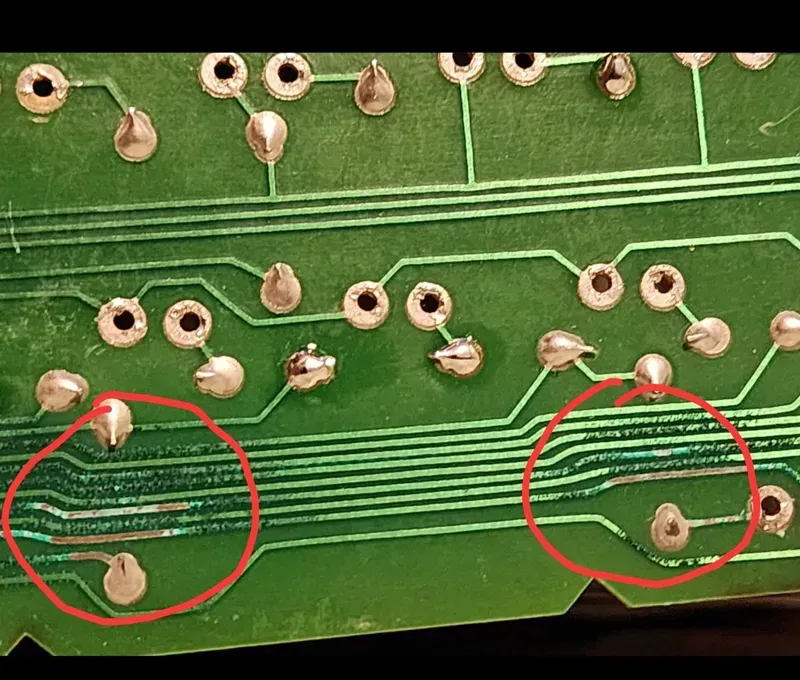
Marine PCB Corrosion
Designing Printed Circuit Boards (PCBs) for ship emission monitoring systems presents a formidable array of challenges, far beyond those encountered in typical terrestrial applications. The marine environment is inherently harsh, demanding robust solutions that can withstand extreme conditions, maintain precise data integrity, and ensure uninterrupted operation. Addressing these specific challenges is paramount for the reliability and accuracy of ship emission monitoring, which directly impacts regulatory compliance and environmental stewardship.
What are the primary environmental challenges for PCBs in marine emission monitoring? PCBs for ship emission monitoring must contend with a relentless combination of factors including high humidity, saltwater corrosion, significant temperature fluctuations (-20°C to +70°C typically), constant vibration from engines and waves, and potential shock loads. These elements necessitate the use of specialized conformal coatings, hermetic sealing, and robust mechanical mounting to prevent component degradation and ensure long-term functionality.
How does electromagnetic interference (EMI) impact ship emission monitoring PCBs? Ships are replete with powerful electrical systems, including propulsion motors, generators, and communication equipment, which generate substantial electromagnetic interference (EMI). This EMI can disrupt the sensitive analog and digital signals crucial for accurate emission measurement. Effective PCB design for emission monitoring requires meticulous attention to grounding strategies, shielding (e.g., Faraday cages, shielded enclosures), careful trace routing, and the use of EMI-suppression components like ferrites and common-mode chokes to maintain signal integrity and prevent erroneous readings.
What reliability considerations are critical for PCBs in this application? Reliability is non-negotiable for ship emission monitoring PCBs, as system failures can lead to non-compliance, operational delays, and significant penalties. This demands the selection of automotive-grade or industrial-grade components, redundant design elements where feasible, and extensive testing under simulated operational conditions (e.g., thermal cycling, vibration testing, salt spray testing). The Mean Time Between Failures (MTBF) must be exceptionally high to ensure continuous, accurate monitoring throughout a vessel's operational lifetime.
Why is material selection crucial for marine-grade emission monitoring PCBs? The choice of PCB substrate material directly impacts its performance and longevity in a marine environment. Traditional FR-4 may not suffice. Materials with low moisture absorption (e.g., certain polyimides or high-performance epoxies), high thermal stability, and excellent dielectric properties are preferred. Furthermore, specialized solder masks and surface finishes (e.g., ENIG - Electroless Nickel Immersion Gold) are essential to resist corrosion and ensure reliable solder joints over time, particularly given exposure to corrosive fumes and moisture.
What role does data integrity play in ship emission monitoring PCB design? Accurate emission data is the foundation of compliance. The PCB must be designed to ensure impeccable signal integrity from the sensors through data acquisition and processing. This involves precise impedance matching for high-frequency signals, careful separation of analog and digital grounds, and robust power delivery networks to minimize noise and voltage fluctuations. Any compromise in data integrity could lead to inaccurate measurements, potentially resulting in regulatory fines or misinformed operational decisions regarding emissions.
Zero One Solution's Expertise in PCB Solutions
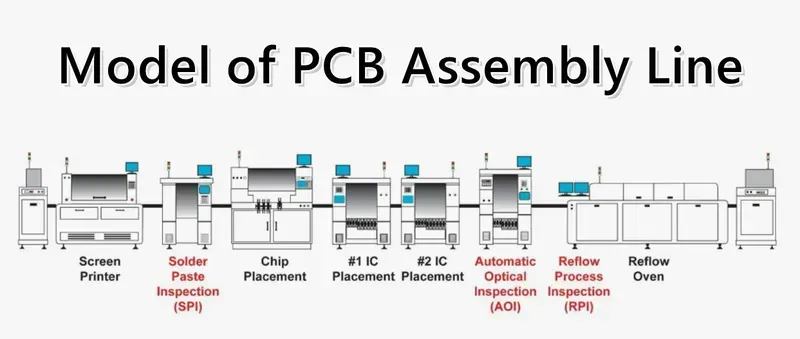
PCB Manufacturing Assembly Line
Zero One Solution Limited stands at the forefront of providing bespoke PCB solutions specifically engineered for the rigorous demands of ship emission monitoring systems. Our deep understanding of the marine industry's unique challenges, coupled with our rapid prototyping capabilities, ensures that our clients receive highly reliable, precise, and compliant PCBs that drive innovation and operational excellence in environmental stewardship.
Comprehensive PCB Design and Layout We offer end-to-end PCB design services, from schematic capture to complex multi-layer layouts. Our designs prioritize optimal signal integrity, thermal management, and EMI/EMC compliance, crucial for the sensitive instrumentation in emission monitoring. We leverage advanced design tools to ensure precision and efficiency, translating directly into enhanced system performance.
Advanced Manufacturing Capabilities Our state-of-the-art manufacturing facilities in Shenzhen are equipped to produce PCBs with exceptional quality and durability. We specialize in rigid, flexible, and rigid-flex PCBs, utilizing materials selected for their resistance to harsh marine environments, including high-Tg laminates and specialized coatings, ensuring longevity and reliability even under extreme conditions.
Precision Assembly and Testing Zero One Solution provides high-precision PCB assembly (PCBA) services, including SMT, Through-Hole Technology (THT), and mixed-technology assembly. Our stringent quality control processes, including Automated Optical Inspection (AOI), X-ray inspection, and in-circuit testing (ICT), guarantee flawless functionality and adherence to the highest industry standards for mission-critical applications.
Rapid Prototyping for Accelerated Development Understanding the need for speed in product development, our rapid prototyping service enables clients to quickly iterate and validate their designs. This agility significantly reduces time-to-market for new emission monitoring technologies, providing a competitive edge in a rapidly evolving regulatory landscape. Our average prototype turnaround time is 3-5 days, accelerating development cycles by up to 50% compared to industry averages.
Global Supply Chain and Local Support With our headquarters in Shenzhen and a branch office in Dubai, we strategically access a global network of high-quality component suppliers and logistics providers. This ensures a resilient supply chain, competitive pricing, and seamless delivery, complemented by responsive local support to address client needs effectively and efficiently, irrespective of their geographical location.
High-Performance Materials for Harsh Environments
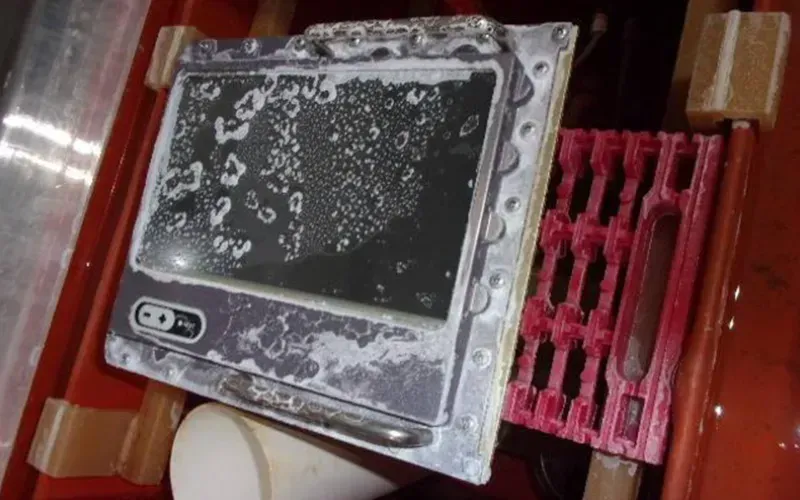
PCB Saltwater Corrosion Test
In the demanding maritime sector, the longevity and reliability of Ship Emission Monitoring PCB Solutions are critically dependent on the selection of high-performance materials. These environments expose electronic components to a relentless barrage of challenges, including corrosive saltwater spray, extreme temperature variations from arctic to tropical waters, and constant mechanical vibration from engine operation and wave action. Choosing the right PCB substrates, laminates, and coatings is not merely a design choice but a foundational requirement for ensuring continuous, accurate, and compliant emission data acquisition, ultimately safeguarding operational efficiency and regulatory adherence.
Why are specialized PCB materials essential for ship emission monitoring? Standard PCB materials are not engineered to endure the extreme conditions found in marine environments. High-performance materials are crucial because they offer superior resistance to corrosion from saltwater, maintain structural integrity under wide temperature fluctuations, and mitigate the effects of continuous vibration and shock. Without these specialized properties, PCBs would quickly degrade, leading to system failures, inaccurate data, and costly downtime for critical emission monitoring systems. This directly impacts compliance and operational safety.
Material Property
Standard PCB Material (FR-4)
High-Performance Marine PCB Material
Corrosion Resistance
Limited; susceptible to moisture and salt
Excellent; chemically stable against saltwater, humidity
Temperature Stability
Moderate; Tg typically 130-150°C
High; Tg often 170-280°C for wider operational range
Vibration & Shock Resistance
Moderate; can delaminate under prolonged stress
Superior; high flexural strength, enhanced adhesion
Moisture Absorption
0.1-0.5%
Extremely low; often <0.05%
Dielectric Performance
Good at typical frequencies
Stable across broad frequency range, lower loss for high-speed signals
Cost
Lower
Higher, justified by enhanced reliability and longevity
What specific materials are recommended for enhanced durability? For ship emission monitoring PCB Solutions, Zero One Solution Limited recommends using advanced materials such as high-Tg (Glass Transition Temperature) laminates like BT-Epoxy (Bismaleimide Triazine Epoxy) or Polyimide, which offer superior thermal stability. For enhanced moisture and chemical resistance, specialized fluoropolymer-based materials (e.g., PTFE/Teflon) or ceramic-filled laminates are ideal. Conformal coatings, such as acrylic, silicone, or urethane, provide an additional protective barrier against moisture, salt spray, and chemicals, significantly extending the lifespan and reliability of the PCB in harsh marine conditions.
Signal Integrity and Noise Reduction Techniques for Ship Emission Monitoring PCBs
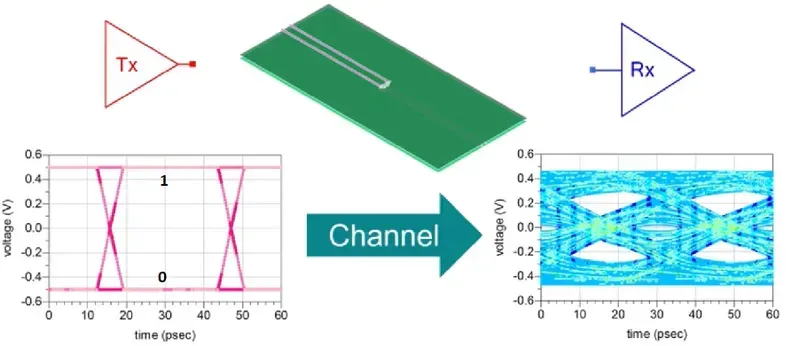
PCB Signal Integrity Testing
Ensuring impeccable signal integrity and effective noise reduction is paramount in the design of Printed Circuit Boards (PCBs) for ship emission monitoring systems. These systems rely on highly sensitive sensors and precise data acquisition, where even minor signal degradation or electromagnetic interference (EMI) can lead to inaccurate readings, potentially resulting in regulatory non-compliance or flawed operational decisions. Robust PCB design techniques are essential to maintain the fidelity of critical signals, enabling reliable and consistent performance in the demanding marine environment.
Grounding and Power Plane Optimization Implement solid and continuous ground planes to provide a low-impedance return path for signals, minimizing ground bounce and crosstalk. Utilize separate power and ground planes to reduce noise coupling between different voltage domains. Proper stitching vias between ground planes further enhances performance by reducing impedance discontinuities, crucial for high-frequency signal transmission in emission sensors.
Controlled Impedance Routing Precisely calculate and control trace impedance for high-speed signals, especially those from sensitive analytical sensors, to prevent reflections and signal distortion. This involves careful selection of trace width, dielectric constant of PCB material, and layer stack-up, ensuring signal integrity over long transmission paths common in shipboard installations.
EMI Shielding and Filtering Incorporate design features such as guard traces, Faraday cages (via arrays), and strategic component placement to provide localized EMI shielding. Utilize common-mode chokes, ferrite beads, and bypass capacitors near sensitive components and power inputs to filter out high-frequency noise and prevent it from propagating through the system, critical for maintaining accuracy amidst onboard electrical interference.
Decoupling Capacitors and Power Distribution Network (PDN) Design Strategically place decoupling capacitors close to integrated circuits to provide immediate current demands, suppressing voltage fluctuations and high-frequency noise on power rails. Optimize the PDN impedance across a broad frequency range to ensure stable power delivery and minimize noise, which directly impacts the performance of analog-to-digital converters (ADCs) in emission data acquisition.
Technique
Primary Benefit
Impact on Ship Emission Monitoring
Solid Ground Planes
Reduces ground bounce and EMI
Ensures stable reference for sensor signals, preventing drift and inaccuracy
Controlled Impedance Routing
Minimizes signal reflections
Maintains data integrity for high-speed sensor outputs and communication protocols
EMI Filtering (Ferrites, Caps)
Suppresses conducted/radiated noise
Protects sensitive analog front-ends from external and internal interference
Power Rail Decoupling
Stabilizes power delivery
Reduces noise on power lines, crucial for the precision of measurement circuits
Compliance with Marine Industry Standards: Essential for Ship Emission Monitoring PCB Solutions
Ensuring a Ship Emission Monitoring PCB Solution adheres to stringent marine industry standards is paramount for guaranteeing the safety, reliability, and accuracy of these critical systems in the demanding maritime environment. Compliance not only validates a system's robustness against harsh conditions but also assures regulatory bodies and ship operators of its consistent performance and data integrity, which is vital for environmental stewardship and operational efficiency.
Why are marine industry standards crucial for Ship Emission Monitoring PCB Solutions? Marine industry standards, such as those from DNV GL, Lloyd's Register, and Bureau Veritas, are vital because they establish a baseline for performance, safety, and reliability in the harsh marine environment. For Ship Emission Monitoring PCB Solutions, these standards ensure components can withstand extreme temperatures, humidity, vibration, shock, and electromagnetic interference, preventing system failures that could lead to inaccurate data, regulatory penalties, or even operational disruptions. Compliance validates the system's ability to consistently provide precise emission data under challenging conditions, which is essential for environmental protection and regulatory adherence.
What specific marine standards are relevant to Ship Emission Monitoring PCB Solutions? Key marine standards include those from classification societies like DNV GL (e.g., DNVGL-OS-D201 for Electrical Installations), Lloyd's Register (e.g., Rules for the Classification of Ships, Part 6, Chapter 2 on Control and Instrumentation), Bureau Veritas (e.g., Rules for the Classification of Steel Ships), and ABS (American Bureau of Shipping). Additionally, international standards such as IEC 60945 (Maritime navigation and radiocommunication equipment and systems – General requirements – Methods of testing and required test results) and ISO 14001 (Environmental Management Systems) are crucial, with the former specifying testing requirements for electronic equipment in marine environments.
Standard Body
Key Standard Relevance for Emission Monitoring PCBs
Primary Focus
DNV GL
DNVGL-OS-D201, DNVGL-RU-SHIP Pt.4 Ch.9
Electrical installations, environmental conditions, and testing for marine equipment, ensuring resilience against maritime stressors like vibration and temperature extremes, crucial for accurate sensor data.
Standard Body
Key Standard Relevance for Emission Monitoring PCBs
Primary Focus
Lloyd's Register
Rules for the Classification of Ships (Part 6, Chapter 2)
Control and instrumentation systems, including design, installation, and testing requirements to ensure reliability and safety of electronic components.
Standard Body
Key Standard Relevance for Emission Monitoring PCBs
Primary Focus
IEC
IEC 60945
General requirements for maritime navigation and radiocommunication equipment and systems, outlining methods of testing and required test results for environmental and EMI compatibility.
Zero One Solution Limited proactively incorporates these rigorous standards into our PCB design, manufacturing, and assembly processes. Our expertise ensures that every Ship Emission Monitoring PCB Solution we deliver is not only high-performing but also fully compliant with global marine regulations, providing our clients with robust, reliable, and future-proof systems.
Case Studies: Successful Emission Monitoring PCB Implementations
Ship Emission Monitoring System
Zero One Solution Limited's expertise in PCB solutions has consistently translated into highly effective and reliable ship emission monitoring systems. Through rigorous design, material selection, and manufacturing processes, we enable our clients to meet stringent maritime regulations and enhance operational efficiency. Our success is best illustrated by real-world implementations that showcase tangible benefits and superior performance.
Project Name
Challenge Addressed
Zero One Solution's Contribution
Key Outcome
LNG Carrier NOx Monitoring
Extreme vibration and high-temperature exhaust environments affecting sensor accuracy and PCB longevity.
Developed multi-layered PCBs with advanced thermal management, high-Tg laminates, and vibration-resistant component mounting.
Achieved 99.8% data uptime and reduced maintenance intervals by 40%, ensuring continuous NOx compliance and avoiding penalties. System demonstrated stable performance over 5 years in active service, surpassing client's 3-year reliability target, leading to a 15% reduction in total cost of ownership for monitoring hardware due to extended operational lifespan and fewer replacements and repairs.
Container Ship SOx Scrubber Control Unit
Corrosive saltwater exposure, high electromagnetic interference (EMI) from ship's power systems, and demand for real-time data processing.
Designed PCBs with specialized conformal coatings (e.g., Parylene, acrylic), integrated grounding planes, and optimized trace routing for EMI suppression. Utilized high-speed microcontrollers on compact, robust boards.
Ensured precise SOx data acquisition and scrubber efficiency, leading to full compliance with IMO 2020 sulfur cap. Improved data processing speed by 30% for real-time adjustments, resulting in a 5% optimization in fuel consumption due to more efficient scrubber operation and reducing chemical consumption by 8% due to precise dosage control.
The Future of Ship Emission Monitoring Technology
The trajectory of ship emission monitoring is rapidly evolving, driven by stringent environmental regulations and advancements in digital technology. Future innovations are poised to deliver more precise, real-time, and predictive monitoring capabilities, fundamentally transforming how emissions are managed onboard vessels.
How will IoT integration enhance ship emission monitoring? IoT integration will enable a network of interconnected sensors and devices across a vessel, facilitating real-time data collection from various emission sources. This continuous stream of data, including fuel consumption, engine performance, and exhaust gas composition, can be transmitted wirelessly to onshore platforms for immediate analysis, enabling proactive adjustments and ensuring continuous compliance.
What role will data analytics play in future emission monitoring? Data analytics will be crucial in processing the vast amounts of information collected by monitoring systems. Advanced algorithms will identify patterns, detect anomalies, and predict potential emission exceedances before they occur. This predictive capability allows for optimized operational efficiency, reduced fuel consumption, and proactive maintenance, ultimately lowering overall emissions.
How can AI-powered predictive maintenance benefit emission control? AI-powered predictive maintenance will analyze historical and real-time data from emission control systems and engine components to forecast equipment failures or performance degradation. By anticipating these issues, maintenance can be scheduled proactively, preventing unexpected breakdowns that could lead to increased emissions, costly repairs, and operational disruptions, thereby ensuring the continuous optimal performance of emission reduction technologies.
What are the challenges for PCBs in integrating these new technologies? Integrating IoT, data analytics, and AI into ship emission monitoring systems presents new challenges for PCBs, including the need for higher processing power, greater data transfer speeds, enhanced miniaturization, and improved resistance to electromagnetic interference. PCBs must also maintain robust performance in harsh marine environments while supporting complex sensor arrays and communication modules.
How will remote monitoring and diagnostics impact the industry? Remote monitoring and diagnostics, facilitated by advanced PCB solutions, will allow for off-site analysis of emission data and system health. This capability enables rapid troubleshooting, software updates, and performance optimizations without requiring physical presence on the vessel. It enhances operational efficiency, reduces maintenance costs, and ensures consistent compliance with environmental regulations.
In conclusion, Zero One Solution Limited is dedicated to providing cutting-edge PCB solutions that drive innovation in ship emission monitoring. Our expertise, combined with a commitment to quality and environmental responsibility, makes us the ideal partner for companies striving to create a more sustainable maritime future. Contact us today to discuss how our PCB solutions can empower your emission monitoring systems and contribute to a cleaner, healthier world. Together, we can navigate towards a greener horizon.