In our increasingly electrified world, the silent guardian of smooth power delivery is often the unsung snubber capacitor. Like a tiny electrical shock absorber, the snubber capacitor tames the wild voltage transients that can occur during switching, especially in high-powered circuits. Without it, our electronic devices, from laptops to electric vehicles, would be vulnerable to damage from these sudden spikes. This article delves deep into the functionality, applications, and selection of snubber capacitors, providing you with an essential understanding of this key component in power electronics.
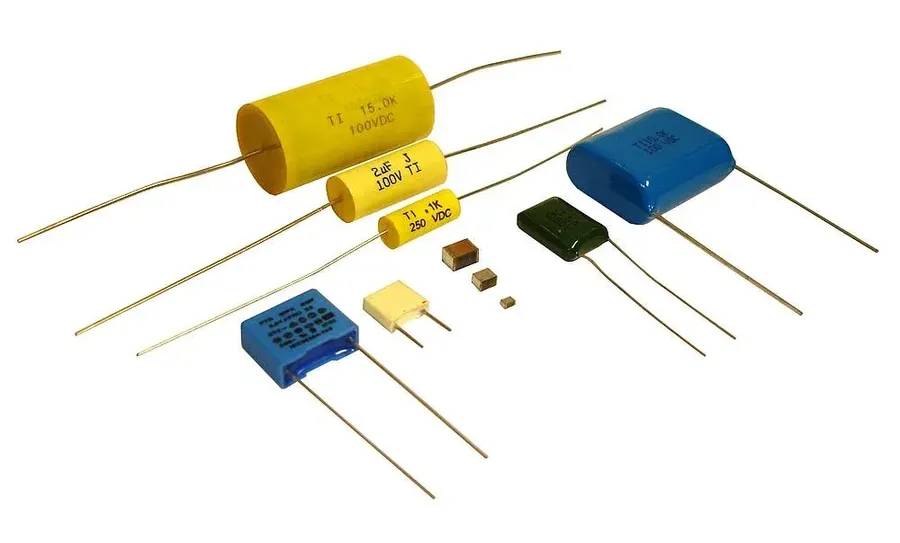
Snubber capacitors are essential components in electronic circuits, specifically designed to mitigate voltage transients and oscillations that arise during switching operations. At their core, they act as protective devices, 'snubbing' or suppressing these unwanted voltage spikes, thereby preventing damage to sensitive components and improving overall circuit reliability.
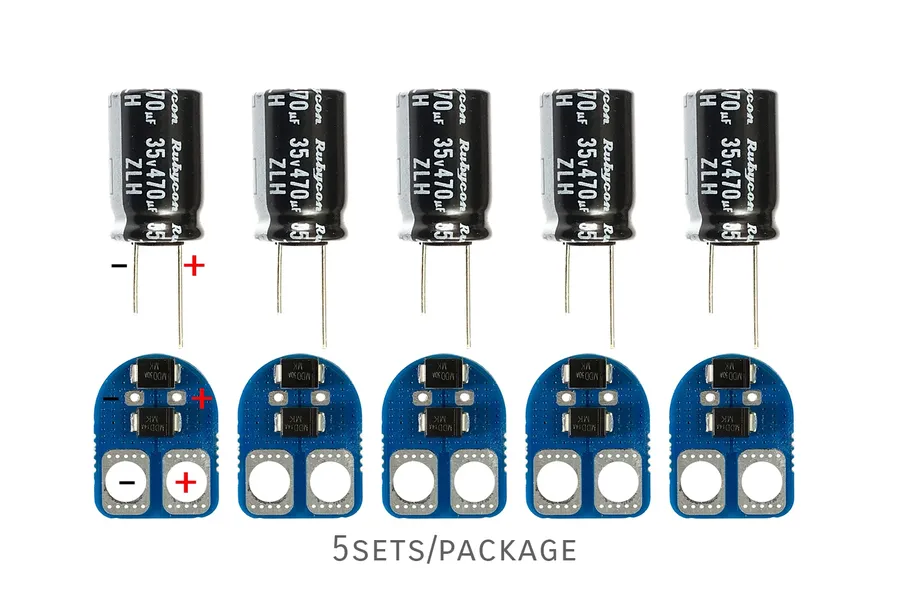
Snubber capacitors are crucial for mitigating voltage spikes generated by parasitic inductance during switching events in electrical circuits. These transient overvoltages, if unchecked, can severely damage or degrade sensitive electronic components. The core function of a snubber capacitor is to absorb energy from these transient events, thus preventing overvoltage stress on circuit elements.
When electronic switches, such as transistors or diodes, rapidly change their state (e.g., from conducting to non-conducting), the inherent parasitic inductance within the circuit resists this abrupt change in current. This resistance manifests as a voltage spike that can far exceed the intended operating voltage of the circuit. These spikes occur due to the fundamental behavior of inductors, which resist changes in current, leading to a voltage that is proportional to the rate of change of current.
The magnitude of these voltage spikes is often substantial and pose a significant threat to semiconductors and other delicate circuit components. Without proper protection such as a snubber, these components can experience dielectric breakdown, thermal stress, or accelerated aging, ultimately resulting in premature failure and reduced reliability of the overall system. A snubber capacitor, acting as a temporary energy reservoir, provides a pathway to safely dissipate the energy of these voltage transients, preventing them from damaging sensitive elements.
Specifically, during switching transitions, the snubber capacitor initially diverts a significant portion of the sudden current change, temporarily storing the energy. As the circuit stabilizes, this stored energy is then gradually released. This process reduces the sharpness of the voltage rise and fall times, minimizing the chances of overvoltage and unwanted electromagnetic interference (EMI), while also improving overall circuit stability and extending component lifespans.
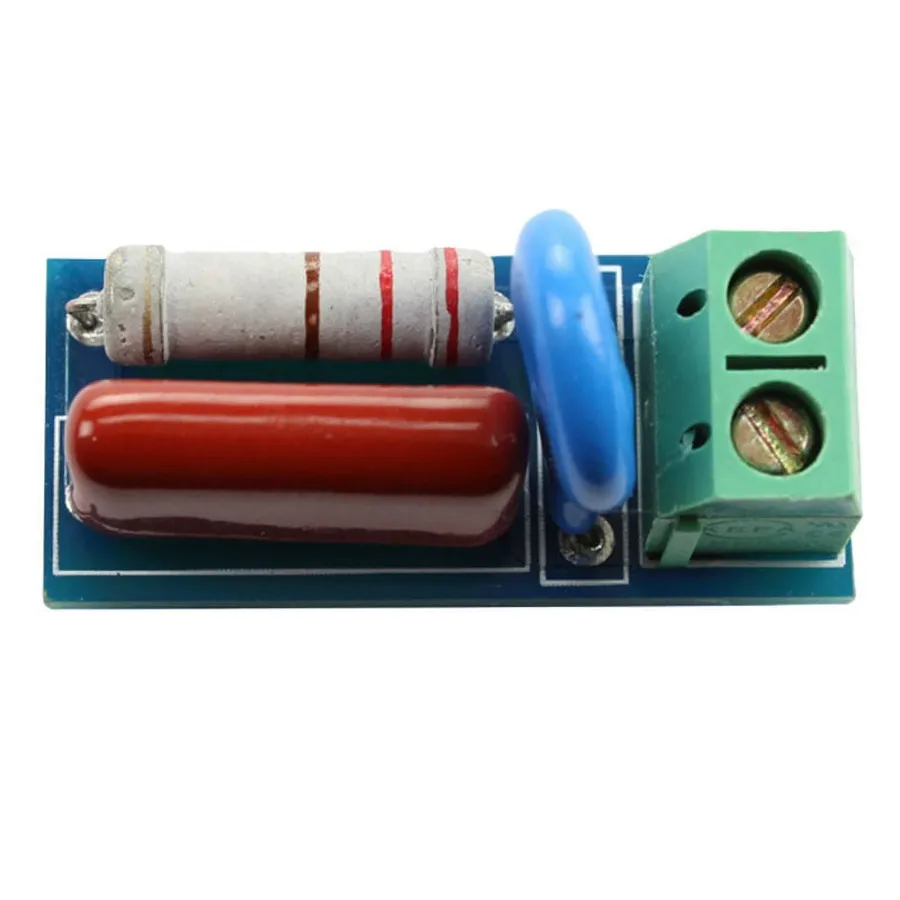
Snubber capacitors function by mitigating voltage transients, effectively absorbing excess energy and preventing overvoltage conditions within a circuit. This is achieved through a controlled process of charging and discharging, which occurs during the switching of power electronic devices.
The core operational mechanism of a snubber capacitor involves its placement in parallel with the switching device, where it acts as a temporary energy reservoir. During the switching 'off' state, parasitic inductance within the circuit causes a voltage spike. The snubber capacitor rapidly absorbs this energy, limiting the voltage rise across the switching element. Subsequently, during the 'on' state, the capacitor discharges its stored energy through a resistor. This continuous cycle effectively limits the voltage across the switching element and dampens oscillations.
The effectiveness of a snubber capacitor is highly dependent on the circuit's parasitic inductance and the snubber capacitor's characteristics, primarily capacitance (C) and equivalent series resistance (ESR). The capacitor value is usually chosen so that it can absorb the peak energy of a transient during switching. The rate at which a capacitor charges and discharges is determined by the value of the resistance (R) in series with the capacitor, commonly forming an RC snubber circuit. This resistive element dissipates energy from the capacitor as heat, preventing the oscillations during switching.
The interplay between the snubber capacitor, the switching device, and associated circuit impedances determines the overall transient response. Proper snubber circuit design is crucial to balance efficient voltage clamping with acceptable power dissipation and ensure that the components are operating within their safe operating area, particularly in applications involving high-frequency switching.
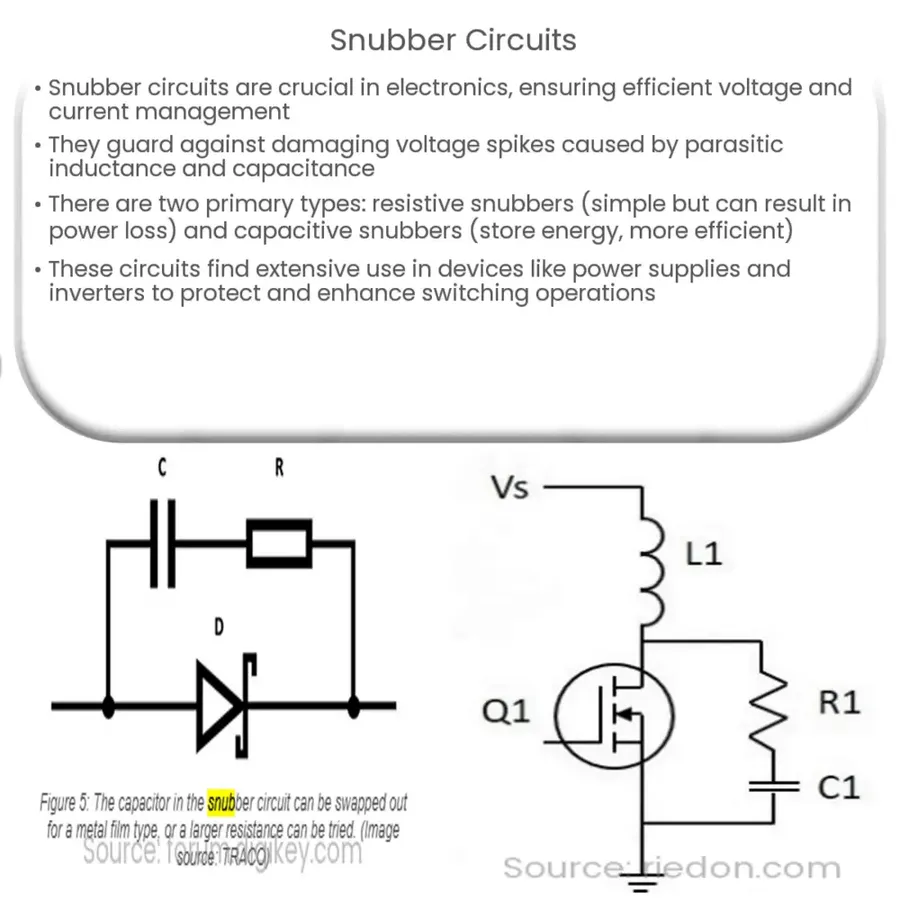
Snubber circuits are not monolithic; they are implemented in various configurations, each with distinct characteristics and suitability for specific applications. Understanding these configurations—primarily RC, RCD, and more complex designs—is crucial for effective circuit protection against voltage transients.
| Snubber Type | Description | Advantages | Disadvantages | Typical Applications |
|---|---|---|---|---|
| RC Snubber | A resistor and capacitor in series, placed in parallel with the switching device. | Simple design, cost-effective, reduces ringing and overshoot. | Dissipates energy as heat, may not be suitable for high-frequency or high-power applications. | General-purpose switching circuits, MOSFET and BJT protection, low to medium power applications. |
| RCD Snubber | Adds a diode to the RC circuit to redirect energy and limit voltage spikes. | More efficient than RC snubbers, reduces power dissipation, good for higher frequencies. | Slightly more complex than RC snubbers, component selection is critical. | Flyback converters, switched-mode power supplies, applications where efficiency is important. |
| Diode Snubber | Primarily uses a diode to clamp the voltage. | Simple and can be effective, especially at lower frequencies. | May not effectively dampen oscillations, best suited for specific and lower frequency applications. | Inductive load switching, specific flyback configurations. |
| Complex Snubber | Involves multiple components and network structures, tailored for specific circuits and performance requirements. | High performance, can be optimized for specific needs. | Most complex and expensive, requires precise tuning, less versatile. | High-power applications, resonant converters, circuits with unique transient characteristics. |
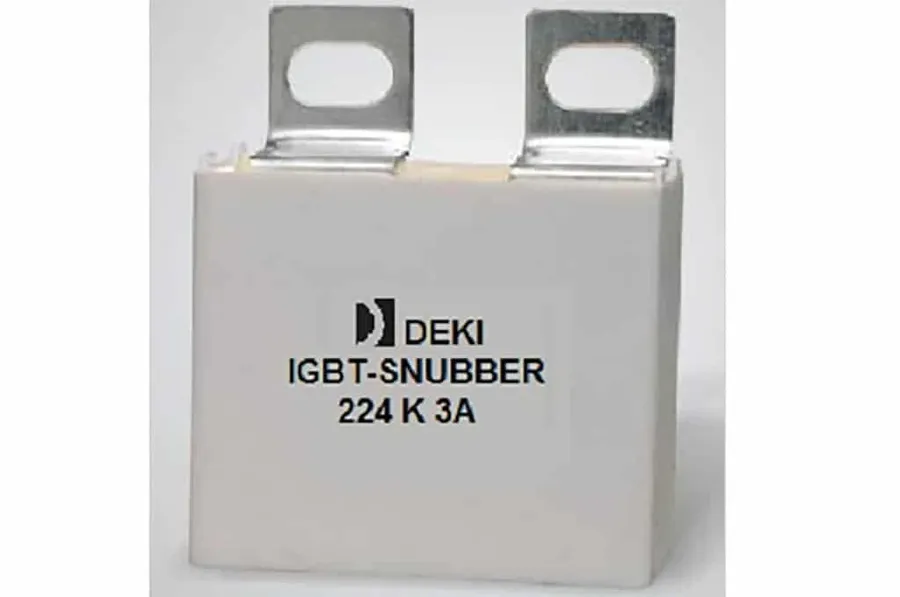
Snubber capacitors are essential components in a wide array of industrial applications, primarily due to their effectiveness in mitigating voltage transients and protecting sensitive electronic devices. Their ability to absorb and dissipate energy from voltage spikes makes them indispensable in systems ranging from power electronics to motor control.
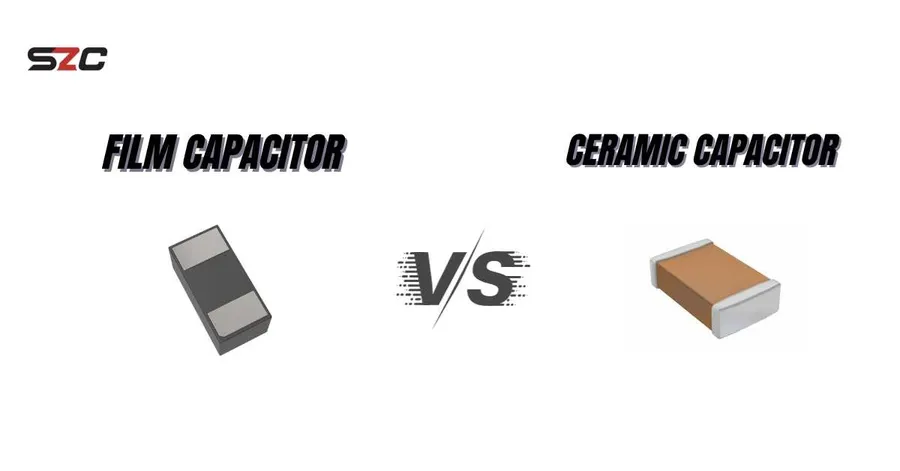
Selecting the correct snubber capacitor is crucial for effective circuit protection against voltage transients. This process involves a careful consideration of several key parameters, including capacitance, voltage rating, equivalent series resistance (ESR), and temperature rating, all tailored to the specific application and circuit characteristics.
| Parameter | Description | Importance |
|---|---|---|
| Capacitance | The amount of charge the capacitor can store; measured in Farads (F). | Determines how effectively the capacitor can absorb energy during voltage spikes. The correct capacitance value is dependent on the circuit's inductance and the desired damping characteristics. |
| Voltage Rating | The maximum voltage the capacitor can safely withstand; measured in Volts (V). | The capacitor's voltage rating must exceed the maximum expected voltage in the circuit, including transient spikes, with an appropriate safety margin to prevent failure. Operating at or near the rated voltage will cause premature failure. |
| Equivalent Series Resistance (ESR) | The internal resistance of the capacitor, representing energy losses; measured in Ohms (Ω). | Lower ESR allows for more efficient energy absorption and discharge, minimizing heat generation and increasing snubber performance. High ESR reduces the effectiveness of snubbing. |
| Temperature Rating | The range of operating temperatures the capacitor can tolerate, measured in degrees Celsius (°C). | Ensuring that the capacitor's temperature rating matches the operating environment and device heat will ensure reliability and performance of the capacitor. Exceeding this rating will result in damage. |
| Capacitor Type | Various capacitor types, such as ceramic, film and electrolytic. | Each type has different strengths and weaknesses related to temperature stability, voltage and frequency capability. Choosing the right technology for the specific application is critical. |
Effective implementation of snubber capacitors hinges not only on component selection but also on meticulous circuit design and layout. Optimizing performance requires careful attention to minimizing parasitic inductance and ensuring proper capacitor placement, which are critical factors in mitigating voltage spikes and achieving the desired suppression of transients. Lead length and placement are paramount for optimal performance.
This section addresses common questions regarding snubber capacitors, providing clarity on their function, selection, and application in electronic circuits. Understanding these aspects is crucial for effective circuit design and protection.
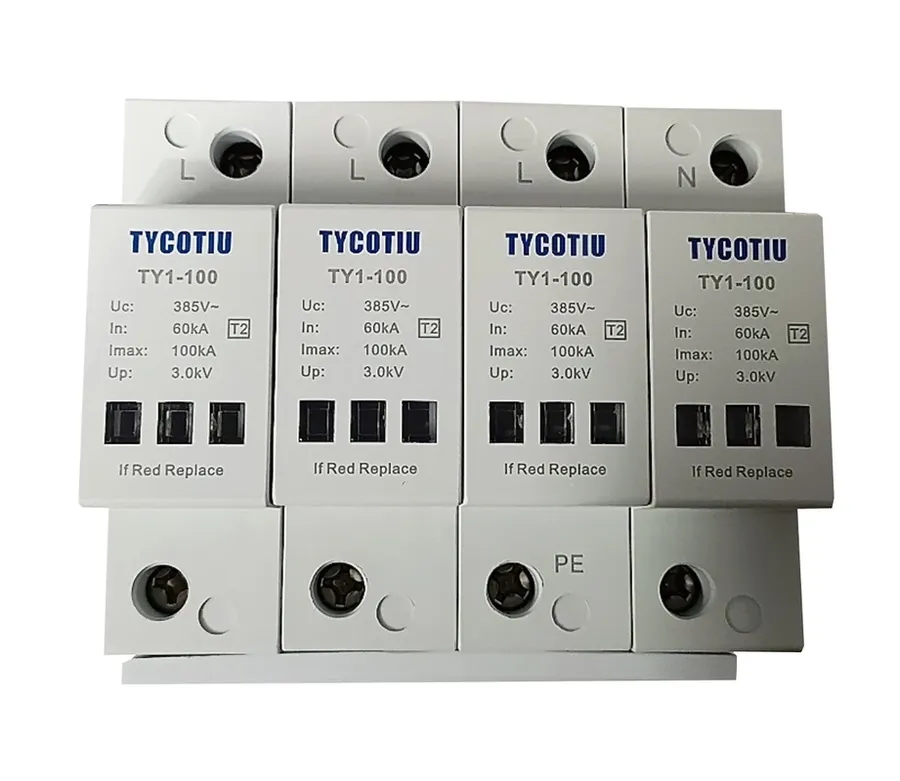
While snubber capacitors are effective at mitigating voltage spikes caused by parasitic inductance during switching, they are not the only solution. This section provides a comparative analysis of snubber capacitors with other surge protection methods, such as Transient Voltage Suppression (TVS) diodes, highlighting the strengths and weaknesses of each approach to enable informed design decisions.
| Feature | Snubber Capacitor | TVS Diode |
|---|---|---|
| Mechanism | Absorbs energy from voltage transients by storing charge; reduces rate of voltage change (dv/dt). | Clamps voltage at a specified level, diverting excess current away from the protected circuit. |
| Response Time | Slower response; designed to reduce the rate of voltage change. | Very fast response time; almost instantaneous voltage clamping. |
| Energy Handling | Handles repetitive surges with moderate energy; effectiveness diminishes with increasing frequencies. | Handles high peak surge currents for short durations; limited by thermal capacity for repetitive surges. |
| Voltage Level | Reduces the magnitude of voltage spikes but does not clamp the voltage to a fixed level. | Clamps voltage to a fixed value above the normal operating voltage. |
| Implementation | Requires careful selection of capacitance, voltage rating and ESR. It requires careful layout and placement due to parasitic inductance. | Relatively simple to implement; requires selection of appropriate clamping voltage. |
| Cost | Component cost is typically lower but more complex design might increase the total cost. | Component cost is generally higher but implementation is often simpler. |
| Use Cases | Best for reducing ringing and voltage overshoot; effective in power converters, motor drives, and high frequency switching applications. | Ideal for protecting against fast transient surges and electrostatic discharge (ESD) events; widely used in sensitive digital circuits. |
Snubber capacitors excel in scenarios where controlling the rate of voltage change and reducing ringing is crucial. For instance, in power converters and motor drives, snubbers are vital for managing the voltage spikes arising from the rapid switching of power transistors (IGBTs, MOSFETs), where a TVS diode might be inadequate to provide the required voltage control and energy management. Conversely, TVS diodes are preferable for rapid overvoltage events like ESD or sudden power line surges that require immediate clamping at a specific voltage.
The selection of the surge protection method should be based on an accurate analysis of the circuit requirements and a clear understanding of the nature of the potential surges and the device that requires protection.
Snubber capacitors are more than just components; they are the guardians of modern electronic systems, safeguarding them against potentially damaging voltage spikes. Understanding their operation, applications, and selection criteria empowers engineers and electronics enthusiasts to design robust and reliable circuits. As our dependence on power electronics continues to grow, the importance of properly implemented snubber circuits, with their heart the snubber capacitor, becomes ever more critical in ensuring the safety and longevity of our devices. From industrial machinery to handheld devices, snubber capacitors are an essential ingredient in the recipe for safe and reliable power.

