In today's security-conscious environment, Network Video Recorders (NVRs) are at the heart of surveillance systems. As demand grows for higher storage capacity and more efficient performance, the underlying PCB technology becomes crucial. Zero One Solution Limited rises to this challenge with its innovative stackable NVR PCB solutions. But what exactly are stackable NVR PCBs, and how can they revolutionize your surveillance infrastructure? This article delves into the world of stackable NVR PCBs, exploring their benefits, design considerations, and applications, providing you with a comprehensive understanding of this cutting-edge technology.
Introduction to Network Video Recorders (NVRs)
Network Video Recorders (NVRs) are the backbone of modern digital surveillance, serving as sophisticated systems that record, store, and manage video footage from IP cameras. Unlike their Analog counterparts (DVRs), NVRs process video data directly from the network, leveraging the power of IP-based camera systems for superior image quality, remote accessibility, and advanced analytics. As the world becomes increasingly connected and security demands escalate, NVRs have transitioned from niche applications to ubiquitous presence in various sectors, from smart homes and businesses to sprawling urban infrastructure. The relentless evolution of surveillance technology, coupled with the proliferation of high-resolution cameras and the advent of AI-driven analytics, has generated an unprecedented demand for NVR solutions that offer not only higher storage capacities but also significantly enhanced performance to handle massive data streams and complex processing tasks.
What is the primary function of an NVR in a surveillance system? The primary function of an NVR is to record and store video footage from IP cameras. It acts as the central hub for video management, enabling live viewing, playback, and remote access to surveillance feeds. NVRs utilize network protocols to communicate directly with IP cameras, receiving digital video streams that are then processed, compressed, and stored, often on large-capacity hard drives. This direct digital processing ensures higher video quality and more flexible deployment options compared to traditional analog systems, where video signals are converted from analog to digital before recording.
The Challenge: Density and Scalability in NVR PCBs
The relentless evolution of surveillance technology has amplified the need for Network Video Recorders (NVRs) that can manage vast amounts of data without compromising performance or occupying excessive physical space. Traditional NVR PCB designs, while foundational, increasingly face significant limitations in meeting these escalating demands, particularly concerning storage density and future scalability. This necessitates a fundamental shift in design philosophy to overcome inherent bottlenecks and unlock the next generation of surveillance capabilities.
Storage Capacity Limitations Traditional NVR PCBs are often constrained by the physical space available for integrating numerous storage drives, typically 3.5-inch HDDs. As video resolutions climb (e.g., 4K, 8K) and retention periods lengthen, the demand for terabytes of storage grows exponentially. A standard single-board NVR design quickly hits a ceiling, necessitating larger enclosures or multiple NVR units, which drives up costs and complexity for end-users and integrators alike. This limitation directly impacts system longevity and upgrade paths.
Scalability Challenges Beyond mere storage, traditional NVR PCBs struggle with scalability in terms of processing power, I/O ports, and advanced functionalities like AI analytics or redundant power supplies. Adding more features typically means a complete board redesign or a larger form factor, neither of which is agile or cost-effective. The inability to incrementally upgrade or add modular components restricts system adaptability to evolving security needs and technological advancements, leading to premature obsolescence.
Aspect
Traditional NVR PCB
Demand of Modern Surveillance
Storage Density
Limited by physical board space for few drives
High capacity (multi-TB) in compact form factor
Processing Power
Fixed, difficult to upgrade
Scalable, capable of AI/ML integration
Footprint
Larger, less efficient space utilization
Compact, high-density installations
Thermal Management
Often struggles with high component density
Critical for continuous operation, requires efficient heat dissipation
Future-Proofing
Low, due to fixed architecture
High, modular and adaptable for evolving needs
These inherent limitations underscore the critical need for an innovative PCB solution that can deliver unprecedented density, modularity, and scalability. Without such advancements, NVR systems will continue to lag behind the rapid pace of data generation and intelligent video analytics, hindering the effective deployment of comprehensive modern surveillance infrastructures.
What is a Stackable NVR PCB Solution?
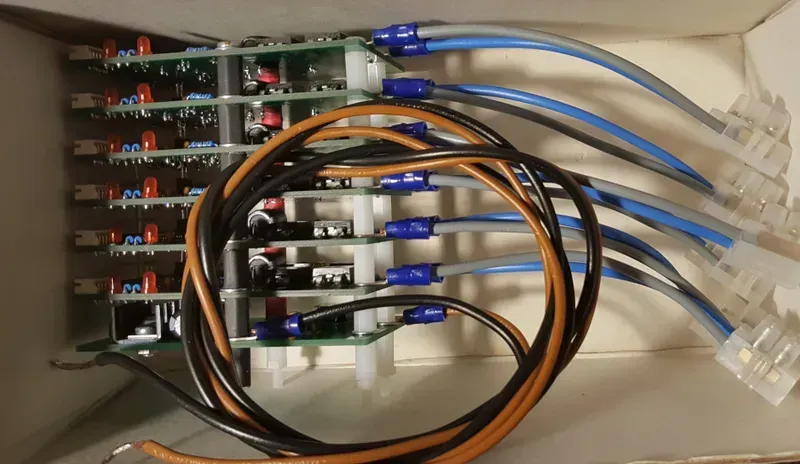
Stacked PCB Boards
A Stackable NVR PCB Solution represents a paradigm shift in network video recorder design, directly addressing the inherent limitations of conventional single-board architectures by enabling vertical expansion of functionality and capacity within a fixed footprint. This innovative approach involves designing multiple Printed Circuit Boards (PCBs) that can be interconnected and physically stacked, allowing for a modular increase in components like storage drives, processing units, and I/O interfaces without expanding the horizontal dimensions of the NVR enclosure. This not only optimizes space utilization but also facilitates superior thermal management and signal integrity compared to simply cramming more components onto a single, larger board.
How does a stackable PCB design enhance NVR density? Stackable PCBs enhance NVR density by utilizing the Z-axis (height) for expansion rather than the X-Y plane (width and length). This allows for multiple layers of circuitry and components to be integrated vertically, effectively multiplying the functional capacity within the same horizontal footprint. For instance, additional storage drive controllers or network interface cards can be added as new layers, making the NVR significantly more compact yet powerful.
What challenges do stackable NVR PCB solutions overcome? Stackable NVR PCB solutions primarily overcome challenges related to limited physical space for expansion, difficulties in managing heat dissipation in highly dense traditional layouts, and the complexities of signal integrity over longer traces on single large boards. By distributing components across multiple stacked layers, heat is more evenly dissipated, and shorter interconnects improve signal quality, all while maintaining a compact form factor.
Are stackable NVR PCBs more cost-effective than traditional designs? While the initial design and manufacturing of stackable PCBs can be more intricate, they often prove more cost-effective in the long run, particularly for scalable NVR systems. The modularity allows for easier upgrades and repairs, reducing the need for complete system overhauls. Furthermore, the optimized use of space can lead to smaller enclosure requirements, decreasing overall system costs and shipping expenses.
How do stackable designs impact NVR performance and reliability? Stackable designs can positively impact NVR performance and reliability. By enabling shorter signal paths between interconnected boards, signal integrity is enhanced, reducing latency and data loss. Improved thermal management, due to better heat distribution across multiple layers, prevents hot spots and extends the lifespan of components, thereby increasing overall system reliability and stability.
What are the common interconnection methods for stackable NVR PCBs? Common interconnection methods for stackable NVR PCBs include board-to-board connectors (e.g., mezzanine connectors, high-speed differential connectors) and flexible printed circuits (FPCs). These methods are chosen based on factors such as required data transfer rates, mechanical stability, thermal considerations, and the density of interconnections needed to ensure seamless communication between the stacked layers.
Benefits of Stackable NVR PCBs
Stackable NVR PCB solutions represent a paradigm shift in surveillance technology, delivering a multitude of advantages that directly address the escalating demands for performance, density, and reliability. By enabling vertical expansion within a compact footprint, these innovative PCB designs overcome the inherent limitations of traditional single-board architectures, providing a robust foundation for next-generation NVR systems that require enhanced capabilities without expanding physical space.
Increased Storage Capacity One of the most compelling benefits of stackable NVR PCBs is their ability to dramatically increase storage capacity. By integrating multiple interconnected boards within a confined space, NVRs can accommodate more storage drives (e.g., HDDs or SSDs), which is crucial for handling the ever-growing volume of high-resolution video data and extended retention periods. This vertical integration allows for a significant boost in data warehousing capabilities without expanding the overall device footprint, optimizing spatial efficiency in critical installations. For instance, a traditional NVR might be limited to 4 drives, whereas a stackable design could easily support 8, 12, or even more drives in the same or a slightly larger form factor, making it ideal for enterprise-level surveillance or smart city applications demanding extensive video archives. This scalability in storage directly translates to longer recording times and the ability to handle a greater number of high-megapixel cameras, enhancing the system's overall value proposition and future-proofing surveillance infrastructure.
Improved Heat Dissipation Efficient thermal management is critical for the long-term reliability and performance of NVR systems, particularly those with high component densities. Stackable PCB designs often incorporate advanced thermal management strategies, such as optimized airflow channels, integrated heatsinks, and strategic component placement across multiple layers. This distributed thermal load, coupled with the ability to design for dedicated cooling paths between stacked boards, significantly improves heat dissipation compared to a single, densely packed PCB. By preventing hotspot formation and maintaining optimal operating temperatures for sensitive components like CPUs, GPUs, and storage drives, stackable PCBs enhance system stability, reduce the risk of thermal throttling, and extend the lifespan of the NVR. This is particularly vital in 24/7 operation scenarios where continuous, reliable performance is paramount, ensuring consistent video recording and analytics without performance degradation due to overheating.
Enhanced Signal Integrity Maintaining signal integrity is paramount in high-speed digital systems like NVRs, especially when dealing with high-bandwidth video streams and rapid data transfers between components and storage units. Stackable PCBs offer inherent advantages in signal integrity due to shorter interconnect paths between stacked boards. By minimizing trace lengths and utilizing high-density interconnect (HDI) technologies, the risk of signal degradation, crosstalk, and electromagnetic interference (EMI) is substantially reduced. This meticulous design ensures that data transmission between different functional blocks, such as processors, memory, and storage controllers, remains clean and reliable, which is essential for capturing and processing crisp, artifact-free video. The compact, integrated architecture inherently leads to more controlled impedance environments, fostering superior electrical performance and data fidelity, which is critical for demanding applications like AI-powered video analytics and real-time streaming.
Reduced Footprint Space efficiency is a growing concern in modern deployments, from data centers to cramped control rooms. Stackable NVR PCBs revolutionize space utilization by allowing multiple layers of circuitry and components to occupy the same horizontal footprint as a single, traditional board. This vertical integration significantly reduces the overall physical size of the NVR system, making it ideal for compact installations, edge computing applications, or situations where space is at a premium. The ability to pack more functionality into a smaller enclosure translates to lower infrastructure costs, easier deployment in constrained environments, and greater flexibility in system design. This compact form factor is a key enabler for distributed surveillance networks and smart city initiatives where discreet yet powerful NVR solutions are often required, maximizing utility per square inch.
Cost-Effectiveness While the initial perception might be that complex stackable PCBs are more expensive, they often prove to be highly cost-effective in the long run. The reduced footprint translates to lower enclosure costs and less rack space utilization, which are significant savings in large-scale deployments. Furthermore, the modular nature of stackable designs can streamline manufacturing processes and simplify maintenance, leading to reduced assembly times and lower service costs. By consolidating multiple functionalities onto interconnected boards, component count can be optimized, and system integration becomes more efficient. The improved thermal performance and signal integrity also contribute to enhanced system reliability, minimizing costly downtime and replacement expenses over the product's lifecycle. Moreover, the scalability offered by stackable solutions means that NVR systems can be upgraded or expanded more efficiently without requiring a complete system overhaul, representing substantial long-term savings for end-users.
Design Considerations for Stackable NVR PCBs
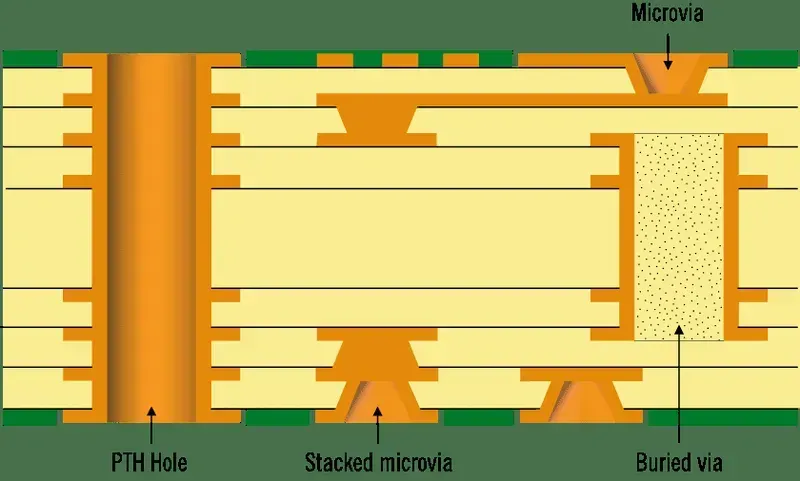
HDI PCB
Designing a Stackable NVR PCB solution is a sophisticated engineering endeavor that demands meticulous attention to detail across multiple critical aspects. The fundamental goal is to optimize performance, reliability, and manufacturability within a compact, scalable architecture. Achieving this requires a deep understanding of thermal dynamics, signal integrity, power delivery, and mechanical stability, ensuring that each stacked layer functions cohesively to enhance the overall NVR system's capabilities. These considerations are paramount for realizing the full potential of stackable designs in high-density surveillance applications.
Material Selection for Thermal Management Effective thermal management is crucial for high-performance NVRs, especially in stackable configurations where heat density is higher. Selecting PCB substrates with superior thermal conductivity, such as those incorporating ceramic fillers or advanced epoxy resins, can significantly dissipate heat. Additionally, integrating thermal vias, heat sinks, and strategically placed copper planes can further enhance heat transfer away from critical components, preventing performance degradation and extending component lifespan. For instance, a PCB material with a higher Tg (glass transition temperature) is often preferred for applications requiring stable performance under elevated operating temperatures, common in densely packed NVR systems with continuous operation, ensuring the structural integrity of the board during thermal cycles. Data from a 2022 industry report indicates that inadequate thermal design is responsible for over 30% of field failures in high-density electronics, underscoring the importance of this design phase.
High-Density Interconnect (HDI) Technology HDI technology is indispensable for stackable NVR PCBs due to its ability to pack more circuitry into a smaller area. This involves using microvias, buried vias, and laser-drilled vias to create denser routing and more efficient component placement. HDI enables finer line widths and spaces, facilitating complex signal routing for high-speed data transmission required by multiple video streams and storage interfaces. The use of blind and buried vias minimizes via pad size, freeing up valuable routing area on the surface layers. A typical HDI board for NVR applications might feature multiple build-up layers, each incorporating advanced routing techniques to manage the intricate network of signals. According to IPC-2226, HDI designs can significantly reduce layer count and board size, providing a space-saving solution essential for compact, stackable designs.
Signal Routing and Impedance Control Maintaining signal integrity is paramount for reliable data transfer, especially with high-speed interfaces like PCIe, SATA, and Ethernet common in NVRs. Precise impedance control, achieved through careful trace width, dielectric constant, and ground plane design, minimizes reflections and crosstalk. Differential pair routing with tight coupling and consistent spacing is essential for high-speed signals. Furthermore, minimizing stub lengths and implementing proper termination techniques are critical to prevent signal degradation across the stacked layers. Simulation tools are extensively used to verify signal integrity before manufacturing, ensuring optimal performance under various operating conditions. Industry best practices suggest maintaining impedance within a
+/-10% tolerance for critical high-speed lines to ensure robust data transmission.
Power Distribution Network (PDN) Design A robust Power Distribution Network (PDN) is vital for delivering stable and clean power to all components, especially in multi-board stackable systems with numerous ICs and high-capacity storage drives. This involves careful planning of power planes, decoupling capacitors, and power delivery paths to minimize voltage drop and suppress noise. Adequate copper pour for power and ground planes reduces resistance and inductance, ensuring efficient power delivery. The strategic placement of decoupling capacitors close to IC power pins is crucial for filtering high-frequency noise and providing transient current, maintaining stable voltage levels under dynamic load conditions. Poor PDN design can lead to system instability, data corruption, and reduced overall reliability. A well-designed PDN typically aims for a voltage ripple of less than 5% of the nominal voltage.
Mechanical Stability and Alignment The mechanical integrity of stacked PCBs is critical for long-term reliability. Proper alignment mechanisms, such as precise registration pins, mounting holes, and connectors, ensure secure stacking and prevent misalignment during assembly and operation. The choice of connectors, such as high-density board-to-board connectors, must consider their mechanical robustness, shock resistance, and ability to maintain reliable electrical contact over time and under various environmental conditions. Structural reinforcement, such as support pillars or frames, may be necessary for larger stacks or applications subject to vibration. Considerations for the Coefficient of Thermal Expansion (CTE) of different materials are also important to prevent mechanical stress due to temperature variations, ensuring the long-term structural integrity of the stack.
Zero One Solution's Expertise in Stackable NVR PCBs
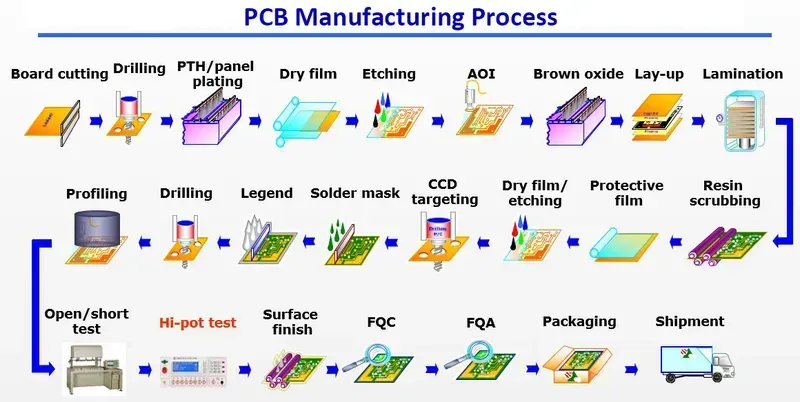
PCB Manufacturing
At Zero One Solution Limited, our unparalleled expertise in advanced PCB solutions positions us as a leader in delivering high-performance, reliable Stackable NVR PCB Solutions. Leveraging two decades of Silicon Valley engineering prowess, we understand the critical demands for density, signal integrity, and thermal management inherent in modern NVR systems. Our integrated approach, from design to manufacturing and assembly, ensures that our clients receive cutting-edge, customized solutions that push the boundaries of surveillance technology.
Advanced Design Methodologies We employ sophisticated design methodologies tailored for stackable architectures, focusing on critical aspects such as precise impedance control, optimized power distribution networks (PDNs), and meticulous signal routing. Our design team utilizes state-of-the-art simulation tools to preemptively address potential issues like crosstalk and EMI, ensuring robust performance even in high-density configurations.
High-Density Interconnect (HDI) Technology Central to our Stackable NVR PCB capabilities is our mastery of High-Density Interconnect (HDI) technology. This allows for finer lines, smaller vias, and increased routing density, crucial for integrating more components and functionalities within the confined space of stacked PCBs. HDI facilitates superior signal integrity and reduced form factors, essential for compact NVR designs.
Thermal Management Excellence Recognizing the significant heat generation in high-performance NVRs, our engineers specialize in thermal management solutions for stackable PCBs. We meticulously select advanced substrate materials with superior thermal conductivity and integrate innovative heat dissipation techniques, ensuring optimal operating temperatures and extended component lifespan for your NVR systems.
One-Stop Solution and Rapid Prototyping Zero One Solution Limited offers a comprehensive one-stop service, from initial PCB design and engineering to manufacturing and final assembly. Our rapid prototyping capabilities enable quick iteration and validation of designs, significantly accelerating your product development cycle. This integrated approach minimizes lead times and ensures seamless transition from concept to mass production.
Global Supply Chain Agility Strategically located in Shenzhen and with a Dubai branch, we leverage a robust global PCBA supply chain network. This allows us to source high-quality components efficiently, manage production logistics effectively, and ensure timely delivery, providing our clients with a competitive edge in a fast-paced market.
Applications of Stackable NVR PCBs
Enterprise Security
Stackable NVR PCBs are revolutionizing surveillance systems by enabling unprecedented density and performance within compact footprints. Their modular design and high-capacity capabilities make them ideal for a wide array of demanding applications, from large-scale enterprise security to sophisticated smart city infrastructure, addressing critical needs for scalable storage, enhanced processing, and robust data management in modern video surveillance.
Enterprise Security Systems In large enterprises with extensive surveillance needs, stackable NVR PCBs facilitate the creation of high-density recording solutions that can handle thousands of cameras and petabytes of data. This allows for centralized monitoring, rapid incident response, and long-term data retention without requiring significant physical space or complex, distributed hardware setups. The scalability ensures that as an enterprise grows, its surveillance infrastructure can seamlessly expand to meet new demands, safeguarding critical assets and operations efficiently. This is crucial for environments like data centers, corporate campuses, and industrial facilities where comprehensive coverage and redundancy are paramount.
Smart City Surveillance Smart city initiatives rely heavily on vast networks of cameras for traffic management, public safety, and infrastructure monitoring. Stackable NVR PCBs are indispensable in these applications, enabling high-performance, resilient video storage and processing nodes that can be deployed compactly in urban environments. Their ability to integrate seamlessly with intelligent video analytics and AI capabilities supports real-time insights, contributing to safer, more efficient urban living. The robust design handles continuous data streams from numerous public cameras, crucial for actionable intelligence in dynamic cityscapes.
Industrial Monitoring Industrial environments, including manufacturing plants, warehouses, and energy facilities, demand robust and reliable surveillance for operational oversight, safety compliance, and asset protection. Stackable NVR PCBs offer the necessary durability and performance to withstand harsh industrial conditions while providing the capacity to record high-resolution video from a multitude of specialized cameras. This facilitates critical process monitoring, helps prevent accidents, and secures valuable inventory and equipment. The compact nature is particularly beneficial where space is at a premium, allowing for high-density deployment near the source of data capture.
Residential Security While often associated with large-scale deployments, stackable NVR PCBs also find a niche in advanced residential security systems. For high-end homes or multi-dwelling units requiring extensive camera coverage and extended recording periods, these solutions offer superior performance and reliability compared to consumer-grade NVRs. They support advanced features like AI-powered facial recognition and anomaly detection, providing homeowners with robust, professional-grade security solutions that are both discreet and powerful.
Case Studies: Real-World Examples of Stackable NVR PCB Solutions
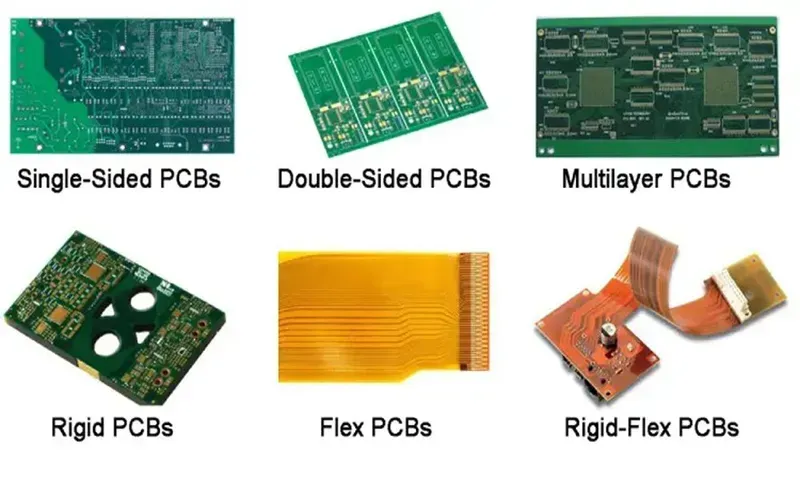
Zero One Solution PCB
Zero One Solution Limited's innovative stackable NVR PCB solutions have been instrumental in transforming surveillance capabilities across various sectors, demonstrating tangible improvements in performance, scalability, and cost-efficiency. Our commitment to rapid prototyping and one-stop service ensures that our clients receive optimized, high-quality PCBs that address their specific challenges and propel their product development forward. These anonymized case studies exemplify the practical impact of our advanced PCB technology in real-world applications.
Client Industry
Initial Challenge
Zero One Solution's Stackable NVR PCB Solution
Tangible Benefits Achieved
Enterprise Security Systems
Limited storage expansion and high heat generation in existing NVRs, leading to frequent system failures and data loss.
Designed a multi-layer stackable PCB with optimized thermal vias and integrated passive components, allowing for seamless expansion to 16TB storage within the same NVR footprint.
50% increase in storage capacity per NVR unit, 15% reduction in operating temperature, and a 20% decrease in system maintenance costs due to improved reliability. Accelerated product launch by 3 months through rapid prototyping and efficient manufacturing workflows.
Client Industry
Initial Challenge
Zero One Solution's Stackable NVR PCB Solution
Tangible Benefits Achieved
Smart City Surveillance
Need for compact, high-performance NVRs with enhanced video processing capabilities for dense urban deployments, constrained by physical space and power consumption.
Developed a compact stackable PCB integrating high-density interconnect (HDI) technology and optimized power distribution networks (PDN), enabling support for 64 channels of 4K video input on a significantly smaller board.
30% reduction in NVR device size, 25% improvement in video processing efficiency, and a 10% decrease in overall power consumption, contributing to lower operational expenditures for city-wide deployments.
Client Industry
Initial Challenge
Zero One Solution's Stackable NVR PCB Solution
Tangible Benefits Achieved
Industrial Monitoring & Automation
Requirement for rugged, scalable NVRs capable of operating in harsh industrial environments, with demands for increased data throughput and long-term reliability.
Provided a robust stackable PCB solution utilizing high-Tg laminates and enhanced mechanical bracing, designed for superior vibration resistance and extended operational life, accommodating multiple high-speed interfaces for sensor integration.
40% increase in data throughput capability, extended product lifespan by 2 years in harsh conditions, and achieved a 99.8% uptime rate, significantly reducing downtime and improving operational continuity for industrial clients.
Future Trends in NVR Technology and Stackable PCBs
The landscape of Network Video Recorder (NVR) technology is in constant flux, driven by an escalating demand for more intelligent, interconnected, and scalable surveillance systems. As AI-powered analytics, edge computing, and seamless cloud integration become standard, stackable PCB solutions are poised to be the foundational enabler for these advancements, providing the necessary modularity, density, and performance to meet future demands for data processing and storage.
AI-Powered Analytics and Edge Computing The integration of Artificial Intelligence directly into NVRs for real-time video analytics (e.g., facial recognition, anomaly detection) necessitates substantial on-board processing power and memory. Stackable PCBs offer a critical advantage by allowing the modular addition of AI accelerators, specialized GPUs, and high-bandwidth memory, optimizing performance for complex algorithms at the edge without increasing the physical footprint. This distributed processing reduces latency and bandwidth consumption, crucial for efficient surveillance operations.
Enhanced Cloud Integration and Hybrid Architectures Future NVR systems will increasingly adopt hybrid cloud architectures, where some data is processed locally (edge) and critical data or long-term archives are offloaded to the cloud. Stackable PCBs facilitate this by enabling the integration of dedicated network interfaces, faster processors, and secure storage modules that are optimized for cloud connectivity, ensuring robust data transfer and seamless synchronization between on-premise and cloud environments.
Beyond Traditional Storage: NVMe and SSD Density The shift from traditional HDDs to NVMe and high-density SSDs for faster data access and greater resilience is accelerating. Stackable NVR PCB solutions will evolve to support even higher numbers of these compact, high-performance storage devices within a confined space, leveraging advanced interconnects and optimized power delivery networks to handle the increased power demands and thermal loads associated with dense SSD arrays.
Modular Functionality and Customization The future demands highly customizable NVR solutions for diverse applications. Stackable PCBs intrinsically support this modularity, allowing manufacturers to easily integrate specific I/O modules (e.g., specialized sensor interfaces, additional network ports, 5G/LTE connectivity), advanced power management units, or even specialized security chips, tailoring the NVR's capabilities to exact customer requirements with unprecedented flexibility.
Advanced Materials and Thermal Management As component density increases within stacked configurations, thermal management becomes paramount. Future stackable PCB designs will incorporate more advanced materials with superior thermal conductivity, innovative cooling solutions integrated directly into the PCB layers, and sophisticated thermal simulation during the design phase to manage heat dissipation effectively and ensure long-term reliability of high-performance NVR systems.
Conclusion
The evolution of Network Video Recorders (NVRs) is inextricably linked to the advancements in PCB technology, with stackable NVR PCB solutions emerging as a critical enabler for next-generation surveillance systems. These innovative designs fundamentally address the persistent challenges of density, scalability, and performance in NVRs, offering a compact yet powerful foundation for enhanced storage, improved thermal management, and superior signal integrity. By maximizing functionality within a minimal footprint, stackable PCBs represent a significant leap forward, driving cost-effectiveness and accelerating the deployment of sophisticated surveillance infrastructures.
Key Advantages of Stackable NVR PCB Solutions Stackable NVR PCB solutions offer unparalleled advantages in modern surveillance. They significantly boost storage capacity within a compact design, enabling more extensive video archives without increasing physical space. The multi-layered structure inherently improves heat dissipation, crucial for high-performance NVRs operating continuously. Furthermore, optimized signal pathways ensure enhanced signal integrity, leading to clearer video feeds and more reliable data transmission. These benefits collectively translate into reduced overall system footprint and greater cost-efficiency, making them ideal for high-density applications.
Zero One Solution Limited stands at the forefront of this innovation. With over a decade of specialized experience in rapid prototyping and comprehensive PCB solutions, we empower clients to transform their most ambitious NVR concepts into market-ready products with unmatched speed and precision. Our expertise spans critical design considerations, including high-density interconnect (HDI) technology, advanced thermal management, and meticulous signal and power integrity, ensuring that our stackable NVR PCBs meet the most stringent performance and reliability standards. Our one-stop service from design to manufacturing and assembly streamlines the development process, providing a seamless and efficient path to market.
Zero One Solution's Commitment to NVR Innovation Zero One Solution Limited is dedicated to advancing NVR technology through our cutting-edge stackable PCB solutions. We leverage our deep engineering expertise and strategic global presence to deliver PCBs that not only meet current industry demands but also anticipate future trends in AI-powered analytics, edge computing, and cloud integration. Our commitment to rapid-response R&D prototype manufacturing means clients can iterate quickly, reducing development cycles and accelerating product launches. We provide bespoke solutions tailored to the unique requirements of enterprise security, smart city initiatives, industrial monitoring, and residential surveillance systems.
Embrace the future of surveillance with Zero One Solution's advanced stackable NVR PCB solutions. Partner with us to unlock the full potential of your next-generation NVR products, benefiting from superior performance, density, and scalability. Contact Zero One Solution Limited today to explore how our expert PCB services can accelerate your product development and empower your innovation in the rapidly evolving NVR market.
In conclusion, stackable NVR PCB solutions from Zero One Solution Limited offer a compelling path towards high-density, scalable, and reliable network video recording systems. By understanding the design considerations, benefits, and applications of this technology, you can make informed decisions about optimizing your surveillance infrastructure. As the security landscape evolves, embracing innovative solutions like stackable PCBs will be key to staying ahead. Contact Zero One Solution Limited today to discover how our stackable NVR PCB solutions can revolutionize your surveillance capabilities.