
The manufacturing floor is undergoing a silent, digital revolution. As latency requirements tighten and the demand for autonomous, self-correcting precision rises, traditional CNC control architectures are reaching their physical limitations. This article dissects the transition from legacy microcontroller systems to advanced, AI-integrated PCB designs, providing engineers and facility managers the insight needed to navigate the next generation of smart production.
Understanding Traditional CNC Controller Architectures
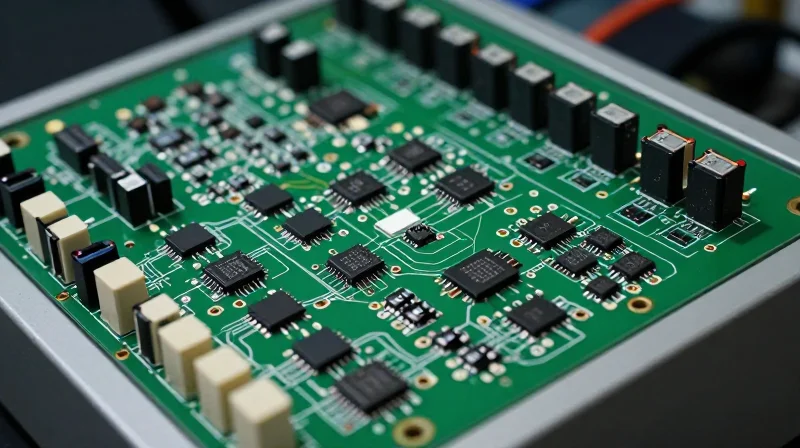
The Legacy of RISC-Based CNC Architectures
Traditional CNC controllers rely heavily on Reduced Instruction Set Computer (RISC) microcontrollers. These systems operate on a rigid, centralized processing model where a single main CPU acts as the master scheduler, executing sequential instructions from a G-code buffer. By prioritizing determinism and low-latency interrupt handling, these architectures achieved high stability but at the cost of modular flexibility and complex data processing capabilities.
Core Structural Limitations
While traditional designs excel at real-time motion control, they struggle with modern operational demands. The reliance on centralized processing means that adding diagnostic sensors or predictive maintenance algorithms often degrades the controller's primary timing loops, leading to jitters in toolpath execution.
| Feature | Traditional Architecture | Design Constraint |
|---|---|---|
| Processing Model | Centralized/Sequential | High overhead for multi-tasking |
| Instruction Set | Hardwired RISC | Difficult to scale for AI models |
| Communication | Deterministic Fieldbus | Limited throughput for Big Data |
- Why are traditional controllers strictly deterministic?
These systems prioritize time-critical pulse generation for stepper or servo motors; any deviation in timing could lead to physical damage or geometric inaccuracy in the workpiece. - Why is the centralized processing model considered a bottleneck?
Centralized CPUs must handle everything from user interface updates to inverse kinematics calculations, leaving little headroom for the intensive compute requirements of modern AI-driven predictive analytics.
The Rise of Edge Computing in Industrial Automation
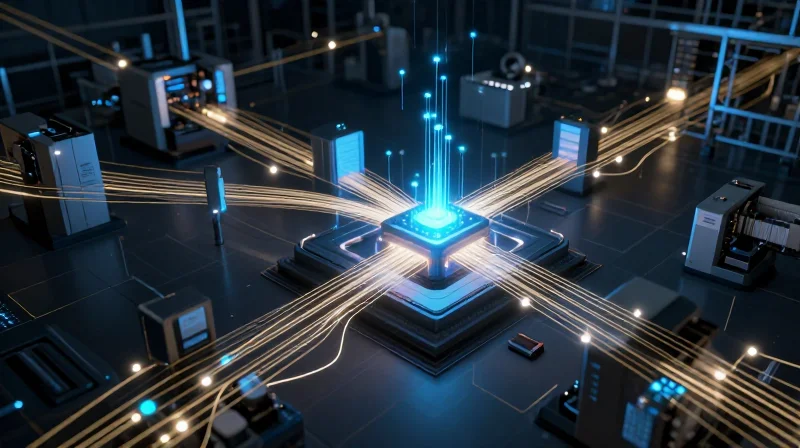
Shifting from Centralized to Edge Intelligence
Traditional CNC architectures relied heavily on centralized processing, where complex calculations were offloaded to remote servers or programmable logic controllers (PLCs). As machining speeds increase and tolerances tighten to the sub-micron level, the latency inherent in network-based data transmission has become a bottleneck. Edge computing addresses this by embedding high-performance processing capabilities directly onto the CNC control board, allowing the system to analyze sensor data and adjust toolpaths in nanoseconds.
Comparative Analysis: Traditional vs. Edge-Enabled Architectures
| Feature | Traditional Architecture | Edge-Enabled Architecture |
|---|---|---|
| Processing Location | Remote Server/Central PLC | On-board CNC Controller |
| Latency | High (Network dependent) | Ultra-low (Near-zero) |
| Data Reliability | Risk of packet loss | Deterministic and secure |
| Scalability | Limited by bandwidth | High (Distributed processing) |
Benefits for Modern Machining
By executing AI models locally, the CNC machine can perform real-time vibration analysis, tool wear compensation, and thermal drift correction without external intervention. This autonomy not only optimizes cycle times but also prevents catastrophic mechanical failures, providing a significant competitive advantage in smart factory deployments.
- Why is low latency critical for CNC machining?
In high-speed machining, a millisecond of delay in processing feedback can result in tool breakage or surface finish defects. Edge computing ensures deterministic execution of control loops. - How does edge computing improve predictive maintenance?
By processing vibration and acoustic emission data locally on the control board, the system detects micro-fractures in cutting tools instantly, allowing for proactive adjustments before a fault occurs. - Does edge computing eliminate the need for cloud connectivity?
No, it complements it. Edge handles the immediate, high-speed execution, while the cloud remains essential for long-term historical data aggregation and global machine learning model updates.
Anatomy of an AI-Optimized PCB
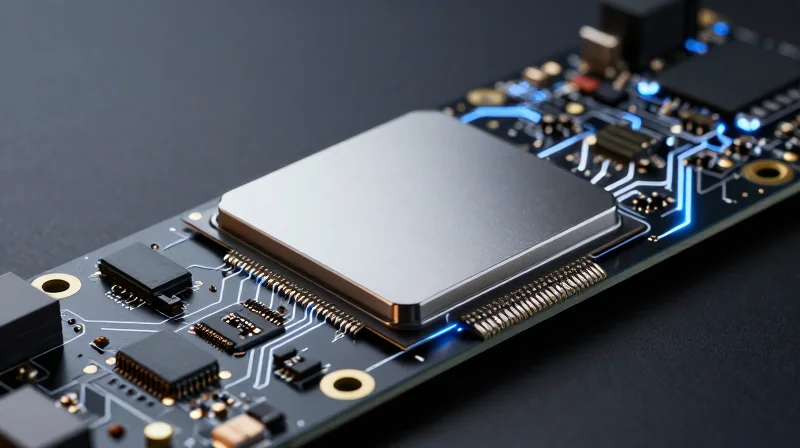
Hardware Architecture: Beyond Traditional RISC
Traditional CNC controllers rely heavily on general-purpose RISC microcontrollers that handle tasks sequentially. In contrast, AI-optimized PCBs utilize a heterogeneous computing architecture. This design offloads computationally intensive tasks—such as vibration analysis, tool wear prediction, and adaptive feedrate adjustment—from the primary CPU to dedicated hardware accelerators, ensuring that low-latency real-time control remains unaffected by complex AI inferencing.
Key Components in the AI-Driven PCB Stack
| Component | Functional Role in CNC | Benefit to Machining |
|---|---|---|
| NPU (Neural Processing Unit) | Accelerates matrix multiplications for ML models | Real-time predictive maintenance and anomaly detection |
| Specialized FPGA | Handles deterministic I/O and motor synchronization | Nanosecond-level latency for motion control loops |
| High-Bandwidth RAM | Rapid buffering of sensor telemetry data | Smooth integration of high-frequency vibration sensors |
Deterministic vs. Non-Deterministic Processing
The primary design challenge in AI-optimized CNC boards is the isolation of the control loop. While AI models are inherently probabilistic and non-deterministic, the G-code execution must be strictly deterministic. Modern boards solve this by implementing physical hardware partitioning: the FPGA maintains the hard real-time interrupt service routines, while the NPU runs the secondary AI processing in parallel. This ensures that even if an AI model encounters a computational spike, the motion trajectory remains stable and error-free.
Frequently Asked Questions
- Does AI processing introduce lag in motion control?
No, because AI-optimized architectures utilize dedicated NPUs, offloading the inference load from the primary motion control processors to ensure zero impact on deterministic timing. - Why are FPGAs essential for modern boards?
FPGAs provide reconfigurable hardware logic that can be tuned to match specific machine kinematics, offering a level of parallelism that standard CPUs cannot achieve for high-speed pulse generation. - Is cloud connectivity required for AI-optimized PCBs?
No, these boards are designed for edge computing, performing all necessary inferencing locally on the PCB to maintain operation even in environments without internet access.
Latency and Real-Time Decision Making
The Latency Constraint in Traditional Polling Architectures
Traditional CNC control boards rely on polling loops, a design pattern where the central processor sequentially checks the status of sensors, limit switches, and motor positions. While this provides high determinism—the ability to guarantee response times—it suffers from inherent latency issues during high-speed, multi-axis motion. As the number of variables increases, the time required to complete one full cycle grows, introducing a 'stutter' or jitter that limits the maximum effective feed rate without compromising path accuracy.
Predictive AI: From Reactive to Proactive Control
Modern AI-driven control boards shift from reactive polling to proactive inference. By integrating Neural Processing Units (NPUs) or FPGAs capable of running lightweight neural networks, these systems analyze vibration, heat, and tool-load data in microsecond increments. Instead of waiting for a threshold to be crossed to trigger a correction, the AI predicts imminent deviation from the tool path based on current material dynamics, allowing for anticipatory torque adjustments.
| Feature | Legacy Polling Architecture | AI-Driven Predictive Architecture |
|---|---|---|
| Reaction Mechanism | Threshold-based (Reactive) | Inference-based (Predictive) |
| Data Processing | Sequential polling loop | Parallelized hardware acceleration |
| Latency Profile | Fixed cycle time | Dynamic, context-aware speed |
| Error Mitigation | Post-error correction | Pre-emptive path adjustment |
Frequently Asked Questions on Control Latency
- Does AI replace the need for deterministic real-time kernels?
No; AI-driven control boards still utilize Real-Time Operating Systems (RTOS) for hard-coded safety functions, while the AI layer handles path optimization and predictive maintenance in a parallel process. - How does inference speed impact machining throughput?
By minimizing 'wait-states' during high-speed contouring, AI controllers maintain higher sustained velocities through complex geometry, reducing cycle times by as much as 15-20% in specific aluminum-milling applications. - Is jitter eliminated in AI-driven control boards?
While not entirely eliminated, the predictive nature of AI smooths out jitter by pre-calculating acceleration and deceleration curves that adapt to fluctuating loads, effectively 'masking' latency that would typically cause tool mark artifacts.
Predictive Maintenance and Self-Diagnostic Capabilities
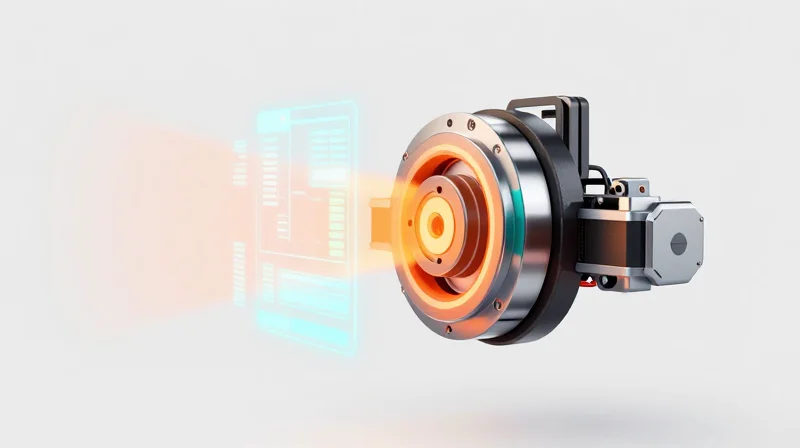
Predictive Maintenance and Self-Diagnostic Capabilities
The transition from traditional, reactive CNC systems to AI-augmented control boards marks a shift from periodic maintenance schedules to condition-based monitoring. By leveraging high-frequency vibration analysis and continuous thermal telemetry, modern control units identify degradation signals that were previously invisible to standard polling protocols.
Mechanism of Anomaly Detection
AI-driven CNC boards employ sophisticated algorithms to perform spectral analysis on sensor inputs. By training baseline models during a machine's 'healthy' state, the onboard processor can flag deviations in spindle harmonics or axis friction. Thermal stress is monitored via embedded sensors that correlate load intensity with temperature rise, enabling the system to trigger autonomous slowdowns or preventative alerts before a catastrophic failure occurs.
| Feature | Traditional CNC Architecture | AI-Driven CNC Solution |
|---|---|---|
| Maintenance Strategy | Schedule-based or Reactive | Condition-based & Predictive |
| Failure Detection | Manual Inspection/Error Logs | Real-time Vibration/Thermal Analysis |
| Response Time | Post-Failure Intervention | Pre-emptive Adjustment |
- How does the board distinguish between normal vibration and tool wear?
AI algorithms use frequency domain filtering to isolate the characteristic signatures of cutting tools. As a tool wears, its vibration pattern shifts; the board detects this gradual shift against the established baseline of an unused tool. - Can these boards compensate for thermal expansion autonomously?
Yes. AI-driven boards integrate real-time thermal data with axis positioning logic, applying dynamic offset corrections to maintain tolerances despite heat-induced geometric deformation.
The Role of Connectivity and IIoT Integration
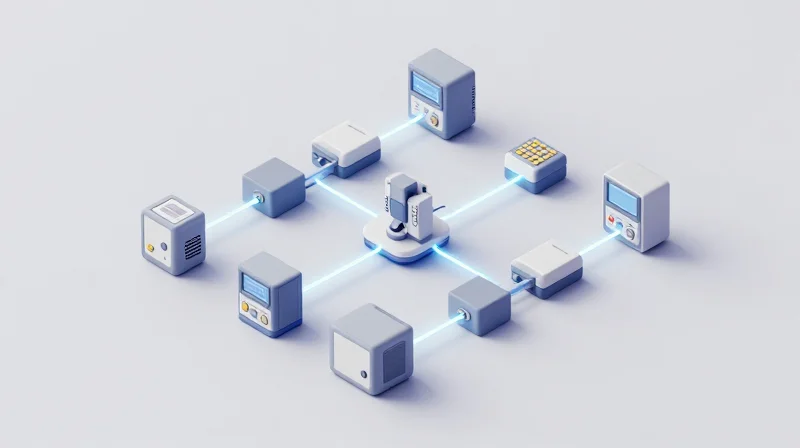
From Siloed Controllers to IIoT Nodes
Traditional CNC control boards were historically designed as closed-loop, standalone systems prioritizing local processing speed over network visibility. In contrast, modern AI-driven architectures treat the control board as a primary data source within the Industrial Internet of Things (IIoT) ecosystem. By embedding high-bandwidth communication interfaces and standardized protocols like OPC-UA and MQTT directly into the hardware layer, these boards enable seamless integration with Manufacturing Execution Systems (MES) and Cloud Analytics platforms.
Comparison of Connectivity Architectures
| Feature | Traditional Architecture | AI-Driven IIoT Architecture |
|---|---|---|
| Communication | Proprietary/Serial/Fieldbus | Open Standards (OPC-UA/MQTT) |
| Data Handling | Passive Monitoring | Edge-Processed Telemetry |
| Connectivity | Limited/Isolated | Integrated Cloud/Ethernet/5G |
| Data Payload | Basic Status Flags | High-Frequency Sensor Streams |
Facilitating Smart Factory Management
The integration of AI-driven control boards facilitates a paradigm shift in factory management. By offloading raw data processing to the edge, the board only transmits actionable intelligence—such as tool degradation trends or energy consumption anomalies—thereby reducing network overhead. This allows enterprise managers to monitor global machine health across multiple sites via centralized dashboards, ensuring that production scheduling is based on real-time hardware condition rather than static service intervals.
- How does IIoT integration reduce factory downtime?
By utilizing real-time sensor streams and predictive analytics, boards detect microscopic deviations in tool performance, allowing for maintenance intervention before a catastrophic failure stops production. - Are legacy CNC systems compatible with AI-driven IoT upgrades?
While legacy systems require external protocol gateways, modern AI-driven boards include native support for Industrial Ethernet, making direct cloud integration possible without middleware bottlenecks. - Does high-frequency data streaming impact machine precision?
Modern boards utilize dedicated I/O processing cores for connectivity that operate independently of the motion control kernel, ensuring that communication tasks do not interfere with real-time cutting precision.
Cost-Benefit Analysis: Upgrading vs. Maintaining Legacy Systems
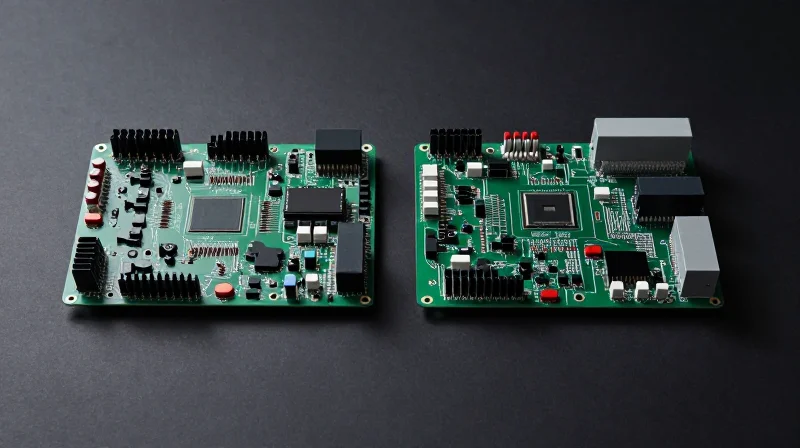
The Financial Crossroads: Legacy Maintenance vs. Modernization
Deciding whether to overhaul legacy CNC control systems is not merely a technical choice but a fiscal one. While legacy systems benefit from 'sunk cost' advantages and familiarity, they often incur compounding costs related to unplanned downtime, specialized labor, and missed opportunities for precision optimization. Conversely, AI-driven solutions demand significant upfront capital investment but offer a clear path to reduced cycle times and enhanced predictive maintenance capabilities.
| Financial Driver | Legacy Maintenance | AI-Driven Modernization |
|---|---|---|
| Capital Expenditure | Low (Maintenance focused) | High (Hardware/Integration) |
| Operational Efficiency | Static/Declining | High (Real-time optimization) |
| Downtime Risk | High (Component obsolescence) | Low (Predictive diagnostics) |
| Training Requirements | Low (Existing skill set) | Moderate (Advanced software training) |
Strategic Assessment Framework
To justify the ROI of an AI-driven upgrade, management must evaluate the 'Total Cost of Obsolescence.' This includes tracking the average mean time between failures (MTBF), the cost of specialized support technicians for legacy architectures, and the waste percentage attributable to aging feedback loops.
- At what point does legacy maintenance become fiscally irresponsible?
When annual maintenance and lost-production costs due to downtime exceed 20% of the replacement value of a modern AI-driven board over a three-year window, an upgrade is generally justified. - How does AI impact the speed of Return on Investment (ROI)?
AI-driven boards typically accelerate ROI through reduced scrap rates, faster cycle times, and the elimination of diagnostic downtime, often reaching break-even within 18 to 24 months. - Is a phased migration possible?
Yes. Organizations often adopt a hybrid approach by integrating IIoT telemetry sensors on legacy systems before replacing the full control board to validate data-driven improvements prior to full-scale hardware migration.
Future Trends: Autonomous Manufacturing and Beyond
The Trajectory Toward Autonomous CNC Systems
The next generation of CNC control boards is shifting from reactive processing to proactive autonomous operation. By integrating edge-native AI models directly onto the board, machines are evolving from simple executors of G-code into self-optimizing agents capable of adjusting feed rates and spindle speeds in real-time to compensate for tool wear, material irregularities, and ambient environmental shifts.
Technological Drivers of the New Era
| Technology | Functional Impact | Hardware Requirement |
|---|---|---|
| Digital Twin Synchronization | Virtual replication of physical machining state | High-bandwidth NVMe storage/Real-time bus |
| On-Board AI Inference | Dynamic adaptive feed rate adjustment | Dedicated NPU or Tensor processing core |
| Predictive Resource Management | Autonomous tool change and coolant cycles | Advanced I/O scheduling and PLC integration |
Digital Twins and Closed-Loop Optimization
Digital twins represent the most significant leap in CNC architecture, creating a bidirectional feedback loop between the CAD/CAM model and the physical CNC controller. Future control boards will maintain a live 'state vector' of the machine, allowing the control system to simulate outcomes milliseconds before execution. This eliminates the 'trial and error' phase of prototyping, effectively bridging the gap between theoretical digital design and physical reality.
Frequently Asked Questions
- Will autonomous CNCs replace human operators entirely?
No, they shift the human role from manual machine operation to high-level system orchestration, oversight, and complex process engineering. - How does edge-based AI differ from cloud-based analytics?
Edge AI operates with near-zero latency directly on the controller, ensuring that safety-critical decisions happen instantly without reliance on external network stability. - What is the primary constraint to achieving full autonomy?
The primary barrier is data standardization across legacy and proprietary controller protocols, which inhibits the seamless flow of telemetry required for true autonomous synchronization.
As industrial demands shift toward higher precision and shorter cycle times, the integration of edge AI into CNC control boards is no longer optional—it is a competitive necessity. By embracing these smarter, faster architectures, manufacturers can unlock unprecedented efficiency and reliability. Contact our team of automation experts today to assess how upgrading your control infrastructure can optimize your facility’s output.
