
In an era where market windows are shrinking and the pressure to innovate is constant, the traditional 'wait-and-see' approach to PCB prototyping has become a bottleneck. We explore how digital manufacturing platforms are redefining the electronics hardware landscape.
The Death of Traditional Batch Manufacturing
The Mismatch Between Legacy Processes and Modern Innovation
Traditional PCB manufacturing was built for stability, scale, and cost-efficiency in high-volume production. In this legacy model, factories prioritize long, continuous production runs where setup costs are amortized over thousands of units. However, modern R&D cycles operate on iterative design, fail-fast methodologies, and short product lifecycles. When these modern demands meet a traditional manufacturing model, the result is prohibitive lead times, significant minimum order quantities (MOQs), and stagnant engineering workflows.
Key Limitations of Batch Manufacturing
| Constraint | Impact on Prototyping | Traditional Batch Result |
|---|---|---|
| Lead Times | Slows iteration cycles | Weeks to months |
| Minimum Order | Excess inventory waste | High MOQs required |
| Setup Costs | Increases per-unit price | Fixed overhead per run |
| Flexibility | Prevents design changes | Rigid process flow |
Frequent Questions Regarding the Shift in Manufacturing Paradigms
- Why does batch manufacturing struggle with small quantities?
Traditional facilities rely on expensive tooling, masking, and machine calibration that is optimized for long runs. When producing only 5 or 10 boards, the fixed setup costs make each individual unit economically unviable. - Does traditional manufacturing stifle R&D speed?
Yes. Engineers often delay design improvements to wait for 'batch windows' or to accumulate enough changes to justify a production order, creating artificial bottlenecks that delay time-to-market. - Is the death of batch manufacturing total?
No; it remains critical for mass-market consumer electronics where cost-per-unit is the primary driver. However, it is fundamentally unsuitable for the prototyping and pilot phases where speed and design agility take precedence.
Defining the Agile Manufacturing Model

Core Principles of Agile PCB Production
Agile manufacturing in the electronics sector is built on the pillars of transparency, connectivity, and responsiveness. Unlike traditional models that rely on linear, siloed supply chains, agile PCB assembly (PCBA) leverages cloud-integrated platforms to synchronize design data directly with shop-floor execution. This approach minimizes 'time-to-first-article,' allowing engineers to move from CAD files to functional hardware in a matter of days rather than weeks.
Comparing Methodologies
| Feature | Traditional Model | Agile Model |
|---|---|---|
| Design Integration | Manual BOM/Gerber Review | Automated DFM Analysis |
| Production Flow | Rigid Linear Batches | Dynamic Modular Workcells |
| Supply Chain | Static, Vendor-Locked | Real-time API Integration |
| Iteration Speed | Long Lead Times | Quick-Turn Delivery |
Key Components of Digital Supply Chain Integration
The transition to agility is powered by digital twin technology and automated Design for Manufacturing (DFM) verification. By automating the front-end engineering processes—such as component cross-referencing and trace-width validation—agile providers eliminate common bottlenecks that historically forced re-spins and extended timelines.
Frequently Asked Questions
- How does agile manufacturing handle component sourcing?
Agile services often utilize real-time API connections to global distributors, allowing for instantaneous component availability checks during the quoting phase. - Is agile manufacturing cost-effective for small volumes?
Yes, by utilizing modular assembly lines that do not require specialized tooling or dedicated line setups, agile providers eliminate the high NRE costs associated with traditional batch manufacturing. - What role does software play in this evolution?
Software serves as the connective tissue, enabling automated quoting, DFM feedback loops, and real-time production status updates that keep developers synchronized with the factory floor.
Comparing Speed and Time-to-Market
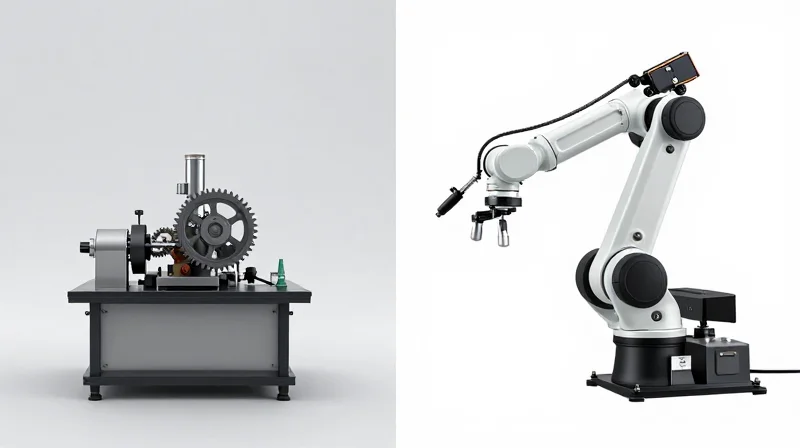
The Velocity Gap: Traditional vs. On-Demand
In the landscape of modern electronics, time-to-market is the primary driver of competitive advantage. Traditional PCB manufacturing often suffers from rigid, siloed workflows that require weeks for procurement, tooling, and final assembly. Conversely, on-demand quick-turn assembly services utilize cloud-integrated supply chains to compress these cycles from weeks into days, enabling R&D teams to fail fast and iterate faster.
| Process Metric | Traditional Batch Manufacturing | On-Demand Quick-Turn Service |
|---|---|---|
| Typical Lead Time | 3-6 Weeks | 24 Hours - 5 Business Days |
| Quote Processing | 24-48 Hours (Manual) | Real-time (Automated) |
| Minimum Order | High volume batch | 1 Unit / Low volume |
| Tooling Costs | Significant upfront | Negligible or zero |
Accelerating Iterative Design Cycles
The traditional batch model demands extensive pre-production verification because the cost and time penalty of a design error are prohibitive. Modern on-demand assembly allows for 'agile hardware development,' where the risk profile of each iteration is reduced through faster feedback loops. By removing the barrier of extended lead times, engineers can perform functional testing on physical prototypes before finalizing high-volume production designs.
Frequently Asked Questions on Speed
- How do on-demand providers achieve such high speeds?
They utilize automated quoting software, digital design-for-manufacturing (DFM) analysis tools, and highly optimized shop floors that prioritize batch-of-one throughput over mass-production efficiency. - Does quick-turn assembly compromise quality?
No; modern providers use advanced AOI (Automated Optical Inspection) and flying probe testing that is just as rigorous as traditional methods, often with higher consistency due to the reduction of human error in manual setup. - When is traditional manufacturing still a better choice?
Traditional manufacturing remains the economic standard for high-volume production runs where unit cost optimization outweighs the need for rapid turnaround times.
Cost Structures: Fixed Overhead vs. Operational Efficiency
The Financial Burden of Traditional Batch Manufacturing
Traditional PCB prototyping models often rely on large batch manufacturing, where cost structures are heavily weighted toward fixed overhead. This approach necessitates significant upfront investment in tooling, masking, and setup fees—costs that are amortized over large volumes but remain prohibitively expensive for iterative R&D. When a design requires frequent changes, these setup costs repeat, creating a financial bottleneck that stifles innovation and inflates the cost per unit for low-volume prototypes.
Operational Efficiency in On-Demand Assembly
In contrast, on-demand quick-turn assembly services utilize digital supply chain integration and automated production lines to eliminate traditional barriers. By prioritizing operational efficiency, these providers replace high setup fees with variable costs tailored to actual production volume. This shift transforms the fiscal model from capital-intensive batches to a lean, pay-as-you-go structure that better aligns with the agile requirements of modern product development.
| Cost Factor | Traditional Batch Manufacturing | On-Demand Quick-Turn Service |
|---|---|---|
| Setup/Tooling Fees | High (Per batch) | Minimal/Eliminated |
| Cost Scaling | Economies of scale at high volume | Efficient at low/medium volumes |
| Fixed Overhead | Heavy reliance | Shifted to operational expense |
| Inventory Risk | High (Due to batch size) | Low (Just-in-time delivery) |
Frequently Asked Questions on Cost Structures
- Why is traditional manufacturing cheaper for high volumes but more expensive for prototypes?
Traditional manufacturing amortizes high fixed setup costs over thousands of units, reducing the per-unit price significantly. Conversely, prototyping small runs forces those high fixed costs onto only a few boards, driving the per-unit cost up drastically. - How does on-demand assembly maintain profitability without fixed setup fees?
On-demand services use highly automated digital workflows that standardize the assembly process, allowing providers to bundle multiple customer designs into a single manufacturing run, which maximizes machine utilization. - Does the shift to on-demand services impact the Total Cost of Ownership?
Yes. While the per-unit cost may seem higher than mass production, the TCO is often lower for prototypes because it eliminates excess inventory, reduces storage requirements, and drastically shortens the time-to-market.
The Role of Software in Precision Assembly

The Digital Pre-Flight: How DFM Tools Redefine Reliability
The core transition from traditional manufacturing to on-demand assembly is defined by the shift from human-in-the-loop inspection to automated Design for Manufacturing (DFM) verification. In the past, engineering teams submitted Gerber files and waited days for a CAM engineer to manually review potential board failures. Today, cloud-integrated software platforms perform these checks in seconds, automatically flagging violations such as insufficient trace spacing, acid traps, or solder mask misregistration before the first component is ever placed.
DFM Automation: Traditional vs. On-Demand
| Feature | Traditional Manufacturing | On-Demand Quick-Turn |
|---|---|---|
| DFM Review Timing | Post-order, manual review | Pre-order, automated real-time |
| Error Feedback | Delayed (Email/Phone) | Instant (Software Dashboard) |
| Correction Process | High-touch, iterative manual cycles | Self-service, automated file re-upload |
| Yield Risk | Higher risk of late-stage rejects | Minimized through predictive analysis |
Optimizing the Iterative Lifecycle
By integrating DFM software directly into the prototyping workflow, engineers effectively front-load the debugging process. This creates a virtual assembly environment where software simulates the reality of production, allowing teams to refine their designs against specific manufacturing constraints without the cost or delay of physically failed boards.
- How does DFM software impact total project cost?
By identifying issues before production, it prevents expensive re-spins and wasted materials, significantly lowering the overall R&D budget. - Is software-based checking as reliable as an expert review?
Automated tools leverage vast databases of industry standards and common failure modes, offering consistent, objective analysis that often catches edge-case errors human reviewers might miss. - Can DFM tools assist with component selection?
Advanced on-demand platforms cross-reference BOM requirements with live inventory data, ensuring that chosen components are not only manufacturable but also available in the supply chain.
Scalability and Supply Chain Resilience

Mitigating Supply Chain Volatility
Modern on-demand assembly services transform supply chain volatility from a production bottleneck into a manageable logistics variable. By utilizing cloud-native platforms that aggregate inventory data from global distributors in real-time, these providers enable engineers to pivot component selections during the design phase, effectively shielding prototypes from the risks of obsolescence or sudden supply shortages.
Comparative Resilience Strategies
| Feature | Traditional Manufacturing | On-Demand Quick-Turn |
|---|---|---|
| Inventory Visibility | Fragmented/Manual | Automated/Real-time |
| Component Sourcing | Rigid (Single Source) | Dynamic (Multi-Source/Alternative) |
| Scalability | Fixed capacity/Lead times | Elastic/On-demand |
Strategic Advantages of Digital Integration
Traditional PCB manufacturing often relies on siloed procurement processes, leading to significant delays when a specific passive component or IC becomes unavailable. In contrast, on-demand platforms utilize 'Digital Thread' technology, which automatically maps design files against live market availability. If a shortage is detected, the system suggests verified alternatives, allowing the project to proceed without costly design cycles or procurement pauses.
- How do on-demand platforms handle component shortages?
They use automated APIs to scan multiple global distributors simultaneously, allowing for the immediate swap of out-of-stock components for form-fit-function compatible alternatives. - Is on-demand assembly inherently more scalable?
Yes, because these platforms utilize distributed manufacturing networks and software-defined workflows, they can scale production volumes without the linear increase in overhead costs found in traditional factory setups. - Does digital integration reduce supply chain risk?
It shifts the risk from reactive crisis management to proactive automated planning, where procurement happens concurrently with DFM validation.
Quality Assurance in Automated Environments
The Paradigm Shift in Quality Control
Traditional PCB manufacturing often relied on batch testing and manual inspection after production, which frequently led to late-stage discovery of defects. Modern on-demand assembly services shift this paradigm by embedding automated quality assurance directly into the manufacturing execution system (MES). By utilizing automated optical inspection (AOI) and X-ray inspection (AXI) linked to digital twin models, providers can identify solder joint anomalies or placement misalignments within milliseconds of assembly.
Comparative Analysis of Inspection Methodologies
| Feature | Traditional Manufacturing | On-Demand Quick-Turn |
|---|---|---|
| Inspection Point | Post-Production (Batch) | In-Line (Continuous) |
| Data Integration | Disconnected/Manual Logs | Real-Time Cloud Analytics |
| Feedback Loop | High Latency | Immediate/Automated |
| Traceability | Lot-Based | Component/Board-Level |
Ensuring Reliability During Rapid Scaling
Transitioning from prototype to mass production poses a significant risk to quality consistency. On-demand platforms mitigate this by standardizing the manufacturing process parameters during the prototype phase. Once a design is qualified for production, the automated assembly line uses the exact same digital recipes and machine learning-optimized SMT placement profiles, significantly reducing the 'new product introduction' (NPI) defect rate.
Frequently Asked Questions
- How does automated inspection impact production speed?
Unlike manual inspection, which creates bottlenecks, automated in-line inspection systems operate at the speed of the assembly line, ensuring quality checks occur without delaying the overall lead time. - Is traceability better in modern automated environments?
Yes. Digital platforms assign unique identifiers to each PCB, allowing for full traceability back to individual component reels, reflow temperature profiles, and inspection timestamps. - Can automated QA replace functional testing?
Automated QA focuses on structural integrity. While it drastically reduces physical defects, final functional testing remains necessary to verify electronic performance and firmware compliance.
Strategic Decision-Making: Choosing the Right Partner
Strategic Decision-Making: Choosing the Right Partner
The decision to choose between a traditional contract manufacturer and an on-demand quick-turn service is rarely about quality alone; it is a calculation of risk, speed, and lifecycle stage. Engineering managers must evaluate their project's specific constraints—such as regulatory compliance, anticipated volume scaling, and technical complexity—to determine the optimal manufacturing infrastructure.
| Decision Factor | Traditional Manufacturer | On-Demand Service |
|---|---|---|
| Development Stage | Production & Mature | Prototyping & Iteration |
| Design Changes | Slow/Bureaucratic | Instant/Automated |
| Supply Chain | Established/Predictable | Real-time/Dynamic |
| Communication | Dedicated Account Manager | Digital API/Dashboard |
Key Considerations for Engineering Managers
- Is the design finalized?
If the design is in constant flux, the high-speed iteration capability of an on-demand service is critical to avoid the lead times associated with legacy vendor engineering change orders. - What are the regulatory requirements?
Legacy manufacturers often provide better support for specialized certifications (e.g., medical or aerospace) that require full traceability and specific audit trails. - How complex is the supply chain?
On-demand platforms excel at managing fragmented component sourcing through automated software, whereas traditional partners are preferred for long-term strategic stock buffering.
Ultimately, the strategic framework involves utilizing on-demand services to accelerate the R&D cycle while maintaining a relationship with a traditional vendor for the final production transition. By mapping the project lifecycle to these specific capabilities, managers can maximize both speed-to-market and long-term reliability.
Transitioning to an on-demand, agile PCB manufacturing model is no longer an option but a competitive necessity for tech firms aiming for high-velocity cycles. Evaluate your current prototyping workflow today and contact our technical team to see how our rapid assembly services can accelerate your next project.
