
As electronic devices shrink in size while surging in complexity, the traditional 'siloed' approach to manufacturing is reaching its breaking point. Managing multiple vendors for a single product leads to mounting logistics hurdles and quality gaps. Today, the industry is pivoting toward fully integrated turnkey box build solutions, a transition that is redefining manufacturing efficiency and reliability.
The Evolution of Electronics Complexity

From Discrete Assemblies to Integrated Ecosystems
The evolution of electronics manufacturing is marked by a fundamental shift from discrete component integration to highly miniaturized, high-density system architecture. In the past, sub-assembly outsourcing was effective because individual boards could be developed, tested, and shipped in isolation. Today, the convergence of IoT, medical devices, and industrial automation has rendered this fragmented approach increasingly untenable.
As products shrink, the margin for error during inter-component communication and system integration has virtually vanished. High-density interconnects (HDI) and advanced packaging techniques have forced manufacturers to treat the entire box build as a single, cohesive entity rather than a sum of disparate parts.
The Complexity Transition: Traditional vs. Modern
| Feature | Traditional Model | Modern Turnkey Model |
|---|---|---|
| Design Density | Low to Moderate | Ultra-High/HDI |
| Supply Chain | Fragmented/Multi-Vendor | Consolidated/Turnkey |
| Interdependency | Low | Critical |
| Validation Scope | Component/PCB Level | Full System Functionality |
Key Drivers of Manufacturing Consolidation
- Why has miniaturization disrupted traditional outsourcing?
Miniaturization requires tighter mechanical tolerances and complex thermal management that cannot be reliably achieved when responsibility is split across multiple, uncoordinated vendors. - What is the primary risk of fragmented assembly?
Fragmented models create 'responsibility gaps,' where integration failures often lead to finger-pointing between vendors rather than swift diagnostic resolution. - How does HDI influence manufacturing decisions?
High-density interconnects introduce sensitivity to electrical noise and signal interference, requiring end-to-end control of the assembly process to maintain product integrity.
Understanding the Traditional Sub-Assembly Model
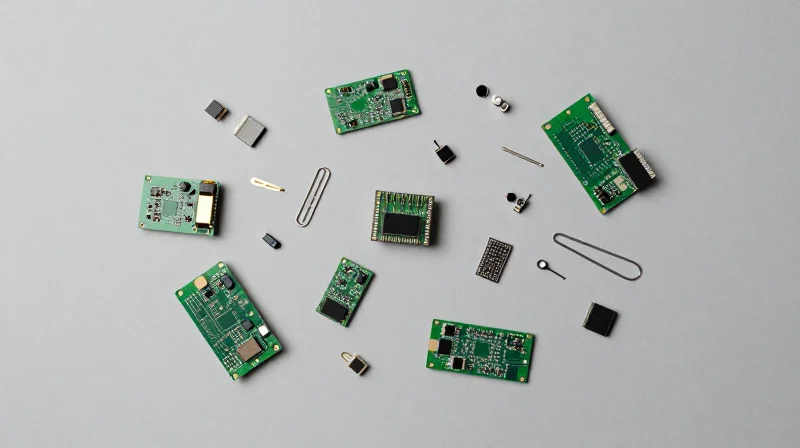
The Anatomy of Fragmented Sourcing
The traditional sub-assembly model relies on a disaggregated supply chain where an OEM manages multiple specialized suppliers for different segments of a product. In this structure, one vendor might produce the printed circuit board assembly (PCBA), another handles the mechanical chassis, and a third party provides cabling or proprietary components. While this model was effective in an era of lower product complexity, it creates a 'silo effect' that impedes transparency and complicates end-to-end quality assurance.
Inherent Risks in the Disaggregated Approach
- Communication Latency
Coordinating design changes across three or four separate vendors often leads to misaligned engineering revisions, causing delays that cascade through the entire production timeline. - Inventory Mismatch
With materials arriving at different intervals from diverse locations, OEMs frequently deal with 'kit-short' scenarios where final assembly is stalled because one minor mechanical component is missing. - Quality Accountability
When a finished unit fails, the 'blame game' between the PCBA vendor and the enclosure supplier can lead to protracted root-cause analysis, extending downtime and complicating warranty claims.
| Metric | Traditional Sub-Assembly Model | Operational Impact |
|---|---|---|
| Vendor Management | Multiple points of contact | High administrative overhead |
| Lead Times | Variable and staggered | Increased risk of production bottlenecks |
| Accountability | Distributed among partners | Difficult to enforce single-source quality standards |
| Inventory Risk | High (fragmented WIP) | Increased carrying costs and shelf-time |
Ultimately, the traditional sub-assembly model demands that the OEM acts as the primary systems integrator. As electronics continue to shrink and functional density increases, the burden of managing these interdependencies is becoming unsustainable. Organizations that remain tethered to this model are increasingly vulnerable to supply chain shocks and the inability to respond rapidly to shifting market demands.
Defining the Turnkey Box Build Advantage

Defining the Turnkey Box Build Advantage
A turnkey box build model represents a paradigm shift from traditional fragmented assembly by delegating the end-to-end integration of a product to a single manufacturing partner. By centralizing procurement, PCB assembly, firmware loading, chassis integration, and final testing under one roof, companies eliminate the logistical friction that traditionally hampers complex electromechanical production.
Core Operational Efficiencies
| Feature | Traditional Model | Turnkey Box Build |
|---|---|---|
| Vendor Management | Multiple suppliers | Single point of contact |
| Inventory Risk | High (split across sites) | Low (consolidated) |
| Quality Feedback | Delayed/Reactive | Immediate/Integrated |
| Logistical Complexity | High overhead | Streamlined fulfillment |
Key Strategic Benefits
- Why does a single source improve quality control?
With a turnkey partner, all processes—from solder paste inspection to final functional testing—occur within a single quality management system, preventing the blame-shifting that often occurs when multiple vendors handle different assembly steps. - How does turnkey manufacturing impact time-to-market?
By eliminating the 'wait times' inherent in shipping sub-assemblies between various third-party contractors, the turnkey approach significantly compresses the production lifecycle and accelerates product availability. - What is the primary financial advantage?
It reduces the hidden costs of supply chain management, such as shipping, incoming inspection at multiple facilities, and the labor required to manage numerous vendor relationships.
Adopting a turnkey box build strategy allows engineering teams to focus on core innovation rather than managing the complexities of a disparate supply chain. This holistic approach ensures that every aspect of the device—cables, enclosures, software, and boards—works in perfect harmony from the first unit produced.
Reducing Lead Times and Supply Chain Friction
In a traditional sub-assembly model, the electronics supply chain is often a series of disparate silos. A product owner must navigate delays caused by transferring components between PCB fabricators, mechanical enclosure suppliers, and final assembly integrators. Each hand-off point represents a potential breakdown in communication, a delay in shipping, and a risk to quality assurance. Turnkey box build manufacturing fundamentally reverses this by internalizing the assembly process, transforming a fragmented linear supply chain into a single, cohesive vertical operation.
Eliminating Supply Chain Friction
The primary cause of friction in traditional models is the 'idle time' that occurs while waiting for inventory synchronization. Turnkey partners mitigate this through synchronized procurement and integrated production scheduling. By managing the supply chain in-house, the turnkey provider transitions from being a passive recipient of parts to an active orchestrator of the entire lifecycle, ensuring that the enclosure, the PCBA, and the firmware loading process converge at the exact moment required for final testing.
| Friction Source | Traditional Sub-Assembly | Turnkey Box Build |
|---|---|---|
| Logistics & Transit | High (Inter-site shipping) | Low (Internal movement) |
| Inventory Buffers | Required at every hand-off | Minimized at line-side |
| Communication Delays | Multi-vendor coordination | Single-point accountability |
| Quality Bottlenecks | Finger-pointing at transitions | Unified quality control |
Frequently Asked Questions on Lead Time Optimization
- How does turnkey manufacturing specifically speed up assembly?
It eliminates the need for shipping WIP (Work-in-Progress) between different specialty vendors, effectively removing days or weeks from the logistics schedule. - Can turnkey models handle custom mechanical enclosures efficiently?
Yes, high-end turnkey partners maintain integrated mechanical engineering capabilities that allow them to fabricate enclosures in parallel with PCBA production. - Does centralized manufacturing impact quality validation speeds?
It significantly improves speed; instead of performing quality checks at every hand-off point, validation is conducted once at the final integrated test phase, reducing total inspection cycles.
Quality Assurance and End-to-End Testing

Unified Integrity: The Turnkey Quality Advantage
In traditional sub-assembly outsourcing, quality assurance is often compartmentalized. Each vendor verifies their specific component, but system-level functionality remains untested until final integration at the OEM facility. Turnkey box build solutions transform this by mandating comprehensive testing protocols that cover the entire product lifecycle—from PCBA integrity to final enclosure fit and functional load testing—before the device leaves the factory floor.
| Quality Metric | Sub-Assembly Outsourcing | Turnkey Box Build |
|---|---|---|
| Responsibility | Fragmented (Multiple Vendors) | Centralized (Single Partner) |
| Testing Scope | Component-level only | System-level functional tests |
| Fault Attribution | High friction/Slow resolution | Immediate identification |
| Validation | Final assembly at OEM site | Pre-shipment end-to-end testing |
Advanced Testing Methodologies
The transition to turnkey manufacturing facilitates the implementation of sophisticated diagnostic tools. Because the provider manages the entire enclosure environment, they can perform stress tests, thermal cycling, and software integration validation in conditions that mirror the final user experience. This holistic approach ensures that potential points of failure, such as cabling interference or thermal accumulation within the chassis, are addressed during the manufacturing phase rather than during field deployment.
Frequently Asked Questions on Quality Protocols
- How does turnkey testing prevent supply chain quality drift?
By centralizing procurement, the turnkey partner enforces strict incoming quality control (IQC) across all materials, ensuring that sub-components meet system-level specifications before they reach the assembly line. - What is the primary benefit of end-to-end functional testing?
It allows for the verification of the complete product assembly under load, ensuring that internal firmware, electrical connectivity, and mechanical seals work in concert as a finished unit. - Does a single partner reduce the complexity of compliance and certification?
Yes, having one entity oversee the full build simplifies the traceability of materials and testing data required for international certifications like CE, FCC, and UL.
Cost Efficiency: More Than Just Unit Price
Shifting Focus to Total Cost of Ownership
While traditional sub-assembly outsourcing often appears more cost-effective on a bill-of-materials (BOM) basis, it frequently hides significant systemic costs. Turnkey box build solutions optimize the entire production lifecycle, transforming fragmented expenses into a streamlined, predictable cost structure. True efficiency is not found in the lowest piece price, but in the reduction of administrative overhead, logistics management, and failure-related rework.
| Cost Factor | Traditional Sub-Assembly | Turnkey Box Build |
|---|---|---|
| Logistics & Freight | High (Multi-site transfers) | Low (One-site shipment) |
| Procurement Labor | High (Multi-vendor management) | Low (Single-point contact) |
| Inventory Carrying | High (Safety stock redundancy) | Low (JIT integration) |
| Quality Rework | High (Interface mismatch risk) | Low (Integrated testing) |
Quantifying Hidden Operational Savings
The turnkey model significantly lowers 'soft costs' that traditional models often overlook. By consolidating component sourcing and integration under one roof, manufacturers reclaim thousands of hours previously spent on vendor coordination, purchase order reconciliation, and multi-facility logistics management. This allows internal teams to pivot from reactive expediting to high-value product innovation.
- How does turnkey manufacturing reduce carrying costs?
By synchronizing sub-assembly production with enclosure integration, manufacturers eliminate the need to hold intermediate inventory, effectively reducing storage costs and the risk of component obsolescence. - Are there hidden savings in system testing?
Yes; by performing end-to-end testing at the box-build level, the provider catches integration issues early, preventing costly field failures and the logistical nightmare of returning individual sub-assemblies. - Does single-source procurement lead to higher prices?
Not necessarily; turnkey partners leverage high-volume global purchasing power, often securing better component pricing than internal procurement teams could achieve when buying in smaller, fragmented batches.
Scalability and Flexibility in Modern Manufacturing

Adaptability in an Uncertain Market
The primary advantage of a turnkey box build approach is its inherent elasticity. In a traditional multi-vendor sub-assembly model, scaling production requires renegotiating logistics, synchronization, and communication protocols across several entities. Conversely, a turnkey partner operates as an extension of the OEM, allowing for dynamic adjustments in labor and resource allocation without the friction of siloed operations.
Scalability Comparison Matrix
| Feature | Traditional Sub-Assembly | Turnkey Box Build |
|---|---|---|
| Demand Volatility Response | Slow; dependent on multi-vendor alignment | Rapid; internal resource reprioritization |
| Logistical Complexity | High; multi-point hand-offs | Low; centralized production |
| Infrastructure Scaling | Fragmented; requires scaling multiple tiers | Unified; seamless capacity expansion |
Frequently Asked Questions
- How does unified manufacturing handle sudden volume spikes?
By housing assembly, testing, and procurement under one roof, manufacturers can leverage shared labor pools and existing supply buffers, bypassing the delays inherent in coordinating multiple independent contractors. - Does a turnkey approach limit vendor flexibility?
While it consolidates the assembly process, modern turnkey providers maintain diverse multi-sourcing strategies for components, ensuring that scaling does not compromise supply chain resilience. - Why is system-level flexibility crucial for modern product lifecycles?
Rapid product iterations require an agile production line that can integrate design changes instantly; fragmented models often suffer from 'bullwhip' effects where information lag creates massive production bottlenecks.
Strategic Considerations for Transitioning
Phased Transition Strategies
Transitioning from fragmented sub-assembly to a turnkey model is not merely a vendor switch; it is a fundamental shift in operational architecture. Successful organizations typically employ a phased approach, beginning with non-critical product lines to calibrate communication channels and quality protocols before migrating high-complexity flagship assemblies.
| Phase | Strategic Focus | Primary Goal |
|---|---|---|
| Phase 1: Pilot | Legacy product migration | Validating SOP alignment |
| Phase 2: Integration | New Product Introduction (NPI) | Unified design-for-manufacturing |
| Phase 3: Optimization | Full ecosystem scaling | Total Cost of Ownership reduction |
Key Considerations for Decision Makers
- How do I evaluate the partner's technical maturity?
Look beyond basic assembly capabilities. Evaluate their internal engineering team's ability to participate in design reviews, suggest material alternatives, and manage complex bill of materials (BOM) lifecycles. - What is the biggest risk during the transition?
Knowledge transfer failure is the primary risk. Ensure your documentation—including testing scripts and mechanical assembly standards—is digitized and fully accessible to the new partner to prevent 'tribal knowledge' silos from dissolving. - Should I maintain dual-sourcing during the switch?
Yes, for high-volume or mission-critical products, maintaining a parallel supply chain for a defined transition period minimizes disruption risks and provides a performance baseline for the new turnkey provider.
Shifting Internal Resource Allocation
As the turnkey partner takes ownership of procurement, component logistics, and system testing, your internal team's mandate must shift. Instead of managing individual sub-assembly vendors, your staff should focus on high-level vendor management, quality governance, and strategic product innovation. This redistribution of internal effort is the true catalyst for the scalability gains promised by the box build model.
In an era of relentless technical advancement, the transition to integrated box build manufacturing is no longer just an option—it is a competitive necessity. By consolidating the assembly chain, companies can reclaim control over quality and speed. Ready to modernize your production strategy? Contact our engineering team today to see how a turnkey solution can optimize your next project.
