
The landscape of portable diagnostics is undergoing a seismic shift. As patients demand smaller, more connected devices, the traditional PCBA architecture that has powered glucose meters for decades is being challenged by the rise of flexible electronics and seamless IoT integration. This article examines the technological evolution of these critical devices and how stakeholders can leverage new manufacturing paradigms to gain a competitive edge.
The Evolution of Glucose Meter Architecture

From Benchtop Instruments to Personal Devices
Early glucose monitoring was restricted to clinical settings, relying on bulky instrumentation with discrete components that lacked portability. The shift toward patient-empowered care in the 1980s and 90s necessitated a radical redesign of electronic architecture, leading to the adoption of high-density Printed Circuit Board Assemblies (PCBAs). These assemblies replaced vacuum tubes and manual switches with microcontrollers and surface-mount technology (SMT), allowing life-saving diagnostics to fit within the palm of a patient's hand.
The Era of Rigid PCBA Architecture
Modern glucose meters typically utilize rigid FR-4 substrates to mount sensors, battery management systems, and communication modules. While effective, this architecture faces inherent physical constraints that limit the seamless integration of wearables into everyday life.
| Feature | Legacy Benchtop | Modern PCBA |
|---|---|---|
| Form Factor | Stationary/Desktop | Portable/Handheld |
| Technology | Discrete Components | Surface Mount (SMT) |
| Flexibility | Zero | Rigid/Flat |
Evolutionary Challenges
- What are the primary limitations of rigid PCBA designs?
Rigid boards are fragile, space-intensive, and prone to mechanical failure under stress, making them difficult to integrate into conformal patches or skin-worn devices. - How did miniaturization change glucose monitoring?
Miniaturization shifted the focus from laboratory-bound equipment to real-time, patient-centric monitoring, enabling the rise of Continuous Glucose Monitors (CGMs).
Limitations of Current Rigid PCBA Manufacturing
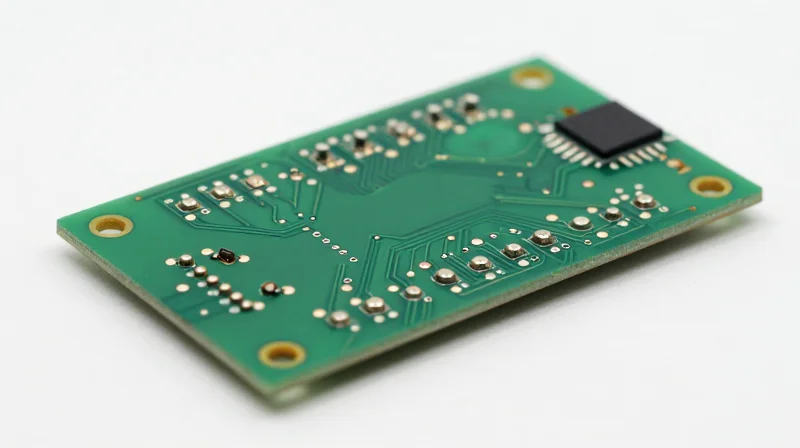
Inherent Constraints of Rigid PCB Assemblies
Traditional Printed Circuit Board Assemblies (PCBAs) rely on rigid substrates, such as FR-4 glass-reinforced epoxy, which are fundamentally incompatible with the human body's dynamic movement. While effective for stable, stationary electronics, these assemblies impose significant physical limitations on wearable glucose monitors that must maintain continuous, comfortable contact with the skin.
Physical and Spatial Limitations
The rigid nature of standard PCBAs dictates a flat form factor that struggles to conform to the curvature of the human arm or abdomen. This lack of flexibility often results in mechanical stress concentrations at the interface between the device and the skin, potentially leading to sensor detachment or user discomfort. Furthermore, the reliance on through-hole or surface-mount technology creates a height profile that prevents the ultra-thin, 'second-skin' aesthetic desired in modern digital health.
| Feature | Rigid PCBA Limitation | Clinical Impact |
|---|---|---|
| Substrate | FR-4 Glass/Epoxy | Lack of anatomical conformity |
| Form Factor | Flat, Rigid planes | Increased device bulk/visibility |
| Wearability | Static, non-compliant | Skin irritation and signal loss |
Manufacturing and Design Trade-offs
- Why does weight matter in current designs?
Rigid components and bulky housing required to protect delicate PCBs add unnecessary mass, causing the device to shift during physical activity, which interrupts continuous glucose monitoring. - How does rigid assembly restrict miniaturization?
The need for a rigid chassis prevents designers from wrapping circuitry around sensors, forcing a larger footprint that complicates the device’s integration into thin, wearable adhesive patches. - What are the limitations regarding material integration?
Traditional manufacturing processes are generally incompatible with thin-film sensing materials and biocompatible substrates, limiting the innovation cycle for chemical-to-digital signal conversion.
The Rise of Flexible Circuitry in Medical Diagnostics
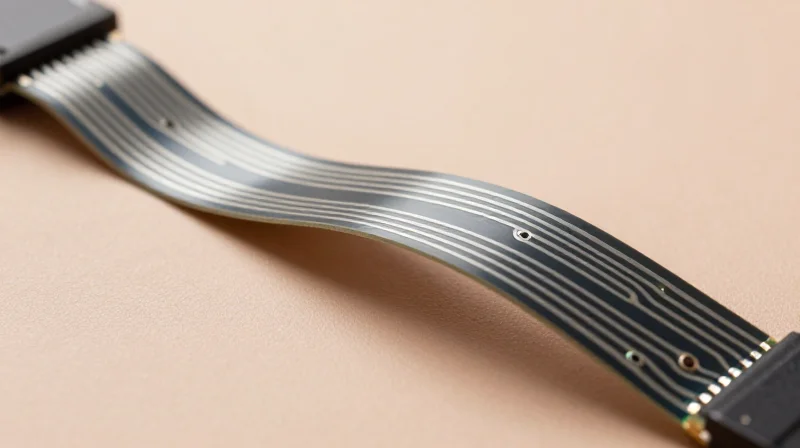
From Rigid Constraints to Organic Form Factors
The integration of flexible circuitry—specifically Flexible Printed Circuit Boards (FPCBs) and additive-printed electronics—represents a paradigm shift in medical diagnostic design. Unlike traditional glass-epoxy (FR-4) substrates that demand flat, rigid housing, flexible circuits leverage polyimide or TPU substrates that mirror the mechanical properties of human skin. By conforming to the unique contours of the body, these devices reduce shear stress at the interface, minimize movement artifacts, and significantly improve patient compliance through superior long-term wearability.
Technological Advantages of Flexible Diagnostics
| Feature | Rigid PCBA | Flexible Printed Electronics |
|---|---|---|
| Form Factor | Fixed, Flat, Bulkier | Conformable, Ultra-thin, Ergonomic |
| Mechanical Durability | High risk of cracking/fatigue | High elasticity and fatigue resistance |
| Weight | Significant due to housing | Negligible (sub-gram potential) |
| Application | Device interior electronics | Direct-to-skin sensing patches |
Key Considerations for Implementation
- How does flexibility impact sensor signal integrity?
While flexible circuits can be sensitive to bending, high-density interconnection (HDI) techniques and strategic component placement ensure stable signal pathways even under dynamic mechanical strain. - Can these circuits be mass-produced efficiently?
Yes, through roll-to-roll (R2R) printing processes, manufacturers can produce diagnostic circuitry at scale with lower material waste and reduced processing energy compared to subtractive chemical etching. - What role does biocompatibility play in these designs?
Flexible circuits often utilize medical-grade encapsulants that prevent skin irritation and protect electronic components from sweat, humidity, and constant physical contact, ensuring consistent data acquisition.
Integrating IoT: Beyond Data Collection

Hardware Requirements for Real-Time Cloud Connectivity
Transitioning from local data logging to continuous, real-time cloud synchronization necessitates a fundamental shift in hardware architecture. Modern glucose monitors must now integrate ultra-low-power wireless transceivers (such as BLE or proprietary sub-GHz protocols) without compromising the device's minimal form factor. This integration demands highly efficient antenna design and sophisticated signal integrity management to ensure reliable data transmission through human tissue and varying environmental conditions.
Comparative Impact on Hardware Design
| Feature | Traditional Rigid PCBA | Modern Printed Electronics |
|---|---|---|
| Connectivity Integration | Space-intensive, requires discrete modules | Additive manufacturing allows embedded antennas |
| Component Density | Limited by planar board area | 3D structural integration capabilities |
| Power Management | Requires bulky battery support | Integrated thin-film energy harvesting |
Optimizing Density and Power Efficiency
IoT integration introduces the 'energy-area-connectivity' trilemma. Traditional PCBA manufacturing struggles here due to the bulk of multi-layered FR4 boards, which impede the miniaturization needed for wearable comfort. In contrast, printed electronics enable the direct deposition of conductive paths and passive components onto flexible substrates, drastically reducing parasitic capacitance and optimizing power consumption by shortening signal traces. This allows developers to allocate more 'real estate' to advanced sensor fusion algorithms rather than basic interconnects.
Frequently Asked Questions
- How does printed electronics assist in power management?
Printed electronics reduce trace lengths and allow for the integration of thin-film batteries, lowering overall system resistance and enabling more efficient power delivery to power-hungry IoT modules. - Is cloud connectivity feasible with flexible electronics?
Yes, through the integration of printed, flexible RF front-ends and low-energy communication protocols, designers can achieve robust cloud-connected performance on highly conformable platforms. - Why is component density a challenge in IoT glucose monitors?
The need to house wireless radios, sensors, micro-controllers, and power sources in a device small enough for long-term wear creates severe spatial constraints that traditional PCB manufacturing cannot easily overcome.
Comparing Costs: Traditional vs. Next-Gen Production
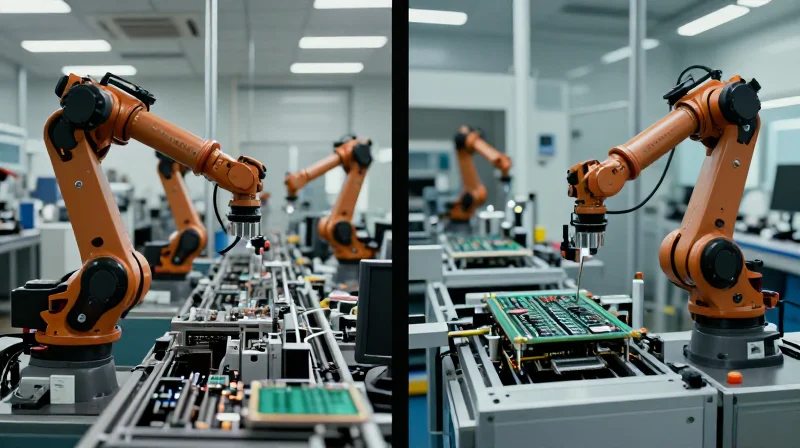
Manufacturing Overhead and Capital Intensity
Traditional PCBA manufacturing relies on high-precision pick-and-place robotics, solder reflow ovens, and multi-stage assembly lines, all of which require significant floor space and energy consumption. Conversely, modern printed electronics utilize roll-to-roll (R2R) printing techniques. This additive manufacturing approach effectively converts capital intensity into process efficiency, allowing for the rapid, continuous production of diagnostic sensors directly onto flexible substrates without the need for complex mounting hardware.
| Feature | Traditional PCBA | Printed Electronics |
|---|---|---|
| Material Usage | Subtractive (High Waste) | Additive (Minimal Waste) |
| Setup Costs | High (Tooling/Stencil) | Low (Digital Templates) |
| Production Speed | Batch/Discrete | Continuous Roll-to-Roll |
| Physical Footprint | Extensive/Fixed | Compact/Modular |
Economic Scalability and Waste Mitigation
The primary economic differentiator lies in the waste profile of each method. Traditional PCB assembly involves etching, which generates hazardous chemical waste and requires strict environmental oversight. Printed electronics, by contrast, use conductive inks printed precisely where needed. By eliminating the necessity for heavy, rigid substrates and reducing the supply chain complexity of individual component sourcing, manufacturers can achieve a lower total cost of ownership as production volumes scale.
Frequently Asked Questions
- Why are setup costs lower for printed electronics?
Printed electronics rely on digital design files for printing plates or direct-write processes, eliminating the need for expensive physical stencils, drills, and chemical etching masks required in traditional PCBA. - Is the transition to printed electronics viable for all medical wearables?
While ideal for flexible, disposable glucose sensors, traditional PCBA remains necessary for high-density processing or high-power computing components that require the thermal management provided by rigid circuit boards. - How does roll-to-roll printing impact unit economics?
Roll-to-roll manufacturing allows for continuous high-speed production, which dramatically lowers labor costs per unit and allows for Just-In-Time (JIT) manufacturing cycles.
Material Science and Biocompatibility
Advancements in Biocompatible Substrates
In the transition from rigid PCBA to printed electronics, the choice of substrate shifts from structural integrity to physiological compatibility. Modern glucose monitoring devices rely on high-performance polymers like polyethylene terephthalate (PET) and polyimide (PI), which offer superior flexibility and chemical inertness. Unlike traditional rigid boards that may cause skin irritation or micro-abrasions, these thin-film materials are designed to conform to the epidermis, minimizing the foreign body response and enhancing sensor stability over extended wear periods.
Conductive Inks and Bio-Interface Engineering
The efficacy of a continuous glucose monitor (CGM) is largely dictated by the electrochemical interface between the biological environment and the sensor's conductive traces. Printed electronics utilize specialized conductive inks—often silver/silver-chloride (Ag/AgCl) or carbon-based composites—that must remain stable within a hydrated, saline-rich environment. Innovations in encapsulation materials and thin-film passivation layers are critical for preventing the leaching of conductive ions into the body while ensuring the sensing electrode remains sensitive to enzymatic glucose reactions.
| Material Property | Traditional PCBA (Rigid) | Printed Electronics (Flexible) |
|---|---|---|
| Biocompatibility | Variable; requires secondary coatings | High; inherent to specialized polymers |
| Skin Conformity | None; rigid profile | Excellent; body-contouring |
| Chemical Stability | High; enclosed housing | Engineered; optimized for ionic exchange |
Key Considerations for Material Selection
- How does substrate flexibility affect signal noise?
Flexible substrates reduce mechanical strain during movement, preventing micro-fractures in conductive traces that would otherwise lead to erratic impedance and signal artifacts. - What role do passivation layers play?
Passivation layers are essential for creating a hermetic seal, protecting the sensitive electronic components from bodily fluids while allowing selective permeability for glucose detection. - Why is material purity critical?
Any contamination in conductive inks or substrate adhesives can trigger skin sensitization or interfere with the sensitive enzymatic electrochemical reaction, potentially leading to inaccurate glucose readings.
Regulatory Hurdles and Quality Assurance
Regulatory Challenges of Printed Electronics
The transition from rigid Printed Circuit Board Assemblies (PCBA) to flexible printed electronics in glucose monitoring introduces significant regulatory complexities. Because traditional rigid boards are well-understood by regulatory bodies, they benefit from established validation protocols. Conversely, modern printed electronics—specifically those utilizing additive manufacturing—require manufacturers to provide comprehensive documentation on ink purity, substrate degradation, and the repeatability of electrical performance over the sensor's lifespan.
| Feature | Traditional PCBA | Printed Electronics |
|---|---|---|
| Validation Path | Established/Standardized | Novel/Performance-based |
| Component Integrity | High thermal stability | Requires chemical stability testing |
| Manufacturing Audit | Fixed assembly lines | Roll-to-roll process consistency |
Quality Assurance and Compliance Frameworks
Quality assurance (QA) in printed electronics must move beyond simple functional testing to include long-term biocompatibility and moisture ingress resistance. Regulatory bodies, such as the FDA, focus on the variability inherent in high-volume, roll-to-roll printing. Ensuring that each sensor batch meets strict sensitivity benchmarks necessitates advanced in-line inspection technologies that monitor conductive ink morphology in real-time.
- How does FDA classification change for printed sensors?
While the end-use device classification remains consistent, the manufacturing process validation must be more rigorous, shifting focus from hardware assembly to material science and chemical consistency. - What ISO standards are critical for this shift?
ISO 13485 remains the foundation, but compliance now requires specialized scrutiny regarding ISO 10993 for the biological evaluation of medical devices, specifically focusing on skin-contact risks with specialized inks. - How to mitigate risks during the transition?
Companies should implement a 'Quality by Design' (QbD) approach, ensuring that material selection and printing parameters are locked early in the development cycle to simplify the submission and verification processes.
Strategic Considerations for Medical Device OEMs
For OEMs, the decision to migrate to printed electronics should be viewed not merely as a component substitution, but as a fundamental shift in supply chain architecture. While traditional PCBA offers a mature, low-risk path for established products, printed electronics enable the thin-form factor, disposable, and high-volume capabilities required for next-generation continuous glucose monitoring (CGM) systems. Strategic alignment requires balancing capital expenditure with the speed-to-market advantages inherent in roll-to-roll manufacturing.
Strategic Decision Matrix
| Strategic Metric | PCBA Focus | Printed Electronics Focus |
|---|---|---|
| Development Speed | Slower; iterative rigid board design | Rapid; agile prototyping with additive processes |
| Scalability | Moderate; linear scaling with line assembly | High; exponential gains with continuous R2R |
| Material Strategy | Standardized FR4/Components | Advanced biocompatible inks/substrates |
Partner Vetting and Risk Mitigation
Vetting a manufacturing partner for printed electronics requires a move beyond traditional electronic contract manufacturing criteria. OEMs must prioritize partners with deep expertise in material science, cleanroom roll-to-roll capabilities, and existing quality systems that bridge the gap between traditional electronics and medical-grade bio-sensor fabrication.
- How do I evaluate the scalability of a potential partner?
Look for production facilities that demonstrate integrated end-to-end roll-to-roll printing lines rather than disparate batch processing stations. - What is the most critical quality certification to verify?
Beyond ISO 13485, ensure the manufacturer has deep validation experience in biocompatibility testing for inks and flexible substrates under prolonged dermal exposure. - When is the right time to transition from rigid to flexible electronics?
Transition is optimal when the product design reaches a stable form factor that benefits from weight reduction and when target volume forecasts justify the higher initial tooling costs of printing plates.
Operational Recommendations
To ensure a successful transition, OEMs should implement a phased adoption strategy. Start by utilizing flexible hybrid electronics (FHE)—a combination of printed interconnects and surface-mounted silicon chips—to maintain core functionality while reducing the board profile. Establish joint development agreements (JDAs) with partners early in the design cycle to align on ink deposition accuracy and yield-enhancement protocols before transitioning to full-scale automated production.
As the demand for smarter, more comfortable glucose monitoring continues to accelerate, moving away from legacy manufacturing is no longer optional—it is a strategic necessity. By embracing flexible circuitry and robust IoT integration, manufacturers can improve patient adherence and device functionality. Contact our engineering team today to audit your current production line and explore how modern electronics can optimize your next diagnostic innovation.
